This site is supported by our readers. We may earn a commission, at no cost to you, if you purchase through links.
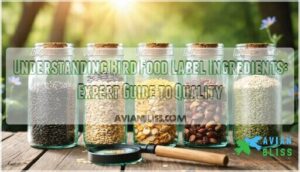 Understanding bird food label ingredients starts with examining three key areas: the ingredient list (ordered by weight), guaranteed analysis percentages, and any species-specific formulations.
You’ll want to look for whole seeds, grains, and identifiable proteins listed first, while avoiding vague terms like "meat by-products" or excessive fillers such as corn.
The guaranteed analysis reveals protein and fat content—breeding birds need 18-25% protein versus 14-18% for maintenance diets.
Quality brands highlight beneficial additives like probiotics and omega fatty acids, while budget options often contain artificial colors that provide zero nutritional value.
Mastering label reading transforms you from a casual shopper into your bird’s nutritional advocate, and there’s more to uncover about spotting premium ingredients.
Table Of Contents
- Key Takeaways
- Bird Food Label Basics
- Ingredient Identification
- Nutritional Content Analysis
- Specialized Bird Food Types
- Making Informed Choices
- Frequently Asked Questions (FAQs)
- How to read the ingredients on food labels?
- What ingredients are in bird feed?
- How to read a pet food label?
- What is high potency bird food?
- How long do bird food ingredients stay fresh?
- Can expired bird food harm my pet?
- What storage conditions preserve ingredient quality best?
- Do seasonal changes affect ingredient nutritional value?
- Which preservatives are safest for birds?
- Conclusion
Key Takeaways
- Read ingredient lists carefully – You’ll find ingredients listed by weight, so look for whole seeds and grains at the top while avoiding vague terms like "meat by-products" and excessive fillers such as corn.
- Check the guaranteed analysis section – You’ll need to match protein percentages to your bird’s needs (18-25% for breeding birds vs. 14-18% for maintenance diets) and verify that fat content meets energy requirements.
- Choose quality over marketing claims – You’ll spot premium foods by their beneficial additives, like probiotics and omega fatty acids, while budget options often contain artificial colors that provide zero nutritional value.
- Avoid fillers and by-products – You’ll save money long-term by choosing single-ingredient feeds over filler-heavy bargain mixes that contain up to 80% worthless ingredients, like wheat, milo, and red millet, that birds won’t eat.
Bird Food Label Basics
You can’t feed your feathered friends properly without understanding what’s actually in their food.
Reading bird food labels carefully helps you choose quality nutrition that supports your bird’s health, energy levels, and vibrant plumage, which is essential for their overall well-being and vibrant plumage.
Importance of Reading Labels
Reading bird food labels isn’t just smart—it’s essential for your feathered friend’s health.
Your bird’s health starts with reading every ingredient—their life depends on what you choose.
Understanding bird food ingredients helps you make informed decisions that lead to healthier birds and cost savings while ensuring legal compliance and ethical sourcing.
- Avoid mystery ingredients that could harm your pet’s digestive system
- Compare nutritional value birds actually need versus marketing claims
- Spot fillers and artificial additives that provide zero benefit
- Identify high-quality protein sources for ideal feather and muscle development
- Ensure ingredient benefits match your bird’s specific dietary requirements
Label Components and Layout
Bird food labels contain several key components you’ll need to navigate effectively.
The label size and font clarity directly impact your ability to read mandatory information quickly, while color coding helps distinguish different sections of bird food composition data.
Placement legibility guarantees critical details about ingredient benefits and seed mix analysis remain visible, making your bird food label evaluation both efficient and thorough for superior nutrition decisions.
Key Terms and Definitions
Deciphering bird food labels often feels like deciphering ancient hieroglyphics, but understanding key terminology transforms you into a savvy pet parent.
These essential definitions provide clarity when ingredient lists seem overwhelming.
- Crude Protein – Minimum protein percentage, not actual digestibility
- By-products – Secondary ingredients from processing, varying in quality
- Natural – Minimally processed ingredients without artificial additives
- Fortified – Enhanced with added vitamins and minerals
- Guaranteed Analysis – Legal requirements for nutrient minimums and maximums
To attract more birds, consider premium bird food.
Ingredient Identification
You’ll find three main ingredient categories on every bird food label: proteins, grains and seeds, and vitamin-mineral supplements that work together to keep your feathered friend healthy.
Learning to identify these components helps you choose foods that match your bird’s specific nutritional needs and life stage.
Protein Sources and Types
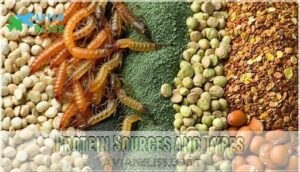
Protein forms the foundation of every bird’s diet, making up 16-24% of quality commercial foods.
You’ll find insect protein listed as dried mealworms or cricket meal, offering complete amino acids your bird needs.
Plant proteins appear as legumes, quinoa, or spirulina, though they require careful protein blends for ideal bird nutrition guide effectiveness. Check protein digestibility ratings when comparing options.
Grain and Seed Ingredients
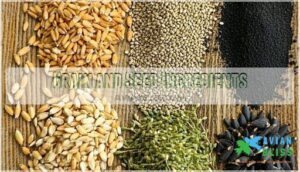
Quality grain and seed ingredients form the backbone of your bird’s daily nutrition, with each component serving specific dietary purposes.
When examining birdseed guide labels, you’ll notice these ingredients typically appear first, indicating their prominence in the seed mix variety.
Key grain types to prioritize:
- Millet varieties – excellent seed nutritional value with easy grain digestibility
- Sunflower seeds – high-fat content supporting energy needs in wild bird seed blends
- Sprouted seed benefits – enhanced protein availability and improved nutrient absorption
- Organic seed sources – free from pesticides, supporting overall bird nutrition guide recommendations
Vitamin and Mineral Supplements
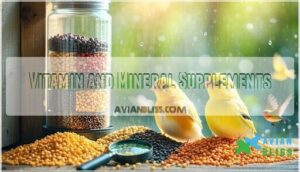
Beyond the ingredient list’s obvious grains and seeds, you’ll discover a treasure trove of vitamin and mineral supplements that transform basic bird food analysis into understanding your feathered friend’s complete nutritional profile.
These synthetic vitamins and natural sources address deficiency symptoms while making dosage guidelines essential for ideal bird health nutrition and seed blend benefits.
Birds need a balanced intake of nutrients, and vitamin A is essential for their skin health and feather growth.
Nutritional Content Analysis
Once you’ve identified the ingredients, you’ll need to analyze the actual nutritional value they provide to your feathered friends.
The guaranteed analysis panel becomes your roadmap for understanding protein levels, fat content, and essential nutrients that keep birds healthy and active.
Macronutrient Breakdown
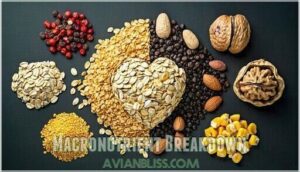
When analyzing bird food, you’ll decode three critical macronutrients that fuel your feathered friend’s daily activities.
Understanding protein ratios, fat content, and carb sources helps you match energy needs with proper nutrition for ideal bird health nutrition.
- Protein Ratios: Look for 14-20% protein in seed blend benefits, supporting feather growth and muscle development
- Fat Content: Healthy fats (8-15%) provide concentrated energy and enhance nutrient absorption
- Carb Sources: Complex carbohydrates from whole grains offer sustained energy without blood sugar spikes
- Energy Needs: Active birds require higher caloric density than sedentary companions
- Fiber Importance: Adequate fiber (3-8%) promotes digestive health and prevents crop impaction
Micronutrient Analysis
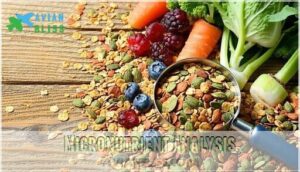
Micronutrient levels tell you whether your bird’s getting vitamins and minerals for ideal health.
Look for vitamin A sources like carrots, vitamin D3 additions, and B-complex supplements that support metabolism.
Check for calcium, iron, and zinc content, plus trace element sources like kelp.
Understanding mineral bioavailability and vitamin stability helps you spot deficiency symptoms early and choose the best bird food with proper antioxidant benefits.
Many owners also supplement their bird’s diet with fresh vegetables, since they offer essential nutrients.
Understanding Guaranteed Analysis
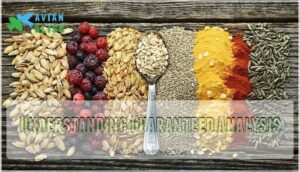
Looking at the guaranteed analysis section, you’ll find nutrient percentages that reveal your bird’s food quality.
Minimum guarantees show the lowest protein and fat levels, while maximum guarantees indicate fiber limits.
Reading AAFCO label regulations helps you understand these baseline requirements, ensuring you’re selecting the best bird food that meets nutritional standards and avoiding ingredients that compromise your feathered friend’s health.
Many bird owners supplement with white proso millet for its digestibility.
Specialized Bird Food Types
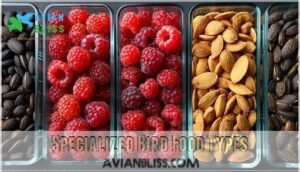
You’ll encounter specialized bird foods designed for specific purposes and species as you navigate premium options.
These targeted formulations address unique nutritional needs through high-potency blends, organic certification, and species-specific ingredient profiles.
High Potency Bird Food
High potency bird food packs concentrated nutrients designed for specific life stages and health challenges.
These specialized formulas provide enhanced nutrition when your feathered friend needs extra support.
- Enhanced Nutrition – Contains higher protein and fat levels for breeding support and energy source requirements
- Breeding Support – Formulated with specific seed types for birds during reproductive periods
- Molting Aid – Includes targeted nutrients to support feather regrowth and immune boost functions
- Energy Source – Concentrated calories help active birds maintain peak health and understanding their nutritional needs
Organic and Non-GMO Options
When choosing between organic and conventional options, you’ll find organic certification guarantees 100% GMO-free ingredients plus pesticide-free sourcing.
GMO concerns primarily affect corn and wheat in common bird seeds, while millet and safflower remain naturally non-GMO.
Sustainable sourcing supports bird health through cleaner nutrition, though cost comparison reveals organic options typically cost substantially more than standard backyard bird feeding supplies.
Switching to non-GMO options can improve nutrient absorption in birds, leading to better health with enhanced nutrient absorption.
Food for Specific Bird Species
Different bird species have distinct nutritional needs, making specialized formulations important for ideal health.
Finch food typically contains Japanese millet and Niger seed with 15% protein, while parrot diets feature sunflower seeds and calcium-rich ingredients.
Hummingbird nectar requires specific sugar ratios, and waterfowl feed includes aquatic plant proteins.
Choose species-appropriate blends over generic mixes. Many retailers offer specialized finch blends online, providing a convenient way to select the right diet for your birds.
Making Informed Choices
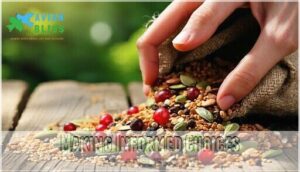
Now that you’ve learned about different bird food types, it’s time to put that knowledge to work when choosing the right nutrition for your feathered friend.
Smart shopping means knowing what to look for and what to avoid, ensuring your bird gets quality ingredients that support their health throughout every stage of life, which is a key aspect of smart shopping.
Evaluating Ingredient Quality
Quality bird food starts with understanding what you’re paying for, not just what’s printed on the package.
**Smart bird nutrition starts with reading beyond flashy packaging to find real value.
Smart shoppers know that ingredient sourcing and processing methods reveal the real story behind those colorful labels.
- Ingredient Sourcing: Look for brands that specify farm origins and supplier relationships
- Processing Methods: Cold-pressed or minimally processed foods retain more nutrients than heat-extruded pellets
- Additive Concerns: Avoid artificial colors, flavors, and chemical preservatives like BHA or BHT
- Freshness Indicators: Check manufacturing dates and choose products with recent production timestamps
- Ethical Considerations: Seek companies committed to sustainable farming and fair trade practices
For high quality options, consider exploring online retailers.
Considering Bird Life Stages
Life-stage feeding transforms your bird’s health from chick to senior years.
Young birds require high-protein Juvenile Food supporting rapid growth, while breeding females need calcium-rich Breeding Diets.
During molting periods, increase protein for feather development.
Senior Birds benefit from easily digestible ingredients and joint-supporting nutrients.
Understanding these changing Molting Needs and Chick Nutrition requirements guarantees superior health throughout your feathered friend’s lifetime, promoting the best possible well-being.
Avoiding Fillers and By-products
Up to 80% of commercial bird food contains worthless fillers like wheat, milo, and red millet that birds reject.
These ingredients to avoid create waste, attract pests, and offer zero nutritional value. Understanding filler identification helps you decode ingredient sourcing practices.
By-product dangers include contamination risks and inconsistent quality. Choosing byproduct free options can help avoid these issues.
Knowledge of label meaning saves money—premium single-ingredient feeds cost less long-term than filler-heavy bargain mixes that birds won’t eat.
Frequently Asked Questions (FAQs)
How to read the ingredients on food labels?
Reading ingredients seems trivial until you’re deciphering cryptic chemical names that sound like alien languages, wondering what you’re actually feeding yourself.
Start with the first ingredient—it’s the most abundant by weight. Ingredients are listed in descending order of quantity.
Look for whole foods like "chicken" rather than vague terms like "meat by-products." Watch for preservatives, artificial colors, and added sugars, which often hide under multiple names.
Check for allergens if you have sensitivities.
What ingredients are in bird feed?
Bird feed typically contains seeds like sunflower, millet, safflower, and nyjer, plus grains such as corn and wheat.
You’ll also find nuts, dried fruits, and sometimes protein sources like mealworms or egg bits.
How to read a pet food label?
Decoding pet food labels is like cracking a secret code that protects your pet’s health.
Start by checking the guaranteed analysis for protein, fat, fiber, and moisture percentages, then examine the ingredient list.
What is high potency bird food?
High potency bird food contains concentrated nutrients, vitamins, and minerals in smaller serving sizes.
You’ll find these premium blends pack more nutritional punch per pellet, supporting your feathered friend’s health with less waste and enhanced energy levels, which can be considered a complete concept for bird care.
How long do bird food ingredients stay fresh?
Surprisingly, stored properly, birdseed stays fresh for 6-12 months.
Though during warm weather, store only what birds consume over two weeks.
You’ll notice quality drops when seeds smell off or look moldy. Trust your nose!
Can expired bird food harm my pet?
Yes, expired bird food can harm your pet.
Spoiled seeds develop mold, rancid oils, and harmful bacteria that cause digestive issues, respiratory problems, or serious illness.
Fresh food guarantees your feathered friend stays healthy and happy.
What storage conditions preserve ingredient quality best?
Store bird food in cool, dry places below 70°F with low humidity. Use airtight containers to prevent oxidation and pest contamination. Avoid sunlight, heat sources, and damp areas like basements.
Do seasonal changes affect ingredient nutritional value?
Summer’s blazing heat can degrade vitamin C in citrus-based bird seed mixes, while winter’s cold preserves fat-soluble vitamins longer.
You’ll notice seasonal ingredient shifts affect nutritional potency, especially in fortified seeds and dried fruits that lose vitamins over time, which is a key factor in maintaining the nutritional value of the bird seed.
Which preservatives are safest for birds?
Natural preservatives like mixed tocopherols (vitamin E) and ascorbic acid (vitamin C) are safest for your feathered friends.
Avoid artificial preservatives like BHA, BHT, and ethoxyquin, which can harm birds’ health over time, using natural alternatives instead.
Conclusion
Ironically, the most sophisticated bird nutritionists often started as overwhelmed shoppers staring at confusing labels.
Now you’re equipped with the knowledge to decode every ingredient, from understanding bird food label ingredients to evaluating guaranteed analysis percentages.
You’ll confidently distinguish between premium whole grains and cheap fillers, ensuring your feathered companion receives the best nutrition.
Remember, quality ingredients directly impact your bird’s health, longevity, and vibrant plumage—making this expertise invaluable.
- https://docs.google.com/forms/d/1GAQr3Kn1cURCVHUA82hAga1Wv8DCH0IuqDLRUrOpN7M/viewform?ts=63f4f653&entry.1515682415=https://www.merriam-webster.com/dictionary%2Funderstanding
- https://premium.britannica.com/mw-unabridged/?utm_source=mw&utm_medium=inline-def&utm_campaign=evergreen
- https://dictionary.cambridge.org/dictionary/english/appreciation-for?topic=understanding-and-comprehending
- https://www.ixl.com/feedback/vocabularydotcom
- https://acronyms.thefreedictionary.com/WOT