This site is supported by our readers. We may earn a commission, at no cost to you, if you purchase through links.
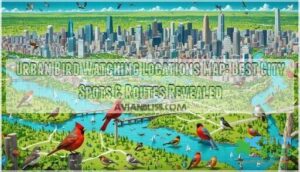 You’ll discover incredible urban bird watching locations map opportunities right in your city’s backyard.
Start with downtown parks where robins and cardinals gather, then explore urban wetlands for herons and ducks.
Don’t overlook rooftops—peregrine falcons often nest on high-rise ledges.
Use apps like eBird to create personalized routes connecting these hotspots.
Early morning visits yield the best results when birds are most active.
Cities actually host over 60% of North America’s bird species, making urban birding surprisingly rewarding.
The secret lies in knowing which green corridors serve as wildlife highways through the concrete maze, and using this knowledge to find the best urban birding locations.
Table Of Contents
- Key Takeaways
- Urban Birding Basics
- City Bird Watching Spots
- Mapping Urban Birding Routes
- Urban Bird Species Guides
- Frequently Asked Questions (FAQs)
- Where can I find a birdingplace?
- Where can I go bird watching?
- What is a local Birding Website?
- Where can I find a good birding spot?
- Where can I find bird watching groups?
- Where can I find bird watching hotspots?
- How to find birding spots?
- What is the best month for bird watching?
- Where are the birding hotspots in NYC?
- How do weather conditions affect urban birding?
- Conclusion
Key Takeaways
- You’ll find urban parks, wetlands, and rooftops offer diverse bird watching opportunities with over 150 species in major cities—use apps like eBird to map prime locations and track real-time sightings.
- You’ll need quality 8×32 or 10×42 binoculars, field guides, and weather protection to successfully spot birds in city environments where concrete creates unique micro-habitats.
- You’ll get best results during early morning visits and peak migration seasons (spring April-May, fall September), when weather conditions like overcast skies improve visibility.
- You’ll discover green corridors and wildlife highways connect fragmented urban habitats, serving as critical pathways for both resident species and the 80% of wetlands that function as migration stopover sites.
Urban Birding Basics
You’ll need the right gear and sharp observation skills to spot birds successfully in urban environments.
Cities offer surprising opportunities to observe diverse species if you know where to look and how to identify their unique behaviors among the concrete jungle.
Essential Birding Gear
You’ll need the right gear to make urban bird watching successful. Start with quality binoculars—8×32 or 10×42 work best for city environments.
Pack a compact field guide for quick species identification. Don’t forget weather protection like a lightweight rain jacket and hat.
Keep your optics clean with a maintenance kit. For a wider selection, consider browsing a site for specialized birding equipment.
Choose a comfortable birding backpack to carry everything while exploring urban birding spots and city bird watching locations near you.
Bird Identification Techniques
Mastering city bird watching starts with recognizing key field marks like beak shape and wing patterns.
Learning bird songs helps identify species before you spot them.
Notice these details:
- Plumage variations between males and females
- Seasonal changes in coloring and behavior
- Behavioral clues like feeding habits
- Size comparisons to familiar urban bird species.
Practice makes perfect when identifying city birds on your birdwatching maps, and it is essential for complete concepts of bird identification.
Urban Habitat Exploration
You can’t spot birds without understanding where they live. Urban environments create unique micro-habitats through Green Infrastructure like rain gardens and Wildlife Corridors connecting fragmented spaces.
Habitat Fragmentation forces species into unexpected areas – check construction sites undergoing Brownfield Restoration for surprising finds. Join Citizen Science projects to map urban bird habitats systematically.
Search "birding near me" to discover local birding spots where urban bird species thrive despite city challenges. Thoughtful planning considers native plant species for local birds.
City Bird Watching Spots
You’ll discover that cities offer surprisingly diverse birding opportunities beyond your typical backyard feeder.
From tranquil park ponds to bustling rooftop gardens, urban environments create unique micro-habitats that attract both resident species and unexpected migrants throughout the year, which can include a variety of diverse bird species.
Park and Garden Locations

City parks and botanical gardens offer prime urban bird habitats where diverse species thrive year-round.
These green spaces attract both resident and Seasonal Park Visitors, making them ideal birding near me locations for spotting everything from common sparrows to migrating warblers. Many enthusiasts enhance these locations with garden bird feeders.
Top Park Features for Bird Watching:
- Garden Bird Feeders – Seed stations and nectar sources draw consistent bird activity
- Park Habitat Diversity – Mixed trees, shrubs, and open areas support different species
- Bird-Friendly Landscaping – Native plants provide natural food and nesting sites
- Garden Bird Photography blinds – Designated viewing areas for close observations
- Urban nature reserves – Protected sections within parks offer undisturbed bird sanctuaries
Urban Wetland Areas

Urban wetlands offer incredible birding hotspots where you’ll discover habitat diversity that supports over 240 bird species.
These urban nature reserves serve as critical bird sanctuaries, especially during migration when 80% function as stopover sites. Despite pollution impact challenges, conservation efforts and wetland restoration programs have boosted bird diversity by 55% in restored areas.
Urban wetlands transform city landscapes into surprising wildlife havens hosting incredible bird diversity.
To enhance your experience, consider visiting during spring and fall migrations when bird activity peaks.
| Wetland Feature | Birding Benefits |
|---|---|
| Seasonal Flooding | Attracts waders and shorebirds during peak migration |
| Protected Zones | 40% more stable bird populations year-round |
| Restoration Sites | 21% increase in migratory bird visitation rates |
Your bird watching map should prioritize urban wildlife areas with boardwalks and birding hotspots that offer interpretive signage. Look for wetlands with buffer plantings and controlled water levels – these birding trails typically host the most diverse species throughout the year.
Rooftop and High-Rise Birding

Elevate your city birdwatching experience by exploring rooftop habitats and high-rise migration corridors.
These urban ecology hotspots offer unique perspectives on bird species identification, especially during peak migration seasons.
Building design features create thermal updrafts that attract raptors and swifts.
Always prioritize bird safety protocols and obtain proper permissions before accessing private rooftops in urban areas.
Mapping Urban Birding Routes
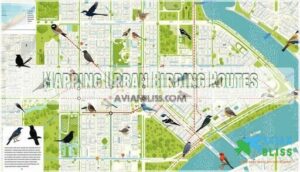
You’ll want to create detailed maps that show prime birding spots, ideal viewing times, and walking routes between locations.
Modern birding apps can track your sightings, share real-time bird activity data, and help you plan efficient routes that maximize your chances of spotting different species throughout the city, using modern technology to enhance the experience.
Creating Customized Maps
While you can’t recreate Central Park in your neighborhood, you can build personalized maps that highlight the best birding cities and accessible birding locations near you.
- Map Customization – Mark specific bird photography spots and bird watching trails with custom icons
- Data Integration – Layer seasonal migration patterns over your favorite locations
- User Interface – Design clean, readable displays for city birds identification
- Accessibility Options – Include wheelchair-friendly paths and Map Sharing features.
Consider using custom birding maps for enhanced detail.
Mobile Apps for Birders
Digital tools transform how you explore city birds identification and discover birdwatching spots.
Top apps like Merlin Bird ID offer App Identification for 10,000+ species, while BirdNET provides Sound Recognition technology processing thousands of daily recordings.
These platforms connect Birding Communities across best birding cities, enabling Data Logging with Offline Functionality.
Many apps also offer bird song learning to help improve identification skills.
Apps help locate urban bird conservation areas and map bird watching trails efficiently.
Urban Bird Species Guides
You’ll recognize many birds as soon as you step outside, from the ubiquitous house sparrow to the flashy cardinal that seems to pose just for photos.
Understanding which species call your city home—and when migrating visitors might drop by—transforms casual walks into exciting treasure hunts for feathered neighbors.
Common Urban Bird Species
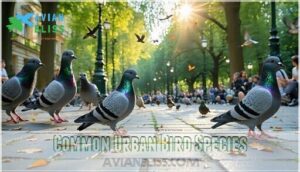
You’ll spot pigeons, sparrows, and crows everywhere in cities.
These hardy species master bird adaptations like scavenging diverse bird diets and flexible nesting habits.
Listen for their distinct vocalizations—pigeons coo, sparrows chirp, crows caw.
Their human interaction skills make urban wildlife viewing perfect for beginner birding urban adventures.
Practice bird watching tips by observing their backyard birding behaviors, supporting urban bird conservation efforts naturally.
Migratory Bird Patterns
Migration Triggers like changing daylight and temperature cues guide millions of birds through urban landscapes twice yearly.
You’ll spot the best urban wildlife viewing during peak migration windows – spring (March-May) and fall (August-October).
Flyway Routes funnel diverse species through cities, creating temporary Stopover Habitats in parks and green spaces.
Celestial navigation aids their journey.
Climate Impacts shift traditional timing, making flexible bird watching tips essential for beginner birding urban success, especially during peak migration windows and with the help of Flyway Routes and understanding of Migration Triggers.
Rare and Endangered Species

Beyond tracking migratory patterns, you’ll discover that urban areas surprisingly shelter 20% of the world’s bird species, including rare and endangered ones facing habitat loss and climate change pressures.
Cities aren’t just concrete jungles—they’re unexpected sanctuaries for one-fifth of Earth’s bird species.
These vulnerable species depend on conservation efforts, breeding programs, and legal protection within city limits. Cities also provide refuge for a surprising amount of urban bird diversity.
Here are three sobering realities about urban rare birds:
- 303 North American bird species have declined since 1970 – many living in your local parks
- 90 "Tipping Point" species lost half their populations – requiring immediate action
- 126 bird species are "lost to science" – not confirmed in over a decade
Urban waterways and green spaces offer essential refuges. Well-managed parks with native vegetation, large trees, and water features support threatened species like Wood Thrush and American Kestrel. Your birdwatching guides should highlight these conservation success stories while urban ecology efforts continue protecting these remarkable survivors in nature’s city sanctuaries.
Frequently Asked Questions (FAQs)
Where can I find a birdingplace?
Ready to explore nature’s symphony?
Use eBird hotspots and Birdingplaces.eu to find local birding areas with maps and descriptions.
These platforms connect you to popular spots where fellow birders report recent sightings and share their discoveries.
Where can I go bird watching?
You’ll find local city parks, nature reserves, and botanical gardens offer excellent bird watching opportunities.
Urban parks provide diverse habitats where birds nest and find food sources, making them perfect starting points for spotting common city species like robins and chickadees year-round.
What is a local Birding Website?
Check out eBird, a real-time online checklist program sponsored by Cornell University and the National Audubon Society.
You’ll find thorough bird guides, life histories, and sounds for identifying local species easily.
Where can I find a good birding spot?
Like a lighthouse guides ships home, city parks, botanical gardens, university campuses, and even cemeteries provide green spaces that attract bird species.
You’ll discover unexpected avian treasures in your neighborhood’s quiet corners.
Where can I find bird watching groups?
You’ll discover local Audubon chapters through their website directory, join Meetup groups for casual birding adventures, or connect with state ornithological societies for serious enthusiasts.
Where can I find bird watching hotspots?
You’ll explore eBird’s hotspot platform and BirdingHotspots.org to locate prime viewing spots.
State parks, nature preserves, and wildlife refuges often become established hotspots where birders report frequent sightings regularly.
These locations can show recent birding activity using eBird’s filtering options to find the best spots.
How to find birding spots?
Just as ancient explorers used maps to navigate uncharted territories, you’ll need reliable resources to find prime birding locations.
Use eBird hotspots, local Audubon chapters, and birding apps to locate the best spots near you.
What is the best month for bird watching?
You’ll spot the most bird species during spring migration, typically April through May. Fall migration in September also offers great variety, though birds aren’t as vocal or colorful then.
Where are the birding hotspots in NYC?
Like compass needles pointing north, Central Park’s Ramble and North Woods guide you to Manhattan’s best birding.
You’ll find Prospect Park’s Lookout Hill and Brooklyn Botanic Garden equally rewarding spots for spotting feathered friends.
How do weather conditions affect urban birding?
Weather dramatically impacts your urban birding success.
Rain drives birds to shelter, wind affects flight patterns, and temperature changes trigger migration.
Overcast skies often produce better sightings than bright sun, while storms concentrate species in protected areas, and this can lead to better sightings.
Conclusion
Research shows that urban environments support over 150 bird species in major cities.
Your urban bird watching locations map becomes a powerful tool for discovering these hidden avian communities.
By combining park visits, wetland explorations, and rooftop observations, you’ll create thorough birding routes that maximize species encounters.
Regular use of mapping apps and field guides transforms any city into an exciting birding destination. You’ve got everything needed to start exploring urban wildlife corridors today, and with this, you can begin discovering these hidden communities.
- https://www.allaboutbirds.org/news/not-just-sparrows-and-pigeons-cities-harbor-20-percent-of-worlds-bird-species/
- https://pmc.ncbi.nlm.nih.gov/articles/PMC4027400/
- https://www.stateofthebirds.org/2022/wp-content/uploads/2022/10/state-of-the-birds-2022-spreads.pdf
- https://www.fws.gov/library/collections/threats-birds
- https://www.ecologyandsociety.org/vol7/iss1/art5/main.html