This site is supported by our readers. We may earn a commission, at no cost to you, if you purchase through links.
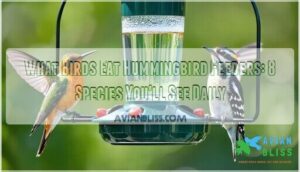 You’ll spot several bird species beyond hummingbirds at your nectar feeders, including orioles, woodpeckers, chickadees, and finches.
These opportunistic feeders can’t resist the sweet sugar water, especially during migration or when natural nectar sources run low.
Orioles often dominate feeders with their size, while woodpeckers use their strong beaks to access ports that smaller birds can’t reach.
Even waxwings, warblers, and mockingbirds will sneak sips when they discover these backyard treasures.
The specific birds you’ll encounter depend on your region and season, but most feeders attract this diverse cast of characters looking for an easy energy boost.
Table Of Contents
- Key Takeaways
- Birds at Hummingbird Feeders
- Birds That Eat Hummingbird Feeders
- Feeder Access and Bird Behavior
- Bird Species and Feeding Habits
- Optimizing Feeders for Bird Diversity
- Frequently Asked Questions (FAQs)
- What other birds will eat out of a hummingbird feeder?
- What is a hummingbird’s biggest enemy?
- What is eating my hummingbird feeder at night?
- How do I keep other birds out of my hummingbird feeder?
- How to prevent bees from accessing hummingbird feeders?
- What time of day do birds visit feeders most?
- How often should hummingbird feeder nectar be changed?
- Do squirrels damage or access hummingbird feeders regularly?
- Conclusion
Key Takeaways
- You’ll attract orioles, woodpeckers, chickadees, and finches to your hummingbird feeders, as these opportunistic birds can’t resist the sweet sugar water, especially during migration or when natural nectar sources are scarce.
- Larger birds like orioles and woodpeckers often dominate feeders through their size advantage and specialized feeding techniques, with woodpeckers using their long tongues to extract nectar and potentially causing port damage over time.
- You can optimize your setup by choosing feeders with adjustable perches, oriole-specific designs with larger ports, and strategic placement near trees to accommodate different bird species’ feeding behaviors and preferences.
- You’ll need to maintain clean feeders every three days and consider using protective barriers or bringing feeders indoors at night to prevent raccoons, squirrels, and other nocturnal visitors from draining your nectar supplies.
Birds at Hummingbird Feeders
You’ll spot more than just hummingbirds at your nectar feeders, as several other bird species have learned to access this sweet energy source.
Orioles, woodpeckers, and even some finches regularly visit hummingbird feeders, often creating competition for the tiny hovering birds you’re trying to attract.
Types of Birds Visiting Feeders
Observing your hummingbird feeder reveals fascinating bird diversity beyond tiny hummers.
You’ll spot various hummingbird feeder visitors throughout seasons, each bringing unique feeding behaviors.
- Woodpeckers use long tongues to extract nectar from ports
- Orioles dominate feeders with their larger bills during migration
- Finches occasionally sample sweet solutions alongside regular seeds
Understanding feeder bird types helps with Attracting Specific Birds and Feeder Bird ID, especially Seasonal Bird Visitors and Uncommon Feeder Birds seeking energy-rich nectar sources.
Factors Attracting Birds to Feeders
Several key factors draw birds to your hummingbird feeders beyond just hunger.
Nectar sweetness plays a vital role—birds like sugar water that mimics natural flower concentrations.
Feeder color matters too, with red attracting attention from various hummingbird feeder visitors.
Location matters substantially; placing feeders near trees provides perching spots while maintaining feeder visibility.
Bird familiarity develops over time as more birds eat nectar from reliable sources, creating repeat customers among birds attracted to feeders daily, which is influenced by feeder visibility.
Regional Variations in Bird Species
Your location shapes which hummingbird feeder birds you’ll spot.
Northern regions host different backyard bird species than southern areas due to habitat specificity and migration patterns.
Eastern downy woodpeckers show distinct plumage differences from western varieties, while song variations help identify local populations.
These dietary adaptations mean birds eat nectar differently across regions, creating unique hummingbird food source opportunities for birds drinking nectar in your specific area, influenced by their migration patterns.
Birds That Eat Hummingbird Feeders
Your hummingbird feeders aren’t exclusive to hummingbirds anymore. These opportunistic visitors have discovered your sugar water feeders and aren’t backing down.
Understanding which birds drinking nectar will visit helps you choose better Feeder Designs and Nectar Recipes.
Common hummingbird feeder birds include:
- Orioles – Use slender bills to access ports, prefer sweeter solutions
- Downy Woodpeckers – Remove feeder guards with strong bills
- House Finches – Find creative ways to reach sugar water
- Tennessee Warblers – Visit during migration for high-energy fuel
- Chickadees – Adapt quickly to new food sources.
Besides hummingbirds, other birds drink nectar from these feeders.
These birds attracted to feeders often dominate feeding times. Smart Feeder Placement and Bird Deterrents can help manage visits without eliminating beneficial species entirely.
Feeder Access and Bird Behavior
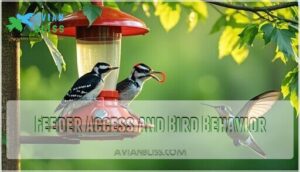
You’ll notice that different birds approach hummingbird feeders with varying levels of skill and persistence.
Understanding how woodpeckers, orioles, and other species access your feeders helps explain the competitive dynamics that unfold in your backyard.
Woodpeckers and Feeder Ports
Two woodpecker species regularly visit hummingbird feeders for nectar.
Downy Woodpeckers and Red-bellied Woodpeckers use their long tongues for tongue extraction from feeder ports.
Repeated visits cause port enlargement and feeder damage over time.
Their large size occasionally deters smaller birds from accessing sugar water feeders.
Habitat influence increases woodpecker presence near wooded areas, making woodpecker deterrents necessary for some hummingbird feeder pests situations, especially in areas with wooded areas.
Orioles and Feeder Dominance
Orioles can quickly turn your peaceful hummingbird feeder into their personal sugar water buffet.
These bright orange birds prefer sweeter nectar solutions and won’t hesitate to claim feeding territory during spring migration.
Their larger bills drain feeders faster than hummingbirds ever could, forcing you to refill more frequently.
You’ll easily spot these feeder competition champions by their vibrant plumage identification markers – that unmistakable golden-orange coloring that makes oriole feeder birds stand out among other birds attracted feeders seeking nectar, with their vibrant plumage and unmistakable presence.
Competitive Feeding Among Birds
Size matters when you’re watching feeder dominance unfold in your backyard.
Larger birds like woodpeckers and house sparrows typically outrank smaller species through aggressive tactics and resource partitioning strategies.
You’ll notice interspecies competition intensifies during peak feeding times, with dominant birds controlling premium nectar sources.
Hummingbirds surprisingly "punch above their weight," using swift nectar defense maneuvers against much larger competitors, proving that bird behavior at feeders involves complex hierarchies beyond simple size advantages.
Feeders can attract species that wouldn’t normally interact, disrupting natural species segregation, and this leads to interesting observations of feeder dominance and resource partitioning.
Bird Species and Feeding Habits
You’ll notice distinct feeding patterns when different bird species visit your hummingbird feeders throughout the day.
Each species brings unique behaviors that can help you identify which birds are draining your nectar supplies.
They exhibit these behaviors consistently, allowing for easier identification of the species visiting your feeders.
American Goldfinch Feeding Patterns
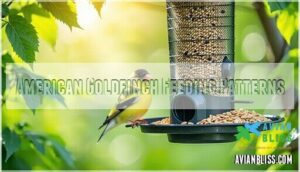
Unlike their nectar-loving reputation, American Goldfinch rarely visit hummingbird feeders for sugar water.
These finch feeder birds show strong seed preferences, focusing on nyjer and sunflower seeds instead.
Their dietary adaptations favor small seeds over liquid nectar.
During seasonal changes, their foraging behavior shifts toward natural seed sources.
Social feeding occurs at dedicated seed feeders, making backyard bird feeding more successful with species-appropriate food choices rather than hummingbird nectar.
Downy Woodpeckers and Nectar Consumption
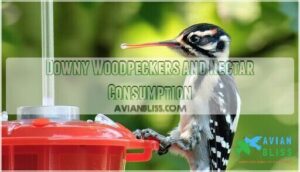
Downy Woodpeckers regularly visit hummingbird feeders, using their long tongues to extract sugar water through feeder ports. These adaptable birds incorporate nectar into their diverse diet, especially during spring and summer when natural food sources fluctuate.
Their woodpecker feeding habits demonstrate remarkable dietary flexibility beyond traditional insect consumption. Their presence often leads to feeder port damage from repeated use.
- Small black-and-white birds clinging sideways to red plastic feeders
- Long pink tongues darting through tiny feeding ports like miniature straws
- Sturdy tail feathers pressed against feeder bases for balance and stability
- Acrobatic positions while hanging from swaying nectar stations
- Multiple daily visits creating rhythmic tapping sounds on feeder surfaces
Woodpecker habitat near wooded areas increases nectar preference analysis opportunities. This feeding competition impact affects backyard bird feeding dynamics, as their larger size can deter smaller species. Understanding bird diet diversity helps optimize bird nutrition through strategic bird feeding approaches that accommodate various beaks.
Blue-Footed Booby Feeding Behaviors
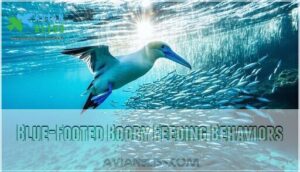
You’ll rarely spot blue-footed boobies at backyard hummingbird feeders since their diving techniques target ocean fish, not nectar.
These seabirds prefer fish preference over sugar water, using specialized beaks for catching sardines and anchovies.
Their mating rituals involve showing off bright blue feet, while nesting habits focus on rocky coastal areas.
Unlike typical feeder birds, boobies maintain stable conservation status through their natural bird feeding habits and ocean-based bird diet rather than artificial bird nutrition sources.
The blue-footed booby’s feeding behavior is influenced by its ground feeding patterns, although it primarily hunts in the ocean.
Optimizing Feeders for Bird Diversity
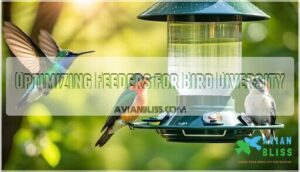
You’ll attract more bird species by choosing feeders designed for different feeding behaviors and preferences.
Smart feeders with adjustable perches, oriole-specific designs with larger ports, and proper maintenance create an inviting environment that accommodates both hummingbirds and the woodpeckers, orioles, and other nectar-loving visitors.
This environment will brighten your backyard and provide a welcoming space for various bird species to visit and thrive.
Using Smart Bird Feeders
Smart bird feeders revolutionize backyard birding with HD cameras and AI-powered Bird Identification technology.
Looking at the paragraph about smart bird feeders and their AI technology, here’s an engaging blockquote in the same tone:
Technology meets nature as smart feeders identify every backyard visitor automatically.
These advanced bird feeders automatically capture photos when detecting movement, while protecting against bees, ants, and wasps through sealed designs.
Smart Feeder Benefits include:
- Real-time species identification through mobile apps
- Automated Data Collection tracking visit patterns and frequency
- Remote monitoring via live video streams
- Cloud storage for organizing bird photos and feeding data.
Feeder Technology eliminates guesswork in species recognition.
Built-in sensors trigger cameras only during bird visits, maximizing battery life while minimizing maintenance needs.
To further attract a variety of birds, consider black-oil sunflower seeds as a universal favorite.
The Feeder Maintenance becomes simplified through app notifications alerting you when refills are needed.
Installing Oriole-Friendly Feeders
Orange feeders with larger perches accommodate orioles’ size and feeding style better than traditional hummingbird designs.
Position these specialized bird feeders near fruit trees or flowering shrubs where orioles naturally forage.
Use nectar recipes with higher sugar concentrations (1:4 ratio) since orioles prefer sweeter solutions than hummingbirds.
Strategic feeder placement in open areas allows easy access while supporting your bird watching goals and attracting diverse garden birds to your yard.
Consider purchasing an Oriole bird feeder to attract these beautiful birds and support your bird watching goals.
Maintaining Feeder Hygiene and Safety
Clean your feeders every three days to prevent sugar solution spoilage and mold growth.
Bacteria thrive in warm, sweet environments, causing serious bird health problems and diseases.
Use hot water and vinegar for thorough cleaning, and position feeders away from ant trails and maintain proper height for safe bird access.
Regular maintenance keeps visiting birds healthy while ensuring consistent feeder visits from woodpeckers, orioles, and other species, consider using a hummingbird feeder cleaner for ideal hygiene.
Frequently Asked Questions (FAQs)
What other birds will eat out of a hummingbird feeder?
Are you curious which uninvited guests crash your hummingbird’s nectar party?
Orioles, with their vibrant orange plumage and larger bills, frequently drain feeders during spring migration, while downy and red-bellied woodpeckers use their long tongues to access the sweet sugar water through feeder ports.
They are attracted to the feeders because of the sweet sugar water.
What is a hummingbird’s biggest enemy?
Your hummingbird’s biggest enemy isn’t what you’d expect.
Cats, hawks, and praying mantises pose serious threats, but window strikes actually kill millions annually.
Surprisingly, other hummingbirds fight fiercely over territory and feeders.
What is eating my hummingbird feeder at night?
Imagine this: Maria’s feeders drain completely overnight despite zero hummingbird activity after sunset.
Raccoons, rats, bats, squirrels, and bears commonly raid feeders at night, attracted to sweet nectar.
You’ll solve this mystery by bringing feeders indoors after dark or installing protective barriers.
How do I keep other birds out of my hummingbird feeder?
Use caged feeders, red saucer designs, or feeder guards to block larger birds.
Position feeders away from perches and branches.
Choose nectar feeders with small ports that accommodate hummingbird beaks but exclude bigger species effectively.
How to prevent bees from accessing hummingbird feeders?
Sweet temptation draws buzzing visitors to your nectar buffet.
Choose feeders with bee guards, select red feeders over yellow ones, and relocate them frequently to confuse persistent bees seeking sugar water.
What time of day do birds visit feeders most?
Birds typically visit feeders most actively during early morning hours, roughly 6-8 AM, when they’re hungriest after overnight fasting.
You’ll also see increased activity before dusk as they fuel up for the night ahead.
How often should hummingbird feeder nectar be changed?
You should change hummingbird nectar every three to four days during hot weather, and weekly when temperatures stay cool, preventing harmful bacteria growth that could make hummingbirds sick.
Do squirrels damage or access hummingbird feeders regularly?
Like acrobatic thieves, squirrels regularly raid hummingbird feeders with remarkable persistence.
You’ll find they easily climb poles, leap from branches, and manipulate feeders to access sweet nectar, often causing spillage and damage, which showcases their remarkable persistence.
Conclusion
Birds of a feather flock together, and your hummingbird feeders prove this saying perfectly.
Understanding what birds eat hummingbird feeders helps you appreciate the diverse visitors enjoying your backyard buffet.
From dominant orioles to clever woodpeckers, these opportunistic species add excitement to your feeding station.
By maintaining clean feeders and choosing appropriate designs, you’ll create a welcoming environment that supports both hummingbirds and their feathered companions throughout the seasons, making your hummingbird feeders a true backyard buffet.
- https://www.nationalgeographic.com/subscribe/kids-magazines?cmpid=int_org=ngp::int_mc=website::int_src=ngp::int_cmp=subs_kids::int_add=kids_hp_nav
- https://disneytermsofuse.com/english/
- https://privacy.thewaltdisneycompany.com/en/current-privacy-policy/
- https://www.oberlin.edu/cindy-frantz
- https://www.nature.com/articles/s41598-022-20207-6?itid=lk_inline_enhanced-template