This site is supported by our readers. We may earn a commission, at no cost to you, if you purchase through links.
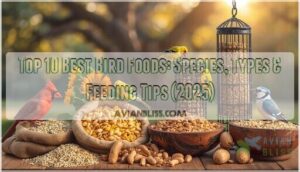
Your backyard isn’t just outdoor space—it’s a rest stop on an ancient migratory highway where exhausted travelers need the right fuel to survive. The difference between high-quality bird food and cheap filler can determine whether a cardinal builds its nest in your oak tree or moves on to a neighbor’s yard.
Fat-rich sunflower seeds power long flights, protein rebuilds worn feathers, and specific seed shapes match the bill structures of different species. Blue jays can’t crack the tiny nyjer seeds that finches devour, while woodpeckers ignore millet that doves sweep up eagerly.
Choosing the best bird food means understanding these preferences and nutritional needs, then matching quality products to the species you want to attract.
Table Of Contents
- Key Takeaways
- What Makes Bird Food The Best?
- Most Popular Bird Food Types
- Top 10 Best Bird Food Products
- 1. Wagner’s Black Oil Sunflower Bird Seed
- 2. C&S Orange Delight Suet Cakes
- 3. Wagner’s Nyjer Seed Wild Bird Food
- 4. Wingfield Farm Virginia In Shell Peanuts
- 5. Kaytee Wild Bird Black Oil Sunflower
- 6. Kaytee Nyjer Wild Bird Food Seed
- 7. Morning Song Dove and Ground Food
- 8. Wagner’s Safflower Seed Wild Bird Food
- 9. Kaytee Nut and Fruit Wild Bird
- 10. C and H Pure Cane Sugar
- Matching Bird Food to Specific Species
- Tips for Feeding Birds Safely and Effectively
- Frequently Asked Questions (FAQs)
- What is the best food to feed birds?
- What are some great fruits to eat?
- What are the different types of bird food?
- What is the best bird food for an outdoor aviary?
- What is the best bird food for the RSPB?
- What do birds eat?
- What is the best food to feed a bird?
- What is the best all around bird food?
- What is the best and worst bird seed?
- What birds like most to eat?
- Conclusion
Key Takeaways
- Black oil sunflower seeds attract the widest variety of backyard birds (over 25 species) because their thin shells are easy to crack and they contain 28% fat and 15% protein, making them the most versatile choice for year-round feeding.
- Matching seed types to bird species significantly increases feeder success—finches prefer tiny nyjer seeds, cardinals choose safflower to avoid competition from squirrels and grackles, while woodpeckers and jays need high-energy options like suet and peanuts.
- Premium bird food with high-quality ingredients directly impacts bird health by strengthening immune systems, accelerating feather regrowth after molting, and providing better energy reserves for migration and breeding compared to cheap filler seeds.
- Clean your feeders every two weeks with a 10% bleach solution to prevent disease outbreaks like conjunctivitis, and store seeds in sealed containers below 59°F to maintain freshness and avoid mold or aflatoxin contamination.
What Makes Bird Food The Best?
The best bird food isn’t just about what’s convenient for you—it’s about what keeps your backyard visitors healthy and coming back. Different species have specific nutritional needs, and the quality of ingredients can make a real difference in their energy levels and overall well-being.
Let’s look at what separates premium bird food from the cheap stuff that often ends up scattered on the ground.
Nutritional Value for Backyard Birds
The best nutrition starts with understanding what fuels your feathered friends. You’ll want to focus on fat content, protein, and carbohydrates—the building blocks of avian health. These nutrients support everything from flight to feather growth.
Key nutrients in quality bird food include:
- Fat content: 27-45% in sunflower seeds and peanuts for energy reserves
- Protein: 14-30% across seed types supporting muscle and feather development
- Carbohydrates: 17-39% providing quick energy during seasonal dietary shifts
- Vitamins B and E: Essential for metabolism and immune function
- Minerals: Calcium, iron, and potassium strengthening bones and overall health
Studies show supplemental feeding increases antioxidant levels and accelerates feather growth in wild songbirds. Many birds, including blackbirds love them, and are known to eat sunflower seeds.
Bird Species Preferences and Dietary Needs
Your backyard birds have distinct tastes shaped by beak size and foraging style. Seed size matters—Blue Jays prefer large striped sunflower seeds, while finches flock to tiny nyjer.
Urban corvids thrive on peanuts and human-derived foods, whereas rural feeding stations attract seed specialists. Urban corvids exhibit increased tolerance of humans.
Nectar feeders bring hummingbirds, but design determines which species visit.
Processed foods rarely compete with unprocessed seeds, which consistently draw more species and individuals to your feeders.
Importance of High-Quality Ingredients
Premium ingredients deliver more than calories—they shape bird health and survival. High-quality seed purity reduces contamination risks, while nutrient density bolsters immunity and feather growth. Sourcing transparency gives you confidence in what you’re offering.
5 Health Benefits of First-Rate Ingredients:
- Stronger immune systems resist disease
- Faster feather regrowth after molting
- Higher true seed percentage means less waste
- Reduced aflatoxin exposure protects organ function
- Better energy reserves for migration and breeding
Factors Affecting Bird Food Selection
Your bird’s choice of seed isn’t random—it reflects seasonal influences, food morphology, and energetic trade-offs. During cold snaps, birds prioritize calorie-dense options like peanuts. Bill shape determines which seed types each species can handle efficiently.
Feeder location and social factors also guide seed selection, as strategically placed feeders increase visitation. Understanding these dynamics helps you match types of birdseed to the species you’re attracting.
Most Popular Bird Food Types
Not all bird foods are created equal, and some types consistently outperform others in attracting a wide variety of species to your backyard. The most popular options share common traits: high nutritional value, broad appeal across bird families, and year-round availability.
Let’s look at the top bird food types that will bring the most feathered visitors to your feeders.
Hulled Sunflower Seeds and Their Benefits
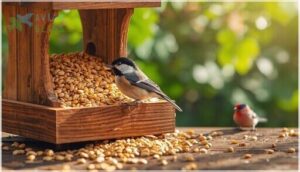
You’ll find hulled sunflower seeds—sometimes called sunflower hearts or chips—at the top of nearly every bird lover’s shopping list for good reason. These shell-free kernels pack around 50–55% fat and 20–25% protein, delivering quick energy that keeps finches, chickadees, nuthatches, and woodpeckers coming back.
Without messy hulls littering your yard, cleanup practically vanishes, though you’ll pay roughly double compared to in-shell seeds.
Black Oil Sunflower Seeds for Bird Diversity
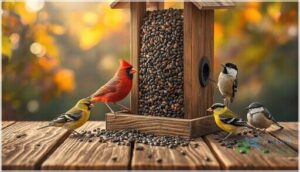
With a thin shell that small beaks crack easily, black oil sunflower seeds draw over 25 species—including cardinals, finches, chickadees, and nuthatches—to your feeders. Their 28% fat and 15% protein fuel migration and winter survival, making them the best choice for bird diversity.
- Hopper, tube, and tray feeder types all work beautifully
- Shell accessibility welcomes weaker-beaked visitors
- Nutritional benefits support year-round population density
- Seed preferences align across ground and perching species
Peanuts and High-Energy Options
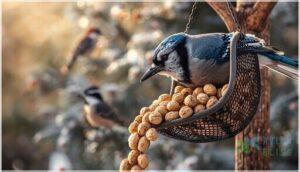
At roughly 567 kilocalories per 100 grams, peanuts deliver considerable energy density that fuels jays, woodpeckers, nuthatches, and chickadees through harsh winters. Their 26% protein and 49% fat outpace most seeds, making them high-energy food for birds when insects disappear.
Offer only human-grade varieties in mesh feeders for safe peanut feeding—aflatoxin-contaminated nuts harm backyard bird feeding success.
Suet for Winter and Insectivorous Birds
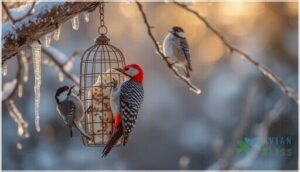
When temperatures plunge, suet delivers roughly 9 kilocalories per gram—more than double most seeds—helping woodpeckers, nuthatches, and chickadees maintain body heat through freezing nights. Rendered animal fat is especially valuable for insectivore birds that lose their natural prey to winter’s grip.
Hang wire-cage feeders near trees, but swap to no-melt formulas in warm months when traditional suet turns rancid and coats feathers.
Nyjer, Millet, and Safflower Seeds
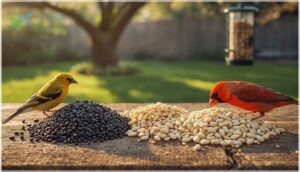
You’ll attract goldfinches and siskins with energy-rich Nyjer seed—35 to 40 percent oil—using tube feeders with tiny ports.
Millet draws doves and sparrows to the ground, while safflower’s slightly bitter flavor lets cardinals and grosbeaks feast without squirrels or grackles muscling in.
These three seed types give you precise control over which species visit your yard.
Top 10 Best Bird Food Products
Now that you understand what birds need and which seed types work best, it’s time to look at specific products you can buy.
The following list includes ten bird foods that meet high nutritional standards and attract a wide variety of species. Each product has a different purpose, so you can choose based on the birds you want to see in your yard.
1. Wagner’s Black Oil Sunflower Bird Seed
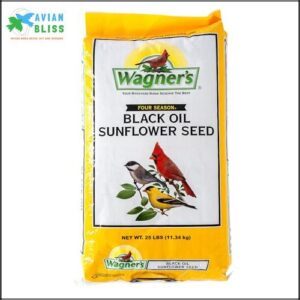
Wagner’s Black Oil Sunflower Seeds stand out as the leading choice in bird food, and Wagners delivers superior seed quality with its 100% pure offering.
You’ll attract cardinals, chickadees, finches, nuthatches, and woodpeckers thanks to the high energy content—24% crude fat and 14% protein—that keeps your feathered visitors thriving year-round. The thin shells make feeding easier for small-beaked species.
The impressive market popularity, with over 8,000 units sold monthly, speaks to its proven effectiveness. Your feeding strategies become simpler when one all-purpose sunflower seed does it all.
Best For: Backyard bird enthusiasts who want to attract a wide variety of songbirds with a high-energy, premium seed that works in multiple feeder types.
- High oil and protein content (24% fat, 14% protein) provides excellent energy for birds year-round, especially during winter and migration
- Thin shells make it easy for small-beaked birds like chickadees and finches to crack open and eat
- Attracts the widest variety of popular bird species including cardinals, woodpeckers, and nuthatches
- Some bags may contain wood chips or other debris mixed in with the seeds
- The 25-pound bag lacks a resealable closure, making it harder to keep seeds fresh after opening
- May attract squirrels and other unwanted wildlife to your feeders
2. C&S Orange Delight Suet Cakes
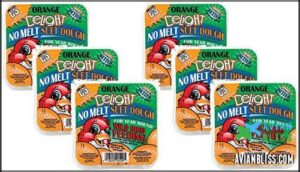
If you’re looking beyond seeds, C&S Orange Delight Suet Cakes offer a high-energy alternative that brings woodpeckers, bluebirds, and orioles right to your backyard.
Each 11.75-ounce cake contains 15% fat and 6% protein, mixing rendered beef suet with roasted peanuts and papaya for balanced nutrition. The orange flavor benefits fruit-loving species, while the no-melt formula stays solid up to 100°F, ensuring feeding durability through summer heat.
At around $2.79 per cake, this ingredient analysis shows you’re getting quality suet that attracts diverse bird species year-round.
Best For: Backyard birders who want to attract fruit-loving and insect-eating species like woodpeckers, orioles, and bluebirds with a high-energy, year-round feeding option that holds up in warm weather.
- High fat content (15%) provides essential energy for birds during migration, nesting, and cold months
- No-melt formula stays solid up to 100°F, making it reliable for summer feeding without mess or waste
- Attracts a diverse range of species beyond typical seed eaters, including orioles, bluebirds, and tanagers
- May arrive broken or damaged if not packaged carefully during shipping
- Some users report their local birds don’t prefer the orange flavor compared to other suet varieties
- Contains potential allergens (tree nuts, milk, fish, shellfish) which may be a consideration for handling
3. Wagner’s Nyjer Seed Wild Bird Food
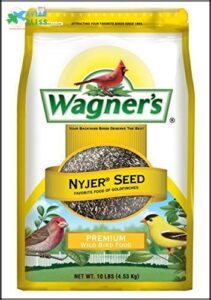
For finch enthusiasts, Wagner’s Nyjer Seed delivers specialized nutrition that goldfinches, pine siskins, and purple finches can’t resist. Each 10-pound bag contains roughly 150,000 sterilized seeds, preventing unwanted sprouting beneath your feeders.
You’ll appreciate the extra-clean formula, which reduces dust and waste while providing high fat and protein content essential for feather health.
At $1.50-$2.50 per pound, this thistle seed offers excellent feeder efficiency, lasting up to 12 weeks at active stations. The non-germinating design ensures maximum waste reduction, and proper storage maintains seed freshness for 6-12 months.
Best For: Bird watchers who want to attract finches like goldfinches and pine siskins to their yard without dealing with messy seed shells or unwanted plant growth.
- Contains 150,000 seeds per 10-pound bag, providing excellent value and long-lasting feeder supply that can sustain active feeding stations for up to 12 weeks
- Extra-clean, sterilized seeds prevent germination and minimize waste, keeping your yard tidy while deterring rodents and larger unwanted birds
- High fat and protein content specifically formulated for finch nutrition, resulting in 2-3 times more goldfinch and pine siskin visits compared to mixed seed blends
- Higher cost at $1.50-$2.50 per pound compared to domestic seed blends, largely due to international sourcing
- Requires specialized finch feeders with small holes and tiny perches, which means an additional equipment investment if you don’t already own one
- Some customers report occasional packaging quality issues like small leaks in bags, and feeders need cleaning every 2 weeks to prevent mold in damp conditions
4. Wingfield Farm Virginia In Shell Peanuts
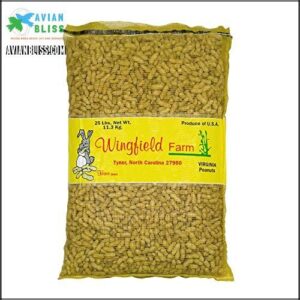
If you’re ready to attract blue jays, woodpeckers, and titmice, Wingfield Farm’s 25-pound bag of Virginia in-shell peanuts delivers what backyard birds need most. These raw, unsalted peanuts pack roughly 45% fat and 24% protein, giving your feathered visitors the high-energy fuel they crave during cold snaps and breeding season.
You’ll appreciate the aflatoxin testing and quality controls that keep these peanuts safe for wildlife. Store them in airtight, rodent-proof containers away from moisture, and watch as jays and corvids make your yard their regular stop.
Best For: Backyard wildlife enthusiasts who want to attract jays, woodpeckers, and other larger birds with a high-energy, bulk food source that’s safe and cost-effective for year-round feeding.
- High in fat (45%) and protein (24%), providing essential energy during winter and breeding seasons when birds need it most.
- Attracts a diverse range of species including blue jays, woodpeckers, crows, and titmice, plus squirrels and deer if you’re feeding multiple types of wildlife.
- Aflatoxin-tested and unsalted, meeting wildlife safety standards with quality controls that protect bird health.
- Requires proper storage in airtight, rodent-proof containers to prevent mold, moisture damage, and pest infestations.
- The 25-pound bulk size may be too much for casual feeders or those with limited storage space.
- Not suitable for human consumption, and pricing can add up for those feeding wildlife frequently or on a large scale.
5. Kaytee Wild Bird Black Oil Sunflower

Kaytee’s 5-pound bag of black oil sunflower seeds brings the same high-energy nutrition that makes this seed type so effective. You’re getting 30% crude fat and 15.5% crude protein—fuel that cardinals, chickadees, and finches rely on through winter and nesting. The thin hulls let smaller birds crack them easily, and the triple-cleaning process keeps debris low.
Market trends show black oil sunflower seeds remain the top choice nationwide, and Kaytee’s quality ratings average 4.8 out of 5, reflecting strong bird attraction and seed quality across hopper, tube, and tray feeders.
Best For: Backyard birders who want a reliable, high-energy seed that attracts a wide variety of songbirds year-round, especially cardinals, chickadees, and finches.
- High oil and protein content (30% fat, 15.5% protein) provides essential energy for birds during cold months and nesting season
- Triple-cleaned with minimal debris, reducing waste and mess at feeders
- Thin hulls make it easy for smaller songbirds to crack and consume
- May attract squirrels and other unwanted animals to your feeders
- Some users find the price point higher than budget alternatives
- 5-pound bag size may be smaller than expected for those feeding multiple birds regularly
6. Kaytee Nyjer Wild Bird Food Seed
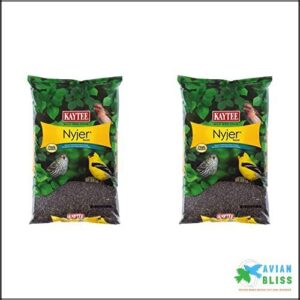
You’ll find 35% crude fat and 18% crude protein in Kaytee’s Nyjer Wild Bird Food Seed, giving goldfinches, pine siskins, and redpolls the high-energy fuel they need year-round. The hull-free formula means zero mess under your feeders and no sprouting in your yard—pure waste reduction.
Use mesh or tube feeders to prevent seed loss. Some buyers report occasional twigs that cause feeder clogging, so check batches before filling.
Nyjer’s small size and oil content make it unbeatable for attracting finches to your feeding station.
Best For: Backyard birders who want to attract goldfinches, pine siskins, and other small finches while keeping their feeding area clean and free of messy seed hulls.
- 100% edible with no hulls means zero mess, no sprouting, and less waste under feeders
- High energy content with 35% crude fat and 18% crude protein keeps finches well-fed year-round
- Concentrated formula lasts longer in feeders, saving you money and refill trips
- Some batches contain twigs that can clog mesh or tube feeders
- Quality control varies, with users reporting inconsistent levels of debris
- Premium pricing reflects the specialty nature and import cost of Nyjer seed
7. Morning Song Dove and Ground Food
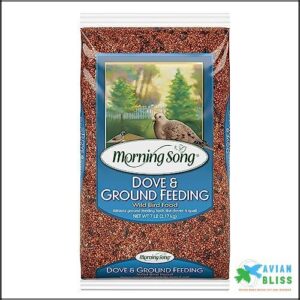
With its white proso millet and black oil sunflower mix, Morning Song Dove and Ground Food draws mourning doves, quail, sparrows, and juncos right to your platform or low table feeder. You’re getting 7 pounds of unflavored seed that ground-feeding birds devour quickly—some eat up to 20% of their body weight daily.
The blend holds a 4.4 out of 5 stars from over 880 reviews, proving its consumer satisfaction. Just note that small seeds may slip through mesh feeders, and cracked corn additions could attract chipmunks alongside your target species.
Best For: Backyard birders who want to attract ground-feeding species like mourning doves, quail, sparrows, and juncos with a high-quality seed blend designed for platform or table feeders.
- Strong 4.4-star rating from 880 reviews shows solid performance and customer satisfaction across different backyard environments.
- White proso millet and black oil sunflower combo delivers both quick energy and sustained nutrition for ground feeders’ high metabolic needs.
- Affordable pricing at $9–15 per 7-pound bag with wide availability and free shipping options from major retailers.
- Small seeds can fall through mesh-style platform feeders, leading to waste if you don’t use a solid tray.
- Birds may consume the food quickly—up to 20% of body weight daily—requiring frequent refills and higher ongoing costs.
- May attract unwanted visitors like chipmunks or squirrels to your feeding area, especially if cracked corn is included.
8. Wagner’s Safflower Seed Wild Bird Food
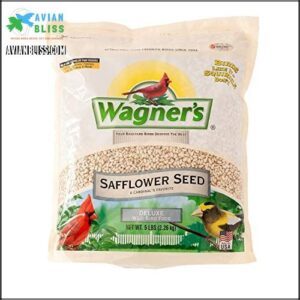
Cardinals love the slightly bitter punch of safflower seeds, and that’s exactly why Wagner’s Safflower Seed Wild Bird Food shines as a cardinal attractant. You’re also drawing chickadees, titmice, and grosbeaks while squirrels and grackles back off—squirrel deterrence works because the taste doesn’t appeal to them.
This 5-pound bag delivers 17% crude protein and 25% crude fat, giving wild birds the energy they need. Use it in tube or platform feeders, and you’ll notice fewer “feeder hogs” competing for space.
Market positioning reflects its premium, single-ingredient focus on attracting birds you actually want.
Best For: Backyard birders who want to attract cardinals, chickadees, and other songbirds while keeping squirrels and aggressive birds like grackles away from their feeders.
- Cardinals and songbirds love the taste while squirrels and pest birds like grackles typically avoid it, giving you more control over who visits your feeder.
- High energy content with 25% crude fat and 17% protein helps birds stay active and warm, especially during winter months.
- Single-ingredient formula means less waste and mess compared to mixed blends with filler grains that birds just toss aside.
- Some customers have reported receiving bags with torn or damaged packaging.
- The hard shells require strong-billed birds to crack them, so it won’t work well for smaller soft-billed species.
- At $11.98 for 5 pounds, it’s pricier than basic mixed birdseed blends you’ll find at most stores.
9. Kaytee Nut and Fruit Wild Bird
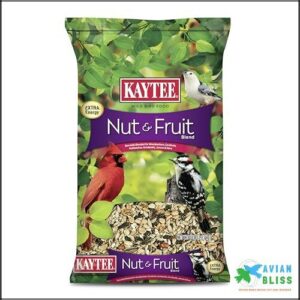
When you want to pull in woodpeckers, chickadees, and nuthatches, Kaytee Nut & Fruit Blend delivers. This premium seed mix combines oil sunflower, peanuts, raisins, and cherries—food types that target species actually crave.
Nutritional analysis shows 30.5% crude fat, making it one of the highest energy density options among bird food blends. You’ll find it in 5 lb and 10 lb packaging formats, and consumer feedback confirms cardinals and grosbeaks visit feeders more often.
The fruit pieces add visual appeal while the nut-fruit blend keeps visits longer.
Best For: Backyard birders who want to attract premium songbirds like woodpeckers, cardinals, and nuthatches with a high-energy, nut-and-fruit blend that keeps birds visiting longer.
- High energy density at 30.5% crude fat—significantly more than standard seed mixes—ideal for supporting birds during cold weather, migration, or breeding seasons
- Attracts a variety of desirable species including cardinals, chickadees, woodpeckers, and grosbeaks with its nut-forward formula (oil sunflower, peanuts, raisins, cherries)
- Year-round feeding option backed by 150 years of Kaytee expertise, with proven appeal in consumer reviews showing increased feeder activity
- Higher price point at $13.98 for 5 lb compared to economy seed blends, which may add up for frequent feeders
- Birds consume it quickly due to its palatability, requiring more frequent refills than less-preferred mixes
- Fruit pieces can potentially clog certain feeder types, particularly those with smaller ports or mesh designs
10. C and H Pure Cane Sugar
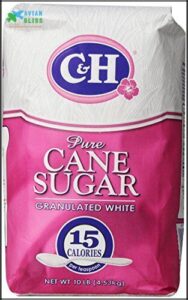
Hummingbirds need nectar that mirrors nature, and C&H Pure Cane Sugar delivers that standard. When you mix four parts water to one part sugar, you create safe homemade hummingbird food following ornithological guidelines that stress cane sugar purity over beet sugar alternatives.
The National Audubon Society confirms this sugar brand preference, noting proper nectar ratios prevent metabolic stress. You must maintain feeder solution hygiene by changing nectar every two to three days—daily in heat—to stop bacterial growth. Never add coloring or honey; plain white sugar keeps hummingbirds healthy year-round.
Best For: Bird enthusiasts who want to make safe, affordable hummingbird nectar that matches natural flower composition and meets expert ornithological standards.
- Recommended by the National Audubon Society as the gold standard for hummingbird feeders due to its high purity and similarity to natural nectar
- Large 10-pound bag offers excellent value at $17.90, giving you months of feeder refills without frequent store trips
- Granulated crystals dissolve easily in water, making it simple to prepare the correct 4:1 ratio for healthy bird feeding
- Not labeled organic or non-GMO, which some environmentally-conscious birders might prefer
- 10-pound quantity requires adequate storage space and may be too much for casual users with just one or two feeders
- Plain packaging means you’re paying for function over aesthetics, though this doesn’t affect the sugar’s performance
Matching Bird Food to Specific Species
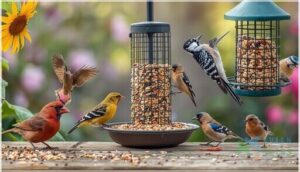
Different bird species have different dietary preferences, and matching the right food to the right bird makes all the difference. When you know what each species needs, you can attract specific visitors to your yard and keep them healthy year-round.
Here’s a breakdown of the best food choices for the most common backyard birds.
Seed Choices for Finches, Cardinals, and Grosbeaks
You’ll want to match seed types to your feeder visitors for better results. Finches show up at Nyjer seed feeders about 74% of the time, while cardinals prefer safflower at rates near 65%. Grosbeaks lean toward black oil sunflower seeds, choosing them over 68% of the time.
Adding hulled sunflower chips boosts finch visits by 23%, and mixed blends keep all three species coming back consistently.
Best Foods for Woodpeckers and Chickadees
Woodpeckers and chickadees thrive on suet and peanuts, which deliver concentrated energy during cold months. Black oil sunflower seeds remain their year-round favorite, with chickadees selecting them over 50% of the time.
Suet blocks with nuts attract both species, boosting occupancy above 60% in winter. Best feeder placement near shrubs reduces predator disturbance by 35%, supporting mixed-species feeding behavior and healthier backyard populations.
High-Energy Options for Jays and Corvids
Jays are powerhouse foragers with a taste for peanuts in the shell, black oil sunflower seeds, and suet—all packed with dietary fats that fuel their energy-intensive foraging behavior. Peanut preferences run strong in these birds, which cache food at impressive rates.
Keep in mind that offering this bird food can boost local population density, potentially affecting ecosystem impact by drawing corvids away from songbird nests.
Protein-Rich Foods for Bluebirds and Robins
Bluebirds and robins thrive on insect protein sources like mealworms, which deliver up to 50% protein and support nestling growth with faster development and stronger immune response.
During breeding season, you can supplement their diet with egg-based foods or suet enriched with insects. These foods for insectivore birds mirror their seasonal prey diversity—beetles, caterpillars, and earthworms—while peanuts hearts and fruit round out their nutritional needs year-round.
Attracting Hummingbirds and Fruit-Eating Birds
You’ll attract hummingbirds best with nectar mixed at 20% sugar concentration—roughly one part white sugar to four parts water—paired with red feeders that mimic flower signals.
For fruit-eating birds like orioles, offer orange halves and grape jelly in spring, then place dark berries, cherries, or apple slices to draw robins and waxwings year-round, building a backyard that accommodates both nectar lovers and frugivores.
Tips for Feeding Birds Safely and Effectively
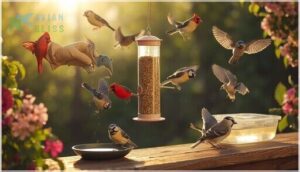
Feeding birds isn’t just about tossing seed into a feeder and calling it a day. The way you offer food, maintain your feeding stations, and store your supplies directly impacts bird health and which species visit your yard.
Let’s walk through the key practices that keep your backyard birds safe, well-fed, and coming back season after season.
Choosing The Right Feeders for Each Seed Type
You’ll get better results if you match your bird feeders to the seed types you’re offering. Tube feeders work best for sunflower seeds and Nyjer, attracting finches and chickadees to your yard. Platform feeder design accommodates larger seeds like peanuts and cracked corn, drawing jays and doves.
Mesh feeder benefits include supporting clinging birds such as nuthatches, while specialized feeders and hopper feeders handle mixed blends efficiently. Ground feeder placement near cover helps sparrows safely.
Preventing Disease and Maintaining Clean Feeders
To protect the health of birds at your feeders, you’ll need to clean them every two weeks using a 10% bleach solution. Disease outbreaks like conjunctivitis spread quickly at dirty feeding stations, so monitoring birds for symptoms matters.
Proper feeder sanitation and cleaning protocols prevent fungal growth and aflatoxins. Rinse thoroughly after disinfecting, and increase frequency during outbreak periods for safe feeding practices.
Reducing Seed Waste and Avoiding Unwanted Birds
To cut bird seed waste and discourage starlings, switch to no-mess blends made from hulled sunflower and peanut hearts—these waste-free bird seed options eliminate seed shells on the ground.
Feeder design matters: add seed-catching trays below your tubes, and use selective feeding strategies like pure safflower or nyjer instead of mixed blends.
Regular ground cleanup prevents rodents and keeps feeding stations tidy.
Storing Bird Food for Freshness and Quality
Proper storage keeps seed quality high and extends shelf life, so you don’t waste money or risk your birds’ health. Store bird seed in sealed containers at temperatures below 59°F with humidity control under 40%, ideally in a cool, dark pantry rather than a humid garage.
Check for spoilage signs like mold, off-odors, or discoloration, and rotate stock every eight weeks to prevent fungal growth.
Offering a Variety of Foods for Maximum Attraction
When you offer three or more food types—sunflower seeds, suet, peanuts, and nyjer—you’ll see up to 42% more species diversity and 55% higher feeder activity than single-seed approaches. Think of it as setting out a buffet instead of one dish.
Offering three or more food types—sunflower seeds, suet, peanuts, and nyjer—can boost species diversity by 42% and feeder activity by 55%
Seasonal preferences shift throughout the year, so rotating seed mixtures for birds and protein sources keeps targeted species coming back while improving feeder management and attracting different bird species consistently.
Frequently Asked Questions (FAQs)
What is the best food to feed birds?
The best bird seed combines high fat and protein to meet bird dietary needs year-round. Hulled sunflower seeds, eaten by 7% of species, deliver excellent seed nutritional value for attracting backyard birds safely.
What are some great fruits to eat?
Blueberries, oranges, and chopped apples supply essential vitamins for robins and waxwings.
Hummingbirds thrive on nectar—four parts water to one part sugar—while fresh grapes and raisins attract mockingbirds during migration.
What are the different types of bird food?
Bird food types include sunflower seeds, nyjer, millet, safflower, peanuts, suet, and mealworms. Each offers unique seed nutritional value, attracting different feeder seed types preferences based on seed species attraction and individual dietary needs.
What is the best bird food for an outdoor aviary?
You’ll want a balanced mix of formulated pellets, hulled sunflower seeds, and Nyjer seed to meet diverse nutritional needs.
Include suet cakes and fresh produce for species attraction while maintaining strict feeder hygiene protocols.
What is the best bird food for the RSPB?
RSPB Favourites Blend offers the best nutritional needs for UK garden birds, combining sunflower hearts, suet, and mealworms. This species-specific blend uses conservation sourcing and resolves aflatoxin concerns for safe seasonal feeding year-round.
What do birds eat?
Feathered visitors don’t all share the same menu. Most species enjoy invertebrates like insects, while others prefer seeds, nuts, fruits, or nectar.
Human-provided foods at feeders supplement these natural bird diets effectively.
What is the best food to feed a bird?
You’ll meet most nutritional requirements with hulled sunflower seeds, black oil sunflower seeds, and peanuts. These attract birds while providing essential fats and proteins.
Seasonal variations matter—offer suet during winter for extra energy.
What is the best all around bird food?
Hulled sunflower seed is your best all-around bird food, attracting nearly 90% of backyard species.
It offers nutritional completeness with high protein, fat, and essential vitamins, making it cost-effective and widely available across regions.
What is the best and worst bird seed?
Black oil sunflower seed is the best bird seed, supporting over 80 species with high energy. Milo ranks worst—rejected by 90% of songbirds, attracting mainly ground feeders and squirrels.
What birds like most to eat?
Most backyard birds prefer sunflower seeds and peanuts as energy sources year-round.
Seed preferences vary by bird species, with finches favoring nyjer and cardinals choosing safflower.
Food diversity attracts more types of bird seed visitors seasonally.
Conclusion
Give your backyard visitors something to chirp about by choosing the best bird food for their specific needs. Whether you’re stocking black oil sunflower seeds for cardinals or hanging suet for winter woodpeckers, quality nutrition transforms your yard into a thriving habitat.
Clean feeders regularly, store seeds properly, and offer variety. Your feathered guests will reward your effort with vibrant colors, cheerful songs, and the satisfaction of supporting wildlife right outside your window.
- https://www.pubs.ext.vt.edu/420/420-006/420-006.html
- https://www.allaboutbirds.org/news/types-of-bird-seed-a-quick-guide/
- https://academic.oup.com/beheco/article/22/3/639/269921
- http://www.littlefeatheredbuddies.com/info/nutrition-wildpet.html
- https://www.cambridge.org/core/journals/invasive-plant-science-and-management/article/examination-of-commercially-available-bird-feed-for-weed-seed-contaminants/913AB80F0AE7F5EFA2DDFEB778432091