This site is supported by our readers. We may earn a commission, at no cost to you, if you purchase through links.
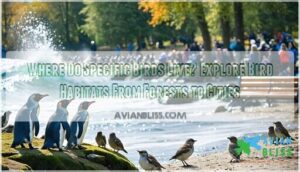 If you’re wondering where do specific birds live, you’ll find each species sticks to places that fit its needs, like Goldilocks picking the right porridge.
Woodpeckers tap away in forests, sparrows flock to city parks, and sandpipers chase waves along the shore.
Some birds, like robins, adapt easily and pop up in gardens or fields, while others, like penguins, need icy coastlines.
Food, shelter, and safety guide these choices, it’s a bit like people choosing neighborhoods—some like the quiet woods, others thrive in the city buzz.
Stick around for tips on spotting these birds right in your own backyard, with complete concepts of bird habitats in mind.
Table Of Contents
- Key Takeaways
- Bird Habitat Types
- Where Do Birds Live
- Coastal Bird Habitats
- Urban Bird Habitats
- Mountain Bird Habitats
- Bird Migration Patterns
- Specific Bird Habitats
- Human Impact on Birds
- Conserving Bird Habitats
- Frequently Asked Questions (FAQs)
- Where do birds live?
- How do birds live in different habitats?
- What is bird habitat?
- Where do birds live in a forest?
- Why do birds live in cities?
- Where do birds live in a coastal habitat?
- Where do birds commonly live?
- How do birds decide where to live?
- Where do the birds live?
- What is the place where birds live?
- Conclusion
Key Takeaways
- You’ll spot birds in almost every environment—forests, grasslands, wetlands, deserts, coasts, cities, or even your own backyard—since each species picks spots that fit its needs for food, shelter, and safety.
- Birds aren’t random about where they live; they rely on unique adaptations that help them survive and thrive in specific habitats, from city parks to icy tundra.
- Human actions, like building cities or farming, shape the places birds can call home, making conservation and habitat protection critical for their survival.
- If you want to attract birds or help them out, focus on providing native plants, water sources, and safe nesting spots—small changes in your yard make a real difference.
Bird Habitat Types
You’ll find that birds don’t just pick any spot to call home—they rely on specific habitats like forests, grasslands, wetlands, deserts, and tundra, each offering unique resources for survival.
If you’ve ever wondered why a snowy owl isn’t hanging out in your backyard, it’s all about matching their adaptations to the right environment.
Forest Bird Habitats
Step into a forest, and you’ll find a world teeming with bird life.
Forest biodiversity thrives in canopy layers, where species like the great horned owl and toucan nest.
Old-growth forests offer prime bird habitat, but forest fragmentation and forest fires can disrupt bird distribution.
A bird species map often reveals forests as hotspots for specific bird habitat needs.
Grassland Bird Habitats
After forest canopies, wide-open grasslands take center stage for birds that love space and sun.
Prairie birds, like meadowlarks and bobolinks, rely on tall grasses for nesting and food.
Savanna species thrive where scattered trees meet open-habitat birds’ needs.
Grassland ecology shapes bird feeding areas, so grassland bird conservation keeps these meadows buzzing with life and song.
Wetland Bird Habitats
After roaming grasslands, you’ll find wetlands bursting with life.
Marsh Ecology shapes bird habitats, supporting Swamp Birds and waterfowl.
Wetland Restoration and Shoreline Management keep these bird locations thriving.
Here’s what makes wetlands special:
- Teeming insect life
- Lush vegetation
- Shallow waters
- Nesting platforms
- Essential for Waterfowl Conservation and wetland conservation
Wetlands truly are bird magnets!
Desert Bird Habitats
Leaving marshes behind, deserts might seem empty, but they’re full of life if you know where to look.
Birds here use desert adaptations like specialized nesting strategies and thermal regulation to survive water scarcity and extreme heat.
Clever predator avoidance and unique bird food sources—think insects and seeds—help them thrive.
Desert bird habitat highlights bird survival strategies at their finest.
Tundra Bird Habitats
In the tundra, birds like the Snowy Owl rely on Arctic adaptations to survive harsh winds and cold.
Permafrost impact means trees are scarce, so Tundra nesting happens on the ground. Each summer, avian migration brings flocks for breeding, drawn by insect abundance.
These unique bird habitats shape bird range, demanding clever bird adaptations for survival. Many migratory species, like the tundra swan, utilize these habitats as stopover sites during their long journeys, influenced by avian migration.
Where Do Birds Live

Curiosity often leads you to wonder, where do birds actually live? Birds aren’t picky squatters—they’re experts in Habitat Selection, picking spots that match their needs for food, shelter, and safety.
You’ll spot them in almost every environment, from dense forests to city rooftops. Birds use Niche Partitioning, meaning different species carve out unique roles in the same area, so you might see woodpeckers in tree trunks while sparrows stick to bushes.
- Birds show strong Habitat Fidelity, returning to the same nesting sites year after year.
- Microhabitat Use lets some birds thrive in tiny patches, like a single tree or pond.
- Habitat Connectivity is key for bird migration patterns, helping them move safely between bird habitats.
If you’re into bird watching, knowing about bird range and bird habitat helps you find the best bird watching locations.
Coastal Bird Habitats
You’ll find that coastal bird habitats support a remarkable variety of species, from seabirds nesting in colonies on rocky cliffs to shorebirds probing sandy beaches for food.
These areas are essential for migration, breeding, and feeding, although you probably won’t see a penguin sunbathing next to a pelican.
Seabird Colonies

If you’re curious where birds gather in the millions, look to seabird colonies along oceans and remote island ecosystems.
These bird breeding grounds feature dense nesting behavior—think puffins shoulder-to-shoulder.
Colony formation helps with feeding ecology and predator safety, but conservation threats like invasive species and pollution loom large.
Protecting bird nesting sites in coastal areas is key for future generations.
Shorebird Migration
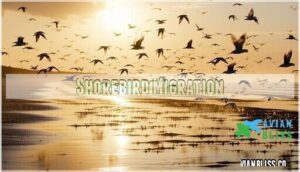
Picture shorebird migration as a high-stakes road trip, with bird migration routes stretching from Arctic breeding grounds to southern coasts.
Along the way, stopover sites in coastal areas act as vital pit stops.
Consider these migration patterns:
- Atlantic Flyway links Arctic to South America
- Delaware Bay fuels stopover ecology
- Climate impacts shift timing and routes
- Conservation challenges threaten breeding success, particularly affecting the breeding success.
Beach Nesting Sites
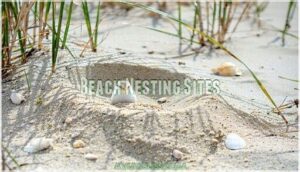
Ever wondered why some birds choose sandy beaches as their nesting locations? These coastal areas offer just the right Sand Composition for eggs, but Nesting Behavior must adapt to Predator Threats and Human Disturbance.
These coastal areas are crucial for the birds, and Marine Protected Areas help safeguard bird habitats. Conservation Strategies help protect these bird habitats, ensuring safe bird breeding.
Check out the table below for a quick guide:
| Nesting Bird | Sand Composition | Predator Threats |
|---|---|---|
| Piping Plover | Fine, loose | Foxes, gulls |
| Least Tern | Mixed, coarse | Raccoons, crows |
| Black Skimmer | Fine, shell mix | Dogs, humans |
| American Oystercatcher | Coarse, gravel | Crabs, skunks |
| Wilson’s Plover | Sandy, sparse | Ghost crabs, rats |
Urban Bird Habitats

You might spot pigeons nesting on traffic lights or sparrows hopping through city parks, showing how birds adapt to busy urban spaces.
Even in crowded neighborhoods, you’ll find birds using rooftops, backyards, and small patches of greenery as important habitats for feeding, nesting, and raising their young, which demonstrates their ability to thrive in various habitats.
City Parks
Stroll through city parks, and you’ll notice Park Bird Diversity is surprisingly high.
Urban areas support robins, woodpeckers, and warblers, thanks to thoughtful City Park Management and well-placed Urban Bird Feeders.
Birdwatching Opportunities abound, especially in parks with varied Park Habitat Quality.
These green spaces act as essential bird habitats, supporting urban environments and encouraging bird conservation right in your neighborhood.
Backyard Birding
Connection with nature starts right outside your door—backyard birding brings science home.
Transform your yard into a thriving bird habitat with bird feeders, nest boxes, and backyard plants.
Keep water sources fresh using bird baths, attracting a variety of species.
Bird watching and bird identification become daily adventures, making bird feeding more rewarding and your backyard bird habitats lively.
Consider various backyard bird feeder options to attract diverse species.
- Place bird feeders in safe, visible spots
- Install nest boxes for cavity-nesting birds
- Grow native backyard plants for food and shelter
- Maintain clean bird baths as water sources
Urban Wildlife Conservation
After you’ve hung feeders in your backyard, think bigger—urban wildlife conservation shapes bird habitats across whole cities.
Supporting urban biodiversity means more than planting flowers; it’s about green infrastructure, smart building design, and community engagement.
Policy implications matter, too, and with thoughtful choices, you help create birdfriendly cities where wildlife conservation and bird conservation thrive, even in the busiest urban areas.
Mountain Bird Habitats
When you explore mountain bird habitats, you’ll find species that have remarkable adaptations for life at high elevations, from the chilly peaks of alpine ecosystems to the open spaces of mountain meadows and steep cliff faces.
These birds face cold temperatures, thin air, and rugged terrain, but they thrive where many others can’t, making every hike feel like a search for hidden treasures.
Alpine Ecosystems
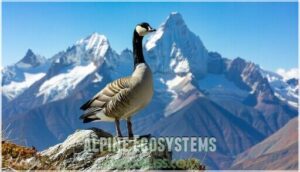
While city birds nest in parks and traffic lights, you’ll find High-Altitude Birds braving the thin air of alpine regions.
These mountaindwelling birds, like the Andean Goose, have Alpine Adaptations for extreme weather and scarce food resources.
Mountain Conservation matters here, as Climate Impacts threaten the Unique Biodiversity found only at high altitudes, where survival is truly an uphill battle.
Mountain Meadow Habitats

Mountain meadow habitats are nature’s patchwork quilts—bursts of wildflowers, buzzing insects, and tall grasses that birds love.
These meadows brim with Meadow Biodiversity, shaped by Grazing Impacts and seasonal Water Sources.
Birds rely on the abundance of food sources and shelter here, but Fire Ecology and Climate Vulnerability remind us that this bird habitat hangs in delicate balance amid mountains and grasslands.
Cliff Nesting Sites
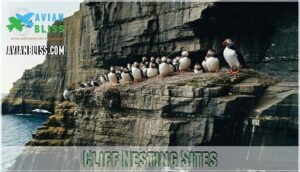
After exploring mountain meadows, let’s head up to the cliffs, where bird nesting gets a dramatic twist.
Cliffside Predators like Peregrine Falcons, puffins, and vultures thrive by:
- Using sturdy Nesting Materials to anchor cliff nests.
- Adapting strong talons and webbed feet for gripping.
- Nesting in large Colony Sizes, while facing challenges like Cliff Erosion and harsh weather.
Coastal cliffs offer birds isolation for nesting.
Bird Migration Patterns
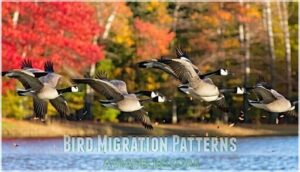
You’ll notice that some birds don’t stick to one address, as migration lets them travel incredible distances for food, breeding, or better weather.
By following migration patterns—whether seasonal, altitudinal, or long-distance—you can see how birds expertly adapt to changing environments, sometimes flying farther than your last family road trip, which involves understanding their ability to travel for food.
Seasonal Migration
Every year, countless migratory species set out on epic journeys, guided by Migration Triggers like daylight and temperature.
You’ll find their Navigation Strategies impressive—think internal compasses and star maps.
Along the way, Stopover Ecology becomes essential, as birds refuel in safe habitats.
Migration Challenges abound, from storms to predators, making Conservation Impacts on bird habitat and seasonal movements more important than ever.
| Migration Trigger | Navigation Strategy | Stopover Ecology |
|---|---|---|
| Daylight changes | Magnetic compass | Wetlands for rest |
| Temperature drops | Star navigation | Forests for food |
| Food scarcity | Landmarks | Grasslands for safety |
| Wind patterns | Sun position | Coastal sites |
| Genetics | Olfactory cues | Urban parks |
Altitudinal Migration
After you’ve learned about seasonal migration, let’s look at altitudinal migration.
Some birds trade city life for high altitudes, moving up and down mountains as seasons shift.
Elevation change helps them chase resource availability and respond to climate influence.
These bird movements are triggered by food, temperature, and breeding success, making their seasonal movements a true balancing act.
Long Distance Migration
Long distance migration is a true test of endurance and strategy for birds.
Picture Arctic Terns flying from pole to pole, guided by navigation strategies like magnetic fields and stars.
Migration triggers include daylight changes and food scarcity.
Along the way, stopover ecology matters—birds refuel at key sites.
Watch for these migration challenges:
- Habitat loss
- Light pollution
- Climate shifts
Specific Bird Habitats

Some birds are homebodies, while others are world travelers, but all need the right bird habitat to thrive.
Forests shelter toucans and parrots, while wetlands offer a buffet for herons and grebes.
The table below highlights five bird habitats, the species you might spot, and a key adaptation for each.
————-:
——————-:
———————–:
Habitat Fragmentation and Habitat Degradation, often caused by Invasive Species or Climate Impacts, threaten these bird habitats.
Conservation Strategies help protect the types of bird habitats birds rely on for survival.
Human Impact on Birds

You shape where birds live more than you might think, as your actions can change forests, wetlands, and even city parks.
Every choice you make, big or small, helps decide where birds can call home.
When you build, farm, or drive, you influence bird habitats through habitat destruction, climate change, and pollution—even if you’re just feeding pigeons from your lunch, which can lead to pollution.
Habitat Destruction
After exploring where specific birds call home, let’s talk about what threatens those places.
Habitat destruction, like deforestation impacts, wetland loss, and coastal development, chips away at safe spaces for birds.
Invasive species move in, changing the neighborhood, while habitat loss impacts food and nesting.
These environmental threats, or bird habitat loss causes, make survival tricky for many species.
Climate Change
After habitat destruction, climate change swoops in, throwing a wrench in bird habitat stability.
You’ll see habitat shifts, migration disruption, and changes in breeding patterns.
Food scarcity and extreme weather can turn migration patterns upside down.
It’s like musical chairs, but the music’s unpredictable and the chairs keep moving.
- Habitat shifts
- Migration disruption
- Changes in breeding patterns
- Food scarcity
- Extreme weather
Pollution Effects
Watching pollution effects unfold in bird habitats is like seeing a domino chain fall—one problem triggers another.
Toxic exposure from pesticides, plastic ingestion, and oil spills leads to habitat degradation, reproductive impacts, and even habitat loss.
These issues ripple through the food web.
Protecting birds means supporting environmental protection and keeping our skies—and their homes—a little cleaner and safer, which ultimately supports environmental protection.
Conserving Bird Habitats

You can help protect birds by supporting efforts like creating protected areas, restoring damaged habitats, and promoting sustainable land use.
Even small actions, like planting native shrubs or avoiding the urge to mow every patch of grass, make a real difference for birds trying to find a safe place to live.
Protected Areas
After learning how human actions threaten bird habitat, it makes sense to ask how you can help.
Protected areas—like bird conservation areas and reserves—act as safe havens for endangered bird habitat.
Good Reserve Management, Habitat Corridors, Buffer Zones, and Community Involvement all matter.
Consider supporting initiatives that focus on bird habitat protection, and Funding Strategies that keep these spaces running, supporting bird conservation and giving many species a fighting chance.
Habitat Restoration
Picture a patch of prairie, once bare, now alive with songbirds—thanks to habitat restoration.
A lifeless field transforms into a chorus of birdsong—nature’s comeback story through habitat restoration.
Restoration techniques like removing invasives, planting natives, and installing nest boxes boost bird habitat health. Reforestation methods can further enhance these efforts by expanding suitable habitats.
Community involvement and steady funding sources keep projects afloat. Monitoring success matters: bird counts and acoustic tools track progress.
Long-term maintenance guarantees ecosystems thrive, supporting bird conservation for years, which relies on habitat restoration and community involvement to ensure the health of the ecosystems.
Sustainable Land Use
Just as habitat restoration breathes new life into damaged areas, sustainable land use keeps bird habitat healthy for the long haul.
You can support bird-friendly agriculture, encourage green infrastructure, and back conservation easements.
Practicing land stewardship means protecting spaces birds need. Supporting agriculture that’s bird-friendly can have a positive impact.
Every action, big or small, helps bird conservation efforts and guarantees habitat preservation for generations.
Frequently Asked Questions (FAQs)
Where do birds live?
You’ll find birds everywhere—soaring above forests, darting through city streets, wading in wetlands, or braving deserts and mountains.
They nest on branches, cliffs, or even traffic lights, always adapting to whatever environment offers food, shelter, and safety.
How do birds live in different habitats?
You’ll notice birds make themselves right at home, whether in a dense forest or a desert.
Each species develops tools—like the hummingbird’s beak or raptor’s talons—so they can thrive in places others just visit.
What is bird habitat?
So, you thought birds just randomly set up shop anywhere, huh?
A bird habitat is the Goldilocks zone for birds—specific environments that offer food, shelter, nesting spots, and safety, all suited to the species’ needs.
Where do birds live in a forest?
You’ll spot birds in forests building nests high in tree branches, tucking homes inside old woodpecker holes, or hopping along the leafy floor scavenging for insects, seeds, or fruit.
Basically, forests are like mega bird apartment complexes!
Why do birds live in cities?
You’ll see birds in cities because they find food scraps, safe nooks for nests, and fewer natural predators.
Like clever urbanites, they adapt quickly, thriving where others just pass through—proof that city life has its perks!
They are able to do this because, like urbanites, they can make the most of the situation.
Where do birds live in a coastal habitat?
Like surfers chasing the perfect wave, you’ll find shorebirds, gulls, pelicans, and terns feasting by the water’s edge.
Nesting on sandy dunes, rocky cliffs, or hidden marshes, they are perfectly tuned to coastal winds and tidal rhythms.
Where do birds commonly live?
Birds tend to settle where food, water, and shelter mix just right—think forests, grasslands, wetlands, deserts, or even your backyard.
Whether it’s city pigeons or mountain bluebirds, birds pick homes that suit their unique needs.
How do birds decide where to live?
You’ll find feathered pals have a knack for picking places to live based on food, shelter, safety, and nesting needs.
Sort of like you looking for a cozy, well-stocked Airbnb that keeps out the drama.
Where do the birds live?
Roughly 10,000 bird species call everything from forests and deserts to busy city parks home.
You’ll spot owls in woodlands, ducks in wetlands, and even sparrows nesting on streetlights—birds, it seems, love variety more than most.
What is the place where birds live?
You’ll often hear that a bird’s home is its “habitat”—that could be a forest, grassland, wetland, or city park.
If you’re a bird, you nest, eat, and sleep wherever you find food and shelter.
Conclusion
Did you know that over 10,000 bird species have unique habitats worldwide?
When you ask, “where do specific birds live,” you’re diving into a world shaped by each bird’s needs for food, safety, and shelter.
You can spot robins outside your window or sandpipers at the shore, all depending on habitat.
With complete concepts of bird environments, you’re ready to notice the patterns and take action to help conserve these fascinating, feathered neighbors, and understand their needs for safety.