
This site is supported by our readers. We may earn a commission, at no cost to you, if you purchase through links.
A single Wandering Albatross can travel 10,000 miles in a single foraging trip, riding Southern Ocean winds for weeks without touching land. That’s not wandering—it’s mastery.
Birds and their natural habitats share a relationship so finely tuned that a slight shift in vegetation, water availability, or temperature can determine whether a species thrives or vanishes entirely. From alpine meadows above 4,000 meters, where Andean Geese nest in thin, frozen air, to mangrove nurseries sheltering the fish that waterbirds depend on, each habitat tells a specific story.
Understanding that story reveals not just where birds live, but why they live there—and what happens when those places start to disappear.
Table Of Contents
- Key Takeaways
- Birds Natural Habitats
- Bird Habitat Classification
- Habitat Suitability Factors
- Bird Adaptations to Habitats
- Conservation of Bird Habitats
- Frequently Asked Questions (FAQs)
- Why do birds live in different habitats?
- Which area is the main habitat of the birds?
- Who studies birds in natural habitat?
- How do birds live in their environment?
- How do birds choose between multiple suitable habitats?
- What happens when bird habitats overlap or merge?
- Do birds recognize their birth habitat later?
- How do seasonal migrations affect habitat preferences?
- Can birds adapt to completely new habitats?
- How do birds navigate during long-distance migrations?
- Conclusion
Key Takeaways
- Birds don’t just adapt to their habitats—they’re physically and behaviorally sculpted by them, from wing shape down to how they raise their young.
- Habitat quality comes down to five essentials: food, nesting cover, predator buffers, water, and microclimate, and losing any one of them can push a species into decline.
- Threats like habitat destruction, climate-driven drought, invasive species, and pollution don’t act alone—they stack, making recovery slower and harder for already-stressed bird populations.
- Protecting birds means restoring connected landscapes, not just preserving isolated patches, because fragmented habitats cut off movement, breeding, and long-term survival.
Birds Natural Habitats

Birds show up in places as different as snowy mountain peaks and busy city streets—each one finding its niche where food, shelter, and climate align. Their habitats fall into a few broad categories, each shaped by distinct ecological conditions.
From treetop canopies to cliff ledges, the variety of bird nesting sites across habitat types reflects just how creatively birds have adapted to wildly different environments.
Here’s a look at the main environments where birds make their homes.
Terrestrial Bird Habitats
Terrestrial bird habitats span an vast range — from the windswept Alpine Tundra where Andean Geese breed above 4,000 meters, to the sun-baked Desert Shrubland where Roadrunners navigate sparse vegetation with ease.
Each zone shapes the birds living within it:
- Alpine Tundra hosts cold-adapted specialists with insulated plumage
- Desert Shrubland shelters heat-tolerant, water-efficient foragers
- Savanna Mosaic offers ground-nesting larks and seed-eating meadowlarks
- Riparian Corridors link fragmented patches, enabling safe dispersal
These habitats don’t exist in isolation — they’re connected threads in a larger ecological fabric.
wetland habitats provide essential foraging grounds for many shorebirds.
Aquatic and Marine Habitats
Move from land to water, and the variety only grows. Aquatic and marine bird habitats stretch from inland Coastal Marshes and Seagrass Beds to open Pelagic Food Webs far offshore.
Estuarine Tidal Zones mix fresh and salt water, drawing Ospreys and sandpipers alike. Mangrove Nurseries shelter juvenile fish that waterbirds depend on.
Albatrosses, meanwhile, roam the Pelagic zone — their world is almost entirely ocean.
Anthropogenic Habitats
Beyond coastlines, birds push even further into human-made worlds. Anthropogenic bird habitats — from Urban and Suburban Areas to Managed Forest Plantations — show how adaptable birds really are.
Urban Green Corridors link city parks, letting migrants move safely through fragmented landscapes. Agricultural Hedgerows shelter ground-nesting species like meadowlarks. Rooftop Gardens attract insectivores, while Urban Water Ponds draw grebes and waders year‑round.
Habitat fragmentation and loss remain serious threats, but smart Conservation efforts for birds — and awareness of Human impacts on avian habitats — are turning that tide.
- Barn Owls hunting farmland edges
- House Sparrows nesting on building ledges
- Grebes foraging in retention ponds
Bird Habitat Classification

Birds don’t all live in the same kind of place — and that variety is exactly what makes studying them so fascinating. Habitat classification helps you make sense of which species go where and why.
Here are the four main habitat types that shape bird life around the world.
Forested Habitats
Forests are like living skyscrapers, and birds have claimed every floor.
Each species stakes out its own niche—from forest floor to canopy—much like the layered ecosystems explored in this bird identification and habitat characteristics guide.
Canopy structure shapes how light filters down, creating distinct zones — from sun-drenched treetops to shadowed understory light levels where different species thrive.
Soil carbon storage and mycorrhizal symbiosis keep these ecosystems productive, supporting forest biodiversity and birds across every layer.
Gap succession dynamics open new niches, though habitat fragmentation and loss remain constant pressures demanding serious conservation efforts for birds.
Aquatic Habitats
Water shapes bird life in ways that land simply can’t match.
- Freshwater Wetland Dynamics drive seasonal feeding cycles for herons and bitterns
- Riverine Floodplain Ecology shifts sandbar nesting sites with every flood
- Estuarine Nutrient Pulses attract dense shorebird flocks to brackish mudflats
- Lake Littoral Vegetation shelters grebes, loons, and diving ducks year-round
- Coastal Seagrass Meadows, estuaries, mangroves, and pelagic zones support wetland conservation across every aquatic tier
Scrub-Shrub Habitats
Scrub-shrub areas might look like nature’s in-between zones, but don’t underestimate them. Dense thickets offer Thorny Refuge for ground-nesting birds, while Edge Foraging along shrub margins draws towhees and catbirds hunting insects. Microclimate Humidity retained beneath shrub canopies sustains invertebrate prey year-round.
| Feature | Bird Benefit |
|---|---|
| Early Succession growth | Attracts migratory songbirds |
| Fire‑Maintained Structure | Keeps habitat open for foragers |
| Native vegetation diversity | Provides habitat restoration |
| Conservation management | Protects adaptations to different habitats |
Open Habitats
Open habitats—grasslands, savannas, and tundra flats—strip away the cover that forests and scrublands provide, leaving birds fully exposed to wind exposure and temperature extremes. That openness shapes everything.
Ground foraging becomes the dominant feeding strategy, and panoramic vigilance replaces stealth.
Fire regimes regularly reset vegetation, maintaining the sparse structure these species depend on.
Habitat fragmentation remains the core threat driving grassland bird conservation efforts today.
Habitat Suitability Factors
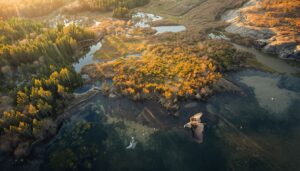
patch of land or stretch of water is created equal regarding birds.
Some spots are ideal, some are just good enough, and the difference often comes down to a handful of key factors.
Here’s what actually determines whether a habitat works for a bird — and why it matters.
Suitable and Marginal Habitats
Not every patch of land is a perfect fit for a bird. Habitat suitability depends on a mix of key resources:
- Food availability from fruiting plants and invertebrates
- Nesting cover in tree cavities or dense vines
- Predator buffers through thick shrub layers
- Water access from nearby streams or ponds
- Microclimate refugia on sheltered, mixed-terrain slopes
Marginal habitats test a species’ Fragmentation Tolerance and Resource Scarcity Adaptation, especially where habitat fragmentation and human disturbance buffer zones reduce connectivity.
Micro-Habitats and Diversity
Think of a forest floor as a city in miniature — each corner hiding a different world.
Microhabitats like leaf litter niches, mossy rock crevices, dead wood cavities, and moisture gradient puddles quietly drive species richness and habitat diversity.
| Microhabitat | Key Bird Benefit |
|---|---|
| Dead wood cavities | Nesting, foraging for beetles |
| Sunlit canopy gaps | Nectar access, insect hunting |
| Leaf litter niches | Seed foraging, invertebrate prey |
| Mossy rock crevices | Moisture refuge, shelter |
These small-scale features support critical adaptation mechanisms and make habitat restoration far more effective.
Factors Influencing Habitat Choice
Food abundance tops the list of habitat suitability factors — where prey and seeds peak, birds follow.
Predation risk shapes nesting decisions just as strongly; dense cover means safer broods.
Water availability, microclimate conditions, and human disturbance all quietly tip the scales.
Habitat corridors and connectivity let birds move between patches, while urbanization, bird communities, invasive species effects, and protected area management determine whether a landscape truly sustains life long-term.
Bird Adaptations to Habitats
Birds don’t just live in their habitats — they’re shaped by them, down to the last feather and behavior. Over time, each species has developed specific traits that make survival in its environment possible.
Here are the key types of adaptations that help birds thrive wherever they call home.
Physical Adaptations
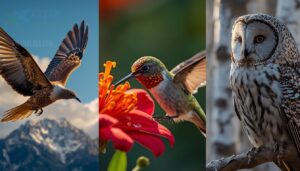
Birds are built for their environments down to the finest detail. Wing morphology, beak specialization, and leg structure each solve a specific survival challenge:
- High aspect-ratio wings give soaring species smooth gliding efficiency
- Beak shapes fine-tune feeding, from nectar probers to seed crushers
- Plumage camouflage and feather structure support thermoregulation in birds across climates
Nature’s engineering, right there on every perch.
Behavioral Adaptations
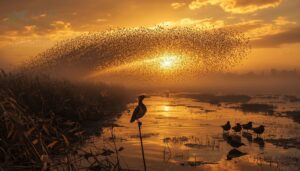
Physical structure only tells part of the story. Behavioral adaptations of birds — migration patterns, foraging strategies, and social learning — fill in the rest.
Migratory timing aligns precisely with food availability, while foraging flexibility lets species shift between insects and seeds seasonally.
Alarm calls warn entire flocks instantly, and territorial displays settle disputes without fighting.
Young birds learn routes and techniques by watching experienced adults.
Thermoregulation Adaptations
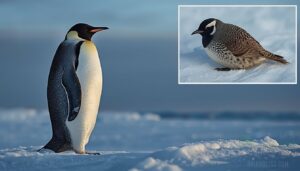
Behavior gets birds so far — but surviving extreme weather conditions, from high altitudes with thin air to frozen tundra, demands real physiological muscle.
Thermal regulation relies on three core mechanisms:
- Feather Insulation — down layers trap air, reducing heat loss dramatically
- Peripheral Vasoconstriction and Countercurrent Heat Exchange — legs and feet conserve core warmth
- Gular Flutter Cooling and Shivering Metabolism — birds cool or heat themselves on demand
Thermoregulation in extreme habitats separates survivors from the rest.
Conservation of Bird Habitats

Birds don’t just live in habitats—they depend on them for everything, from raising young to finding food. But across the world, those habitats are shrinking, shifting, and disappearing faster than many species can adapt.
Birds depend on their habitats for everything, yet those habitats are vanishing faster than species can adapt
Here’s a closer look at what’s at stake and what people are doing about it.
Importance of Bird Habitats
Think of a healthy bird habitat as a life-support system—remove it, and the whole network starts to unravel.
Food resource availability, nesting site security, and reliable migration stopovers aren’t just conveniences; they’re non-negotiables for survival.
Habitat diversity keeps ecosystems flexible, which builds climate resilience over time.
Birds and ecosystem services go hand in hand: hummingbirds pollinate, raptors control rodent populations, and frugivores disperse seeds across landscapes.
Conservation biology recognizes that habitat restoration isn’t optional—it’s foundational.
| Habitat Function | Bird Role | Ecosystem Benefit |
|---|---|---|
| Food provision | Insectivores | Natural pest control |
| Seed dispersal | Frugivores | Forest regeneration |
| Pollination | Hummingbirds | Plant reproduction |
| Nesting structure | Cavity nesters | Biodiversity support |
| Migration corridor | Long-distance migrants | Gene flow maintenance |
Threats to Bird Habitats
Habitat destruction sits at the heart of every threat birds face today. Urban expansion and agricultural sprawl erase nesting grounds faster than populations can relocate, while habitat fragmentation effects leave isolated patches too small to support healthy breeding.
Climate change impacts on habitats compound this—drought dries wetlands, wildfires increase in frequency, and storms flood coastal nesting sites. Invasive predators like rats and cats exploit these disrupted zones relentlessly. Meanwhile, pollution runoff poisons aquatic food chains, cutting off the resources birds depend on.
- Habitat Destruction – Development and logging eliminate critical nesting and foraging habitats annually
- Climate Drought – Reduced water availability degrades wetlands and grassland ecosystems substantially
- Invasive Species Impact – Invasive predators and plants disrupt nest success and food availability
- Pollution Runoff – Pesticides and chemical contamination reduce aquatic insect prey for waterbirds
- Wildfire Frequency – Intensified fires destroy breeding grounds, leaving recovery slow and incomplete
Conservation Efforts and Challenges
Turning threats into action takes more than good intentions—it demands coordinated effort across borders, budgets, and belief systems. Protected areas now cover roughly 15 percent of many regional landscapes, offering critical refuge for migratory birds. Yet funding mechanisms remain inconsistent, and policy enforcement often lags behind the need.
Climate resilience strategies must adapt as climate change impacts on habitats accelerate range shifts. Community participation fills real gaps, with citizen scientists logging millions of observations through monitoring technologies each year.
| Challenge | Current Effort | Key Tool |
|---|---|---|
| Invasive species impact | Removal programs | Ecological surveys |
| Habitat restoration | Wetland rewetting | Remote sensing |
| Threats to bird habitats | Protected area expansion | Flyway agreements |
Habitat Protection and Restoration
Protecting birds starts with protecting places they call home. Legal designations guard nesting islands and shoreline wetlands from development, giving species the stability they need to breed and forage.
Wetland restoration goes deeper than surface-level fixes—hydrological reinstatement restores natural water flow, while native plant replanting and invasive species removal rebuild food webs from the ground up.
Habitat corridors reconnect fragmented landscapes, letting birds move freely between feeding and nesting grounds.
Community stewardship programs tie it all together, turning local knowledge into lasting biodiversity conservation.
Frequently Asked Questions (FAQs)
Why do birds live in different habitats?
Every bird species fills a specific ecological niche, shaped by food resources, predator avoidance strategies, and nesting sites.
Climate tolerance and competitive exclusion further determine which habitat-specific bird species thrive where.
Which area is the main habitat of the birds?
Birds don’t claim one single home — forests lead in sheer diversity, but wetlands, grasslands, mountains, and urban spaces each host species uniquely adapted to thrive there.
Who studies birds in natural habitat?
In the study of unraveling bird behavior, ornithology researchers lead the way.
Field biologists track migration, Bird Banding Specialists monitor survival, and Acoustic Monitoring Teams identify species by sound.
Citizen Science Contributors using eBird expand avian ecology research globally.
How do birds live in their environment?
Think of each species as a specialist—its feeding strategies, mating displays, territorial songs, and nest site selection shaped precisely by where it lives.
Adaptations to different habitats run deeper than feathers.
How do birds choose between multiple suitable habitats?
When multiple habitats look equally promising, birds weigh food abundance, predation avoidance, and thermal microclimate before committing.
Conspecific cues — like spotting others thriving nearby — often tip the decision, making neighbor presence a surprisingly reliable quality signal.
What happens when bird habitats overlap or merge?
When habitats overlap, resource pooling draws in more species, and temporal partitioning keeps rivals from clashing. Movement corridors form naturally, boosting habitat connectivity and reducing fragmentation effects across the landscape.
Do birds recognize their birth habitat later?
Yes — birds often recognize their birth habitat later through natal site fidelity and memory imprinting. Early landscape learning and cue-based navigation guide them back to familiar territory across seasons.
How do seasonal migrations affect habitat preferences?
Seasonal movements follow wind routing and resource pulses, so birds shift habitat preferences as phenology shifts change food availability.
Thermal refugia and corridor connectivity along migration routes guide birds toward the most suitable microhabitats each season.
Can birds adapt to completely new habitats?
Absolutely — birds are remarkably resilient.
Through behavioral plasticity, urban colonization, and novel food exploitation, many species successfully colonize new environments when food, shelter, and safety align, making range shift dynamics and genetic adaptation central to their survival story.
How do birds navigate during long-distance migrations?
Birds rely on a mix of Sun Compass, Magnetic Sensing, Celestial Cues, Olfactory Navigation, and Wind-Assisted Routing to follow precise migration routes — a beautifully layered system honed over millions of years.
Conclusion
Like threads in a carefully woven nest, birds and their natural habitats hold each other together—remove one, and the whole structure weakens. Every adaptation, from a warbler’s bill to an albatross’s wingspan, is a direct answer to the habitat that shaped it.
When those habitats shrink, species don’t simply relocate; they unravel. Protecting these spaces isn’t just conservation work—it’s preserving millions of years of living solutions that no laboratory could ever recreate.