This site is supported by our readers. We may earn a commission, at no cost to you, if you purchase through links.
 Last spring, I watched a cardinal slam into my office window at full speed—wings splayed, body limp—because I’d hung a feeder just six feet away thinking I was doing the birds a favor. That mistake taught me what thousands of backyard birders learn the hard way: where you hang your feeder matters just as much as what you put in it.
Getting the placement right means keeping your feathered visitors safe from window strikes, predators, and disease while still giving you a front-row seat to the action. A few simple distance rules and smart positioning choices can transform your yard into a haven instead of a hazard.
Table Of Contents
- Key Takeaways
- Where Should I Hang Bird Feeders Safely?
- How to Prevent Bird Feeder Predators
- Best Placement for Different Bird Feeder Types
- Tips to Attract More Birds and Reduce Risks
- Maintenance and Disease Prevention for Feeders
- Frequently Asked Questions (FAQs)
- Where to put bird feeders?
- Should you place a bird feeder near a window?
- How far away should a bird feeder be?
- How do you hang a bird feeder?
- How do you keep birds away from a bird feeder?
- Where should hummingbird feeders be hung?
- How often should I move or rotate bird feeders?
- What height is best for hanging bird feeders?
- Can I place feeders near vegetable gardens safely?
- Should feeders be moved during different seasons?
- Conclusion
Key Takeaways
- Place feeders either within 3 feet of windows or beyond 30 feet to prevent fatal collisions, since birds can’t build enough speed to hurt themselves at close range but become vulnerable at mid-distances.
- Position feeders 10 feet from trees and 5-6 feet high to block squirrel access and predator ambush zones while providing nearby shrubs for quick escape routes when hawks appear.
- Space multiple feeders at least 10 feet apart to cut disease transmission by over 50%, and clean them monthly with bleach solution to reduce infection rates by up to 60%.
- Use seed trays beneath feeders to reduce rodent activity by 42% and avoid placing feeders within 15-20 feet of birdhouses, since nesting birds become territorial and stressed when crowds gather nearby.
Where Should I Hang Bird Feeders Safely?
Finding the right spot for your bird feeder isn’t just about convenience—it’s about keeping your feathered visitors safe from collisions, predators, and disease. The ideal location balances visibility for you, protection for the birds, and distance from potential hazards.
Let’s look at the key placement factors that’ll turn your yard into a safe haven.
Safe Distances From Windows and Trees
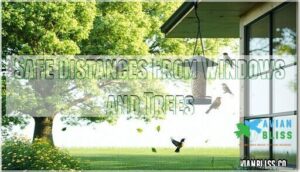
You’ll want to think about windows and trees like bookends—too close to either one spells trouble for your feathered visitors. Here’s your yard layout game plan for safe bird feeding:
- Windows: Keep feeders at least 3 feet away to prevent window strikes—though closer than 3 feet actually works too since birds won’t build up collision speed.
- Trees: Maintain 10 feet of distance to block squirrel leaps and reduce predator ambush zones.
- Feeder height: Position 5-6 feet up for ideal bird safety and visibility.
- Sight lines: Choose spots where you can monitor activity and spot risks.
- Window bird feeders: Suction-cup models mounted directly on glass are surprisingly safe—window collisions happen when birds can’t judge distance, not proximity.
Tree proximity matters because squirrels are basically furry acrobats, and hawks use branches as launching pads.
Avoiding High Human Activity Areas
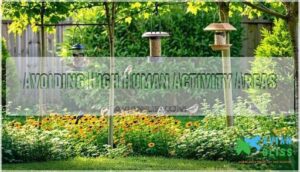
Birds are a lot like us—they avoid noisy, chaotic places when they’re trying to grab a bite to eat. Set up your bird sanctuary in quiet zones with minimal foot traffic—think side yards or peaceful areas away from patios and walkways. Low traffic spots reduce stress for backyard birds and improve safety.
| High Activity Zones | Quiet Zones |
|---|---|
| Near doors, grills, play areas | Side yards, garden corners |
| Frequent disturbance, bird stress | Calm feeding, natural behavior |
| Higher window collisions from panic flights | Reduced flight accidents |
| Poor bird feeder placement | Ideal sanctuary conditions |
Choosing Visible Yet Protected Locations
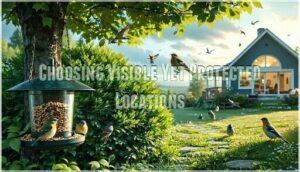
Finding that ideal balance between “easy for you to watch” and “safe enough for birds to relax” isn’t as tricky as it sounds. Position feeders where you’ve got clear viewing angles from inside—kitchen windows work great—but make sure there’s nearby shelter like evergreens or shrubs within 10-15 feet.
This protected area setup lets birds dart to safety if hawks show up, while you still enjoy front-row seats to the action without compromising bird safety.
Legal and Neighbor Considerations
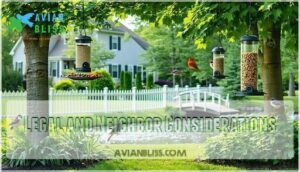
Before you hang your first feeder, check local regulations—some areas require feeders to sit at least 20 feet from property lines. Homeowner associations might have their own feeder regulations, and neighbors appreciate when you prevent nuisance laws from kicking in.
Keep feeder capacity under 300 cubic inches for single-family homes, use roofs to block rain, and skip ground feeding entirely to stay compliant while protecting bird safety.
It’s also essential to research local bird laws to verify you’re meeting all the necessary requirements.
How to Prevent Bird Feeder Predators
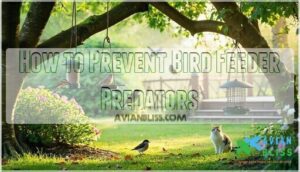
Your feeder setup might be attracting more than just birds—cats, hawks, and other predators see it as an all-you-can-eat buffet.
Smart placement and a few strategic tweaks can turn your feeding station into a safe haven instead of a danger zone.
Here’s how to keep your feathered visitors protected while they eat.
Keeping Feeders Away From Cats and Hawks
Cats and hawks pose serious threats to your feeder visitors, but smart placement creates a bird sanctuary that keeps predators at bay. Think of your setup as a safe zone—you want birds to eat comfortably without becoming someone else’s meal.
Key predator protection strategies:
- Cat guards work best when feeders sit at least 5 feet high and 10 feet from hiding spots where cats lurk
- Hawk proofing means placing feeders near shrubs (but not too close) so birds can dart to cover quickly
- Feeder shields like cages around tube feeders let small birds in while blocking larger predators
- Window collision risks drop when feeders are within 3 feet of glass—injured birds can’t escape hawks
Open spaces without escape routes are a hawk’s hunting ground. Predator deterrents like surrounding shrubs give birds a fighting chance, while proper squirrel proofing keeps feeders stable during quick escapes. To further improve bird safety, consider using native plant species that provide natural food and cover.
Using Natural Shelter for Bird Safety
Think of trees and shrubs as your birds’ built-in security system—they’re the difference between a relaxed meal and a panicked escape route. Evergreen shelter and native habitat plantings within 5-10 feet create wildlife corridors that protect against hawks while deterring cats.
Brush piles near feeders offer quick refuge for ground-feeders. This natural shelter approach bolsters bird safety without compromising your feeder placement strategy—it’s wildlife conservation that actually works.
Monitoring for Predators and Adjusting Placement
If you’re not watching for hawks circling overhead or cats stalking from the bushes, you’re basically running an all-you-can-eat buffet with no bouncers. Predator surveillance means checking your setup regularly and being willing to relocate feeders when threats emerge.
Here’s what works:
- Watch for hawk deterrents like reflective tape if raptors patrol your yard
- Add squirrel barriers and bird safety nets if mammals breach your defenses
- Shift bird feeder placement 10+ feet when predators establish patterns
Squirrel proofing and hawk awareness aren’t one-time fixes—they’re ongoing safety protocols.
Best Placement for Different Bird Feeder Types

Not all feeders work well in the same spot—and placing the wrong type in the wrong location can leave birds vulnerable or turn your feeding station into a frustrating mess.
Each feeder style has different needs based on the species it attracts, how it dispenses food, and what threats it faces. Here’s where to hang each type for the best results.
Hummingbird Feeders (Bottle and Dish-Style)
Hummingbird feeders need a little more TLC than your standard seed setup—they’re picky about sun, wind, and spillage. Hang yours in a mostly shaded spot to keep the sugar solution from spoiling fast, and choose a sheltered location where wind won’t make it sway and spill.
Position feeders at a comfortable feeder height where you can watch hummingbirds hover and still reach them for cleaning—usually eye level works great for bird watching and maintenance.
Tube and Thistle Seed Feeders
Tube feeders are like apartment buildings for finches—multiple perches mean goldfinches, siskins, and chickadees can dine together without the drama. Hang yours where you’ll catch the action—these long, cylindrical seed dispensers work best when they’re:
- 3+ feet from windows to prevent deadly collisions
- 10 feet from trees so squirrels can’t launch themselves over
- Near evergreens or shrubs for quick escape routes from hawks
- In clear view from your favorite window for easy monitoring
- Spaced 10+ feet apart to cut disease transmission by over 50%
Thistle seed feeders attract finches like magnets, so prioritize seed quality and tube design for best results.
Suet and Peanut Feeders
Woodpeckers, nuthatches, and chickadees treat suet feeders like their personal energy bars—these high-fat offerings fuel them through cold snaps and migrations when insects go MIA. Mount yours on tree trunks or poles where clinging birds feel at home, keeping them 3+ feet from windows and near escape cover.
Clean monthly to cut disease transmission by 60%—winter feeding demands feeder hygiene.
| Feeder Type | Best Placement | Key Benefit |
|---|---|---|
| Suet cages | Tree trunks, poles | Mimics natural foraging |
| Peanut feeders | Open areas, 10 ft from trees | Reduces squirrel raids |
| Winter suet | Shaded spots | Prevents melting in sun |
| Wire mesh | Near evergreens | Quick predator escape |
Ground and Tray Feeders
Sparrows, juncos, and doves prefer dining at ground level—they’re built for scratching and hopping, not acrobatics on hanging feeders. Set tray feeders 1-2 feet off the ground on platforms or stumps—high enough to dodge cat pounces but low enough for these birds’ comfort zone.
Keep ground placement near shrubs for quick escapes, and use seed trays under other feeders to catch spillage while cutting rodent visits by 42%.
Tips to Attract More Birds and Reduce Risks

Getting birds to visit is only half the battle—you also want to keep them safe and healthy while they’re around. The right extras can turn your yard into a bird haven without adding new dangers.
Here’s how to boost your setup and protect your feathered guests at the same time.
Using Native Plants for Food and Shelter
Native plants aren’t just a backdrop for your feeders—they’re a living buffet and shelter system that keeps birds coming back all year long. Think of them as natural food sources that complement your feeders beautifully.
By choosing bird-friendly plants for wildlife habitat creation, you’re setting up eco-friendly landscaping that offers year-round shelter and draws in more species than feeders alone ever could.
Adding Water Sources and Brush Piles
Once your yard’s green buffet is set up, a fresh water source and a few well-placed brush piles can turn it into the perfect bird hangout spot.
A bird bath becomes a magnet for species that wouldn’t normally hit your feeders, and brush piles create perfect hiding spots that pair beautifully with your native plants—basically building a wildlife habitat that offers everything from natural food sources to shelter in one tidy package.
Preventing Window Collisions and Overcrowding
Your bird habitat can quickly turn risky if you’re not watching for two big threats: window strikes and overcrowding. More than 1 billion birds die annually from window collisions in the U.S., and cramped feeders spread disease fast. Here’s how to protect your feathered visitors:
Window strikes and overcrowded feeders kill over a billion birds yearly—proper spacing and placement prevent both deadly threats
- Place feeders within 3 feet or beyond 10 feet from windows—this controls flight speed and prevents fatal impacts
- Apply external window films or decals near feeders—they cut collisions by up to 94%
- Space multiple feeders at least 10 feet apart—reduces disease transmission by over 50% in finches
- Use seed trays below hanging feeders—drops rodent presence by 42%
- Watch for ornamental pear trees near mirrored windows—they create deadly collision traps for species like Cedar Waxwings
Proper feeder placement and simple window treatments make your yard safer while still drawing plenty of birds.
Placement Near Birdhouses—is It Safe?
You might think a birdhouse and feeder side-by-side sounds like a backyard paradise—but it’s actually a recipe for conflict. Nesting birds get territorial and stressed when feeders draw crowds near their birdhouses.
Keep your feeder placement at least 15–20 feet away from birdhouses to protect nesting safety and reduce collision risks, giving breeding birds the space they need while still offering bird shelter elsewhere.
Maintenance and Disease Prevention for Feeders
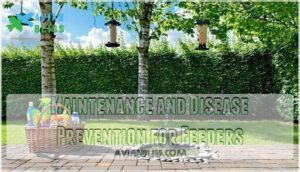
Even a perfectly placed feeder won’t keep birds healthy if you’re not maintaining it properly. Disease spreads fast at feeders, and messy setups attract unwanted visitors like rodents.
Here’s what you need to do to keep your feeding station safe and clean.
Cleaning and Refilling Best Practices
Here’s the reality: a dirty feeder isn’t just unappetizing—it’s a disease hotspot that can drop infection rates by up to 60% when cleaned monthly. You’ll want to scrub your bird feeder with hot, soapy water and a 10% bleach solution, then rinse thoroughly.
Don’t forget proper seed storage—fresh bird seed in sealed containers prevents mold that no amount of squirrel proofing can fix.
Using Seed Trays to Minimize Mess and Rodents
Seed trays catch falling debris before it hits the ground—cutting rodent activity by 42% and keeping your yard from looking like a buffet for every mouse in the neighborhood. Here’s what makes them game-changers for feeder sanitation:
- Mess reduction keeps hulls contained
- Squirrel proofing gets easier with less ground litter
- Wildlife conservation means fewer disease vectors
- Bird feeder placement stays cleaner longer
You’ll notice fewer unwanted visitors when seed stays where it belongs.
Proper Feeder Spacing to Prevent Disease
Crowding feeders together is like hosting a potluck where everyone shares the same fork—disease transmission spikes when birds compete for limited resources. Spacing feeders more than 10 feet apart cuts trichomoniasis outbreaks in finches by over 50%, giving each bird species room to feed without constant contact.
This simple bird feeder placement strategy reduces infection control risks while keeping overcrowding manageable, especially when you’re attracting multiple flocks.
Storing Bird Food Safely
Improper storage turns fresh birdseed into a moldy breeding ground for bacteria—and attracts every rodent in a three-block radius. Keep your birdseed safety on point with these food storage tips:
- Store seed in airtight metal containers—plastic won’t stop determined mice
- Keep storage areas dry and cool to prevent moisture buildup
- Buy smaller quantities you’ll use within 2-3 weeks
- Inspect regularly for mold, webbing, or pest droppings
Proper storage protects both seed freshness and your squirrel proofing efforts.
Frequently Asked Questions (FAQs)
Where to put bird feeders?
Proper bird feeder placement starts with positioning feeders at least three feet from windows and ten feet from trees.
This balances visibility with safety, reducing window collisions and keeping squirrels at bay while giving your feathered visitors quick escape routes.
Should you place a bird feeder near a window?
Surprisingly, yes—but only if it’s within three feet. Feeders closest to windows actually prevent collisions better than those placed farther away. Birds can’t build up enough speed to hurt themselves when they take off from nearby feeders, drastically reducing window strikes and improving bird safety.
How far away should a bird feeder be?
Placement isn’t one-size-fits-all—it’s about balancing competing risks. Keep feeders at least 3 feet from windows to prevent deadly collisions, yet closer is actually safer than mid-range distances.
Position them 10 feet from trees to block squirrel jumps while maintaining nearby escape cover from hawks.
How do you hang a bird feeder?
Most bird feeder placement focuses on location, but the mechanics matter too. Use sturdy hanging options like shepherd hooks or a bird feeder pole with a baffle to deter squirrels. Check weight limits for cord materials before mounting types.
How do you keep birds away from a bird feeder?
Ironically, sometimes you want to discourage certain visitors. Use squirrel baffles, feeder guards, or strategic feeder placement to block squirrels and larger nuisance birds.
Bird deterrents and predator protection tactics help you selectively manage who visits—squirrel proofing keeps seed for your intended guests.
Where should hummingbird feeders be hung?
You’ll want to hang hummingbird feeders in shaded areas with wind protection to keep the sugar solution fresh and prevent spillage. Feeder height matters less than creating a safe environment where sun exposure won’t spoil the nectar—think protected spots that stay mostly cool throughout the day.
How often should I move or rotate bird feeders?
You don’t need to relocate your bird feeder regularly—stability matters more than rotation. Only move it if you’re troubleshooting predators, disease outbreaks, or excessive mess beneath the feeder placement area.
What height is best for hanging bird feeders?
Most feeders work best at five to six feet high—it’s the ideal height for bird safety and squirrel proofing. That height keeps predators at bay while making your yard layout work for easy maintenance and bird feeder placement adjustments.
Can I place feeders near vegetable gardens safely?
You can place feeders near gardens, but keep them ten to fifteen feet away. This spacing protects crops from seed debris and droppings while squirrel-proofing helps with pest management concerns.
Should feeders be moved during different seasons?
You don’t need to move your bird feeder placement every season, but rotation helps. Shifting feeders closer to evergreens in winter offers better weather adaptation, while summer placement near shade benefits hummingbirds.
Following migration patterns through seasonal adjustments improves your feeder placement strategies.
Conclusion
Here’s the thing: you can’t undo a collision once it happens. But you can stop the next one—by placing feeders either within three feet of windows or beyond thirty, using natural barriers against predators, and spacing stations to curb disease spread.
Knowing where to hang bird feeders safely turns your yard from a risky stopover into a sanctuary worth revisiting.
That cardinal at my window? Never came back. Make sure yours do.
- https://www.reddit.com/r/birdfeeding/comments/1id524y/where_is_the_best_location_for_my_bird_feeder/
- https://ottawa.wbu.com/thoughtful-feeder-placement
- https://www.perkypet.com/articles/window-strike-prevention
- https://birdseedandbinoculars.com/wordpress/where-to-hang-a-suet-feeder/
- https://www.farmstore.com/blog/feeding-feathered-friends-a-comprehensive-wild-bird-feeder-guide