This site is supported by our readers. We may earn a commission, at no cost to you, if you purchase through links.
Ever climbed a ladder in your pajamas to refill a bird feeder before work? Yeah, us too. That daily grind gets old fast, and it’s exactly why large capacity bird feeders have become the backyard birder’s best friend.
We’re talking feeders that hold 20, 50, even 95 pounds of seed, turning a daily chore into a once-a-month task. Cardinals, chickadees, and finches don’t care how often you fill up—they just want reliable food. Your schedule matters too, though!
Below, you’ll find nine feeders that actually deliver on capacity, durability, and squirrel-proofing, so you can spend less time refilling and more time watching the show.
Table Of Contents
- Key Takeaways
- Top 9 Large Capacity Bird Feeders Reviewed
- What to Look for in Large Capacity Bird Feeders
- Best Materials for Durable Outdoor Feeders
- Squirrel-Proofing, Placement, and Bird Access
- Cleaning, Seasonal Care, and Seed Protection
- Frequently Asked Questions (FAQs)
- How often should I refill large capacity feeders?
- What seed types work best for mixed species?
- Can large feeders handle windy or stormy conditions?
- Do large feeders require special mounting or installation?
- How do I attract rare bird species specifically?
- What time of year needs the biggest capacity feeder?
- Do larger feeders attract more unwanted pests or rodents?
- How do I choose capacity based on flock size?
- Conclusion
Key Takeaways
- Large capacity bird feeders hold anywhere from 3.5 to 95 pounds of seed, cutting refill frequency down to once every 1-4 weeks depending on flock size and weather.
- Squirrel-proofing works best through weight-activated perches, locking lids, and baffles placed 10+ feet from jumping points like trees or fences.
- Metal and galvanized steel feeders last 15-20 years and resist rust, while recycled plastic and cedar offer solid, weather-resistant alternatives.
- Regular upkeep—cleaning every two weeks, checking for winter ice, and storing seed in airtight, low-humidity containers—keeps seed fresh and birds healthy year-round.
Top 9 Large Capacity Bird Feeders Reviewed
Ready to stop refilling your feeder every other day? I tested capacity, materials, and squirrel defenses to find nine feeders that actually hold up to backyard chaos. Here’s how each one stacks up.
For the full rundown on which designs kept squirrels off and birds happy, check out this guide to squirrel-proof bird feeders for tough backyards.
1. Metal Hopper Bird Seed Feeder
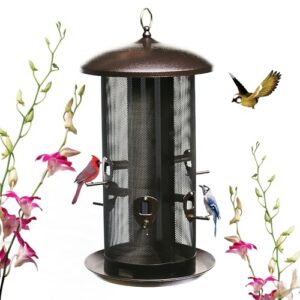
If you’ve got room for a big feeder, this one earns its keep. The dual-chamber hopper holds 10 pounds of seed total, so you can load sunflower on one side and mixed seed on the other, pulling in cardinals, titmice, and nuthatches at once.
Ten feeding ports plus a wraparound tray mean a whole flock can eat shoulder-to-shoulder without squabbling over space. The powder-coated iron construction shrugs off rain and snow for years, and that copper-tone finish looks sharp against green foliage.
Squirrels will try their luck, though — no cage feeder is bulletproof. Refilling is refreshingly painless thanks to the screw-top lid, no tools required. Just brace yourself: fully loaded, this beast gets heavy fast.
| Best For | Backyard birdwatchers with ample outdoor space who want to attract a variety of wild birds like cardinals, titmice, and nuthatches at once. |
|---|---|
| Material | Powder-coated iron |
| Seed Capacity | 10 lbs |
| Squirrel Resistance | Not guaranteed |
| Weather Resistance | Rain and snow resistant |
| Refill Method | Screw-top lid |
| Multi-Bird Access | 10 ports plus tray |
| Additional Features |
|
- Dual seed compartments hold up to 10 pounds, letting you offer two seed types simultaneously
- Ten feeding ports with a wrap-around tray let multiple birds feed at the same time
- Powder-coated iron construction and screw-top lid make it durable and easy to refill or clean
- No mounting hardware included, so you’ll need to supply your own hanging setup
- Squirrel resistance isn’t guaranteed, and persistent squirrels may still get to the seed
- Larger footprint may not fit well on small balconies or in tight spaces
2. Large Outdoor Wild Bird Feeder
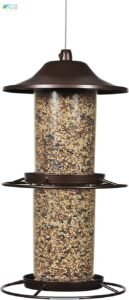
Prefer two seed types over one? This feeder’s dual trays let you split black oil sunflower and safflower, pulling in cardinals, woodpeckers, and finches without them elbowing each other off the perch.
At 4.5 pounds capacity, it won’t match the ten-pound hopper next door, but the Evenseed technology keeps both ports flowing evenly, so you’re not stuck refilling one side every other day.
The Sure-Lock cap does solid work against squirrels, provided you actually twist it shut (learned that one the hard way). Bronze powder coating shrugs off rust and rain, and that 12-inch hook holds a hearty 35 pounds — plenty sturdy for tree, porch, or shepherd’s hook.
| Best For | Backyard bird enthusiasts who want to attract a wide variety of species while cutting down on how often they refill the feeder. |
|---|---|
| Material | Bronze powder-coated metal |
| Seed Capacity | 4.5 lbs |
| Squirrel Resistance | Sure-Lock cap |
| Weather Resistance | Rust and rain resistant |
| Refill Method | Twist cap |
| Multi-Bird Access | Dual trays |
| Additional Features |
|
- Dual seed trays let you offer two seed types at once, drawing in a greater variety of birds
- Evenseed technology keeps all feeding ports active longer, reducing the need for frequent refills
- Sure-Lock cap helps keep squirrels out of the seed reservoir when properly secured
- 4.5-pound seed capacity is smaller than some hopper-style feeders, meaning more frequent refills for larger flocks
- Metal parts may be prone to rust in wet or humid climates, and plastic components can degrade with prolonged sun exposure
- Doesn’t keep out larger or more aggressive bird species, so it may not suit yards wanting to limit visitors
3. Giant Brown Bird Feeder Combo
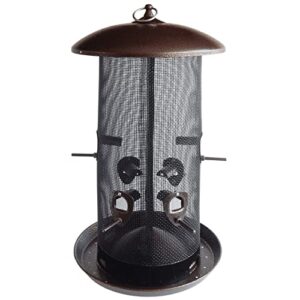
That dual-tray trick from the last feeder? This one takes it further with two full compartments holding roughly 11 pounds combined, so cardinals, finches, and woodpeckers all get their own space at the table.
The hammered brown finish isn’t just for looks. It’s all-metal construction built to shrug off rain and rust, with a dome roof and drainage holes keeping seed dry through soggy weeks. A seed diverter channels grain straight to the ports, cutting down on waste you’d otherwise sweep off the patio.
Birds can cling to the screen or perch on the tray, whichever suits their style. Refills happen fast through the screw-top lid, no spills, no fuss. For yards hosting a crowd, this one earns its keep.
| Best For | Homeowners with busy backyards who want to feed multiple bird species at once without them competing for space. |
|---|---|
| Material | All-metal hammered |
| Seed Capacity | 11 lbs |
| Squirrel Resistance | Not specified |
| Weather Resistance | Rain and rust resistant |
| Refill Method | Screw-top lid |
| Multi-Bird Access | Dual compartments |
| Additional Features |
|
- Two full compartments hold roughly 11 pounds of seed combined, cutting down on refills
- All-metal, hammered brown construction resists rain and rust for long-term outdoor use
- Seed diverter and screw-top lid make refilling quick and mess-free
- Larger dual-tray design takes up more space than a standard single feeder
- All-metal build adds weight, which may require sturdier mounting or hanging hardware
- Dome roof and drainage holes need occasional cleaning to keep seed flowing properly
4. Squirrel Proof Wild Bird Feeder
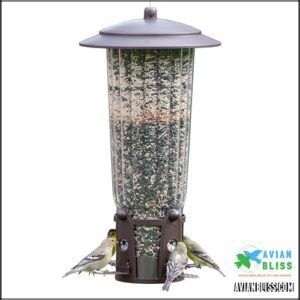
Squirrels treat unprotected feeders like an all-day buffet, and that’s exactly what the Perky-Pet 334-1SR shuts down. Its weight-activated Seed Shield snaps ports closed the instant something heavier than a cardinal lands on the perch.
You get 4 pounds of capacity, plus patented Flexports that let birds feed comfortably outside the port opening, cutting down on the seed you’d normally find scattered below. Cardinals and blue jays both manage the ladder-style perches fine.
Mount it with 18 inches of clearance and lock the lid using the Sure-Lock cap. The metal build stands up well to weather, though expect the Flexports to wear eventually. No replacement parts, unfortunately, so treat this one as a long-term investment rather than a fixer-upper.
| Best For | Backyard bird enthusiasts dealing with persistent squirrel problems who want to attract cardinals, blue jays, and other larger songbirds without constant seed loss. |
|---|---|
| Material | Metal |
| Seed Capacity | 4 lbs |
| Squirrel Resistance | Weight-activated Seed Shield |
| Weather Resistance | Weather resistant |
| Refill Method | Sure-Lock cap |
| Multi-Bird Access | Ladder perches |
| Additional Features |
|
- Weight-activated Seed Shield and Sure-Lock cap keep squirrels out of both the feeding ports and the lid
- 4 lb seed capacity means fewer refills, and Flexports reduce spilled seed while giving birds a comfortable spot to perch
- Durable metal construction with ladder-style perches that work well for small and large birds alike
- Needs a full 18 inches of clearance on all sides to work as intended, which may limit placement options
- Metal body can heat up in direct sunlight, potentially making perches uncomfortable for birds
- Port size isn’t ideal for very small finches, and there are no replacement parts if the Flexports wear out
5. Squirrel Proof Large Bird Feeder
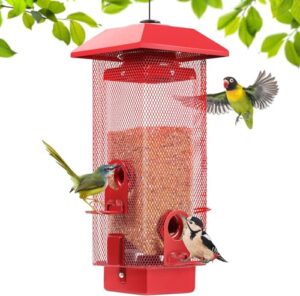
Ever watched a squirrel treat your feeder like a personal vending machine? This one puts a stop to that. The 7.4-pound retractable tray snaps shut the instant something heavier than a finch lands, and with six perches around a 360° hollow grid, cardinals, chickadees, and sparrows still feed without a hitch.
Add a sloped roof up top to shed rain and snow, keeping the tray mechanism dry and reliable—pair it with this backyard nesting box setup guide if you’re building weatherproof feeders and boxes together.
Eight drainage holes keep seed dry through freeze-thaw swings, so mold isn’t an issue. The stainless steel and iron build resists rust nicely, though securing that top clip properly makes all the difference for actual squirrel resistance.
| Best For | Backyard bird lovers who want to attract cardinals, finches, sparrows, and chickadees while keeping squirrels out of the seed. |
|---|---|
| Material | Stainless steel and iron |
| Seed Capacity | 7.4 lbs |
| Squirrel Resistance | Retractable tray |
| Weather Resistance | Rust resistant |
| Refill Method | Top clip |
| Multi-Bird Access | 6 perches |
| Additional Features |
|
- Retractable tray design automatically closes under the weight of squirrels, protecting up to 7.4 lb of seed
- 360° feeding tray with 6 perches accommodates multiple birds of different sizes at once
- Rust-proof stainless steel and iron construction with 8 drainage holes keeps seed dry and mold-free
- Bird seed isn’t included, so you’ll need to purchase it separately
- Needs cleaning at least every two weeks to keep birds healthy
- Metal body can heat up in direct sunlight and isn’t built for heavy snow or ice
6. Large Metal Bird Feeders Outdoor
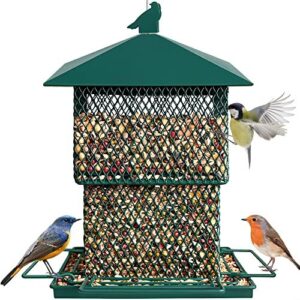
Rain, snow, blazing sun—this 6.2-pound galvanized feeder shrugs it all off without flaking or rusting, something you’ll genuinely appreciate five winters from now.
Bottom drainage keeps seed from turning to mush, and the retractable 360° feeding tray shuts down squirrel access the moment things get too heavy. Finches, titmice, and warblers still work the diamond mesh like it’s a self-serve buffet, hopping port to port without any hassle.
Fewer refills means less time lugging seed bags around your yard. Steel construction simply outlasts plastic by years, so while it costs more upfront, you’re paying for a feeder that won’t crack or fade. For serious backyard birders, that durability pays for itself.
| Best For | backyard bird enthusiasts who want a durable, weatherproof feeder that attracts a variety of species like finches, cardinals, and bluebirds year-round. |
|---|---|
| Material | Galvanized steel |
| Seed Capacity | 6.2 lbs |
| Squirrel Resistance | Retractable tray |
| Weather Resistance | Rust and weatherproof |
| Refill Method | No disassembly needed |
| Multi-Bird Access | 360° diamond mesh |
| Additional Features |
|
- Galvanized steel construction resists rust and withstands rain, snow, and sun without flaking
- Generous 6.2 lb capacity with a 360° diamond mesh design means fewer refills and easy access for multiple birds at once
- Easy to fill and clean without any disassembly required
- Metal surface can get hot to the touch in direct sunlight
- Needs regular cleaning to prevent mold and seed spoilage
- Squirrel-resistant features won’t stop every determined squirrel
7. Large Metal Wild Bird Feeder
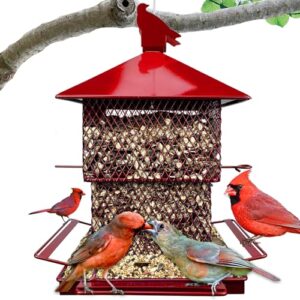
Picture a workhorse feeder that shrugs off five straight seasons of storms without a spot of rust. That’s this galvanized steel model, built with welded seams instead of screws so water never sneaks inside.
It holds 3-6 pounds of mixed seed, and the perforated tray gives cardinals, chickadees, and finches 360-degree access all at once. A locking metal cap keeps squirrels from prying the lid open, while the vented roof dissipates heat so seed doesn’t cook in July sun.
Mount it 5-6 feet up near a shrub for cover, and the steel hanging hardware aids up to 15 pounds combined weight. Simple, sturdy, and built to outlast cheaper feeders by years.
| Best For | Backyard bird watchers who want a durable, all-weather feeder that attracts a wide variety of wild birds like finches, cardinals, and blue jays. |
|---|---|
| Material | Galvanized steel |
| Seed Capacity | 3-6 lbs |
| Squirrel Resistance | Locking metal cap |
| Weather Resistance | All-weather rustproof |
| Refill Method | Locking metal cap |
| Multi-Bird Access | 360° tray |
| Additional Features |
|
- Bird-shaped locking lid helps deter squirrels and raccoons from accessing seed
- Four-sided 360° feeding tray with mesh paneling and drainage keeps seed fresher longer
- Sturdy metal construction holds up in rain, snow, and year-round outdoor conditions
- Squirrels can still reach the feeder if it’s hung too close to jumpable perches
- Metal surface can get hot to the touch in direct sunlight
- Needs regular cleaning to prevent mold and seed spoilage in humid weather
8. Large Hopper Bird Seed Feeder
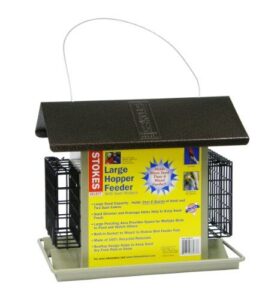
Not many feeders let you check seed levels without popping the lid, but this one’s clear side panel does exactly that. Holding up to 8.4 pounds, it’s built for yards with cardinals, woodpeckers, and chickadees competing for space.
That capacity stretches refills toward once a month, a real win when you’re juggling a busy schedule. Recycled plastic shrugs off cracking and fading, and it’s backed by a lifetime guarantee—so you’re not replacing it in five years.
A roof overhang plus drainage holes keep seed dry through storms, protecting freshness longer than open-tray designs. Squirrel guards add another layer of protection, making this hopper a genuinely low-fuss choice for serious backyard birders.
| Best For | This hopper feeder is best for backyard bird enthusiasts who want to host a variety of songbirds with plenty of room to perch, feed, and enjoy both seed and suet in one spot. |
|---|---|
| Material | Recycled plastic |
| Seed Capacity | 8.4 lbs |
| Squirrel Resistance | None |
| Weather Resistance | Weather-resistant |
| Refill Method | Pop lid |
| Multi-Bird Access | Multiple perches |
| Additional Features |
|
- Large capacity (over 6 quarts) means fewer refills and room for multiple birds to feed at once
- Seed diverter and drainage holes help keep food dry and fresh
- Made from 100% recycled, weather-resistant material that holds up outdoors
- Requires a separately sold Stokes Select pole for proper mounting
- Its large footprint may not fit smaller balconies or tight spaces
- No squirrel-resistant features, so squirrels may compete with birds for food
9. Mixed Seed Bird Feeder Combo
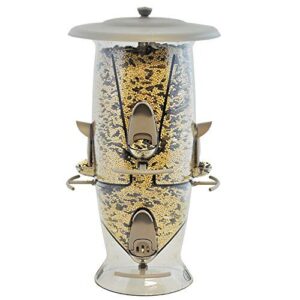
Six feeding ports sounds like a party, and for finches, wrens, chickadees, and woodpeckers, it is. This More Birds combo holds 3.5 pounds and uses a Stay Full Port System, so seed keeps flowing evenly even when levels run low.
Wide, hinge-clean openings make refills and scrub-downs painless. That matters, since mold loves humid seasons.
Here’s the catch: this one skips squirrel-proofing entirely. If your yard has acrobatic raiders, pair it with a baffle or mount it away from jumping points. The plastic body controls weather fine season after season, but expect some UV wear over time.
Bottom line? Great for variety-seekers, not squirrel battles.
| Best For | Bird lovers who want to attract a wide variety of species like finches, wrens, chickadees, and woodpeckers with one versatile feeder. |
|---|---|
| Material | Plastic |
| Seed Capacity | 3.5 lbs |
| Squirrel Resistance | None |
| Weather Resistance | Not specified |
| Refill Method | Hinge design |
| Multi-Bird Access | 6 ports |
| Additional Features |
|
- Six adjustable ports suit different seed types and bird sizes
- Stay Full Port System keeps seed flowing evenly, even at low levels
- Hinge design opens the feeder in half for quick, tool-free cleaning
- No squirrel-resistant features, so acrobatic critters can raid it freely
- Plastic construction may wear down with prolonged UV exposure
- Needs regular cleaning to prevent mold in humid climates
What to Look for in Large Capacity Bird Feeders
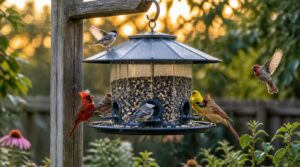
Ready to pick a feeder that won’t leave you refilling every other day? Not all large capacity models are built the same, and a few key features make all the difference. Here’s exactly what to check before you buy.
Seed Capacity Range
Ever wonder why some feeders empty in a day while others last two weeks? It’s all about seed capacity range. Large capacity bird feeders span 20 to 100 pounds, with heavy-duty units hitting 95lb capacity for serious backyard operations.
Think about your flock size first. A modest setup might only need 10 pounds of bird seed weekly, while rural properties feeding dozens of species burn through 5-10 pounds fast—capacity indicators on labels help you plan accordingly. The mucilage layer function mucilage layer function helps seeds retain moisture and adapt to environmental conditions.
Refill Interval Expectations
So how often will you actually be filling that thing? A large capacity bird feeder usually needs refilling every 3-14 days, depending on seed type and bird traffic.
Black oil sunflower seed disappears faster than mixed blends. Winter and migration season speed up refill frequency, while rain or humidity spoils seed quicker—so weather-resistant construction genuinely extends your intervals between fill-ups!
Feeding Ports and Perches
Capacity means nothing if birds can’t actually perch and eat comfortably. Look for multiple feeding ports (4-9 is ideal) spaced around the reservoir, plus a circular 360 perch letting birds cling from any angle.
Port size should run 0.8-1.2 cm, with smooth edges. Perch material matters too—metal resists wear, while non-slip coatings improve grip during damp mornings.
Easy Fill Openings
Ever wrestled a 5-lb bag of seed into a feeder with an opening the size of a coin slot? Not fun.
Easy fill openings fix that with wide, 4-6 inch mouths for fast, mess-free refills.
- Splash guards for spill guard design
- Clear panels for level visibility
- Bulk-bag funnel compatibility
- Snap lids for smooth refill speed
Lid ergonomics matter—one-handed caps make refilling your large capacity bird feeder genuinely painless.
Seed Flow Control
Seed flow control keeps your feeder from dumping seed like a busted piñata. Good models use orifice size selection matched to seed type, plus anti-blockage screens preventing bridging.
Look for humidity adaptation and real-time flow monitoring cues—basically, seed level visibility through clear panels. Smart metering mechanisms mean less seed waste and fresher seed sitting in the hopper.
Best Materials for Durable Outdoor Feeders
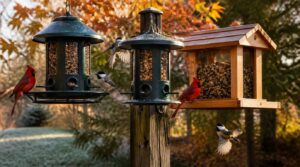
Ever wonder why some feeders last decades while others crack after one harsh winter? The material makes all the difference, standing between your feeder and years of rain, sun, and hungry squirrels. Let’s break down which materials actually hold up outside.
Metal Feeder Benefits
Metal feeders are the workhorses of the birding world. A powdercoated steel construction shrugs off chewing, pecking, rust, and nasty weather, easily lasting 15-20 years. They’re simple to clean too, which means better hygiene for your feathered visitors.
Bonus: that hefty weight keeps things stable in windy gusts, and metal’s temperature conduction helps regulate seed freshness on chilly mornings.
Cedar and Wood Options
Rustic charm meets real durability with a cedar bird feeder. Western Red Cedar resists rot and insects naturally, while the Woodlink All Cedar Bird Feeder shows off that warm, reddish patina birds and neighbors both admire.
For large birds like cardinals, choose ample bird feeder capacity and wipe with mild soap yearly. Sustainable sourcing keeps it eco-friendly, and smart placement near cover boosts safety.
Recycled Plastic Durability
Ever wonder why some plastic feeders crack after one winter while others shrug off a decade of storms? It comes down to material purity and processing.
Quality recycled plastic feeders use UV-stabilized, impact-resistant blends that rival virgin plastic, resisting weathering, warping, and fading. This durable bird feeder construction delivers genuine all-weather durability, giving you eco-friendly, corrosion-resistant performance without sacrificing strength.
Rust-Resistant Coatings
Rust is what turns a great feeder into scrap metal, so coatings matter more than most folks realize.
Galvanized steel shrugs off rain and snow without flaking, while powder-coated finishes lock in color for years. Look for zinc primer protection underneath—it’s the same trick bridge builders use. Combined with UV-resistant finishes, you get real corrosion resistance that keeps your feeder looking sharp, season after season.
Weatherproof Roof Designs
A good roof isn’t just decoration, it’s your seed’s best defense against soggy disaster.
Sloped roof designs channel rain away fast, while quality weatherproof underlayment stops leaks before they start. Think of it like shingles on your house.
- Drainage holes prevent pooling
- Overhangs block wind-driven rain
- Weather-resistant construction survives years outdoors
Combined, these features keep seed dry, mold-free, and appetizing for your feathered regulars.
Squirrel-Proofing, Placement, and Bird Access
Ever watch a squirrel outsmart a "squirrel-proof" feeder? It happens more than you’d think, and the fix usually comes down to smart engineering plus smart placement. Here’s what actually keeps your feeder squirrel-free while still welcoming every bird you’re hoping to attract.
Weight-Activated Perches
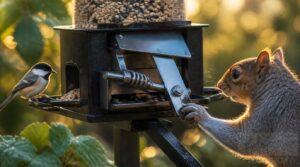
Picture a tiny drawbridge that slams shut the instant a squirrel steps on it—that’s basically what you’re getting. Weight-sensitive mechanisms use spring-loaded perches, adjustable from 2 to 6 ounces, so chickadees feed freely while heavier pests trigger the weightactivated Seed Shield. Stainless steel and powder-coated perches shrug off rust. Mount yours at typical songbird flight height, and this large capacity bird feeder feature just works.
A weight-activated perch acts like a tiny drawbridge, letting light birds feed while heavier squirrels trigger it shut
Cage and Baffle Protection
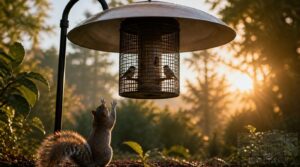
Cage and baffle protection doubles down where weight-activated perches leave off. A metal mesh cage with 1 to 2 centimeter openings lets small birds in while blocking bigger, seed-stealing visitors entirely.
Add a baffle extending 6-12 inches beyond the canopy, sized 2-4 inches wider than the feeder, and squirrels simply can’t get a grip. Powder-coated finishes keep both weatherproof for years.
Ideal Feeder Height
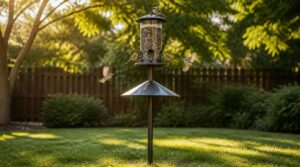
Height matters as much as any cage or baffle. Predator safety height means mounting 5-6 feet up, while Height for Songbirds favors that same range for chickadees and finches.
- Pole mounted baffles work best paired with proper mounting height
- Post mounted baffles need secure anchoring for wind stability
- Seed Spillage Reduction improves with consistent height
- Maintenance Access Height should avoid ladders
- Feeder stability in wind protects your investment
Distance From Jumping Points
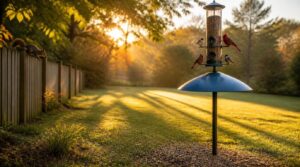
Ever watch a squirrel launch itself off a fence like it’s auditioning for the Olympics? That’s exactly why 10+ feet from jumping points matters so much.
Trees, fences, and rooflines all become launchpads. Keep your feeder that far away, and even the most determined acrobat can’t stick the landing—pair that distance with solid pole-mounted baffles for real protection.
Nearby Cover for Birds

Distance keeps predators guessing, but nearby cover gives your birds somewhere to bolt. Evergreen shrubs 5-15 feet away offer year-round shelter, while tree canopy overhead blocks rain and hawks alike.
Add leaf litter for ground concealment and a shallow water source within 10 feet. This combo turns simple bird feeder placement into a genuine safe zone—smart mounting height means nothing without an escape route nearby.
Cleaning, Seasonal Care, and Seed Protection
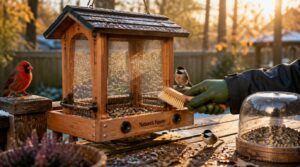
Buying a big feeder is only half the job, folks. Keeping it clean and weather-ready is what actually keeps your birds coming back all year. Here’s what that upkeep really looks like, season by season.
Two-Week Cleaning Routine
Two weeks, that’s your magic number for a proper bird feeder cleaning routine.
- Day 1: disassemble, soak metal parts, scrub, air dry
- Midpoint: empty seed storage, sanitize, reseal
- Days 13-14: reassemble, check for rust
Use mild dish soap, never bleach. This cleaning schedule keeps sanitation solid and cuts your bird feeder refill frequency headaches down considerably!
Summer Mold Prevention
Summer humidity turns feeders into mold factories fast, especially in shaded, muggy corners. Combat this with sealed, moisture-resistant housings that block dampness from creeping into seed. Boost airflow by relocating feeders away from blocked corners, letting breezes dry surfaces naturally.
Wipe damp spots after rain, and store backup seed in sealed containers. This keeps seed fresh and your bird feeder cleaning routine truly effective.
Winter Ice Checks
Once temps dip to freezing, grab a quick morning check before the birds show up. Ice formation risks hit hinges and ports first, causing seed flow obstruction and jammed trays.
Watch weatherresistant construction for structural weight impact on roofs. Choose sheltered placement ice avoidance spots, and stick to a simple winter cleaning routine—de-ice perches every two weeks to keep your large capacity bird feeder running smoothly.
Dry Seed Storage
Ever wonder why your birdseed goes stale before the birds even touch it? The answer’s usually moisture, not time.
- Keep humidity between 3-8%
- Freeze extras near -18°C
- Use airtight containers with desiccants
- Dry fully before cold storage
- Label with date and moisture target
Bulk birdseed storage done right means your large capacity bird feeder always gets fresh, mold-free fuel—no soggy surprises.
Replacing Worn Parts
A squeaky hinge or sticky lid is your feeder waving a white flag. Check wear indicators like perch cuffs and flow valves regularly—50% wear means it’s time.
Swap hinge pins for stainless steel, replace gaskets for tight seals, and watch for spring fatigue and gear alignment issues. Part compatibility matters most: matching specs keeps your durable bird feeder running smoothly for years.
Frequently Asked Questions (FAQs)
How often should I refill large capacity feeders?
My neighbor’s hopper stayed full two weeks straight in April, then needed daily top-offs once fledglings arrived.
Seed consumption, weather, and bird traffic drive everything—5-10 pound capacity feeders usually need refilling every 7-14 days; check when seed dips below one-third.
What seed types work best for mixed species?
Black oil sunflower wins over the widest crowd, so build around it. Add nyjer for finches, cracked corn for ground feeders, and safflower — cardinals and chickadees love it, squirrels don’t — for genuinely balanced seed type compatibility.
Can large feeders handle windy or stormy conditions?
When gales rattle branches like maracas, will your feeder sway or stand firm? Choose galvanized metal construction with reinforced housings, secure mounting stability, and drainage holes—these weather-resistant bird feeder features keep seed dry and feeder stability solid, even in 40 kmh gusts.
Do large feeders require special mounting or installation?
Mounting stability comes down to weight, not fancy hardware. Set poles in concrete, mount at 5-8 feet high, and use weatherproof, rated brackets. Add quick-release couplings for painless refills, and your feeder stays put through wind, rain, and hungry squirrels.
How do I attract rare bird species specifically?
Want rarities in your yard? Study your region’s species diversity, plant native berry- and nectar-producing shrubs, add moving water, and rotate seed types seasonally.
Combine high-protein feeding with discreet, sheltered placement near cover for shy, elusive visitors.
What time of year needs the biggest capacity feeder?
Late fall through midwinter wins, hands down. Winter migration peaks collide with natural food shortages, while fall seed scarcity and holiday birdwatching influx mean your largecapacity bird feeder works overtime—stretching refill frequency from days to weeks when you need it most.
Do larger feeders attract more unwanted pests or rodents?
It’s not the size itself, it’s the spillover. A large capacity bird feeder holds more seed, so ground spill increases, drawing rodents. Smart placement, baffles, and quick cleanup keep pest attraction risks low despite bigger portions.
How do I choose capacity based on flock size?
Match capacity to your daily seed requirement: 10 birds need roughly 5-0 lbs daily. Multiply by flock size, then pick feeders offering multiple feeding ports (4-6 birds per port) and refill frequency around every 4-7 days.
Conclusion
Picture never climbing that ladder again—not once, not ever, until squirrels sprout opposable thumbs. That’s the promise of large capacity bird feeders done right.
You’ve seen nine feeders built to outlast weather, outsmart critters, and outlive your patience for weekly refills. Pick the one matching your yard, your budget, your birds. Fill it, hang it, walk away.
Your cardinals won’t send thank-you notes, but their steady visits say plenty. That’s a trade worth making.