This site is supported by our readers. We may earn a commission, at no cost to you, if you purchase through links.
birdbaths sit ignored—not because birds don’t want water, but because the placement makes them nervous. wired to avoid anything that feels like a trap, and a bath tucked against a fence or buried in dense shrubs triggers exactly that instinct. prettiest cast-iron basin turns into yard decor if no bird feels safe enough to land.
place a birdbath in your yard matters more than what it looks like. Sunlight, nearby cover, ground predators, wind exposure—each one shapes whether birds visit daily or avoid it entirely. placement right, and you’ll have a bath that earns its spot.
Table Of Contents
- Key Takeaways
- Best Birdbath Spot in Your Yard
- Keep Safe Distance From Shrubs
- Reduce Window Collision Risks
- Balance Sunlight and Shade
- Choose a Calm, Sheltered Area
- Decide Between Ground or Pedestal
- Set The Bath on Stable Ground
- Place It Near Water Access
- Keep Birdbaths Away From Feeders
- Adjust Placement for Every Season
- Frequently Asked Questions (FAQs)
- Conclusion
Key Takeaways
- Place your birdbath 6–12 feet from shrubs, and either within 3 feet of windows or beyond 30 feet away — these two rules alone eliminate most collision and predator risks.
- Morning sun with afternoon shade is the sweet spot: it slows algae growth, cuts evaporation, and keeps water cool enough that birds actually want to drink it.
- Elevation matters — pedestal at 24–36 inches forces predators into the open and gives birds clear sightlines and instant escape routes that a ground-level bath simply can’t offer.
- Keeping your birdbath 15–30 feet from feeders, and within easy hose reach isn’t just convenient — it directly reduces water contamination, disease spread, and the maintenance effort that causes most people to give up.
Best Birdbath Spot in Your Yard
Finding the right spot for a birdbath isn’t complicated, but a few key factors make all the difference. Birds need to feel safe before they’ll stop, splash, and come back regularly.
A good bird bath maintenance kit also helps you keep the water clean and inviting, which is just as important as placement.
Here’s what to keep in mind when choosing your ideal location.
Quiet Area Birds Can Approach Safely
Birds are skittish by nature — even a slammed door can empty a birdbath instantly. Choose a quiet spot with minimal human traffic, soft ground surface underfoot, and partial shade overhead.
A gentle water drip draws them in without startling them. Scentless materials help too. Low noise zones with limited foot traffic give birds the confidence to approach, linger, and actually use what you’ve built.
Open Visibility With Nearby Escape Cover
Think of it as creating a predator scan zone — open enough for birds to size up their surroundings, but never isolated. Provide fresh clean water to attract more species.
- Keep an open approach path with a clear line of sight
- Position quick exit perches — branches, fences — within one short flight
- Avoid dense hedging right at the edge
- Offer visible landing spots near shrubs or trees, not inside them
Easy Viewing Without Constant Disturbance
birds feel safe, you want to actually enjoy watching them.
Position a seat 8–12 feet away in a low-traffic zone — no door slams, no barking dogs.
Low Noise Landscaping and Wind Buffer Zones around the bath create calm that keeps birds lingering.
Use Glare-Free Viewing angles and an Elevated Observation Angle, so your line of sight stays clear without looming over them.
Keep Safe Distance From Shrubs

Shrubs and trees are great for birds — but only when they’re close enough for cover, not so close they become a hiding spot for predators.
Where you place your birdbath in relation to nearby plants can make all the difference in whether birds feel safe enough to return.
Here’s what to keep in mind.
Place It Near Cover, Not Inside It
Cover proximity is a balancing act — too far and birds feel exposed, too close and predators gain an ambush spot. Aim for these Cover Proximity Guidelines:
- Position 6–12 feet from shrubs for solid Escape Route Distance
- Keep an Open Space Buffer of 3+ feet on the yard‑facing side
- Use Partial Visual Barriers like low ornamental grasses
- Add Strategic Perch Placement — a branch 6–8 feet away
- Prioritize bird bath visibility over dense location near shrubs and trees
Avoid Dense Hedges That Hide Predators
Dense hedges are a predator’s best friend — and your birds’ worst enemy. Without a proper Hedge Buffer Zone, cats and other hunters lurk unseen until it’s too late.
Keep at least 12 feet of Sparse Groundcover around the bath to support predator detection and create clear Predator Spotting Paths. A solid Visibility Perimeter gives birds the reaction time they need for real predator protection and predator avoidance.
Trim Nearby Plants for Clear Sightlines
Even a well-placed birdbath loses its appeal when overgrown plants close in around it. Regular Branch Trimming and Low Shrub Pruning maintain visibility from every angle. For real bird safety, focus on three things:
- Clear Approach Path Clearance so birds aren’t weaving through branches
- Open Clear Flight Corridors above the bath for quick takeoffs
- Trimmed Perch Visibility spots nearby — close enough to scan, not hover over the water
A continuous drip sound can attract more birds to the bath.
Reduce Window Collision Risks
Windows are one of the sneakiest hazards in a bird-friendly yard — and your birdbath placement can make things worse. A bird that sees sky or trees reflected in glass won’t slow down until it’s too late.
Keeping your bath clean and well-positioned away from windows — check out pedestal bird bath options that simplify safe garden placement — gives birds a clear, reflection-free landing spot they’ll actually trust.
Here’s how to position your bath so the glass stops being a threat.
Keep Birdbaths Away From Reflective Glass

Reflective glass is a silent hazard in any yard. When windows mirror the sky or surrounding trees, birds can’t tell the difference — and window collisions happen fast.
For solid bird bath safety, keep your bath away from reflective surfaces.
A glass-free buffer reduces visual distortion mitigation issues, limits glare reduction gaps, and facilitates overall bird bath placement that prioritizes bird bath visibility without the danger of anti-reflective film workarounds.
Choose Safer Distances From House Windows

Distance is everything here. Keep your birdbath either within 3 feet of a window or beyond 30 feet away — that’s your Distance Safety Range.
The gap between those two points is a collision-free zone that isn’t. Birds build speed fast, and window collisions happen before they can steer.
When neither distance works, Glass Marker Use on your windows helps create a safe flight path.
Avoid Placing Baths Opposite Sky Reflections

A window facing open sky acts like a mirror — and your birdbath sitting directly opposite it sets up a dangerous flight line. Angle Placement matters here: use Offset Positioning so the bath isn’t face-to-face with the glass.
External Shading like awnings cuts glare, while Window Decals break up the reflection.
Reflective Glass Mitigation protects birds without sacrificing your view.
Balance Sunlight and Shade

Where you set your birdbath in relation to the sun matters more than most people expect.
Too much direct light, and you’re fighting algae, warm water, and constant refilling — too much shade, and birds lose confidence approaching it.
A few simple placement adjustments make all the difference.
Aim for Morning Sun and Afternoon Shade
Think of sunlight like seasoning — a little goes a long way. The sweet spot for bird bath placement is morning sunlight paired with afternoon shade. Here’s why that Sun-Heat Balance matters:
- Morning Warmth dries dew fast, keeping surfaces safe.
- Dappled Light filters heat without blocking visibility.
- Afternoon Coolness slows evaporation noticeably.
- Temperature Stability encourages shy birds to return.
- Ideal sunlight and shade balance limits algae buildup naturally.
Aim for 4–6 hours of partial shade daily.
Prevent Overheating, Algae, and Fast Evaporation
Full sun all day is rough on birdbath water — it heats fast, evaporates quickly, and turns green within days. A shallow depth gradient design helps slow that cycle, since less water volume means easier temperature control.
Drop in a small copper algae inhibitor to naturally suppress growth. Pair that with an evaporation reducing cover or partial shelter, and your water stays cleaner, cooler, and fresher far longer.
Use Dappled Shade for Cooler Water
Dappled shade — the kind that filters through a tree canopy — keeps water temperature noticeably cooler than direct exposure. Aim for a mix of sun and shade, with morning light and afternoon cover.
A light-colored basin also helps by reflecting heat instead of absorbing it.
That partial or dappled shade reduces water evaporation and cuts down how often you’re refilling on hot days.
Choose a Calm, Sheltered Area

Even the best-placed birdbath will sit empty if the spot feels too chaotic or exposed. Birds are cautious creatures — wind, foot traffic, and nearby pets can all send them looking elsewhere.
Here’s what to get right when choosing a calm, sheltered location.
Protect Birds From Strong Wind Exposure
Strong wind keeps birds away — they simply won’t battle gusts just to grab a drink.
Smart windbreak placement makes all the difference. Use shrubs, fences, or walls to block the prevailing wind direction without fully enclosing the bath.
low-profile bath on stable, level ground stays steadier in seasonal wind adjustments, reduces wobbling, and keeps your garden microclimate calm enough that birds actually stick around.
Avoid Walkways, Patios, and Noisy Zones
Wind isn’t the only thing that spooks birds — foot traffic and noise do just as much damage.
Think of acoustic zone mapping as your secret weapon: identify where the yard stays genuinely quiet, then plant your bath there. A low-traffic zone at least 15 feet from walkways follows basic walkway proximity rules that give birds room to relax.
Watch for these common disturbance sources:
- Walkway footsteps transmit vibrations up to 5 feet — vibration dampening strategies like gravel borders help absorb that energy
- Patio gatherings easily exceed 60 decibels, rattling bird nerves quickly
- Traffic noise buffer gaps of 30 feet around AC units keep sound from bleeding over
- Patio sound barriers — fences, hedges, raised planters — block conversation carry effectively
- Unpredictable shadows from passing humans trigger escape flights nearly 90% of the time
Keep your bath visible but not exposed — tucked into a calm corner where noise reduction for bird comfort happens naturally, and bird safety stays built right into the bird bath placement itself.
Keep The Bath Away From Doors and Pets
Even a well-placed bath fails if placed near a back door or pet zone. Door proximity matters — opening and closing causes birds to flush every time. Build a safety perimeter by keeping the bath in a low-traffic zone, sufficiently clear of pet paths.
Pathway avoidance and pet deterrence work together: cats hide, dogs charge, and birds simply stop coming.
Decide Between Ground or Pedestal

Where you set your birdbath — on the ground or up on a pedestal — makes a bigger difference than most people expect. The right height affects everything from predator risk to how often birds actually show up.
Here’s what to keep in mind before you decide.
Why Elevated Baths Deter Ground Predators
A ground-level bath is basically a buffet table for cats.
Elevation changes everything — a pedestal creates a natural elevated safety barrier that forces predators into the open, where birds can use predator surveillance before landing. Clear predator sightlines improve dramatically from height, and vertical escape routes open up instantly. That climbing barrier effect alone cuts ambush risk and gives birds a genuinely safer stopping point.
A pedestal birdbath forces predators into the open, giving birds clear sightlines and instant escape routes
Ideal Height for Safety and Easy Access
Most experts land on 24 to 36 inches as the sweet spot — and for good reason. That bird bath height hits every major checkbox: predator deterrence height keeps cats from easy ambush, viewer eye level aligns with patio seating, and cleaning ergonomics mean no awkward kneeling.
Elevated placement at around 30 inches also wins on stability, wind resistance, while species compatibility stays strong for chickadees, robins, and finches alike.
When a Ground-level Bath Still Works
A pedestal isn’t always the answer. If your yard draws robins, juncos, or mourning doves, ground-level placement actually matches their natural Ground Forager Preference — they’re already down there.
It works well when you practice solid Predator Management Strategies:
- Position in partial shade on stable level ground
- Use a Textured Basin Surface with shallow water depth (1–2 inches)
- Add Seasonal Water Motion via a small dripper for movement and predator deterrence
Set The Bath on Stable Ground
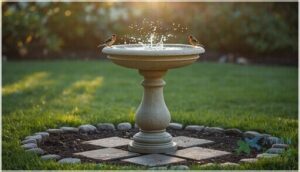
Even the best birdbath placement can fall apart if the base beneath it isn’t solid. A wobbly bath tips, spills, and eventually cracks — and birds won’t stick around for that.
Here’s what to look for when setting your bath on ground that’ll actually hold it.
Use a Flat, Level, Load-bearing Surface
Think of your birdbath’s foundation like a handshake — firm, steady, and reliable.
A flat even surface keeps the basin balanced, while stable level ground prevents wobbling during cleaning or refilling.
| Surface Type | Load Distribution Design | Best For |
|---|---|---|
| Concrete Slab Thickness (2–4 in) | Spreads weight broadly | Heavy stone baths |
| Paver Alignment | Distributes load evenly | Medium pedestal styles |
| Gravel Base Compaction | Firms soft soil | Lightweight ceramic baths |
| Compacted soil | Moderate support | Temporary setups |
| Mixed paver + gravel | Maximizes bird bath stability | Ground-level placement |
Use Shims for Leveling when pavers shift slightly — small corrections make a real difference.
Prevent Tipping, Wobbling, and Uneven Water Depth
Even a slight tilt ruins everything — water pools to one side, birds get wet feet on entry, and your bath looks crooked.
hollow pedestal base with sand or gravel for weighted base stability. leveling shims under low edges to correct wobble.
ground anchoring and regular maintenance checks keep your basin shape balanced, your water even, and bird bath stability solid.
Check Stability After Rain and Freeze-thaw Cycles
Rain softens soil, and frost heave can quietly shift even a well-placed pedestal overnight. Make seasonal adjustments part of your routine — a quick base leveling check in spring catches winter damage early.
Press gently on opposite sides for a pedestal stability test, inspect drainage, and review soil compaction after storms. Wet clay shifts; gravel bases drain faster and hold firmer.
Place It Near Water Access
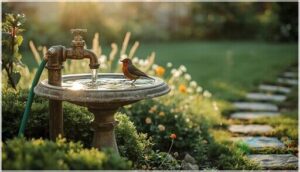
Placement matters, but so does practicality. A birdbath you can’t easily refill or clean won’t stay in good shape for long — and birds notice when the water goes stale.
Here’s what to think about regarding water access.
Keep Refilling Simple With a Hose Nearby
Smart bird bath placement starts with one practical question: how far is the nearest hose? Keeping your bath within easy hose routing distance makes daily top-offs take seconds, not minutes — and that consistency matters most during summer heat.
- quick fill setup prevents water from running dry between visits
- adjustable flow valve gives you control without overfilling the basin
- Hidden tubing under bark or soil keeps things tidy while staying accessible
- seasonal hose storage before winter to protect your setup
Consider Automatic Refill or Drip Options
If a hose nearby keeps things simple, automatic refillers take it one step further.
A gravity-fed setup — a raised reservoir feeding the basin — works as a power‑free refill option without any wiring.
Pair it with a float valve, and the basin self‑regulates beautifully.
| System Type | Key Benefit |
|---|---|
| Gravity-fed setup | Power-free refill, no electricity needed |
| Float valve | Holds steady depth automatically |
| Drip flow | Moving water deters mosquitoes and algae |
| Recirculating dripper | Mimics natural springs, attracts more birds |
| Auto-refill line | Reduces daily bird bath maintenance |
Float valve maintenance matters — debris can jam the mechanism, so check it weekly.
Drip flow benefits go beyond aesthetics; moving water slows algae control problems naturally.
Whether you’re optimizing bird bath placement or building a better water source for wildlife, these systems quietly do the heavy lifting.
Make Weekly Cleaning Easier and Faster
Automatic refill systems handle the water — but placement still drives how painless your bird bath cleaning routine actually is. Position the bath where you can stand comfortably, reach every edge, and tip it without awkwardness.
A Stiff Brush, use nearby, a Quick Rinse Method with the hose, and a Scheduled Cleaning Routine turn Batch Water Changes into a five‑minute habit.
Less travel, less mess, more birds.
Keep Birdbaths Away From Feeders
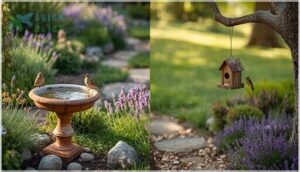
Birdbaths and feeders seem like natural neighbors, but putting them too close together causes more problems than you’d think. Seed husks, feathers, and droppings end up in the water fast — and where birds crowd, disease spreads.
Here’s what to keep in mind when spacing them out.
Reduce Seed Debris and Water Contamination
Feeders are messy by design — hulls, chaff, and seed fragments drift straight into nearby water. That’s why spacing matters. Aim for 15–30 ft between feeder and bath.
Use mulch traps around the base to catch falling debris before it reaches the water.
Weekly bird bath cleaning, basic seed filtering, and consistent clean water practices keep your water quality management tight and algae growth minimal.
Lower Crowding and Disease-transfer Risks
When birds crowd around a single birdbath near your feeder, disease spreads fast — droppings, saliva, and contaminated water do the rest.
Multiple baths across low-traffic zones naturally encourage species segregation and reduce direct contact.
Stick to a clean water schedule, with regular cleaning and refilling every two to three days. That simple rotation cuts crowding and disease-transfer risks substantially.
Balance Convenience With Healthy Spacing
Yes, convenience matters — but not at the cost of bird health. Aim for 10 to 15 feet between your bath and feeders, keeping a low-traffic corridor between both.
- Map a clear maintenance path access route for quick cleaning
- Choose a pet-free zone with good visibility and predator protection
- Keep seating proximity and convenient cleaning access in mind when finalizing placement
Adjust Placement for Every Season

A birdbath that works perfectly in June might be in the wrong spot by January. Seasonal shifts in sun, temperature, and wind mean your placement strategy has to shift too.
Here’s how to keep your setup working year-round.
Move Portable Baths Into Shade in Summer
Summer heat is no joke for your birdbath — or the birds using it. Moving portable bird baths into partial shade is one of the smartest seasonal adjustments for bird baths you can make.
It’s a simple heat reduction benefit that also aids algae control strategy, and evaporation management. Cooler water improves bird comfort enhancement, reduces refill frequency, and makes maintenance simplification genuinely easy.
Use Sunnier Spots in Winter Conditions
Winter flips the script — now you want full sun. Moving your bath to a sunnier spot is one of the best seasonal adjustments for bird baths you can make, using solar heat retention to slow freezing and improve temperature regulation for birds.
warm water microclimate does more than you’d think:
- Ice-free edges let smaller songbirds drink without slipping
- Snow melt visibility helps birds spot the bath against white ground
- Daylight bird attraction peaks when sunlit water glints in bright winter light
- Sun exposure slows refreezing overnight, keeping water accessible in the morning
- Warm water discourages moss and keeps the basin looking inviting
Winterizing bird baths starts here — with smarter placement, not just added gear.
Add Heaters, Wind Protection, or Seasonal Cover
Even the best placement needs backup in January. A 50-watt heater — one of the most energy‑efficient winter heating elements available — runs your entire season for roughly , making heater energy efficiency a real win.
Pair it with a natural windbreak material choice like dense shrubs upwind, add a high-density cover (250+ GSM) for overnight insulation techniques, and your winterizing bird baths setup practically runs itself.
Frequently Asked Questions (FAQs)
Where not to put a bird bath?
Avoid full sun, busy walkways, reflective windows, dense shrubs, feeders, sloped or unstable ground, flood zones, compost piles, near swimming pools, hot surfaces, and pet zones — these spots compromise bird safety and bath hygiene.
How far away from the house should a birdbath be?
Place your birdbath either within 3 feet of a window or beyond 30 feet away. That middle zone is the danger zone — birds build enough speed to seriously hurt themselves on glass.
What water depth is best for small birds?
Keep it shallow — 1 to 2 inches works best. A gentle slope and texture footing let small birds wade in safely, matching their species depth preference without risking a slip or scare.
Which materials hold up best outdoors?
The toughest materials aren’t always the heaviest.
Aluminum resists corrosion naturally, polyresin manages UV and weather-resistant conditions well, cast stone concrete lasts decades, ceramic glaze resists algae, and cedar offers solid wood rot resistance with basic sealing.
Can moving water attract more bird species?
Yes — moving water is a breakthrough.
A dripper or solar power fountain adds sound and motion that acts like a hummingbird magnet, warbler draw, and natural mosquito deterrence all at once, boosting species richness substantially.
How often should birdbath water be replaced?
Change birdbath water every one to two days — daily in summer heat. Stagnant water breeds algae and mosquitoes fast. If it looks cloudy or smells off, replace it immediately.
Do native plants near a birdbath help birds?
Native plants near a birdbath absolutely help birds.
They provide insect habitat, berry resources, and seasonal nectar while supporting predator deterrence, thermal regulation, and habitat enrichment — making bird bath placement far more effective within a bird-friendly landscape.
Conclusion
Imagine your birdbath, once ignored, now buzzing with winged visitors—a coincidence? No, it’s smart design.
By prioritizing safety, visibility, and stability, you’ve transformed it from yard decor into a essential oasis. Birds thrive where they feel secure, and your careful where to place a birdbath in your yard choices prove it.
Watch as sparrows splash and finches flock, trusting the space you’ve crafted. This isn’t just about water; it’s about creating a sanctuary that fits seamlessly into their world—and yours. Now, sit back and enjoy the show.
- https://www.gardeningknowhow.com/garden-how-to/beneficial/bird-bath-placement-mistakes
- https://www.thegardengates.com/blogs/beyond-the-garden-gates/location-is-everything-where-to-place-outdoor-birdbaths
- https://homeandroost.co.uk/blogs/garden-birds/where-to-place-a-bird-bath
- https://www.aosom.com/blog-where-to-place-a-bird-bath-for-maximum-bird-activity-and-safety.html
- https://birdsinthetree.com/where-is-the-best-place-to-put-a-bird-bath/