This site is supported by our readers. We may earn a commission, at no cost to you, if you purchase through links.

Your birdhouse won’t sit empty if you know which birds use bird houses in different seasons. Eastern bluebirds claim nest boxes in March and April, raising broods through summer before heading south. Come October, those same boxes become winter hotels for chickadees and nuthatches seeking shelter from freezing nights.
The entrance hole that welcomes a wren in May might be too small for a downy woodpecker roosting in January. Each species arrives with specific needs—from hole size to interior space—and timing your setup right means you’ll host residents year-round instead of watching your birdhouse gather cobwebs.
Table Of Contents
Key Takeaways
- Different bird species use birdhouses for distinct seasonal purposes—eastern bluebirds, chickadees, and wrens nest during spring and summer (March through August), while chickadees, nuthatches, and woodpeckers use the same boxes as winter roosting shelters when temperatures drop.
- Entrance hole size determines which species can use your birdhouse, with chickadees and wrens needing 1-1/8 inch openings, bluebirds requiring 1.5 inches, and woodpeckers needing 2.25 inches to access the cavity safely.
- Year-round birdhouse residents like chickadees and nuthatches shift their behavior seasonally, nesting in spring and then using the same boxes for cold-weather roosting on freezing nights to conserve body heat.
- Strategic birdhouse placement and maintenance—including seasonal cleaning between tenants, predator guards, and proper orientation with morning sun exposure—keeps boxes occupied throughout the year and supports multiple species across different seasons.
Which Birds Use Bird Houses Each Season?
Birdhouse activity shifts throughout the year as different species come and go based on their needs. Some birds claim your houses during breeding season, while others seek shelter when temperatures drop.
Let’s look at which birds use birdhouses during spring and summer nesting, fall and winter roosting, and year-round residency.
For the best results, choose birdhouse supplies online that match the specific entrance hole sizes and interior dimensions each species needs.
Birds Nesting in Spring and Summer
Spring migration triggers nesting patterns in many bird species. From March through June, bluebirds, chickadees, and wrens choose your birdhouse for breeding season activities. These cavity-nesters often raise summer broods into August, with fledging success peaking in late spring.
You’ll notice breeding habits shift as temperatures rise—tree swallows and titmice favor boxes during early summer, supporting multiple clutches and substantial bird species identification opportunities.
Researchers rely on scientific study summaries to understand bird behavior and population dynamics.
Species Roosting in Fall and Winter
Once nesting season ends, fall migration brings new visitors seeking winter roosting spots. Chickadees, nuthatches, and woodpeckers claim cavities as temperatures drop, using your birdhouse for cold weather shelter rather than nesting behavior.
These winter visitors still help with natural bird house pest control, though their effectiveness drops when harsh weather keeps them sheltered inside.
These bird species huddle inside on freezing nights to conserve heat—roosting behavior that peaks when winds calm and mercury plummets. Your backyard birding setup becomes essential bird shelter, supporting bird conservation through harsh months.
Understanding language patterns can help describe the behaviors of these bird species.
Year-round Birdhouse Residents
Chickadees and nuthatches stand out as true year-round residents, shifting from nesting behavior in spring to roosting behavior when cold snaps hit. Winter insulation matters—these resident species pack into well-maintained boxes on frigid nights, relying on cold weather adaptation to survive.
To support these hardy winter visitors, follow seasonal birdhouse preparation guidelines that cover both nesting setup and cold-weather roosting needs.
Proper birdhouse maintenance and strategic birdhouse placement turn your setup into an essential bird shelter, supporting bird conservation and bird-friendly gardens through every season.
Common Bird Species by Season
Different birds show up at your birdhouse depending on the time of year and what they need. Some arrive in spring to raise their young, while others seek winter shelter when the cold sets in.
If you’re in New Jersey, you can plan your birdhouse setup around common backyard birds of New Jersey and their seasonal patterns.
Let’s look at which species you’re most likely to see during each season.
Spring Nesters—bluebirds, Chickadees, Wrens
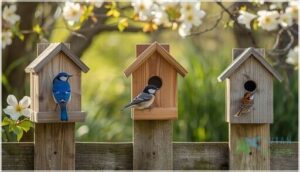
When temperatures climb and daylight lengthens, three beloved cavity-nesters will eagerly claim your nesting boxes. Bluebirds, chickadees, and wrens each bring unique breeding patterns and birdhouse design preferences to your backyard.
To boost fledging success during spring nesting season, focus on these essentials:
- Mount bluebird boxes with 1.5-inch entrance holes in open areas by March
- Install chickadee boxes with 1-1/8 inch openings near dense vegetation in early spring
- Position wren houses with 1-inch entrances in brushy spots by April
Summer Users—tree Swallows, Titmice, House Sparrows
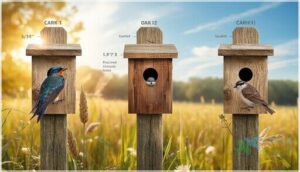
As temperatures peak, tree swallows, titmice, and house sparrows dominate birdhouses. Tree swallows prefer 1.4–1.5 inch entrance holes near open areas, nesting from May through July. Titmice select 1-inch openings in wooded spots, breeding March to July. House sparrows occupy urban boxes with larger entrances throughout June and August.
Position your boxes away from direct afternoon sun to prevent overheating during summer nesting patterns.
Winter Shelter Seekers—nuthatches, Woodpeckers, Chickadees
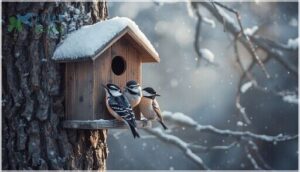
When cold winds arrive, nuthatches, woodpeckers, and chickadees turn your birdhouses into cozy nighttime shelters. These winter adaptations help them conserve energy through roosting behavior in insulated cavities.
Key cold weather strategies include:
- Nuthatches occupy snug 1.25-inch entrance holes for heat retention
- Downy woodpeckers roost in larger 1.5-inch openings
- Chickadees prefer tight 1-inch entrances that trap warmth
- Interior dimensions under 5×5 inches provide better birdhouse insulation
- Clean boxes reduce disturbance, supporting consistent shelter preferences
How Seasonal Changes Affect Birdhouse Use
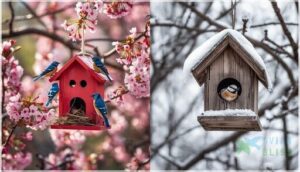
Birds don’t use birdhouses the same way all year long. Their needs shift dramatically as seasons change—from raising chicks in spring to finding shelter during winter storms.
Understanding these seasonal patterns helps you see why a birdhouse that’s bustling in May might sit empty in November.
Breeding and Nesting Patterns by Season
Spring Nesting kicks off as daylight increases and insect populations surge—your birdhouse becomes prime real estate for bluebirds and chickadees. These breeding cycles often yield one or two broods if food stays abundant through summer.
Bird Behavior Patterns shift dramatically: nesting strategies favor suitable cavities with proper entrance sizes, while Seasonal Migration reduces occupancy by late fall, impacting birdhouse placement decisions you’ll make.
Roosting and Shelter Needs During Cold Months
When nighttime temperatures plunge below freezing, your birdhouse transforms from nursery to thermal shelter—chickadees and nuthatches cram inside roost boxes to conserve precious body heat.
When temperatures plunge, birdhouses become thermal shelters where chickadees and nuthatches huddle together to survive freezing nights
Winter roosting demands tight, dry cavities built from untreated wood with minimal ventilation and drainage to prevent condensation. Cold weather survivors need:
- Narrow entrance holes (1 to 1.5 inches) that lock out larger predators
- Snug interiors offering bird insulation against wind chill
- Sun-facing placement away from prevailing gusts
Impact of Weather on Birdhouse Occupancy
Heavy rain and high winds can cut your birdhouse occupancy in half—waterlogged nests drive birds to natural roosts until conditions improve. Weather patterns shape nesting strategies and bird behavior throughout the year.
You’ll see bluebirds and wrens abandon boxes during prolonged storms, while chickadees spike roosting during cold snaps. Proper ventilation and drainage help your birdhouse weather any climate effects.
Birdhouse Design Preferences by Species

Getting the right birdhouse design isn’t just about looking good in your yard—it’s about matching what each species actually needs to feel at home. Different birds have surprisingly specific preferences regarding entrance hole sizes, interior space, and where you place the box.
Let’s break down the key design features that’ll help you attract the birds you want to see.
Optimal Entrance Hole Size for Each Bird
Your entrance hole size can make or break your birdhouse’s success. Cavity-nesting birds need precise openings: chickadees and wrens thrive with 1 1/8-inch holes, while titmice prefer 1 1/4 inches. Eastern bluebirds do well at 1 1/2 inches, and woodpeckers require larger 2 1/4-inch entrances.
These measurements aren’t arbitrary—they help your target bird species while deterring competitors and predators from invading the nest box.
Interior Dimensions and Materials for Seasonal Use
Beyond the entrance hole size, your birdhouse interior matters just as much. You’ll want a nesting depth of 6 to 8 inches and a floor width of 4 to 6 inches for most cavity nesters.
Choose untreated cedar or pine for material selection—these woods regulate temperature naturally. Include ventilation gaps near the top and drainage holes below.
Seasonal insulation helps winter roosters, but keep surfaces smooth for easy cleaning between occupants.
Placement and Orientation for Seasonal Attraction
Where you position your birdhouse changes everything. Here’s what works:
- Morning sun exposure with afternoon shade keeps temperatures balanced through the breeding season.
- Birdhouse elevation matters—mount smaller species at 4–6 feet, larger ones at 6–10 feet for ideal nest box installation.
- Entrance orientation toward open habitats improves seasonal visibility for incoming parents.
- Ventilation strategies include facing away from winter winds while allowing natural airflow.
- Space houses 25–30 feet apart to support bird habitat creation without territorial conflicts.
Tips to Attract Birds Year-Round
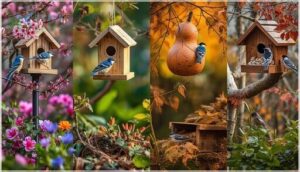
You’ve picked the right birdhouse and placed it where your target species will find it. Now it’s time to make sure birds actually stick around through every season.
Here are three practical strategies to keep your birdhouses occupied year-round.
Preparing and Maintaining Birdhouses for Each Season
Success starts with seasonal cleaning and year-round maintenance of your birdhouses. Clean nest boxes in late winter before spring nesting begins, removing old materials and disinfecting with bird-safe solutions. Winterization tips include sealing gaps and checking for rot. Regular birdhouse renovation ensures safe nesting box design and proper bird-friendly gardens. Install fresh nesting materials when needed for ideal birdhouse installation.
| Season | Key Maintenance Tasks |
|---|---|
| Spring | Inspect, clean, repair damage before March |
| Summer | Monitor occupancy, check ventilation |
| Fall | Remove debris, prepare for winter roosting |
| Winter | Seal drafts, ensure drainage clear |
| Year-round | Document use, rotate boxes to reduce parasites |
Using Predator Guards and Proper Cleaning Techniques
Predator guards block climbing pests and reduce entrance hole obstructions from raccoons and snakes. Metal baffles on poles work best. Inspect guards each spring and tighten fasteners before nesting season begins.
For birdhouse sanitation, clean boxes once yearly after breeding ends—wear gloves and use a 1:9 bleach solution, then rinse and dry completely. Regular guard maintenance and proper cleaning schedules keep your nesting box design safe for returning birds.
Enhancing Your Garden Habitat for Seasonal Diversity
Around your birdhouses, native plants and thoughtful garden layout create a thriving avian habitat that sustains backyard birds year-round. Boost biodiversity support with these wildlife gardening essentials:
- Plant native flowers and shrubs that provide seeds and insects across seasons
- Add shallow water features with perches nearby for drinking and bathing
- Layer vegetation—tall trees, mid-height shrubs, and ground cover—for shelter
- Maintain healthy soil quality by reducing pesticides that harm insect prey
- Connect garden zones to hedgerows, creating bird friendly gardens that enable seasonal movement
This garden habitat creation approach transforms your yard into a vibrant ecosystem.
Frequently Asked Questions (FAQs)
Do migratory birds return to the same birdhouse?
Yes, many migratory birds show strong birdhouse loyalty. Bluebirds and purple martins often return to the same nest box each spring, demonstrating impressive site fidelity when conditions remain favorable and predators stay away.
Can multiple bird species share one birdhouse?
Mixed-species occupancy rarely occurs simultaneously. Bluebirds and chickadees may use similar boxes in succession, not together.
Winter roosting can briefly overlap, but breeding season competition usually prevents true cavity sharing among different nesting species.
How do birds find birdhouses in new locations?
Birds find new birdhouses through visual cues like habitat features, open spaces, and nearby perches.
They scan for entrance holes, assess safe flight paths, and respond to territorial behavior from resident birds during nest site selection.
What materials do birds prefer for nest building?
Grasses, cattail down, and soft mosses top your feathered friends’ wish list for nest lining—they offer cushioning and warmth.
Feathers, animal hair, and fine twigs help weave a snug cup that shields eggs from the cold.
Should birdhouses be painted or left natural?
A coat of color can be like armor for your birdhouse design. Light, non-toxic paint options shield wood finishes from climate effects while prioritizing bird safety, supporting cavity-nesting birds’ nesting habits year-round with proper maintenance tips.
Conclusion
Think of your birdhouse as a neighborhood inn—spring guests check in to raise families, winter travelers seek refuge from the storm. Understanding which birds use bird houses in different seasons transforms that wooden box from seasonal rental to year-round destination.
Match your entrance holes to your visitors, clean between tenants, and you’ll discover the quiet satisfaction of providing exactly what’s needed, exactly when it matters. Your backyard becomes their refuge, season after season.
- https://www.allaboutbirds.org/news/how-to-help-birds-in-winter/
- http://www.wild-bird-watching.com/Building_Bird_Houses.html
- https://nestwatch.org/wp-content/themes/nestwatch/birdhouses/eastern-bluebird.pdf
- https://www.onelook.com/?loc=olthes1&w=subpoint
- https://www.sciencedirect.com/science/article/pii/S2949916X23000464