This site is supported by our readers. We may earn a commission, at no cost to you, if you purchase through links.
You fill the bird bath, arrange it just right, and wait. Nothing. Days pass, and your bird bath sits there like an ignored invitation while birds flock to your neighbor’s yard. Frustrating, right?
Here’s the thing: birds are pickier than you’d think about water sources. They’re looking for specific conditions that signal safety, cleanliness, and easy access—not just any puddle will do.
The culprit behind your empty bird bath usually boils down to a handful of fixable issues: water that’s too deep or dirty, poor placement that screams “predator danger,” or a design that makes landing feel like an Olympic gymnastics routine. Once you understand what birds actually need (spoiler: it’s simpler than you’d guess), you can transform that lonely basin into the neighborhood hotspot.
Table Of Contents
Key Takeaways
- Birds avoid baths with water deeper than 1-2 inches or slick surfaces lacking texture, so add rocks and texture and ensure sloped edges for safe landing and wading.
- Dirty or stagnant water signals disease risk to birds, requiring you to scrub the bath every 1-2 weeks and replace water every 1-2 days to prevent algae and bacterial growth.
- Placement matters critically—position your bath 10-15 feet from cover in open areas with morning sun and afternoon shade, ensuring clear sightlines for predator detection while keeping escape routes accessible.
- Moving water from drippers, misters, or small fountains attracts birds far more effectively than still water, as the sound and ripples signal freshness and safety while preventing mosquito breeding.
Why Aren’t Birds Using My Bird Bath?
You set up the perfect bird bath, but the birds? They’re ignoring it completely. Frustrating, right?
The trick is choosing the right style and placement—bird baths designed specifically for decks tend to attract more visitors than generic models.
Let’s look at the most common culprits behind this problem and what your feathered friends are actually telling you.
Common Reasons Birds Avoid Bird Baths
Often, your bird bath sits empty because of a few key reasons birds avoid bird baths. Here’s what might be keeping them away:
- Water Temperature – Direct sun makes water too hot for comfortable bathing.
- Predator Avoidance – Poor placement exposes birds to danger during vulnerable moments.
- Water Quality – Stagnant, dirty water signals disease risk.
- Bath Maintenance – Neglected cleaning deters health-conscious visitors.
Regular inspection of your bath is vital to avoid issues outlined in these.
Understanding Bird Behavior Around Water
Bird behavior around water reveals fascinating patterns. Most species prefer shallow sources—1 to 2 inches deep—for safe bathing rituals and bird hydration. Feather maintenance drives frequent bathing, while moving water signals freshness.
They visit after dawn and late afternoon, using water quality as a health cue. Understanding these water preferences helps you create an irresistible setup for attracting birds to gardens. Maintaining clean feathers and preening habits is essential for birds’ survival and overall health.
Identifying Specific Problems in Your Yard
Now that you know what birds want, look at your yard with a detective’s eye. Soil compaction and drainage issues create standing water—mosquito breeding grounds that repel birds.
Poor yard lighting near the bath limits predator avoidance visibility. Dirty water signals danger, while pest control chemicals contaminate drinking sources.
Regular bird bath maintenance ensures water quality and bird safety in your backyard haven.
Bird Bath Depth and Design Mistakes
Here’s the thing: your bird bath might look perfect to you, but birds see it differently. If the water’s too deep or the surface is slick as glass, they’ll take one look and fly right past.
Your bird bath might look perfect to you, but if the water’s too deep or the surface too slick, birds will fly right past
Let’s break down the three biggest design mistakes that turn birds away—and how to fix them.
If you’re just getting started, check out this guide on how to set up a bird cage properly to avoid these pitfalls from day one.
Ideal Water Depth for Bird Safety
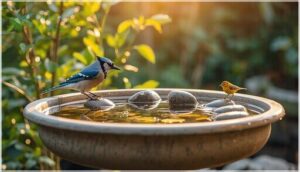
Think of deep water as a trap door for tiny birds. Your bath needs shallow water—just 1 to 2 inches—to prevent bird drowning and guarantee bird safety.
Here’s what works:
- Keep edges at 1 inch for small songbirds
- Limit central depth to 2 inches maximum
- Add rocks for safe landing areas
- Provide depth variation benefits across the basin
- Test with your finger—ankle-deep feels right
Shallow bath design saves lives!
Importance of Sloped and Textured Surfaces
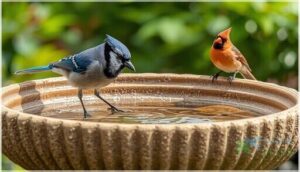
A smooth bowl is like an ice rink for wet feet. You need sloped surface benefits and textured material to prevent slips.
Proper edge design guides water flow away from the rim, keeping landings dry and safe. Surface grip lets birds wade confidently into shallow water without tumbling.
This smart bird bath design and placement protects bird safety in gardens while simplifying bird bath maintenance and supporting bird hygiene!
Choosing Bird Bath Materials and Features
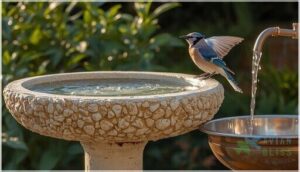
Material selection makes or breaks your setup. Stone and concrete deliver durability factors that last decades, while metal resists cracking in freezing climates.
Surface texture with pebbled finishes gives birds solid footing—critical for shallow water bathing. Light color options reflect heat, keeping water cool.
Feature integration like built-in drippers or copper deck mount bird baths adds movement that birds can’t resist. Even a bird bath heater extends winter use!
Cleanliness and Water Quality Issues
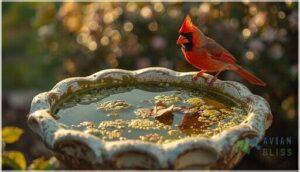
Here’s the dirty truth: birds won’t touch water that looks or smells off. Even a thin film of algae or a few floating leaves can send your feathered friends searching for cleaner drinking spots.
Let’s tackle the three biggest water quality culprits and get your bird bath back in business.
How Dirty Water Deters Birds
Dirty water is the top culprit when birds skip your bath. Cloudiness, algae control issues, and visible debris signal water pollution that birds instinctively avoid.
Bacterial growth in stagnant water can cause eye infections and feather problems. Birds prefer clean water—it’s safer for drinking and bathing. Without proper bird bath maintenance and cleaning, even the fanciest bath becomes a no-fly zone.
Effective Bird Bath Cleaning Routines
Regular bird bath maintenance keeps your feathered visitors coming back! Scrub the basin every 1 to 2 weeks with a dedicated brush—skip the dish soap.
Between full cleanings, blast away debris with water. For stubborn stains, soak in vinegar for 15 minutes.
Rinse thoroughly until odor-free, then refill with clean water. Your birds will notice the difference immediately.
Preventing Disease and Algae Growth
Want to keep algae and harmful microbes at bay? Bird health depends on diligent water purification and disease prevention!
- Empty and scrub weekly with a brush and mild soap to remove biofilm (microbe management starts here).
- Disinfect quarterly using ½ cup white vinegar per gallon, then rinse until odor-free.
- Shade the bath 3 to 6 hours daily to slow algae control issues.
- Replace water every 1 to 2 days to prevent stagnation.
Proper bird bath maintenance equals healthier visitors!
Bird Bath Placement and Environmental Factors
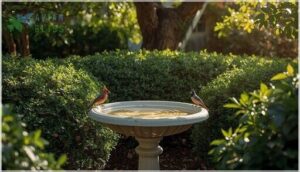
You’ve got the cleanest bird bath on the block, but still no takers?
Location might be the culprit. Where you place your bird bath—and what’s around it—can make or break whether birds feel safe enough to stop by for a splash.
Best Locations for Bird Bath Visibility
Where you place your bird bath can make or break your success! Birds need open area placement with clear sightlines—they won’t risk bathing if they can’t spot danger. Position your bath 10 to 15 feet from cover in a visible pathways zone. Morning sun, afternoon shade? That’s your sweet spot for sun shade balance. Think like a cautious sparrow surveying the scene.
| Location Feature | Why Birds Care | Your Action |
|---|---|---|
| Wide open radius | Aerial visibility from above | Choose unobstructed lawn area |
| Multiple approach angles | 360-degree threat detection | Avoid corners or tight spaces |
| Morning sun exposure | Warms water, attracts early bathers | Face east when possible |
| Partial afternoon shade | Prevents overheating and algae | Plant shrubs on west side |
| Level, stable surface | Prevents wobbling during use | Use flat ground or pedestal |
Your garden design for birds should blend bird-friendly environment elements with predator-free zones—keeping that escape route handy without sacrificing bird bath visibility!
Providing Safety From Predators
Birds won’t bathe if they feel like sitting ducks. Providing safety from predators means creating escape routes and clear sightlines.
Here’s your predator proofing checklist for bird safety in gardens:
- Place tall stable perches within 3-5 feet for quick escapes
- Avoid dense shrubs on all sides—birds need visibility
- Add a low barrier to deter ground predators
- Install motion-sensor lights for dawn/dusk wildlife attraction
- Keep one side completely open as a bird refuge zone
Smart predator deterrents equal confident bathers!
Sun, Shade, and Surrounding Vegetation
Once you’ve nailed predator safety, sun exposure becomes the next culprit. Too much direct sun dries water fast and heats it uncomfortably. Partial shade during peak afternoon hours keeps things cool and inviting!
Here’s your sun-shade balance guide:
| Sun Exposure | Shade Patterns | Vegetation Management |
|---|---|---|
| Morning sun only | Deciduous tree canopy | 3+ feet clearance |
| Partial afternoon shade | Dense evergreen shrubs | Low grasses nearby |
| Dappled light | Shade cloth (temporary) | Mulch around base |
| Full shade (winter) | High canopy branches | Flowering plants 6-12″ away |
| Rotating seasonal angles | Mixed sun-shade zones | Native plant clusters |
Smart plant placement creates microclimate effects that attract more species while maintaining a bird-friendly environment with natural cover!
Proven Tips to Attract Birds to Your Bird Bath
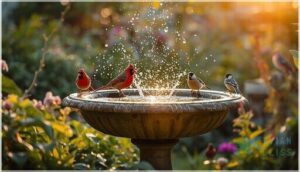
You’ve got the basics down—now let’s make your bird bath irresistible.
A few simple tweaks can turn your quiet basin into the neighborhood hotspot for feathered visitors.
Here are three proven strategies that’ll have birds lining up for a splash.
Using Drippers, Misters, and Moving Water
Nothing grabs a bird’s attention quite like moving water. The gentle drip, splash, or mist signals a safe, fresh spot to drink and bathe.
Here’s how to make it work:
- Install a dripper at 0.5 to 2 GPH—slow enough to avoid overflow but steady enough to create ripples and sound.
- Add a small fountain or pump to circulate water, preventing stagnation and deterring mosquito larvae.
- Use a misting system for larger areas, adjusting spray radius to keep water shallow and non-threatening.
Moving water benefits go beyond attraction. Water movement aerates the bath, keeping it clearer longer and reducing algae films. Just remember pump maintenance—clean filters regularly to prevent clogs and guarantee consistent Water Flow Rates. Even battery-powered water features deliver results, turning a static basin into an irresistible oasis.
Adding Perches and Landing Spots
You’ve got the water moving—now give your visitors somewhere to land. Perch Variety matters: mix thin dowels with thicker branches near the bath edge.
Landing Platforms with textured surfaces let birds test the water safely before hopping in. Position perches within easy reach of the bath—about 6 to 12 inches away—so feathered friends can approach without risky leaps. It’s simple Enrichment Activities that boost Bird Safety.
Creating a Bird-Friendly Garden Environment
Your garden layout planning turns a simple bath into a bird sanctuary. Think layers: native plant selection that delivers food, shelter, and year-round interest.
- Plant berry-producing shrubs 6 to 15 feet from your bath for quick cover
- Group native flowering perennials in clusters to create safe foraging zones
- Keep some leaf litter on the ground—it hosts insects birds crave
- Mix evergreens with deciduous plants for shelter across all seasons
Wildlife conservation strategies start right in your backyard!
Frequently Asked Questions (FAQs)
How often should I refill my bird bath?
You need to change water frequently—but not obsessively. Refresh your bird bath every two to three days in warm months, weekly when cooler, and daily during summer heat waves or heavy usage.
Can I use tap water in bird baths?
Yes, you can use tap water in bird baths. If it’s safe for you, it’s fine for birds.
Let tap water sit 24 hours to reduce chlorine, then change it daily for freshness.
What temperature water do birds prefer for bathing?
Birds prefer lukewarm water between 70 and 85 degrees Fahrenheit for bathing habits. This temperature range promotes thermal comfort across seasons.
A bird bath heater helps maintain ideal water temperature during cold weather for consistent bird preferences.
Do different bird species have different bathing preferences?
Bird size matters in terms of bathing techniques and species specificity. Sparrows prefer shallow puddles for quick dips, while ducks dive deep.
Different feather preening styles shape their water preferences entirely.
Should I remove my bird bath during winter?
Actually, keeping your bird bath through winter helps visiting birds. They need water even during freezing weather. Consider a heated birdbath or adding a simple heater to prevent ice formation.
Conclusion
Turns out birds have higher standards than most dinner guests—who knew? But now you’ve got the blueprint: shallow water, a clean basin, strategic placement, and maybe a little moving water for flair.
Address why birds aren’t using my bird bath by fixing these basics, and you’ll go from zero visitors to a full-fledged avian social club. Your bird bath won’t stay empty for long. Those picky little critics will finally show up, splash around, and make your yard their favorite stop.