This site is supported by our readers. We may earn a commission, at no cost to you, if you purchase through links.
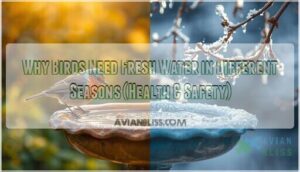
A robin collapses mid-flight on a scorching July afternoon, its wings suddenly heavy. The culprit isn’t disease or injury—it’s dehydration. Birds lose water rapidly through respiration and heat regulation, especially during temperature extremes.
In winter, the problem flips: ice locks away moisture when birds need it most. Understanding why birds need fresh water in different seasons reveals just how vulnerable these creatures are to environmental shifts.
Their survival hinges on consistent access to clean water, whether they’re battling summer heat, preparing for migration, or enduring freezing temperatures. You can make a difference by providing reliable water sources year-round, supporting both their immediate health and long-term population stability.
Table Of Contents
Key Takeaways
- Birds lose water rapidly through respiration and heat regulation, making daily access to fresh water as essential as food for their survival across all seasons.
- Dehydration shows through visible signs like sunken eyes, dull plumage, and reduced activity, while clean water prevents disease transmission and maintains healthy feather condition for flight.
- Seasonal challenges shift dramatically from summer’s rapid water loss through panting to winter’s frozen sources, with migration periods demanding 20% higher hydration rates for traveling birds.
- Your backyard bird bath becomes a conservation tool when maintained properly with daily water changes in summer, shallow depths under 2 inches, and heated options to prevent winter freezing.
Why Do Birds Need Fresh Water Year-Round?
Water isn’t just a nice addition to your backyard—it’s a lifeline for birds every single day of the year. Birds rely on fresh water for drinking, bathing, and keeping their bodies at the right temperature, no matter the season.
Water is a lifeline for birds every day of the year, essential for drinking, bathing, and temperature regulation
Let’s look at three key ways water aids their survival throughout the year.
Water’s Role in Bird Survival
Water keeps birds alive by supporting essential body functions you mightn’t see. Fresh water drives their metabolism, aids digestion, and regulates temperature—critical for bird physiology.
Avian hydration maintains feather condition through preening, ensuring proper insulation and flight. Without adequate water intake, thermoregulation fails during temperature extremes.
Access to quality fresh water directly impacts bird health and wellness, making it as essential as food for their survival. The importance of scientific study summaries, such as those audited using methodological rigor, highlights the need for accurate information in understanding bird health.
Hydration and High-Energy Lifestyles
You’ll notice active birds demand constant hydration to fuel their rapid metabolic rates. Flight endurance depends on proper water balance, as dehydration reduces muscle performance during sustained activity.
Energy expenditure increases dramatically during territorial displays and migration, raising water intake needs. Avian physiology links water quality directly to stamina—your backyard water source sustains these high-energy lifestyles, maintaining bird health and wellness through every demanding season.
Water for Bathing and Thermoregulation
Beyond drinking, birds rely on bathing to maintain feather integrity and manage body temperature. Fresh water facilitates these daily hygiene rituals:
- Bathing removes oils and dirt that compromise feather insulation.
- Wet plumage aids evaporative cooling during heat stress.
- Regular feather care reduces parasite loads on skin surfaces.
- Post-bath preening realigns barbs for ideal thermoregulation.
- Clean water quality prevents bacterial irritation affecting bird health.
Consistent bird bath access ensures proper bird hygiene year-round.
How Seasonal Changes Affect Birds’ Water Needs
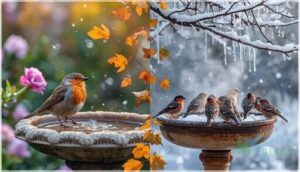
Birds don’t experience seasons the same way you might flip through a calendar. Their water needs shift dramatically as temperatures rise and fall, as migration windows open and close, and as natural sources freeze or evaporate.
Understanding these seasonal patterns helps you provide the right water support when birds need it most.
Increased Water Loss in Summer Heat
Hot days put your backyard birds under serious pressure. When temperatures climb, birds lose water rapidly through exposed skin and panting, increasing their daily water intake needs.
Summer heat triggers faster evaporation from their bodies, raising dehydration risks if water sources dry up.
Heat stress intensifies as birds struggle with thermoregulation, making fresh water essential for their survival and health.
Winter Challenges and Freezing Water
When cold weather settles in, frozen water becomes a major survival challenge for your backyard birds. They still need daily hydration even when temperatures drop below freezing.
Winter hydration depends on finding unfrozen water sources throughout the day. Here’s what happens when water freezes:
- Ice coverage prevents birds from drinking enough to meet daily needs
- Energy balance suffers when dehydration sets in during cold snaps
- Heated birdbaths provide reliable access to liquid water
- Deicer safety matters when you add heating elements to bird baths
- Cold weather adaptation requires consistent unfrozen water availability
You can prevent frozen water risks by maintaining shallow, ice-free sources.
Migration Periods and Hydration Demands
Migratory stopovers reveal intense water turnover rates in traveling birds. During seasonal migration, your backyard becomes a lifesaving refueling station where avian dehydration risks climb sharply. Flight hydration demands increase by 20% in small songbirds crossing long distances. Bird migration depends on reliable water sources and quality at rest stops.
Here’s what drives their hydration needs:
| Migration Phase | Water Demand | Critical Factor |
|---|---|---|
| Spring departure | Rapid refueling | Reproductive timing |
| Summer passage | Peak evaporative loss | High temperatures |
| Autumn journey | Pre-winter reserves | Corridor aridity |
| Stopover rest | 35-50% increase | Fat accumulation |
| Night flight | Elevated risk | Water scarcity |
Access to clean water determines stopover duration and survival success during seasonal changes in bird hydration patterns.
Health Impacts of Water Availability on Birds
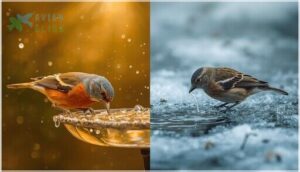
Water availability directly impacts a bird’s physical health and daily behavior. Without consistent access to clean water, birds show visible signs of distress that affect their survival.
Let’s examine how water shortages influence their well-being throughout the year.
Signs of Dehydration in Birds
You can spot dehydration in birds through several clear indicators. Watch for lethargy or reduced activity, especially during hot weather. Sunken eyes and dull, fluffed plumage signal poor avian hydration. Birds may show sticky beaks and rapid breathing. Dark yellow urine and dry droppings reveal inadequate water intake.
These dehydration signs require immediate attention to restore bird health and proper water quality.
Effects on Feather Condition and Behavior
Fresh water directly shapes feather maintenance and bird grooming behavior year-round. Dehydration leads to dull, brittle feathers and reduced flight readiness. Bird hydration aids proper oil distribution across feathers, maintaining waterproofing.
Your feathered friends display longer preening sessions when clean water is available, strengthening plumage health during molting patterns. Water quality influences avian health by enabling thorough bathing, which improves feather alignment and overall bird behavior.
Importance of Clean, Fresh Water for Wellness
Water quality determines avian health outcomes more than you might expect. Clean water reduces disease transmission and aids bird hydration by preventing harmful bacteria growth. Fresh sources maintain proper water intake while minimizing gastrointestinal stress on your backyard visitors.
Contaminant-free supplies improve feather condition and daily energy levels. You provide essential bird health support when offering consistently clean, fresh water year-round.
Providing Safe Water Sources in Every Season
You can keep birds healthy and hydrated throughout the year by choosing the right water features for each season. The type of bird bath you select matters, as does how you maintain it during temperature extremes.
Here’s what you need to know about providing safe, accessible water no matter what the weather brings.
Bird Bath Types and Seasonal Adaptations
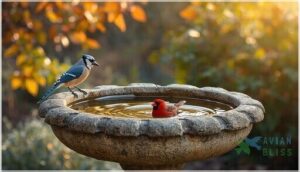
You’ll want to choose a bird bath that suits seasonal conditions. Shallow designs no deeper than 2 inches keep small birds safe year-round.
Porous materials like concrete or natural stone retain warmth for early morning bathing. Consider heated birdbaths or floating models you can reposition for best sun exposure.
Rough textures provide secure footing for safer water access across seasons.
Preventing Water Freezing in Winter
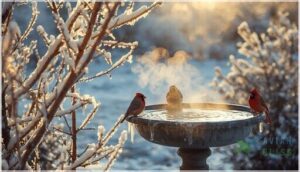
During winter, you’ll face ice formation that blocks birds from life-sustaining water. Heated birdbaths maintain liquid water even when temperatures drop below freezing.
These winter water solutions use low-watt heater mats or thermostatically controlled bowls that prevent freezing without high energy costs.
Place your heated unit in a wind-protected spot with sun exposure to reduce heat loss and optimize frost protection techniques for reliable access.
Maintenance and Cleaning for Bird Health
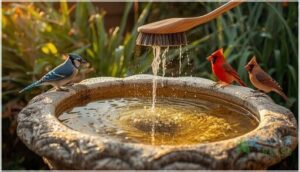
Beyond keeping water from icing over, you need regular cleaning schedules to protect bird health. Scrub bird baths every 2-3 days with a stiff brush and vinegar solution to remove algae and biofilm. This sanitation method maintains water quality and hygiene standards without harsh chemicals.
Equipment maintenance includes inspecting for cracks where bacteria hide. Clean water sources prevent disease spread, supporting conservation efforts for bird habitats in your yard.
Supporting Bird Populations Through Water Access
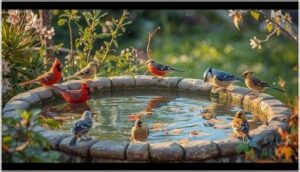
When you provide water in your backyard, you’re doing more than helping individual birds—you’re contributing to broader conservation efforts. Your bird bath or pond becomes a critical resource that aids local populations, especially in areas where natural water sources have disappeared.
Let’s explore how accessible water transforms yards into conservation spaces that benefit entire bird communities.
Backyard Water Features as Conservation Tools
Your simple bird bath becomes a critical conservation tool when you maintain it properly. Fresh water attracts diverse species to urban habitats, supporting bird populations facing habitat loss.
- Reliable water features reduce disease transmission from stagnant sources
- Shallow basins welcome small passerines and hummingbirds alike
- Clean water helps birds survive heat waves and droughts
- Well-maintained wildlife ponds create self-sustaining eco systems
- Your backyard birds benefit from predictable, contaminant-free drinking spots
Creating Bird-Friendly Habitats
Water features work best when paired with native plantings that provide food and shelter. You create true bird-friendly habitat creation by combining bird baths with diverse vegetation structure. Native plants support insects birds need, while varied heights offer safe roosting spots.
Eco-friendly gardens with reduced pesticides protect food sources. This bird-friendly gardening approach transforms your yard into a complete ecosystem supporting multiple species year-round.
Community Efforts for Urban and Suburban Birds
In cities where habitat vanishes fast, you can join volunteer-led citizen science programs that track urban bird populations and water use patterns. Local governments partner with nonprofits to install heated basins and seasonal water stations.
Neighborhood initiatives now include bird-friendly policies and certification programs, transforming backyards into connected stepping stones.
Your participation strengthens urban bird conservation and bolsters wildlife conservation efforts across entire communities.
Frequently Asked Questions (FAQs)
How often should I change my bird bath water?
You’d think birds could wait, but they can’t. Change your bird bath water daily in summer heat.
Every one to two days works for cooler seasons, preventing algae and keeping your feathered visitors healthy.
What depth is safest for small birds bathing?
You should keep your bird bath between 1 and 2 inches deep for small birds. Shallow dishes with sloped edges prevent drowning and allow safe feather preening while providing adequate water access.
Can birds drink from chlorinated tap water safely?
Most wild birds tolerate chlorinated tap water in small amounts, but high chlorine levels can irritate sensitive species.
Let tap water sit overnight or use filtered sources for safer bird hydration.
Should I add supplements or vitamins to birds water?
You shouldn’t add supplements or vitamins to birds’ water without veterinary guidance. Healthy birds obtain adequate nutrients through balanced diets, and excessive supplementation risks vitamin toxicity, imbalances, and masked avian health issues.
Conclusion
A full bird bath in July prevents collapse. A thawed basin in February ensures survival. Your water source matters every single season because birds can’t adapt to scarcity—they depend on what you provide.
Understanding why birds need fresh water in different seasons transforms a simple backyard feature into a lifeline. Keep it clean, keep it accessible, and you’ll support healthier populations through heat waves, cold snaps, and migration journeys alike.
- https://www.startribune.com/evidence-that-winter-baths-can-be-bad-for-birds/504380032/
- https://blog.nwf.org/2014/12/dont-forget-water-for-birds-in-winter/
- https://x.com/godofprompt/status/1990526288063324577
- https://www.linkedin.com/posts/bohdanlukianets_tasks-study-research-activity-7373377539521667072-UTEi
- https://www.sciencedirect.com/science/article/pii/S0749208123000268