This site is supported by our readers. We may earn a commission, at no cost to you, if you purchase through links.
A robin pants with its beak open, wings drooping away from its body. It’s not sick—it’s trying to cool down. Birds don’t sweat, so when temperatures climb, they face a serious challenge. They lose water through respiration and evaporative cooling, yet natural sources like puddles and streams often disappear during summer’s peak heat. Without regular access to fresh water, even healthy birds can become dehydrated within hours.
Your backyard can become a lifeline during these critical months. Understanding why birds need water in summer helps you provide the right support, from choosing safe containers to maintaining clean sources that keep feathered visitors healthy when they need it most.
Table Of Contents
- Key Takeaways
- Why Birds Need Water in Summer
- How Water Regulates Bird Body Temperature
- The Role of Water in Bird Digestion
- Signs of Dehydration in Birds
- Bird Bathing: Health and Feather Care
- Common Water Sources for Birds
- Providing Safe Water for Birds at Home
- Maintaining Clean Water Sources
- Ecological Benefits of Summer Water Access
- Top 4 Products for Summer Bird Hydration
- Frequently Asked Questions (FAQs)
- Conclusion
Key Takeaways
- Birds can’t sweat, so they depend on water for evaporative cooling through panting and wet feathers to survive summer heat and prevent dangerous overheating.
- Dehydration happens fast in hot weather—watch for lethargy, sunken eyes, dry beaks, and ruffled feathers as warning signs that birds need immediate water access.
- Fresh water supports vital functions beyond cooling, including digestion, nutrient absorption, feather maintenance, and parasite removal through regular bathing.
- Your backyard birdbath becomes a lifeline when natural sources dry up—keep it shallow, clean it daily, and add moving water features to attract more birds safely.
Why Birds Need Water in Summer
Summer heat hits birds hard, and water becomes their lifeline when temperatures climb. Natural water sources often dry up during the hottest months, leaving birds struggling to find what they need to survive.
Understanding these seasonal challenges helps you create a reliable water source that keeps your backyard visitors healthy and safe.
Seasonal Challenges for Birds
Summer brings a perfect storm of challenges that put birds in survival mode. Heat stress from rising temperatures forces them to work harder just to stay cool. Climate change intensifies these seasonal struggles, pushing many species to their limits.
- Water scarcity becomes critical as natural sources dry up in the heat.
- Summer diet shifts demand more energy, increasing birds’ need for hydration.
- Bird migration patterns can leave exhausted travelers desperate for reliable water sources.
You’ll notice birds showing up more often at any water you provide during these tough months. Birds also rely on moving water features to help them cope with heat.
Increased Risk of Dehydration
When temperatures climb, your backyard visitors face real danger. Small songbirds lose water rapidly through breathing and their skin, forcing them to drink multiple times daily. During heatwaves, natural ponds shrink and streams slow to a trickle, leaving birds scrambling for safe hydration. Understanding the importance of scientific study summaries can help us better address the needs of birds in these situations.
| Dehydration Signs | What You’ll Notice |
|---|---|
| Lethargy | Birds sitting still, less active than usual |
| Ruffled feathers | Plumage looks unkempt or puffed out |
| Dry beak | Beak appears dull, mouth tissues pale |
| Sunken eyes | Eyes look recessed, lack normal brightness |
| Increased calls | More frequent or unusual vocalizations |
Heat stress compounds water scarcity, creating summer risks that threaten even healthy birds. Providing water for birds becomes lifesaving when drought limits moisture-rich insects they’d normally eat.
Impact of Heat on Avian Health
Heat stress pushes birds beyond discomfort into real danger. When core body temperature rises and electrolyte balance falters, your feathered friends stop eating, pant constantly, and become vulnerable to infections.
During summer heatwaves, avian mortality spikes as thermal regulation fails.
That’s why providing water for birds isn’t just helpful—it builds climate resilience against dehydration risks threatening bird health across your neighborhood.
Providing water for birds builds climate resilience against dehydration risks threatening their health across your neighborhood
How Water Regulates Bird Body Temperature
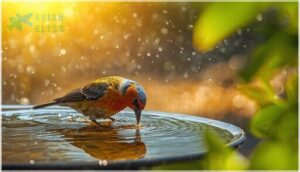
Birds can’t sweat like you do, so they rely on water for a different kind of cooling system. When temperatures climb, they use evaporative cooling to release heat and stay safe. Here’s how water helps birds beat the summer heat. That’s why ensuring birds have access to fresh water during hot months becomes essential for their survival and health.
Evaporative Cooling in Birds
When birds need water most, they rely on a sophisticated evaporative mechanism to survive scorching days. You’ll see them panting or fluttering their throat—that’s their respiratory cooling at work, lowering body temperature by several degrees. A quality bird cage water dispenser ensures your feathered friend always has access to fresh water, especially during heat stress.
Wet feathers boost this feather cooling process, wicking moisture to key sites. Without proper hydration, heat stress cripples these thermoregulation strategies, putting bird health at serious risk of dehydration.
Preventing Overheating in Hot Weather
You can shield your backyard visitors from heat stress with smart hydration management. During summer, birds ramp up water intake to power evaporative cooling and thermal regulation. Here’s how to help:
- Refill shallow basins twice daily when temperatures spike
- Add misters near feeders for quick cooling
- Place water sources in partial shade to prevent overheating
- Monitor for dehydration signs like prolonged panting
Providing water for birds in summer aids their survival when natural sources dry up.
The Role of Water in Bird Digestion
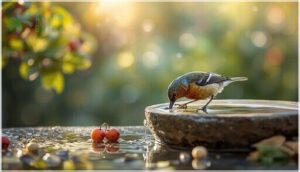
Water does more than cool birds down—it’s a key player in how they digest food. Without enough water, their bodies can’t break down meals or absorb the nutrients they need to stay healthy.
Let’s look at two important ways water aids digestion in birds. Water also supports nutrient absorption and waste elimination, which is why providing proper hydration setups near bluebird houses encourages healthier nesting activity.
Aiding Food Breakdown and Nutrient Absorption
Water powers your backyard visitors’ digestion in extraordinary ways. Without adequate hydration, birds can’t produce the saliva that starts breaking down seeds and insects. Water activates digestive enzymes and helps transport nutrients across gut walls into cells. When dehydration strikes, the entire process slows, threatening gut health and nutrient uptake.
| Digestion Process | How Water Helps |
|---|---|
| Enzyme Activation | Aids hydrolysis reactions that break down food |
| Nutrient Uptake | Allows transport proteins to move nutrients into cells |
| Bile Production | Aids fat digestion through emulsification |
| Gut Motility | Keeps food moving smoothly through the digestive tract |
The importance of water for birds becomes clear when you see how cellular hydration affects every step. From the moment food enters their beak to final nutrient absorption, bird hydration and health remain inseparable. Providing fresh water daily in a properly designed bird bath helps support their cellular hydration needs while keeping them healthy and active year-round.
Supporting Essential Cellular Functions
Cellular hydration powers every microscopic process keeping birds alive and thriving. When you provide fresh water, you’re fueling reactions that extend far beyond digestion alone.
Here’s what proper hydration sustains at the cellular level:
- Metabolic processes – Water facilitates ATP production and enzyme activity that generate energy
- Protein folding – Adequate hydration prevents aggregation and sustains proper molecular assembly
- Nucleic acid metabolism – DNA replication and repair depend on balanced fluid environments
- Osmoregulation – Cells maintain volume and prevent damage through water-mediated ion balance
Bird hydration and health connect directly to these invisible but essential processes. Dehydration disrupts cellular machinery rapidly, underscoring the importance of water for birds. Water quality matters because contaminants interfere with these delicate biochemical pathways, compromising survival during summer’s heat.
Signs of Dehydration in Birds

Spotting dehydration early can make all the difference for the birds in your yard. They’ll show you something’s wrong through changes in how they act and look.
Here are the key warning signs to watch for.
Lethargy and Behavioral Changes
When heat stress takes hold, you’ll notice bird behavior shifts dramatically. Bird lethargy becomes obvious as activity drops and vocalizations fade. Summer behavior changes include slower foraging and reduced movement at feeders.
These dehydration signs signal your feathered visitors lack thermal comfort. Watch for decreased flight, less territorial defense, and longer rest periods. Recognizing these early signs of dehydration in birds helps you provide life-saving bird hydration before conditions worsen.
Physical Symptoms (dry Beak, Sunken Eyes)
Beyond sluggish behavior, you can spot dehydration through visible physical changes. Watch for these warning signs that birds need water:
- Dry, cracked beak tissue lacking normal moisture
- Sunken eyes from fluid loss in ocular tissues
- Reduced mucous membrane turgor around the beak
- Dull, flaky appearance of facial features
- Panting-like mouth breathing patterns
These dehydration signs demand immediate attention for proper avian health and eye care.
Risks of Prolonged Dehydration
When dehydration drags on, the consequences become serious. Elevated blood viscosity strains circulation, while kidney dysfunction increases renal injury risk.
You’ll notice electrolyte imbalances triggering neurological symptoms and behavioral changes from cognitive impairment. Heat stress vulnerability skyrockets, making fluid balance critical.
These dehydration effects can lead to avian mortality if water scarcity persists, making bird care and maintenance essential for avian health.
Bird Bathing: Health and Feather Care
Water isn’t just for drinking—it’s also a bird’s spa day. When birds bathe, they’re doing serious work to stay healthy and flight-ready.
Let’s look at why a good splash matters so much for their well-being.
Removing Parasites and Dirt
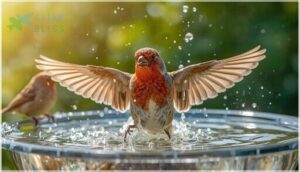
Bathing isn’t just about comfort—it’s essential parasite control for your backyard visitors. When birds splash in fresh water, they dislodge feather mites and lice that drain their energy.
Regular access to clean birdbaths promotes effective dirt removal and feather cleaning, especially during peak insect season.
Quality water matters: debris-free sources aid bird hygiene better than stagnant pools, helping birds stay healthy all summer long.
Maintaining Feather Condition
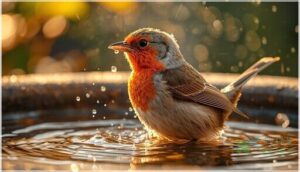
Clean water is essential for keeping feathers in top shape, ensuring optimal flight and insulation. When birds wet their plumage, they can effectively spread natural oils during preening, which helps align barbules for waterproofing and strength.
Regular access to water significantly aids in bird hygiene, particularly during the molting process and beak health maintenance. Here’s how:
- Bathing loosens debris that wears down feather structure
- Water aids in removing dust that reduces feather insulation
- Wet feathers distribute oils more effectively during plumage care
- Bird-friendly environments with clean water promote better feather maintenance year-round
Bathing as a Cooling Strategy
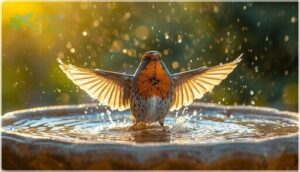
When temperatures climb, you’ll notice birds splashing more often—and for good reason. Evaporative cooling through bathing lowers their body temperature fast, reducing heat stress before it becomes dangerous.
This cooling strategy also aids feather maintenance, keeping plumage functional in extreme heat. Shallow birdbaths with cool water temperature give birds the relief they need, making your backyard an essential stop when natural sources dry up.
Common Water Sources for Birds
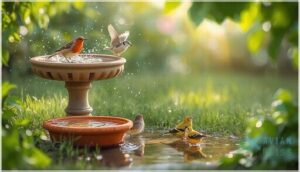
Birds find water in more places than you might think. Some sources come straight from nature, while others are ones you can set up right in your own backyard.
Let’s look at where birds go when they need a drink or a quick cool-down.
Natural Sources (ponds, Streams, Wet Foliage)
Birds naturally turn to ponds, streams, and wet foliage when they need water. Ponds offer standing water for drinking and bathing, while streams provide flowing, oxygenated sources that stay fresher. Wet foliage captures dew, giving small birds quick hydration on hot days.
Water quality in these natural water sources matters—cleaner habitats mean healthier birds and fewer parasites.
Backyard Bird Baths and Fountains
You can bring water directly to your backyard birds with thoughtful bird bath design and fountain installation. Consider these key features for creating a bird-friendly backyard:
- A shallow basin with a wide rim facilitates safe drinking and bathing
- Drippers or gentle fountain jets create movement that attracts birds
- Elevated placement on pedestals improves predator protection
Regular water feature maintenance and birdbath safety checks keep your garden hydration station welcoming all summer.
Alternative Hydration Methods
Beyond traditional bird baths, you’ll find several water-efficient hydration devices that keep birds healthy without waste. Dripper systems deliver slow, continuous water sources for birds, while mister fans and fogging devices create fine sprays that cool and hydrate simultaneously. Water wicks and evaporative coolers offer moisture through humidity. These bird hydration methods help prevent dehydration when birds need water most during summer heat.
Providing Safe Water for Birds at Home
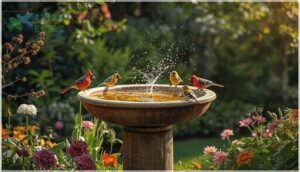
Setting up a safe water source at home takes a bit of planning, but it’s simpler than you might think. The key is choosing the right container, placing it where birds feel secure, and adding features that catch their attention.
Let’s walk through three practical steps to create a water station that keeps your feathered visitors healthy and hydrated.
Choosing Bird-friendly Containers
Not every container works for birds. Choose one with a wide, shallow basin—multiple birds can drink without crowbing. Look for non-toxic, easy-to-clean materials that won’t harm your feathered visitors. Container design matters: gradual sloping edges prevent drowning, while proper drainage systems stop mosquito breeding. Size your birdbath or fountain to match local species, creating truly bird-friendly water features that support backyard bird conservation efforts.
- Wide, shallow basins accommodate various bird sizes safely
- Non-toxic container materials protect birds from harmful chemicals
- Gradual sloping edges help prevent accidental drowning
- Effective drainage systems reduce mosquito breeding risks
- Appropriate sizing attracts target species without inviting problems
Placing Water Sources for Safety and Accessibility
Location can make or break your birdbath’s success. Place your water sources 10-15 feet from shrubs where birds can perch before drinking, yet far enough from dense cover where predators hide.
Position your bird bath in partial shade to keep water cool and near windows for easy monitoring.
This strategic water placement creates a bird-friendly backyard while ensuring bird safety through smart habitat integration and accessibility features year-round.
Using Misters, Drippers, and Moving Water Features
Moving water acts like a beacon, drawing birds with sound and shimmer. Here’s how to leverage water feature design for bird health and backyard bird conservation:
- Misting systems create evaporative cooling that drops temperatures while attracting birds through fine droplets.
- Dripper technology delivers steady drops that prevent stagnant pools and reduce parasite risk.
- Fountains provide moving water benefits through continuous circulation, keeping your bird-friendly water features clean naturally.
This water management approach aids bird behavior and water needs effectively.
Maintaining Clean Water Sources
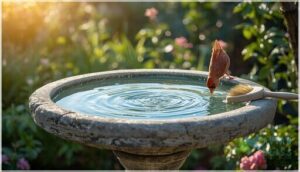
Fresh water is only helpful if it stays clean. A dirty birdbath can spread disease faster than it prevents dehydration.
Here’s how to keep your water sources safe and inviting for birds all summer long.
Daily Water Changes and Cleaning
Think of your bird bath as a water bowl that needs the same care you’d give your own glass. Change the water every single day to prevent harmful bacteria from multiplying.
Scrub the basin with hot water and a stiff brush at least twice weekly—this simple sanitation method keeps your feathered visitors safe.
Fresh water isn’t just invigorating; it’s essential for proper hydration and bird hygiene.
Preventing Bacteria and Algae Growth
Once you’ve established a daily cleaning routine, you’ll want to tackle the green stuff. Algae removal and bacterial control depend on smart placement and proactive care. Here’s how to keep water sources clear and bird-friendly:
- Position your bath in partial shade to limit algae-driving sunlight
- Add a dripper or mister—moving water discourages microbial growth
- Remove leaves and debris immediately to cut nutrient supply
- Monitor water for cloudiness or slime as early contamination signs
- Consider periodic microbial testing for peace of mind
These sanitation methods guarantee fresh water that sustains proper hydration year-round.
Safe Cleaning Methods and Materials
Choosing the right sanitizing solutions protects your feathered visitors. Plain, unscented soap and water handle routine cleaning without harsh chemicals. Rinse containers thoroughly after every wash to eliminate residues. Skip bleach and disinfectants that leave harmful traces—or rinse until no odor remains. Avoid abrasive cleaning products that scratch plastic; those grooves trap microbes. Safe water purification starts with gentle, bird-friendly water features maintenance.
| Cleaning Method | When to Use |
|---|---|
| Plain soap + water | Daily surface cleaning |
| Vinegar solution | Weekly deep clean |
| Replace water | Every 24-48 hours |
Ecological Benefits of Summer Water Access
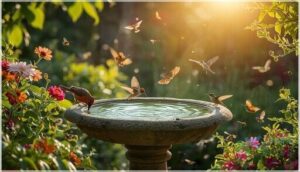
When you provide water for birds in your backyard, you’re doing more than just helping individual animals stay cool. You’re creating a ripple effect that strengthens entire ecosystems, especially in areas where natural water sources have disappeared.
Here’s how your simple birdbath contributes to conservation in three meaningful ways.
Supporting Local Bird Populations
A reliable water source anchors healthy local populations through habitat restoration and wildlife preservation. Providing fresh water for birds boosts density, attracts diverse species, and improves fledgling survival rates.
Your backyard can become a bird-friendly environment that aids bird migration and urban ecology efforts. Water conservation practices create stepping stones essential for the importance of water for bird survival in developed areas.
Enhancing Backyard Biodiversity
Water features paired with native plantings and microhabitat creation turn your backyard into a bird-friendly environment teeming with life. Gardening for birds means adding fruiting shrubs, ground cover, and varied water feature design at different heights.
These ecosystem services attract diverse species while supporting biodiversity monitoring efforts. You’ll notice more activity when bird-friendly water features complement thoughtful landscaping choices.
Contributing to Urban Wildlife Conservation
By installing backyard water features, you’re joining a broader movement toward urban wildlife conservation and wildlife preservation. Your efforts create critical habitat stepping stones in developed areas, fostering resilient bird populations amid environmental change.
Here’s how your contribution matters:
- Green spaces paired with water access boost local biodiversity and bird survival during extreme heat
- Community engagement through citizen science programs improves urban wildlife conservation monitoring
- Bird-friendly environments with safe water features reduce mortality from dehydration and heat stress
- Eco friendly designs incorporating native vegetation sustain sensitive species in suburban settings
- Urban planning that prioritizes wildlife and water conservation builds healthier ecosystems for everyone
Creating a bird-friendly backyard bolsters policy frameworks promoting sustainable infrastructure citywide.
Top 4 Products for Summer Bird Hydration
You’ve got plenty of options regarding keeping birds hydrated this summer. Some products focus on providing fresh drinking water, while others create cooling experiences that help birds beat the heat.
Here are four reliable products that can make a real difference in your backyard.
1. Best Choice Pedestal Bird Bath

A sturdy pedestal bird bath lifts water off the ground, keeping visiting birds safer from prowling cats and other backyard predators. You’ll want pedestal materials like concrete or resin that handle summer sun without cracking. Aim for a water depth around 1 to 1.5 inches so smaller birds can wade comfortably while maintaining feather care through bathing.
Place your birdbath near bushes for quick escapes, and change the water daily for proper bath maintenance. This setup turns your backyard into a reliable hydration station that promotes bird safety all summer long.
| Best For | Homeowners who want a decorative, easy-to-place birdbath that attracts a variety of birds while adding elegance to their garden without heavy lifting or complex installation. |
|---|---|
| Primary Material | High-density polyresin |
| Intended Use | Bird bath decoration |
| Maintenance Required | Regular cleaning needed |
| Outdoor Suitability | Weather-resistant design |
| Capacity/Quantity | 0.8 gallons |
| Assembly Difficulty | No tools required |
| Additional Features |
|
- Lightweight resin construction makes it easy to move and position anywhere in your yard, plus you can fill the base with sand or water for added stability in windy conditions.
- No tools needed for assembly, so you can set it up in minutes and start attracting birds right away.
- Weather-resistant material with antique finish and Fleur-de-Lis accents adds charm to your garden while holding up through different seasons.
- At 4.4 pounds unfilled, it can tip over easily in strong winds unless you weigh down the base with sand or water.
- The resin material may cause water discoloration over time due to leeching, requiring more frequent water changes.
- Not built for extreme weather or heavy use—it may crack after prolonged exposure to harsh conditions or larger birds.
2. Perky Pet Bird Waterer Dispenser
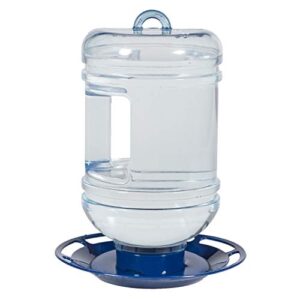
If you’re looking for a simple way to keep wild birds hydrated, the Perky-Pet 780 offers a smart solution. This water dispenser holds 48 fluid ounces and features a circular tray where multiple birds can sip at once, turning your yard into a safe hydration station.
Bird waterers like this one reduce your maintenance time while providing reliable outdoor accessories for summer bird care. Change the water every few days to prevent bacteria buildup, and you’ll support healthy pet hydration habits that guard against dehydration during scorching afternoons.
| Best For | Bird watchers who want to attract more visitors to their yard by offering a reliable water source that keeps multiple birds hydrated with minimal daily upkeep. |
|---|---|
| Primary Material | Plastic |
| Intended Use | Bird water dispenser |
| Maintenance Required | Clean every 2 weeks |
| Outdoor Suitability | Outdoor hanging use |
| Capacity/Quantity | 48 fl oz |
| Assembly Difficulty | Easy to install |
| Additional Features |
|
- Holds 48 ounces so you won’t need to refill constantly during hot weather
- Circular perch lets several birds drink at the same time, which brings more activity to your space
- Wide-mouth design makes filling and cleaning straightforward compared to narrow-necked bottles
- Smaller birds may have trouble using the perch if it’s designed for medium-sized species
- Plastic construction can crack or break with sun exposure or rough handling
- Requires cleaning every couple of weeks to prevent algae and slime from forming inside
3. Portable Outdoor Misting Cooling System
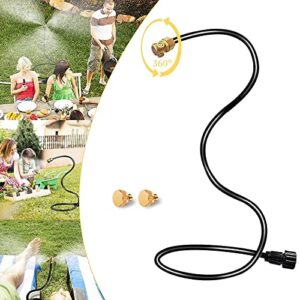
When summer heat peaks, misting systems create a lifesaving microclimate that drops ambient temperature by up to 20 degrees. You can adjust nozzle directions across 120° to 360° angles, delivering gentle cooling effects that reduce heat stress without overwhelming birds.
These birdfriendly water features help prevent dehydration through evaporative cooling while using minimal water. Place the unit near perches or feeders so birds can access hydration and relief during scorching afternoons.
Clean nozzles weekly to maintain consistent mist and support outdoor cooling all season long.
| Best For | Bird enthusiasts looking to provide cooling relief for their feathered visitors during hot weather while maintaining a comfortable outdoor space. |
|---|---|
| Primary Material | Brass |
| Intended Use | Outdoor cooling mist |
| Maintenance Required | Occasional maintenance |
| Outdoor Suitability | Patio and outdoor |
| Capacity/Quantity | 6 feet length |
| Assembly Difficulty | Easy to assemble |
| Additional Features |
|
- Adjustable misting patterns (120° to 360°) let you customize coverage for different yard layouts and bird activity zones
- Drops temperature by up to 20 degrees through evaporative cooling, creating a refuge during heat waves
- Easy setup with portable design and water flow control valve for simple adjustments
- Effectiveness drops significantly in humid climates where evaporative cooling doesn’t work as well
- Requires weekly nozzle cleaning to prevent mineral buildup and maintain consistent mist quality
- Some users report durability issues and leakage problems that may require ongoing maintenance
4. Bird Bath Water Circulator Device
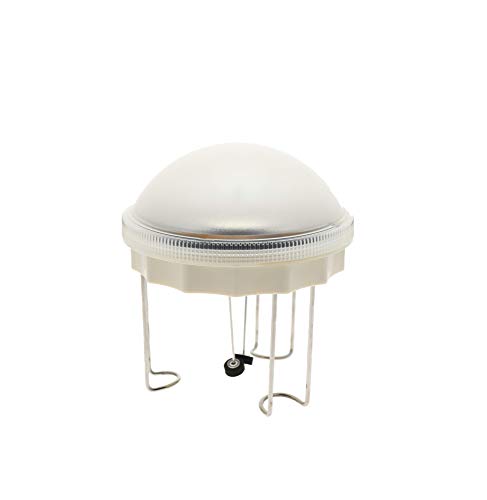
Stagnant water in your bird bath breeds mosquitoes and algae fast. A water circulator device keeps water moving 24/7, using energy-efficient motors that draw minimal power while improving water quality and bird safety.
You’ll see more bathing activity because birds prefer the motion and cooler microclimate. Place the submersible pump above ground near a GFCI outlet for device installation safety.
Clean it weekly to prevent mineral buildup. Adjust flow gently so timid species feel comfortable. Some models work with heated birdbaths in winter, creating a birdfriendly backyard water source year-round.
| Best For | Bird enthusiasts who want to maintain cleaner water, attract more birds to their bath, and prevent mosquito breeding without daily water changes. |
|---|---|
| Primary Material | Plastic/Electronic |
| Intended Use | Bird bath fountain |
| Maintenance Required | Battery replacement |
| Outdoor Suitability | Outdoor bird baths |
| Capacity/Quantity | 2 D-cell batteries |
| Assembly Difficulty | No wiring required |
| Additional Features |
|
- Keeps water moving continuously to discourage mosquitoes and reduce algae buildup, creating a healthier environment for birds
- Attracts more birds naturally since they’re drawn to the sound and movement of circulating water
- Energy-efficient motors run 24/7 without driving up electricity costs, and many models offer adjustable flow rates
- Requires weekly cleaning to prevent mineral deposits from clogging the pump and reducing water flow
- Needs proximity to a GFCI outlet for safe operation, which limits placement options in some yards
- Battery-operated models like the API-7WW may need frequent battery replacements (every two months), adding to maintenance costs
Frequently Asked Questions (FAQs)
What time of day do birds drink most?
Birds drink most in the early morning and late afternoon when temperatures cool. On hot days, afternoon visits increase as they seek evaporative cooling to regulate body temperature effectively.
Can birds drink from swimming pools safely?
Pool water isn’t safe for birds—chlorine and sanitizers cause irritation and toxicity. Chemical residues trigger illness, and slippery edges create drowning hazards.
Offer clean, shallow water alternatives instead to prevent dehydration.
Do different bird species have different water needs?
Absolutely. Water requirements vary dramatically across species—hummingbirds sip constantly due to high metabolism, while raptors extract moisture from prey.
Body size, diet, and habitat shape each bird’s unique hydration needs and survival strategies.
How much water does a bird need daily?
Daily consumption varies by size—small birds drink 5 to 15 milliliters, while medium species need 10 to 30 milliliters. Water requirements double during heat waves when birds rely on evaporative cooling to survive.
Will sugar water harm wild birds in summer?
Skip the sugar water—it can harm wild birds in summer. Plain, fresh water keeps them hydrated safely without risking bacterial growth, spoilage, or nutritional imbalances that sugar solutions create.
Conclusion
When heat waves strike and puddles vanish, will the birds in your yard survive? That depends entirely on you.
Now you understand why birds need water in summer—not just for drinking, but for cooling, bathing, and staying healthy through the hottest months. A simple birdbath with fresh water can mean the difference between thriving and struggling.
Your backyard holds that power. Keep it clean, keep it filled, and watch your feathered neighbors flourish.
- https://esajournals.onlinelibrary.wiley.com/doi/10.1111/ecog.07432
- https://www.frontiersin.org/journals/physiology/articles/10.3389/fphys.2019.01405/full
- https://www.nasa.gov/centers-and-facilities/goddard/u-s-desert-songbirds-at-risk-in-a-warming-climate
- https://georgiawildlife.com/out-my-backdoor-how-drought-affects-wildlife
- https://www.audubon.org/news/executive-summary-water-and-birds-arid-west-habitats-decline