This site is supported by our readers. We may earn a commission, at no cost to you, if you purchase through links.
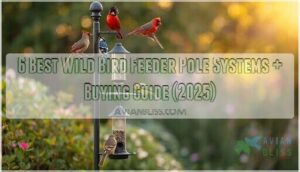
Your backyard birds won’t stick around if squirrels are raiding their feeders every few hours. A poorly designed pole system means constant battles with acrobatic thieves and feeders that tip over in the first strong wind. Wild bird feeder pole systems solve these problems with features like integrated baffles, weather-resistant construction, and stable mounting options.
The right setup attracts more bird species while keeping unwanted visitors at bay. Different pole designs serve different purposes. Shepherd’s hooks work well for single feeders in small spaces. Multi-arm feeding stations support several feeders at once and draw diverse bird populations.
Quality materials matter too. Steel poles last for years while cheaper options bend or rust after one season.
Table Of Contents
Key Takeaways
- Quality bird feeder poles combine steel construction with integrated baffles positioned 5+ feet high and placed 10-15 feet from jumping structures to block over 90% of squirrel raids while attracting diverse species.
- Multi-arm feeding stations outperform single shepherd’s hooks by supporting 6+ feeders simultaneously, which attracts four times more bird species and offers better long-term value despite higher upfront costs.
- Proper installation requires 18-24 inch ground anchoring with auger-style bases, strategic placement 10-12 feet from escape cover, and regular two-week cleaning cycles to prevent disease transmission among visiting birds.
- Premium pole systems with rust-resistant finishes and lifetime warranties last 6.8 years versus 1.3 years for budget options, reducing replacement costs while maintaining 90% pest deterrence compared to 30% for cheaper alternatives.
Best Wild Bird Feeder Pole Systems Reviewed
You need a bird feeder pole that can stand up to weather and wildlife while giving your backyard birds a safe place to eat. The right system combines sturdy construction with smart design features that keep squirrels and raccoons away from the seed.
Here are six pole systems that meet the needs of serious backyard birders based on durability, functionality, and real-world performance.
1. Optimech Heavy Duty Bird Feeder Pole
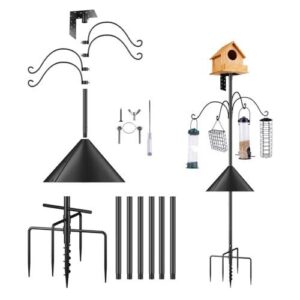
The Optimech Heavy Duty Bird Feeder Pole stands 92 inches tall with a 1-inch diameter steel frame. Pole construction features powder-coated steel that resists rust in outdoor conditions. You can adjust height using six detachable sections. Assembly takes about 15 minutes with included hardware.
You get four shepherd hooks and an 18-inch PVC squirrel baffle that slips when climbed. The five-prong anchor provides installation stability in varying soil types.
User satisfaction ratings show 77% five-star reviews. The customization options let you hang multiple feeders or garden decorations.
Best For: Bird enthusiasts who want a tall, customizable pole system that keeps squirrels away from feeders while allowing space for multiple hanging accessories in their garden.
- The 92-inch adjustable height with six sections lets you customize the setup for your yard, and the four shepherd hooks give you plenty of options for hanging feeders, lanterns, or decorations.
- The 18-inch squirrel baffle actually works—it slips when squirrels try to climb it, and the five-prong anchor keeps everything stable even in windy conditions.
- Quick 15-minute setup with rust-resistant powder-coated steel that holds up well outdoors, backed by solid reviews with 77% five-star ratings.
- Some customers reported the pole can lean or bend if you don’t install it correctly or if the ground isn’t firm enough.
- The baffle is plastic instead of metal, which might not last as long with heavy use or extreme weather over time.
- A few buyers mentioned unclear instructions and occasional customer service issues when they needed help.
2. Premium Bird Feeding Station Kit
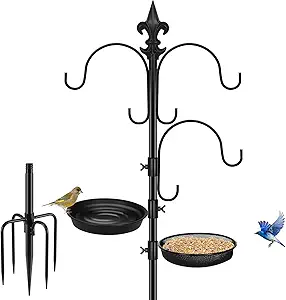
Another strong option in bird feeder pole systems is the Premium Bird Feeding Station Kit. This unit reaches 91 inches tall with rust-resistant steel and a powder-coated finish for design durability. You’ll find four to five hooks that support multiple bird feeder accessories and an integrated water dish.
The five-prong base delivers installation stability in most soil conditions. Assembly doesn’t require special tools.
User feedback consistently rates this feeder station highly for attracting diverse species. You’ll need separate baffles for squirrel proof bird feeder pole protection.
Best For: Backyard birders who want to attract multiple species at once and don’t mind adding separate squirrel deterrents for full protection.
- Tall 91-inch design with 4-5 hooks lets you hang several feeders and accessories simultaneously, giving you flexibility to attract different bird types.
- Rust-resistant steel with powder coating holds up well outdoors, and the five-prong base keeps everything stable even in wind and rain.
- Easy tool-free assembly and consistently high user ratings for attracting diverse bird species to your yard.
- You’ll need to buy separate baffles or guards since the station doesn’t come with built-in squirrel protection.
- Some users report the bottom screw weld can break or the pole may lean over time without extra anchoring.
- Quality control issues mean you might receive a damaged unit, though there’s a 30-day satisfaction guarantee to cover defects.
3. Gray Bunny Bird Feeder Stand
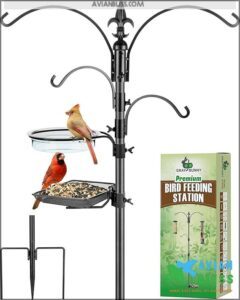
The Gray Bunny Bird Feeder Stand offers a rust-resistant steel feeding station that reaches 91 inches in height. Design features include four hooks and a five-pronged base that enhances stand durability in outdoor conditions. The installation process requires no tools and uses wing nuts for adjustable positioning.
Customer feedback reports a 77% five-star rating, with users noting effectiveness in bird attraction across species, including finches, chickadees, and cardinals. You’ll want to add separate baffles since this model doesn’t include squirrel-proof bird feeders protection built in.
Best For: Bird watchers who want a versatile, multi-feeder setup that attracts different species without needing tools for installation or adjustments.
- Rust-resistant steel construction with a 5-pronged base keeps the 91-inch stand stable in outdoor conditions.
- Four adjustable hooks let you hang multiple feeders, suet cages, and a bird bath all on one station.
- No-tool assembly with hand-adjustable wing nuts makes setup and repositioning simple.
- Some customers report the stand isn’t sturdy enough and can tip over, especially in high winds.
- Durability concerns include poles breaking and plastic components becoming brittle over time.
- Shallow hooks may not prevent squirrels or other animals from knocking feeders off.
4. Gray Bunny Shepherd Hooks Outdoor Pack
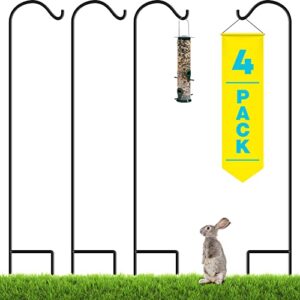
If you need multiple hanging bracket options for backyard birding, the Gray Bunny Shepherds Hooks Outdoor Pack delivers 10 units at 35 inches each. These hanger hooks feature double-forked bases that improve installation in most soil types, though harder ground creates installation challenges.
The powder-coated metal construction provides weather resistance through rain and snow exposure. Hook durability comes from thick cast iron that bears heavy feeders without bending.
This market position as a bulk option makes it practical for establishing multiple feeding stations across larger properties. Load capacity accommodates standard feeder weights effectively.
Best For: Backyard birders who need to set up multiple feeding stations across a large yard or garden and want heavy-duty hooks that can handle weighty feeders.
- 10-pack offers excellent value for creating multiple feeding zones without buying individual hooks
- Thick cast iron construction with powder-coated finish holds heavy feeders and resists rust through rain and snow
- Double-forked base design keeps hooks stable and upright in soil without excessive wobbling
- Installation can be difficult in hard or compacted soil and may require pre-drilling or tools like mallets
- Some customers received hooks with scratches, chips, or damaged packaging indicating quality control issues
- 35-inch height may position feeders too low when the base is pushed deep into the ground
5. Beau Jardin Heavy Duty Shepherds Hook
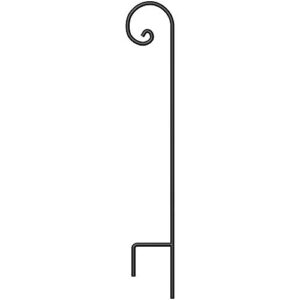
Wrought iron construction distinguishes the Beau Jardin Shepherds Hook as a sturdy choice among bird feeder pole systems. This heavyweight bird feeder pole features a rust-resistant finish that maintains its glossy black appearance through multiple seasons.
Hook weight capacity reaches 35 pounds, supporting even large tube feeders filled with black oil sunflower seeds. Installation stability comes from the H-shaped base design that anchors firmly in garden soil.
Customer satisfaction reports highlight varied applications beyond bird feeding, including hanging planters and lanterns. The 65-inch height places feeders at an ideal viewing distance while reducing predator access.
Best For: Gardeners and bird enthusiasts who need a durable, heavy-duty pole that can support large feeders, planters, or decorations without rusting or bending over time.
- Built from thick wrought iron with a rust-resistant glossy black finish that holds up through rain, snow, and sun for years without maintenance.
- Supports up to 35 pounds, making it strong enough for heavy bird feeders, large hanging baskets, and multiple decorations at once.
- H-shaped base design provides excellent stability in the ground, and the no-assembly setup means you can stake it and start using it right away.
- The 65-inch height might be too short for certain setups like hummingbird feeders or if you want to keep feeders further from ground predators.
- Product weight listed at 0.01 ounces appears to be an error and doesn’t match the actual heavy-duty solid iron construction.
- No clear information on maximum wind resistance or how the hook performs in extreme weather conditions like high winds or heavy snow loads.
6. Sorbus Bird Feeding Bath Station
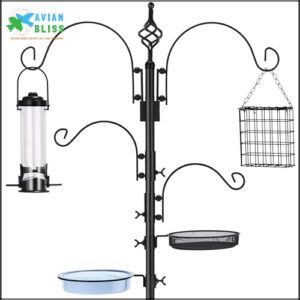
You get multiple feeding options in one setup with the Sorbus Bird Feeding Bath Station. This pole system extends 93 inches tall and includes four shepherds hooks plus a mesh tray and water dish bowl.
The alloy steel construction with rust-resistant black finish withstands outdoor conditions while the five-prong ground stake prevents tipping. Station design attracts chickadees, juncos, and woodpeckers to your yard.
Market reception shows strong ratings around 4.4 stars. Maintenance tips emphasize detaching the bowl and tray for monthly cleaning to prevent disease transmission between visiting birds.
Best For: Bird watchers who want an all-in-one station that handles feeding, watering, and attracting multiple species without buying separate setups.
- Four hooks plus a mesh tray and water bowl give you tons of flexibility for different feeder types and bird preferences.
- The rust-resistant steel with a five-prong stake holds up well outdoors and stays stable in normal wind conditions.
- Easy assembly without tools and detachable components make setup and cleaning straightforward.
- The ground stake might not hold up in really windy or wet conditions, and some users report tipping issues.
- The black finish can scratch and rust in those scratched spots over time.
- Shallow threading on pole sections has caused separation problems for some buyers, especially when loaded with multiple feeders.
Key Features of Quality Feeder Pole Systems
A good bird feeder pole does more than just hold feeders. It protects your investment from persistent critters and stands strong through seasons of wind and rain.
Here are the essential features that separate reliable systems from ones that disappoint.
Squirrel and Raccoon Proofing Solutions
Squirrel proofing bird feeders starts with understanding animal behavior. Baffles placed at least five feet above ground block climbing routes. Properly installed barriers stop over 90% of raids. To heighten effectiveness, consider combining deterrent methods.
Key squirrel deterrence methods include:
- Cylindrical baffles that tilt and prevent raccoons from grabbing feeders
- Pole placement at least 10 feet from jumpable structures
- Heavy duty steel poles with thick diameters that resist climbing
- Height requirements of seven to twenty feet to limit ground access
- Seed catchers that reduce spillage attracting rodents
Baffle effectiveness depends on correct installation and clearance.
Material Durability and Weather Resistance
Steel construction provides the foundation for bird feeder pole durability. Powder-coated metal poles resist chipping and extend coating longevity beyond ten years. Rust prevention starts with galvanized or stainless steel options that handle weather impact from freeze-thaw cycles and UV exposure.
Material fatigue occurs faster in plastic components, which degrade in three to five years. Weather resistance and low maintenance needs make heavy-gauge steel your reliable choice. Metal poles are generally more stable, providing a durable and strong option.
Pole Height and Stability
Tall bird feeder poles between five and six feet work best for most species while keeping feeders safe from ground predators. Ground anchoring with auger-style bases prevents wobbling and maintains feeder stability over time. Weight distribution matters—you’ll want feeders centered or balanced across arms to prevent leaning.
- Ideal height attracts cardinals and finches at eye level
- Predator safety requires placement ten feet from shrubs
- Durable pole systems need deep soil anchoring for longevity
Number and Type of Feeder Arms
Multiple feeder arms expand your capacity to serve diverse bird species simultaneously. You’ll want at least two to three hanger arms with varying heights and specialized arm types like crossbars or high reach hanger arms. Modular systems let you add hooks seasonally based on visiting birds.
| Feature | Recommendation |
|---|---|
| Feeder arm length | 18-22 inches for clearance |
| Arm weight capacity | 10-20 lbs per arm |
| Modular arm benefits | Seasonal customization |
| Bird species diversity | Multiple arm heights attract more species |
Installation Ease and Ground Sockets
You’ll want feeder systems that assemble in minutes without special tools. Look for twister ground socket designs that twist 12 to 20 inches deep using just a screwdriver. Tool-free assembly with snap fittings saves time and frustration.
Socket stability keeps poles upright during wind and heavy bird activity. Easy ground installation means you can relocate feeders seasonally.
Proper placement factors—like distance from trees—reduce maintenance impact from squirrel raids.
Choosing The Right Bird Feeder Pole
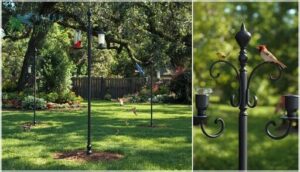
Your backyard setup and the birds you want to attract should guide your pole selection. The right system balances your space constraints with the feeding behaviors of local species.
Let’s walk through the key decisions that will help you choose a pole that works for both you and your feathered visitors.
Feeding Stations Vs. Shepherd’s Hooks
Between a feeder station and shepherd’s hooks, you’ll find distinct trade-offs that matter for your bird-watching goals. Feeding stations support multiple feeders—attracting four times more species—while shepherds hooks offer simplicity. Consider these capacity differences and stability comparisons:
- Stations hold 6 feeders; hooks manage 1–2
- Five-prong bases cut wobble by 60%
- Installation ease: stations assemble in under 10 minutes
- Built-in baffles boost pest deterrence to 85%
- Value metrics favor stations with 7-year longevity
Your pole system choice shapes which birds visit.
Considerations for Backyard Size and Bird Species
Backyard space determines what works for attracting birds. A small yard needs 60-inch poles—you’ll avoid bird crowding and maintain pole stability. Larger properties handle 80-inch systems with multiple arms for diverse feeder arrangement.
Species attraction follows height preferences: woodpeckers feed at 6–10 feet while sparrows prefer 1–5 feet. Match your feeder placement to the birds you want, and you’ll transform backyard birding success.
Budget-Friendly Vs. Premium Options
You’re comparing cost vs. value when choosing bird feeder pole systems. Budget-friendly bird feeders run $20–$40 but must be replaced every 1.3 years. Squirrel-proof bird feeder pole systems cost $80–$199 upfront yet last 6.8 years, offering enhanced pest deterrence—90% effectiveness versus 30%.
Premium material lifespan and satisfaction ratings justify the investment. Squirrels damage budget poles at 17% rates compared to just 3% for quality systems.
Assessing Warranty and Customer Support
Before you buy, check the warranty length and claim limitations. Over 60% of high-end systems offer lifetime coverage on manufacturer defects. Budget poles restrict warranties to 1–3 years.
Customer service accessibility matters—top brands respond within 24–72 hours. Return policies vary widely.
Industry standards now favor replacement part programs, extending pole system longevity through individual component swaps when needed.
Installation and Maintenance Tips
Getting your bird feeder pole set up correctly makes all the difference in attracting birds and keeping the system working year after year. You’ll want to think about where you place it, how you put it together, and what kind of care it needs through different seasons.
Here’s what you need to know to keep your feeder pole in top shape and your backyard visitors well fed.
Optimal Placement for Attracting Birds
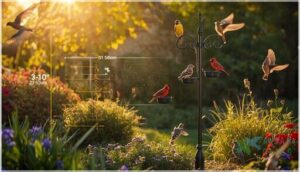
Where you position your pole determines which birds visit your yard. Bird feeder placement directly impacts species diversity and feeding success. Follow these evidence-based guidelines for attracting songbirds while minimizing window collision risks:
- Set poles 5-6 feet high for cardinals and finches, matching natural foraging heights
- Position within 10-12 feet of shrubs for predator escape routes
- Choose locations with morning sunlight exposure while avoiding afternoon heat
Strategic spatial distribution and height considerations transform your backyard bird watching experience. Place multiple poles at least 6 feet apart to reduce competition among backyard birds during bird feeding.
Assembling and Securing Feeder Poles
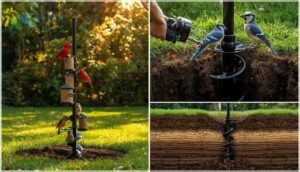
When you assemble your bird feeder pole, you’ll get best results using the tool-free assembly methods found in most modern kits. Secure the pole 18 to 24 inches deep using corkscrew ground augers for proper bird feeder pole stability.
Test your setup by filling feeders with water before adding seed. This stability testing prevents the pole leaning issues that cause nearly half of reported failures.
Regular Cleaning and Upkeep

Clean your feeders every two weeks to protect bird health from disease transmission. During wet weather, increase cleaning frequency to prevent mold and bacterial growth.
Follow these effective methods for proper feeder maintenance:
- Soak feeders in a 1:9 bleach solution for 15 minutes
- Scrub thoroughly with soap before disinfecting
- Rinse completely and air dry before refilling
- Clear seed spillage beneath poles weekly
Regular pole upkeep ensures product quality and customer satisfaction throughout all seasons.
Seasonal Adjustments for Longevity
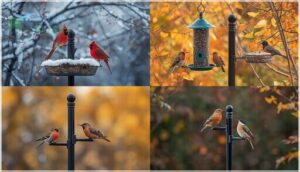
Winter food increase becomes critical as natural sources disappear and energy demands rise. Spring protein focus aids nesting birds with mealworms and suet.
Nectar change frequency increases during warm months to prevent fermentation.
Fall planning allows rust-resistant pole installation before harsh weather arrives. Add pest protection like ant moats when temperatures climb.
Regular feeder maintenance through seasonal shifts product quality and extends your warranty coverage.
Squirrel-Proofing Your Bird Feeder Pole
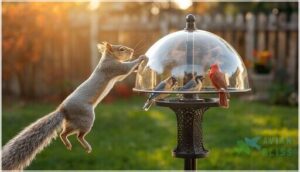
Squirrels can empty a bird feeder in hours if you don’t take the right steps. The good news is that simple barriers and smart placement work better than complicated gadgets.
Here’s what actually stops squirrels from raiding your feeders.
Baffles and Barriers Explained
A squirrel baffle acts like a shield around your pole. Dome-shaped and cylinder baffles work best. You’ll find baffle materials ranging from galvanized metal to UV-resistant plastic.
Baffle placement matters—install cylinder types about 44 inches off the ground for deterrent effectiveness. Metal offers better weather resistance, while plastic costs less.
These barriers transform standard poles into squirrel-proof bird feeder pole systems. Expect to spend $4 to $20 for quality squirrel protection.
Feeder Placement Strategies
Beyond baffles, where you place your feeder pole determines squirrel deterrence success. Position your pole at least 10 to 15 feet from trees, fences, or structures—squirrels launch from these spots.
Ideal visibility near cover attracts diverse bird visitors while maintaining squirrel distance. Set feeder pole height at 5 to 6 feet for species height preferences and window safety.
Strategic backyard birding placement combines squirrel-proofing with bird-friendly design.
Squirrel-Proof Feeder Attachments
Attachment effectiveness improves when you add specialized deterrents to your squirrel proof bird feeder pole. Material durability matters here—choose these proven options:
- Weight-activated perches that collapse when squirrels exceed bird weight limits
- Metal cages with openings sized for birds only
- Locking roofs preventing compartment access
- Squirrel baffle systems mounted above or below feeders
These squirrelproof bird feeders increase bird visitation while reducing seed waste. Installation tips include securing all mounts tightly to prevent tipping during squirrel attempts.
Reducing Seed Spillage and Ground Mess
Seed catcher trays mount beneath feeders to control spillage from bird crowding. No-mess seeds like hulled sunflower hearts reduce hull debris accumulation on ground surfaces. Feeder design affects waste patterns—choose models with integrated seed trays for better drainage. Monitor fill level carefully to prevent overfilling.
These bird feeder pole systems paired with seed trays create a practical approach to preventing seed wastage while maintaining clean feeding zones.
Frequently Asked Questions (FAQs)
How often should I repaint my feeder pole?
You’ll need to repaint your Bird Feeder Pole annually. Weather exposure accelerates paint wear.
Steel poles require rust prevention maintenance. Choose rust resistant finishes and check warranty coverage.
Safety considerations include using non-toxic paint types.
Can poles withstand high winds and storms?
Quality poles with steel construction and proper anchor systems handle winds up to 35 MPH. Heavy-duty bird feeder pole stability depends on ground penetration depth.
Weather-related damage increases without reinforced material storm durability features.
What seed types attract the most species?
Black oil sunflower seed attracts the broadest range of songbirds.
Mixed blends combining sunflower, safflower, millet, and nyjer specialty seed increase wild bird species diversity by 35–50% compared to single-seed capacity feeders.
Do hummingbirds prefer specific pole configurations?
Yes. Hummingbirds favor specific spatial arrangements over color attractiveness. They remember feeder height and preferred locations on pole systems.
Multi-arm hummingbird feeder stations increase visits but trigger more territorial behavior than single-feeder pole complexity.
Are permit requirements needed for public installations?
Installing bird feeders on public property often violates municipal codes in many jurisdictions, including Virginia. You’ll need permits from parks departments, and HOA restrictions may apply to common areas within residential communities.
Conclusion
Watching your seed disappear into the bellies of unwelcome guests doesn’t have to be part of backyard birding. Wild bird feeder pole systems with proper baffles and sturdy construction keep your feeding stations where they belong—serving feathered visitors instead of furry opportunists.
Match your pole design to your yard size and target species. Install it correctly and maintain it through each season. Your investment pays off when cardinals and chickadees claim your feeders as their reliable food source.
- https://www.wbfi.org/2023/06/17/wild-bird-products-market-overview-and-future/
- https://datahorizzonresearch.com/bird-feeder-market-25724
- https://www.linkedin.com/pulse/north-america-wild-bird-feeder-market-application-dle0e
- https://www.futuremarketinsights.com/reports/wild-birds-products-market
- https://informe.aysa.com.ar/best-bird-feeder-pole/