This site is supported by our readers. We may earn a commission, at no cost to you, if you purchase through links.
A single bird at your feeder can pull you out of whatever’s eating at you—and that’s not sentiment, that’s biology. Watching animals in motion triggers a measurable drop in stress hormones, which is why wildlife rehabilitators often call bird feeding “cheap therapy”.
The catch is that most beginners hang up a feeder, fill it with the wrong seed, and wonder why nothing shows up. Getting started with wild bird feeders for beginners doesn’t have to mean trial and error on your own. The right feeder, placed in the right spot, with the right seed, turns an empty yard into a busy hub within days.
Table Of Contents
- Key Takeaways
- Choosing Your First Wild Bird Feeder
- Key Features for Beginner Bird Feeders
- Top 10 Wild Bird Feeders for Beginners
- 1. Clear Acrylic Window Bird Feeder
- 2. SUNALLY Window Bird Feeder
- 3. Jealoeur Outdoor Hanging Bird Feeder
- 4. FLINTER Hanging Metal Mesh Bird Feeder
- 5. iBorn Metal Bird Feeder
- 6. Nature Anywhere Window Bird Feeder
- 7. Clear Window Bird Feeder
- 8. Birdream Retro Pagoda Bird Feeder
- 9. Hanizi Outdoor Bird Feeder
- 10. Metal Bird Feeder Tube
- Placement and Maintenance Tips
- Attracting Wild Birds to Your Feeder
- Frequently Asked Questions (FAQs)
- What is the 5 7 9 rule for bird feeders?
- Why put a potato in the bird feeder?
- How to feed wild birds for beginners?
- What is the easiest wild bird to befriend?
- Which birds are attracted to specific feeders?
- How do I identify birds visiting my feeder?
- Can multiple feeders be placed in one yard?
- Do bird feeders attract predators like hawks?
- How long before birds discover a new feeder?
- Conclusion
Key Takeaways
- Matching your feeder style to the birds you want — tube for finches, platform for variety, suet for woodpeckers — makes a bigger difference than most beginners expect.
- Black oil sunflower seed attracts the widest range of backyard birds, so if you’re only stocking one seed, that’s the one to start with.
- Placement isn’t just about convenience — keep feeders either within 3 feet of windows or beyond 30 feet to cut collision risk, and follow the 5-7-9 rule to keep squirrels out.
- Clean your feeder every two weeks with a bleach-water solution and let it fully dry before refilling, because dirty feeders can make birds sick fast.
Choosing Your First Wild Bird Feeder
Picking your first bird feeder doesn’t have to be overwhelming. There are a few solid styles worth knowing before you buy, each one drawing in different birds.
Once you’ve picked your feeder style, pairing it with the right wild bird seed makes a real difference in which species actually show up.
Here’s what your options look like.
Tube Feeders for Small Songbirds
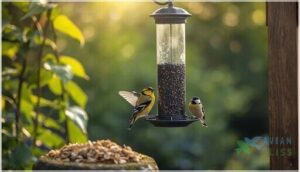
Tube feeders are a great starting point for beginners. They’re slim, usually 9 to 13 inches tall, with seed port design that naturally favors small wild birds like finches and chickadees.
Fill them with black oil sunflower or Nyjer bird seed for solid songbird attraction. Many are squirrel proof with weight-sensitive perches — smart pest control methods without extra effort.
Easy to disassemble for feeder maintenance too. For more details about different types of tube feeders, including design variations and maintenance tips, visit the linked resource.
Platform and Tray Feeders for Variety
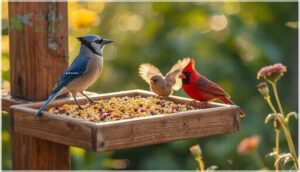
If you want more birds, platform and tray feeders open things up — literally. Their flat, open design welcomes nearly 88 out of 98 common backyard species, from tiny juncos to bold blue jays.
Here’s what makes them worth starting with:
- Open Design lets birds spot food from above instantly
- Attracts Species of all sizes on one surface
- Food Flexibility — sunflower, corn, mealworms, fruit, all fit
- Material Choices range from cedar to powder-coated mesh
- Beginners appreciate the easy visibility and simple refilling
A helpful overview of platform feeder advantages and maintenance can be found in this detailed guide on platform feeders.
Suet Feeders for Woodpeckers and Nuthatches
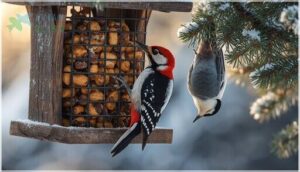
While platform feeders cast a wide net, suet feeders go narrow on purpose — and that’s exactly what makes them special.
Woodpeckers naturally brace their tail against tree trunks while chiseling for food.
Tail-prop suet feeder designs mimic that behavior.
Nuthatches, meanwhile, prefer hanging upside down, making upside-down feeder designs perfect for their acrobatic nuthatch diet.
Suet cake types packed with peanuts and insects deliver serious bird nutrition all winter.
Window Feeders for Close-Up Viewing
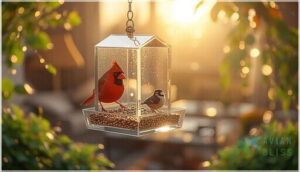
If suet feeders bring birds into the yard, window bird feeders bring them straight to your face. Clear designs in acrylic or polycarbonate mount directly to glass with strong suction cups, giving beginners a front-row seat to wild birds just inches away.
Key features worth knowing:
- Clear Viewing panels offer close viewing without binoculars
- Squirrel proof suction mounts resist most unwanted visitors
- Removable seed trays simplify bird seed refills
- Smart window placement near shrubs improves bird safety
- Feeder materials like polycarbonate outlast cheaper plastics
Hopper Feeders for Mixed Species
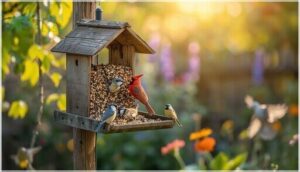
Hopper feeders are a beginner’s best friend in terms of drawing wild birds from across the neighborhood. Their gravity-fed hopper design releases bird seed steadily, so you’re not constantly refilling. One feeder can serve cardinals, chickadees, finches, and jays at once — solid for wildlife conservation and bird attraction without the fuss.
| Feature | Detail | Benefit |
|---|---|---|
| Seed Variety | Sunflower, millet, corn | Attracts mixed species |
| Squirrel Proof | Pole-mount recommended | Protects your seed supply |
| Feeder Maintenance | Regular scrubbing needed | Keeps wild birds healthy |
Key Features for Beginner Bird Feeders
Not all bird feeders are built the same, and for beginners, a few key features can make or break the experience.
Knowing what to look for saves you time, money, and a lot of frustration. Here’s what actually matters when you’re picking your first feeder.
Durable Feeder Materials
The feeder you choose needs to hold up, not fall apart after one rainy season. Metal durability is hard to beat — powder-coated steel blocks rust, and heavy-gauge metal cages deliver real squirrel protection. Clear acrylic panels resist UV yellowing and keep bird seed visible. Recycled plastic resistance to rot and mold prevention make it a smart long-term pick too.
- Metal bird feeders shrug off freeze-thaw cycles without warping
- Squirrel proof metal cages stop chewing damage cold
- Weather proofing keeps your seed dry and fresh longer
- Clear acrylic panels stay transparent season after season
Easy Installation Methods
Setting up your first feeder doesn’t require a toolbox. Most beginners find tool free options like shepherd’s hooks or deck mounts surprisingly simple — just slip, clamp, or twist into place.
Once your feeder’s up, keeping it stocked with the right stuff matters — choosing the best fruit and seed for birds can make a real difference in who shows up at your yard.
| Method | Best For |
|---|---|
| Suction cups | Window bird feeder |
| Pole systems | Outdoor hanging feeders |
| Deck mounts | Balcony setups |
Height adjustments matter too — aim for 5 to 6 feet for easy bird feeder maintenance and safe bird access.
Seed Capacity and Refill Frequency
How often you’re trudging outside to refill matters more than you’d think. Small tube feeders hold 1 to 1.5 pounds of bird seed — fine for light traffic.
Medium hopper feeders manage 3 to 5 pounds, stretching refill schedules to every few days. Bird consumption keeps seed freshness in check and prevents waste sitting too long.
Weather Resistance and Protection
Rain, snow, and ice can ruin seed fast. Weatherproof designs with wide overhanging roofs and drainage systems stop moisture before it becomes a problem.
Look for roof materials like UV-resistant acrylic or powder-coated metal — they handle sun and ice guards hold up in freezing temps. Wind protection and squirrel proofing features, like caged outdoor hanging setups or suction cups on windows, keep your feeder working all season.
Removable Parts for Cleaning
Dirty feeders can make birds sick — that’s not a risk worth taking. Look for easy disassembly designs where the base, lid, and seed port design all come apart without tools.
Removable trays and slide-out bottoms make cleaning bird feeders quick and realistic every two weeks. Good tube maintenance means running a brush through the full tube. Bird feeder maintenance and cleaning gets done more often when the feeder makes it simple.
Top 10 Wild Bird Feeders for Beginners
Finding the right feeder doesn’t have to feel overwhelming. These ten options cover a range of styles, materials, and mounting methods — so there’s something here no matter where you’re starting from.
Take a look and see which one fits your space and the birds you want to bring in.
1. Clear Acrylic Window Bird Feeder
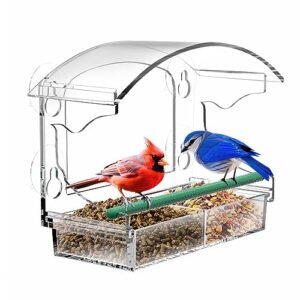
The BPYOT Clear Acrylic Window Bird Feeder is a solid pick if you want birds close enough to count their feathers. At 10 by 3.9 by 8 inches, it’s compact and light — just 6.9 ounces.
Strong suction cups hold it flat against clean glass, and the removable tray makes refilling and cleaning straightforward. It’s best for small visitors like finches, chickadees, and titmice.
Larger birds won’t fit comfortably, so set your expectations accordingly.
| Best For | Anyone who wants a front-row seat to backyard bird activity — especially kids, cat owners, or older folks who enjoy watching nature up close without leaving home. |
|---|---|
| Material | Acrylic |
| Weight | 6.9 oz |
| Color | Clear |
| Easy to Clean | Yes, removable tray |
| Bird Size Suitability | Small birds only |
| Squirrel Resistance | Not mentioned |
| Additional Features |
|
- Suction cups hold it firmly to the glass, so setup takes about two minutes
- The removable seed tray makes cleaning and refilling simple — no mess, no fuss
- Crystal-clear acrylic means you see the birds, not the feeder
- Bigger birds like cardinals or pigeons won’t find it comfortable
- Suction cups can lose grip over time, especially in heat or cold
- The compact size might feel too small for birds used to larger feeders
2. SUNALLY Window Bird Feeder
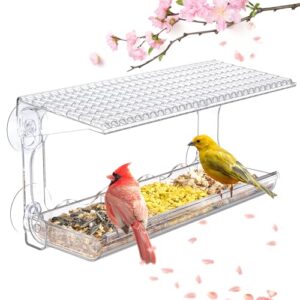
If you liked the BPYOT but want a bit more room, the SUNALLY Window Bird Feeder steps things up. It’s slightly larger at 11 by 5.5 inches and splits its seed tray into three compartments — handy if you want to offer different seeds at once.
Four strong suction cups keep it steady on clean glass. The drainage holes help prevent soggy seed after rain. It’s clear plastic, so you’ll always know when it’s time to refill.
| Best For | Bird watchers, elderly folks, and kids who want a closer look at birds without leaving the house. |
|---|---|
| Material | Plastic |
| Weight | 14.1 oz |
| Color | Clear |
| Easy to Clean | Yes, easy clean |
| Bird Size Suitability | Small to medium |
| Squirrel Resistance | Not mentioned |
| Additional Features |
|
- Three separate compartments let you offer different seeds at the same time
- Clear plastic makes it easy to see when it needs a refill
- Drainage holes keep the seed from turning into a soggy mess after rain
- Debris from the seed tray can clog the water reservoir
- Suction cups need a spotless window to hold properly
- Not a great fit for larger birds
3. Jealoeur Outdoor Hanging Bird Feeder
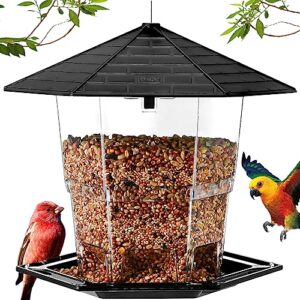
If window feeders feel a little too close to home, the Jealoeur Outdoor Hanging Bird Feeder gives birds more open space to land and eat. It holds 2.2 pounds of seed — enough to go a few days between refills.
The hexagonal roof sheds rain naturally, keeping seed drier longer. A push-latch lid locks tight so wind won’t pop it open. At under a pound, it hangs easily from a shepherd’s hook or tree branch.
| Best For | Casual backyard bird watchers who want a simple, affordable feeder for small to medium-sized birds without a lot of fuss. |
|---|---|
| Material | Plastic |
| Weight | 12.3 oz |
| Color | Black |
| Easy to Clean | Yes, retractable design |
| Bird Size Suitability | Small to medium |
| Squirrel Resistance | Not effective |
| Additional Features |
|
- The hexagonal roof does real work — keeps rain off the seed and gives birds a little shade on hot days.
- Filling and cleaning is straightforward thanks to the retractable design and push-latch lid.
- At under a pound, it hangs just about anywhere — tree branch, shepherd’s hook, porch overhang.
- It’s on the smaller side, so if you’ve got a lot of bird traffic, you’ll be refilling it pretty often.
- Bigger birds won’t get much use out of it — this one’s really built for the smaller crowd.
- Don’t count on it to keep squirrels away — it doesn’t have anything special going on in that department.
4. FLINTER Hanging Metal Mesh Bird Feeder
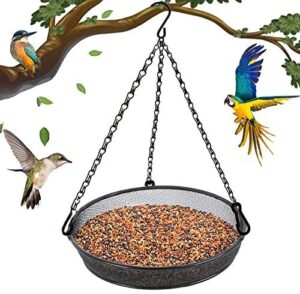
The FLINTER Hanging Metal Mesh Bird Feeder takes a different approach — no tubes, no lids, just an open 7.2-inch square tray built from heavy-duty powder-coated metal. Rainwater drains straight through the mesh, so seed stays fresher longer.
Small birds like finches, sparrows, and titmice land from any side, feeding side by side without jostling. It comes as a two-pack, so you can hang one while cleaning the other — a smart setup for beginners building a routine.
| Best For | Backyard bird watchers, nature lovers, and families looking for an easy, low-maintenance feeder that attracts small birds like finches and wrens. |
|---|---|
| Material | Metal |
| Weight | 9.1 oz |
| Color | Black |
| Easy to Clean | Yes, with tools |
| Bird Size Suitability | Small to medium |
| Squirrel Resistance | Not mentioned |
| Additional Features |
|
- Heavy-duty powder-coated metal keeps it weather-resistant and built to last through the seasons.
- The mesh tray works with seeds, peanuts, and mealworms — giving you flexibility in what you attract.
- Adjustable chain makes it easy to hang just about anywhere, from a tree branch to a shepherd’s hook.
- Larger birds like cardinals and blue jays won’t get much use out of it — the size just isn’t there for them.
- The chain can rust over time, especially if you’re in a humid or rainy climate.
- It needs regular scrubbing with soapy water to keep mold and bacteria from building up.
5. iBorn Metal Bird Feeder
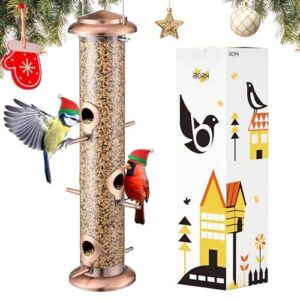
The iBorn Metal Bird Feeder brings a classic tube design with real staying power. Standing 16.5 inches tall with six feeding ports, it lets several birds eat at once — finches, chickadees, and sparrows especially.
The brushed copper aluminum finish resists rust, and the clear seed tube shows you exactly when it’s time to refill. A flip-top lid makes filling quick. Drainage holes in the metal base keep seeds from sitting in water and spoiling.
It’s a solid starter feeder, no-fuss, and a great option for those looking for a simple bird feeder.
| Best For | Backyard bird lovers who want a good-looking, low-maintenance feeder that attracts smaller birds like finches, sparrows, and chickadees. |
|---|---|
| Material | Aluminum/Metal |
| Weight | 15.5 oz |
| Color | Brushed Copper |
| Easy to Clean | Yes, flip-top |
| Bird Size Suitability | Small to medium |
| Squirrel Resistance | Partial |
| Additional Features |
|
- Six feeding ports mean several birds can eat at the same time — less waiting, more watching.
- The clear seed tube takes the guesswork out of refilling, so you’re never caught off guard.
- Flip-top lid makes filling fast and easy, no fumbling around.
- The ports are too small for bigger birds like blue jays or cardinals, so you might miss out on some visitors.
- Squirrels can still figure out a way in, metal or not.
- It’s on the smaller side, so if your yard gets busy, you’ll be refilling it pretty often.
6. Nature Anywhere Window Bird Feeder
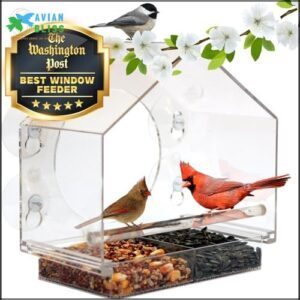
Nature Anywhere’s window feeder is built for those who want birds practically at arm’s reach. It mounts with four heavy-duty suction cups and holds about 15 ounces of seed in a sturdy polycarbonate body that won’t yellow or crack over time.
The sliding tray pulls out cleanly for refilling — no need to take the whole thing down. You also get a lifetime suction cup guarantee, which is a real confidence booster for first-timers.
| Best For | Bird lovers, cat owners, and anyone who wants a front-row seat to backyard wildlife without stepping outside. |
|---|---|
| Material | Polycarbonate |
| Weight | 1.39 oz |
| Color | Crystal |
| Easy to Clean | Yes, no assembly |
| Bird Size Suitability | Small to medium |
| Squirrel Resistance | Unique deterrent |
| Additional Features |
|
- Mounts right on your window so you can watch birds up close — no binoculars needed
- Clear polycarbonate build is tough, weatherproof, and stays clear over time
- Lifetime guarantee on the suction cups gives you real peace of mind
- Suction cups can lose their grip over time and may need replacing
- You’ll be refilling it pretty often depending on how busy your local bird traffic is
- Birds might take a while to warm up to it, so don’t expect action on day one
7. Clear Window Bird Feeder
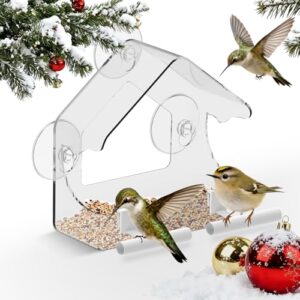
Sometimes the simplest design is the most satisfying. This clear acrylic window feeder measures just 6.2 by 6.2 inches and weighs only 5 ounces, but it punches well above its size.
Strong suction cups hold it firmly to the glass, giving you a front-row seat to chickadees and finches up close. The removable tray makes cleaning and refilling easy.
It’s compact, no-fuss, and honestly one of the best ways to turn your window into a live nature channel.
| Best For | Bird lovers, seniors, kids, and cat owners who want a close-up, front-row view of backyard birds right from their window. |
|---|---|
| Material | Acrylic |
| Weight | 5 oz |
| Color | Clear |
| Easy to Clean | Yes, removable tray |
| Bird Size Suitability | Small birds only |
| Squirrel Resistance | Not mentioned |
| Additional Features |
|
- Crystal-clear acrylic gives you an unobstructed 360° view of birds feeding up close
- Strong suction cups keep it securely mounted, and the removable tray makes cleaning and refilling a breeze
- Lightweight and compact at just 5 ounces, so it works on almost any window without any tools or hardware
- Suction cups may lose their grip in very cold temperatures, which could be a problem in harsh winters
- No perches, so some birds may have a harder time landing and staying put
- The tray holds a limited amount of seed, meaning more frequent refills if you get a lot of visitors
8. Birdream Retro Pagoda Bird Feeder
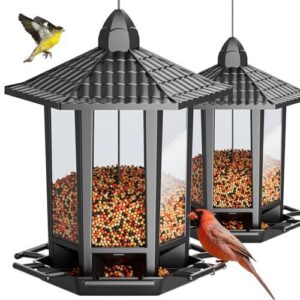
If you want a feeder that looks like it belongs in a Japanese garden, the Birdream Retro Pagoda is hard to beat. Its tiered pagoda roof sheds rain naturally, while the all-around seed trough lets cardinals, goldfinches, and chickadees feed from every side.
Assembly snaps together in minutes — no tools needed. The transparent panel shows you when it’s time to refill. At under 10 ounces, it hangs easily from any shepherd’s hook or tree branch.
| Best For | Families, casual bird watchers, and anyone who wants to add a little charm to their backyard without a lot of fuss. |
|---|---|
| Material | Plastic |
| Weight | 9.6 oz |
| Color | Black |
| Easy to Clean | Yes, wide opening |
| Bird Size Suitability | Small to large |
| Squirrel Resistance | Not squirrel-proof |
| Additional Features |
|
- The pagoda design looks genuinely cool — it stands out from the usual plain plastic feeders
- Easy to put together and the see-through panel takes the guesswork out of refilling
- Comes with a lifetime warranty, so you’re covered if something goes wrong
- Squirrels will absolutely help themselves — no protection there
- Plastic can get brittle over time, especially through harsh winters or strong winds
- The foot stands have been known to snap off, which might mean a quick glue fix
9. Hanizi Outdoor Bird Feeder
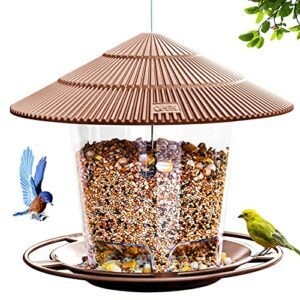
The Hanizi Outdoor Bird Feeder keeps things refreshingly simple. Its clear plastic panels let you see seed levels at a glance — no guessing, no unnecessary lid-lifting. The inclined roof sheds rain well, so your seed stays dry even during a downpour.
It holds up to 47 ounces, enough to keep chickadees, finches, sparrows, and cardinals fed for several days. The twist-lock top discourages squirrels, and the lightweight frame makes hanging and refilling genuinely easy for beginners.
| Best For | Backyard bird lovers who want a simple, low-maintenance feeder that keeps seed dry and squirrels (mostly) at bay. |
|---|---|
| Material | Plastic |
| Weight | 8.1 oz |
| Color | Brown |
| Easy to Clean | Yes, large opening |
| Bird Size Suitability | Small to large |
| Squirrel Resistance | Not fully proof |
| Additional Features |
|
- Clear panels make it easy to check seed levels without opening anything
- The inclined roof does a solid job keeping seeds dry in rain
- Lightweight and easy to hang, fill, and clean
- Not fully squirrel-proof — determined squirrels have found their way in
- Openings can be too small for larger seed types or bigger birds like cardinals
- Perch size may leave larger birds struggling to get comfortable
10. Metal Bird Feeder Tube
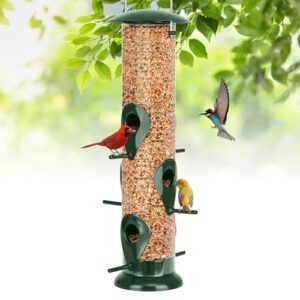
Metal construction changes everything when squirrels are involved. This tube feeder stands 13 inches tall, weighs just 15.5 ounces, and features six metal feeding ports that let finches, chickadees, sparrows, and woodpeckers feed at the same time.
The wide-opening lift-up lid makes refilling straightforward, and the transparent tube shows you exactly when seed runs low. It accommodates sunflower seeds and mixed blends well. One honest note — determined squirrels can eventually work the lid loose, so a baffle pole helps.
| Best For | Bird lovers who want a durable, low-maintenance feeder that can handle multiple visitors at once without falling apart after a season. |
|---|---|
| Material | Metal |
| Weight | 15.5 oz |
| Color | Green |
| Easy to Clean | Yes, lift-up lid |
| Bird Size Suitability | Small to medium |
| Squirrel Resistance | Not fully proof |
| Additional Features |
|
- Metal build holds up way better than plastic — no cracking, no easy chewing through it
- Six feeding ports mean less squabbling and more birds at once
- Transparent tube takes the guesswork out of knowing when to refill
- Squirrels will eventually figure out the lid if they’re motivated enough
- Moisture can collect at the bottom, making cleanup a bit of a hassle
- The lid hinges can pop out when you move it around, which gets old fast
Placement and Maintenance Tips
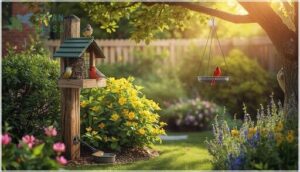
Getting your feeder in the right spot makes all the difference between a busy backyard and an empty one.
A little routine care keeps birds coming back and seeds from going bad. Here’s what you need to know to set things up right and keep them that way.
Best Locations for Feeder Placement
Where you put your feeder placement matters more than most beginners expect. For window proximity, keep feeders either within 3 feet of glass or beyond 30 feet to reduce collision risk.
Tree cover within 10 to 15 feet gives wild birds a quick escape from predators. Consider sun exposure, yard layout, and predator safety too — smart bird feeder placement makes backyard birding genuinely rewarding.
Height and Accessibility Considerations
Height shapes everything from bird visibility to how often you’ll bother refilling. Most feeders work best around 5 to 6 feet off the ground — comfortable for human reach without making squirrel deterrence a lost cause.
Squirrels can jump nearly 4 feet up, so that extra height matters. For outdoor hanging and window bird feeder setups, keeping things at eye level makes backyard birding and bird feeder maintenance feel seamless.
Cleaning Schedules and Safe Methods
Keeping feeders clean matters just as much as where you hang them. For cleaning bird feeders, aim for every two weeks under normal conditions — weekly if traffic is heavy or birds look sick.
A solid sanitizing solution is one part bleach to nine parts water. After scrubbing with soapy water, safe rinsing removes all residue. Always air dry completely before refilling.
Inspecting Feeders for Wear and Damage
Once cleaning bird feeders becomes routine, the next step is knowing when a feeder is past its prime. A quick inspection every few weeks protects avian health and keeps beginners from dealing with surprise failures mid-season.
Check these five areas:
- Structural Checks – look for cracks or wobbly perches
- Hanging Hardware – test chains and hooks for fraying
- Metal Rust – feel for rough, pitted edges on rims
- Chewing Damage – scan for gnaw marks and missing chunks
- Weather – inspect roofs for warping after heavy storms
Attracting Wild Birds to Your Feeder
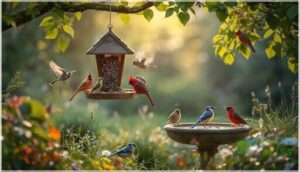
Getting birds to actually show up takes a little more than just hanging a feeder outside. The right seed, the right setup, and a few smart habits make all the difference.
Here’s what you need to know to turn your yard into a place birds keep coming back to.
Selecting The Right Bird Seed
The seed choice matters more than the feeder itself. Black oil sunflower seed attracts the widest range of wild birds — chickadees, cardinals, finches, and more. Nyjer works best for goldfinches. Safflower discourages grackles while keeping cardinals happy. Match your seed selection to your target bird species, and you’ll see results fast.
| Seed Type | Bird Preferences | Feeder Capacity Tip |
|---|---|---|
| Black Oil Sunflower | Chickadees, cardinals, finches | Fill tube or hopper fully |
| Nyjer (Thistle) | Goldfinches, siskins | Use small-port finch feeders |
| Safflower | Cardinals, doves, titmice | Works in any standard feeder |
| White Millet | Sparrows, juncos, doves | Best in platform or tray feeders |
| Hulled Sunflower | Most backyard bird species | Ideal for window or deck feeders. |
Always prioritize seed freshness — discard anything that smells sour or clumps. Smart storage methods, like sealed steel containers in a cool, dry spot, keep your bird seed usable for weeks.
Seasonal Feeding Strategies
Wild birds don’t eat the same way year round — and neither should you. Matching your seasonal bird feeding strategies to what birds actually need makes a real difference.
- Winter Feeding: Stock suet and black oil sunflower seeds for energy-dense calories.
- Spring Migration: Add mealworms when birds return hungry from long flights.
- Autumn Prep: Refill feeders consistently so birds learn to rely on your yard.
Creating a Safe and Inviting Habitat
Your backyard can become a true wildlife habitat with a few smart choices. Safe feeder placement — within 3 feet of windows or beyond 25 feet — cuts collision risk dramatically. Add water sources, native bird friendly plants, and natural perches for habitat diversity.
Here’s a quick guide for beginners:
| Element | Why It Matters |
|---|---|
| Feeder Placement | Reduces window strikes |
| Water Sources | Attracts more wild birds |
| Native Plants | Boosts backyard wildlife shelter |
| Predator Control | Keeps feeding areas safer |
| Habitat Diversity | Helps more bird feeders visitors |
Deterring Squirrels and Unwanted Pests
Squirrels are basically Olympic athletes — don’t underestimate them. Squirrel proofing starts with the “5-7-9 rule“: keep feeders 5 feet high, 7 feet from launching surfaces, and 9 feet below branches.
Squirrels are Olympic athletes — outsmart them with the 5-7-9 rule: 5 feet high, 7 feet out, 9 feet below branches
Add a squirrel baffle on your pole for reliable wildlife barriers. Weight-activated squirrelproof feeders work great too, closing ports when heavier pests land. Smart seed protection and pest deterrents mean more birds, fewer freeloaders.
Frequently Asked Questions (FAQs)
What is the 5 7 9 rule for bird feeders?
The 5 7 9 rule is a bird feeder placement guide: keep feeders 5 feet high, 7 feet from side structures, and 9 feet below overhanging branches to block squirrel access.
Why put a potato in the bird feeder?
Plain boiled potato gives wild birds a quick carbohydrate boost — great for bird nutrition in cold months.
Just skip raw or seasoned pieces, as solanine and salt harm wild bird health fast.
How to feed wild birds for beginners?
Start simple. Hang one feeder, fill it with black oil sunflower seed, and watch who shows up.
Most wild birds find feeders within a few days. Clean it every two weeks and you’re set.
What is the easiest wild bird to befriend?
The black-capped chickadee tops the list for bird trust. These bold little birds will land right on your hand for sunflower seeds — a rewarding chickadee behavior that surprises most beginners.
Which birds are attracted to specific feeders?
Different bird feeders attract different bird species.
Tube feeders bring small bird visitors like chickadees and finches.
Platform feeders are large bird magnets.
Suet feeders draw clinging bird species like woodpeckers.
How do I identify birds visiting my feeder?
Noticing bird size, feather color patterns, beak shape analysis, and wing bar identification helps you name each visitor quickly.
Apps like Merlin make wild bird species identification simple for any birdwatcher.
Can multiple feeders be placed in one yard?
Yes, you can place multiple feeders in one yard.
Spreading them out improves feeder spacing, promotes bird diversity, and helps with squirrel control by preventing any one spot from being dominated.
Do bird feeders attract predators like hawks?
Bird feeders can attract hawks by concentrating wild birds in one spot.
Smart feeder placement near shrubs gives bird species quick cover. Tube feeders and window feeders naturally reduce hawk access and improve bird safety.
How long before birds discover a new feeder?
Most wild birds discover a new feeder within a few days to two weeks.
Chickadees and titmice are usually first. Place it near shrubs, use black oil sunflower seeds, and be patient.
Conclusion
Something is about to happen in your yard—you just don’t know it yet. The moment you hang the right feeder in the right spot, filled with the right seed, you’ve quietly set the stage.
Wild bird feeders for beginners aren’t complicated once you understand what birds actually need. A chickadee will find you before you find it. That first visit won’t feel like luck. It’ll feel like you finally did something right.
- https://www.nwf.org/garden-for-wildlife
- https://avianreport.com/tube-bird-feeders-beginners/
- https://www.birdscanada.org/choosing-the-right-feeder-and-seed-a-guide-to-keeping-backyard-birds-healthy
- https://www.wbu.com/products/squirrel-proof/
- https://www.kingsyard.com/blog/bird-feeder-setup-placement-guide/