This site is supported by our readers. We may earn a commission, at no cost to you, if you purchase through links.
 When you’re looking at wild bird rehabilitation cost, it’s a bit like putting together a puzzle, each piece representing food, shelter, vet bills, and even a little flight school.
For a songbird, you might pay just $57 to get it back on its wings, but a hawk or owl can easily rack up $50 per week, and a bald eagle’s grocery bill alone might top $3,000 a year.
Rehab centers rely on donations, grants, and some creative fundraising to keep the lights on.
There’s more to the story—facility, supplies, and those all-important volunteer hours all play their part.
Table Of Contents
- Key Takeaways
- Wild Bird Rehab Costs
- Bird Species Costs
- Rehabilitation Process
- Operational Costs
- Funding Wildlife Rehab
- Frequently Asked Questions (FAQs)
- What is wild bird rehabilitation?
- Are wildlife rehabilitators paid?
- Where can I get help if I need a wildlife rehabilitator?
- Are donations to wild bird rehabilitation tax deductible?
- Are wildlife rehabilitators available 24 hours a day?
- Are wildlife rehabilitators licensed?
- Do wildlife rehabilitators charge?
- Who do I call for an injured bird in Iowa?
- How to rehab a wild bird?
- Do wildlife rehabbers make money?
- Conclusion
Key Takeaways
- You’ll spend anywhere from $37 to $3,750 to rehab a single bird, with raptors costing much more than songbirds.
- Food and vet bills make up most of your expenses, so tracking costs and budgeting is essential if you run or support a rehab center.
- Donations, grants, and creative fundraising are what keep most wild bird rehab programs alive—very few charge for taking in injured birds.
- Most wildlife rehabilitators work as volunteers, so every dollar or hour you give helps get injured birds back on their wings.
Wild Bird Rehab Costs
You’ll spend between $37 to $3,750 per bird depending on the species and care needs, with songbirds averaging $57 each including monitoring.
Serious medical cases can push costs much higher, while basic rehabilitation for common species stays under $100, which can be considered a basic cost.
Average Annual Costs
The wild bird rehabilitation cost typically runs between $10,000 and $150,000 annually for most centers.
Your annual budget depends heavily on patient volume, with facilities treating over 1,000 birds commonly exceeding $100,000.
Cost analysis shows individual bird expenses range from $75 to $300 each.
Financial planning must account for inflation’s 12% increase since 2020, making expense tracking essential for sustainable funding models and wildlife rehabilitation costs management.
Food Expenses
When you step into wild bird rehabilitation, food costs quickly take center stage.
Feeding wild birds isn’t just a chore—it’s the heartbeat of every successful rehabilitation effort
Feeding expenses soar, whether you’re budgeting for bulk Seed Costs or specialty Formula Expenses.
Food Budgeting is key—different species have unique Dietary Needs.
Nutrition Planning matters, too.
The wild bird rehabilitation cost climbs fast if you don’t track wildlife feeding.
Ultimately, feeding equals the biggest cost of bird care.
Understanding the wildlife feeding expenses is essential for effective rehabilitation management.
Veterinary Care
Beyond feeding costs, veterinary care represents your second-largest expense in wild bird rehabilitation. Medical bills can quickly escalate when you’re caring for injured wildlife, especially when emergency care becomes necessary.
Here’s what you’ll typically spend on avian medical expenses:
- Initial assessments and diagnostic fees – $25-$100 per bird for intake exams, plus $50-$200 for radiographs and diagnostic tests
- Surgical procedures and treatments – $150-$800 for fracture repairs, with advanced surgeries like wing amputations exceeding $1,000
- Ongoing medical support – $15-$90 for medications per bird, plus $15-$45 per follow-up visit for bandage changes
Vet services for raptors cost substantially more than songbirds, with bird treatment prices averaging $600 per hawk or owl case compared to $55-$110 for smaller species.
Bird Species Costs
You’ll find significant cost differences when rehabilitating various bird species, with raptors requiring the highest investment and songbirds being more budget-friendly.
Hawks and owls demand $50 weekly for basic care, while smaller songbirds average just $37-57 per bird through the entire rehabilitation process.
Hawks and Owls
Since raptors demand specialized care, you’ll face hawk rehabilitation costs averaging $600-$2,500 annually per bird.
Owls require similar investments due to complex Flight Patterns and Raptor Behavior needs.
These apex predators consume $1,200-$1,500 in prey yearly, while their specialized housing increases facility expenses by 30%.
Bird rescue funding often prioritizes these charismatic species through dedicated Owl Conservation programs.
Songbirds
Calculating songbird rehabilitation expenses? These tiny patients pack a surprisingly big financial punch for bird rehabilitation programs.
Songbird rehabilitation costs include:
- Initial assessment – $35-$100 per bird for veterinary evaluation and triage procedures
- Monthly food expenses – $5-$20 covering seeds, fruits, and specialized Songbird Nutrition formulas
- Medical interventions – $75-$250 for treating Avian Diseases, wound care, and antibiotics
- Housing costs – $500-$1,500 maintaining flight enclosures that accommodate natural Nesting Habits
- Release preparation – $15-$45 for pre-release evaluation, banding, and transport logistics
Urban wild bird rescue centers typically handle 300 songbirds annually, with standard cases averaging $50-$120 per bird.
Emergency situations requiring intensive Feather Care or addressing Migration Patterns disruptions can exceed $400.
Most avian rehabilitation facilities rely heavily on donations since these delicate creatures demand specialized attention throughout their recovery journey at bird rehabilitation centers.
Understanding songbird species information is essential for effective rehabilitation and conservation efforts.
Birds of Prey
Birds of prey rehabilitation demands significant financial commitment, with hawks costing approximately $500 per individual and monthly maintenance diets reaching $500-$600.
Bald Eagles require $3,000 annually for feeding alone, while Great-horned Owls need $2,900 yearly.
These raptors‘ specialized prey selection and complex flight patterns make avian rehabilitation particularly expensive, requiring expert care for successful wild bird rescue outcomes.
Rehabilitation Process
When you bring an injured wild bird to a rehabilitation center, you’re starting a complex process that typically spans 60-90 days and costs between $37-$500 per bird depending on the species and severity of injuries.
The rehabilitation journey involves three critical phases: initial emergency care and assessment, ongoing medical treatment and daily maintenance, and final preparation for release back into the wild, which is a crucial step for the bird’s survival and release back into the wild.
Initial Care
When you find an injured bird, the intake process begins immediately with emergency care assessment.
Medical screening costs start around $50-100, while initial housing setup adds another $25-50.
Nutrition costs during this critical first phase can reach $15-30 weekly, depending on species needs.
Avian vet costs for diagnostic work often exceed $200, making wildlife rehab expenses substantial from day one.
Bird hospital fees vary widely, but expect cost of bird care to climb quickly during injured bird care evaluation.
Understanding bird care costs is essential for effective rehabilitation planning.
Ongoing Treatment
Medical Care during rehabilitation demands ongoing attention, with specialized avian rehabilitators spending 2.5 hours daily per bird for treatment routines.
Recovery Costs climb as chronic conditions require extended stays, increasing expenses by 30-50%. Treatment Plans include regular bloodwork, imaging, and veterinary check-ups every 7-10 days at $75 per visit.
Your ongoing wildlife rehabilitation costs include:
- Nursing Needs – Injectable medications required for 85% of injured admissions
- Advanced therapies – Laser treatments costing $50-120 per session for complex cases
- Custom nutrition – Species-specific feeds averaging $2-7 daily per recovering bird
- Regular diagnostics – Blood work and X-rays comprising 10-15% of total case expenses
- Professional oversight – Ongoing Fees for specialized staff managing treatment protocols
The cost of bird medication is a significant factor, often involving bird health products to support recovery.
Release Preparation
Once your bird’s health stabilizes, release preparation becomes your final hurdle.
You’ll spend on habitat assessment ($90 per field day), flight training facilities, and nutrition planning for wild foraging.
Proper socialization techniques and post release monitoring guarantee your wildlife rehabilitation cost investment pays off through successful bird rescue support.
| Release Component | Average Cost |
|---|---|
| Habitat Assessment | $90/day |
| Flight Training Setup | $200-400 |
| Post-Release Monitoring | $90/field day |
Operational Costs

When you run a wildlife rehabilitation center, operational costs extend far beyond just feeding the birds.
Your biggest expenses include facility maintenance like aviary repairs and cleaning supplies, specialized equipment such as incubators and medical tools.
Plus the challenge of managing volunteers and any paid staff positions.
Facility Maintenance
Your wildlife rehabilitation facility faces ongoing maintenance costs that directly impact your budget.
Facility maintenance accounts for 35-50% of annual operating expenses at wildlife care facilities.
Enclosure design requires regular repairs averaging $1,000-$10,000 yearly, and cleaning protocols and sanitation procedures add $150-$400 monthly.
Ventilation systems and pest control run $50-$250 per month, while wildlife rehabilitation cost management depends on consistent upkeep.
Equipment Expenses
Beyond basic facility upkeep, you’ll need specialized wildlife rehabilitation equipment that adds up quickly.
Every injured bird needs more than just good intentions—it needs the right tools to heal properly.
Your budget must account for essential gear that keeps birds safe and healthy throughout recovery. Effective wildlife enclosure designs are vital for successful rehabilitation outcomes.
- Caging Costs: Custom enclosures range from $200-2,000 depending on species size
- Medical Supplies: Syringes, needles, and medications cost $500+ annually per facility
- Heating Pads: Temperature control equipment runs $50-150 per unit for critical care
- Cleaning Tools: Specialized disinfectants and safety gear require ongoing replacement costs
Staffing and Volunteers
You’ll need a solid team to run your wildlife rehabilitation operation effectively.
Most centers rely heavily on wildlife rehabilitation volunteers who handle daily care tasks, feeding schedules, and basic medical support.
Staff management becomes critical as you balance paid positions with volunteer coordination, and recruitment strategies should target local veterinary schools, animal science programs, and community groups.
Mentorship programs help new volunteers learn proper handling techniques and safety protocols, which is essential for the success of the operation.
Team building activities keep your wildlife rehabilitation staff motivated despite the emotional demands of caring for injured birds.
Effective bird conservation efforts also play a vital role in the overall success of wildlife rehabilitation centers.
Funding Wildlife Rehab
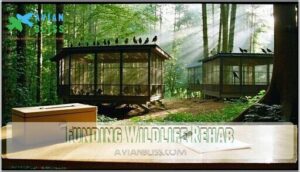
Funding your bird rehabilitation efforts doesn’t have to drain your personal savings account.
Most successful wildlife centers combine donations, grants, and community partnerships to cover the $12,000 annual food costs and unexpected veterinary bills that can reach thousands per complex case.
Sustainable bird rehab thrives through community, donations, and grants—funding every meal, every rescue, every hopeful release
Donations and Grants
Securing wildlife rescue donation funding requires strategic planning and diverse approaches.
You’ll find approximately 60% of rehabilitation centers depend on grants as their primary income source, while individual donations contribute 40-55% of operational budgets.
Effective conservation efforts often rely on bird sanctuary support to guarantee the long-term viability of these organizations.
- Grant Writing: Target state wildlife agencies and conservation organizations offering $3,000-$75,000 awards
- Donor Engagement: Build relationships with individual contributors averaging $25-$250 per gift
- Corporate Sponsorships: Partner with businesses providing $1,000-$20,000 annually through matching programs
Community Support
Local wildlife rehabilitation centers depend on your community’s helping hands to keep their doors open.
Through Volunteer Training programs, you’ll learn essential skills while reducing staffing costs.
Donation Management systems track wildlife rescue donations efficiently.
Public Awareness campaigns and Community Outreach activities build support networks.
Fundraising Events bring neighbors together for wildlife rehabilitation support, creating lasting partnerships with animal welfare organizations, which rely on effective Donation Management.
Financial Sustainability
Creating sustainable wildlife rehabilitation programs requires careful Budget Planning and Cost Management to weather unpredictable donation cycles.
Here’s how centers maintain Funding Models that work:
- Donation Strategies: Recurring donor programs provide 10-25% of operational costs
- Grant Writing: Government contracts supply 15-30% of annual budgets
- Corporate sponsorships: Local businesses offset wildlife rehabilitation expenses substantially
- Fundraising events: Generate $10,000-$50,000 yearly for avian care costs
Smart wildlife rehabilitation financial management prevents centers from closing their doors.
Frequently Asked Questions (FAQs)
What is wild bird rehabilitation?
Wild bird rehabilitation means you help sick or injured wild birds recover so they can return to nature.
You’ll feed, treat, and house them, like a wildlife nurse, until they’re strong enough to fly free again.
Are wildlife rehabilitators paid?
You rescue, you feed, you worry—yet most wildlife rehabilitators aren’t paid; they’re volunteers, fueled by purpose, not paychecks.
Sometimes, small stipends or donations help, but don’t count on it to cover your rent!
Where can I get help if I need a wildlife rehabilitator?
If you find injured wildlife, call your state’s wildlife agency or a licensed local rehabilitator.
Numbers like the Wildlife Rescue League (0800) or Blue Ridge Wildlife Center (9000) can point you in the right direction.
Are donations to wild bird rehabilitation tax deductible?
If you donate to a registered 501(c)(3) wild bird rehab center, your gift usually counts as tax-deductible.
Just ask for a receipt, stash it with your records, and enjoy helping save some feathered friends.
Are wildlife rehabilitators available 24 hours a day?
Most wildlife rehabilitators aren’t on call around the clock, but some clinics offer emergency help after hours.
It’s best to check local centers’ hours first, just in case you ever find a feathered friend in need.
Are wildlife rehabilitators licensed?
Ever wonder who holds the keys to animal rescue?
You’ll be dealing with licensed rehabilitators—they’ve got state or federal permits, know what they’re doing, and follow strict rules to keep you and the animal safe.
Do wildlife rehabilitators charge?
Most wildlife rehabilitators don’t charge you to drop off injured or orphaned animals, but donations help cover their costs.
You might see a suggested amount, but services are usually free—think of it as community care, not a business.
Who do I call for an injured bird in Iowa?
Like a compass guiding a lost hiker, Iowa’s DNR or licensed wildlife rehabilitators are your best bet.
Call Iowa DNR at 515-725-
Don’t handle injured birds directly—let the experts step in safely.
How to rehab a wild bird?
When you find an injured bird, gently place it in a ventilated box lined with a towel.
Keep it warm, quiet, and away from pets or noise.
Call a licensed wildlife rehabilitator—don’t try to feed or treat it yourself.
Do wildlife rehabbers make money?
Running a rehab center is like filling a bucket during a rainstorm—you spend more than you collect.
You might get donations or grants sometimes, but most folks end up dipping into their own pockets to cover costs.
Conclusion
Picture a rescue center at sunrise, volunteers already at work, each dollar counted.
When you look at wild bird rehabilitation cost, you’re seeing the real price of giving injured birds a second chance.
Whether it’s a small songbird or a mighty raptor, food, care, and expert attention add up fast.
Every donation helps keep the process going, and if you ever find a bird in need, now you know what it really takes to help it fly again.
- https://givewildlifeabrake.com/cost-of-wildlife-care/
- https://redcreekwildlifecenter.com/2025-spring-newsletter-2/
- https://www.sciencedirect.com/science/article/abs/pii/S0044516916300260
- https://www.foxrunenvironmentaleducationcenter.org/new-blog/2022/1/25/feeding-expenses-in-wildlife-rehabilitation
- https://www.aplacecalledhoperaptors.com/food/