This site is supported by our readers. We may earn a commission, at no cost to you, if you purchase through links.
Every year, up to a billion birds die from window strikes alone, and countless more suffer wing injuries that leave them vulnerable to predators or unable to feed. Cats account for another staggering portion of avian injuries, with domestic felines killing an estimated 2.4 billion birds annually in the United States.
These aren’t isolated tragedies—they’re preventable patterns that you can interrupt with the right wing injury prevention methods. Small changes to your yard, home, and daily habits create safer zones where birds can thrive without risking their most essential tools for survival.
Whether you’re protecting backyard visitors or caring for domestic birds, understanding where dangers lurk and how to eliminate them gives you real power to reduce harm.
Table Of Contents
- Key Takeaways
- Common Causes of Bird Wing Injuries
- Identifying Signs of Wing Injuries
- Creating a Safe Bird Environment
- Reducing Predator Risks to Birds
- Bird-Friendly Landscaping Strategies
- Preventing Injuries in Domestic Birds
- Monitoring Bird Health and Behavior
- Safe Handling Techniques for Injured Birds
- Emergency Response to Wing Injuries
- Community Education and Advocacy
- Frequently Asked Questions (FAQs)
- Conclusion
Key Takeaways
- Window collisions and outdoor cats are the leading causes of wing injuries and bird deaths, but simple changes like decals and keeping cats indoors can cut these risks dramatically.
- Signs of wing injury include drooping, swelling, feather loss, and changes in movement or behavior; early detection and quick veterinary care are critical for recovery.
- Bird-proof your home by installing window decals, clearing yard hazards, and avoiding pesticides to create a safe environment for both wild and domestic birds.
- Community education, practical landscaping, and responsible pet management work together to build lasting protection for birds in your neighborhood.
Common Causes of Bird Wing Injuries
Birds face dangers every single day, and many of these threats come from things you mightn’t even notice in your own backyard. Understanding what puts birds at risk is the first step in protecting them from wing injuries.
Let’s look at the three main culprits that account for millions of bird injuries each year.
Window Collisions
Each year, window collisions kill up to a billion birds across North America and Europe. Glass reflects vegetation and sky, tricking birds into seeing false perches. You can reduce these tragedies with simple bird safety measures:
- Apply window decals spaced two to four inches apart
- Install exterior screens or films on reflective surfaces
- Position feeders closer than three feet to windows
- Choose bird-friendly landscaping that minimizes glass reflection
These collision patterns spike during bird migration, making urban planning essential for bird conservation. Effective conservation strategies require careful consideration of science information to develop well-informed solutions.
Predator Attacks (cats, Wildlife)
While windows pose one threat, predator attacks—especially cat attacks—cause equally devastating wing injuries. Cats kill roughly 2.4 billion birds annually, targeting ground-foraging species with claws that fracture delicate wings.
Feral cat control and wildlife deterrents like motion-activated sprinklers offer proven bird safety measures. Bird-friendly landscaping with open sightlines reduces ambush opportunities, while keeping cats indoors remains your most effective cat attack prevention strategy for wildlife conservation.
Understanding the main topic branches can help in organizing information about bird safety and conservation.
Environmental Hazards and Human Activities
Beyond predator attacks, human activities create hidden threats you might overlook. Light pollution disorients migrating birds, while wind exposure during storms increases injury risk by 34 percent.
Urban planning that ignores habitat loss forces birds near reflective glass—1 to 2 birds per 100 mortalities stem from window collisions in cities.
Climate change intensifies these dangers, making bird-friendly landscaping and thoughtful design more urgent than ever.
Identifying Signs of Wing Injuries
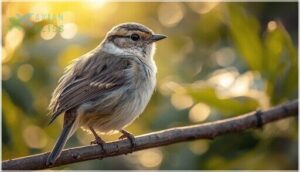
Spotting wing injuries early can make all the difference in whether a bird recovers or suffers long-term damage. You’ll need to look for physical signs on the wing itself, as well as changes in how the bird moves and behaves.
Here are the key warning signs that tell you something’s wrong.
Visible Fractures or Drooping Wings
A drooping wing is like a red flag waving—it often signals a fracture or dislocation that needs your attention within 24 hours. Look for swelling, unusual angles, or a wing held away from the body.
If you spot visible bone or bleeding, that’s an open fracture requiring immediate care. Don’t try realigning anything yourself; gentle handling and quick professional help give injured birds their best shot at recovery.
Feather Loss and Swelling
Patchy feather loss around the wing, paired with local swelling or warmth, often points to trauma or wing infection that needs veterinary attention. You might notice bleeding at quills, crusting, or skin irritation—all signs of feather damage disrupting the healing process.
Document what you see with dated photos, then seek professional help to rule out fractures, soft tissue injuries, or infection before feather regrowth can begin.
Behavioral Changes Indicating Pain
Pain Assessment begins with watching how your bird moves and reacts. Injury Response often shows through subtle shifts in daily habits. Look for these behavioral signs that signal wing injury distress:
- Persistent wing droop or inability to lift the wing normally
- Reduced hopping, perching difficulty, or loss of balance
- Distress calls when you approach the affected wing
- Increased sleep time paired with loss of appetite
- Isolation from cage mates or avoidance of usual activities
These Stress Factors demand immediate avian care to address underlying bird health concerns.
Creating a Safe Bird Environment
You can make a real difference in bird safety by addressing the hazards in your own backyard. Simple changes around your home reduce the risk of wing injuries and collisions that hurt millions of birds each year.
Here are three key areas where your actions protect birds from preventable harm.
Bird-proofing Windows and Glass Surfaces
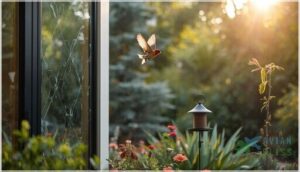
Windows act like invisible walls to birds, causing millions of collisions each year. You can prevent these strikes by installing window decals or UV coatings at 10–15 cm intervals, which make glass visible to birds. Consider bird screens or window shields positioned within 1–2 inches of glazing for added protection.
Glass alternatives with built-in patterns reduce reflection hazards. Keep bird feeders at least 3–5 meters from windows to create a bird-friendly environment, and use curtains during dawn and dusk when collisions peak.
Removing Yard Hazards
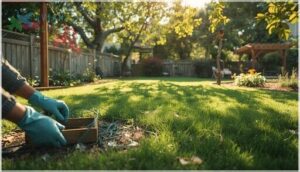
Your yard can be a minefield of hidden dangers for birds. Start by clearing debris like fishing line, broken glass, and sharp tools within 10 meters of perches—studies show this cuts injuries by 25 percent.
Regular cleanup after storms, safe fencing around pet areas, and trimming tall grasses near bird feeders all create bird-friendly landscaping that protects wildlife corridors and complements your window collisions prevention efforts.
Minimizing Pesticide and Toxin Exposure

Toxic substances lurking in your garden pose invisible threats to bird habitat health. Chemical exposure from common pesticides disrupts ecological balance and harms wings through neurological damage. Protect avian protection by adopting these environmental safety practices:
- Create pesticide-free zones within 50–100 meters of feeders
- Choose bird-friendly landscaping with pesticide alternatives like beneficial insects
- Clean water sources weekly to remove contamination
- Practice integrated pest management for wildlife conservation
Environmental awareness starts in your own backyard.
Reducing Predator Risks to Birds
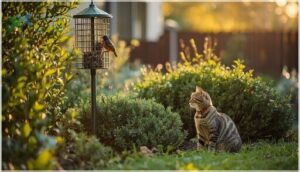
Predators pose one of the biggest threats to backyard birds, with house cats alone killing around 2.4 billion birds every year in the United States.
You can dramatically reduce these risks by making a few thoughtful changes to how you manage your outdoor spaces. Let’s look at three practical strategies that keep both birds and local wildlife safer.
Keeping Cats Indoors
Keeping your cat indoors isn’t just about feline wellness—it’s one of the most effective steps for bird conservation. With proper indoor enrichment and cat proofing, you’ll create a bird-friendly environment that protects wildlife while supporting your pet’s domestic safety and overall animal welfare.
Indoor cats face 1.8 to 3.0 times lower injury risks and live much longer.
Installing Cat Deterrents in Gardens
Even when your own cat stays inside, neighborhood felines may still threaten garden birds. Motion sensors with sprinklers offer effective wildlife protection without harm, while scent-based cat repellents like citrus peels work for some. Install garden barriers such as cat-proof fencing around bird-friendly landscaping. These predator deterrent methods support bird conservation by creating a true bird-friendly environment:
- Motion-activated sprinklers deter cats instantly
- Citrus-based feline deterrents repel certain cats
- Cat-proof fencing limits garden access
- Dense shrubs near perches provide escape cover
- Regular maintenance sustains wildlife preservation efforts
Deterring Other Common Predators
Beyond cats, foxes, raccoons, and birds of prey pose serious threats to your feathered visitors. Motion-activated security lights cut nocturnal predator visits by roughly 53 percent, while electrified netting prevents up to 90 percent of ground attacks. Guard animals like dogs reduce predation by 63 percent.
These predator control and wildlife deterrents create urban bird safety measures that genuinely protect vulnerable species through smart fencing strategies and habitat design.
Bird-Friendly Landscaping Strategies

Your yard can be a safe haven for birds, or it can become another hazard zone. The plants you choose, the tools you use, and the shelter you provide all play a role in preventing wing injuries.
Let’s look at three landscaping strategies that create a safer environment for the birds visiting your property.
Planting Native Shrubs and Trees
Native plant selection forms the backbone of bird habitat creation and wildlife corridor design. When you choose the right tree species diversity for your region, you’re building a bird-friendly environment that works year-round.
Consider these ecofriendly gardening practices:
- Select native shrubs with dense foliage for safe shelter
- Plant evergreen and deciduous trees at varied heights
- Create layered plantings to support different bird species
- Maintain continuous native cover along property edges
These bird-friendly landscaping tips reduce injury risk while supporting local biodiversity.
Avoiding Harmful Garden Tools and Chemicals
Your garden tools and chemicals pose real threats to birds. Hedge trimmers and power shears can strike birds mid-flight, while pesticides cause feather damage and impaired flight.
Chemical alternatives and bird-safe tools make toxic-free gardens possible. Store all chemicals in locked containers, use integrated pest management, and choose non-toxic soil amendments.
These eco-friendly landscaping choices support bird conservation and wildlife preservation while maintaining your bird-friendly environment.
Providing Safe Perches and Shelter
Sturdy perches with varying diameters reduce foot strain and prevent falls that can injure wings. Install broad, natural branch materials in sheltered roosting areas high off the ground, spacing them to avoid collisions.
Bird enclosures and nesting boxes should have smooth interiors and predator-proof latches.
These bird-friendly landscaping features support bird welfare and wildlife preservation while creating a secure bird-friendly environment for better bird care.
Preventing Injuries in Domestic Birds
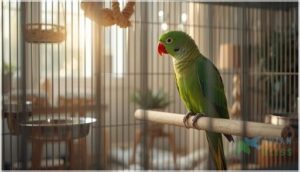
Domestic birds face unique risks inside your home, from poorly designed cages to unsafe toys that can trap or injure their wings. You have complete control over their environment, which means you can prevent most injuries before they happen.
Let’s look at three key areas where small changes make a big difference in keeping your bird’s wings healthy and strong.
Safe Aviary and Cage Design
Your bird’s home is its fortress—and poor cage design can lead to preventable wing injuries. Choose impact-resistant materials and appropriate bar spacing for your species to prevent entanglement. Install varied-diameter perches to minimize plumage stress, and guarantee proper ventilation systems without creating drafts.
A thoughtfully designed aviary layout with balanced lighting creates a bird-friendly environment that promotes wildlife preservation while prioritizing enclosure safety and thorough avian care.
Supervised Out-of-cage Time
Regularly scheduled outside time lets your bird stretch, socialize, and explore—but only in controlled, bird-friendly environments. Before each session, inspect your safe flight areas for hazards like open windows or ceiling fans.
Watch bird behavior closely during supervised exercise to catch early signs of fatigue or wing injury. These avian enrichment activities support healthy movement while keeping cage-free zones secure, benefiting both domestic care and wildlife rehabilitation principles.
Appropriate Toys and Enrichment
Enrichment plans that rotate safe chew items and puzzle feeders keep your bird mentally sharp and physically active. Choose toxic-free toys matched to your bird’s size and species to encourage natural foraging and bird socialization.
Well-designed enrichment fosters bird behavior that mirrors wildlife preservation instincts, creating a bird-friendly environment. Regular toy rotation maintains novelty, reinforcing bird conservation principles while preventing boredom-related injuries in your bird-friendly landscaping efforts indoors.
Monitoring Bird Health and Behavior

You can’t prevent wing injuries without knowing what normal looks like. Regular observation helps you spot trouble early, when intervention makes the biggest difference.
Learning to read bird behavior—whether they’re truly injured or just finding their wings—gives you the confidence to act decisively when it matters most.
Early Signs of Distress or Injury
You might miss the earliest warning signs if you’re not paying close attention. Watch for wing drooping, awkward flight patterns, or feather damage that suggests wing trauma.
Behavioral cues like reluctance to perch or sudden aggression during handling can signal an injured wing. Early injury assessment helps you catch bird wing injuries before they worsen, giving the injured bird its best chance at recovery.
Regular Observation Routines
Consistency is your best friend regarding spotting wing trouble early. Set up daily checklists to monitor wing symmetry, feather integrity, and range of motion at the same time each day. Document what you see, and you’ll catch subtle changes before they become serious.
Observation training sharpens your eye, aids timely reporting, and strengthens bird conservation efforts in any bird-friendly environment.
Distinguishing Between Fledgling and Injured Birds
Once you’ve built a rhythm watching your birds, the next challenge is separating normal fledgling behavior from real wing injury. Young birds learning to fly often show drooping wings, unsteady movement, and reluctance to take off—all classic injury signs. Here’s your assessment framework:
- Check for parent presence: Fledglings usually have attentive parents nearby bringing food and calling.
- Observe wing symmetry: Injured birds show uneven wing angles, visible swelling, or abnormal bone positioning.
- Test flight patterns: Fledglings improve with rest; injured birds can’t sustain normal flight or perching.
- Look for behavioral cues: Pain causes hiding, persistent distress calls, and reduced activity beyond typical fledgling caution.
- Time your intervention: Monitor for 2-3 hours before assuming a wild bird needs rescue—many recover independently.
Understanding bird development and wing anatomy helps you avoid unnecessary wild bird rescues while catching genuine bird injuries early. When injury assessment reveals persistent impairment, contact bird rescue professionals promptly.
Safe Handling Techniques for Injured Birds
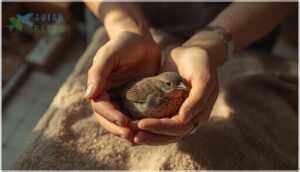
When you find an injured bird, your next move matters. Handling it the wrong way can worsen its injuries or put you at risk from sharp beaks and claws.
Here’s how to safely pick up and hold a bird that needs your help.
Protective Gloves and Towels
When you approach an injured bird, thick canvas or cloth gloves shield your hands from sharp beaks and claws. Wrap a soft towel around the bird’s body, tucking the injured wing gently against its side—this padded cradle minimizes wing movement and prevents further harm.
These basic protective gear items make bird rescue safer for both you and your feathered patient.
Proper Lifting and Restraint
Once you’ve got your gloves and towel ready, cradle the injured bird with both hands beneath its body—never grab wings, feet, or head. Support the chest gently while keeping that hurt wing tucked snug against its side.
This two-handed bird wrapping method steadies the bird during injury assessment and safe transport to your ventilated box, all while preventing wing flapping that could worsen fractures.
Minimizing Stress During Handling
Beyond proper lifting, your gentle handling makes all the difference—every moment you hold that injured bird counts. Keep your grip soft but secure, speak in low tones, and limit contact to under two minutes whenever possible.
A calm approach lowers stress markers like rapid breathing or frantic fluttering, so move slowly, avoid sudden noise, and get the bird into that quiet, towel-lined box quickly before heading to the vet.
Emergency Response to Wing Injuries
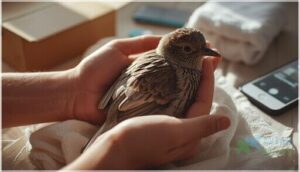
When you discover a bird with a wing injury, your first actions can make all the difference in its chances of recovery. Knowing how to assess the situation, stabilize the bird, and get it to professional care quickly will help you respond with confidence instead of panic.
Let’s walk through the essential steps you need to take when every second counts.
Initial Assessment and Stabilization
When you find a bird with an injured wing, start with a calm wing inspection—look for drooping, swelling, or visible breaks. Use gentle bird wrapping techniques with a soft towel to secure the wing against its body, minimizing movement.
Document the injury’s appearance and time of discovery for vet care. These stabilization techniques prevent further damage while you arrange emergency response through avian rehabilitation professionals.
When to Seek Veterinary Assistance
Seek veterinary care immediately if you spot visible fractures, active bleeding, or a wing held at an odd angle. These bird injuries demand an emergency response from an avian first aid expert who can provide proper injury assessment and treatment.
Urgent signs requiring a vet include:
- Open wounds with exposed tissue or bone
- Severe swelling or dark bruising around the injured wing
- Extreme distress, panic, or inability to perch
- Lethargy, weakness, or signs of shock
Don’t wait—prompt veterinary advice prevents infection and permanent damage.
Safe Transport to Rehabilitation Centers
Before you drive to rehabilitation centers, secure the bird in a towel-lined carrier with proper ventilation—transport safety is critical. Keep the injured bird upright during the trip, minimizing movement for bird stabilization. Aim to reach wildlife rehabilitation within an hour. Emergency response teams at wildlife care facilities provide veterinary guidance and injury assessment, so call ahead. Attach a note describing the bird’s condition for faster bird rehabilitation.
| Transport Step | Action Required |
|---|---|
| Carrier Preparation | Use ventilated box with soft lining |
| Temperature Control | Avoid direct sun or air conditioning |
| Movement Restriction | Secure in floorboard, keep upright |
| Time Management | Minimize transport time under 1 hour |
| Documentation | Attach injury description note |
Community Education and Advocacy

Protecting birds isn’t something you do alone—it takes your whole community pulling together to make a real difference. When you share what you’ve learned about preventing wing injuries, you create a ripple effect that reaches neighbors, schools, and local organizations.
Protecting birds requires community action—when you share injury prevention knowledge, you create a ripple effect that transforms neighborhoods into safer havitats
Let’s look at three powerful ways you can turn your knowledge into action and build a safer world for birds in your area.
Raising Awareness of Bird Injury Prevention
You can’t protect what you don’t understand. Public outreach transforms bird safety from abstract concern into community action through targeted awareness campaigns and education strategies.
When neighbors learn that window collisions cause millions of bird injuries annually, they’re more likely to adopt bird conservation strategies and bird-friendly landscaping tips.
Community engagement turns individual effort into collective impact, creating a safe bird environment for local wildlife.
Promoting Bird-friendly Practices
You can turn awareness into action by championing specific bird conservation practices in your community. Share window collision prevention techniques with neighbors, advocate for bird-friendly landscaping tips in urban planning meetings, and model sustainable living through eco-friendly yard choices.
When you demonstrate wildlife safety measures—like installing decals or planting native cover—you create bird-friendly environments that others will follow, transforming individual efforts into lasting change.
Supporting Local Wildlife Conservation Efforts
Your local wildlife conservation efforts make a measurable difference—community-led habitat restoration projects boost bird diversity by up to 25% in just five years. Strengthen these conservation strategies through active community engagement:
- Join citizen science programs that track wing injuries and improve rehabilitation prioritization
- Support grant-funded habitat enhancement projects that increase survival rates for recovering birds
- Participate in workshops teaching humane rescue techniques and wildlife preservation methods
- Advocate for municipal bird-friendly landscaping tips and sustainable gardening practices in local policy
These environmental sustainability actions create lasting wildlife preservation outcomes.
Frequently Asked Questions (FAQs)
What nutritional deficiencies weaken bird bone strength?
Ever wondered why bird bones break so easily? Calcium deficit, low phosphorus levels, poor Vitamin D role, and magnesium impact all reduce bone density—key concerns in avian medicine, bird injuries, and wildlife conservation in veterinary medicine and avian health.
How does weather affect wing injury recovery?
Weather Impact shapes wing injury recovery. Cold snaps slow tissue healing, while high humidity raises infection risk.
Controlled climate considerations, like keeping birds at 65–75°F, support faster bird rehabilitation and better Recovery Timelines in avian medicine.
Can lighting at night cause bird collisions?
You might think birds can easily avoid buildings at night, but Night Lighting disrupts Bird Vision, increasing Collision Risks.
Urban Planning that dims lights and uses birdfriendly landscaping helps reduce bird collisions, supporting wildlife conservation and a safer birdfriendly environment.
What role does habitat fragmentation play in injuries?
Habitat fragmentation ramps up injury risk by breaking up safe flight paths and crowding birds near predators and hazards.
Strong landscape connectivity, habitat restoration, and bird-friendly landscaping with native plants are key conservation strategies for wildlife preservation and rescue.
Conclusion
Imagine your yard, a place where birds glide confidently, their wings unbroken, their movements free. With thoughtful wing injury prevention methods—bird-proofed windows, safe landscaping, and watchful habits—you shape this future.
Each step you take shields fragile wings from harm, turning risk into refuge. As you notice more birds thriving, remember: these small changes ripple outward, protecting not just today’s visitors, but every feathered guest who follows.
Your care creates a lasting sanctuary, one wingbeat at a time.
- https://birdsupplies.com/blogs/news/how-to-choose-the-best-bird-cage-for-your-pet?srsltid=AfmBOooQ35Fk8uXpTcYZTzJ2-QrWj-3KnV_L_Y8uvDJh2mZkUreL7tSK
- https://www.britannica.com/dictionary/subtopic
- https://www.merriam-webster.com/dictionary/subtopic
- https://www.slideshare.net/slideshow/3-hs1subtopics/167045
- https://academichelpexpress.blog/2024/08/please-use-the-bulleted-points-and-the-rubric-below-to-guide-your-work-your-pa/