This site is supported by our readers. We may earn a commission, at no cost to you, if you purchase through links.
A flash of crimson against green leaves can stop you in your tracks. Georgia’s forests, backyards, and woodlands host a surprising variety of red-feathered visitors throughout the year. Some stick around all twelve months, while others show up only when the seasons shift.
The Northern Cardinal leads the pack as the state’s most recognized red bird, but nine other species bring their own shades of scarlet to the landscape. From tiny finches at your feeder to bold tanagers in the treetops, each species has distinct markings and habits.
Knowing what to look for helps you identify them quickly and set up the right habitat to bring them closer.
Table Of Contents
- Key Takeaways
- Common Red Birds Found in Georgia
- Northern Cardinal – Bright Red Males, Distinctive Song
- House Finch – Rosy Red Males, Urban Habitats
- Purple Finch – Raspberry Red, Winter Visitor
- Scarlet Tanager – Red Body, Black Wings, Forests
- Summer Tanager – All Red Males, Insect Eaters
- Red-bellied Woodpecker – Red Head, Backyard Visitor
- Red-headed Woodpecker – Bold Red Head, Open Woodlands
- American Robin – Orange-Red Breast, Common in Yards
- Painted Bunting – Vibrant Red With Multicolor Plumage
- Vermilion Flycatcher – Rare Fiery Red Visitor
- Habitats and Migration Patterns of Red Birds
- Diet and Conservation Status of Red Birds
- Top 5 Bird Foods for Attracting Red Birds
- Frequently Asked Questions (FAQs)
- What does it mean when a red bird stays around your house?
- What bird is red but not a cardinal?
- Are red birds and cardinals the same?
- What is a rust colored bird in Georgia?
- What are the big red birds in Georgia?
- What are the little birds in Georgia with red heads?
- Are cardinals common in Georgia?
- How do red birds communicate with each other?
- What predators commonly target red birds in Georgia?
- Do red birds form mixed-species flocks?
- Conclusion
Key Takeaways
- Georgia hosts ten distinct red bird species year-round and seasonally, including the iconic Northern Cardinal, vibrant tanagers, colorful finches, and boldly marked woodpeckers that each prefer specific habitats from dense forests to urban backyards.
- Male red birds display the brightest plumage to attract mates, with coloration ranging from the cardinal’s all-red body to the scarlet tanager’s dramatic black wings and the painted bunting’s rainbow mix of red, blue, and yellow-green feathers.
- Attracting red birds requires matching food to species—cardinals and finches prefer black oil sunflower and safflower seeds, while tanagers hunt insects mid-flight and woodpeckers need suet or peanut-based nuggets at properly placed feeders.
- Conservation status varies widely across Georgia’s red birds, with cardinals and house finches thriving in urban areas while scarlet tanagers face serious habitat loss threats that make preserving forest canopy and woodland corridors essential for their survival.
Common Red Birds Found in Georgia
Georgia’s home to some of the most striking red birds you’ll find anywhere in the Southeast. From backyards to deep forests, these vibrant species show up in different habitats throughout the state.
If you’re curious about how Georgia’s red birds compare to their counterparts in neighboring states, check out red birds in Texas for a fascinating look at regional variations.
Here are ten red birds you can spot in Georgia, along with what makes each one unique.
Some red birds in Georgia also share their plumage with striking black and white patterns that make them even easier to identify in the field.
Northern Cardinal – Bright Red Males, Distinctive Song
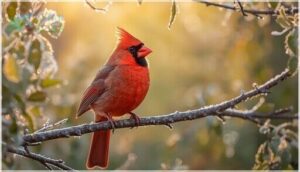
You can’t miss a male Northern Cardinal in Georgia – he’s the bold one flashing entirely bright red plumage with a sharp black mask. Males defend territories fiercely while females, sporting subtle reddish-brown feathers, handle most incubation duties during nesting season.
Their striking appearance makes cardinals one of the easiest common bird identification in gardens challenges, especially when males perch prominently on feeders or branches.
These year-round residents belt out clear, slurred whistles that echo through backyards and woodlands. The Northern Cardinals’ ability to thrive in various environments is due to their adaptability to urban bird habitats.
House Finch – Rosy Red Males, Urban Habitats
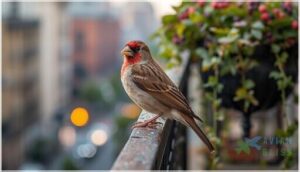
While Northern Cardinals stay put in their territories, House Finches bring city life to Georgia birding. You’ll spot rosy red males around backyard feeders, buildings, and urban parks year-round. Their red plumage comes from berries and fruits they eat, not genetics. These adaptable finches nest on ledges, vents, and hanging planters, making city adaptation look easy. House Finches exhibit unique diet and foraging behaviors that help them thrive in various environments.
- Males show red coloration on face, upper breast, and rump visible during flight
- Females choose the deepest red males as mates over orange or yellow variations
- Urban nesting occurs 12-15 feet up on buildings, using grasses and debris for construction
Purple Finch – Raspberry Red, Winter Visitor
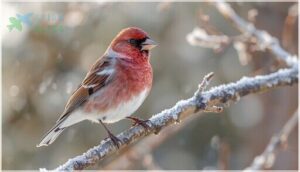
Purple Finch males look like they’ve been dipped in raspberry juice, unlike the brick-red House Finch. You’ll spot these winter visitors at Georgia feeders during irruptive migration years, when northern seed crops fail. They show up from fall through spring, favoring sunflower seeds and tree buds.
Their conservation status rates low concern despite a 32 percent population decline since 1966. Watch for their pink crowns and unstreaked bellies during bird identification outings.
These distinctive markings help separate them from similar species like the backyard birds of Virginia that share overlapping habitats year-round.
Scarlet Tanager – Red Body, Black Wings, Forests
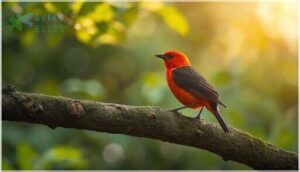
If raspberry reds aren’t bold enough for you, the Scarlet Tanager is a real showstopper. Males flash a deep red body with jet black wings, haunting mature forests across Georgia. You’ll need patience to spot them high in the canopy.
- Forest Ecology stronghold
- Bird Migration marvel
- Tanager Behavior: canopy forager
- Conservation Efforts matter
- Avian Photography challenge
Summer Tanager – All Red Males, Insect Eaters
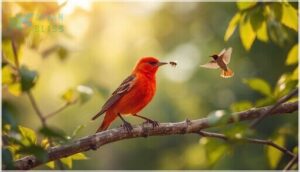
Summer Tanagers ditch the dramatic black-wing look and go all-in on solid red, making them the only completely red bird you’ll find hunting bugs through Georgia’s open woodlands. Their insect diet includes bees and wasps, which they expertly snatch mid-flight.
| Feature | Details |
|---|---|
| Red Plumage | Solid rose-red males, no black markings |
| Summer Habitat | Open woodlands, forest edges |
| Tanager Migration | Depart Georgia by late summer for tropics |
Watch for their unique bird behavior during peak summer months.
Red-bellied Woodpecker – Red Head, Backyard Visitor
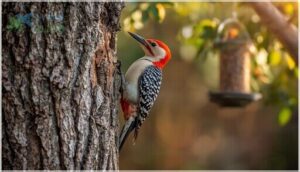
Curiosity pays off when you spot a Redbellied Woodpecker flashing its bold red head. This Red Bird Species thrives in Georgia’s backyards, showing off classic Woodpecker Behavior as it clings to tree trunks or visits feeders for suet and sunflower seeds.
For prime Bird Watching in Georgia, keep dead trees for nesting habits and try peanuts to boost your Backyard Feeding success.
Red-headed Woodpecker – Bold Red Head, Open Woodlands
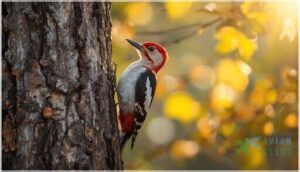
Strike gold with the Redheaded Woodpecker when you explore Open Woodlands across Georgia. This Red Bird Species flaunts bold Red Plumage covering its entire head, making Bird Watching in Georgia unforgettable.
You’ll spot them drilling into dead trees or catching insects mid-flight, especially during migration when small birds with red heads become more active across the region.
Typical Woodpecker Behavior includes:
- Snatching insects from tree bark
- Storing acorns in tree crevices
- Flying between scattered snags
- Favoring open woodland margins
- Supporting Woodland Ecology through seed dispersal
Bird Conservation efforts protect dwindling habitats statewide.
American Robin – Orange-Red Breast, Common in Yards
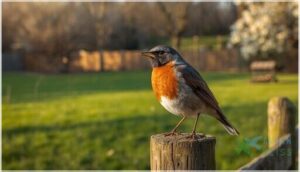
You’ll spot American Robins hopping across Georgia lawns like tiny orange-chested explorers hunting earthworms. These Red Birds thrive in Backyard Habitats year-round, making Bird Identification easy during your Georgia Birding adventures. Watch for Robin Nesting in spring and enjoy Bird Feeding stations that attract this Urban Wildlife favorite.
| Feature | Male | Female |
|---|---|---|
| Breast Color | Orange-red | Duller orange |
| Back | Gray-brown | Gray-brown |
| Throat | White with streaks | Pale white |
Migration Patterns shift some robins southward while others remain throughout winter, rewarding your Backyard Birding efforts.
Painted Bunting – Vibrant Red With Multicolor Plumage
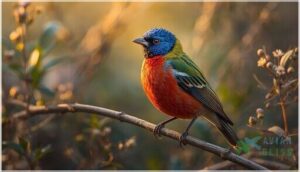
You’ll recognize male Painted Buntings as living rainbows with red breasts, blue heads, and yellow-green backs. These Red Birds showcase stunning Plumage Dynamics when carotenoid pigments settle into feathers during Molt Patterns after the breeding season. Color Intensity varies with Geographic Variation across populations.
Females wear brownish-olive tones for camouflage during Breeding Habits. This Bird Species makes Georgia Birding unforgettable, though Bird Identification requires patience to spot them in dense thickets.
Vermilion Flycatcher – Rare Fiery Red Visitor
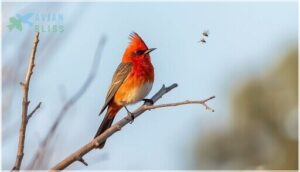
You won’t see many Vermilion Flycatchers in Georgia, but when one shows up, it’s like spotting a spark of fire against the winter sky. These Rare Sightings happen mostly in southern Georgia Habitats during Bird Migration season.
Males flash vivid Red Plumage while demonstrating classic Flycatcher Behavior—darting from perches to catch insects mid-air. This Bird Species makes Georgia Birding adventures worth the wait for dedicated Bird Identification enthusiasts tracking Red Birds.
Habitats and Migration Patterns of Red Birds
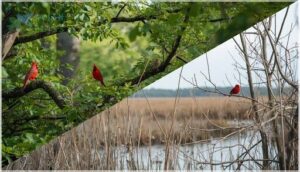
Red birds in Georgia call different places home depending on their species and the time of year. Some stick around all twelve months, while others only pass through during migration or winter.
Let’s look at where you’ll find these birds and how their movements change with the seasons.
Woodlands, Forests, and Urban Backyards
Dense shrubs in Georgia’s woodlands and forests create perfect cover for Northern Cardinals and tanagers, while open woodlands suit woodpeckers. Urban planning shapes backyard birding tips—mixing trees, snags, and fruiting shrubs attracts red birds year-round.
Habitat fragmentation threatens diversity, but smart backyard landscaping and woodland restoration can boost bird habitats and make Birdwatching in Georgia feel like a daily adventure.
Year-Round Residents Vs. Migratory Species
Backyard feeders and woodlands in Georgia host Red Birds with different Resident Patterns. Some, like Northern Cardinals and Red-bellied Woodpeckers, stick around all year, adapting to local Habitat Preferences.
Others, such as Scarlet Tanagers, follow bold Migration Routes, appearing only during breeding season. These contrasting Seasonal Behaviors shape Conservation Strategies and reveal how Bird Migration Patterns influence avian life across Georgia.
Seasonal Movements in Georgia
Migration patterns in Georgia are influenced by food availability and temperature swings. Cardinal flocks shift during cold snaps, chasing seeds across neighborhoods. Scarlet and summer tanagers pass through each spring and fall, refueling on insects at stopover sites. Vermilion flycatchers appear as rare winter vagrants.
Habitat connectivity between forests and backyards allows red birds to adjust their range as seasons change.
Preferred Nesting and Feeding Sites
Understanding where red birds actually nest and feed helps you spot them more reliably. In Georgia, bird habitats vary widely based on species preferences and seasonal needs.
- Cardinals and house finches raise chicks in shrubs near your backyard feeders
- Scarlet tanagers hide their nests high in the forest canopy
- Woodpeckers carve out nesting trees in mature woodland edges
- Summer tanagers hunt insects from low branches in open forests
- Bird houses attract some species while others prefer natural cavities
Habitat preservation ensures these feeding grounds stay productive year-round.
Diet and Conservation Status of Red Birds
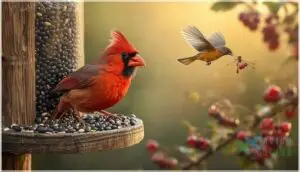
Understanding what red birds eat helps you attract them to your yard and support their survival. Some species crack seeds with powerful beaks, while others snatch insects mid-flight or pluck berries from branches.
Conservation efforts vary widely—some red birds thrive in Georgia’s changing landscapes, while others face serious threats from habitat loss.
Seed and Fruit Preferences
You’ll have better luck luring red birds to your backyard feeders when you know what they crave. Black oil sunflower seeds draw cardinals and finches year-round. Purple finches prefer nyjer seed, while house finches visit feeders stocked with millet. During winter months, safflower seeds become especially attractive to cardinals.
| Seed Types | Preferred Red Bird Species |
|---|---|
| Black oil sunflower | Northern Cardinals, House Finches, Purple Finches |
| Safflower | Northern Cardinals, House Finches |
| Nyjer (thistle) | Purple Finches, House Finches |
| White millet | Cardinals, Finches |
| Cracked corn | Cardinals, various seed-eaters |
Fruit preferences shift with Georgia’s seasons. Dogwood berries sustain cardinals through winter, while mulberries attract robins and cardinals during summer. Elderberries and beautyberries bring waves of red bird species to your yard. Plant these native options to meet their nutrition needs naturally.
Insectivorous Red Birds
Red birds in Georgia don’t just live on seeds alone. Several species chase down insects to fuel their active lifestyles, especially during breeding season.
- Northern Cardinal captures beetles and caterpillars while raising chicks
- Summer Tanager specializes in aerial foraging, snatching bees and wasps mid-flight
- Scarlet Tanager gleans arthropods from leaves in forest canopies
- Vermilion Flycatcher hawks flying insects during rare Georgia visits
Conservation Challenges and Stable Populations
You’ll see surprising population trends among Georgia’s red birds. Northern Cardinals thrive in cities and suburbs, showing strong species resilience despite urban planning challenges. House Finches bounce back from disease outbreaks.
But Scarlet Tanagers face real threats from habitat loss and climate adaptation pressures. Wildlife conservation efforts track these shifts closely. Some species adapt better than others to Georgia’s changing landscape.
Scarlet Tanagers face serious threats from habitat loss and climate change, while other Georgia red birds adapt more successfully to shifting landscapes
Role of Habitat Preservation
Protecting Georgia’s wild spaces keeps red birds thriving for generations to come. You can support habitat preservation for red birds through these proven strategies:
- Promote forest management practices that maintain canopy cover and native understory vegetation
- Support wildlife corridors connecting fragmented forests for migration patterns
- Advocate for biodiversity conservation through ecosystem preservation efforts
- Encourage habitat restoration of woodland edges and mixed forests
These ecosystem services directly support avian habitat preservation.
Top 5 Bird Foods for Attracting Red Birds
You can’t invite red birds to your backyard without the right menu. Different species have different tastes, so stocking the right foods makes all the difference.
Here are five proven options that’ll bring cardinals, tanagers, and finches right to your feeder.
1. Cole’s Sunflower Bird Seed
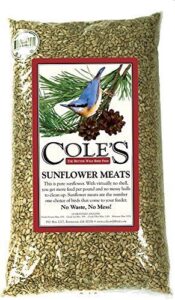
You’ll want pure sunflower meats if you’re serious about attracting red birds to your Georgia yard. Cole’s Sunflower Seed offers 16% fat content—that’s high-energy nutrition for cardinals, house finches, and red-bellied woodpeckers. The shell-free formula means zero mess on your deck or under bird feeders.
It works in tubes, platforms, and mesh feeders. Store it in a cool spot and rotate your stock every six to eight weeks. Position feeders 10 to 15 feet from cover for the best results.
| Best For | Backyard birders in Georgia who want to attract cardinals and other red bird species without dealing with messy seed shells. |
|---|---|
| Brand | COLE’S |
| Item Form | Seed |
| Age Range | All life stages |
| Weight | 10 pounds |
| Feeder Compatibility | All feeder types |
| Additives | No synthetics/chemicals |
| Additional Features |
|
- High 16% fat content provides excellent energy for birds during migration and cooler months
- Shell-free sunflower meats eliminate waste and keep feeding areas clean
- Works with all feeder types including tubes, platforms, and mesh feeders
- More expensive than standard birdseed options with shells
- Requires rotation every 6-8 weeks in warm climates to prevent spoilage
- Some bird species may need time to adjust to eating pure sunflower meats
2. Cole’s Safflower Bird Seed
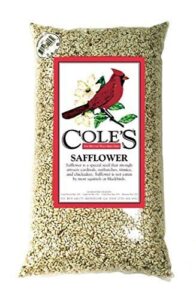
Cardinals love safflower seed, and squirrels usually don’t touch it. Cole’s Safflower Bird Seed delivers that bitter-tasting advantage while attracting Northern Cardinals, Purple Finches, and nuthatches to your Georgia yard.
The 10-pound bag works in hoppers, tubes, and platform feeders. Mount your feeder 5 to 8 feet high near shrubs for cover.
Clean feeders monthly in humid Georgia summers to prevent mold. Store safflower in a dry spot to maintain freshness.
This seed’s high hull content and oleic oil offer solid energy during cooler months and migration periods.
| Best For | Georgia bird watchers who want to attract cardinals and other red birds while keeping squirrels and blackbirds away from their feeders. |
|---|---|
| Brand | COLE’S |
| Item Form | Seed |
| Age Range | All Life Stages |
| Weight | 10 pounds |
| Feeder Compatibility | All feeder types |
| Additives | No synthetics/chemicals |
| Additional Features |
|
- Safflower’s bitter taste naturally deters squirrels and most blackbirds, so more seed goes to your target birds like cardinals and finches.
- Works in any feeder type—hoppers, tubes, or platforms—giving you flexibility in your setup.
- Resists mold better than sunflower in Georgia’s humid summers, keeping seed fresh longer with monthly cleaning.
- Some users report that squirrels and unwanted birds still eat it, so results can vary by location and local wildlife.
- Higher price point, especially when factoring in shipping costs for online orders.
- A few bird watchers noticed fewer birds visiting after switching from sunflower or mixed seed.
3. Cole’s Special Feeder Bird Seed
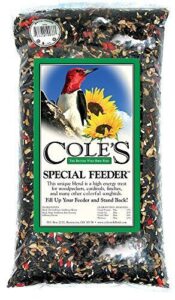
Cole’s Special Feeder Bird Seed packs Black Oil Sunflower, pecans, and sunflower meats into a 10-pound mix that Northern Cardinals and House Finches can’t resist.
You’ll spot bright red males at your feeder within days if you place it 5 to 8 feet high near Georgia woodlands or suburban backyards.
The seed works in tube, mesh, and bowl feeders, though large pecan chunks may jam narrow ports. Break those pieces apart before filling to keep seed flowing smoothly and maintain steady bird traffic year-round.
| Best For | Backyard birders in wooded or suburban areas who want to attract Northern Cardinals, House Finches, and other seed-eating songbirds with a high-energy mix. |
|---|---|
| Brand | COLE’S |
| Item Form | Seed |
| Age Range | All life stages |
| Weight | 10 pounds |
| Feeder Compatibility | All feeder types |
| Additives | No synthetics/chemicals |
| Additional Features |
|
- High-energy blend with Black Oil Sunflower, pecans, and sunflower meats attracts a wide variety of birds quickly
- No synthetic additives or artificial flavors—just natural ingredients birds love
- Works in tube, mesh, and bowl feeders for flexible placement options
- Large pecan pieces can jam narrow feeder ports and need breaking apart before use
- Pricier than standard seed mixes, which may not fit every budget
- Some birds may ignore certain ingredients, leading to uneven consumption and waste
4. C&S Peanut Wild Bird Nuggets
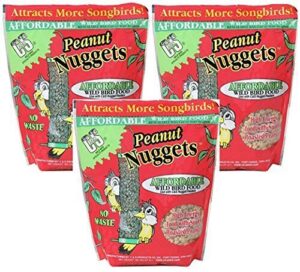
C&S Peanut Wild Bird Nuggets deliver 45–50% fat per nugget, making them a powerhouse for winter bird watching in Georgia backyards. The high-protein peanut nutrition fuels birds during cold snaps when natural seeds run low.
You’ll see Northern Cardinals, House Finches, and Red-bellied Woodpeckers flock to tray or cylinder feeders loaded with these compact bites.
Keep nuggets dry to prevent mold, and store your bag in a cool spot to preserve freshness. Rotate this feed with other seed types so your red birds get balanced meals throughout the season.
| Best For | Backyard birders in Georgia who want to attract cardinals, finches, and woodpeckers with high-energy peanut nuggets during winter months. |
|---|---|
| Brand | C&S |
| Item Form | Seeds |
| Age Range | All Life Stages |
| Weight | Not specified |
| Feeder Compatibility | Multiple feeder types |
| Additives | Not specified |
| Additional Features |
|
- Delivers 45–50% fat content that fuels birds through cold weather when natural food is scarce
- Attracts a wide variety of species including Northern Cardinals, jays, woodpeckers, and smaller songbirds
- Compact nugget form works well in multiple feeder types like trays and cylinders with minimal mess
- Some customers report packaging issues with excessive crumbs and lower-quality bags
- Requires frequent refilling due to high bird demand, which can get expensive at $20.86 per set
- Needs proper storage in dry conditions to prevent mold, which can be tricky in humid Georgia climates
5. C&S Peanut Suet Nuggets
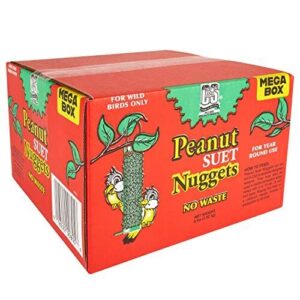
C&S Peanut Suet Nuggets pack the same high-fat punch in a softer, easier-to-eat format that red birds love. You’ll notice Scarlet Tanagers and Summer Tanagers gobbling these up alongside cardinals and woodpeckers at your Georgia feeders.
The bite-sized chunks work great in wire mesh holders or mixed with other seeds. Place feeders in shaded spots to prevent melting during warmer months.
If anyone in your household has a peanut allergy, consider safer alternatives. Proper feeder placement and fresh suet nugget benefits make all the difference for attracting diverse species year-round.
| Best For | Backyard birders in Georgia who want to attract woodpeckers, cardinals, nuthatches, and tanagers with a high-energy, easy-to-serve suet option that works in multiple feeder types. |
|---|---|
| Brand | C&S |
| Item Form | Nugget |
| Age Range | All ages |
| Weight | 8 pounds |
| Feeder Compatibility | Wire feeder compatible |
| Additives | Not specified |
| Additional Features |
|
- Soft nugget format breaks apart easily and appeals to a wide range of seed-eating and insect-eating species
- More economical and less messy than traditional suet cakes, and can be mixed with other seeds for variety
- High-fat peanut formula provides essential energy during winter months when natural food is scarce
- Can melt or spoil quickly in Georgia’s heat and humidity, requiring shaded placement and frequent replacement
- Not suitable for households with peanut allergies due to ground peanut kernels as the main ingredient
- May not attract all bird species, especially those that prefer nectar, fruit, or specific seed types
Frequently Asked Questions (FAQs)
What does it mean when a red bird stays around your house?
Why does one bird keep hanging around? A red bird staying near your backyard often signals reliable food sources, suitable nesting habitat, or minimal threats.
Georgia’s resident cardinals frequently establish territories around feeders year-round.
What bird is red but not a cardinal?
Several red bird species show up in Georgia besides cardinals. Look for the all-red Summer Tanager, the Scarlet Tanager with black wings, the multicolored Painted Bunting, or the rare Vermilion Flycatcher.
Are red birds and cardinals the same?
No, they’re not the same. Red birds include many species across different families—tanagers, finches, woodpeckers—while Northern Cardinals are just one specific species with distinct taxonomy, plumage characteristics, and classification within Georgia’s diverse red bird population.
What is a rust colored bird in Georgia?
You’re likely spotting a Northern Cardinal, House Finch, or Purple Finch. These rust-colored bird species thrive across Georgia’s diverse habitats.
Males display rosy-red to raspberry feather patterns, making bird identification straightforward for enthusiastic Georgia birding adventures.
What are the big red birds in Georgia?
The most impressive Red Bird Species you’ll spot are Northern Cardinals, standing about 8-9 inches tall.
Red-bellied and Red-headed Woodpeckers match that size, making them the largest red-plumed birds across Georgia Habitats.
What are the little birds in Georgia with red heads?
You’ll encounter Cardinals with black masks and woodpeckers sporting striking crimson caps.
The Red-bellied Woodpecker shows a red crown and nape, while Red-headed Woodpeckers display bold, complete red heads across Georgia’s woodlands.
Are cardinals common in Georgia?
Yes, you’ll spot Northern Cardinals year-round across Georgia. They thrive in woodlands, suburban yards, and urban wildlife areas.
Their stable bird population makes cardinal sightings common, whether you’re mastering bird identification techniques or just enjoying Georgia birding.
How do red birds communicate with each other?
Sharp alarm calls slice through quiet canopy layers while softer contact sounds keep flocks connected. Song displays mark territory and attract mates. These vocalizations help red birds coordinate movement and warn neighbors about predators.
What predators commonly target red birds in Georgia?
Hawks, owls, and feral cats pose major threats to Georgia’s red birds. Snakes raid nests for eggs and young. Crows and jays occasionally prey on nestlings, especially near urban wildlife conservation efforts areas.
Do red birds form mixed-species flocks?
Like travelers sharing a journey, red birds in Georgia often join mixed-species flocks during winter. Northern Cardinals frequently team up with chickadees and titmice, benefiting from enhanced predator detection while foraging together.
Conclusion
A busy feeder can feel empty if you don’t know what you’re looking at. Identifying red birds in Georgia gets easier when you match color patterns to habitat and season. Separate cardinals from tanagers and finches from flycatchers with confidence.
Stock the right seeds, plant native cover, and keep your binoculars ready. These ten species won’t stay hidden for long once you know their signatures and where they like to show up.