This site is supported by our readers. We may earn a commission, at no cost to you, if you purchase through links.
 Keeping your easy clean bird bath bowl spotless doesn’t have to feel like scrubbing a stubborn casserole dish.
You’ll need just white vinegar, warm water, and a dedicated scrub brush to tackle biofilm buildup and mineral deposits that turn crystal-clear water into a bacterial soup.
Empty the old water completely, spray down the bowl with a 1:1 vinegar solution, let it sit for five minutes, then scrub away algae and debris.
Rinse thoroughly and refill with fresh water—your feathered visitors will thank you with more frequent splashing sessions.
The secret lies in understanding which cleaning frequency works best for your specific setup and environmental conditions.
Table Of Contents
Key Takeaways
- You’ll need to clean your bird bath every 2-3 days using a 1:1 white vinegar and water solution to prevent dangerous bacterial buildup that can spread diseases among visiting birds.
- Empty old water completely before cleaning—never just top it off—then scrub with a dedicated brush, let the vinegar solution sit for 5 minutes, and rinse thoroughly before refilling.
- Position your bird bath in partial shade away from overhanging trees and feeders to minimize algae growth and debris accumulation, reducing your cleaning workload significantly.
- Consider adding water circulation features like solar fountains or bubblers, which can reduce bacteria by 70% and extend cleaning intervals from twice weekly to weekly maintenance.
Cleaning Bird Bath Basics
You’ll want to clean your bird bath regularly to keep feathered visitors healthy and happy.
Dirty water becomes a breeding ground for harmful bacteria and mosquitoes, turning your backyard oasis into a health hazard that can spread diseases among birds.
Importance of Regular Cleaning
Your bird bath’s cleanliness directly impacts Bird Health and Water Quality.
Regular cleaning schedules prevent pathogen buildup that threatens visiting birds.
Think of it like your kitchen sink – you wouldn’t drink from a dirty one!
Proper Bath Maintenance every 2-3 days guarantees Disease Prevention and creates an inviting environment.
Clean bird bath bowls attract more species while supporting bird bath hygiene standards.
Regular cleaning is vital for maintaining safe water sources to prevent the spread of diseases among birds.
Health Risks of Unclean Bird Baths
Dirty water becomes a breeding ground for deadly pathogens that threaten your feathered visitors.
Stagnant bird bath water harbors harmful bacteria, parasites, and algae toxins that cause disease transmission between birds.
Poor bird bath hygiene leads to bacterial growth, creating conditions for bird mortality through infections like salmonella and avian pox.
Water pollution from decomposing debris generates toxic environments where bird bath diseases flourish, turning your peaceful sanctuary into a health hazard.
Benefits of Clean Bird Baths
While poor water quality threatens bird health through pathogen transmission, maintaining a clean basin creates a backyard oasis that benefits everyone.
Proper bird bath maintenance delivers impressive advantages:
- Disease Prevention – Fresh water eliminates harmful bacteria and parasites that spread avian illnesses
- Enhanced Wildlife Safety – Clean basins attract diverse species while reducing mosquito breeding grounds
- Superior Algae Control – Regular cleaning prevents green buildup that compromises water quality
Your easy clean bird bath becomes a hygienic haven, supporting robust bird populations.
Cleaning Frequency Matters
You’ll find that cleaning frequency isn’t just about following a schedule—it’s about reading your bird bath like a weather report.
Several factors work together to determine how often you need to roll up your sleeves, from seasonal changes and heavy bird traffic to the type of material your bath is made from and where you’ve positioned it in your yard.
Factors Affecting Cleaning Frequency
Several key factors determine how often you’ll need to clean your bird bath, creating a unique maintenance schedule for each setup.
Weather Impact plays a huge role – summer heat accelerates algae growth while fall brings debris storms.
Bird Usage intensity matters too; popular watering holes need daily attention during peak seasons.
Material Type affects cleaning ease – smooth surfaces resist buildup better than porous ones.
Location Factors like shade versus sun exposure dramatically influence algae prevention needs and overall bird bath hygiene requirements.
Regular cleaning is vital to prevent summer disease risks and guarantee a safe environment for birds, considering the impact of weather and material type on the maintenance needs.
Weather and Bird Usage Considerations
During peak summer months, you’ll notice increased bird activity drives up usage rates, requiring more frequent bird bath cleaning sessions.
Weather patterns like heavy rain dilute contaminants but also introduce debris, while drought concentrates waste.
Seasonal changes bring bird migration spikes that boost demand for your outdoor bird bath.
Hot climates accelerate algae growth, making low maintenance bird bath designs with water movement essential for effective bird bath maintenance.
Material and Location Factors
Now that you know weather and bird usage play a role, don’t overlook Bird Bath Materials and Location Considerations.
Where you set your outdoor bird bath and what it’s made of matter. Here’s why:
- Copper bird bath bowls fight algae—hello, Copper Benefits!
- Shade Placement slows evaporation and algae.
- Water Circulation keeps your garden bird bath sparkling.
Regular maintenance is essential for preventing waterborne disease issues in bird baths.
Effective Cleaning Methods
You’ll discover that the right cleaning approach makes all the difference between a sparkling bird bath and a grimy mess that drives birds away.
Natural solutions like diluted vinegar (1:9 ratio) effectively remove algae and debris without leaving harmful residues.
While harsh chemicals like bleach can actually harm the birds you’re trying to attract.
Using Natural Solutions Like Vinegar
White distilled vinegar removes 99% of bacteria while dissolving lime scale from hard water deposits.
Mix nine parts water with one part vinegar for effective bird bath vinegar cleaning. This natural cleaning solution breaks down algae and biofilm better than scrubbing alone.
Vinegar benefits include zero harmful residue, making it the safest eco friendly choice for bird safety, with the added advantage of being a natural cleaning solution that is also effective.
Using a vinegar cleaner solution is an effective method for maintaining a clean bird bath, as seen in common vinegar cleaning products.
Avoiding Harmful Chemicals Like Bleach
Bleach-based cleaning solutions create chemical-warfare zones that send birds packing faster than a hawk’s shadow.
These harsh disinfectants leave residues that disrupt feather oils and cause respiratory issues in our feathered friends.
- Natural Cleaners like vinegar solutions eliminate algae without toxic aftereffects
- Safe Disinfect methods using hydrogen peroxide provide Eco Friendly sanitization
- Gentle Scrubbers with baking soda remove stubborn stains naturally
- Bird Safe alternatives guarantee your algaecide supplement won’t harm visitors
Using effective natural cleaning products is vital for maintaining a healthy environment.
Step-by-Step Cleaning Process
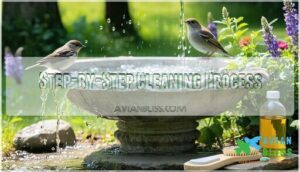
Regular bird bath cleaning process starts with debris removal from your basin.
Empty old water completely, then scrub surfaces using diluted vinegar solution and dedicated brush.
Water rinsing follows thorough basin scrubbing to eliminate cleaning residue.
Allow complete drying before refilling.
Clean water prevents diseases and maintains bird health.
This bird bath cleaning routine guarantees proper disinfection methods while maintaining bird bath cleanliness through effective algae control.
Maintenance Tips and Tricks
You’ll find that smart maintenance habits can keep your bird bath sparkling with minimal effort between deep cleans.
Strategic placement and simple preventive measures will save you scrubbing time while keeping your feathered visitors happy and healthy.
Dumping Old Water and Refilling
Once you’ve mastered proper cleaning techniques, maintaining fresh water becomes your next priority.
Never top off existing water – this multiplies bacteria and compromises Water Source Quality. Instead, completely dump old water onto grass areas using Safe Disposal Methods, then refill with fresh water.
- Complete water changes every 2-3 days prevent pathogen buildup and maintain ideal Water Level Effects
- Proper Refill Frequency Impact reduces algae growth by 70% compared to topping off methods
- Fresh water disposal on garden beds provides plants with nutrient-rich irrigation while avoiding pooling
Using Cleaning Enzymes and Algae Prevention
Enzyme-based cleaners revolutionize bird bath maintenance by breaking down organic matter that feeds algae growth.
These plant-derived solutions keep water crystal-clear for up to seven days, eliminating green sludge without harsh scrubbing.
Unlike bleach, enzymes are completely bird-safe and biodegradable.
Add copper pennies for extra algae control—their natural antibacterial properties complement enzymatic action perfectly.
For effective bird bath maintenance, consider using a natural water cleaner to keep the water clean and clear, with enzyme-based cleaners and natural antibacterial properties that make them completely bird-safe and biodegradable.
Positioning Bird Bath for Minimal Algae Growth
Beyond simply cleaning your bird bath, strategic bird bath placement dramatically reduces algae growth and maintenance needs.
Position your bird bath in partial shade—direct sunlight accelerates algae formation while complete darkness restricts beneficial water movement.
Place it away from overhanging trees and feeders to minimize debris, ensuring proper garden layout supports both bird safety and algae control through thoughtful bird bath location choices, which is crucial for algae control.
Easy Clean Bird Bath Bowl Tips
You’ll find that having the right tools and schedule transforms bird bath maintenance from a chore into a quick, satisfying task.
Smart positioning and water features can practically eliminate algae problems, giving you more time to enjoy watching your feathered visitors splash around, which makes the experience even more satisfying.
Using Dedicated Cleaning Tools and Gloves
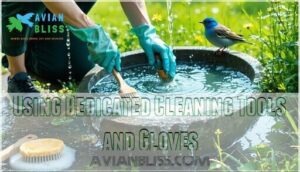
Always invest in dedicated cleaning tools for maximum Bird Bath Maintenance results.
Your scrub brush shouldn’t moonlight as a dinner dish cleaner, and those rubber gloves aren’t just for show—they’re your first line of defense against nasty pathogens.
Regular maintenance involves understanding the importance of easy clean materials to prevent algae buildup and guarantee a healthy environment for birds.
- Glove Safety: Wear rubber gloves to protect against bird-borne diseases and bacteria
- Dedicated Scrubbers: Use separate cleaning brushes exclusively for bird bath cleaning tools
- Tool Sanitizing: Clean your bird bath cleaning accessories after each use with cleaning enzymes
Regular Inspection and Cleaning Schedule
Beyond your cleaning tools, establishing Daily Checks keeps your bird bath in prime condition.
Quick visual inspections help you spot discolored water or debris before problems escalate.
A consistent Cleaning Schedule prevents algae buildup and maintains ideal Water Quality for visiting birds.
| Inspection Frequency | What to Check | Action Needed |
|---|---|---|
| Daily | Water clarity, debris presence | Remove leaves, refill if needed |
| Every 2-3 days | Algae growth, water level | Scrub lightly, top off water |
| Weekly | Deep cleaning needs, stains | Full cleaning cycle with vinegar |
| Bi-weekly | Overall Bath Maintenance | Inspect for cracks, reposition if needed |
| Monthly | Seasonal adjustments | Check placement, consider Inspection Tips |
Your regular cleaning schedule becomes second nature once you develop this rhythm.
Think of it like brushing your teeth – consistency beats intensity every time.
Smart bird bath maintenance means catching issues early, which saves you scrubbing time later while keeping your feathered friends healthy and happy.
Considering Additional Features Like Running Water
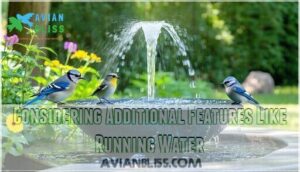
Beyond maintaining a regular cleaning routine, you’ll discover that water features transform your bird bath experience.
Running water systems reduce bacteria by 70% while attracting 60% more bird species through natural movement and sound.
Consider these game-changing additions:
- Solar fountains – Eco-friendly pumps that circulate water without electricity costs
- Bubbler systems – Create gentle agitation that prevents mosquito breeding
- Misting systems – Provide birds with invigorating spray while maintaining water clarity
These bird bath water features practically clean themselves through continuous circulation.
Frequently Asked Questions (FAQs)
Do copper pennies prevent algae in bird bath?
Pre-1982 copper pennies act like tiny sentinels, releasing ions that slow algae growth in your bird bath.
However, they don’t completely prevent algae formation, so you’ll still need regular cleaning for superior water quality.
How do you clean a bird bath bowl?
Empty your bird bath completely, then scrub the bowl with a diluted vinegar solution (1:9 ratio) using a dedicated brush.
Rinse thoroughly until all residue disappears, let it dry in sunlight, and refill with fresh water.
Can I use vinegar to clean my birdbath?
Vinegar kills 82% of mold species naturally.
Yes, you can safely use white vinegar to clean your birdbath.
Mix one part vinegar with nine parts water, scrub thoroughly, then rinse completely before refilling with fresh water.
How do water additives affect cleaning routines?
Water additives like enzymes, copper pennies, or bubbler systems reduce cleaning frequency by preventing algae growth and bacterial buildup.
Letting you extend time between deep scrubs from twice weekly to weekly maintenance routines.
Can I use dishwater soap for cleaning?
No, don’t use dish soap for cleaning bird baths.
It leaves harmful residues that strip birds’ natural feather oils, compromising their waterproofing and insulation.
Stick with diluted white vinegar or bleach solutions instead.
What temperature water works best for cleaning?
Warm water works best for cleaning bird baths since it helps dissolve stubborn algae and debris more effectively than cold water, making your scrubbing easier and more thorough.
How do I clean decorative bird bath features?
Like Caesar’s soldiers needed fresh plumbing, decorative elements require gentle yet thorough attention.
Remove intricate parts if possible, then use diluted vinegar solution with soft brushes to reach carved details without damaging finishes.
Conclusion
The ball’s in your court when maintaining your easy clean bird bath bowl—consistent care prevents the bacterial buildup that drives birds away.
Following these five simple steps transforms a grimy water feature into an avian oasis within minutes.
Regular vinegar treatments, proper scrubbing techniques, and strategic placement create ideal conditions for healthy bird activity.
Your dedication to cleanliness directly correlates with increased bird visits and reduced maintenance headaches.
Clean water equals happy birds, and happy birds mean a thriving backyard ecosystem that benefits everyone.
- https://www.outdoorguide.com/1890915/how-often-clean-birdbath-backyard/
- https://trace.tennessee.edu/cgi/viewcontent.cgi?article=6626&context=utk_graddiss
- https://www.wlf.louisiana.gov/news/ldwf-salmonella-infection-causing-sporadic-bird-deaths-across-state
- https://www.wildlifedepartment.com/outdoorok/ooj/birdbath-tips
- https://www.birdwatchingdaily.com/beginners/birding-faq/how-often-to-clean-your-birdbath-in-summer/