This site is supported by our readers. We may earn a commission, at no cost to you, if you purchase through links.
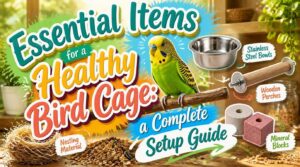
A bird that pulls its feathers, refuses to eat, or sits motionless at the bottom of its cage isn’t being dramatic—it’s failing.
In fifteen years of avian practice, the cases that haunt me most weren’t caused by disease. They were caused by cages: wrong bar spacing that trapped toes, plastic bowls breeding bacteria at rates 85% higher than stainless steel, drafts triggering cortisol spikes that suppressed immune function for days.
The essential items for a healthy bird cage aren’t accessories—they’re medicine. Get them right, and your bird thrives. Get them wrong, and you’ll wonder why it’s sick despite a clean bill of health.
Table Of Contents
- Key Takeaways
- Right Bird Cage Setup
- Top 10 Healthy Cage Items
- 1. Craftsboys Compact Bird Cage
- 2. A E White Flight Bird Cage
- 3. Extra Large Wrought Iron Bird Cage
- 4. Large Wrought Iron Bird Cage
- 5. VivoHome 30 Inch Iron Birdcage
- 6. Extra Large Corner Bird Cage
- 7. Prevue Stainless Steel Playtop Birdcage
- 8. Lixit Stainless Cage Bowl
- 9. Stainless Steel Bird Feeder Bowls
- 10. Czwestc Natural Wood Perch Kit
- Safe Food and Water Stations
- Healthy Perches and Roosts
- Enrichment Toys for Happy Birds
- Cage Hygiene Essentials
- Lighting and Climate Needs
- Safe Cage Placement Rules
- Frequently Asked Questions (FAQs)
- Conclusion
Key Takeaways
- Stainless steel bowls harbor 85% fewer bacteria than plastic, making them one of the most impactful health upgrades you can make for your bird.
- Bar spacing, cage dimensions aren’t optional features—they’re the difference between a bird that thrives and one that silently suffers.
- Rotating 3–5 enrichment toys weekly and offering varied-diameter perches can cut feather-plucking by up to 40% and keep your bird mentally engaged.
- Cage placement matters as much as what’s inside it—drafts, nonstick fumes, and kitchen heat are hidden hazards that directly spike your bird’s stress hormones.
Right Bird Cage Setup
A cage is more than four walls and a door—it’s the foundation of your bird’s daily health. Get the size, spacing, and construction wrong, and you’re inviting stress, injury, or worse. Here’s what to look for before you buy.
Even small design oversights can lead to serious harm, so it’s worth reviewing wing injury prevention methods for pet birds before settling on a cage.
Species-based Cage Size
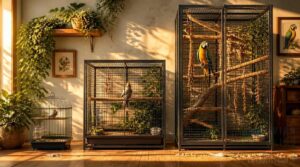
Since no two species fly alike, cage dimensions must match the bird.
Small bird dimensions start near 175 square inches of floor space; cockatiels need at least 432.
Large parrot volume climbs to 6–8 square feet, with 60-inch species-specific height.
Multi-bird spacing doubles that minimum, and a breeding pair area needs roughly 25% more room.
Safe Bar Spacing

Cage size and bar spacing requirements work together, since species-specific gaps prevent toe entrapment and head injuries.
- Finches need tight bar spacing near 0.25 in, blocking tiny toes.
- Macaws need wider spacing near 1.5 in, easing safe movement.
- Vertical bar orientation stops climbing toes from wedging, unlike horizontal bars.
Inspecting bar alignment and material finish safety upholds bird safety guidelines.
Escape-proof Latches
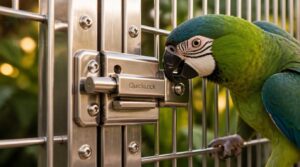
Spacing closes one escape route — the door is the next test of safety. Birds are truly clever, persistent escape artists.
Choose a large front door with an improved metal safety lock and a quicklock mechanism for fully secure locking mechanisms. Stainless steel or galvanized hardware resists indoor corrosion, while concealed screws and tamper resistant features add real cage escape prevention.
Rust-free Construction
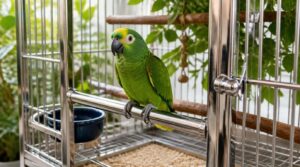
Metal toxicity prevention starts with hardware material selection. Pick stainless steel grades like 304 or 316, powder-coated options, and rust-free welds for a sturdy, low-carbon rustproof frame.
- Stainless steel hardware resists saliva and droppings
- Corrosion resistant coatings seal moisture out
- Nontoxic materials keep chewing birds safe
This build adds 3 to 5 years of long-term cage durability over untreated steel.
Room for Wing Movement

Watch a bird try to flap in cramped quarters, and you’ll see the problem fast—wings hit bars, feathers fray.
Cage dimensions must accommodate your bird’s wingspan, with interior width at least 1.6 times the extended span.
Keep vertical clearance above perches generous, round bar ends to prevent feather snags, and offer a spacious flight cage with open play tops for daily flight exercise.
Top 10 Healthy Cage Items
Choosing the right cage matters as much as anything you’ll put inside it. Size, bar spacing, and build quality vary widely between models, and those differences affect your bird’s health daily. Here are ten cages and accessories worth your attention, each suited to different species and setups.
1. Craftsboys Compact Bird Cage
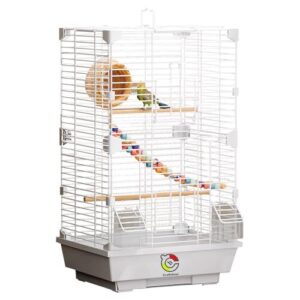
For owners working with limited space, the Craftsboys Compact Bird Cage offers a practical starting point. At 18 inches high by 12 inches wide, it suits small social species without overwhelming a tight room.
Its powder coated steel frame resists rust, while 1/2 inch wire spacing keeps escape-prone birds secure. The front door latches firmly, and a slide-out base tray makes daily cleaning straightforward—no disassembly required, just routine maintenance that fits a busy schedule.
| Best For | This cage is best suited for first-time bird owners housing small species like finches, canaries, lovebirds, or small parrots in a space-saving setup. |
|---|---|
| Primary Material | Alloy steel, PP plastic, wood |
| Dimensions | 24.8 × 14.6 × 11 in |
| Compatible Species | Finches, canaries, lovebirds, small parrots |
| Surface Finish | Painted non-toxic coating |
| Cleaning Method | Slide-out waste tray |
| Included Accessories | Ladder, perch bar, feeders, swing |
| Additional Features |
|
- Comes with a ladder, perch, two feeders, and a swing, so you have everything you need to get started right away
- Slide-out tray under the wire floor makes daily cleanup quick and simple
- Lightweight and portable, with hanging hooks that let you free up floor space or keep the cage away from drafts and other pets
- Assembly can be a hassle, with many small plastic clips and parts to fit together
- Build quality is fairly basic, and some owners report paint chipping or the frame bending or rusting over time
- The small size and tight bar spacing mean it only works for small, calmer birds, not larger or more active species
2. A E White Flight Bird Cage
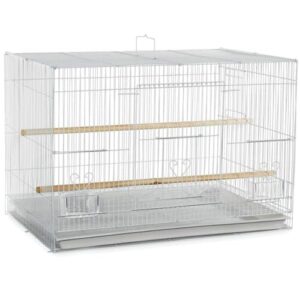
When a single bird needs room to actually fly, not just hop between perches, the A E White Flight Bird Cage earns its name. Standing roughly 32 to 40 inches tall, this wrought iron design gives small to medium parrots genuine vertical flight space across multiple levels.
The powder coated white finish resists chipping and rust under daily disinfecting. Front doors lock securely, and a lower storage shelf keeps cleaning supplies close at hand without cluttering your floor space.
| Best For | The A E White Flight Bird Cage is best for owners of a single small to medium parrot who want a tall, multi-level home that supports real flight rather than just hopping between perches. |
|---|---|
| Primary Material | Powder-coated metal |
| Dimensions | 24 × 16 × 16 in |
| Compatible Species | Finches, canaries, parakeets |
| Surface Finish | Powder-coated metal |
| Cleaning Method | Slide-out plastic tray |
| Included Accessories | Wood perch, dual feeder stations |
| Additional Features |
|
- Stands 32 to 40 inches tall, giving birds genuine vertical flight space across multiple levels
- Powder-coated white finish resists chipping and rust, even with daily disinfecting
- Front doors lock securely, and a lower storage shelf keeps cleaning supplies within easy reach
- Its tall, multi-level footprint may not suit smaller rooms or tight living spaces
- Wrought iron construction adds weight, making the cage harder to move or reposition
- Designed for a single bird, so it may not work well for owners wanting to house a pair or small flock
3. Extra Large Wrought Iron Bird Cage
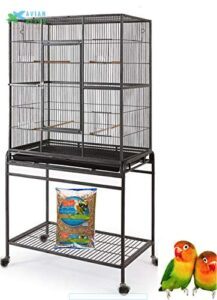
African Greys and macaws need room to spread both wings without touching bars, and this cage delivers it. Standing over 79 inches tall with 3.2 mm thick wire mesh, it’s built for large parrot species that test cage strength daily.
Multiple climbing platforms support vertical exercise, while rust-resistant coatings protect the frame indoors or out. The flat top design includes secure feeding doors, giving you safe access without stressing your bird during routine care.
| Best For | This cage is best suited for owners of parakeets, canaries, finches, lovebirds, and similar small to medium-sized birds who want a roomy, mobile enclosure for daily living and breeding. |
|---|---|
| Primary Material | Wrought iron, enamel-coated |
| Dimensions | 32 × 19 × 64 in (with stand) |
| Compatible Species | Parakeets, canaries, finches, lovebirds |
| Surface Finish | Enamel coating |
| Cleaning Method | Slide-out metal grate and tray |
| Included Accessories | Feeder cups, wooden perch, rolling stand |
| Additional Features |
|
- Spacious 32 in L × 19 in W × 64 in H design gives multiple small birds plenty of room to fly and move around
- Side nesting doors and a front door with a secure metal lock make feeding, cleaning, and breeding easy without disturbing your birds
- Rolling stand with four wheels (two lockable) lets you reposition the cage easily for cleaning or seasonal placement
- The bottom grate doesn’t fully remove, leaving a gap that requires some caution for bird safety
- Some units arrive with slightly bent bars or a stiff front latch that may need adjusting
- The plastic litter tray is lower quality than the metal parts and may wear out faster over time
4. Large Wrought Iron Bird Cage
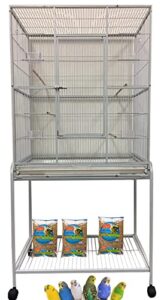
Not every household needs a 79-inch giant—this large wrought iron cage fits medium-to-large parrots at a more manageable 60 to 69 inches tall. The rolling stand adds mobility without sacrificing stability, since the heavier iron base reduces tipping risk.
Bar spacing runs 3/4 to 1 inch, suited to species like conures and amazons. Double-latched doors with rounded corners prevent escapes and foot injuries, while powder-coated finishes resist rust and simplify cleaning.
| Best For | This cage is best for new or budget-conscious bird-keepers housing small-to-medium birds like parakeets, finches, or canaries who want roomy flight space and easy breeding access. |
|---|---|
| Primary Material | Wrought iron, plastic components |
| Dimensions | 25 × 17 × 54 in (with stand) |
| Compatible Species | Parakeets, finches, canaries, small birds |
| Surface Finish | Enamel coating |
| Cleaning Method | Slide-out bottom tray |
| Included Accessories | Feeder cups, wooden perches, rolling stand |
| Additional Features |
|
- Spacious 54-inch flight enclosure with tight 1/2-inch bar spacing keeps small birds safe and comfortable
- Side nest doors make breeding and chick care simple without disrupting the rest of the cage
- Rolling stand with a lower shelf keeps food, toys, and supplies organized and within easy reach
- Assembly instructions are sparse, which can be frustrating for first-time builders
- Some users notice the stand wobbling during regular use
- Feeder trays and accessories sometimes arrive cracked or damaged from shipping
5. VivoHome 30 Inch Iron Birdcage
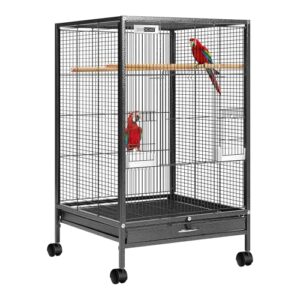
At 30 inches tall and just 13 pounds, this compact cage suits conures, lovebirds, cockatiels, and finches. Its low-carbon steel frame resists rust, while four lockable casters ease relocation between rooms.
The guillotine-style door demands secure locking—rapid closure risks injury if left unsecured. Bars hold steady for typical use, though persistent escape artists may bend them. A removable bottom tray and detachable mesh shelves simplify weekly cleaning. Included perches, food cups, and a sandbox give you a ready-to-use starter setup.
| Best For | This cage is best for owners of small parrots like conures, lovebirds, cockatiels, and finches who want a lightweight, mobile home base that’s easy to move and clean. |
|---|---|
| Primary Material | Low-carbon steel |
| Dimensions | 17.9 × 17.9 × 30.3 in |
| Compatible Species | Conures, lovebirds, cockatiels, finches |
| Surface Finish | Hammer-pattern paint |
| Cleaning Method | Removable tray and mesh shelves |
| Included Accessories | Food containers, wooden perches, sandbox drawer |
| Additional Features |
|
- Rust-proof, water-resistant low-carbon steel frame holds up well over time
- Four lockable caster wheels make it simple to relocate between rooms
- Removable bottom tray and detachable mesh shelves speed up routine cleaning
- Guillotine-style door closes quickly and must be locked carefully to prevent injury
- Bars can bend if a persistent escape artist applies repeated pressure
- Caster height makes the wheels awkward to use on tables or other raised surfaces
6. Extra Large Corner Bird Cage
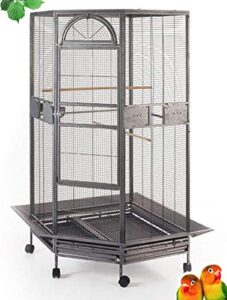
If floor space is tight, this corner-fit design solves it. Measuring 42 by 42 inches with a 73-inch height, it tucks flush against two walls while offering 60 inches of interior climbing room for active flyers. One-inch bar spacing suits medium parrots safely, and escape-proof latches keep curious beaks contained.
Four swing-out feeder doors with stainless cups simplify meals, while the slide-out grill and tray cut cleaning time. Powder-coated steel resists rust and chipping reliably for years of daily use.
| Best For | This corner cage is ideal for owners of small-to-medium birds—like budgies, cockatiels, lovebirds, and conures—who want a space-saving design that still gives their pets plenty of room to move. |
|---|---|
| Primary Material | Wrought iron, epoxy-coated |
| Dimensions | 30 × 30 × 63.5 in |
| Compatible Species | Budgies, cockatiels, lovebirds, conures |
| Surface Finish | Epoxy powder coat |
| Cleaning Method | Slide-out metal trays and grates |
| Included Accessories | 4 feeder cups, 2 perches, 2 trays, 2 grates |
| Additional Features |
|
- Corner-fit footprint frees up floor space while still offering generous flight room inside
- Slide-out trays and removable grates make daily cleanup quick and hassle-free
- Large swing front door and low pull-down door make it easy to handle birds without added stress
- Bars can be on the thin side and may bend under pressure from larger or stronger birds
- Feeder doors don’t have locking mechanisms, which could let determined chewers escape
- Assembly instructions are sparse, so plan for two people and extra time to put it together
7. Prevue Stainless Steel Playtop Birdcage
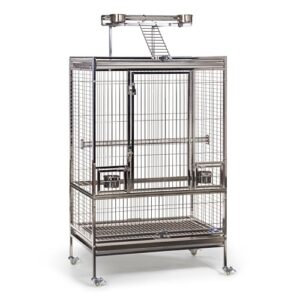
If your bird needs vertical play space rather than a wider footprint, this design earns its keep. All-stainless-steel construction resists rust and chipping for life, standing 61.3 inches tall with a playtop perch, ladder, and locking food cups.
Two independent bird-proof locks secure the front door, while a removable grille and tray simplify cleanup. One-inch wire spacing suits cockatiels through African greys, though smaller species need extra grate covering for safety.
| Best For | Owners of medium to large birds, like cockatiels, amazons, and African greys, who want a tall, rust-proof cage with built-in playtop space and easy mobility between rooms. |
|---|---|
| Primary Material | Stainless steel |
| Dimensions | 31.5 × 23.6 × 61.3 in |
| Compatible Species | Cockatiels, amazons, African greys |
| Surface Finish | Rust-resistant steel finish |
| Cleaning Method | Pull-out grille and tray |
| Included Accessories | Playtop perch, feeder cups, casters |
| Additional Features |
|
- All-stainless-steel build resists rust and chipping, with rollaway lockable casters for easy relocation
- Playtop comes loaded with a perch, ladder, lock-in-place food and water cups, toy hook, and removable grille and tray
- Front door has two independent bird-proof locks plus a wide opening for easy access
- One-inch wire spacing isn’t safe for smaller birds without extra grate covering
- Some latch mechanisms can come open unintentionally, so supplemental hardware may be needed for extra security
- Shipping damage is possible, so inspection and possible part replacement may be needed during setup
8. Lixit Stainless Cage Bowl
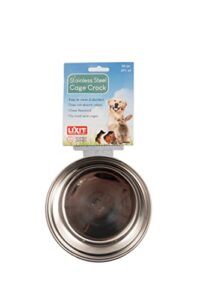
Once that cage is mounted and secure, attention turns to what fills it. The Lixit Stainless Cage Bowl twists onto horizontal or vertical bars without tools, and its rotating lock bracket holds firm during normal cage activity while still allowing quick removal for cleaning.
At 20 ounces, the wide-mouth, narrow-base design cuts spillage and resists chewing. The stainless bowl won’t absorb odors, though the plastic clip can wear with repeated detaching—worth checking periodically.
| Best For | Owners of small caged or crated pets—dogs, cats, birds, ferrets, and rabbits—who want a secure, no-spill feeding bowl that’s easy to clean. |
|---|---|
| Primary Material | Stainless steel, plastic lock bracket |
| Dimensions | 7 × 4.5 × 4.5 in |
| Compatible Species | Birds, ferrets, rabbits, small animals |
| Surface Finish | Non-porous steel surface |
| Cleaning Method | Twist-off bowl removal |
| Included Accessories | Rotating lock bracket |
| Additional Features |
|
- Twist-on/twist-off mounting works on most horizontal or vertical cage bars without tools
- Wide-mouth, narrow-base design minimizes food spillage and waste
- Stainless-steel construction resists chewing and won’t absorb odors
- Plastic lock components can be difficult to separate, especially the first time
- Repeated removal may wear down the plastic clip, sometimes leading to breakage
- Some units may arrive defective, requiring a return or replacement
9. Stainless Steel Bird Feeder Bowls
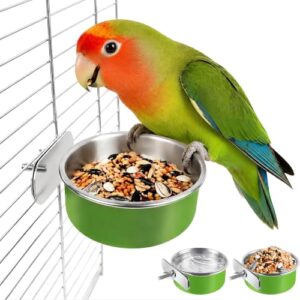
For a simpler two-bowl setup, stainless steel feeder bowls with clamp holders are hard to beat. Each bowl holds about 10 ounces, locks onto bars without tools, and resists rust for 5 years or more with regular cleaning.
The smooth interior won’t trap food residue, and removable design makes daily rinsing quick. Keep food and water in separate bowls—cross-contamination drops substantially when they’re not sharing space. Just check that your cage bars are thick enough for the clamps to grip securely.
| Best For | Small bird owners (parakeets, cockatiels, budgies, finches) and small mammal owners (hamsters, guinea pigs) who want a durable, easy-to-clean feeding setup. |
|---|---|
| Primary Material | Food-grade stainless steel |
| Dimensions | 3.9 × 1.8 in (per bowl) |
| Compatible Species | Parakeets, cockatiels, budgies, finches |
| Surface Finish | Green-finished stainless steel |
| Cleaning Method | Removable detachable bowls |
| Included Accessories | 2 clamp holders included |
| Additional Features |
|
- Stainless steel construction is more durable and hygienic than plastic, resisting rust and odors over time
- Tool-free clamp design makes installation and repositioning quick and hassle-free
- Separate bowls keep food and water apart, reducing cross-contamination and keeping the cage cleaner
- Clamps may not grip securely on cages with very thin or plastic bars
- Bowl size could be too bulky for smaller cages with limited interior space or narrow bar spacing
- Not suitable for larger bird species like macaws or large parrots
10. Czwestc Natural Wood Perch Kit
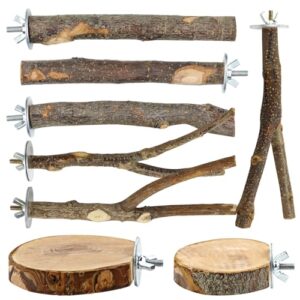
Rounding out a perch lineup, this kit gives you eight untreated hardwood pieces—platforms, straight perches, and forked branches—in varied diameters for natural foot exercise. Wing-nut hardware means tool-free mounting and easy rearranging during cleaning.
It suits budgies, parakeets, and cockatiels best, not large parrots needing heavier grip support. Inspect each wing nut and washer before installing; occasional hardware defects have been reported. Expect a mild wood scent initially, which fades within days of regular handling and airflow.
| Best For | Owners of budgies, parakeets, and cockatiels looking to add a versatile, natural-feel climbing and chewing gym to their cage setup. |
|---|---|
| Primary Material | Apple wood and assorted hardwood |
| Dimensions | 5.9 in length (perches) |
| Compatible Species | Budgies, parakeets, cockatiels |
| Surface Finish | Natural wood surface |
| Cleaning Method | Tool-free component removal |
| Included Accessories | Metal wing nuts and washers |
| Additional Features |
|
- Eight varied hardwood pieces (platforms, straight perches, forked branches) encourage natural foot exercise and beak/nail conditioning
- Tool-free wing-nut hardware makes installation and cage rearranging quick and easy
- Multiple diameters and textures keep birds engaged and help reduce boredom
- Not suitable for large parrots or birds that need a heavier grip
- Some units arrive with hardware defects, like malformed wing nuts or missing washers
- Platforms may feel smaller than expected and carry a mild wood odor at first
Safe Food and Water Stations
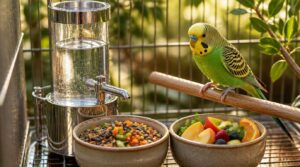
Your bird’s cage can be perfect in every other way and still fall short at the food bowl. Bacteria, spills, and contamination start right there, often before you notice anything’s wrong. Here’s what actually makes a feeding station safe, piece by piece.
Stainless Steel Bowls
Few materials hold up in a bird’s environment quite like stainless steel. Unlike plastic, which harbors 85% more bacterial growth, stainless steel bowls stay nearly bacteria‑free — making them the standard of excellence for hygienic feeding stations.
Their mirrored German bowls are dishwasher‑safe, adding extra convenience for bird owners.
Key advantages include:
- Smooth interior surfaces that won’t trap seed debris or feathers
- Dishwasher-safe durability that outlasts plastic by years without warping
- Locking mounts that secure food and water bowls firmly to cage bars
Ceramic Dish Options
If stainless steel is the workhorse, ceramic is the elegant alternative.
A glazed, non-porous finish resists bacteria and won’t absorb odors, but always check for food-safe glaze certification first.
For ceramic vs plastic, ceramic wins on hygiene and chew-resistance. Choose 3–5 inch dishes by body size, mount securely against tipping, and hand-wash to protect the glaze’s longevity.
Secure Locking Mounts
A bowl that tips or detaches mid-day undoes everything else you’ve carefully set up.
Snap latch and hidden hasp mounts are the most reliable options — they require two-handed operation, cutting accidental openings dramatically. Look for:
- Stainless steel or powder-coated aluminum hardware
- Tension-based closure that holds under jostling
- Clear visual indicators confirming full engagement
- Monthly silicone lubrication to maintain function
Separate Food and Water
One swallowed seed in the water dish can turn it septic within hours. Keep food and water stations physically separate — opposite sides of the cage works best — to limit bacterial cross-contamination between stainless steel bowls and ceramic bowls.
This separation also builds reliable behavioral routines, helping your bird learn exactly where to eat and drink, while making consumption monitoring easier for early health detection.
Spill-resistant Bowl Placement
A splashy drinker can soak nearby surfaces fast. A lip shield design deflects droplets back into the bowl, while swing arm mounting absorbs head‑movement momentum before it reaches perches.
For feeders, an adjustable clamp keeps placement firm, and elastic mesh seed catchers with a snug elastic skirt design—paired with reusable seed mats—cut spill and cross‑contamination drastically.
Healthy Perches and Roosts

Perches are where your bird spends most of its waking hours, so getting them right matters more than most owners realize.
The right combination of materials, diameters, and placement can protect your bird’s feet, support natural behaviors, and even reduce vet visits.
Here’s what to look for when choosing perches and roosts for your cage setup.
Natural Wood Perches
A branch isn’t just something to stand on — it’s a daily workout for your bird’s feet. Natural wood perches from species like manzanita, maple, or birch offer irregular bark textures that build foot strength and promote healthy claw wear.
Some woods even carry mild antimicrobial properties, quietly supporting hygiene between cleanings.
Varied Perch Diameters
Think of your bird’s feet like your own hands — they need variety to stay strong.
Natural wood perches of varied diameters — 0.5 in for small birds, up to 2 in for large parrots — exercise different muscles, distribute weight evenly, and cut pressure sore risk by 40%.
Offer at least three sizes to support foot health daily.
Rope and Sisal Perches
Rope and sisal perches take foot health a step further than wood alone.
Natural fiber surfaces engage foot muscles continuously — birds shift grip angles, strengthen tendons, and build proprioception through every small movement. Sisal rope also doubles as enrichment, letting birds gnaw and forage along the fibers naturally.
Three reasons to add rope perches today:
- Flexible surfaces absorb pressure, protecting tender toe pads
- Irregular texture stimulates grip strength and dexterity
- Shapeable designs create climbing routes that reduce boredom
Proper Perch Spacing
Texture matters, but placement determines whether birds actually use it.
Space perches 12 to 18 inches apart, with at least 12 inches between parallel bars to prevent wing brushing.
Stagger heights for natural climbing movement, leave 6 inches of headroom for wing clearance, and keep diameters between 0.75 and 1.25 inches for varied, safe gripping.
Avoid Sandpaper Perches
Skip sandpaper perch covers entirely—they cause more harm than good. Constant abrasion wears down protective foot pad keratin, raising infection risk and slowing healing of minor cuts. Susceptible birds can develop dermatitis or Bumblefoot from this sanding action.
Choose natural wood perches instead. Untreated branches offer texture variety without sacrificing bird foot health, supporting circulation and balanced nail growth naturally.
Enrichment Toys for Happy Birds
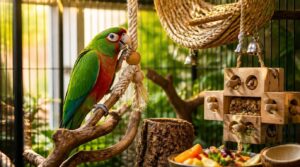
A bored bird is rarely a healthy one—boredom shows up fast as feather-plucking, screaming, or worse. The right toys keep your bird’s mind and beak busy while protecting them from hidden dangers. Here’s what your cage actually needs, and what belongs nowhere near it.
Boredom turns birds destructive fast — the right toys protect both their mind and your sanity
Foraging Puzzle Toys
A hungry parrot will work for its food, and that instinct is your best enrichment tool. Foraging puzzle toys hide treats behind sliding doors or rotating lids, engaging birds for up to 70% of daily activity.
Start with beginner designs, then progress to multi-step puzzles. Rotate 3–5 weekly, vary treat placement, and inspect materials regularly—habituation sets in fast, otherwise.
Chewing Toys
Beaks grow continuously, and chewing toys keep that growth in check while satisfying a deep instinct. Offer natural wood chewing branches—zebra wood, maple—sized so your bird’s beak grips 75–100% of the surface.
Destructible, colorful chew toys like lovyoCoCo designs add variety. Choose non-toxic materials, size‑appropriate pieces, and inspect weekly for splinters supporting genuine beak health benefits.
Weekly Toy Rotation
Think of toy rotation as your bird’s weekly reset — without it, even the best enrichment loses its pull.
Rotate 3–5 toys every seven days, alternating foraging puzzles with chew toys to sustain engagement. Keep a rotation log noting what comes in and out.
Foraging puzzles alone can occupy birds for up to 70% of daily activity, cutting feather-plucking by 40%.
Non-toxic Toy Materials
What your bird chews on matters as much as what it eats. Choose food‑grade silicone chew toys—non‑porous and easy to disinfect.
Hardwoods like beech or maple need food‑grade oil finishes, never sealants. Look for BPA‑free plastics and organic cotton or hemp textiles.
These nontoxic, destructible toys keep beaks busy without chemical risk.
Avoid Stressful Mirrors
A mirror doesn’t offer friendship—it offers an "intruder" your bird can’t ever resolve. That confusion fuels pecking, chasing, and chronic stress. Watch for tail fluffing, pacing, or odd vocalizations as warning signs.
Skip mirrors and bells entirely; bells can exceed 100 dB. Instead, rotate toys weekly and offer real social cues to support genuine avian behavior and mental wellbeing.
Cage Hygiene Essentials
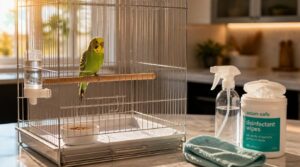
A clean cage isn’t just tidy—it’s a direct line to your bird’s respiratory and digestive health. Bacteria and mold build up faster than most owners expect, even between visible messes. Here’s what your daily and weekly hygiene routine should actually include.
Safe Cage Liners
Every cage floor needs a bird-friendly substrate, not just a layer of newspaper. Choose recycled paper or plant-fiber liners for high absorbency and low dust, or fleece liners for reusable, washable coverage.
Confirm non-toxic, dye-free materials, custom-fit dimensions, and odor control rated above 90%. Replace liners every 1–2 weeks to prevent cage liner contamination and support eco-friendly disposal.
Daily Dish Cleaning
Clean liners only go so far if the dishes underneath stay dirty.
Wash food and water bowls after every meal with warm water and mild, unscented soap, rinsing well to clear soap residue.
Air-dry on a clean towel, check stainless steel bowls monthly for cracks or corrosion, and use a soft sponge to prevent scratches that trap bacteria.
Weekly Deep Cleaning
Daily dish care sets the foundation, but weekly deep cleaning takes it further.
Scrub all removable components — perches, bowls, and accessories — separately in warm water with a mild, non‑toxic detergent. Rinse thoroughly, then air‑dry completely before reassembly; residual moisture promotes mold.
Replace cage liners weekly to cut bacterial and mold exposure by up to 80%.
Bird-safe Disinfectants
Once the scrubbing is done, disinfection is your next line of defense. A 10% bleach solution applied for 10 minutes, then rinsed thoroughly, eliminates pathogens on stainless steel and ceramic without leaving harmful residue.
Never use phenol-based or essential oil cleaners — both are toxic to avian respiratory systems.
Always disinfect with your bird out of the cage.
Dropping Checks
After disinfecting, take a moment to run a dropping check before returning your bird to the cage. Scan each item — bowl mounts, perch fastenings, liner placement — confirming everything is secure and correctly positioned.
- Verify bowl locks are snapped tight
- Check perches for wobble or splintering
- Confirm liner sits flat, fully covering the cage bottom
- Note any failed placements and fix them immediately
- Log findings so co-caregivers stay informed
Lighting and Climate Needs
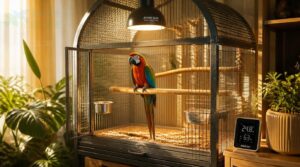
Light does more for your bird than you might think — it regulates sleep, mood, and even hormone balance. Getting the climate right is just as important as any perch or toy you put inside the cage. Here’s what to focus on regarding lighting and temperature for your bird’s environment.
Full-spectrum Lighting
A bird’s mood and molt depend on UVA UVB balance, not just brightness.
| Feature | Target Range | Why It Matters |
|---|---|---|
| CRI | >90 | True color rendering |
| UVB | ~2.4% | Promotes hormonal rhythms |
| Color Temp | 2100–2200K | Reduces blue light hazards |
Full spectrum LED bulbs use phosphor coatings, delivering safe UV lighting for birds without flicker.
Consistent Sleep Cycles
When the lights go out on a consistent schedule, your bird’s body takes that as its cue to reset — regulating melatonin, cortisol, and the circadian rhythms that keep it healthy.
12 hours of darkness nightly is the clinical target. Sleep deprivation raises corticosterone levels, suppressing immunity and triggering feather-destructive behaviors. Cover the cage at the same time each evening — consistency matters more than exactness.
Safe Humidity Levels
Air that’s too dry or too damp can hurt your bird just as much as the wrong temperature. Aim for humidity levels between 50–60% for most species — parrots favor 50%, cockatiels and budgies 45–55%.
Below 30% dries mucous membranes; above 60% breeds mold and fungal growth.
Use a digital hygrometer at perch height, away from drafts, and adjust seasonally.
Draft-free Placement
A draft feels invisible to you but hits your bird like a cold slap.
Keep cages 6 feet from active windows and clear of doorway swings. Avoid placing them under HVAC vents or ceiling registers.
Test airflow with a ribbon—if it flutters, relocate. Reassess each season, since heating and cooling shift drafts unpredictably.
Stable Room Temperature
Stability matters more than any single number. Keep rooms at a steady temperature 65–75°F, avoiding swings beyond 5°F hourly.
Monitoring temperature trends with a min/max digital sensor catches drift early—digital sensor benefits include logged highs and lows.
Manage seasonal shifts with heaters or AC, and maintain 40–60% humidity.
Avoiding sudden fluctuations protects against feather picking and respiratory stress.
Safe Cage Placement Rules
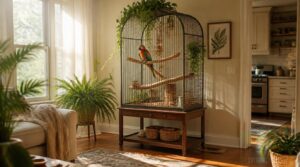
Where you put the cage matters just as much as what’s inside it. Your bird’s health depends on avoiding hidden dangers like fumes, drafts, and isolation. Here’s exactly where—and where not—to set up that home.
Away From Kitchens
The kitchen is one of the worst spots for a bird cage. Cooking heat can spike ambient temperature by 4–6°F during meal prep, stressing your bird and disrupting its circadian rhythms. Heavy foot traffic adds noise and sudden drafts.
Cleaning residue and kitchen odors — including fumes from spices, grease, and cleaners — can overwhelm your bird’s sensitive airways and raise mold risk near the cage.
Avoid Non-stick Fumes
Beyond traffic and odors, nonstick cookware poses a sharper threat: polymer fume fever. Heating PTFE coatings above 500°F releases fumes that can be fatal to birds within minutes. Damaged coatings worsen this risk.
Switch to ceramic or cast iron, run a range hood, and ventilate thoroughly. A HEPA air purifier adds another layer of protection against airborne particulates.
Against a Solid Wall
Once cookware fumes are controlled, location still matters.
Position the cage flush against a solid wall—concrete or brick holds anchors best, while wood or plaster needs load-rated hardware to prevent splintering or shear failure. A wall backing limits side access, stabilizes perches, and dampens echo. Leaving 1–2 inches for airflow prevents moisture buildup behind the cage.
Social but Calm Location
A solid wall supports structure, but placement also shapes your bird’s social world. Choose a noise zone near living rooms, not kitchens or laundry areas, so your bird sees family activity while staying shielded from clatter.
Soft furnishings dampen echo, and a small window view offers visual enrichment.
Keep interactions on a predictable daily schedule to build calm anticipation, not overstimulation.
Away From Direct Drafts
Even small air movements can spike your bird’s corticosterone levels, triggering chronic stress. Position the cage at least 3 feet from windows, doors, or vents.
Test airflow with a lightweight ribbon — if it flutters near the cage, reposition immediately.
Use weather stripping and draft blockers on exterior doors, and keep a thermostat‑monitored room between 65–75 °F year‑round.
Frequently Asked Questions (FAQs)
What are the must haves for birds?
Think of a bird’s habitat as a living prescription. Your must-haves: ideal cage size, stainless steel bowls, natural wood perches, enrichment toys, mineral blocks for calcium, and a daily health observation routine.
How often should bird wings be clipped safely?
Clip again every 1–3 months after molt begins — once primary feathers restore upward lift. Check both wings regularly, since regrowth rates differ per bird.
Can birds safely coexist with household pets nearby?
Yes — birds can coexist with household pets when you use secure enclosures, supervised introductions, and trained "leave it" cues. Never leave them unsupervised together.
What signs indicate a bird is feeling stressed?
A stressed bird often shows feather plucking, abnormal vocalizations, or hunched posture. Watch for disrupted sleep, avoidance behaviors, and appetite changes — these behavioral shifts signal rising stress and can escalate into serious health issues.
How do you introduce a new bird to existing ones?
Start by keeping your new bird in a separate cage nearby for 7–10 days, allowing existing birds to adjust through sight and sound before any direct contact occurs.
Which common houseplants are toxic to pet birds?
Several common houseplants pose serious risks to pet birds. Toxic species include pothos, philodendron, and oleander. Safer alternatives are spider plants and orchids.
Conclusion
Think of your bird’s cage the way a surgeon thinks of an operating room—every detail either sustains life or quietly threatens it.
The essential items for a healthy bird cage aren’t a checklist you complete once; they’re a living system you maintain with intention. Get the spacing, materials, perches, and placement right, and you’re not just building a cage. You’re building the conditions for a bird that genuinely flourishes.