This site is supported by our readers. We may earn a commission, at no cost to you, if you purchase through links.
Bluebirds are picky tenants—and for good reason. A cavity just 1/16 of an inch too wide invites house sparrows to move in and destroy eggs, sometimes killing the adults. After years of watching backyard nest boxes fail because of small design oversights, I’ve become something of an obsessive on the subject.
The difference between a generic birdhouse from a gift shop and a properly engineered bluebird home isn’t aesthetic—it’s the difference between a thriving nest and a tragedy. Choosing the right unique bird houses for bluebirds means understanding what bluebirds actually need: precise dimensions, smart predator deterrents, and materials that hold up through brutal summers and cold winters alike.
Table Of Contents
- Key Takeaways
- Key Features of Unique Bluebird Houses
- Types of Bluebird Houses
- Creative Bluebird House Designs
- Top 10 Unique Bird Houses for Bluebirds
- 1. Nature’s Way Cedar Bluebird House
- 2. Eastern Bluebird Cedar Nesting Box
- 3. Woodlink Cedar Bluebird House
- 4. JCs Wildlife Bluebird House Kit
- 5. Wild Wings Cedar Blue Bird House
- 6. Cedar Blue Bird House
- 7. Tenforie Wooden Bird House Feeder
- 8. Gray Bunny Cedar Birdhouse
- 9. Heath Bluebird Cedar House
- 10. Cedar Bluebird House with Predator Guard
- Factors to Consider Before Buying
- Best Placement for Bluebird Houses
- Tips for Attracting Bluebirds to Your Yard
- Frequently Asked Questions (FAQs)
- What is the best birdhouse to attract bluebirds?
- Should bluebird houses be in the sun or shade?
- Do bluebirds like hanging birdhouses?
- What type of bird house do bluebirds like?
- Which direction should a bluebird birdhouse face?
- What’s the best place to put a bluebird house?
- How to attract bluebirds to a bluebird house?
- What materials work best for bluebird houses?
- How often should bluebird houses be cleaned?
- When is the best season to install?
- Conclusion
Key Takeaways
- A 1.5-inch entrance hole is the single most critical design detail—get it wrong by even a fraction and you’ve handed your bluebird house over to sparrows or starlings.
- Smart predator protection isn’t optional: stovepipe baffles, metal faceplates, and smooth pole mounting work together to keep raccoons, snakes, and cats from turning your nest box into a buffet.
- Cedar is the gold standard for bluebird houses because it resists rot naturally, insulates well through temperature swings, and needs zero chemical treatment to hold up season after season.
- Where you put the box matters as much as what you buy—mount it 5 feet high facing east, at least 100 yards from the next box, in an open area with short grass and no pesticides nearby.
Key Features of Unique Bluebird Houses
When you’re shopping for a bluebird house, you’ll quickly notice that not all boxes are created equal. The best designs share a few critical features that actually keep your bluebirds safe, comfortable, and coming back season after season.
From entrance hole diameter to ventilation design, these key features of the best bluebird houses make a real difference in whether birds actually settle in and thrive.
Let’s break down what you should look for so you can spot a quality house from across the garden center.
Optimal Entrance Hole Size
A carefully chosen entrance hole size is your first line of defense in bird safety and predator control. The standard 1½-inch diameter works beautifully for Eastern Bluebirds, while Western and Mountain species thrive with 1 9/16 inches.
Here’s what you’ll protect against:
- Starlings and aggressive competitors can’t squeeze through properly sized openings
- Climbing predators face tougher access when holes sit 6-10 inches above the floor
- House Sparrows avoid boxes with snug, purpose-built entrance dimensions
Wildlife experts continually adjust to improve both bird safety and nesting success.
Durable and Eco-Friendly Materials
Sustainable woods like Eastern red cedar resist rot naturally without harsh chemicals, so your bluebird house stays structurally sound season after season.
Recycled plastic bird houses keep waste out of landfills while handling weather extremes beautifully. I love how reclaimed materials give each box unique character, and non-toxic coatings protect the exterior while keeping nestlings safe.
These eco-friendly choices reduce your environmental footprint without sacrificing durability. For added bird protection, consider houses featuring a predator guard box design.
Predator Protection Elements
You need smart predator protection to keep bluebirds safe while they nest. Metal faceplates around the entrance hole stop raccoons from chewing the opening larger, and entrance guards create a tunnel that blocks reach-in attacks.
For pole mounting, stovepipe baffles 24 inches long and 8 inches wide prevent climbing predators from ever reaching your sparrow resistant nesting box installation.
Ventilation and Drainage Solutions
Beyond predator protection, your bluebird house needs proper roof ventilation and wall vents to manage airflow and prevent deadly overheating. I love how a simple 0.75-inch gap between the roof and walls creates cross-ventilation without exposing the nest.
Drainage systems with four corner holes keep moisture control strong, so nesting material stays dry and your birdhouse maintenance stays minimal through weather resistance challenges.
Easy Cleaning and Maintenance
When nesting season wraps up, you’ll appreciate hinged side panels that swing open for quick nest box sanitizing—just unhook the latch and scrape out old material in minutes. I love how removable floors let you drop debris straight through, cutting your maintenance schedules to simple fall and spring cleanings.
Look for exterior screws rather than nails, pair your cleaning tools with a mild bleach solution, and your bluebird house stays safe year after year.
Types of Bluebird Houses
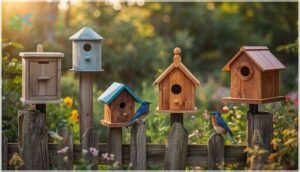
You’ll find bluebird houses come in several distinct styles, each designed to meet specific nesting needs and regional requirements. From slot entries that deter unwanted visitors to cylindrical designs that keep out house sparrows, these variations aren’t just about looks—they solve real problems for nesting bluebirds.
Let’s break down the main types so you can choose the right design for your backyard and the bluebird species in your area.
Slot Entry Bluebird Houses
Slot design bluebird houses break the mold with a horizontal entrance roughly 1⅛ inches high instead of the typical round hole. You’ll find this entrance size discourages house sparrows while eastern bluebirds adapt beautifully, boosting your nesting success. I love how these boxes combine predator deterrents with bird safety—the recessed slot under an extended roof makes it harder for climbing threats to reach inside your nesting box.
Key advantages of slot entry houses:
- Sparrow-resistant design keeps aggressive competitors away from your bluebirds
- Shallow interior layout with 4×4 inch floor suits eastern bluebird nesting perfectly
- Extended roof shields the entrance from rain and climbing predators alike
Peterson Style Bluebird Houses
The Peterson design stands out with its tall, wedge-shaped body and steeply sloped roof that channels rain away from your eastern bluebird families. You’ll notice the vertical oval entrance sits high on the front panel, creating about 5 to 6 inches of protective depth that shields eggs from reaching predators.
I love how this birdhouse pairs rot-resistant cedar with drainage holes and a pivoting front for easy monitoring between broods.
Gilbertson and Gilwood Designs
If you want a bluebird house that sparrows will hate and predators can’t climb, you’ll appreciate the clever Gilbertson nest box made from smooth 4-inch PVC materials paired with a cedar roof. The shallow 4½-inch depth and snug cavity discourage sparrow invasions while bluebirds thrive.
Key features include:
- Lightweight PVC body mounted on metal conduit for enhanced predator guards
- Tool-free removal for quick nest box maintenance
- Gilwood slot designs with horizontal entrance for ventilation
- Tight construction that keeps nests dry without extra drains
- Cedar bird houses combined with recycled components for durability
Both styles prioritize bluebird preferences through careful sizing.
Regional Bluebird House Variations
Your Eastern Bluebird won’t need the same bluebird house that thrives in Montana’s high country. Regional designs respect climate adaptations and habitat variations. NABS-approved plans recommend thicker cedar walls for cold northern states, while southern boxes use extended roofs and ventilation to combat heat. Western and Mountain species prefer larger floors and different entrance sizing.
The Gilbertson nest box works across zones, but matching your local nesting preferences and bluebird migration patterns always wins.
Creative Bluebird House Designs
You don’t have to settle for a boring box on a pole regarding housing bluebirds. Modern artisan designs blend function with visual appeal, using materials like copper accents, recycled plastic roofs, and hand-painted finishes that make your birdhouse stand out.
Let’s look at some creative approaches that protect bluebirds while adding character to your yard.
Artisan and Modern Styles
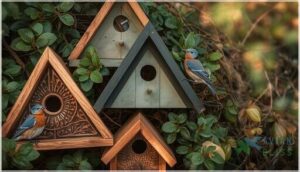
If you’re ready to break away from rustic cabin styles, modern bluebird houses now feature geometric forms like clean wedge shapes and asymmetrical fronts that look like tiny contemporary sheds.
Artisan details such as hand-tooled textures and carved trim make eco-friendly bird houses stand out, while mixed media designs pair cedar bird houses with metal accents.
You’ll find these birdhouse styles use muted color schemes that complement your garden’s modern aesthetic.
Decorative Roof Materials
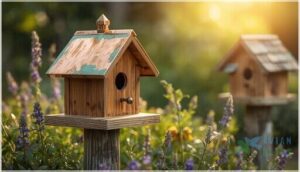
You’ll notice copper accents on bluebird house roofs catch light beautifully, then develop soft brown or green patinas over three to four years. Lacquered copper keeps its bright shine for several seasons before weathering starts.
Metal roofs paired with cedar bird houses create striking contrasts that stand out as outdoor decor. Shingled styles give a cozy cottage vibe.
Metal Accents and Predator Guards

Metal entrance plates in galvanized steel or copper keep predators from chewing through your bluebird house openings. You’ll want guard materials that work:
- Stovepipe baffle designs wrap metal around poles to block climbing raccoons and snakes
- Wire mesh cages extend 3-4 inches from entry holes, stopping reaching paws
- Cone baffles deflect predators downward on wooden posts
- Metal pole mounting eliminates claw holds that wooden posts offer
These predator guards dramatically improve birdhouse maintenance success and predator protection rates.
Hand-Painted and Themed Houses
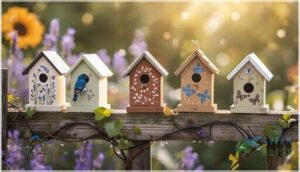
Beyond protective hardware, you can turn your bluebird house into genuine yard art. Hand-painted birdhouses with garden motifs, polka dots, or rustic brush strokes add personality, while light colors like pale tan or white reflect heat to keep nests cool. I love how themed designs with flowers or cottage-style roofs blend function with beauty.
Painted birdhouses need exterior-grade acrylic on the outside only—never coat interior walls so nestlings can grip rough wood when climbing out. Apply two coats of outdoor sealant to protect your artwork from UV and rain, spraying from six inches away to avoid drips on your decorative details.
| Design Element | Practical Benefit | Creative Options |
|---|---|---|
| Light color schemes | Reflects sunlight, prevents overheating | White, pale green, soft gray |
| Decorative accents | Personalizes without blocking access | Butterflies, vines, stripes |
| Artistic roofs | Sheds water while adding visual interest | Copper panels, painted shingles |
| Eco friendly finishes | Protects artwork, safe for birds | Water-based exterior paint, clear sealers |
Top 10 Unique Bird Houses for Bluebirds
Now that you’ve seen the creative possibilities, let me walk you through ten specific bluebird houses that actually deliver on design and function. Each one brings something different to the table, whether it’s unique construction, built-in predator protection, or materials that’ll outlast your mortgage.
I’ve selected these because they balance the safety features bluebirds need with the durability and ease of maintenance you’ll appreciate.
1. Nature’s Way Cedar Bluebird House

You’ll find that Nature’s Way Cedar Bluebird House delivers serious protection alongside natural beauty. This 12-inch-tall box uses premium rot-resistant cedar paired with stainless steel hardware that won’t corrode, so it stays sturdy season after season.
The 1.5-inch entrance hole comes with a predator guard tunnel, making it tough for raccoons or cats to reach inside. I love how the elevated mesh floor helps control blowflies, and those fledgling kerfs give young birds the grip they need to climb out when they’re ready to fly.
| Best For | Backyard birders who want a durable, low-maintenance house that keeps bluebirds safe from predators and parasites. |
|---|---|
| Material | Premium Cedar |
| Ventilation | Air vents included |
| Easy Cleaning | Clean-out door |
| Predator Protection | Predator guard included |
| Entrance Hole | Bluebird-sized |
| Mounting | Pole or flush mount |
| Additional Features |
|
- Premium cedar and stainless steel construction means it’ll last for years without rotting or rusting
- Smart safety features like the predator guard and elevated mesh floor protect birds from threats and blowfly infestations
- Easy-access clean-out door and good ventilation make seasonal maintenance quick and simple
- The mesh floor sometimes arrives sticky or gummy and needs cleaning before you can use it
- You might need to buy extra mounting hardware since it’s not always included
- The price runs higher than basic bluebird houses, though the quality backs it up
2. Eastern Bluebird Cedar Nesting Box
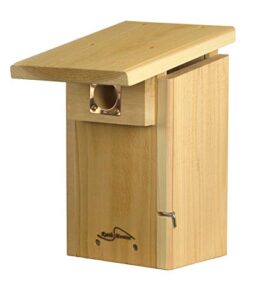
You’ll want to check out the Kettle Moraine Eastern Bluebird Cedar Nesting Box if you’re serious about providing top-tier habitat.
This five-pound box uses solid cedar paired with stainless steel screws that hold tight through years of weather, and that copper portal around the 1.5-inch entrance doubles as both a striking accent and a predator deterrent.
The hinged door lets you monitor nests easily, while the side viewing window gives you quick peeks without disturbing your bluebird family.
| Best For | Backyard birders who want a durable, easy-to-monitor nesting box approved by the North American Bluebird Society for attracting Eastern Bluebirds. |
|---|---|
| Material | Cedar Wood |
| Ventilation | Not specified |
| Easy Cleaning | Hinged door |
| Predator Protection | Copper portal guard |
| Entrance Hole | Bluebird-sized |
| Mounting | Pole mount |
| Additional Features |
|
- Solid cedar and stainless steel construction stands up to years of outdoor use
- Hinged door and side viewing window make nest monitoring and seasonal cleaning simple
- Copper portal with predator guard helps protect nesting birds from threats
- Floor size may not work for Western Bluebirds if you’re in their range
- Open gaps under the lid can let rain in during heavy storms
- No blowfly trap included, so you’ll need to add one separately if desired
3. Woodlink Cedar Bluebird House
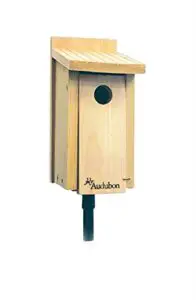
The Woodlink Cedar Bluebird House stands out for its practical, conservation-first design. You’ll appreciate how it’s built to National Audubon Society specs, using kiln-dried cedar with 0.75 to 0.875-inch walls that buffer temperature swings nicely.
The 1.56-inch entrance hole welcomes bluebirds while keeping larger competitors out, and the flat front design—no perch—discourages invasive species like starlings.
I love how the hinged front panel swings open for quick nest checks, making your monitoring work smooth and stress-free.
| Best For | Backyard birders who want a conservation-approved bluebird house that’s easy to monitor and built to last. |
|---|---|
| Material | Cedar Wood |
| Ventilation | Not specified |
| Easy Cleaning | Easy clean design |
| Predator Protection | Not specified |
| Entrance Hole | 1.56-inch hole |
| Mounting | Pre-drilled holes |
| Additional Features |
|
- Built to National Audubon Society specifications with proper entrance hole size and no-perch design to deter invasive species
- Hinged front panel makes nest checks and seasonal cleaning quick and hassle-free
- Thick cedar walls provide natural insulation to protect nesting birds from temperature extremes
- Some buyers received pine construction instead of the advertised cedar material
- Quality control issues reported, including gaps in construction and screws that strip easily
- Missing ventilation holes and interior kerf cuts that help baby birds climb out safely
4. JCs Wildlife Bluebird House Kit
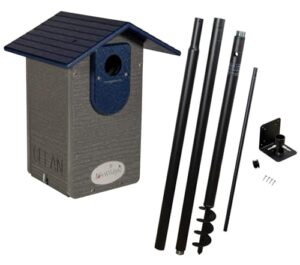
If you’re looking for a setup that sidesteps traditional wood rot worries, the JCs Wildlife Bluebird House Kit delivers. It’s crafted from recycled poly lumber that won’t crack, split, or fade, keeping its brown color through seasons of sun and storms.
The 1.5-inch entrance sits 5.5 inches above the floor, and the included predator guard extends that tunnel to block raccoons and squirrels. I love how the side panel swings open for cleaning, plus ventilation gaps near the top prevent dangerous overheating during brooding season.
| Best For | Homeowners wanting a maintenance-free bluebird house that’ll last years without the usual wood rot headaches. |
|---|---|
| Material | Recycled Poly Lumber |
| Ventilation | Not specified |
| Easy Cleaning | Full side panel access |
| Predator Protection | Predator guard included |
| Entrance Hole | Bluebird-sized |
| Mounting | Universal pole kit |
| Additional Features |
|
- Recycled poly lumber construction means zero cracking, splitting, or fading over time
- Full side panel access makes seasonal cleaning genuinely easy
- Predator guard and proper entrance sizing keep raccoons and larger birds out
- Pre-drilled mounting holes sometimes don’t line up perfectly with the included pole
- Ground auger struggles in bone-dry or rock-hard soil
- You might need to actively discourage house sparrows from moving in first
5. Wild Wings Cedar Blue Bird House
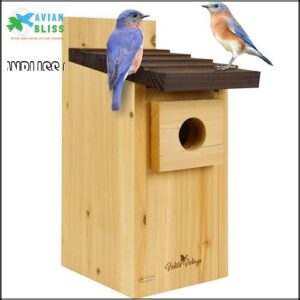
The Wild Wings Cedar Blue Bird House ticks every conservation box with naturally rot-resistant cedar and rust-free hardware that lasts through multiple breeding seasons. At 12 inches tall, it offers interior space perfect for bluebirds and tree swallows.
It includes an elevated mesh floor that fights blowfly infestations, plus fledgling kerfs—those textured grooves—so young birds can grip and climb to the exit.
You’ll find built-in predator guards, wall vents for airflow, and a side clean-out door that swings open between broods without stress.
| Best For | Backyard birders who want a durable, well-ventilated nesting box that’s easy to clean and protects young bluebirds from predators and parasites. |
|---|---|
| Material | Cedar Wood |
| Ventilation | Air vents included |
| Easy Cleaning | Clean-out door |
| Predator Protection | Predator guard included |
| Entrance Hole | Bluebird-sized |
| Mounting | Pole or flush mount |
| Additional Features |
|
- Cedar construction with rust-free hardware naturally resists rot and lasts multiple seasons
- Elevated mesh floor and interior grooves help prevent blowfly problems and give fledglings grip to climb out
- Side clean-out door makes monitoring and cleaning between broods simple and stress-free
- Doesn’t include mounting hardware, so you’ll need to buy that separately
- May need staining or extra weatherproofing if you’re in an area with harsh conditions
- Some buyers reported getting a different model than what they ordered
6. Cedar Blue Bird House
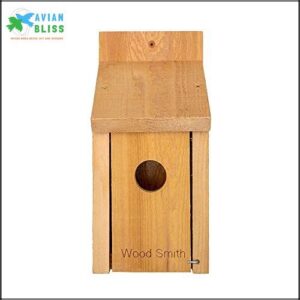
You deserve a bluebird house that balances natural beauty with practical performance. This cedar model measures 5.5″D x 6″W x 12″H, featuring Western Red Cedar construction that resists rot without chemical treatments.
The easy-twist latch on the front door allows for quick cleaning between broods, while air vents keep the nest chamber cooler during summer heat spikes. Weatherproof screws ensure everything stays tight through seasons of expansion and contraction.
It’s designed for bluebirds, wrens, chickadees, and finches, though squirrels can sometimes enlarge the entrance hole if they’re persistent.
| Best For | Backyard birders who want a low-maintenance, natural-looking house that attracts bluebirds, wrens, and chickadees without chemical treatments. |
|---|---|
| Material | Western Red Cedar |
| Ventilation | Air vents included |
| Easy Cleaning | Easy-open door |
| Predator Protection | Not specified |
| Entrance Hole | Wild bird-sized |
| Mounting | Hardware included |
| Additional Features |
|
- Western Red Cedar naturally resists rot and weather damage for years of use
- Easy-twist latch and front-opening door make cleaning between broods simple
- Built-in air vents help regulate temperature and keep nestlings comfortable in summer heat
- Door latch design has reliability issues according to some users
- Squirrels can chew through the cedar and enlarge the entrance hole over time
- Birds may not use the house depending on placement and local competition
7. Tenforie Wooden Bird House Feeder
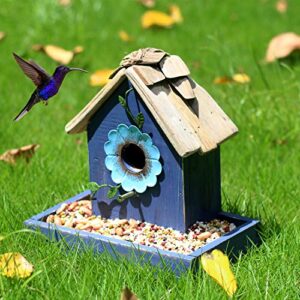
If you’re drawn to a birdhouse that pulls double duty, the Tenforie Wooden Bird House Feeder combines shelter and feeding in one compact 9¾”H x 6″W structure. This hut-style design with a pitched roof shields small birds from light rain while offering both a nesting cavity and seed tray below.
It’s hand-crafted from natural wood, so each piece shows unique grain patterns. The cottage aesthetic fits rustic gardens beautifully, though some users note the entrance hole runs small for certain species and the hanging design can swing in wind.
| Best For | Bird lovers who want a charming dual-purpose piece that offers both nesting space and a feeding station for finches, wrens, and chickadees in a compact rustic design. |
|---|---|
| Material | Exterior Plywood/Cedar |
| Ventilation | Not specified |
| Easy Cleaning | Easy to clean |
| Predator Protection | Not specified |
| Entrance Hole | Small bird-sized |
| Mounting | Post or hang |
| Additional Features |
|
- Handcrafted from natural wood with a cottage-style aesthetic that adds rustic charm to any garden or patio
- Serves double duty as both a birdhouse and feeder, maximizing functionality in a small footprint
- Made from durable exterior-grade materials designed to withstand outdoor conditions
- Entrance hole may be too small for some bird species, limiting which birds can use it
- Roof construction can deteriorate over time and may require maintenance or replacement
- Hanging design tends to swing in wind, making it difficult to keep stable without securing to a post
8. Gray Bunny Cedar Birdhouse
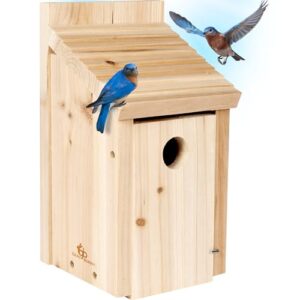
The Gray Bunny Cedar Birdhouse steps up with 2 cm thick walls and carbonized wood that fights rot season after season. Rust-resistant screws hold everything tight through years of weather.
You’ll find multiple air vents around the walls and four corner drainage holes, plus a front panel that swings open in under two minutes for annual cleanouts.
The 1.5 inch entrance suits eastern bluebirds perfectly, while interior grooves give fledglings a grip when they climb out.
| Best For | Backyard bird watchers who want a durable, low-maintenance home for bluebirds and other small cavity-nesting species. |
|---|---|
| Material | Cedar Wood |
| Ventilation | Air vent at top |
| Easy Cleaning | Easy to clean |
| Predator Protection | Not specified |
| Entrance Hole | Small bird-sized |
| Mounting | Hang outdoors |
| Additional Features |
|
- Thick cedar construction with rot-resistant carbonized wood holds up through multiple seasons
- Quick-clean design with a front panel that opens in under two minutes for annual maintenance
- Smart ventilation and drainage system prevents moisture buildup and keeps birds comfortable
- Large air vents may allow wasps and other insects to move in
- Some units leak water during heavy rain despite drainage holes
- Roof and door alignment issues reported by multiple users
9. Heath Bluebird Cedar House
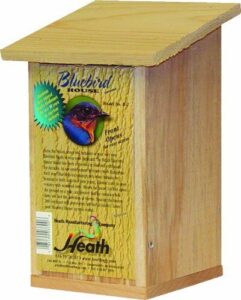
Heath Outdoor Products delivers a modern cedar house built from heavy-duty lumber that resists rot without chemical treatments. Cedar’s natural breathability works alongside ventilation gaps to prevent overheating during summer afternoons, while drainage at the base keeps nest material dry after storms.
You’ll appreciate the 1.5 inch entrance positioned high on the front panel, which keeps nestlings safer from raccoons and curious cats. The side panel swings open tool-free, so you can clean between broods in seconds.
| Best For | Backyard birders who want a durable, low-maintenance house specifically designed to attract bluebirds with proper ventilation and predator protection. |
|---|---|
| Material | Cedar Wood |
| Ventilation | Not specified |
| Easy Cleaning | Front panel opens |
| Predator Protection | Not specified |
| Entrance Hole | Bluebird-sized |
| Mounting | Pole or screw mount |
| Additional Features |
|
- Tool-free side panel makes cleaning between broods quick and easy
- Natural cedar construction resists rot and regulates temperature without chemicals
- 1.5-inch entrance hole positioned high to deter predators like raccoons and cats
- Wood thickness may be lighter than expected for the price point
- Entrance hole size limits use to bluebirds and similar species, excluding swallows
- Recent price increases have reduced overall value according to some customers
10. Cedar Bluebird House with Predator Guard
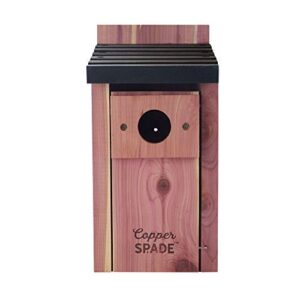
A cedar house with an integrated predator guard offers layered defense against raccoons and cats. You’ll find a thick cedar block extending the entrance tunnel around that critical 1.5-inch opening, making it nearly impossible for paws to reach eggs or nestlings inside.
Some builders add a copper portal over the guard to stop squirrels from chewing through, which also develops a beautiful patina over time.
The front panel hinges open for quick nest checks, and drainage holes below keep moisture from pooling under your birds’ home.
| Best For | Bird enthusiasts who want a durable, well-protected nesting box that keeps predators at bay while making cleaning and monitoring easy. |
|---|---|
| Material | Cedar Wood |
| Ventilation | Not specified |
| Easy Cleaning | Easy to clean |
| Predator Protection | Predator guard included |
| Entrance Hole | Bluebird-sized |
| Mounting | Easy install |
| Additional Features |
|
- Cedar construction with predator guard creates a safe nesting environment that blocks raccoons and cats from reaching eggs
- Front-hinging panel makes nest checks and seasonal cleaning quick and hassle-free
- Thoughtful design details like fledgling grooves, slanted roof, and drainage holes help baby birds thrive
- Roof material may arrive damaged due to inadequate packaging during shipping
- Roof wood doesn’t always match the cedar body, which affects the overall look
- Some assembly concerns with roof attachment that could lead to durability issues
Factors to Consider Before Buying
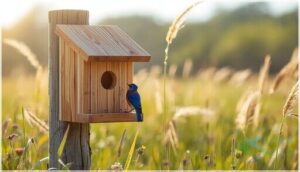
Before you hand over your money, you need to know what actually makes a bluebird house work in the wild. I’ve seen too many well-meaning folks buy beautiful boxes that fail because they missed a few critical details about sizing, weather protection, or species compatibility.
Let’s walk through the key factors that separate a decorative lawn ornament from a home that bluebirds will actually use season after season.
House Size and Interior Space
You’ll want a bluebird nesting box with interior floor dimensions around 4 by 4 inches for eastern bluebirds, or slightly larger at 5 by 5 inches for western and mountain species. Interior depth from entrance hole size to floor should sit between 5 and 6 inches, giving nestling space while keeping predators at bay.
Proper interior shapes—whether rectangular or cylindrical—help parents build secure nests without cramming the area.
Weather Resistance and Insulation
Beyond picking the right floor plan, you’ll need durable weather resistance features that shield nesting bluebirds from scorching heat and freezing nights. Look for designs that combine insulated walls, drainage, and airflow to keep interior conditions stable.
- Insulated walls around 0.75 to 1 inch thick maintain steady nest temperatures through seasonal swings
- Roof overhangs extending 1 to 2.5 inches past the entrance deflect rain and reduce drafts
- Air gap beneath double-layer roofs slows heat transfer, keeping cavities cooler in summer
- Moisture escape through floor drainage holes prevents soggy nests after storms
- Ventilation openings near the top release hot air without exposing chicks to wind
Maintenance Accessibility
You’ll want easy cleaning and maintenance schedules baked into your bluebird nesting box design. Access doors that swing open fully let you remove nest material with simple cleaning tools, while hinged or removable panels give you clear sightlines for predator control checks.
I love how front-opening designs turn routine nest removal into a thirty-second task, keeping your ventilation ports clear and birds healthy between broods.
Compatibility With Bluebird Species
Species Dimensions and Entrance Hole Size matter more than you might think when choosing Bluebird Houses. Eastern Bluebird thrives in boxes with 4-by-4-inch floors and 1.5-inch entrances, while Western Bluebirds need 5-by-5-inch interiors with 1 9/16-inch openings.
Habitat Match, Spacing Needs, and Predator guards complete the compatibility picture, turning your yard into territory these birds actually recognize as home.
Best Placement for Bluebird Houses
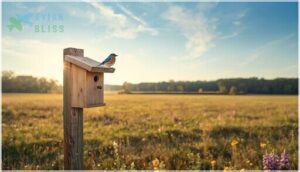
You can build the fanciest bluebird house on the market, but if you stick it in the wrong spot, those birds won’t even give it a second look. I’ve learned that placement matters just as much as the house itself—height, direction, spacing, and predator protection all play a role in whether bluebirds will actually move in.
Even the finest bluebird house fails if placement, height, and predator protection are an afterthought
Here’s what you need to know to give your bluebird house the best chance of attracting a nesting pair.
Ideal Mounting Height
You’ll find the sweet spot for attracting bluebirds sits around five feet above ground, where predator protection meets your own convenience. This standard height range keeps raccoons and snakes at bay while letting you monitor nesting sites without a ladder, and your pole stability improves when you bury an extra two to three feet underground.
- Mount at 4-6 feet for best predator deterrence and easy monitoring
- Use smooth metal poles to prevent climbing access to bird house installation
- Bury 2-3 feet deep to secure pole stability in wind and weather
Direction and Sun Exposure
Point your bluebird house entrance east or southeast — that’s the sweet spot for morning sun benefits without brutal afternoon shade becoming a heat trap. Early light warms eggs gently after cool nights, while wind rain protection from typical westerly storms keeps nests dry.
In hotter regional climates, this simple bird house installation choice dramatically improves your success attracting bluebirds to nesting sites.
Spacing and Territorial Needs
Bluebird houses are territorial by nature — each pair needs breathing room. For Eastern Bluebirds, spacing your NABS-approved nest boxes at least 100 yards apart dramatically cuts conflict between competing pairs.
In mixed species areas with Tree Swallows, try pairing two sparrow-resistant bluebird houses 5–10 feet apart, then placing the next pair 100–300 yards away. That spacing strategy seriously improves your chances of attracting bluebirds successfully.
Predator Guard Installation
Once your spacing is dialed in, predator protection becomes the next big move. Mount your bluebird house on a smooth metal pole with a stovepipe pole baffle — at least 8 inches wide and 24 inches tall. Keep the baffle top around 4 feet high.
For extra predator deterrents, pair it with a Noel guard around the entrance hole size opening.
Tips for Attracting Bluebirds to Your Yard
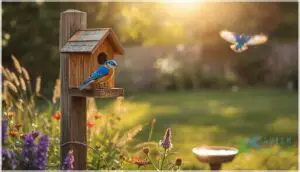
Getting bluebirds to actually show up and stay takes a bit more than just hanging a house and hoping for the best. A few smart adjustments to your yard can make a real difference, from what you plant to how often you check in on your setup.
Here’s what actually works.
Landscaping for Bluebird Habitats
Creating a wildlife-friendly garden starts with thinking like a bluebird. These birds crave open space, clean sightlines, and insect-rich native plants — not a manicured showpiece.
For birdwatching success and a thriving bird habitat, focus on:
- Open Lawn Creation — Keep grass 3–5 inches tall over at least a quarter-acre
- Native Plant Selection — Plant flowering dogwood, elderberry, and oaks to fuel the insect buffet bluebirds need
- Soil Quality Management — Skip pesticides and leave leaf litter in place to protect ground beetles
Providing Water and Food Sources
Once your yard looks like bluebird country, water and food seal the deal.
Set up shallow Bird Baths — just 1–2 inches deep — with flat stones for easy wading. In freezing temps, Water Heaters keep things ice-free. For food, Mealworm Feeders loaded with live larvae work brilliantly, since insects make up nearly 70% of a bluebird’s diet.
| Resource | What Works | Why It Matters |
|---|---|---|
| Bird Baths | 1–2 inch depth, wide basin | Safe wading, feather cleaning |
| Winter Feeding | Heated birdbath, 50–60W element | Open water when streams freeze |
| Mealworm Feeders | Single-layer live larvae dish | Mirrors natural insect hunting |
| Fruit Sources | Chopped berries, softened dried fruit | Covers 32% of winter diet |
| Bird Feeder Designs | Pole-mounted, open sightlines | Predator awareness while eating |
These Bird Feeding Strategies double as serious Bird Conservation Efforts, keeping your yard a reliable refuge year-round.
Regular Monitoring and House Cleaning
Think of your Bluebird House as a living system that needs your attention. Quick weekly Bird Health Checks during March through August take under two minutes — open the door gently, scan for wasps or blowfly larvae, and close it.
After each brood fledges, Nest Box Maintenance matters: remove old nests, clear Ventilation gaps, and start fresh.
Consistent Cleaning Schedules and Nesting Cycle Tracking genuinely transform your Birdhouse into a thriving, season-after-season refuge.
Avoiding Common Bluebird Deterrents
Even small mistakes can quietly push bluebirds away from an otherwise perfect setup. Here’s what to avoid:
- Skip reflective tape or spinning pinwheels near your Bluebird House — Visual Deterrents spook them fast.
- Prioritize Chemical Safety by ditching broad-spectrum insecticides that wipe out their food supply.
- Use Noise Reduction strategies — avoid placing boxes near machinery.
- Install a Predator Guard and confirm Entrance Hole Size stays at 1.5 inches for Sparrow Resistant, Predator Protection results.
- Mount on isolated poles for genuine Predator Control and lasting Nesting Success.
Frequently Asked Questions (FAQs)
What is the best birdhouse to attract bluebirds?
The best bluebird house combines a 5-inch entrance hole, rot-resistant cedar construction, and proper ventilation.
These features directly support nesting success by matching natural bluebird behavior and creating a safe, bird-friendly habitat.
Should bluebird houses be in the sun or shade?
Bluebird houses thrive with morning sun and afternoon shade. This balance ensures nesting safety by preventing dangerous heat buildup — full afternoon sun can push interior temperatures to 120°F, risking your nestlings.
Do bluebirds like hanging birdhouses?
Hanging birdhouses rarely match bluebird nesting preferences. They favor stable, pole-mounted setups with predator guards — swinging movement disrupts incubation and invites climbing predators. For best results, skip hanging mounting styles entirely.
What type of bird house do bluebirds like?
Bluebirds prefer simple, solid nest boxes that mimic natural tree cavities. They love cedar birdhouses with a 5-inch entrance hole, proper ventilation, and clean interiors — classic bluebird house designs built for safety and comfort.
Which direction should a bluebird birdhouse face?
As the old saying goes, it’s all about location. Face your bluebird house east. This compass orientation delivers gentle morning sun exposure, shields from west winds, and keeps nest safety high for Eastern Bluebird families.
What’s the best place to put a bluebird house?
The best spot for a bluebird house is at the edge of an open field, about 5 feet high, facing east, with short grass nearby for easy insect hunting.
How to attract bluebirds to a bluebird house?
Want to attract bluebirds to your birdhouse? Keep the nesting box placement open, skip pesticides, offer mealworms, and add a shallow birdbath. Bluebirds find clean, insect-rich yards irresistible.
What materials work best for bluebird houses?
Cedar is your best bet. It’s naturally rot-resistant, insulates well, and needs no chemical treatment. Recycled poly wood runs a close second for eco-friendly, weatherproof durability.
How often should bluebird houses be cleaned?
Clean your bluebird house at least once a year, ideally after the nesting season ends.
For best parasite control, remove old nests between broods too.
Consistent seasonal maintenance keeps your birdhouse healthy and ready.
When is the best season to install?
Late winter is your sweet spot. Install your bluebird nesting box by February, before males start scouting territories.
Seasonal timing matters — early installation gives bluebirds first pick and sets your whole nesting cycle up for success.
Conclusion
Even Aristotle would’ve obsessed over entrance hole measurements if bluebirds nested in ancient Greece. That’s how precise this craft is.
When you choose unique bird houses for bluebirds with genuine intention—right dimensions, smart predator guards, breathable materials—you’re not just hanging wood in a yard. You’re engineering a safe harbor for a species that rewards your care with vivid blue wings and season after season of nesting success. Get the details right, and they’ll come.
- https://www.beautifulhayscounty.org/hays-humm/bluebird-nest-box-management
- https://kmwoodworking.com/products/bluebird-nest-box-with-recycled-roof
- https://thebackyardnaturalist.com/wordpress/portfolio-items/bluebird-nesting-box/
- https://www.sialis.org/entrance-hole-debate/
- https://michiganbluebirds.org/nest-boxes/nestbox-basics