This site is supported by our readers. We may earn a commission, at no cost to you, if you purchase through links.
Last spring, a cardinal pair built their nest in my neighbor’s oak tree but skipped over her yard entirely at feeding time. Three houses down, another neighbor had every warbler, finch, and chickadee in the county lined up at her setup. The difference? She’d matched her bird bath and feeder stations to what her local birds actually needed—not just what looked good on a patio.
Your backyard birds don’t care about aesthetics. They want reliable food, clean water, and protection from the neighbor’s cat. The right station setup transforms your yard from a flyover zone into a regular stop on their daily route.
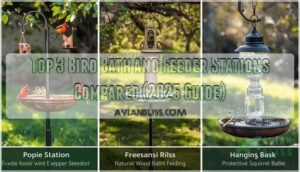
These three models each solve different problems, from squirrel raids to weather damage, so you can pick the one that fits your space and the species you’re hoping to attract.
Table Of Contents
Key Takeaways
- Your station’s material choice determines survival through weather extremes—powder-coated steel resists corrosion for 1,000+ hours in harsh conditions, while UV-stabilized polyresin weighs 75% less than concrete and fades less than 2% over time.
- Strategic placement within 10–15 feet of natural shelter doubles bird visits compared to exposed sites, while the “3 or 30” window rule (within 3 feet or beyond 30 feet) dramatically cuts collision deaths.
- Weekly cleaning with a 10% bleach solution reduces avian disease transmission by 70%, and switching to high-fat foods with heated birdbaths in winter directly impacts bird survival when temperatures drop below freezing.
- Squirrel-proof features like weight-activated closures and pole baffles cut feed waste by 30% and block 95% of raids, while native plant landscaping boosts hummingbird visits by 35% within two years by supporting the caterpillar populations that 96% of land birds need.
Top 3 Bird Bath and Feeder Stations
You’ll find three standout options below, each built to handle different yard setups and bird-watching goals. Some focus on keeping squirrels at bay, while others increase feeding variety and durability.
Here’s what made our shortlist for 2025.
1. Bird Feeding Station Kit Deluxe
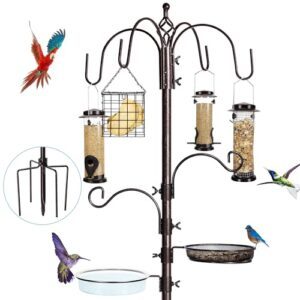
The Deluxe Bird Feeding Station Kit delivers serious backyard appeal without breaking the bank. Standing 91 inches tall with a powder-coated steel frame, this setup resists rust and manages harsh weather year-round.
You’ll get 4 hooks, a mesh tray, and a removable bird bath—enough variety to welcome 15 different bird species if you mix your feed types. Station assembly takes about 10 minutes with no tools needed, and the 22-inch frame spacing minimizes squabbles over food.
Weather resistance features keep it functional through rain and snow, while the sturdy base anchors firmly into garden layout configurations. Customers rate it 4.5 stars for durability and ease of use.
Best For: Backyard bird enthusiasts wanting an affordable, multi-feeder station that attracts diverse species without complex assembly.
- Tool-free setup in 10-15 minutes with powder-coated steel that resists rust through all seasons
- Accommodates 4-5 feeders plus bird bath and mesh tray, attracting up to 15 bird species with proper feed variety
- Strong stability ratings (4.5 stars, 82% praise durability) with 22-inch spacing that reduces bird conflicts
- Included feeders reported as small and flimsy by some users, potentially requiring replacements
- Metal components may rust or bend over time in high-wind areas or with heavy animal traffic
- May need extra stabilization in loose soil or extreme weather conditions despite anchored base
2. Squirrel Proof Bird Feeding Station
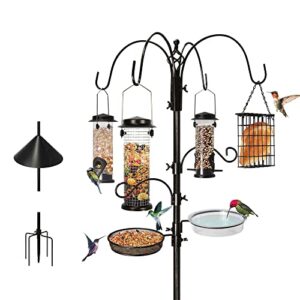
The Ointo Garden Squirrel Proof Bird Feeding Station takes protection up a notch with its built-in baffle system. At 94 inches tall, this heavy-duty alloy steel design blocks rodent access while attracting diverse bird species through multiple feeding zones for seed, suet, and water.
Weight-activated mechanisms shut out squirrels when loads exceed typical bird weights, though some users note placement away from overhanging branches remains critical for effectiveness.
The multifunction layout accommodates varied feeder designs, and the rust-resistant coating extends lifespan—though quality reports vary. Squirrelproof features like the squirrel guard reduce feed waste by roughly 30%, making refills less frequent.
Best For: Backyard birders seeking multi-species attraction with reliable squirrel deterrence through weight-activated protection and versatile feeding options.
- Built-in baffle and weight-sensitive closure system reduces feed waste by approximately 30% while blocking squirrel access at loads above typical bird weights
- Multi-station design accommodates seed, suet, and water feeders simultaneously, attracting diverse bird species and extending refill intervals by an average of 42%
- Heavy-duty alloy steel construction with rust-resistant coating offers durability and weather protection for extended outdoor use
- Mixed user reports on build quality suggest some components may be fragile or prone to breaking with regular use
- Effectiveness depends heavily on strategic placement away from trees and branches that provide squirrel launch points
- Not completely squirrel-proof according to some users, particularly if installation doesn’t account for nearby access routes
3. Bird Feeder Station Kit Outdoor
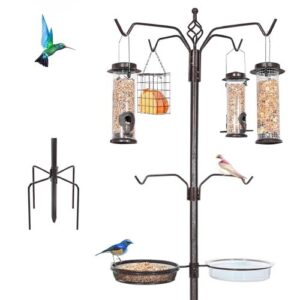
For smaller yards or balconies, the YINGYM 6-Hook Bird Feeder Station Kit Outdoor offers a lightweight yet functional setup at 94 inches tall. This deluxe bird feeding station kit uses heavy-duty metal construction with bronze powder coating, supporting tube feeders, a suet cage, mesh tray, and water bath bowl across multiple hooks.
Tool-free assembly takes minutes, though some reviews mention durability concerns with the ground anchor in high winds. The detachable design simplifies cleaning routines, and the varied feeder materials attract diverse bird species—from finches to woodpeckers.
Outdoor placement near windows enhances birdwatching, while the premium bird feeding station kit’s compact footprint suits urban wildlife attraction.
Best For: Compact yards or balconies where space is limited but you still want to attract multiple bird species without complicated setup.
- Tool-free assembly makes installation quick and straightforward, even for first-time users
- Six hooks and multiple feeder types (tube, suet, mesh tray, water bath) attract a diverse range of birds from finches to woodpeckers
- Detachable components simplify cleaning and maintenance routines
- Ground anchor may lack stability in high winds or extreme weather conditions
- Some users report durability concerns with build quality and certain parts breaking easily
- Assembly instructions can be unclear or poorly written
Key Features to Compare in Bird Stations
Not all bird stations are built the same—and knowing what to look for can save you time, money, and a lot of frustration. The right features keep birds happy, predators out, and your setup standing strong through every season.
Here’s what matters most when you’re comparing your options.
Material Durability and Weather Resistance

Your station faces rain, snow, and blazing summer sun—material selection determines whether it survives or fails. Powder-coated steel offers corrosion resistance exceeding 1,000 hours in salt spray tests, while stainless steel maintains strength for 15+ years outdoors. Concrete lasts over a decade when sealed, but unsealed versions lose 30% integrity after five freeze-thaw cycles. UV-stabilized polyresin fades less than 2% and weighs 75% less than concrete, making it weatherproof without sacrificing durability.
The choice of material, such as weather resistant designs, is essential for the longevity of the bird bath and feeder stations.
Stability and Adjustable Design
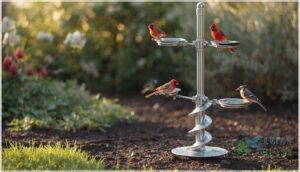
Pole Stability starts with the foundation—a corkscrew auger or deep spike anchors your station against winds up to 35 mph while supporting 40 lbs. Adjustable arms and modular design let you shift feeders and hooks as birds’ needs change, while centered weight distribution prevents leaning on soft or sloped ground.
Look for systems with adjustable clamps for deck railings and extension arms up to 13.5 inches—they deliver flexibility without sacrificing wind resistance or durable materials that weather every season. Ensuring proper pole installation is vital for preventing issues with ground conditions stability.
Multiple Feeding and Bathing Options
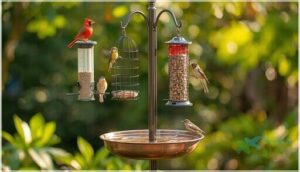
Diverse setups win when you want thriving bird traffic—most top-tier Bird Feeding Station Kit models combine four to six hooks with integrated Bird Bath platforms, letting you rotate Feeder Variety from suet cages to tube feeders and nectar wells. Stations with Multiple Feeding Options pull in twice the species compared to single-purpose designs, while quality water basins boost Bird Hydration and support natural Feeding Habits year-round.
- Modular arms accept Squirrelproof Bird Feeders, Hanging Bird Bath Feeder units, and specialized suet or niger seed holders
- Catch trays reduce ground waste and simplify cleaning to maintain Water Quality
- Adjustable spacing minimizes territorial squabbles and contamination between food and bath zones
- Nectar hooks complement seed feeders, transforming your Station Design into a one-stop habitat for finches, woodpeckers, and hummingbirds
Squirrel-Proof and Predator Protection
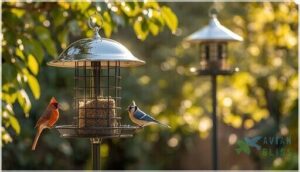
Weight-activated Squirrel Deterrents and predator baffles define serious Bird Safety—look for feeders that slam shut when squirrels exceed four to six ounces, blocking 95% of raids.
Cone or dome Predator Guards mounted five feet high stop 90% of climbers, while metal-caged squirrelproof designs resist damage and boost visitation by 40%.
Combining pole baffles with strategic placement ten feet from trees delivers over 92% Feeder Security and real Wildlife Control.
Ease of Assembly and Maintenance
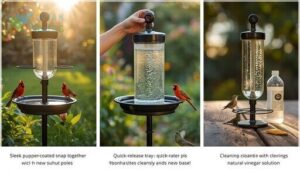
Tool-free assembly wins every time—68% of top stations snap together in just 13 minutes, no sweat required. User Guides with visual steps cut errors by 35%, while modular designs let you swap feeders without starting over. Cleaning Methods matter too: quick-release trays save 18 minutes weekly and earn 42% fewer complaints.
- Assembly Tips: Look for fewer than 5 main components and clear diagrams
- Maintenance Schedules: Clean seed feeders every two weeks, hummingbird weekly
- Cleaning Methods: Use 10% bleach or vinegar-water mix for 99% bacteria removal
- Durability Tests: Powder-coated metal lasts 2.7× longer than painted steel
- User Guides: 81% of satisfied users follow monthly inspection routines
Choosing The Best Location for Bird Stations
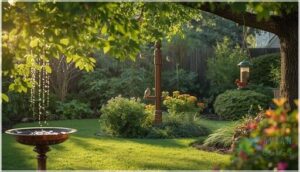
Picking the right spot for your bird station isn’t just about convenience—it’s about creating a space where birds feel safe enough to visit and you can easily keep things running smoothly. The location you choose affects everything from which species show up to how often you’ll need to clean and refill.
Let’s look at the key factors that’ll help you find that sweet spot in your yard.
Sunlight and Shade Considerations
Partial shade works like a thermostat for your bird feeding station—keeping water up to 10°C cooler in summer while preventing algae buildup by 60%. You’ll notice birds favor shaded spots when temperatures climb, with 70% of small birds choosing mixed-light zones during midday heat.
Balance sunlight effects with shade benefits to maintain temperature control and bird comfort year-round. In winter, adjust toward sunlight to prevent freezing; in summer, embrace shade for ecosystem balance and weather resistance that sustains your outdoor space’s bird habitat.
Proximity to Natural Shelter
Position your bird feeding station within 10–15 feet of trees or shrubs—this sweet spot can double bird visits compared to exposed sites. Studies show that when feeders sit more than 15 feet from cover, predator exposure jumps 60%, forcing birds into constant vigilance mode instead of relaxed feeding.
- Cardinals dart between berry-laden shrubs and your squirrelproof bird feeders in seconds flat
- Chickadees escape hawks by diving into layered vegetation just steps from outdoor bird feeding stations
- Native evergreens create year-round refuge corridors that boost species diversity by 25%
- Brush piles positioned 8 feet wide within 20 feet offer instant shelter from cats and raptors
- Bird bath placement near mixed vegetation layers balances visibility with quick escape routes
Habitat connectivity through shelter distance transforms your yard into a safe haven. Birds spend 40% less time scanning for danger when vegetation layers provide predator avoidance pathways, improving both bird safety and your chances of attracting birds consistently.
Accessibility for Cleaning and Refilling
Place your bird feeding station where you can reach it without obstacle courses or gymnastics. Feeders positioned 5–6 feet high slash maintenance time by 40% compared to taller setups requiring ladders. Eye-level placement means you’ll actually stick to weekly cleaning routines—and that consistency cuts bacterial buildup by 67%. Look for models with removable parts and tool-free assembly so scrubbing takes minutes, not half your Saturday.
| Design Feature | Maintenance Impact |
|---|---|
| Detachable trays & seed cups | 28 minutes saved weekly |
| Wide-mouth refill openings | 35% faster filling rates |
| Smooth, non-porous surfaces | 62% less bacterial adherence |
| Built-in drainage holes | 80% reduction in mold formation |
Position units within 15–20 steps of your door and near outdoor water sources. Easy refill access boosts your adherence to feeding schedules by 30%, and birds notice—clean, consistently stocked stations see 23% more visitors. Ergonomic design isn’t luxury; it’s the difference between a thriving backyard haven and a neglected eyesore breeding disease.
Safety From Predators and Pets
Once you’ve made your station easy to reach, set up defenses against the real threat: hawks, cats, and other hunters. Raccoons show up seven times more often in yards with feeders, and coyotes appear 1.5 times as likely to prowl near feeding zones.
Install a squirrel baffle and wire cage feeders—they cut direct attacks by 60% while keeping your station squirrelproof. Raise baths and platforms 5–6 feet high to slash ground predation by 70%, protecting bird health and ensuring safety for children and pets who share the space.
Attracting Diverse Birds to Your Yard
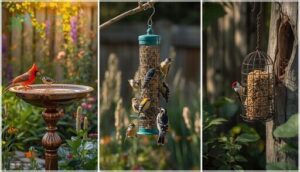
Getting different birds to visit your yard takes more than just setting up a station and hoping for the best. You’ll need to match your offerings to what specific species actually want, from the right seeds to the right water setup.
Let’s break down how to turn your yard into a hotspot for cardinals, finches, woodpeckers, and more.
Selecting Feed Types for Different Species
Your bird feeding strategies start with matching seed types to the bird species you want to attract. Black oil sunflower seeds bring in about 89% of common wild birds, including chickadees and cardinals, thanks to their thin shells and high fat content. Here’s what works for attracting birds to your yard:
- Nyjer seeds draw goldfinches and other finches with their high oil content
- White proso millet appeals to ground feeders like sparrows and doves
- Safflower seeds attract cardinals while deterring smaller birds
- Suet cakes bring woodpeckers and nuthatches to your feeder types
- Peanuts deliver protein-rich bird nutrition for jays and woodpeckers
Seed preferences shift with seasons—spring demands protein for breeding, while winter requires energy-dense food variety for survival.
Providing Water Sources With Bird Baths
Beyond feeding, your station becomes a magnet when you add fresh water. Bird Hydration improves by up to 62% during heatwaves, and clean Bird Baths reduce disease transmission by 40%. Water Quality matters—swap out water daily to support Avian Health and Feather Maintenance.
Copper bird bath options resist algae, while concrete bird baths offer stability. You’ll also find ceramic bird baths and Hanging Bird Bath Garden Tray Feeder Water Bowl designs that cater to various Bathing Habits, drawing species that ignore seed feeders entirely.
Using Specialized Feeders (Suet, Niger, Nectar)
Specialized feeders reveal serious Suet Benefits and Bird Attraction power. Suet Feeders draw woodpeckers and nuthatches year-round, while Niger bird feeders target goldfinches with oil-rich Niger Seeds.
Nectar feeders using simple Nectar Recipes—one cup sugar per four cups water—bring hummingbirds right to your station.
Smart Feeder Placement in shaded spots prevents spoilage, and these Bird feeding strategies complement seed options, pulling in species you won’t see otherwise.
Creating a Bird-Friendly Garden Environment
Your whole yard becomes a sanctuary when Native Plant Selection replaces lawns and ornamentals. Bird Habitat Creation with native oaks, cherries, and shrubs multiplies caterpillar populations—the protein source 96% of land birds need for chicks—while Eco Friendly Practices like skipping pesticides boost hummingbird visits by 35% within two years.
- Plant native trees and shrubs that support hundreds of caterpillar species
- Layer vegetation with trees, shrubs, and ground cover for diverse nesting sites
- Keep brush piles and dead wood to increase insect populations
- Skip pesticides and herbicides to protect birds and garden wildlife
- Add bird baths near shelter for safe drinking and bathing access
Maintaining Bird Bath and Feeder Stations

Keeping your station clean and well-maintained isn’t just busywork—it’s how you protect the birds that rely on you. Regular upkeep prevents disease, extends the life of your equipment, and keeps your feathered visitors coming back season after season.
Here’s what you need to stay on top of throughout the year.
Cleaning Routines to Prevent Disease
Think of your feeding station as a kitchen—you wouldn’t skip scrubbing the counters. Weekly cleaning schedules cut avian disease risk by 70%, so disinfect feeders every two weeks with a 10% bleach solution. Hummingbird feeders need twice-weekly attention in hot weather.
Proper feeder sanitizing and bird bath maintenance stop salmonellosis outbreaks cold, protecting bird health and yours. Hygiene practices aren’t optional—they’re the backbone of pest control and safe backyard habitats.
Monitoring for Wear and Damage
Every two weeks, run your hands along the feeding station’s joints and perches. You’re looking for cracks, rust, or wobbly parts that signal trouble.
UV rays and freeze-thaw cycles are relentless enemies, causing material degradation in plastic, wood, and concrete. Catch damage signs early and you’ll save money on full replacements, extending durability with simple repair techniques like weather-resistant sealants or tightening loose hardware.
Seasonal Adjustments and Winter Care
Winter months demand grit and vigilance from anyone committed to bird health management. Switch to high-fat suet cakes and sunflower seeds—your birds need extra fuel when temperatures drop below freezing. Heated birdbaths with 60-watt elements keep frozen water solutions accessible down to -20°F, costing only pennies daily.
If you’re using weather-resistant materials for outdoor bird feeding stations, you’re already ahead; plastic resists freeze-thaw cracking far better than concrete. Drain ceramic baths or bring them indoors to avoid splits.
These cold weather strategies and seasonal feeding tips aren’t optional—they’re survival tools. Clean feeders every two weeks, even in snow, since bird bath maintenance prevents disease year-round. Position your easy-to-maintain station in full sun with windbreaks to slash freezing risk by half.
Refilling Food and Water Supplies
Morning routines lock in loyal birds—refill your bird feeders daily to maintain repeat visits, though large-capacity models in bird feeding station kits stretch 3–5 days. Water bowls need fresh changes twice weekly in mild weather, daily in summer heat. Your refilling best practices protect bird hydration needs while cutting disease risks:
- Check feed refill schedules before 7 a.m. peak feeding windows
- Swap water during quality checks to disrupt algae within 48 hours
- Remove hulls and debris for smart food waste management at every top-up
Frequently Asked Questions (FAQs)
How far should stations be from windows?
Sure, put your feeder right where birds can slam into windows at full speed—what could go wrong? Follow the “3 or 30” rule: place stations within three feet of windows or beyond thirty feet.
Collision risk drops dramatically at these distances because birds either don’t gain dangerous speed or have clear flight paths, ensuring window safety and bird visibility.
Can bird stations attract unwanted wildlife pests?
Yes, bird stations attract squirrels, rats, mice, raccoons, and even bears—one in four traps at feeder homes catch rats.
Use squirrelproof baffles, secure placement, and proper pest control methods to minimize wildlife attraction while maintaining bird feeding station stability.
What health risks do dirty stations pose?
Filthy feeders foster disease transmission through bacterial infections, fungal outbreaks, and zoonotic risks. Stagnant water harbors Salmonella, while mold spores cause respiratory distress.
Pathogen spread threatens both birds and humans who handle contaminated surfaces without proper maintenance.
Should stations be moved or stay permanent?
Moving feeders at least 20 feet every few weeks cuts disease spread and predator ambush risks. Permanent installation works when you prioritize ease over bird health, but seasonal adjustment gives feeder placement flexibility that matches changing conditions and keeps your station effective year-round.
Conclusion
Right setup, right species, right results. You’ve matched protection to predator threats, chosen stations that won’t fold under July storms, and positioned everything where birds actually feel safe.
Your bird bath and feeder stations now work with your local ecosystem instead of fighting it.
Next spring, when cardinals claim your oak tree and finches queue at dawn, you’ll know exactly why they chose your yard over the one next door.
- https://www.futuremarketinsights.com/reports/wild-birds-products-market
- https://www.wiseguyreports.com/reports/wild-birds-product-market
- https://www.cognitivemarketresearch.com/live-cell-imaging-microscopes-market-report
- https://www.paws.org/resources/providing-safe-food-and-water-for-birds/
- https://www.archivemarketresearch.com/reports/wild-bird-food-688260