This site is supported by our readers. We may earn a commission, at no cost to you, if you purchase through links.
The wrong bird seed can turn your backyard into a disappointment, with empty feeders and quiet mornings. Black oil sunflower seeds attract over 25 species, while nyjer seeds bring goldfinches right to your window. Choosing bird seed for backyard feeders isn’t about buying the most expensive bag—it’s about understanding what different species actually eat.
Cardinals prefer safflower seeds that squirrels avoid, and ground-feeding sparrows need millet scattered on platforms. When you match the right seed to the right feeder, you’ll see more variety, less waste, and birds that keep coming back.
Table Of Contents
- Key Takeaways
- Top 10 Bird Seeds for Backyard Feeders
- 1. Black Oil Sunflower Bird Seed
- 2. C&S Orange Delight Suet Cake
- 3. Nyjer Seed Wild Bird Food
- 4. Wingfield Farm Virginia In Shell Peanuts
- 5. Kaytee Wild Bird Black Oil Sunflower
- 6. Kaytee Nyjer Wild Bird Food Seed
- 7. Wild Bird Ground Feeding Seed Mix
- 8. Safflower Seed Wild Bird Food
- 9. Kaytee Nut and Fruit Wild Bird
- 10. C and H Pure Cane Sugar
- Choosing The Best Seed for Your Birds
- Types of Feeders and Their Seed Pairings
- Bird Seed Safety, Storage, and Health
- Strategies to Attract More Bird Species
- Frequently Asked Questions (FAQs)
- Conclusion
Key Takeaways
- Black oil sunflower seeds attract over 25 bird species and work in any feeder type, making them the most versatile and cost-effective choice for backyard birding.
- Matching seed to feeder style matters—nyjer in tube feeders draws finches, safflower in hoppers attracts cardinals while deterring squirrels, and millet scattered on platforms brings ground-feeding sparrows and doves.
- Proper seed storage below 60°F in sealed containers prevents dangerous mold and aflatoxin contamination, while monthly feeder cleaning with diluted bleach solution reduces disease transmission by over 90%.
- Offering multiple seed types and feeder styles increases backyard bird diversity by up to 76%, with the addition of water sources boosting visits by 46%.
Top 10 Bird Seeds for Backyard Feeders
You don’t need to guess which seeds will work best for your backyard birds. The right seed brings the right species to your feeders, whether you’re hoping to attract cardinals, finches, or ground-feeding doves.
Here are ten seed options that consistently deliver results based on avian feeding behavior and nutritional value.
1. Black Oil Sunflower Bird Seed
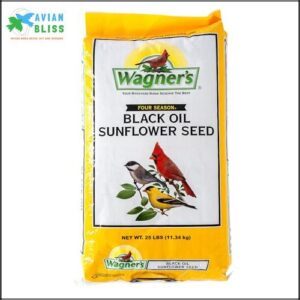
Black oil sunflower seeds stand out as the most adaptable birdseed you can offer. Their thin shells and high fat content—around 38% crude fat and 15% protein—make them easy to crack and nutrient-dense for your backyard visitors. You’ll attract over 25 species, including cardinals, chickadees, and woodpeckers.
These seeds work in any feeder style, from hoppers to tubes, and they’re more energy-rich than striped varieties.
With the U.S. bird food market reaching $3.16 billion in 2025, black oil sunflower remains the cornerstone choice for supporting avian diversity.
Best For: Backyard birders who want to attract the widest variety of songbirds year-round with a single, affordable seed that works in any feeder.
- Attracts over 25 bird species including cardinals, chickadees, finches, and woodpeckers thanks to its thin shell and high energy content.
- Provides superior nutrition with 38% fat and 15% protein, making it ideal for supporting birds through winter and migration seasons.
- Works in all feeder types and produces less mess than striped sunflower or mixed blends due to thinner hulls.
- Some bags contain debris like twigs or dirt, which can clog feeders and require extra cleanup.
- The 25-pound bags lack resealable closures, leading to potential spills and reduced seed freshness over time.
- Attracts squirrels and may cause unwanted sunflower plants to sprout in your yard if seeds fall and germinate.
2. C&S Orange Delight Suet Cake
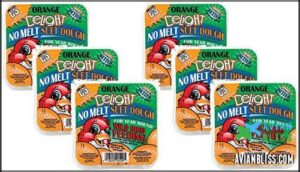
While sunflower seeds are most popular, you can attract fruit-loving birds like orioles, woodpeckers, and bluebirds by offering C&S Orange Delight Suet Cake. This no-melt formula holds up in temperatures to 100°F, making it ideal for seasonal feeding throughout the year.
You’ll get 15% crude fat and 6% protein per cake, plus the orange flavor appeal draws in tanagers and thrushes that bypass traditional seeds.
The suet fits standard wire feeders and suet cages, and its feeder compatibility means you won’t need special equipment to start attracting birds today.
Best For: Backyard birders who want to attract fruit-loving species like orioles, woodpeckers, and bluebirds year-round without worrying about melting or mess.
- No-melt formula stays solid up to 100°F, so you can feed birds all summer without the suet turning into a greasy puddle.
- Attracts birds that ignore regular seed—tanagers, thrushes, and robins actually show up for the orange flavor and fruit mix.
- Fits any standard suet cage or wire feeder you already own, no special equipment needed.
- Ships in flimsy packaging and often arrives cracked or crumbled, based on multiple customer complaints.
- Doesn’t work for everyone—some buyers report their birds completely ignore it.
- Contains allergens (tree nuts, potential fish and shellfish cross-contamination), so handle carefully if you have sensitivities.
3. Nyjer Seed Wild Bird Food
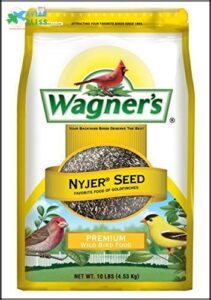
If you’re serious about attracting finches, you’ll want to stock thistle seed—also called Nyjer seed—in your feeders. This tiny, oil-rich birdseed draws goldfinches, siskins, and purple finches like nothing else, with over 90% of North American feeder-visiting finch populations showing a strong preference during peak months.
You’ll see 10 to 40 finches daily when your tube or sock feeder stays filled with fresh seed. The high fat content—up to 35%—bolsters overwinter survival, and squirrels won’t bother it, reducing waste considerably.
Best For: Backyard birders who want to attract finches like goldfinches, siskins, and purple finches while keeping squirrels and larger birds away from the feeder.
- Draws finches consistently—you’ll see 10 to 40 visits daily when the feeder’s stocked with fresh seed, thanks to the high fat content (up to 35%) that finches crave.
- Squirrels and bigger birds ignore it, cutting non-target consumption by at least 70% and keeping more seed for the finches you actually want.
- Supports finch survival through winter with dense nutrition—480 to 500 calories per 100 grams—so you’re genuinely helping birds when temperatures drop.
- Costs more than standard birdseed blends, which can add up if you’re refilling feeders every week or two.
- Shells pile up fast under the feeder, creating a mess that requires regular cleanup or strategic feeder placement.
- Seed goes stale quickly—after four weeks, feeding visits drop by 60%, so you’ll need to replace it often to keep finches interested.
4. Wingfield Farm Virginia In Shell Peanuts
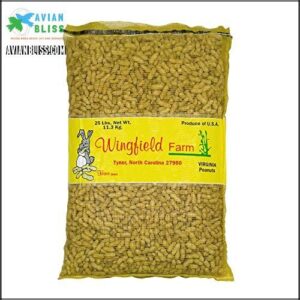
While finches gather at thistle feeders, larger birds need a protein-packed option—that’s where Wingfield Farm Virginia In Shell Peanuts shine. These raw, high-fat peanuts provide 166 calories per ounce, attracting jays, woodpeckers, nuthatches, and titmice to your backyard.
You’ll notice caching behavior as jays carry multiple peanuts away to store for winter. Use mesh feeders to prevent choking, and store your peanuts in sealed, cool containers below 60°F to avoid aflatoxin contamination. Proper storage extends shelf life to 12 months, keeping your backyard birds healthy year-round.
Best For: Backyard wildlife enthusiasts who want to attract larger bird species like jays, woodpeckers, and nuthatches with a high-protein, energy-dense food source.
- High in fat (49%) and protein (25%), providing 166 calories per ounce to support bird health and winter survival
- Attracts charismatic species and encourages natural caching behavior, making bird-watching more engaging
- Creates less mess than typical seed mixes when birds consume them on-site at mesh feeders
- Not suitable for human consumption, limiting versatility compared to edible peanut products
- Requires careful storage in cool, dry conditions below 60°F to prevent dangerous aflatoxin mold development
- Price point may be higher than standard birdseed options, with some customers finding the cost prohibitive
5. Kaytee Wild Bird Black Oil Sunflower

As an ornithologist, I recommend Kaytee Wild Bird Black Oil Sunflower as your go-to birdseed for attracting songbirds. These seeds offer 30% crude fat and 15.5% protein, providing essential nutrition for cardinals, chickadees, and woodpeckers year-round. The thin hulls make feeding easier for smaller feeder birds compared to striped sunflower seeds.
With package size options from 5 to 14 pounds and consumer satisfaction ratings above 4.7 stars, you’re getting quality seed. Store your birdseed in sealed containers below 60°F to maintain freshness and prevent spoilage.
Best For: Bird enthusiasts looking to attract the widest variety of songbirds—especially cardinals, chickadees, and woodpeckers—with a high-energy, single-ingredient seed that’s easy for smaller birds to crack.
- High nutritional value with 30% fat and 15.5% protein keeps birds energized year-round
- Thin hulls make it easier for small songbirds to eat compared to striped sunflower seeds
- Triple-cleaned with minimal debris and filler, so you get more actual seed for your money
- Some customers report receiving damaged bags with torn packaging
- Mixed feedback on seed size consistency, with occasional complaints about overly small or large seeds
- A few buyers mention finding more debris than expected despite the triple-cleaning claim
6. Kaytee Nyjer Wild Bird Food Seed
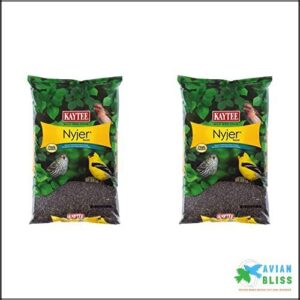
If you’re committed to attracting goldfinches, pine siskins, and other small finches to your yard, Kaytee Nyjer Wild Bird Food Seed delivers the specialized nutrition these birds crave. This thistle-like birdseed contains 35% crude fat and 18% protein, fueling birds during migration and winter.
The hull-free design means zero waste under your feeders, no sprouting in flowerbeds, and a cleaner patio. You’ll need tube or mesh feeders for best seed delivery, and regular cleaning prevents mold.
At 256 ounces per two-pack, this concentrated formula lasts longer between refills.
Best For: Bird enthusiasts who want to attract finches and minimize mess with a concentrated, hull-free seed that won’t sprout or leave waste under feeders.
- High nutritional value with 35% crude fat and 18% protein supports birds during migration, breeding, and winter months.
- Zero waste formula eliminates hulls, preventing sprouts in gardens and keeping patios and flowerbeds clean.
- Concentrated formula lasts longer in feeders, reducing refill frequency and overall maintenance.
- Premium pricing makes it one of the more expensive birdseed options on the market.
- May contain twigs that can clog tube or mesh feeders, requiring occasional cleaning.
- Requires specialized feeders (tube, mesh, or sock designs) rather than standard platform feeders for optimal use.
7. Wild Bird Ground Feeding Seed Mix
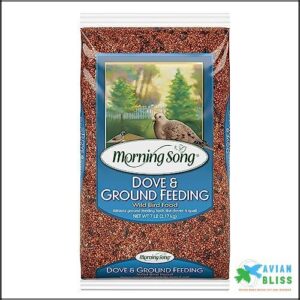
Ground feeding birds—doves, quail, sparrows, and juncos—thrive when you scatter seed mixes directly on platforms or clean ground. Premium blends feature black oil sunflower and white proso millet, while bargain mixtures contain up to 80% fillers like milo and wheat that birds ignore.
You’ll attract more species with compositions rich in shelled sunflower hearts and cracked corn, but watch for contamination risks: peanuts and corn can harbor aflatoxins, deadly carcinogens that threaten backyard flocks.
Choose fresh, high-quality ground feeders’ seed mixes, and your feeding station becomes a gathering place for diverse avian communities.
Best For: Backyard birders who want to attract ground-feeding species like doves, quail, sparrows, and juncos with a nutritious seed blend at a reasonable price.
- Contains quality ingredients like black oil sunflower and white proso millet that birds actually eat, reducing waste compared to cheap filler-heavy mixes.
- Attracts a wide variety of ground-feeding birds including mourning doves, dark-eyed juncos, and multiple sparrow species.
- Offers good value with a 7-pound bag that’s easy to use in platform feeders or scattered directly on the ground.
- May contain smaller seeds that fall through mesh platform feeders, leading to some waste.
- Bird interest can vary depending on local species and their preferences—some customers report mixed results.
- Limited seed variety compared to premium blends, which might not appeal to all backyard birds in your area.
8. Safflower Seed Wild Bird Food
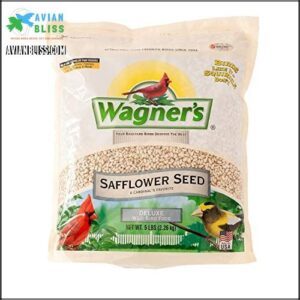
Safflower seed’s bitter taste works like a natural filter at your feeder, welcoming cardinals, chickadees, and nuthatches while deterring most squirrels and aggressive starlings. This specialty birdseed packs 38% fat and 16% protein, delivering nutritional value comparable to black oil sunflower seed. You’ll see best results using large hopper or platform feeders, which accommodate safflower’s thick hull.
Market growth reflects increasing demand—the global safflower seed market reached USD 1.30 billion in 2024, driven by birders seeking targeted solutions for attracting different bird species while managing pests.
Best For: Backyard birders who want to attract cardinals, chickadees, and other songbirds while naturally discouraging squirrels and aggressive species like grackles and starlings.
- Bitter taste deters most squirrels and bully birds, reducing feeder competition by around 70% while still attracting desirable songbirds like cardinals and nuthatches.
- High nutritional value with 38% fat and 16% protein provides energy-rich feeding comparable to black oil sunflower seed.
- Thick hulls create less mess and ground debris than sunflower seeds, helping keep feeding areas cleaner and discouraging rodents.
- Some squirrels may adapt to the bitter taste over time, particularly in certain regions, making deterrence inconsistent.
- Thick hulls can be difficult for smaller bird species to crack, potentially limiting which birds can access the seed.
- Not all bird species are attracted to safflower—some customers report certain birds ignoring it entirely, requiring experimentation or seed mixing.
9. Kaytee Nut and Fruit Wild Bird
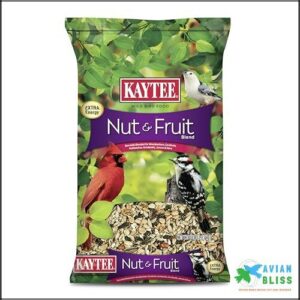
Kaytee’s nut and fruit blend transforms your feeding station into a year-round destination for nuthatches, woodpeckers, cardinals, and grosbeaks. This premium birdseed mixture combines hulled sunflower seeds, peanuts, raisins, dried cherries, cranberries, and safflower seeds, delivering 38-42% crude fat for high-energy nutrition.
The diverse ingredient analysis aids in attracting different bird species through varied seed preferences of birds—fruits provide quick sugars while nuts offer sustained fuel.
Use hopper or platform feeders for best results, and store your bird food in sealed containers to prevent moisture buildup and preserve nutritional benefits.
Best For: Backyard birders who want to attract a wide variety of songbirds like cardinals, woodpeckers, and nuthatches with a high-energy, nutrient-rich blend that keeps birds coming back year-round.
- High fat content (38-42%) provides excellent energy for birds during cold weather and migration seasons
- Attracts diverse species with mix of nuts, fruits, and seeds that appeal to different feeding preferences
- Includes probiotics and vitamins to support bird health beyond basic nutrition
- Higher price point compared to standard seed-only blends may not fit all budgets
- Fruit content can clog certain feeder types and requires more frequent cleaning
- Toxic to dogs and cats, so not suitable for yards where pets have access to feeders
10. C and H Pure Cane Sugar
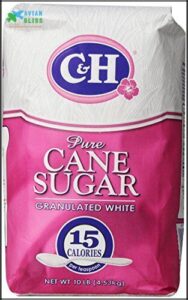
C&H Pure Cane Sugar acts as your foundation for homemade hummingbird food, delivering 100% sucrose that mirrors natural flower nectar. Mix one part sugar to four parts water for ideal nectar ratios—this sugar solution provides energy without stressing tiny kidneys.
Sugar purity matters for hummingbird health, so avoid brown or raw varieties that contain harmful iron levels.
Clean your nectar feeders every three days to prevent mold growth, and enjoy watching these jeweled visitors fuel up on your perfectly balanced cane benefits mixture year-round.
Best For: Bird enthusiasts who want to make safe, high-quality hummingbird nectar at home using pure cane sugar that closely matches natural flower composition.
- 100% pure cane sucrose mirrors natural nectar chemistry, making it the safest choice for hummingbird feeding without harmful iron content found in brown or raw sugars.
- Dissolves easily in water for quick nectar preparation at the recommended 1:4 ratio, providing optimal energy without kidney stress.
- Versatile beyond bird feeding—works great for baking, cooking, and everyday sweetening needs.
- Price has increased over time, making it somewhat expensive compared to generic sugar options.
- Requires diligent feeder cleaning every three days to prevent mold and bacterial growth in sugar water.
- Not all bird species can digest sucrose safely, so it’s specifically suited for hummingbirds rather than general backyard bird feeding.
Choosing The Best Seed for Your Birds
Picking the right seed isn’t just about grabbing any bag off the shelf. Different birds have different tastes, and understanding what each species prefers helps you attract the visitors you want to see.
Let’s look at the key seed types and how to match them to the birds in your backyard.
Sunflower Seed Benefits and Varieties
You’ll find that black oil sunflower seeds pack more nutritional value than striped varieties, thanks to their higher oil content and thinner shells. These small powerhouses deliver roughly 44% fat and 17% protein, fueling birds through cold snaps and breeding seasons. As a result, they’re a popular choice for bird feeders.
If you’re short on cleanup time, sunflower hearts offer a hulled option, though they spoil faster and cost more.
Safflower, Nyjer, and Millet Preferences
Cardinals and grosbeaks favor safflower, while House Sparrows and starlings avoid it—giving you more control over who visits. Nyjer pulls in goldfinches and siskins, especially when you use feeders with small ports to cut waste. Millet works best on the ground, drawing sparrows and doves that prefer low feeding.
Mixing all three boosts species diversity by up to 32%. This nutritious seed is a high-energy food source for backyard birds.
Attracting Finches, Doves, and Cardinals
To bring finches, doves, and cardinals into your yard, you’ll need different strategies for each. Here’s what works:
- Finches: Tube feeders with Nyjer or sunflower hearts attract over 80% of local goldfinch populations when the seed is fresh
- Doves: Ground-scattered browntop millet and cracked corn increase visits by 90%
- Cardinals: Safflower in platform feeders draws 82% more visits than other setups
- Seed combinations: Mixing sunflower seeds, safflower, and Nyjer promotes 65% of feeder activity
- Seasonal variations: Winter doubles ground-foraging beneath feeders
Water sources nearby help seal the deal.
Identifying and Avoiding Fillers
Many birdseed mixtures contain fillers like red milo, wheat, and flax that birds simply toss aside. You’ll spot these as large reddish-brown seeds or pale grains in discount blends.
Up to 73% of economy mixes are wasted this way, which means you’re paying for seed that ends up rotting on the ground.
Check labels carefully, avoid premixed seeds with vague ingredients, and consider homemade blends for better seed quality and real cost comparison.
Ground Feeding Vs. Feeder Birds
While ground-feeding birds like sparrows and doves prefer scattered millet and cracked corn, feeder birds such as finches and chickadees favor Nyjer and sunflower in elevated feeders. Understanding these distinct feeding behaviors helps you reduce disease transmission risks and manage environmental impact more effectively.
Consider these key differences:
- Ground-feeding birds create more seed waste and attract rodents
- Feeder birds show more stable population trends over time
- Mixed feeding zones require more frequent cleaning
- Platform feeders bridge both feeding styles
- Separate stations minimize cross-species disease spread
Types of Feeders and Their Seed Pairings
Picking the right seed is only half the equation—your feeder choice matters just as much. Different feeder designs work better with specific seed types, and understanding these pairings helps you attract the birds you want while cutting down on waste.
Let’s look at how each feeder style matches up with the seeds that perform best in them.
Tray, Hopper, and Tube Feeders
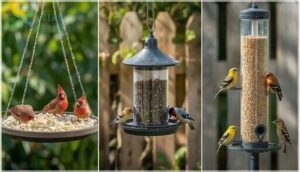
You want to match the right feeder to the right seed, and it makes all the difference. Tray feeders welcome nearly 89% of backyard species, from juncos to jays, and they’re easy to clean. Hopper feeders hold more seed and protect it from the weather, while tube feeders excel with thistle for finches. Here’s how seed pairings affect your success:
| Feeder Type | Best Seed Pairing | Top Attracted Species |
|---|---|---|
| Tray feeders | White millet, sunflower chips | Sparrows, doves, cardinals |
| Hopper feeders | Black oil sunflower, safflower | Nuthatches, chickadees, jays |
| Tube feeders | Nyjer (thistle) seed | Goldfinches, siskins, finches |
Feeder material durability matters too—metal and reinforced plastic score highest. Regional feeder preferences vary, but pairing seed types correctly with these bird feeders boosts visitation across all climates.
Platform and Window Feeders
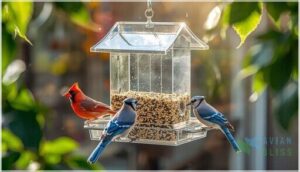
With platform feeder designs, you’ll attract nearly 89% of backyard species—cardinals, jays, and doves love the open access. Black-oil sunflower and safflower work beautifully in both styles, attracting birds to feeders you can actually enjoy watching.
Acrylic window feeders bring birds within inches of your view while reducing seed spillage by 30%. Place them 5+ feet high to limit predators, and clean every two weeks to prevent disease.
Matching Seed Types to Feeder Styles
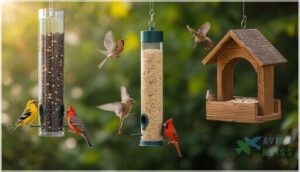
You’ll boost bird visits by pairing seed types to feeder design. Black-oil sunflower thrives in tube feeders, hopper, and window feeders, supporting up to 40 species.
Nyjer requires specialized tube feeders with small ports, attracting goldfinches and siskins while cutting waste by 41%.
Safflower works best in hoppers with larger openings, drawing cardinals while deterring squirrels in 64% of cases.
Minimizing Mess and Waste
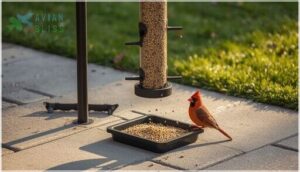
Seed catcher trays reduce ground cleanup by 50%, capturing hulls before they accumulate. No-mess mixes eliminate waste composting needs entirely, with 100% edible content that prevents sprouting. You’ll cut managing bird feeder mess dramatically by offering single-seed feeders rather than blends, reducing bird seed waste by 60%.
Strategic feeder placement over pavers simplifies removing seed hulls, while daily raking prevents mold development and keeps feeding areas healthy.
Bird Seed Safety, Storage, and Health
Keeping your birds healthy starts with choosing safe seeds and storing them correctly. Contaminated or spoiled seed can spread disease and harm the very birds you’re trying to help.
Let’s walk through what to watch for and how to keep your feeding station safe year-round.
Avoiding Toxic Seeds and Contaminants
Protecting your backyard birds starts with recognizing toxic bird food hazards. Aflatoxins in corn and peanuts can reach concentrations as high as 2,780 micrograms per kilogram, poisoning even healthy birds.
Aflatoxins in corn and peanuts can poison backyard birds at concentrations reaching 2,780 micrograms per kilogram
Pesticide exposure from treated seeds, weed seeds carrying agricultural risks, and microbial threats like Salmonella create serious bird seed health hazards.
You’ll want to avoid mixes with corn, choose reputable brands, and prioritize preventing bird feeder contamination through careful seed selection.
Proper Seed Storage Techniques
Once you’ve chosen safe birdseed, proper storage prot
Preventing Mold, Spoilage, and Disease
Once your seed is safely tucked away, feeder cleaning becomes your next line of defense. Mold prevention starts with offering small amounts, which cuts spoilage risks by 40%. Clean feeders monthly using a 1:9 bleach solution to slash bacterial load by over 90%. When humidity climbs above 70%, mold can strike within 48 hours, fueling disease transmission like aspergillosis and salmonellosis that devastate local flocks.
| Risk Factor | Impact on Bird Health |
|---|---|
| Humidity >70% | Mold develops in 48–72 hours; aflatoxins rise |
| Uncleaned feeders (5+ weeks) | 45% increase in parasitic infection |
| Seed waste piles | Mold hotspot within 72 hours in damp weather |
| High bird density at feeders | Doubles disease transmission vs. natural foraging |
| Salmonellosis outbreak | 45%+ mortality in affected songbird populations |
Regular attention to seed storage and safety, plus diligent feeder cleaning, protects bird health and keeps your backyard haven thriving.
Recognizing Harmful Seed Mixtures
Beyond proper storage and sanitation, you’ll need a sharp eye for seed mixture quality to avoid real hazards. Cheap premixed seeds often pack up to 73% filler—red millet, wheat, and milo that most songbirds ignore. Worse, discount blends can harbor aflatoxins from moldy corn or peanuts, weed seed spread risks from contaminated grains, and pesticide residue dangers. Industry regulation gaps mean rejected human-grade ingredients slip into bird feed unnoticed.
Watch for these red flags:
- Filler seed identification: Mixes listing milo, wheat, or oats among top ingredients
- Aflatoxin risk factors: Corn or peanuts in low-cost blends prone to mold
- Weed contamination: 96% of commercial birdseed contains pigweed or herbicide-resistant seeds
- Lack of transparency: Vague labels with minimal ingredient detail or sourcing information
Avoiding premixed seeds and choosing single-ingredient options gives you control over what reaches your feeders and keeps your flock safer.
Strategies to Attract More Bird Species

Attracting a wide range of bird species to your yard requires more than just putting out a feeder and waiting. You need to think like the birds themselves, considering what they eat, where they feel safe, and how they interact with their surroundings.
The following strategies will help you create an inviting space that draws in everything from finches to cardinals throughout the year.
Offering a Variety of Seeds
Offering seed varieties attracts far more species than sticking to a single type. Mixed seed feeders in urban yards increased bird abundance by 74% and species diversity by 76% compared to single-seed options. Your diverse food sources should include black oil sunflower, white proso millet, safflower, and nyjer seed to reach granivores, ground-feeders, and finches alike.
| Seed Type | Primary Species Attracted |
|---|---|
| Black oil sunflower | Cardinals, chickadees, nuthatches |
| White proso millet | Sparrows, juncos, doves |
| Nyjer seed | Goldfinches, house finches |
| Safflower seed | Cardinals, grosbeaks |
Quality seed mixtures eliminate fillers like red millet, reducing waste by over 40% and discouraging rodents. Conservation support through thoughtful seed selection helps native populations thrive, especially during winter shortages.
Using Multiple Feeder Types
How many species visit your yard? Installing different types of bird feeders increases species richness by 8–12 birds and reduces competition through niche partitioning—up to 40 species can appear in urban areas when you diversify feeder placement.
- Tube feeders capture 70% of finch visits with nyjer or sunflower chips
- Tray feeders welcome ground-feeders like sparrows and doves with white millet
- Hopper feeders serve cardinals and jays with safflower or black oil sunflower
This approach improves health impacts while reshaping urban ecology.
Providing Water and Shelter
While attracting backyard birds depends partly on bird feeders, you’ll see up to 46% more visits when you add water sources—Lesser Goldfinches alone dip 1.5 times per minute. A clean bird bath changed daily cuts bacterial loads by 85%, supporting backyard wildlife health.
Combine water with native plant cover and nest box utilization near shelter placement strategies, and you’re creating a bird-friendly environment that truly transforms bathing behavior and species diversity.
Managing Squirrels and Pests
Why let squirrels steal half your seed? Squirrel-proof feeders cut losses by 80%, while spicy deterrents using capsaicin reduce consumption by 25% without harming birds. Strategic seed selection—like safflower ignored by 90% of squirrels—plus pole baffles cutting pest access 95% protect your investment.
Managing squirrel populations and discouraging small mammals saves over $200 million annually across North America, keeping spilled grain minimal and feeding areas pest-free.
Keeping Feeding Areas Clean
Your feeders can become disease hotspots faster than you’d think. Clean them every two weeks using a 9:1 water-to-bleach solution for ten minutes, preventing bird feeder contamination that spreads Salmonella and conjunctivitis. Weekly feeder cleaning during outbreaks saves lives.
Remove spilled grain and debris beneath feeding stations, store seed in waterproof containers for mold prevention, and always air-dry completely before refilling.
Frequently Asked Questions (FAQs)
How often should I refill bird feeders?
You should check your feeders daily, especially in winter when birds rely on consistent feeding. Refilling every 1-2 days prevents bird abandonment and maintains higher visitation rates across diverse species.
What time of year attracts most birds?
Bird feeding peaks during winter and spring breeding season, when energy demands soar. Migration stopovers in autumn also draw crowds.
Summer feeding slows as natural abundance reduces reliance on backyard bird feeding stations year-round.
Can bird feeders harm local bird populations?
Yes, absolutely. Disease transmission skyrockets at crowded feeding stations, predation increases as hawks and cats target congregated birds, and nutritional dependency can develop, undermining natural foraging behaviors and overall avian diet quality in local ecosystems.
How do feeders impact nearby ecosystems long-term?
Over time, supplemental feeding alters plant community structure through seed dispersal and feeder waste accumulation.
Species dominance shifts occur as certain birds outcompete others, while disease propagation increases without proper feeder cleanliness and nutrient redistribution practices.
Whats the average cost of feeding birds yearly?
While seed price variations seem endless, most households spend around $60 yearly on birdseed.
Regional market insights show costs depend on seed mixtures you choose, buying the best birdseed types, and current price drivers affecting annual feeding costs.
Conclusion
Finding the right bird seed for backyard feeders isn’t just a feather in your cap—it’s the foundation of a thriving backyard habitat. When you pair black oil sunflower seeds with tube feeders, safflower with hopper designs, and nyjer with thistle socks, you create dining options that match natural feeding behaviors.
Store seeds properly, rotate varieties seasonally, and watch your yard transform into a reliable stopover where cardinals, finches, and chickadees return day after day.
- https://www.futuremarketinsights.com/reports/usa-bird-food-market
- https://www.metatechinsights.com/industry-insights/bird-food-market-1787
- https://www.mordorintelligence.com/industry-reports/bird-food-market
- https://www.iowadnr.gov/news-release/2024-11-19/bird-feeding-101-attracting-birds-and-maintaining-feeders
- https://www.amraandelma.com/bird-marketing-statistics/