This site is supported by our readers. We may earn a commission, at no cost to you, if you purchase through links.
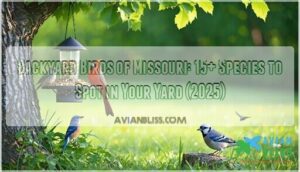 You’ll discover amazing backyard birds of Missouri right outside your window.
The Northern Cardinal, with its bright red feathers, visits feeders year-round alongside the clever Blue Jay and gentle Mourning Dove.
American Robins hop across your lawn hunting worms, while Red-bellied Woodpeckers drum on trees.
Eastern Bluebirds and American Goldfinches add seasonal color to your yard.
These birds thrive when you provide sunflower seeds, suet, and fresh water.
Missouri’s diverse habitats make it a bird-watcher’s dream, from Kansas City suburbs to rural Springfield backyards.
Setting up the right feeders and native plants creates a perfect bird haven that’ll surprise you with species variety.
Table Of Contents
- Key Takeaways
- Common Backyard Birds
- Attracting Birds Missouri
- Bird Feeder Types
- Missouri Bird Identification
- Backyard Birding Tips
- Missouri Bird Species
- Regional Birding Missouri
- Frequently Asked Questions (FAQs)
- What are the most common backyard birds in Missouri?
- Are there birds in Missouri all year-round?
- What birds eat in Missouri?
- Is Missouri a good state for birdwatching?
- What birds live in Springfield Missouri?
- What type of bird feeder to get in Missouri?
- How do I identify a bird in my backyard?
- What is the most common Missouri bird?
- How do I find out what birds are in my area?
- What are those tiny brown birds called?
- Conclusion
Key Takeaways
- You’ll spot Northern Cardinals, Blue Jays, American Robins, Mourning Doves, and Red-bellied Woodpeckers year-round in your Missouri backyard – these five species are the most reliable residents that don’t migrate.
- You’ll attract more bird species by providing sunflower seeds in tube feeders, suet for woodpeckers, fresh water sources, and native plants like Purple Coneflower and elderberry that offer natural food and shelter.
- You’ll create the best bird habitat by combining different feeder types – tray feeders for cardinals and doves, nyjer feeders for goldfinches, and suet feeders for woodpeckers – while keeping them clean and protected from squirrels.
- You’ll maximize your birdwatching success by understanding Missouri’s seasonal patterns – spring migrants like Indigo Buntings arrive March through June, while winter visitors like Dark-eyed Juncos seek shelter from December through February.
Common Backyard Birds
You’ll find five bird species in most Missouri backyards year-round, including the bright red Northern Cardinal and bold Blue Jay.
These common residents—along with Mourning Doves, American Robins, and Red-bellied Woodpeckers—visit feeders regularly and adapt well to suburban environments.
Northern Cardinal
Missouri’s state bird, the Northern Cardinal, brings year-round color to your backyard.
Missouri’s brilliant red cardinals turn any ordinary backyard into a year-round showcase of natural beauty.
These brilliant red males and warm brown females are hard to miss at feeders.
Cardinal essentials for Missouri backyards:
- Cardinal Diet – sunflower seeds, safflower seeds, cracked corn
- Cardinal Habitat – dense shrubs and woodland edges
- Cardinal Song – clear "birdy-birdy-birdy" whistles
- Cardinal Breeding – 2-3 broods per season in thick cover
Blue Jay
You’ll easily spot Blue Jays with their brilliant blue crests and white undersides in your Missouri backyard.
Their intelligent birds show complex Blue Jay Behavior, using various Jay Calls to communicate with their flock.
Their Jay Diet includes nuts, seeds, and insects, while their Jay Intelligence helps them remember thousands of food caches.
Jay Habitat preferences include oak trees for acorns, and their ability to thrive is also linked to their complex behavior.
Mourning Dove
You’ll spot Mourning Doves year-round in Missouri backyards, appearing on 43% of birdwatcher checklists.
These gentle birds showcase pale brown-pink bodies with darker wings and distinctive white tail edges. Their soft cooing calls create peaceful morning soundtracks that many associate with dove symbolism of peace and hope.
They’re also known for their gentle cooing calls.
Key Mourning Dove Facts:
- Diet consists of seeds from bird feeders, especially millet and cracked corn
- Nesting occurs in trees using loose stick platforms, often reusing sites
- Conservation status remains stable due to adaptability to suburban environments
American Robin
Year-round residents with gray-brown backs and rusty orange breasts, American Robins are Missouri’s most recognizable backyard birds.
Their Robin Behavior includes hopping on lawns hunting earthworms, while Robin Nesting occurs in trees using mud-lined cups.
These common birds adapt their Robin Habitat from woodlands to suburban yards throughout Missouri, and their diet consists of insects, berries, and fruits.
Red-bellied Woodpecker
The Red-bellied Woodpecker‘s striking zebra-striped back makes it a standout among Missouri backyard birds.
These adaptable drummers bring year-round entertainment to your yard with their distinctive vocalizations and acrobatic feeding style.
- Habitat Preference: Thrives in mature trees, parks, and wooded neighborhoods
- Diet Diversity: Enjoys insects, nuts, fruits, and suet feeders
- Nesting Habits: Excavates cavities in dead wood for breeding
Attracting Birds Missouri
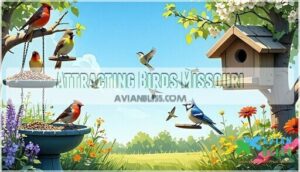
To attract birds to your Missouri yard, focus on creating a habitat that meets their basic needs for food, water, and shelter.
Provide bird feeders, fresh water sources, nesting areas, and native plants to encourage a variety of species to visit and create a welcoming environment.
Put Out Bird Feeders
Setting up bird feeders transforms your yard into a Missouri bird magnet. Choose black oil sunflower seeds for cardinals and chickadees, or nyjer for goldfinches.
Place feeders near shrubs for cover but away from windows. Consider different bird feeder types to attract a wider variety of species.
Keep squirrels at bay with baffles or pole-mounted designs. Clean feeders monthly to prevent disease and maintain healthy backyard bird populations year-round.
Add a Water Source
Water brings Missouri birds to your yard like a magnet. Fresh, clean water sources attract more species than feeders alone.
Place shallow dishes, birdbaths, or drippers where birds feel safe from predators.
- A bubbling fountain creates movement that catches cardinals‘ and robins’ attention
- Shallow stone basins let small birds like chickadees wade safely
- Heated birdbaths provide unfrozen water during harsh Missouri winters. Consider using a safe bird bath heater to prevent freezing.
Offer Birdhouses
Strategic birdhouse placement transforms your Missouri backyard into a nesting haven.
Mount bird houses 5-6 feet high on poles with predator protection like baffles.
Choose cedar or pine materials for durability and proper ventilation.
Many people find success using cedar birdhouses.
Regular birdhouse maintenance, including annual cleaning, guarantees nesting success for Eastern Bluebirds, chickadees, and wrens while attracting birds year-round, making it a great way to create a year-round attraction.
Add Native Plants
Native plants create the perfect backyard birds buffet while providing natural shelter options.
Missouri’s indigenous flora attracts birds by offering seed sources, berry bushes, and insect habitat that feathered friends recognize from generations of dining.
Transform your bird habitat with these Missouri natives:
- Purple Coneflower – goldfinches love the seeds
- Elderberry – provides berries and nesting spots
- Oak trees – support over 500 insect species
- Wild bergamot – attracts hummingbirds and butterflies
- Serviceberry – early spring blooms, summer berries
Bird Feeder Types
Choosing the right feeder helps you attract different bird species to your Missouri backyard. Each feeder type serves specific birds, from cardinals at tray feeders to woodpeckers at suet feeders.
Tray Feeders
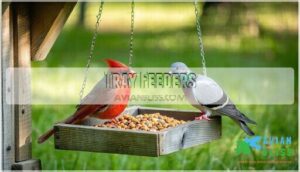
Placing tray feeders at ground level attracts Missouri birds like cardinals and mourning doves who prefer platform feeding.
These simple bird feeders offer easy access but require regular cleaning to prevent disease. Choose feeders with drainage holes and raised edges to minimize seed spillage.
| Feature | Benefit | Maintenance |
|---|---|---|
| Tray Material | Weather resistance | Weekly cleaning |
| Squirrel Baffles | Protects birdseed | Monthly checks |
| Bird Safety | Prevents injuries | Daily inspection |
| Cleaning Frequency | Reduces contamination | After rain/snow |
The key to maintaining these feeders is regular cleaning and inspection, ensuring the health and safety of the birds. By following these guidelines, you can create a welcoming environment for Missouri birds.
Suet Feeders
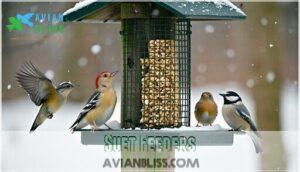
Suet feeders attract woodpeckers, nuthatches, and chickadees to your Missouri backyard with high-energy fat cakes.
Choose cage-style feeders with squirrel baffles, and hang them six feet from tree trunks.
Seasonal suet types work best – use insect-laden varieties in summer, pure fat in winter.
You can make DIY suet using lard, seeds, and peanut butter for cost-effective bird feeding.
Nyjer Feeders
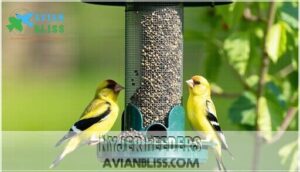
Why do American Goldfinch flock to certain backyard birds feeders while ignoring others? Nyjer seed quality makes all the difference for attracting finches to your Missouri bird feeders.
These specialized tube feeders require strategic placement and regular cleaning. Tube feeders are space efficient and deter squirrels.
- Tiny black seeds spilling from mesh feeding ports
- Bright yellow goldfinches clinging upside-down while eating
- Squirrel deterrents protecting precious nyjer from hungry mammals
- Weekly feeder cleaning preventing moldy seed buildup
- Strategic placement near shrubs for quick escape routes
Missouri Bird Identification
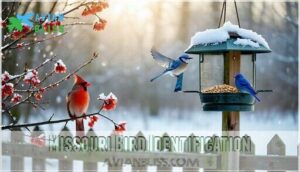
You’ll spot different birds throughout the year in Missouri, with some staying all seasons while others visit only during specific times.
Learning to identify year-round residents like cardinals and blue jays, seasonal visitors such as indigo buntings, and understanding migration patterns will help you recognize the 30+ species that call Missouri backyards home.
Year Round Residents
Spotting Missouri’s year-round residents means knowing which backyard birds stick around through every season.
Northern Cardinals, Blue Jays, and American Robins adapt to winter survival strategies while maintaining stable populations. These common birds showcase Missouri bird diversity despite resident bird decline concerns.
Male cardinals sport bright red plumage. Urban bird adaptations help species like Mourning Doves and Red-bellied Woodpeckers thrive in changing environments year-round, which is a key aspect of winter survival strategies and overall bird diversity.
Seasonal Visitors
During migration seasons, your Missouri backyard becomes a bustling highway for traveling bird species.
These seasonal visitors arrive and depart based on weather patterns and food availability, creating exciting birdwatching opportunities throughout the year.
Bird feeders in particular can benefit from quality seed options.
Here are four key seasonal visitor categories:
- Spring Arrivals – Indigo Buntings and Barn Swallows return for breeding season
- Summer Breeders – Eastern Kingbirds and Common Yellowthroats nest locally
- Fall Departures – Warblers and flycatchers head south before winter
- Winter Migrants – Dark-eyed Juncos and White-throated Sparrows seek shelter
Migration Patterns
Missouri birds follow predictable patterns throughout the year.
Spring migration brings warblers and thrushes from March through June, while fall migration sends waterfowl south from August to November.
You’ll witness these seasonal movements as birds travel between breeding range and wintering grounds, triggered by changing daylight and temperatures.
| Migration Season | Peak Months | Common Species | Best Viewing Times |
|---|---|---|---|
| Spring Migration | April-May | Warblers, Vireos | Early morning hours |
| Fall Migration | September-October | Waterfowl, Songbirds | Dawn and dusk |
| Winter Residents | December-February | Juncos, Sparrows | All day |
| Summer Breeders | May-August | Indigo Buntings, Swallows | Throughout day |
The table outlines the migration patterns and best viewing times for different species, including waterfowl and songbirds.
By understanding these seasonal movements, you can better plan your birdwatching activities to spot your favorite species, such as the Indigo Buntings.
Backyard Birding Tips
Creating a bird-friendly backyard takes simple steps that make a big difference for Missouri’s feathered visitors.
You’ll attract more species by providing the three basics birds need: shelter, food, and water sources throughout the year.
Providing Shelter
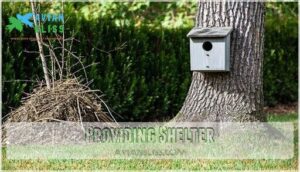
Birds need safe places to rest, roost, and raise their families. Creating proper shelter attracts more backyard birds to your Missouri yard and keeps them coming back season after season.
Here are five ways to provide shelter for Missouri birds:
- Install birdhouses with proper entrance hole sizes – 1.25 inches for chickadees, 1.5 inches for bluebirds
- Add roosting boxes for winter warmth and protection from harsh weather
- Plant native shrubs like elderberry and dogwood for natural shelters and nesting spots
- Place birdhouse placement 5-6 feet high, facing away from prevailing winds
- Provide nesting materials like twigs, dried grass, and cotton in mesh bags during spring
Predator protection matters too. Position shelters away from areas where cats can easily reach, and add baffles to poles supporting your bird habitat structures.
Offering Food
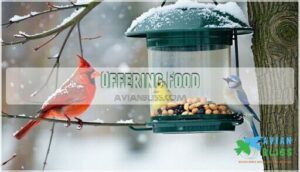
Despite the cold months ahead, consistent bird feeding creates a reliable food source that keeps Missouri’s backyard birds coming back.
You’ll want to offer different seed types to attract various species. Cardinals love sunflower seeds, while goldfinches prefer nyjer.
Clean your feeders monthly to prevent disease spread and guarantee food safety. To further prevent collisions, consider applying UV-reflective decals to your windows.
| Bird Species | Preferred Food |
|---|---|
| Northern Cardinal | Sunflower seeds, safflower seeds |
| American Goldfinch | Nyjer seeds, thistle |
| Blue Jay | Peanuts, cracked corn |
The variety of birds visiting your yard can be increased by offering the right types of seeds, and by taking steps to ensure their safety and well-being, you can create a welcoming environment for them.
Creating Bird Friendly Yard

Creating a bird-friendly yard goes beyond just hanging feeders.
Think of your space as a bird sanctuary where safety comes first. Natural landscaping with native plants for birds provides food and shelter while avoiding pesticides protects our feathered friends.
Here are three essential safety measures:
- Prevent window collisions with decals or screens
- Ensure pet safety by keeping cats indoors
- Provide natural nesting materials like twigs and dried grass
Missouri Bird Species
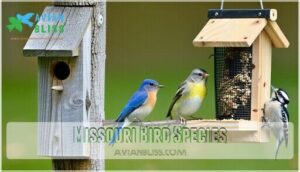
You’ll find over 30 different bird species in Missouri backyards, with some staying year-round while others visit only during specific seasons.
These four featured species—Eastern Bluebird, American Goldfinch, Downy Woodpecker, and Tufted Titmouse—represent some of the most recognizable and frequently spotted birds you can attract to your yard with the right food and habitat.
They are birds that can be seen in backyards, with the right food being a key factor.
Eastern Bluebird
The Eastern Bluebird’s brilliant blue wings make it a backyard treasure in Missouri.
These birds prefer open spaces with scattered trees for nesting habits.
You’ll spot males with vibrant blue upperparts and rusty-orange breasts year-round in southern Missouri.
Conservation efforts have helped their populations recover through proper bird houses and habitat protection.
| Characteristic | Details |
|---|---|
| Diet Preferences | Insects, berries, small fruits |
| Bluebird Habitats | Open woodlands, farms, orchards |
| Bluebird Identification | Blue above, orange breast, white belly |
| Nesting Requirements | Cavity nester, accepts nest boxes |
American Goldfinch
You’ll spot American Goldfinch year-round in Missouri backyards, though their molting plumage changes dramatically.
Males flash bright yellow feathers during spring breeding season, while females stay duller olive-brown.
Their goldfinch song sounds like "po-ta-to-chip" in flight.
Attracting goldfinches requires nyjer seed feeders since their goldfinch diet focuses on small seeds.
Watch for their undulating flight pattern during bird identification sessions.
Downy Woodpecker
You’ll spot Missouri’s smallest woodpecker year-round at your feeders.
The Downy Woodpecker sports black-and-white stripes with males showing a red patch on their heads.
These acrobatic birds love suet and sunflower seeds.
Here are five key Downy Woodpecker identification tips:
- Size comparison – About sparrow-sized, much smaller than other woodpeckers
- Bill shape – Short, straight bill perfect for insects and seeds
- Wing pattern – White back with black barred wings creates distinctive look
- Feeding behavior – Hangs upside-down on branches and visits feeders regularly
- Sound identification – Sharp "pik" call and soft drumming on wood
Tufted Titmouse
You’ll recognize the Tufted Titmouse by its distinctive gray mohawk and curious nature.
This backyard bird’s favorite visits Missouri bird feeders year-round, preferring sunflower seeds and suet.
Titmouse Behavior includes hanging upside-down while foraging, and their Titmouse Sounds feature a clear "peter-peter-peter" call.
Titmouse Habitat spans woodlands and suburbs, while Titmouse Nesting occurs in tree cavities.
Titmouse Diet includes insects, seeds, and berries throughout seasons.
Regional Birding Missouri
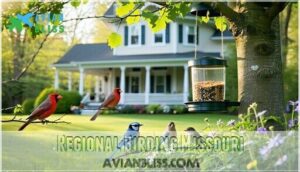
Missouri’s diverse regions offer unique birding opportunities, with different species appearing more frequently in Kansas City, St. Louis, and Springfield areas.
You’ll find that urban parks, suburban neighborhoods, and rural edges create distinct habitats that attract specific bird communities throughout the state, which is a result of the diverse regions.
Kansas City Birds
Kansas City’s urban landscape hosts over 475 documented bird species, making it a birding hotspot.
You’ll spot Northern Cardinals, Blue Jays, and American Robins year-round in your backyard.
KC Habitats support diverse local birds during spring and fall migration periods.
Urban birding here reveals species diversity that conservation efforts help protect. Common Missouri birds thrive alongside local birds in residential areas.
St Louis Birds
You’ll discover amazing St Louis birds in diverse City Habitats throughout the metro area.
Forest Park attracts common birds like Northern Cardinals and Blue Jays, while River Birds including herons frequent the Mississippi.
Urban Migration brings seasonal warblers and tanagers to your backyard.
Local Conservation efforts help protect Missouri bird species, making St Louis bird identification rewarding for backyard birders year-round with a focus on complete concepts.
Springfield Birds
Springfield’s backyard birds mirror statewide trends, with Northern Cardinals and Blue Jays leading the pack.
You’ll find excellent Missouri bird identification opportunities in Springfield habitats like Wilson’s Creek and Busiek State Forest.
Local conservation efforts support Missouri bird species diversity, and bird photography enthusiasts capture stunning Missouri bird feeding scenes year-round.
Springfield birds benefit from the city’s commitment to preserving natural corridors and maintaining bird-friendly spaces.
Regional Birding Hotspots
Missouri’s birdwatching hotspots offer incredible diversity for enthusiasts.
The Great Missouri Birding Trail connects State Parks, Wildlife Refuges, and Conservation Areas like Loess Bluffs National Wildlife Refuge and Eagle Bluffs Conservation Area.
These Missouri birding locations host over 300 species.
Local Sanctuaries and Birding Trails provide easy access to birdwatching in Missouri’s rich ecosystems.
Frequently Asked Questions (FAQs)
What are the most common backyard birds in Missouri?
You’ll spot Northern Cardinals, Blue Jays, and American Robins most often in your yard.
Mourning Doves, Tufted Titmice, and Carolina Chickadees also visit regularly, making these six species your most reliable feathered neighbors, and together they form a group of six species.
Are there birds in Missouri all year-round?
Feathered friends flourish year-round in your Missouri backyard.
You’ll spot Northern Cardinals, Blue Jays, and Chickadees through all seasons.
These hardy residents don’t migrate, giving you consistent bird-watching opportunities every month, with year-round viewing possible.
What birds eat in Missouri?
Birds in Missouri eat seeds, insects, berries, and nectar.
You’ll see cardinals cracking sunflower seeds, woodpeckers hunting bugs, robins grabbing worms, and goldfinches enjoying thistle.
Different species have specialized diets matching their beaks.
Is Missouri a good state for birdwatching?
You’ll find excellent birdwatching opportunities here with over 400 species recorded statewide.
Year-round residents like cardinals and blue jays, plus seasonal migrants, create diverse viewing experiences across forests, wetlands, and grasslands throughout all seasons.
What birds live in Springfield Missouri?
You’ll see Northern Cardinals, Blue Jays, and American Robins year-round in Springfield.
Mourning Doves, Tufted Titmice, and Red-bellied Woodpeckers also call this area home permanently, making birdwatching rewarding throughout all seasons.
This area is home to a variety of birds, with some species being present year-round.
What type of bird feeder to get in Missouri?
You’ll absolutely need a tube feeder with multiple perches for cardinals and finches, plus a suet feeder for woodpeckers. These two feeders will attract Missouri’s most common backyard birds year-round.
How do I identify a bird in my backyard?
Start by noting size, shape, and colors. Check the beak type, tail length, and wing patterns.
Listen to calls and songs. Observe feeding behavior and flight style.
Use a field guide or birding app for confirmation.
What is the most common Missouri bird?
The Northern Cardinal takes the crown as Missouri’s most common bird.
You’ll spot these bright red males and brown females with their distinctive crests in 70% of summer checklists and 62% of winter ones, which makes them a common sight.
How do I find out what birds are in my area?
You’ll discover local birds by downloading eBird or Merlin apps.
Visiting nearby parks with binoculars, checking local Audubon chapters’ websites, or asking neighbors about common species they’ve spotted in your specific neighborhood.
What are those tiny brown birds called?
Those tiny brown birds you’re spotting are likely House Sparrows, Carolina Wrens, or various sparrow species like Song Sparrows.
They’re common backyard visitors with streaked brown plumage that helps them blend into their surroundings perfectly.
Conclusion
Missouri hosts over 400 bird species throughout the year, making your backyard a potential hotspot for diverse wildlife.
You’ve learned how to identify common residents and attract seasonal visitors with proper feeders, water sources, and native plants.
The backyard birds of Missouri will reward your efforts with year-round entertainment and natural pest control.
Start with sunflower seeds and suet feeders, then watch as cardinals, blue jays, and woodpeckers transform your outdoor space into a thriving bird sanctuary.
- https://mdc.mo.gov/sites/default/files/2022-06/W00002Enjoying%20Missouri%20Birds.pdf
- https://www.birdlist.org/checklists_of_the_birds_of_the_united_states/birds_of_missouri.htm
- https://www.eaglehill.us/urban-habitats/Vol%206/Urban%20Habitats%20%20Baltimore%20Birdscape%20Study%20%20Identifying%20Habitat%20and%20Land-Cover%20Variables%20for%20an%20Urban%20Bird-Monitoring%20Project.html
- https://ace-eco.org/vol18/iss2/art9/
- https://www.researchgate.net/publication/369126557_Long-term_trends_in_grassland_bird_relative_abundance_on_focal_grassland_landscapes_in_Missouri