This site is supported by our readers. We may earn a commission, at no cost to you, if you purchase through links.
That sparrow splashing cheerfully in your backyard bird bath might be doing more than just cooling off—it could be spreading Salmonella to every other visitor if the water hasn’t been cleaned recently. Contaminated bird baths act as disease hotspots where pathogens persist for weeks, passing infections from one bird to the next through shared water.
The importance of bird bath hygiene extends beyond aesthetics; it’s a critical factor in protecting the health of your local bird population. Dirty water harbors harmful bacteria, promotes algae growth, and creates breeding grounds for mosquitoes that threaten both avian and human health.
Regular cleaning and proper maintenance transform your bird bath from a potential hazard into a safe haven where birds can bathe, preen, and hydrate without risk.
Table Of Contents
- Key Takeaways
- Why Bird Bath Hygiene Matters
- Common Risks of Dirty Bird Baths
- How Often to Clean Bird Baths
- Best Practices for Cleaning Bird Baths
- Maintaining Water Quality in Bird Baths
- Tips to Prevent Algae and Mosquitoes
- Encouraging Healthy Bathing Habits in Birds
- Frequently Asked Questions (FAQs)
- Conclusion
Key Takeaways
- Contaminated bird baths become disease hotspots where pathogens like Salmonella can persist for weeks, spreading infections among birds and posing zoonotic risks to humans—with 42% of wild bird salmonellosis cases requiring hospitalization.
- You should clean your bird bath at least weekly under normal conditions, but increase to daily water changes during warm weather when algae growth accelerates and mosquito breeding cycles complete in just 7-10 days.
- Moving water features like fountains or drippers prevent mosquitoes from laying eggs while attracting more bird species, and biological larvicides containing Bti eliminate over 90% of mosquito larvae without harming birds.
- Proper bird bath hygiene supports essential bird health functions including feather maintenance, parasite removal, and temperature regulation, while clean water sources become critical lifelines during drought conditions and in urban environments.
Why Bird Bath Hygiene Matters
A bird bath might seem like a simple backyard feature, but keeping it clean makes all the difference in protecting the birds that visit your yard. Without regular maintenance, standing water becomes a breeding ground for diseases and parasites that can sicken or even kill wild birds.
Let’s look at three key reasons why bird bath hygiene matters for the health of your local avian neighbors.
Impact on Bird Health and Well-being
When you maintain proper bird bath hygiene, you’re supporting essential physiological processes that keep birds thriving. Clean water quality directly impacts several health aspects:
- Feather maintenance: Bathing hydrates feathers, enabling effective preening that removes dirt and maintains waterproofing vital for flight and insulation
- Skin hydration: Regular access to clean water prevents skin irritation and feather damage
- Parasite reduction: Wet feathers assist with removal of feather lice and ectoparasites during preening, improving overall avian hygiene and preening effectiveness.
Birds also use baths for efficient temperature regulation.
Prevention of Disease Transmission
Your bird bath can quietly become a disease hotspot when hygiene lapses. Contaminated water allows pathogens like Salmonella to persist for weeks, raising zoonotic disease risks—wild bird salmonellosis has hospitalized 42% of infected people across multiple states. Biofilm and algae harbor bacteria, while stagnant water breeds mosquitoes that spread West Nile virus.
A neglected bird bath becomes a disease hotspot where contaminated water harbors Salmonella for weeks, threatening both birds and humans
Management practices matter: weekly cleaning with diluted bleach solution greatly reduces pathogen transmission, protecting both birds and your family. To maintain a healthy environment, it’s important to follow birdbath cleaning tips.
Supporting Local Bird Populations
Beyond shielding birds from pathogens, clean water sources become lifelines in developed and drought-stressed landscapes. Urban water sources like your backyard bath can boost local habitat quality, attracting species that bypass seed feeders and enriching garden biodiversity. During climate stress relief periods, supplemental water concentrates avian populations, supporting ecosystem health. Citizen science monitoring at these sites reveals which groups thrive or decline, guiding practical disease prevention steps that strengthen water quality and safeguard local avian populations year-round.
- Clean baths attract non-feeder species, increasing backyard bird richness
- Ground-level and elevated baths together serve diverse wildlife communities
- Drought periods concentrate birds at reliable supplemental water sites
- Citizen observers track population trends through bird bath monitoring
- Weekly hygiene protects vulnerable local species from pathogen exposure
Common Risks of Dirty Bird Baths
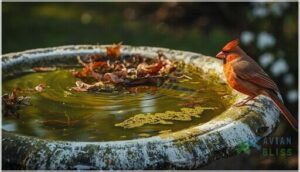
A dirty bird bath isn’t just unsightly—it becomes a breeding ground for serious health hazards that can harm the very birds you’re trying to help.
Stagnant water and accumulated debris create conditions where diseases flourish, pests multiply, and harmful organisms thrive.
Understanding these risks helps you recognize why regular cleaning isn’t optional, it’s essential for protecting your feathered visitors.
Spread of Avian Diseases
When multiple birds share contaminated water, diseases like salmonellosis and house finch eye disease spread rapidly. Pathogens survive longer in stagnant, dirty baths—think of them as breeding grounds for trouble.
Environmental factors like temperature and organic debris affect pathogen survival rates, making bird bath hygiene critical for disease prevention. Your cleaning routine directly impacts disease transmission risks and behavioral patterns around your bath.
Attraction of Mosquitoes and Pests
Stagnant water transforms your bird bath into a mosquito breeding hotspot, with females requiring less than an inch of standing water to lay eggs that can hatch within days. You’re also inviting unwanted guests like raccoons and squirrels, which contaminate water with droppings.
- Water agitation through fountains or drippers prevents mosquitoes from depositing eggs
- Larvicide usage with Bti safely targets mosquito larvae without harming birds or natural predators
- Habitat removal around your bath reduces pest attraction and improves bird bath hygiene
Algae and Harmful Bacteria Growth
When warm sunlight hits stagnant water, algae identification becomes critical—you’ll notice that slimy green biofilm formation within just 3 to 7 days. This bacterial proliferation creates dangerous conditions, as pathogens like Salmonella thrive in these environments.
Regular water testing and cleaning agents help maintain water quality, preventing disease spread. Without proper bird bath hygiene, toxin exposure weakens birds’ immune systems, sometimes fatally.
How Often to Clean Bird Baths
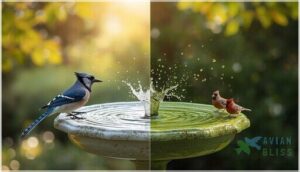
Knowing when to clean your bird bath isn’t guesswork—it’s about establishing a routine that keeps the water safe and inviting for your feathered visitors. The frequency depends on several factors, including weather conditions, how many birds use the bath, and the time of year.
Here’s what you need to know about timing your cleaning schedule, adjusting for seasonal changes, and recognizing when your bird bath needs immediate attention.
Recommended Cleaning Frequency
Your bird bath maintenance routine directly impacts the health of your backyard visitors. To keep birds safe and disease-free, follow these essential cleaning frequency factors:
- Scrub thoroughly once per week under normal conditions to prevent mold and algae buildup
- Replace water daily or every other day during warm weather when contamination accelerates
- Clean every 2–3 days minimum during high-risk seasons with heavy bird traffic
- Increase to daily cleaning when you notice visible debris, biofilm, or odor
- Disinfect immediately if disease outbreaks occur in local bird populations
Consistent bird bath hygiene protects the species you’re working to support.
Seasonal Adjustments for Cleaning
You’ll need to adjust your cleaning schedule as the seasons shift, because warm weather accelerates algae growth and mosquito control becomes critical in summer. Increase to daily water changes during peak heat, when stagnant conditions promote disease transmission faster.
In winter, Winterizing Baths may involve draining frozen water or scrubbing heated baths regularly. Regional Variations—like arid climates versus humid zones—also influence your seasonal bird care approach and bird bath maintenance priorities.
Signs Your Bird Bath Needs Cleaning
When your eyes catch a green tinge or cloudy film floating on the surface, you’re looking at a textbook sign that disease prevention starts with action. Water discoloration, algae presence, debris buildup, insect activity, and changes in bird behavior all signal urgent cleaning needs—and clean bird baths demand attention before pathogens multiply.
- Cloudy or murky water develops within 2–3 days in warm weather, carrying elevated bacterial loads
- Visible green or brown algae coating basin walls indicates stagnant conditions and nutrient accumulation
- Bird droppings, feathers, or leaf debris floating in the water increases organic contamination rapidly
- Mosquito larvae (“wigglers”) swimming near the surface confirm stagnant water persisting several days
- Birds avoiding the bath or hesitating to enter suggest they detect poor water quality you might’ve missed
Cleaning bird baths when you spot these signs protects bird bath hygiene and aids effective algae prevention in your backyard habitat.
Best Practices for Cleaning Bird Baths
Cleaning your bird bath properly isn’t complicated, but the details matter for keeping your feathered visitors safe. The right approach balances effectiveness with safety, using cleaning agents that won’t harm birds while removing harmful contaminants.
Let’s walk through the essential steps to keep your bird bath clean and welcoming.
Safe Cleaning Agents to Use
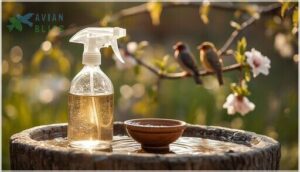
What cleaning solutions won’t harm your feathered visitors? You’ll want to reach for plain white vinegar diluted 1:9 with water—it’s gentle yet effective against algae and biofilm. For tougher jobs, a 10% bleach solution works when disease risk spikes, though it requires extensive rinsing. Hydrogen peroxide mixed 1:1 with water offers a middle ground. Skip harsh detergents that strip protective feather oils, and always rinse thoroughly afterward.
| Cleaning Agent | Best Use | Key Safety Note |
|---|---|---|
| White Vinegar (1:9) | Routine cleaning, algae removal | Rinse until no odor remains |
| Bleach Solution (10%) | Disease outbreak disinfection | Multiple rinses, air dry completely |
| Hydrogen Peroxide (1:1) | Occasional deep cleaning | Breaks down into water and oxygen |
Proper Scrubbing Techniques
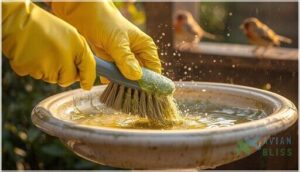
Once you’ve chosen your cleaning solutions, your scrubbing technique determines how well you protect bird health. Here’s your approach:
- Match stiff-bristled brushes to rough concrete surfaces, soft sponges to delicate ceramic
- Use circular motions to dislodge biofilm—they’re 95% effective
- Apply moderate pressure; excessive force damages surfaces
- Scrub each section for just a few minutes
- Target visible algae with vinegar-assisted brushing
Rinsing and Drying Procedures
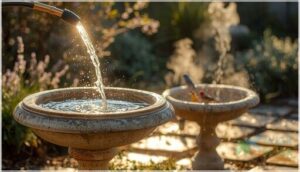
After scrubbing, your rinsing technique directly impacts water quality and pathogen limitation. Rinse for 30 to 60 seconds using 10 to 20 liters of water to flush residual chemical removal completely—no suds or odor should remain.
Then allow the basin to air-dry in sunlight where good circulation exists; drying environmental conditions interrupt mosquito breeding and reduce surface microbes. Scheduling cleaning around weather ensures thorough drying before refilling with fresh water.
Maintaining Water Quality in Bird Baths
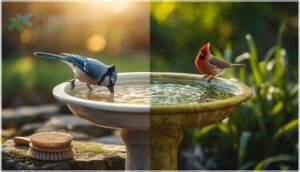
Keeping the water in your bird bath fresh and appealing requires more than just an occasional scrub. Stagnant water quickly becomes a breeding ground for bacteria and mosquitoes, putting visiting birds at risk.
Let’s look at three practical strategies you can use to maintain high water quality throughout the season.
Regular Water Changes
You’ll want to replace your bird bath water at least every 2–3 days, increasing to daily changes during hot summer months. This frequency prevents mosquito larvae from completing their 7–10 day development cycle and limits buildup of fecal matter, feathers, and organic debris that fuel algae growth and bacterial contamination.
Seasonal water changes directly protect water quality and support effective mosquito control around your yard.
Preventing Water Stagnation
Keeping water moving stops mosquitoes from laying eggs—they need a calm surface, and even gentle ripples disrupt their breeding cycle. Consider shaded placement to slow algae growth, and choose shallow, smooth-surfaced containers that drain completely.
Organic matter like leaves or droppings accelerates stagnation, so regularly remove debris before it settles. Residual water in basin crevices can harbor larvae between refills, so complete emptying matters as much as fresh water.
Using Fountains and Drippers
When water flows continuously, you cut mosquito breeding by disrupting their seven- to ten-day larval cycle while also slowing bacterial and algae growth rates. Moving water attracts more species through sound and visual cues, making your bath a reliable hydration station.
- Circulation benefits: Pumps and drippers keep water fresh and prevent stagnation
- Bird attraction: Trickling sounds draw diverse songbirds seeking shallow, moving water
- Algae control: Constant flow reduces nutrient buildup that fuels green films
- Maintenance practices: Change water every one to three days and rinse filters regularly to protect equipment
Tips to Prevent Algae and Mosquitoes
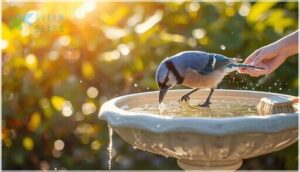
Algae and mosquitoes thrive in bird baths that aren’t maintained properly, turning what should be a safe refuge into a health risk for your backyard visitors.
The good news is that preventing these problems doesn’t require complicated solutions or expensive products. Here are the straightforward strategies you can use to keep your bird bath clean and inviting.
Placement and Sun Exposure
Where you place your bird bath can be just as critical as how often you clean it. Partial shade keeps water temperatures several degrees cooler, slowing algae growth and reducing thermal stress for bathing birds. However, avoid heavy shade entirely—mosquito larvae thrive in darker, stagnant conditions with less UV exposure.
Position your bath about two to three meters from shrubs, balancing predator risk with quick cover access while maintaining good water quality for birds.
Natural Deterrents for Pests
Although ultrasonic devices claim to repel pests, research shows they provide less than 20% effectiveness—hardly worth your investment.
Instead, use biological larvicides containing Bti, which eliminate over 90% of mosquito larvae within 24 hours without harming birds. For algae control, cleaned copper pennies disrupt algal cell membranes naturally.
Plant-based options like garlic solutions can achieve 85–100% larval mortality, offering safer insect control than harsh cleaning agents.
Cleaning Accessories and Tools
You’ll need the right cleaning supplies to keep your bird bath spotless. Non-scratch scrubbing pads paired with vinegar solutions effectively remove biofilm without harming surfaces, while eco-friendly tools reflect market trends favoring reusable microfiber cloths.
Avoid chemical disinfectants like bleach that corrode basins and endanger birds.
Choose bird bath cleaning methods that prioritize safety—gentle cleaning agents with thorough rinsing help clean bird baths support healthy avian visitors year-round.
Encouraging Healthy Bathing Habits in Birds
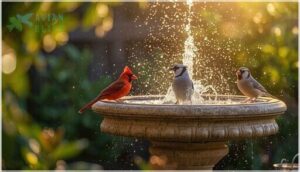
Once you’ve established a consistent cleaning routine, the next step is helping birds feel comfortable and safe using your bath. A well-maintained bird bath naturally encourages healthy bathing behavior, but there are additional ways you can support the birds in your yard.
Let’s look at three practical strategies that promote regular, safe bathing habits while protecting the health of your local avian visitors.
Providing Clean Bathing Environments
You can encourage consistent bathing by maintaining shallow basins with gentle slopes—ideally 5–10 cm deep—that allow safe, effective cleaning. Adding drippers or small pumps improves water quality for birds while attracting more species.
Position your clean bird baths 2–3 meters from protective cover to balance safety with accessibility.
Multi-bath setups reduce crowding and contamination, supporting better bird health and hygiene across your bathing space location.
Attracting Diverse Bird Species Safely
Want to increase the variety of feathered visitors while keeping them safe? You’ll attract diverse bird species by combining smart design with thoughtful avian hygiene practices.
- Vary water depth from 1–3 inches to welcome finches through robins
- Add moving water features that maintain water quality for birds while preventing mosquito breeding
- Position baths near shrubs at proper stand height for predator protection
- Integrate natural cover to support safe bird hygiene across species
Monitoring Bird Health Around Baths
Beyond providing clean water, you’ll need to watch for visual health signs in visiting birds. Weak, drowsy songbirds with eye discharge or fluffed feathers may signal salmonellosis outbreaks.
Report clusters of sick birds to local wildlife agencies—citizen science data has proven valuable for early disease outbreak response, helping protect both avian hygiene and broader environmental risk context in your community.
Frequently Asked Questions (FAQs)
What materials are safest for bird bath construction?
Glazed ceramic and sealed concrete bird baths offer smooth, nonporous surfaces that resist biofilm and algae better than rough materials.
Avoid galvanized metals—zinc toxicity remains a real threat.
Copper provides natural antimicrobial benefits for your water source.
Can I use treated tap water for birds?
Yes, you can use tap water for birds—most municipal supplies contain chlorine levels well within safe limits. Let water sit briefly to dissipate chlorine, ensuring better water quality maintenance and supporting avian hygiene practices through clean bird feeders and proper bird bathing routines.
How deep should a bird bath be?
Your bird bath should be about 1 to 2 inches deep for best depth, accommodating most songbirds safely.
Larger birds may use zones up to 3 to 4 inches, while smaller species need shallower water to prevent drowning.
Do bird baths need maintenance during winter?
Heated bird bath devices require just as much attention in cold months as summer. Winter cleaning frequency should match warm-weather routines, preventing algae growth and freezing damage while maintaining birdbaths safely for winter bird hydration needs.
Should I add anything to bird bath water?
Most wildlife experts recommend plain water only. Don’t add chlorine, soaps, or copper—they can harm birds.
Use Bti mosquito dunks safely if needed, but vinegar and bleach are strictly for cleaning, followed by thorough rinsing.
Conclusion
Picture a thriving backyard sanctuary where birds arrive, bathe confidently, and leave healthier than they came—that’s what proper maintenance creates. The importance of bird bath hygiene can’t be overstated: it prevents disease outbreaks, protects vulnerable populations, and ensures your offering remains beneficial rather than harmful.
By committing to regular cleaning, fresh water changes, and vigilant monitoring, you’re not just maintaining a decorative feature—you’re actively safeguarding the well-being of every feathered visitor who trusts your care.
- https://academic.oup.com/jue/article/2/1/juw005/2624138
- https://pmc.ncbi.nlm.nih.gov/articles/PMC5063893/
- https://www.allaboutbirds.org/news/avian-influenza-outbreak-should-you-take-down-your-bird-feeders/
- https://georgiawildlife.com/dnr-clean-feeders-save-birds
- https://www.iowadnr.gov/news-release/2025-04-22/plan-regular-cleanings-bird-feeders-waterers-and-baths