This site is supported by our readers. We may earn a commission, at no cost to you, if you purchase through links.
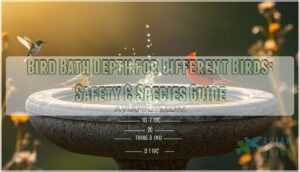
A shallow puddle might seem harmless, but for a chickadee or warbler, three inches of water can become a death trap. Backyard birders often overlook this reality when choosing ornamental basins, prioritizing aesthetics over the precise measurements that keep small songbirds safe.
The difference between one inch and three inches isn’t just preference—it determines whether finches will wade confidently or avoid your bath entirely. Each species has evolved specific bathing behaviors tied to body size and wing structure, meaning a cardinal’s comfort zone won’t work for a hummingbird.
Understanding bird bath depth for different birds transforms your setup from decorative fixture to genuine wildlife resource, drawing diverse species while preventing the accidents that plague poorly designed basins.
Table Of Contents
Key Takeaways
- Water depth between 1-2 inches keeps small songbirds like finches and chickadees safe from drowning, while depths exceeding 3 inches create hazards for fledglings and exclude smaller species entirely from using your bath.
- Gradual slopes with textured surfaces give different-sized birds their own comfort zones—shallow edges at 0.5-1 inch for cautious entry, sloping to 2-2.5 inches at center for medium birds like robins, and up to 3 inches for larger species like jays.
- Regular cleaning every 2-3 days in warm weather prevents disease transmission and mosquito breeding, which surveys show over half of birdbath owners neglect despite its critical importance to avian health.
- Strategic placement 10-15 feet from protective shrubs with partial shade, combined with features like pebbles for grip and moving water, transforms a basic basin into a wildlife hub that attracts diverse species from hummingbirds to doves.
Why Bird Bath Depth Matters for Birds
When you fill a bird bath, the water depth isn’t just a minor detail—it directly determines which birds can use it safely and comfortably. Too deep, and smaller species face real drowning risks; too shallow, and larger birds might skip it altogether.
Understanding why depth matters helps you create a bathing station that welcomes a diverse array of feathered visitors while keeping them safe.
Importance of Depth for Bird Safety
Water depth stands as the single most critical factor in preventing drowning among backyard visitors. Most songbirds safely navigate baths of 1–2 inches, but depths exceeding 2–3 inches pose serious risks, especially for fledglings and weakened individuals.
Water depth between 1–2 inches prevents drowning in songbirds, while depths beyond 3 inches endanger fledglings and weakened visitors
Proper bath design with visible, gradual slopes protects avian health while supporting species conservation efforts in your own garden.
How Depth Affects Bird Comfort
Beyond survival, depth shapes how confidently birds use your bath. Small songbirds linger longer in shallow water—around 1 to 2 inches—where they maintain stable footing while fluttering wings and dipping heads. These Bird Comfort Zones support essential Feather Maintenance and cooling.
Deeper basins restrict Bathing Behaviors to cautious sipping, as birds avoid immersion they can’t control, revealing clear Species Preferences tied directly to water depth and security.
Role of Bath Depth in Attracting Species
Bath Design directly influences Bird Species Attraction. Shallow Water—around 1 to 2 inches—draws finches, chickadees, and warblers, while slightly deeper zones near 2 inches accommodate robins and cardinals.
This Water Depth range maximizes Species Diversity without compromising Bird Safety. Baths deeper than 3 inches exclude smaller visitors entirely, narrowing your backyard’s avian community to just a handful of confident, larger bird species.
Ideal Bird Bath Depths by Species Size
Not all birds approach water the same way, and their size dictates how deep they can safely wade. Small songbirds need shallow edges to avoid the risk of drowning, while larger species can handle more depth without issue.
Understanding these preferences helps you create a bird bath that welcomes everyone from tiny finches to sturdy doves.
Depth Guidelines for Small Songbirds
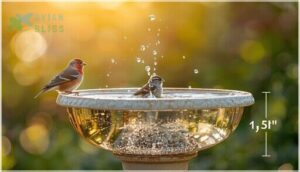
Small songbirds like finches and sparrows thrive when you keep bird bath depth between 1 and 1.5 inches. This shallow water range lets small species bathe safely while maintaining grip and visibility to the bottom—essential for bird safety.
- Edge zones around 0.5 to 1 inch allow cautious entry and easy exit
- Depth gradients sloping to 2 inches maximum accommodate varied comfort levels
- Clear water quality helps birds assess depth before entering
Suitable Depths for Medium-Sized Birds
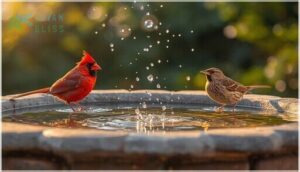
Medium species like robins, thrushes, and cardinals need bird bath depth between 2 and 2.5 inches at the center for safe, effective bathing. This range allows these small birds to fully wet their plumage while keeping secure footing—critical for bird safety.
Design your bath with depth gradients sloping from 1 inch at the rim, so medium-sized birds can choose their comfort zone. Water quality stays visible at these levels, encouraging confident use.
Recommended Depths for Large Birds
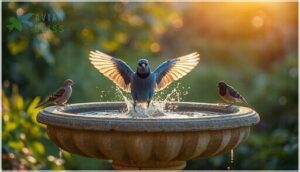
Large birds like jays, grackles, and doves thrive in bird bath depth between 2 and 3 inches at the center—enough to submerge their bodies without risking instability. This depth safety guideline accommodates large bird accommodations while maintaining traction.
Include water depth variations by sloping from 1 inch at the edges, supporting bird species diversity. Textured surfaces improve shallow bath designs, letting all bird species bathe confidently together.
Designing Bird Baths for Multiple Species
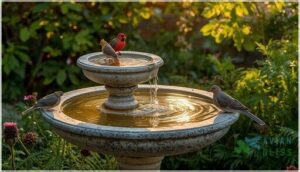
When you’re designing a bird bath that welcomes everyone from tiny finches to larger doves, you’ll need to think beyond a simple basin of water.
The key is building in features that let different species find their comfort zone without putting any bird at risk. Here are three design elements that make your bird bath accessible and safe for a diverse crowd.
Creating Gradual Slopes and Varied Depths
A graded basin works like a gentle shoreline—you want water starting at half an inch near the edges, sloping gradually to about two inches at the center. This bird bath depth range lets small songbirds wade safely while giving larger backyard birds room to immerse and splash.
Gradual slope angles under 20 degrees prevent slipping, and basin shapes with broad, shallow perimeters boost bird accessibility across species.
Incorporating Textured Surfaces for Grip
Smooth bowls turn into slip hazards when wet—that’s why textured surfaces are essential for bird safety. Rough stone, concrete, or even gravel at the base provides the grip enhancement birds need to wade and bathe without losing footing.
Add textured materials directly to the bath bottom, especially in areas where bird bath depth reaches two inches, and you’ll create slip resistance that accommodates diverse bird species safely across your entire bird bath design.
Selecting Safe and Accessible Bath Materials
Material matters when creating bird-friendly designs that last. Choose non-toxic materials like unglazed terracotta, stone, or concrete—they won’t leach chemicals into drinking water and their naturally rough, safe bath surfaces offer better grip than glazed ceramics.
For durable construction, avoid polyresin in harsh climates; it cracks in freezing weather and degrades under UV exposure. Eco-friendly options that tolerate frequent scrubbing keep your bird bath design functional and safe across seasons.
Enhancing Bird Bath Safety and Maintenance

A well-designed bird bath becomes truly effective only when you maintain it properly and prioritize safety for your feathered visitors. The right depth prevents accidents, while consistent upkeep ensures the water remains clean and inviting.
Let’s explore two essential practices that will keep your bird bath both safe and appealing to the species you want to attract.
Preventing Drowning With Proper Depth
Drowning prevention starts with depth safety: keep water levels at 1–2 inches for most bird species. Shallow basins give small birds secure footing, while gradual slopes support bird escape for all sizes. Here’s how to prevent accidents:
- Limit depth to 2 inches maximum at the center of your bird bath
- Add rocks or gravel to create safe perching platforms
- Build gentle slopes like a beach for easy exit
- Use textured surfaces so birds can grip securely
- Place stones at intervals to break up deeper sections
Regular Cleaning and Water Quality Tips
Proper depth only protects birds if your water stays clean. You’ll want to empty and scrub your bird bath every 2–3 days in warm weather—mosquitoes can hatch within 48 hours, and pathogens build up fast in standing water. Use a stiff brush for algae control and debris removal, then rinse thoroughly. For disinfection methods, a 10% bleach solution (1 part bleach to 9 parts water) kills bacteria effectively.
| Season | Cleaning Frequency | Key Tasks |
|---|---|---|
| Summer | Every 2–3 days | Scrub biofilm, check for larvae, refill |
| Spring/Fall | Weekly | Remove leaves, disinfect, inspect edges |
| Winter | Every 7–10 days | Break ice, clean debris, sanitize basin |
Regular water quality checks prevent disease transmission—surveys show over half of birdbath owners skip proper scrubbing, letting contamination accumulate. Always rinse away bleach residue and let your bath air-dry before refilling.
Tips for Attracting Diverse Birds to Your Bath

Getting the depth right is just the beginning—where you place your bird bath and what features you add can make all the difference in attracting a diverse crowd of feathered visitors. Small adjustments to positioning, texture, and surrounding habitat turn an ordinary water source into a hotspot for species you mightn’t see otherwise.
Here are practical ways to boost your bird bath’s appeal across different species.
Positioning Bird Baths for Maximum Use
Beyond depth, placement determines which bird species discover your bath. Position it about 10 to 15 feet from protective shrubs—close enough for predator avoidance yet open enough for water visibility during backyard bird watching.
Partial shade slows algae and keeps water cooler, while stable, level ground ensures even depth around the rim.
Garden integration with clear sightlines attracts diverse species seeking safe hydration.
Adding Features Like Pebbles or Fountains
Pebble placement in your bird bath creates safe perches and shallow zones, especially important when depth exceeds 5 cm. Stone textures improve traction on slippery surfaces, while fountain designs add moving water that attracts warblers and hummingbirds—species you might otherwise miss.
Water circulation from small bubblers also disrupts mosquito breeding, keeping your bath cleaner between maintenance sessions. These simple water features transform standard basins into hubs for diverse backyard birds.
Integrating Bird Baths Into Wildlife-Friendly Gardens
Your bird bath becomes part of a larger ecosystem when paired with native plant selection and thoughtful garden layout. Position it 6 to 10 feet from shrubs—close enough for quick cover but far enough to discourage predators.
Native plants boost insect biomass, providing food for backyard birds before and after bathing. This integrated approach fosters water quality, bird behavior, and ecosystem balance while advancing wildlife conservation.
Frequently Asked Questions (FAQs)
How often should bird bath water be changed?
Sure, let fresh water in daily during summer—unless you enjoy hosting a mosquito convention. Regular cleaning every few days prevents disease and keeps your feathered guests healthy and happy.
What materials work best for bird bath construction?
Material matters when building your DIY bird bath. Ceramic Choices and Concrete Options offer durability, while Metal Alternatives resist rust.
Bird lovers increasingly prefer Sustainable Designs using Recycled Materials that serve diverse bird species safely.
Providing a regular clean water supply is essential for the health and well-being of the birds.
Can bird baths be used during winter months?
When ice locks up natural water sources for more than 120 days per year, bird baths become lifelines. Providing liquid water is essential, and learning about winter bird care can help.
You can maintain them through winter using heated units, daily warm-water refills, or strategic sun placement for backyard birds.
Do bird baths attract unwanted pests or predators?
Yes, bird baths can attract mosquitoes, raccoons, and predators like hawks if poorly maintained. However, daily water changes, strategic placement with clear sightlines, and moving water features minimize pest attraction while preserving wildlife safety and avian habitat.
Should bird baths be placed in sun or shade?
A birdbath in relentless July sun can hit 95°F within hours—too hot for most bird species. Partial shade keeps water cooler, slows evaporation rates, and reduces algae, making your backyard bird watching station safer and more inviting.
Conclusion
What separates a thriving wildlife hub from an ignored ornament? The answer lies in those critical measurements beneath the waterline. When you master bird bath depth for different birds—pairing shallow edges with gradual slopes—you create sanctuaries where hummingbirds and jays alike find safe refuge.
Every inch you calibrate protects vulnerable species while inviting new visitors to your garden. Your basin becomes more than decoration; it becomes a lifeline, precisely engineered for the wings that depend on it.