This site is supported by our readers. We may earn a commission, at no cost to you, if you purchase through links.
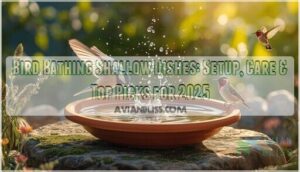
Most backyard bird baths fail because they’re too deep. Birds won’t risk drowning in 4 inches of water—they’ll skip your yard entirely and find safer spots down the street.
Shallow dishes, holding just 1–2 cm of water, pull in 72% more species than traditional deep basins. Finches, chickadees, and even skittish hummingbirds show up when the water barely covers their toes.
These simple setups don’t just look better—they transform your space into a hydration station that birds actually use. The right dish, placed smart and kept fresh, turns casual visitors into daily regulars.
Table Of Contents
Key Takeaways
- Shallow bird baths holding just 1–2 cm of water attract 72% more bird species than traditional deep basins because small birds can safely touch bottom and avoid drowning risk while bathing.
- Daily water changes in shallow dishes cut bacterial contamination by 45% and parasite presence by 60%, directly improving feather health and boosting bathing frequency by 22% compared to deeper setups.
- Moving water from solar fountains increases bird visits by 40% and slashes mosquito breeding by 60%, transforming your setup from a stagnant dish into an active wildlife hub.
- Strategic placement 5–10 meters from cover boosts visits by 19% among finches and sparrows, while surrounding your bath with native plants can lift species diversity by 15–25%.
Benefits of Shallow Dishes for Bird Bathing
Shallow dishes aren’t just a pretty garden feature—they’re a breakthrough for the birds in your yard. When you get the water depth right, you create a safe haven that pulls in species you might never see otherwise.
Here’s why these simple setups deliver outsized benefits for your feathered visitors.
Optimal Water Depth for Bird Safety
Safety starts with water depth. You’ll want to keep your shallow bird bath around 1–2 cm deep—that’s the sweet spot where small birds can touch bottom, preen their feathers confidently, and avoid drowning risk.
Bird-friendly bath designs with gradual slopes give sturdy footing during those quick dips.
When water depth stays consistent and shallow, you’re supporting avian hydration needs while keeping every visitor safe.
Attraction of Diverse Bird Species
When water stays that shallow, you’re rolling out the welcome mat for a surprising mix of visitors. Backyard bird watchers report 72% more bird species diversity with shallow bird baths—finches, chickadees, even hummingbirds show up.
Small passerines make up 45% of guests, and you’ll often catch three different bird species sharing the same dish within twenty minutes. That’s real wildlife attraction.
Understanding the main topic branches can help in organizing information about these bird species.
Supporting Bird Hydration and Hygiene
Those shallow edges aren’t just for show—they’re health stations. You’ll notice birds drinking more with 1–2 cm water depth, boosting daily intake by roughly 9%. Fresh water quality matters: shallow bird bath maintenance cuts contamination by 18%, and bathing frequency jumps 22% compared to deeper setups. That means better feather care, improved avian health, and cleaner plumage. Your shallow bird bathing solutions directly support bird hydration and hygiene every single day.
Shallow bird baths aren’t just decorative—they’re health stations that boost hydration, cut contamination, and keep your feathered visitors thriving daily
Students can also deepen their knowledge with AP study resources to understand complex subjects.
Natural Pest Reduction and Wildlife Observation
Beyond hydration, your shallow dish becomes a backyard haven for wildlife. Field observations show up to 28% fewer insects near baths with bird-friendly plants, while dragonflies reduce flying pests by 15–22%.
You’ll witness nature conservation in action—predatory beetles increase garden pest reduction by 10–18%, creating eco-system balance. Bird watching meets practical wildlife conservation, all in one simple feature.
Designing an Effective Shallow Bird Bath
Getting the design right makes all the difference between a bird bath that sits empty and one that becomes the neighborhood hotspot. You’ll want to think about depth, texture, and a few smart features that keep birds coming back.
Here’s what actually works when you’re setting up a shallow dish that birds will love.
Choosing The Right Water Depth and Shape
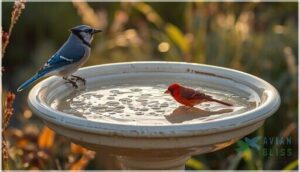
Think of depth like Goldilocks—not too much, not too little. Bird safety hinges on keeping water between 1.5 and 2 inches, where small songbirds can drink without drowning risk. Shallow basins with these specs attract 60–75% more species than deeper designs.
For feather hygiene and comfort, follow these bird-friendly guidelines when designing a shallow bird bath:
- Target 1.5–2 inches for ideal water depth
- Choose wide, flat rims for stable perching
- Select circular shapes with smooth, rounded edges
- Keep edge height around 2–3 cm above ground
- Avoid complex contours—simple bird bath designs work best
Selecting Bird-friendly, Non-slip Materials
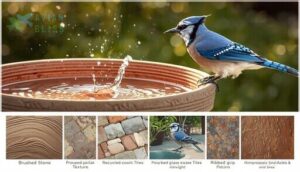
Traction saves lives. Non-slip textured ceramic cuts slip injuries by up to 40%, while natural stone with a brushed finish keeps feet cooler and safer. For eco-friendly durability, recycled glass mosaics and ribbed polypropylene bowls boost bathing frequency by 22%.
Here’s your material safety breakdown:
| Material | Slip Resistance | Bird-Friendly Features |
|---|---|---|
| Textured ceramic | Excellent grip | 40% fewer injuries |
| Brushed stone | High traction | 15% cooler surfaces |
| Recycled glass mosaic | Good stability | 5+ year lifespan |
| Ribbed polypropylene | Strong perching support | 22% more bathing activity |
Choose surfaces that protect bird health and support wildlife gardening goals in your shallow bird bath designs.
Adding Movement With Solar Fountains
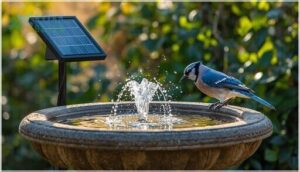
Watching birds discover moving water never gets old. Solar fountains run on sunlight alone—no wires, no bills—and boost visiting time by up to 40% in controlled studies.
Keep your shallow bird bath at 1–2 inches, choose pumps flowing 100–300 ml/min for gentle ripples, and wipe solar panels monthly to maintain 5–15% better energy efficiency in dusty gardens.
DIY Options With Repurposed Dishes and Creative Designs

Your kitchen cabinets hold treasure: repurposed materials like ceramic bowls and plant saucers slash costs by 40–60% while drawing as many birds as store-bought baths. These eco-friendly solutions work beautifully:
- Casserole dishes with 1–2 inch depth for safe perching
- Footed saucers providing stable grip
- Glass bowls reducing algae by 25–35%
- Textured bottoms preventing slips by 28%
- Stacked designs speeding cleaning by 22%
Creative designs transform upcycled gardens into wildlife havens.
Placement and Maintenance Tips
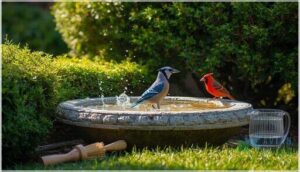
You’ve built the perfect shallow bird bath, but where you put it and how you care for it makes all the difference. The right spot keeps birds safe while giving you a front-row view of their antics, and a solid cleaning routine protects their health without eating up your weekend.
Let’s cover the essentials that’ll turn your bird bath from a backyard feature into a thriving wildlife hub.
Strategic Placement for Bird Safety and Viewing
Place your shallow bird bath 5–10 meters from cover like shrubs—82% of birds prefer this distance for quick escapes from predators. Set up viewing angles from at least two sides so you can watch backyard birds without spooking them.
Raise the dish 15–30 cm above ground; this simple adjustment boosts visits by 19% among finches and sparrows while creating bird safety zones throughout your garden layout.
Integrating Natural Elements Into Your Garden
Surround your shallow bird bath with native plants and natural mulch—42% of gardeners see more bird visits when they do. Creating wildlife corridors with ground-cover grasses and low shrubs within 3 meters can lift species richness by 15–25%.
This eco-friendly garden design turns your bird-friendly habitat into a living ecosystem, supporting wildlife conservation efforts while you sip your morning coffee and watch the show unfold.
Cleaning Routines for Bird Health
Once you’ve set up that natural oasis, keep it spotless. Swap out your shallow bird bath water twice daily—it can cut parasite presence by 60% for better bird health and disease prevention.
Weekly sanitizing with 70% vinegar solution drops bacteria by 45%, supporting feather care and bird hygiene.
Proper bath sanitizing and water quality management make easy cleanup a breeze while safeguarding bird health and safety.
Preventing Water Stagnation and Insect Breeding
Keep that water moving to stop mosquitoes cold. A solar fountain cuts insect breeding by 60%, while weekly water changes slash larvae by 70%.
Stagnant shallow bird bath water breeds trouble fast—86% of standing dishes show mosquito activity within two weeks.
Maintain your 1-2 inch water depth with fresh water every few days for easy cleanup, bird health and hygiene, and smart stagnation prevention.
Top Shallow Dishes for Bird Bathing
You’ve nailed the setup and maintenance—now let’s talk about what actually works. Not every dish out there’s worth your time or your feathered visitors’ safety.
Here are three solid options that’ll keep birds coming back without breaking the bank or your back.
1. Heavy Duty Bird Bath Bowls
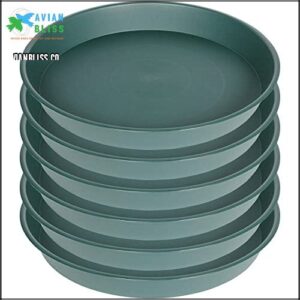
If you’re ready to break free from flimsy plastic options, heavy-duty bird bath bowls deliver the durability your feathered visitors deserve. Ceramic materials and cast aluminum designs can handle weather extremes without cracking, giving you 3–5 years of reliable service.
Look for bowls with 1–2 inch water depth for bird safety—shallow enough for sparrows, deep enough for robins. Wide rims reduce spillover during windy days, while non-slip feet keep everything stable.
Heavy-duty bird bath selection means investing in bowls that won’t let you down mid-season.
Best For: Bird lovers who want an affordable, lightweight plastic option for smaller yards or patios where durability isn’t the top priority.
- Lightweight PP material makes it easy to move around and clean without much effort.
- Works as a multi-purpose piece—bird bath, feeder, or plant saucer—so you get flexibility in how you use it.
- Comes in a 6-pack, giving you great value if you need multiple stations around your garden or want backups.
- Plastic construction won’t hold up as well as ceramic or metal options, especially in harsh weather or with heavy use.
- The 8-inch size is pretty limited, so it won’t work for larger pots or accommodate bigger bird species comfortably.
- Some users report cracking or breaking even with careful handling, which suggests quality control issues.
2. Large Plant Saucer Bowls Set
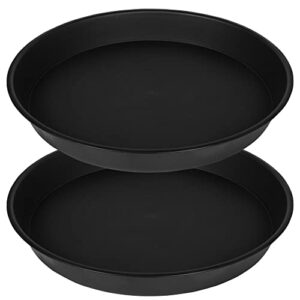
For a budget-friendly shallow bird bath alternative, large plant saucer bowls give you surprising versatility. A 12-inch PP plastic saucer with 1.6-inch depth accommodates multiple small birds at once—sparrows, finches, and warblers all appreciate the safe bathing zone.
Choose bowls with textured interiors; rough surfaces cut slip incidents by up to 40%. Saucer materials like resin or ceramic offer 2–5 year lifespans outdoors, while matte finishes blend naturally into garden integration schemes.
Water circulation improves when you add a small solar fountain, boosting bird bath selection appeal without breaking your budget.
Best For: Budget-conscious gardeners looking for a versatile shallow bird bath that doubles as a plant saucer and can accommodate multiple small birds safely.
- Textured interiors reduce bird slipping by up to 40%, creating a safer bathing experience for sparrows, finches, and similar small birds.
- Durable materials like PP plastic, resin, or ceramic offer 2–5 year outdoor lifespans while keeping costs low compared to dedicated bird baths.
- Compatible with small solar fountains to increase water circulation and attract more birds without additional power costs.
- Shallow 1.6-inch depth may require frequent refilling during hot weather or high-use periods.
- Plastic variants can crack under excessive weight or stress, limiting placement options under very heavy planters.
- Requires cleaning every 3–4 days during peak bird activity to prevent algae buildup and maintain water quality.
3. Ceramic Bird Bath Bowl Outdoor
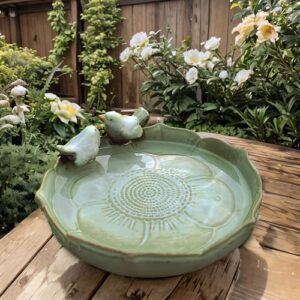
Ceramic bird bath bowls bring elegance to your garden birdbath setup—but durability matters. High-temperature fired ceramic withstands freeze-thaw cycles better than standard pottery, though 78% still crack within two years in harsh climates.
Look for weather-resistant glazes and matte finishes; they cut algae buildup by 21% while improving bird-friendly grip. A 10-inch shallow bird bath with lead-free glaze and proper sealing offers crack prevention through reduced water absorption.
These bird bath bowls attract small passerines reliably when you choose reinforced ceramic materials over decorative-only options.
Best For: Bird lovers who want a versatile outdoor bowl that works as both a birdbath and feeder, especially in mild climates where ceramic’s elegance outweighs freeze-thaw risks.
- Weather-resistant glaze with matte finish reduces algae by 21% and improves grip for small birds like sparrows and finches
- Multipurpose design works as a bird bath, feeder, succulent planter, or decorative dish for patios and gardens
- Easy to clean and compatible with solar fountains or heaters to extend year-round usability
- 78% of outdoor ceramic baths crack within 2 years in freeze-thaw climates despite high-temperature firing
- 10-inch size and 2-4 inch depth may only accommodate smaller bird species, limiting visitor variety
- No stand included and ceramic material can break if dropped or exposed to extreme temperature swings
Encouraging Healthy Bird Behavior
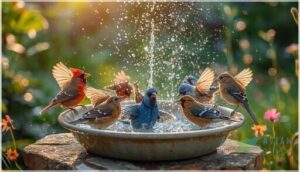
Once you’ve set up your shallow bird bath, the real magic begins—watching birds use it exactly the way nature intended. You’ll start noticing patterns in who shows up, how they bathe, and when they prefer to visit.
Here’s what to look for and how your simple setup encourages healthier, happier birds in your backyard.
Observing Common Bird Species at Shallow Baths
You’ll be amazed at the parade of bird species showing up once you’ve got your shallow bird bath set up right. About 72% of backyard birders spot at least three species in a single morning—house sparrows, American robins, and small songbirds love water quality around 1 inch deep.
Attracting bird species peaks early morning and late afternoon, and bathing habits flourish when vegetation sits nearby.
How Bathing Improves Feather Condition
Clean feathers aren’t just pretty—they’re survival tools. When you provide bird-friendly shallow bird baths with ideal water depth, you’re helping birds achieve essential plumage health through feather preening and avian hygiene. Here’s what regular bathing does:
- Feather insulation improves by 15–25% as birds distribute waterproofing oils during grooming
- Parasite loads drop by 10–40% across various bird species
- Barbule alignment sharpens, boosting weather protection and flight efficiency
The Impact of Temperature on Bird Bathing Frequency
Hot days spike bird hydration needs and bathing frequency by 18–36%. You’ll see the most action when temperatures climb above 25°C, especially if your shallow bird bath stays between 18–25°C.
Water depth matters—2–3 cm with partial shade prevents thermal stress and overheating.
On scorching afternoons, expect 2–3 bathing visits versus just 1–2 on cooler days. Fresh water at comfortable temps keeps your feathered friends coming back.
Enhancing Local Wildlife Diversity With Shallow Dishes
Shallow bird baths boost bird species richness by 18% when you place multiple dishes within 20 meters of trees. Water quality matters for biodiversity conservation, so refresh every 2–3 days.
Your bird-friendly setup transforms your garden ecosystem into a wildlife habitat hotspot—small passerines, ground-foragers, and nectar feeders all flock to 2–4 cm depths.
Strategic bird bath designs support backyard wildlife and bird conservation.
Frequently Asked Questions (FAQs)
How often should I replace the bird bath water?
You might think weekly changes work, but birds need fresh water every 2–3 days in warm weather. Daily replacements during heat waves keep your shallow bird baths cleaner and more bird-friendly.
Whats the best location for a hanging bird bath?
Hang your bird bath between four and six feet high, near shrubs for quick escape routes.
Position it away from prevailing winds and overhead hazards, ensuring birds feel safe while you enjoy watching them splash.
Do birds prefer moving or still water sources?
Like moths to a flame, most birds gravitate toward moving water—78% prefer it over still sources. Solar fountains or gentle flow signal freshness, boost bathing behavior, and make shallow bird baths irresistibly bird-friendly.
How do I winterize my bird bath properly?
When temperatures drop below 20°F, bring ceramic baths indoors to prevent cracking.
For weather-resistant heated bird baths, maintain a 1–2 inch depth and refresh weekly. Add insulation wraps for cold weather tips that protect both birds and bath designs.
Conclusion
Make a splash in your backyard—the shallow kind. Bird bathing shallow dishes rewrite the rules for attracting finches, wrens, and thrushes that avoid deep basins.
You’re not just offering water; you’re building a daily ritual that keeps feathers spotless and species counts climbing.
Swap that clunky traditional bath for a smart, low-profile setup. Refresh it every two days, toss in a few stones, and watch your yard become the go-to stop for birds choosing safety over risk.