This site is supported by our readers. We may earn a commission, at no cost to you, if you purchase through links.
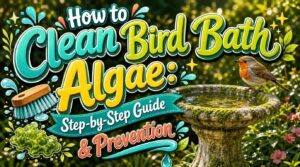
That green slime coating your bird bath isn’t just unsightly—it’s a sign the water has turned into a health hazard for every bird that visits. Algae can colonize a clean basin in as little as 48 hours during summer, especially when warm temperatures, direct sunlight, and bird droppings combine.
The birds drinking from it have no way to know the water harbors E. coli, Salmonella, or mosquito larvae beneath that murky surface.
Cleaning bird bath algae thoroughly—and keeping it from coming back—takes the right technique, the right solution, and a simple routine that fits any schedule.
Table Of Contents
- Key Takeaways
- Why Does Algae Grow in Bird Baths?
- Health Risks of a Dirty Bird Bath
- Step-by-Step Guide to Clean Bird Bath Algae
- Natural and Chemical Cleaning Solutions Compared
- How to Prevent Algae From Returning
- Top 8 Products for Cleaning Bird Bath Algae
- 1. Casabella Premium Waterblock Cleaning Gloves
- 2. Chemical Guys Heavy Duty Dilution Bottle
- 3. OXO Good Grips Scrub Brush
- 4. Arm and Hammer Pure Baking Soda
- 5. Mademax Solar Bird Bath Fountain
- 6. Gorilla Waterproof Rubberized Sealant Spray
- 7. Birdbath Fountain Water Clarifier
- 8. YaNovate Thermostatic Bird Bath Heater
- Bird Bath Cleaning Schedule by Season
- Frequently Asked Questions (FAQs)
- Can copper pennies prevent algae in bird baths?
- Do birds eat algae from bird baths?
- Is rainwater better than tap for birds?
- How deep should a bird bath be?
- Can algae make birds sick long-term?
- Can algae make humans sick too?
- Does bird bath color affect algae growth?
- Can barley straw prevent algae in bird baths?
- How do I remove algae stains from concrete?
- Conclusion
Key Takeaways
- Algae can take over a bird bath in as little as 48 hours during summer, and the contaminated water can carry E. coli, Salmonella, and mosquito larvae that silently harm every bird that visits.
- A simple mix of one part white vinegar to nine parts water, followed by three thorough rinses, is all you need to clean your bird bath safely without risking your birds’ sensitive lungs.
- Moving water is your best long-term defense — a solar fountain, dripper, or bubbler keeps algae from settling, cuts mosquito breeding, and draws more birds to your yard.
- Your cleaning schedule should shift with the seasons: change water every one to two days in summer, every two to three days in spring, fall, and winter, and always scrub the basin at least once a week.
Why Does Algae Grow in Bird Baths?
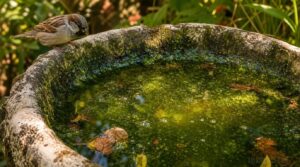
Algae doesn’t just show up randomly — your bird bath is practically a welcome mat for it. A few specific conditions work together to turn clean water green almost overnight.
Knowing what triggers that green takeover helps you choose the right approach — bird-safe algae prevention methods can stop the cycle before it starts.
Here’s what’s actually driving that growth.
How Sunlight and Warm Water Accelerate Algae Growth
Sunlight is basically algae’s best friend. When direct rays hit your bird bath, they trigger a Photosynthetic Boost that kicks growth into high gear — especially when water temperature climbs between 20–30°C.
That Heat-Induced Growth cycle speeds up Nutrient Uptake and cell division quickly.
Watch for these warning signs:
- Green film forming within days of sunlight exposure
- Deeper Light Penetration turning the whole basin murky
- Warm Water Metabolism doubling algae populations overnight
The Role of Bird Droppings and Organic Nutrients
Warm water sets the stage, but bird droppings seal the deal. Every time a bird visits, its waste releases guano nitrogen, phosphorus enrichment, and organic matter into the water.
That nutrient loading kicks microbial decomposition into overdrive, feeding algae fast. Organic matter leaching from droppings basically fertilizes your bath daily, making algae growth almost inevitable without a consistent natural cleaning solution and nutrient reduction routine.
How Stagnant Water Creates The Perfect Algae Environment
Still water is algae’s best friend. Without water circulation, your bird bath becomes a self-sustaining system where surface film formation traps heat and nutrients, thermal layering locks warmth near the surface, and microbial interactions build biofilms that feed algae colonies.
Small stagnant pools also invite mosquito breeding.
Low water turnover rate accelerates algae growth through:
- Concentrated nutrients from droppings
- Reduced water column mixing
- Rising pH fluctuations from decomposition
- Stable biofilm communities
- Trapped surface heat
Types of Algae Commonly Found in Bird Baths
Not all algae are the same, and knowing what’s growing in your bird bath helps you tackle it faster. Here’s a quick breakdown:
| Algae Type | Appearance | Key Risk |
|---|---|---|
| Green Algae | Slimy green mats | Rapid algae growth in sunlight |
| Cyanobacteria | Blue-green scum | Cyanobacteria toxin risk to birds |
| Diatoms | Brown/yellow film | Diatom film formation on basin surfaces |
Filamentous algae structure looks like tangled hair clinging to edges, while multicolored algae patches signal mixed colonies — both signs that your cleaning routine needs tightening.
Recognizing each type makes algae removal and algae control methods far more effective.
Health Risks of a Dirty Bird Bath
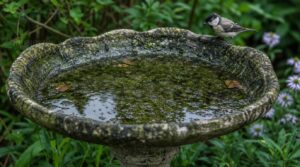
dirty bird bath is more than an eyesore — it’s a quiet health hazard for every bird that stops by for a drink. Stagnant, algae-covered water can carry bacteria and attract mosquitoes faster than you might think.
Here’s what you need to know about the real risks hiding in a neglected bird bath.
How Algae and Bacteria Endanger Backyard Birds
That green slime coating your bird bath isn’t just ugly — it’s quietly working against the birds you’re trying to help. Bacteria growth inside dirty water creates real respiratory irritation and feather contamination risks for visiting birds.
Biofilms trap ammonia from droppings, adding to the nutrient load impact and thermal stress effects that weaken birds, shifting their feeding behavior changes noticeably.
A clean bird bath matters more than you’d think.
E. Coli and Salmonella Risks From Contaminated Water
When birds defecate in or near your bird bath, fecal contamination introduces E. coli and Salmonella directly into the water. Bacterial survival increases with each day you skip cleaning, raising outbreak thresholds that endanger visiting birds and pets.
Every day you skip cleaning, bird droppings turn your bath into a bacteria breeding ground
Human exposure happens easily during refilling or scrubbing.
Consistent water sanitation for wildlife and natural cleaning solutions for wildlife keep bacterial growth in check and support bird disease prevention.
Mosquito Breeding and West Nile Virus Concerns
A neglected bird bath doesn’t just threaten birds — it becomes prime Culex mosquito habitat almost overnight. Stagnant, warm water accelerates the mosquito life cycle from egg to biter in days.
Here’s what that means for your yard:
- Temperature effects speed up larval development, producing more adult mosquitoes faster.
- Water stagnation risks include West Nile transmission through infected Culex bites.
- Clean water and algae removal from birdbaths directly support avian disease prevention and prevent mosquito breeding.
Signs That Your Bird Bath Needs Immediate Cleaning
Your bird bath is telling you something — you just have to listen.
Cloudy water, a foul odor, or a slimy film coating the basin walls are all clear warning signs.
If you spot algae clumps floating on the surface, or notice bird avoidance where they simply won’t drink, act immediately.
Bird droppings and old water fuel fast algae growth and can harbor mosquito larvae within days.
Step-by-Step Guide to Clean Bird Bath Algae
Cleaning your bird bath doesn’t have to be complicated — it just needs to be done right.
few simple steps done in the right order will clear out algae, bacteria, and buildup without harming the birds you’re trying to help.
Here’s exactly what to do, from draining the old water to refilling it fresh.
Step 1: Safely Drain and Dispose of Old Water
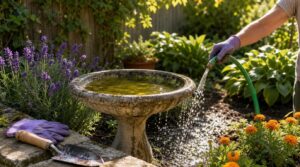
Before anything else, drain the basin completely — old water is a mosquito breeding ground and a sanitation hazard for wildlife.
For proper hose setup, attach a hose securely to the drain valve and direct the flow toward grass or garden soil.
Avoid storm drains to protect local waterways.
Wear gloves, keep pets away, and always follow local drainage rules for regulatory compliance and environmental safety.
Step 2: Prepare a Bird-Safe Cleaning Solution
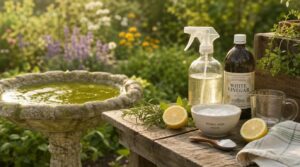
The right cleaning solution makes all the difference — and you don’t need anything fancy. Remember that avian respiratory sensitivity means even mild fumes can harm birds.
A natural solution of water and vinegar works beautifully for routine cleaning.
- Mix distilled white vinegar and water using a 1:9 ratio for safe, effective algae removal
- Baking soda paste treats stubborn mineral stains without scratching surfaces
- Store unused solutions away from bird habitats following basic storage precautions
Skip harsh surfactants — birds’ lungs are sensitive.
Step 3: Scrub The Basin, Rim, and Exterior Thoroughly
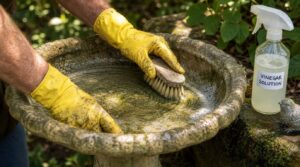
With your vinegar and water cleaning solution ready, pull on rubber gloves and get scrubbing.
Use non‑abrasive sponges for plastic or ceramic surfaces, and a stiff brush or heavy‑duty scrub brush for concrete.
Scrub the basin in circular motions, paying close attention to corner sediment removal where grime hides.
Don’t forget the rim and exterior — algae clings there too.
Step 4: Rinse The Bird Bath Multiple Times
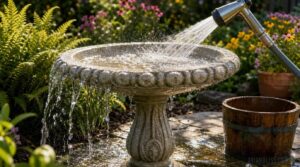
Once you’ve scrubbed every surface, rinse and dry the basin — but rinsing comes first, and it takes more than one pass. Triple rinse benefits add up fast: each cycle flushes loosened algae, cleaning residue, and cloudy water away.
garden hose with a spray nozzle for the best rinse tool selection, or pour from a bucket if needed. rinse water quality each time — keep going until it runs completely clear and carries no scent of vinegar or soap.
Step 5: Dry Completely and Refill With Fresh Water
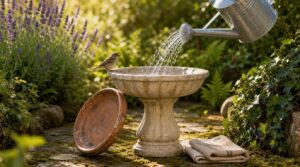
After you rinse and dry the basin, give it real time to air out — don’t rush this part. Check every corner and seam for hidden moisture before refilling.
A cover keeps dust and debris out while it dries. When it’s fully dry, refill with fresh water from a clean source to support water sanitation for wildlife and prevent algae buildup.
Natural and Chemical Cleaning Solutions Compared
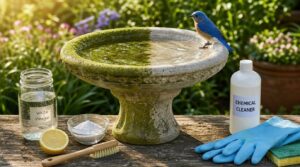
Not every cleaning solution works the same way, and some are safer for birds than others. The right choice depends on what you’re dealing with — light algae, stubborn stains, or a bath that needs a quick reset.
Here’s a look at the most effective options, from gentle naturals to careful chemical use.
Using Diluted White Vinegar as a Safe Algae Remover
White vinegar is one of the gentlest, most effective bird bath cleaners you’ll find under your kitchen sink. Its acetic acid breaks down algae cell walls on contact — no harsh chemicals needed. Follow these Dilution Guidelines: mix one part vinegar to nine parts water as your go-to natural solution of water and vinegar.
- Surface Compatibility matters: diluted vinegar works beautifully on plastic and smooth surfaces, but avoid prolonged contact with stone or metal edges
- Contact Time Effects are real: let the solution sit 5–15 minutes, then scrub to lift algae films completely
- Post-Clean Rinse is non-negotiable: rinse thoroughly three times so no residue harms visiting birds
Always wear protective gloves when applying, even with diluted vinegar. Used consistently, this approach will prevent algae buildup before it starts.
Applying Baking Soda Paste for Stubborn Mineral Stains
Baking soda paste is one of those DIY cleaning solutions that punches above its weight. For your Paste Preparation Ratio, mix baking soda with just enough water to form a thick spread.
Apply it directly to hard water stains, let it sit 10–20 minutes for proper Stain Dwell Time, then scrub gently.
Check Surface Compatibility Tips — ceramic and plastic handle it well. Rinse thoroughly. Mineral buildup removal has never been simpler.
How to Use Bleach Safely Without Harming Birds
Bleach works, but only when you use it right. Stick to safe Bleach Dilution Ratios — one teaspoon per gallon of water — and follow strict Bird Removal Procedures before you start. Ventilation Requirements matter too; let the area air out fully.
- Remove birds before cleaning
- Scrub, then rinse three times
- Never mix bleach with acids
- Let surfaces dry completely before refilling
Using Hydrogen Peroxide for Quick Algae Removal
Hydrogen peroxide works fast — and it’s gentler than bleach. Follow basic Peroxide Dilution Guidelines: use 1 to 2 milliliters of hydrogen peroxide 3 percent per liter of water for quick algae removal.
Check Material Compatibility first, since concrete may etch with prolonged exposure.
Always follow Safety Precautions — keep birds away during Application Timing, rinse thoroughly after, and consider the Environmental Impact by limiting weekly treatments.
Scrubbing Techniques for Concrete, Plastic, and Stone Baths
Not all bird baths are built the same, so your Brush Type Selection really does matter. Use a soft‑bristle brush or non‑scratch sponge on plastic to avoid scuffs, and a nylon brush with pH Neutral Cleaner on concrete.
Circular Motion Scrubbing lifts algae evenly. For Mineral Stain Removal, work baking soda paste in with an old toothbrush.
After cleaning, check Sealant Reapplication Timing on concrete baths.
How to Prevent Algae From Returning
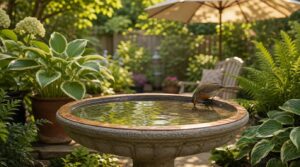
Cleaning your bird bath is only half the battle — keeping algae from coming back is where the real difference is made. A few simple changes to your setup can slow algae growth considerably between cleanings.
Here are the best ways to stay ahead of it.
Placing Your Bird Bath in Partial Shade
Where you place your bird bath matters more than most people realize. A shaded location — under a tree, next to a fence, or beneath a shade hood — gives you natural Temperature Regulation and slows algae growth considerably.
- Choose morning sun, afternoon shade for Seasonal Positioning
- Use Shade Materials like wood or lattice for sunlight blockage
- Maintain Moisture Management by ensuring good airflow underneath
- Keep sightlines open for Predator Visibility so birds feel safe
Adding Fountains, Drippers, or Bubblers for Water Movement
Still water is algae’s best friend — and moving water is your secret weapon. A solar fountain, bird bath bubbler, or dripper keeps things circulating without much effort on your part.
| Feature | How It Helps | Best For |
|---|---|---|
| Mademax solar birdbath fountain pump | Energy efficient, no wiring needed | Sunny yards |
| Dripper | Gentle Seasonal Water Circulation | Shaded spots |
| Bird bath bubbler | Constant micro-currents disrupt algae | Small basins |
| Water circulation system | Full basin coverage | Larger baths |
| Aesthetic Fountain Placement | Attracts birds, reduces stagnation | Visual focal points |
Match your Pump Flow Rate to your basin size — too strong and birds won’t drink. Feature Maintenance Tips: clean intake screens every few weeks to prevent clogs.
Using Copper Pennies or Pipe to Naturally Inhibit Algae
Moving water slows algae down, but copper stops it in its tracks. Using copper to inhibit algae in bird baths is one of the oldest tricks in the book — and it actually works.
Here’s how to do it right:
- Drop pre-1982 copper pennies into the basin for steady copper ion efficacy against algae.
- Follow a smart pipe placement strategy — rest a short copper pipe section flat on the basin floor.
- Stay on top of copper wear monitoring; replace pieces once patina builds up and ion release slows.
Natural algae inhibitors like these aren’t foolproof on their own, so combine them with shade and regular cleaning for the best algae prevention results.
Watch safety concentration limits — if the water turns bluish-green, remove the copper and flush the bath immediately. Think of copper as one layer of your complementary algae controls, not the whole solution.
Choosing Smooth, Non-Porous Bird Bath Materials
Copper helps, but the basin itself can fight algae before it ever takes hold. Your material choice matters more than most people realize.
| Material | Key Benefit | Watch Out For |
|---|---|---|
| Ceramic bird bath | Ceramic glaze durability resists algae adhesion | Can chip in hard freezes |
| Glass bird bath | Glass temperature resistance keeps surfaces cool | Heavier and fragile |
| Plastic bird bath | Polymer weight advantage makes cleaning easy | UV degradation over time |
Smooth, non-porous surfaces — glazed ceramic, porcelain, composite UV stability resisting resin, metal copper inhibition finishes — give algae nowhere to grip.
Rough concrete bird bath surfaces trap nutrients; algae-resistant materials don’t.
Using Biodegradable Algae-Control Balls and Enzyme Dispensers
Your material choice does a lot of the heavy lifting — but biodegradable algae-control balls and bird-safe enzyme dispensers pick up where smooth surfaces leave off. Both options offer solid Material Compatibility across ceramic, plastic, and stone baths, giving you a low-effort layer of natural cleaning solutions and algae control.
Drop a biodegradable ball into a shallow tray using a simple Placement Strategy, and it slowly releases natural compounds that disrupt algae growth for up to 30 days.
Applying enzymes and specialized cleaners for algae management works best with smart Dosage Timing — follow the label, since Temperature Effects can speed up or slow down how fast each ball breaks down.
Watch for Degradation Monitoring cues like cloudiness or visible crumbling, and replace accordingly.
Top 8 Products for Cleaning Bird Bath Algae
Having the right tools makes bird bath cleaning faster and a lot less frustrating. These eight products cover everything from scrubbing and sealing to keeping the water moving and algae-free all year.
Here’s what’s worth keeping on hand.
1. Casabella Premium Waterblock Cleaning Gloves
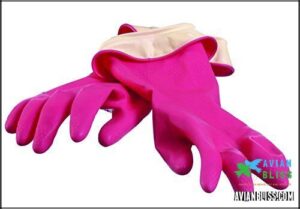
Your hands take a beating when you’re scrubbing algae off rough concrete or stone. That’s where the Casabella Premium Waterblock Cleaning Gloves earn their place.
The latex outer shell is thick and durable, while the cotton flock lining keeps your hands comfortable during longer sessions.
The built-in Waterblock cuff folds back to redirect water away from your forearm — no more wet sleeves.
Textured fingertips give you a solid grip on wet surfaces, making scrubbing faster and safer.
| Best For | Anyone who wants serious hand and forearm protection while tackling tough cleaning jobs like scrubbing pots, dishes, or outdoor surfaces. |
|---|---|
| Material | Latex/Cotton |
| Primary Use | Hand Protection |
| Price Range | $6.98 |
| Unit Size | 1 Glove |
| Origin/Brand | USA Made |
| Maintenance Needs | Hand-washable |
| Additional Features |
|
- The Waterblock cuff actually works — it folds back and keeps water from running down your arm while you clean.
- Thick latex construction holds up way better than those flimsy gloves you grab at the grocery store.
- The cotton flock lining makes a real difference — your hands stay comfortable and don’t get that sweaty, clammy feeling.
- Sizing runs a little small, so if you’ve got wider hands, you might want to go up a size.
- The cuff can slip down during longer cleaning sessions, which kind of defeats the purpose.
- Not great for heavy-duty chemicals — stick to dish soap and hot water and you’ll be fine.
2. Chemical Guys Heavy Duty Dilution Bottle
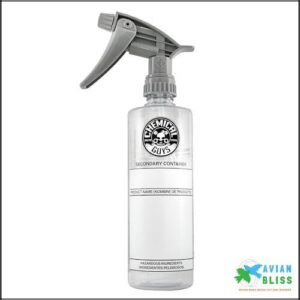
Getting your cleaning solution ratios right matters more than most people realize.
The Chemical Guys Heavy Duty Dilution Bottle (model ACC151) makes that easy with its printed dilution markings right on the side — no measuring cups needed.
The clear 16 oz body lets you see exactly what’s inside, and the heavy-duty sprayer delivers 1.3 ml per stroke, so coverage is faster than with standard bottles.
It’s compatible with vinegar solutions, degreasers, and enzyme cleaners — everything you’d use on a bird bath.
| Best For | Detailers and car care enthusiasts who mix their own chemical solutions and want a fast, clearly labeled sprayer that keeps things organized on the job. |
|---|---|
| Material | Rigid Polymer |
| Primary Use | Chemical Spraying |
| Price Range | Not Listed |
| Unit Size | 16 fl oz |
| Origin/Brand | Chemical Guys |
| Maintenance Needs | Rinse After Use |
| Additional Features |
|
- Printed dilution markings on the side make mixing ratios quick and foolproof — no extra measuring tools needed.
- The high-output sprayer (1.3 ml per stroke) covers surfaces faster than a standard bottle, saving real time on bigger jobs.
- Clear body and GHS-compliant label area make it easy to identify what’s inside and stay safe around harsh chemicals.
- The bottle neck can develop stress cracks if it takes a hard drop, which is a real risk in a busy garage.
- The internal straw can bend over time, leading to uneven spray or leaks when you open the nozzle.
- The sprayer trigger can wear out with heavy chemical exposure, and some units arrive already not working out of the box.
3. OXO Good Grips Scrub Brush
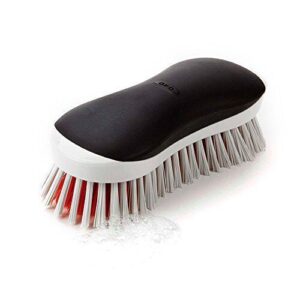
Scrubbing a bird bath by hand gets old fast — especially when algae clings to every curve of the basin.
The OXO Good Grips Scrub Brush makes that job noticeably easier. Its dual nylon bristle system puts stiff outer bristles on tough green buildup while softer inner bristles smooth the surface clean.
The curved neck reaches corners without scraping your knuckles, and the thermoplastic rubber handle won’t slip even when your hands are dripping wet.
At $11.99, it’s a practical addition to your cleaning kit.
| Best For | Anyone who cleans bird baths, tile, grout, or bathroom surfaces regularly and wants a solid everyday scrub brush that’s easy to grip and won’t scratch. |
|---|---|
| Material | Nylon/TPR |
| Primary Use | Surface Scrubbing |
| Price Range | $11.99 |
| Unit Size | 1 Brush |
| Origin/Brand | Unbranded |
| Maintenance Needs | Dishwasher Safe |
| Additional Features |
|
- Dual nylon bristles handle both light grime and tougher buildup without scratching surfaces
- The non-slip rubber handle stays secure even with wet hands, making longer cleaning sessions way less tiring
- At $11.99, it’s an easy buy that covers a surprising range of tasks — bathrooms, kitchens, grills, and more
- The bristles may not be stiff enough for really stubborn residue, like caked-on car mat grime
- The handle runs a bit small, so if you have larger hands you might feel like you’re losing some leverage
- The wide head is great for open surfaces but struggles to get into tight corners or narrow crevices
4. Arm and Hammer Pure Baking Soda
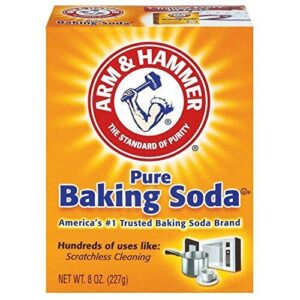
When mineral stains and algae start crusting the basin, baking soda is one of the simplest fixes you’ll find. Arm & Hammer Pure Baking Soda is 100% sodium bicarbonate — no additives, no harsh chemicals.
Mix it into a paste with a little water, apply it to stubborn spots, and let it sit for a few minutes before scrubbing. It’s gentle enough not to harm birds, yet abrasive enough to lift grime.
At $6.95 for 8 oz, it’s an affordable staple for any cleaning kit.
| Best For | Bird bath owners who want a safe, chemical-free way to scrub away mineral buildup and algae without worrying about harming wildlife. |
|---|---|
| Material | Sodium Bicarbonate |
| Primary Use | Cleaning/Deodorizing |
| Price Range | $6.95 |
| Unit Size | 8 oz |
| Origin/Brand | Arm & Hammer |
| Maintenance Needs | Reseal After Use |
| Additional Features |
|
- Pure sodium bicarbonate — no additives, so it’s totally safe around birds and pets
- Works as a gentle abrasive to lift stubborn grime and mineral stains without scratching
- Super affordable and easy to find — a versatile staple you’ll reach for all the time
- The 8 oz box goes fast if you’re cleaning regularly — bulk bags offer much better value per ounce
- The resealable closure can be finicky, and any moisture getting in will clump the powder
- Stock on Amazon can be hit or miss, so it’s worth grabbing a backup when you see it available
5. Mademax Solar Bird Bath Fountain
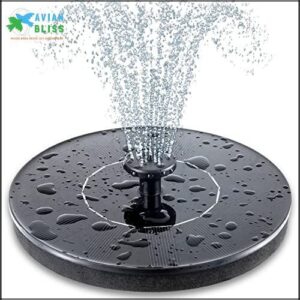
Still water is algae’s best friend — and the Mademax Solar Bird Bath Fountain breaks that friendship fast. It runs entirely on sunlight, activating within about three seconds of direct light, with no wiring or batteries needed.
The pump keeps water moving continuously, which cuts down on algae buildup and mosquito breeding at the same time.
Eight interchangeable nozzles let you adjust the spray pattern, and the whole unit weighs under a pound.
At $16.79, it’s a low-effort, high-impact addition to any bird bath.
| Best For | Gardeners and bird lovers who want a simple, low-maintenance way to keep a small water feature fresh and moving without dealing with cords or batteries. |
|---|---|
| Material | Plastic |
| Primary Use | Water Circulation |
| Price Range | $16.79 |
| Unit Size | 0.6 lb |
| Origin/Brand | Unbranded |
| Maintenance Needs | Rinse Periodically |
| Additional Features |
|
- Starts up in seconds of hitting sunlight — truly plug-and-play with no setup fuss
- Eight nozzle options let you mix up the spray pattern to suit your style
- At $16.79, it’s an easy, affordable upgrade for any bird bath or small pond
- Shuts off completely on cloudy days or at night since there’s no battery backup
- Can drain smaller basins fast on high spray settings, so you’ll need to refill more often
- Some users report pump failures or clogging after just a few weeks of use
6. Gorilla Waterproof Rubberized Sealant Spray
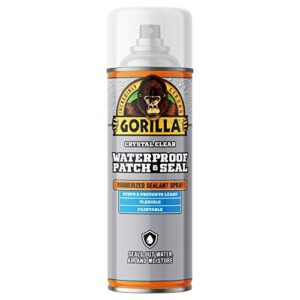
Cracks in your bird bath don’t just look bad — they let water seep out and make cleaning harder over time.
The Gorilla Waterproof Rubberized Sealant Spray fills gaps up to ¼ inch wide and bonds to concrete, stone, and most other bath materials.
It self-levels into a smooth, protective film that resists UV rays and temperature swings.
Just spray from 8–12 inches away, let it cure for 24 hours, and your basin stays watertight longer between deep cleans.
| Best For | Homeowners who want a quick, no-fuss fix for small cracks and leaks on bird baths, gutters, roofs, or other outdoor surfaces without breaking out a caulk gun. |
|---|---|
| Material | Rubber Coating |
| Primary Use | Leak Sealing |
| Price Range | Not Listed |
| Unit Size | 14 oz |
| Origin/Brand | Unbranded |
| Maintenance Needs | Reapply as Needed |
| Additional Features |
|
- Bonds to almost anything — concrete, metal, wood, rubber, glass, and more
- Self-levels into a smooth, UV- and temperature-resistant film that you can paint over
- Easy spray application from 8–12 inches away means no tools or mess
- Strong chemical smell means you really need good ventilation and a mask nearby
- Thin consistency can run on vertical surfaces, so you might need a few coats
- Won’t work for gaps bigger than ¼ inch or anything that stays submerged in water
7. Birdbath Fountain Water Clarifier
Sometimes the best maintenance tool is one that works while you’re not watching. A Birdbath Fountain Water Clarifier uses enzymes and beneficial bacteria to quietly digest algae, sludge, and ammonia between your regular cleanings.
Just add a few capfuls weekly, and it gets to work breaking down the organic buildup that clouds water and clogs pumps.
It’s safe for birds, pets, and plants — and compatible with plastic, ceramic, and stone basins.
Think of it as your invisible cleaning crew.
| Best For | Bird and garden enthusiasts who want cleaner water in their backyard fountains and birdbaths without constant scrubbing. |
|---|---|
| Material | Liquid Concentrate |
| Primary Use | Water Treatment |
| Price Range | Not Listed |
| Unit Size | 16 fl oz |
| Origin/Brand | Unbranded |
| Maintenance Needs | Weekly Dosing |
| Additional Features |
|
- Tackles the messy stuff — algae, sludge, and ammonia — so your water stays cleaner between manual washes
- Totally safe around birds, pets, and plants, so no worrying about what’s splashing around
- Super easy to use — just a few capfuls a week and you’re done
- Don’t expect overnight results — heavily gunked-up water can take a few weeks to clear up
- It’s not a replacement for actual cleaning; you’ll still need to scrub the basin periodically
- Bigger water features may need more product, and results can vary depending on water temperature
8. YaNovate Thermostatic Bird Bath Heater
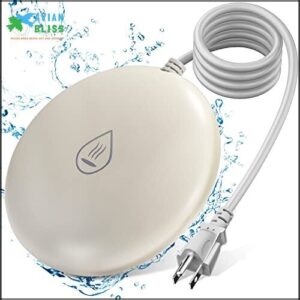
Winter is when birds need you most — and that invisible cleaning crew can’t help if the water is frozen solid. The YaNovate Thermostatic Bird Bath Heater solves that quietly.
Its 70-watt heating element clicks on only when water approaches freezing, then shuts off automatically. No babysitting required.
The anodized aluminum base conducts heat evenly, and the double-layer waterproof construction keeps it safe around curious squirrels.
Just plug it into an outdoor outlet and your birds have open water all winter long.
| Best For | Backyard bird enthusiasts and pet owners who want to keep a birdbath, small pond, or outdoor waterer ice-free through winter without any fuss. |
|---|---|
| Material | Anodized Aluminum |
| Primary Use | Freeze Prevention |
| Price Range | Not Listed |
| Unit Size | 7x7x1.5 in |
| Origin/Brand | Model 05-742G |
| Maintenance Needs | Seasonal Inspection |
| Additional Features |
|
- Thermostat-controlled heating means it only runs when needed, keeping electricity costs low
- Plug-and-play setup — no tools, no assembly, just connect it to an outdoor outlet
- Anodized aluminum construction spreads heat evenly and holds up to moisture and corrosion
- Struggles in extreme cold below -20°F, so it may not cut it in the harshest winter climates
- The paint can peel after a few seasons, which could leave flakes in the water
- Short cord means you might need an outdoor extension cord, adding a little extra setup
Bird Bath Cleaning Schedule by Season
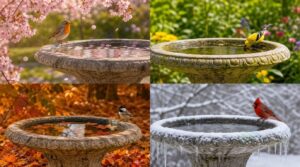
Your bird bath doesn’t need the same care in January as it does in July — the seasons change, and so should your routine. A seasonal awareness goes a long way toward keeping the water clean and the birds coming back.
Here’s what your cleaning schedule should look like throughout the year.
Daily Maintenance Tips for Hot Summer Months
Hot weather turns a bird bath into an algae factory almost overnight. That’s why daily habits matter most in summer. Follow this routine to keep the water safe:
- Morning Water Refill — Change the water daily before sunlight peaks.
- Shade Placement — Position the bath out of direct afternoon sun.
- Bubbler Adjustment — Keep running water moving to slow algae growth.
- Temperature Monitoring — Check water warmth; above 75°F accelerates algae fast.
- Tool Sanitization — Rinse your brush daily using vinegar and baking soda as natural disinfectants, or drop in copper pennies as a low-cost algae inhibitor.
Spring and Fall Weekly Cleaning Routine
Spring and fall bring cooler temps, but algae doesn’t take a break.
Stick to a seasonal maintenance schedule for backyard bird baths — scrub the basin once a week using natural cleaning solutions for wildlife, like diluted vinegar.
Do a debris sweep after rain, run a quick basin inspection, and practice brush sanitation to prevent cross-contamination.
Regular cleaning and water replacement for bird baths keep birds safe all season.
Winter Bird Bath Care and Freeze Prevention
Keeping birds hydrated doesn’t stop when temperatures drop. A bird bath heater rated between 10 and 60 watts manages freeze prevention without overheating the water. Pair heater installation with insulation techniques like wrapping the base in foam or straw, and place your bath in partial shade to block wind. Running water through a bubbler or pump slows ice formation naturally.
- Use freeze-resistant materials like resin or durable plastic — ceramic and glass crack in extreme cold
- Connect your heater to a GFCI outlet for safety
- Apply insulation techniques by elevating the bath to cut ground frost impact
- Monitor water temperature with a basic thermometer for temperature monitoring
- Keep pump operation consistent during daylight to maintain water circulation techniques for bird baths
How Often to Change Bird Bath Water Year-Round
Seasonal water turnover isn’t one-size-fits-all.
Temperature-driven changes mean your regular water replacement schedule shifts throughout the year — and getting that timing right plays a direct role in algae prevention and preventing mosquito breeding in your backyard bird bath.
| Season | Change Frequency |
|---|---|
| Summer | Every 1–2 days |
| Spring/Fall | Every 2–3 days |
| Winter | Every 2–3 days |
high evaporation rate in summer speeds up contamination, while rainfall impact in cooler months can introduce debris that clouds water fast.
Stick to this seasonal maintenance schedule for backyard bird baths and you’ll keep fresh water flowing year-round.
Inspecting and Maintaining Your Cleaning Tools
Your tools work just as hard as you do — so they deserve the same attention.
- Check your heavy-duty scrub brush and soft-bristle brush bristles monthly; replace them when they bend past 45 degrees.
- Test handle integrity by tugging each connection point firmly.
- Store your non-scratch sponge, old toothbrush, and spray bottle off the floor in a dry spot.
- Keep a spare parts inventory of replacement bristle heads on hand.
- Log tool wear checks quarterly to stay ahead of breakdowns.
Frequently Asked Questions (FAQs)
Can copper pennies prevent algae in bird baths?
Yes, copper pennies can help.
Pre-1982 coins release copper ions that naturally slow algae growth, but copper ion release depends on pH dependence and mineral precipitation, making them a supplement — not a substitute — for regular cleaning.
Do birds eat algae from bird baths?
Birds don’t eat algae from bird baths. It’s not part of their natural bird feeding behavior.
They may sip around clearer edges, but algae growth signals poor bird health conditions — keep that water fresh.
Is rainwater better than tap for birds?
Rainwater is naturally softer, with lower mineral content and no chlorine irritation, making it gentler on birds.
However, its pH acidity and filtration needs vary, so tap water’s temperature stability keeps it a reliable backup.
How deep should a bird bath be?
Keep it between 1 inch at the edges and 2 inches at the center. That shallow-to-deep contour suits most species depth preferences while following basic safety depth guidelines — no bird gets stranded.
Can algae make birds sick long-term?
Absolutely — chronic toxin exposure from algae isn’t just a one-time threat.
It can cause neurological impairment, immune suppression, reproductive effects, and subtle behavioral changes that quietly erode a bird’s health over time.
Can algae make humans sick too?
Yes, algae can make you sick. Algal toxin ingestion, skin contact reactions, and inhalation of aerosols can all trigger gastrointestinal symptoms or neurological effects — sometimes within hours of exposure.
Does bird bath color affect algae growth?
Color does play a role, but it’s smaller than you’d think.
Dark baths increase thermal absorption impact, warming water faster and nudging algae growth along. Light colors offer a reflectivity temperature effect, keeping things slightly cooler.
Can barley straw prevent algae in bird baths?
Barley straw can help prevent algae before it starts. Tuck a mesh bag of straw into your bath early in the season — it releases natural compounds as it slowly decomposes.
How do I remove algae stains from concrete?
Mix a vinegar and water solution or apply baking soda directly to stains. Scrub with a soft‑bristle brush, then rinse well.
For tough buildup, oxygen bleach application works fast without damaging the surface.
Conclusion
What kind of sanctuary are you offering if the water you provide does more harm than good?
Every time you clean bird bath algae, you’re not just tidying up—you’re protecting the small lives that depend on your yard. Drain it, scrub it, rinse it well, and refill it on a schedule that matches the season.
That simple routine turns your bird bath into something every visiting bird can safely trust.
- https://www.cdc.gov/harmful-algal-blooms/signs-symptoms/symptoms-freshwater-harmful-algal-blooms.html
- https://www.birdrescue.org/helping-heal-from-the-toxins-in-harmful-algal-blooms/
- https://www.vdh.virginia.gov/waterborne-hazards-control/harmful-algal-blooms/cyanobacteria/
- https://vcahospitals.com/know-your-pet/algae-poisoning