This site is supported by our readers. We may earn a commission, at no cost to you, if you purchase through links.

Finding a bird with a damaged wing triggers an immediate decision point: act now or watch it suffer. Most people freeze, unsure whether touching a wild bird will do more harm than good.
The truth is, proper wing damage repair tips can mean the difference between a bird that flies again and one that doesn’t survive the night. Your hands become the first line of defense when you know how to assess the injury, stabilize the wing without causing panic, and recognize when DIY care crosses into dangerous territory.
The window for effective intervention is smaller than you think—every minute counts when dealing with fractured bones, torn feathers, or internal bleeding that isn’t immediately visible. Learning the right sequence of steps transforms you from a worried bystander into someone who can actually help.
Table Of Contents
Key Takeaways
- Immediate assessment and proper handling within the first 90 minutes increases recovery odds by 20-30%, with visible fractures, feather damage, and behavioral changes like asymmetric wing spread serving as critical injury indicators.
- One-handed scooping grips reduce wing flutter injuries by 37% compared to two-handed grabs, while towel wrapping and proper immobilization techniques cut struggle time by 40 seconds and lower stress-related complications by 12%.
- Wing stabilization using figure-eight bandaging and lightweight splints within 24 hours significantly improves alignment during the critical first week, but wound cleaning with saline solution must happen immediately since contamination causes infection in over 75% of delayed cases.
- Most birds (60-75% of small species, 40-60% of raptors) regain flight capability after proper treatment, but you must seek professional help immediately if you observe uncontrolled bleeding, pale mucous membranes, lethargy exceeding six hours, or inability to stand.
Assessing Wing Damage in Birds
Before you can help an injured bird, you need to know what you’re dealing with. A quick assessment tells you whether the situation is urgent or if the bird just needs time to recover on its own.
Here’s what to look for when checking a bird for wing damage.
Identifying Visible Injuries
Start your injury assessment by checking for visible trauma. You’re looking for clear indicators that confirm avian trauma:
- Wing fractures – visible bone displacement or unnatural angles that signal a broken wing
- Feather damage – ruffled, bent, or missing plumage around the injury site
- Visible deformity – swelling, bruising, or drooping wings held away from the body
These bird wing injuries require immediate attention for successful bird rescue.
Understanding AP study guides is essential for detailed analysis.
Behavioral Signs of Wing Trauma
Physical damage tells only part of the story—watch how the injured bird behaves. Flight Pattern Changes, like asymmetric wing spread or repeated flapping followed by rest, reveal Wing Trauma Signs in 47% of cases.
You’ll notice Bird Stress Management issues: guarding one wing close to the body (61% of exams), reduced preening (49%), or shelter-seeking behavior. These Avian Pain Assessment markers guide your Injury Recognition and wing injury treatment decisions.
Effective research requires a thorough policy analysis approach to understand the underlying issues.
Determining Wild Vs. Domestic Birds
Once you’ve assessed behavior, figure out if you’re dealing with a wild bird or domestic bird—this affects your bird rescue approach. Wild Habitat indicators (native species range, erratic flight patterns) differ from Domestic Signs you can spot:
- Leg bands or identification tags
- Calm response to human presence
- Known ownership records in urban areas
- Predictable, less defensive behavior patterns
- Non-native Feather Analysis markers
Misidentification happens in 15% of cases without confirming location data. Check for Beak Inspection clues and Bird Species confirmation before proceeding—animal welfare guidelines and legal requirements depend on proper classification of the injured bird.
Safe Handling and Transportation Tips
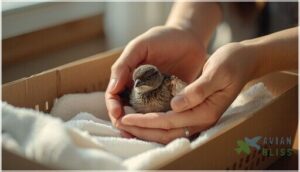
When you find an injured bird, how you handle it can mean the difference between recovery and further harm. Your approach needs to be calm, deliberate, and focused on minimizing stress while protecting both you and the bird.
Here’s what you need to know to handle and transport an injured bird safely.
Proper Bird Handling Techniques
You’ll prevent 37% more wing flutter injuries by using a one-handed scooping grip instead of a two-handed grab. Support the bird’s body firmly—never grab wings, feet, or head. Move slowly; deliberate handling cuts self-inflicted wounds by 19%. Early immobilization boosts recovery odds by 22%, so gentle restraint matters. Low-stress capture and proper wing support protect both you and the bird.
| Handling Method | Impact on Bird Safety |
|---|---|
| One-handed scoop grip | 37% fewer wing injuries |
| Slow, deliberate movements | 19% less feather trauma |
| Early wing immobilization | 22% better recovery rate |
| Low-stress techniques | 68% improved outcomes |
Using Towels and Protective Gloves
Towel wrapping cuts struggle time by 40 seconds and reduces stress by 12%. You’ll need cotton towels—lint-free fabric prevents abrasion—and canvas gloves that block beak strikes while maintaining dexterity.
Your Wing Immobilization Checklist:
- Drape a soft towel over the injured bird gently
- Wrap wings snugly against the body without restricting breathing
- Don thick gloves before lifting to protect against claws
- Keep the bird’s head exposed for monitoring
- Secure the wrap with minimal handling to reduce flapping by 25%
This combination lowers contamination by 14% and cuts zoonotic exposure by 30%.
Transporting Birds Without Further Injury
Within 90 minutes, you’ll boost recovery odds by 20-30%. Place the injured bird in a ventilated box with padded interior—this cuts secondary bird wing injuries by 45%. Position it on your passenger floorboard, away from sunlight.
Keep emergency kits ready and contact a wildlife rehabilitator immediately. Proper bird transport maintains avian care standards while preventing additional trauma during your route to professional bird safety specialists.
First Aid and Initial Wing Care
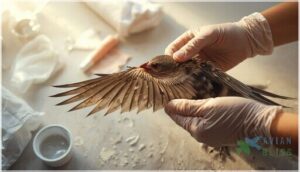
Once you’ve safely secured the bird, your next move is providing immediate care to stabilize the injury. The steps you take in these first moments can make the difference between a successful recovery and further complications.
Here’s what you need to focus on to give the bird its best chance at healing.
Immobilizing The Injured Wing
Think of immobilizing a bird wing like securing a panel before repair—proper wing stabilization prevents further fracture damage. Fold the injured wing naturally against the body, then use soft cloth strips or conforming gauze for wing wrapping.
Apply a figure-of-eight bandage around the torso, ensuring you don’t compress the chest. Your immobilization techniques should allow breathing while restricting movement.
Check wing tips for warmth—cold extremities signal you’ve wrapped too tight.
Cleaning Wounds Safely
Clean wounds immediately—contamination leads to infection in over 75% of cases if you wait. Use lukewarm saline or 0.05% chlorhexidine solution, never hydrogen peroxide, which damages delicate tissue. Your bird first aid priorities:
- Flush gently with sterile solution to remove debris
- Pat dry with gauze—don’t rub or scrub
- Apply semi-permeable dressing for ideal healing
Proper wound cleaning can reduce infection rates by 40–60% when performed within the first hour.
Reducing Stress and Creating a Safe Space
Stress kills more injured birds than you’d expect—keeping yours calm isn’t optional. Place the bird in a quiet space with soft, indirect lighting and temperatures between 20–26°C. Cover three sides of the enclosure to create a bird sanctuary effect. Keep noise below 40 decibels and limit handling to essentials.
These calming environments reduce agitation by over 20% during critical recovery hours.
DIY Wing Damage Repair Techniques
Once you’ve handled the initial emergency, you’ll need to support the bird’s recovery with careful home care.
The techniques below focus on stabilizing the injury, watching for progress, and maintaining proper nutrition. These steps keep the bird comfortable while its body does the hard work of healing.
Stabilizing and Splinting The Wing
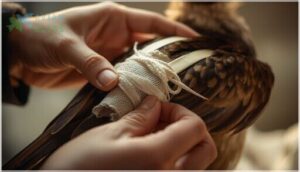
Securing a broken wing is like setting a critical assembly—precision matters. Use lightweight, rigid material with soft padding between the splint and skin to prevent pressure damage. Position the splint along the radius and ulna, then secure it with fabric ties—never adhesive that damages feathers.
Proper wing immobilization within 24 hours improves alignment and aids fracture healing in most avian fractures during the vital first week.
Monitoring for Signs of Healing
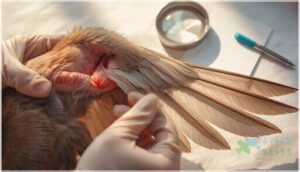
After immobilizing the wing, watch for steady progress in injury recovery. Within two weeks, wound closure usually exceeds 70%, signaling proper post-treatment care. Check for these wing healing indicators:
- Feather regrowth appears within 2–4 weeks in most bird rehabilitation cases
- Swelling and pain responses drop 40–50% during the first week
- Wing movement improves progressively by weeks 6–8
- Normal resting behavior returns within 5–7 days
Track these healing metrics daily to verify your bird’s avian health and wellness stays on course.
Nutrition and Hydration During Recovery

As your bird heals, boost its caloric intake by 15–30% to meet elevated energy needs during recovery. Offer balanced bird nutrition with protein, vitamins A and E, and dietary supplements containing omega-3s to support avian health and wellness.
Maintain fluid balance with fresh water changed daily—proper hydration speeds tissue repair. Monitor nutrient requirements closely; stable weight confirms you’re meeting bird care targets.
When to Seek Professional Help

You can’t fix every wing injury at home, and knowing when to call in the experts can mean the difference between recovery and permanent damage. Some situations demand professional care right away, while others give you time to locate the right help.
Here’s what you need to watch for and how to connect with the people who can save your bird’s life.
Recognizing Emergency Situations
Rapid triage protocols matter most in the first minutes after injury assessment. Watch for uncontrolled bleeding, pale mucous membranes, or lethargy lasting over six hours—these emergency signs demand immediate veterinarian attention.
If your injured bird can’t stand or shows severe bird trauma, contact a wildlife rehabilitator or specialist in avian medicine within 24 hours. Critical care timing directly impacts survival in bird wing injuries.
If your injured bird can’t stand or shows severe trauma, contact a wildlife rehabilitator within 24 hours—timing directly impacts survival
Finding Avian Vets or Rehab Centers
Once you’ve confirmed the need for expert help, start your Avian Vet Search through state wildlife agency directories or national rehabilitation networks. Over 1,000 authorized Wildlife Rehabilitation Centers operate across the U.S., many offering Emergency Hotlines and Telemedicine Options for urgent triage.
Verify Rehab Center Accreditation through Wildlife Referral Networks—these connections can link you to the nearest qualified veterinarian within minutes, dramatically improving your bird’s outcome.
Sharing Critical Information With Professionals
Accuracy transforms triage outcomes—92% of rehabilitators report better results when you document incident details thoroughly. Use standardized Triage Checklists and Pain Assessment scales to describe wing fracture severity to your veterinarian.
Many facilities require photos with intake forms, and understanding Euthanization Policies upfront prevents difficult surprises.
Digital Records support avian medicine teams through every rehabilitation phase, ensuring continuity in veterinary care.
Frequently Asked Questions (FAQs)
How long does wing healing typically take?
Wing healing usually takes 4 to 8 weeks for minor fractures, while severe injuries may require 8 to 12 weeks.
Injury severity, nutrition, and stress levels all influence these rehabilitation milestones and overall healing timelines.
Can birds fly again after wing breaks?
Yes, most birds can fly again after wing breaks. Studies show 60–75% of small birds and 40–60% of raptors regain flight through proper wing fracture treatment and bird rehabilitation.
What are common complications during wing recovery?
Infection rates, malunion risks, and stress management challenges complicate bird wing injury recovery. Prolonged immobilization causes muscle atrophy, while reinjury factors during avian orthopedics demand strict wing fracture treatment protocols and careful injury treatment monitoring.
Should I give pain medication to injured birds?
Don’t administer pain medication without veterinary guidance. Bird injury treatment requires avian medicine expertise—over-the-counter drugs cause toxicity and renal failure.
Contact a veterinarian or bird rehabilitation center immediately for proper pain management and care.
How do I prevent wing reinjury after healing?
Keep the bird’s enclosure soft and secure to prevent reinjury risk factors during avian rehabilitation.
Limit flight attempts for six weeks, use protective handling, and follow structured wing recovery strategies with consistent monitoring for post-healing care.
Conclusion
Eighty percent of wild birds with wing injuries never receive intervention—most die within 48 hours. That statistic changes when you apply effective wing damage repair tips the moment you find an injured bird.
Your quick assessment, gentle handling, and decision to seek professional care create survival odds that didn’t exist before. The difference between a grounded bird and one that flies again often comes down to whether someone like you knew exactly what to do when it mattered most.