
This site is supported by our readers. We may earn a commission, at no cost to you, if you purchase through links.
You don’t need a blind in the backyard or hours crouched behind binoculars to document rare bird sightings anymore. Bird cameras for remote viewing deliver sharp footage directly to your smartphone, capturing visitors you’d miss during work hours or sleep.
These specialized cameras combine motion sensors, weatherproof housing, and AI recognition to identify species automatically—transforming casual feeders into 24/7 research stations. Solar panels eliminate battery swaps, while night vision reveals nocturnal activity most birders never witness.
Whether you’re tracking migration patterns or simply want close-up views of elusive species, the right camera setup puts you in control of what you see and when you see it.
Table Of Contents
- Key Takeaways
- Key Features of Bird Cameras for Remote Viewing
- Power and Connectivity Options
- Top 9 Bird Cameras for Remote Viewing
- 1. Birdfy Smart Bird Feeder Camera
- 2. Birdsfafe Solar Bird Feeder Camera
- 3. Netvue Smart Bird Feeder Camera
- 4. Clear Acrylic Window Bird Feeder
- 5. Ewinvos Window Bird Feeder
- 6. Bird Buddy Solar Smart Bird Feeder Camera
- 7. Technaxx Bird Camera
- 8. Soliom Bird Feeder Camera
- 9. Netvue Hummingbird Feeder Attachment
- Installation and Maintenance Tips
- How to Choose The Best Bird Camera
- Frequently Asked Questions (FAQs)
- Conclusion
Key Takeaways
- Modern bird cameras eliminate guesswork by combining motion sensors, AI species recognition, and weatherproof housing to capture footage you’d miss during work or sleep—turning casual feeders into 24/7 research stations.
- Solar-powered models with IP65+ ratings deliver uninterrupted operation across temperature extremes while night vision and infrared capture nocturnal activity most birders never witness.
- Top performers like Birdfy and Bird Buddy pair 2K resolution with on-device AI identification and real-time smartphone alerts, though you’ll need strong 2.4 GHz Wi-Fi within 30-50 feet for reliable streaming.
- Match camera features to your actual birdwatching goals—motion detection reduces data usage to 1-5 GB monthly versus 200-300 GB for continuous streaming, while proper placement and minimal LED flash prevent spooking shy species.
Key Features of Bird Cameras for Remote Viewing
You can’t capture real birdwatching moments unless your camera works when it matters most. The best bird cameras pack features that handle everything from surprise visitors at dawn to storm conditions that would fry basic electronics.
If you’re overwhelmed by options, this guide to birdwatching cameras with long zoom breaks down what actually matters for field use.
The best bird cameras capture dawn visitors and survive storms that destroy basic electronics
Here’s what separates cameras that deliver footage from ones that leave you staring at blank screens.
The best bird cameras for birdhouse monitoring balance sharp image sensors with motion detection and real-time streaming capabilities.
Motion Detection and Real-Time Alerts
Motion sensors trigger real-time alerts the instant a bird lands at your feeder. You’ll get push message notifications on your phone within seconds, complete with thumbnail previews to verify what tripped the sensor.
Some models even offer customizable sensitivity settings so you can reduce false alerts from wind or squirrels.
AI alert filters eliminate false positives from swaying branches, while customizable detection zones let you focus on specific perches. Remote access and WiFi connectivity guarantee you won’t miss a single visitor.
If you’re weighing your options, check out this bird feeder camera system comparison to find models that balance smart alerts with reliable performance.
Weatherproof and Durable Design
Your camera needs to stand up to relentless sun, driving rain, and freezing winters without flinching. Look for outdoor cameras with IP65 rating or higher—that level of weatherproof durability means dust-tight seals and protection against water jets.
Quality housing designs use aluminum or impact-resistant polycarbonate with UV-resistant coatings. Sealant technologies around ports prevent moisture intrusion, while durability testing ensures environmental resistance across temperature extremes from -10°C to 50°C.
AI-Powered Bird Species Recognition
Beyond rugged enclosures, AI-powered species recognition puts field identification on autopilot. Edge AI trained on regional avifauna delivers top-1 species accuracy with confidence scores you can verify.
Recognition systems analyze bird behavior in real time, flagging rare visitors instantly. Model training improves through periodic updates, refining digital birding tools across your local species range.
AI ethics matter—check that your camera respects wildlife viewing guidelines and privacy norms.
High-quality feeders with dual cameras, like those reviewed in top bird feeder features, should include privacy-conscious AI that avoids capturing neighboring yards or identifying humans.
Night Vision and Low-Light Performance
When darkness falls, infrared imaging and low light sensors separate capable cameras from toys. Night vision modes using near-infrared illumination capture silhouettes at 0.01 to 0.1 lux—perfect for dawn and dusk activity.
Thermal detection adds 0.05 °C temperature resolution for complete darkness, while dark scene enhancement boosts motion detection range to 30 meters.
Outdoor camera systems with these features transform wildlife photography, letting you track animal movements around the clock without disturbing natural behavior.
Mobile App and Remote Access Compatibility
Your smartphone becomes the command center with dedicated iOS and Android apps that deliver remote alerts within seconds of motion events. Cross-platform compatibility ensures uninterrupted remote access from any mobile device, while end-to-end app security protects your video streams.
Wi-Fi connectivity powers cloud storage integration and live viewing—though strong WiFi signal strength determines streaming quality for true remote monitoring freedom.
Power and Connectivity Options
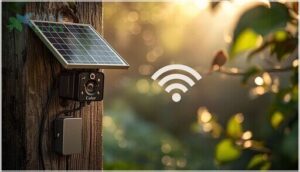
Your bird camera won’t work without reliable power and a solid internet connection. Solar panels offer hands-free operation for weeks, while battery-powered units give you flexibility in remote spots where sunlight’s scarce.
Here’s how to match the right power source and connectivity setup to your backyard conditions.
Solar-Powered Vs. Battery-Operated Cameras
You’ll face a clear tradeoff between solar-powered cameras and battery-operated units. Solar panels deliver continuous energy efficiency and extended battery life when positioned in full sun, reducing your power management headaches.
Battery-only wireless cameras offer placement freedom and remote access anywhere but demand regular recharging.
Camera durability depends on your climate—solar power excels in sunny regions, while battery setups shine in shaded spots.
Wired Power Alternatives
You can skip solar power entirely and run wired installations from a standard AC outlet using weatherproof adapters. These setups eliminate battery life concerns and deliver uninterrupted power savings in areas with accessible electricity.
USB power banks work too—pair them with wireless cameras for extended field use during storms or overcast stretches. Always protect exposed connectors with sealed enclosures to prevent weather damage.
Wi-Fi and Internet Requirements
Your bird camera won’t stream without solid wireless connectivity—most models need 3–5 Mbps upload speed on 2.4 GHz Wi-Fi. Weak Wi-Fi range kills remote monitoring systems before they start. Position your router within 50 feet or add an extender. Secure your network security with WPA3 encryption.
Smartphone apps demand stable data transmission, so test bandwidth allocation during peak hours. Poor internet speed means frozen feeds and missed alerts.
Data Storage: Local Vs. Cloud Solutions
Your footage is your treasure—guard it wisely. Local storage keeps recordings on-device but demands regular manual backups, while cloud reliability offers hands-free archiving with monthly fees that compound across multiple wireless cameras. Data security differs sharply: local backup prevents third-party breaches, yet cloud facilitates smooth remote monitoring systems anywhere.
- Hybrid solutions combine SD cards with cloud uploads for bulletproof redundancy in wildlife monitoring setups.
- Storage costs scale with retention time—expect annual cloud fees per bird feeder camera.
- Motion detection triggers reduce cloud bandwidth and preserve local capacity simultaneously.
Top 9 Bird Cameras for Remote Viewing
You’ve got plenty of solid options regarding bird cameras that let you watch from anywhere. Each model below brings different strengths to the table, from AI species recognition to solar charging and specialized feeders.
Here’s a breakdown of nine cameras that’ll give you remote access to your backyard birds without the guesswork.
1. Birdfy Smart Bird Feeder Camera
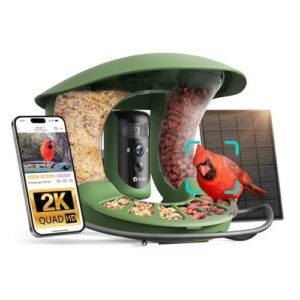
You want crystal-clear footage without wrestling with dead batteries every week. The Birdfy Smart Bird Feeder Camera delivers dual-lens 2K and 1080p resolution alongside AI-powered bird species identification that processes on-device.
Its 9,000 mAh solar-powered system keeps wildlife monitoring running nonstop, while the weatherproof build withstands 14°F to 113°F.
Smart features include real-time app alerts, weekly recaps, and free cloud storage. This smart bird feeder technology mounts easily on trees or posts, making bird watching technology accessible without complicated wiring or constant maintenance.
| Best For | Bird enthusiasts who want to identify and photograph backyard visitors without constantly checking batteries or dealing with complicated setup. |
|---|---|
| Camera Resolution | 2K and 1080p dual-lens |
| Power Source | Solar with 9,000 mAh battery |
| AI Identification | Yes |
| Weather Resistance | 14°F to 113°F |
| Material | PC, ABS, Metal |
| Connectivity | 2.4 GHz Wi-Fi |
| Additional Features |
|
- Dual-lens system captures both wide-angle live streaming and detailed close-up shots in 2K resolution for professional-quality bird photography
- Solar-powered 9,000 mAh battery eliminates the need for frequent recharging or battery swaps, keeping your feeder running year-round
- AI bird identification happens right on the device and sends instant alerts when new species arrive, so you never miss a rare visitor
- Only works with 2.4 GHz Wi-Fi networks, which limits placement options if your router is far from the mounting location
- AI species identification isn’t perfect and may misidentify similar-looking birds or struggle with juvenile plumage
- Requires regular cleaning to keep the camera lens clear and prevent seed buildup from blocking the solar panels
2. Birdsfafe Solar Bird Feeder Camera

The Birdsfafe Solar Bird Feeder Camera is powered by dual solar panels, eliminating the need for battery swaps and ensuring continuous wildlife monitoring from dawn to dusk.
This solar-powered camera captures 2K video with AI bird identification, instantly recognizing species like cardinals, blue jays, and hummingbirds. The 32GB included storage saves weeks of footage, while the manual squirrel siren protects your feed management system.
Its IP65 weatherproof housing ensures durability in temperatures ranging from 32°F to 113°F. Additionally, four users can stream simultaneously via the 2.4G WiFi connection, making birdwatching technology easily shareable across your household.
| Best For | Birdwatchers who want hands-free monitoring with solar power and AI species identification without constantly changing batteries. |
|---|---|
| Camera Resolution | 2K |
| Power Source | Solar with built-in panels |
| AI Identification | Yes (subscription required) |
| Weather Resistance | IP65 weatherproof |
| Material | ABS, PC |
| Connectivity | 2.4G Wi-Fi |
| Additional Features |
|
- Dual solar panels keep the camera running continuously without manual charging or battery replacements
- 2K video quality with AI identifies bird species automatically and sends instant arrival alerts
- Includes 32GB storage and supports up to 4 simultaneous users for family sharing
- AI bird identification requires a subscription after the initial free period
- Only works with 2.4G WiFi, not compatible with 5G networks
- Plastic construction may become brittle in extreme temperatures below 32°F or above 113°F
3. Netvue Smart Bird Feeder Camera
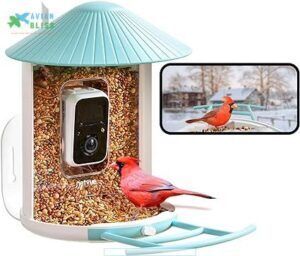
The Netvue Smart Bird Feeder Camera delivers 2K resolution with color night vision, capturing full 1080P footage around the clock. Your Netvue Birdfy Feeder AI subscription unlocks automated bird identification, though you’ll need to budget for ongoing access.
This smart feeder camera syncs with 2.4GHz WiFi for live streaming to your phone, while its 50oz container reduces refill frequency. The IP65-rated ABS housing withstands harsh weather, and proper camera placement near natural perches optimizes bird behavior documentation.
You’ll recharge every two days unless you add their solar panel accessory.
| Best For | Backyard birders who want automated species identification and 24/7 remote monitoring without constantly refilling feeders. |
|---|---|
| Camera Resolution | 2K |
| Power Source | Rechargeable battery |
| AI Identification | Yes (subscription required) |
| Weather Resistance | IP65 weatherproof |
| Material | ABS, PC |
| Connectivity | 2.4Ghz Wi-Fi |
| Additional Features |
|
- 2K resolution with color night vision captures clear footage day and night, plus AI identifies bird species automatically
- 50oz capacity means fewer refills, and the snap-lock roof makes maintenance quick when you do need to clean or add food
- IP65 weatherproof rating handles rain and wind while live streaming lets you watch from anywhere on your phone
- AI bird identification requires an ongoing subscription, adding to your total cost over time
- Battery needs recharging every two days unless you buy the separate solar panel accessory
- Camera stays attached to the feeder, so you can’t remove it easily for charging or thorough cleaning
4. Clear Acrylic Window Bird Feeder
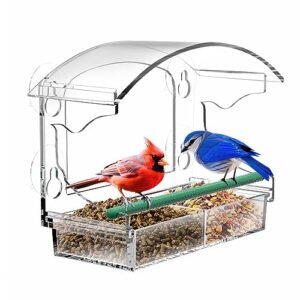
The BPYOT Clear Acrylic Window Bird Feeder offers a DIY approach to bird feeder cameras, pairing transparent acrylic construction with strong suction cups for unobstructed window placement. You’ll position your own camera behind the feeder design to capture close-range footage without specialized smart bird feeders or solar powered cameras.
The removable seed tray simplifies acrylic maintenance, while impact-resistant material withstands UV exposure. Proper bird attraction depends on strategic positioning and seed selection.
Unlike integrated birdwatching equipment, this setup requires separate camera mounts and manual recording management.
| Best For | Bird lovers who want an affordable, hands-on setup for window-based bird photography without investing in expensive smart feeders. |
|---|---|
| Camera Resolution | N/A |
| Power Source | N/A |
| AI Identification | No |
| Weather Resistance | N/A |
| Material | Acrylic |
| Connectivity | N/A |
| Additional Features |
|
- Clear acrylic design gives you unobstructed camera angles for close-up bird shots right outside your window
- Strong suction cups and removable seed tray make installation and cleaning straightforward
- Budget-friendly DIY option that lets you use your existing camera equipment instead of buying dedicated bird camera systems
- Requires you to supply and position your own camera, mount, and recording setup separately
- Suction cups may lose grip or arrive damaged, and acrylic can scratch over time if not cleaned carefully
- Bird attraction isn’t guaranteed—success depends heavily on your location, seed choice, and whether cats or window glare scare birds away
5. Ewinvos Window Bird Feeder
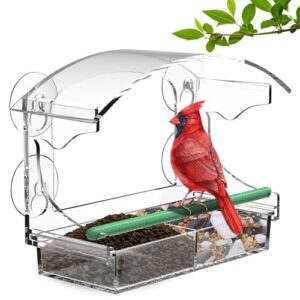
Ewinvos merges transparent window mounting with integrated camera streaming for hands-free bird watching. You’ll access live 1080p footage through the companion app, capturing bird behavior without external recording devices.
The magnetic or suction attachment system suits varied window types, while adjustable camera angles track feeder placement zones. Real-time alerts notify you when motion triggers the sensor, storing clips via microSD or cloud options.
Battery-powered operation eliminates wiring constraints, though solar-powered cameras offer extended runtime. Seed variety directly influences which species visit your smart feeder camera installation.
| Best For | Bird enthusiasts who want close-up viewing and automatic recording of feeder activity without setting up separate cameras. |
|---|---|
| Camera Resolution | N/A |
| Power Source | N/A |
| AI Identification | No |
| Weather Resistance | Weatherproof |
| Material | Acrylic |
| Connectivity | N/A |
| Additional Features |
|
- Live 1080p streaming through a mobile app lets you watch birds in real-time from anywhere and save footage to microSD or cloud storage.
- Magnetic or suction mounting works on most windows and includes adjustable angles to frame the feeding area perfectly.
- Motion-triggered alerts notify you instantly when birds arrive, so you never miss interesting visitor behavior.
- Battery life depends heavily on activity levels, meaning frequent recharging if your feeder sees lots of traffic.
- Camera lens and feeding ports need regular cleaning to prevent blur and seed buildup that affects image quality.
- Birds may take time to adjust to the feeder, especially if nearby pets or window reflections make them uncomfortable.
6. Bird Buddy Solar Smart Bird Feeder Camera

Bird Buddy breaks free from constant battery swaps with integrated solar power that fuels your wildlife monitoring setup indefinitely. The weatherproof ABS housing withstands rain and UV exposure while capturing 5MP photos automatically when motion triggers the camera.
You’ll get 2K video quality paired with AI-driven bird identification that recognizes species in real-time through the companion app. Smart bird feeders like this one deliver real-time alerts to your phone, transforming casual bird watching into documented field observation without monthly charging hassles.
| Best For | Bird enthusiasts who want hands-free wildlife photography without the hassle of charging batteries or missing rare visitors while they’re away. |
|---|---|
| Camera Resolution | 2K HD video, 5MP photos |
| Power Source | Solar-powered charging |
| AI Identification | Yes |
| Weather Resistance | UV resistant, weatherproof |
| Material | ABS |
| Connectivity | 2.4Gh Wi-Fi |
| Additional Features |
|
- Solar charging means you’ll never climb a ladder to swap batteries, and the system keeps running even during cloudy stretches thanks to the built-in backup battery.
- AI identification tells you exactly which species just landed at your feeder, complete with fun facts delivered straight to your phone in real-time.
- Weatherproof build handles rain and sun without degrading, so you can mount it once and let it work through all four seasons.
- You’ll need a 2.4GHz Wi-Fi connection, which might mean buying a range extender if your router’s too far from the mounting spot.
- Photo storage and premium features require a subscription, so the upfront cost isn’t the whole picture.
- Squirrels can damage the front panel or chew through cords, turning your bird feeder into an expensive chew toy.
7. Technaxx Bird Camera
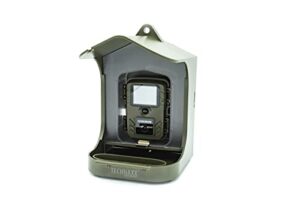
If you’re hunting for close-range wildlife monitoring without breaking the bank, the Technaxx TX165 delivers 1080p image quality through a macro-focused lens that captures birds from 2″ to 6″.
This outdoor camera triggers in 0.3 seconds with PIR motion detection and records Full HD video at 25 fps, letting you document bird behavior with built-in audio.
The weatherproof ABS housing withstands outdoor conditions, though you’ll need to pull the SD card for playback—a trade-off that keeps this bird feeder camera accessible for budget-conscious wildlife photography enthusiasts.
| Best For | Bird watchers and nature enthusiasts who want extreme close-up footage of feeder activity without spending a fortune on specialized wildlife cameras. |
|---|---|
| Camera Resolution | 1080P |
| Power Source | Solar panel |
| AI Identification | Yes (99% accuracy) |
| Weather Resistance | IP65 weatherproof |
| Material | Recycled Plastics |
| Connectivity | 2.4Ghz Wi-Fi |
| Additional Features |
|
- Lightning-fast 0.3-second trigger captures birds the moment they land, so you won’t miss quick visits
- Macro lens focus (2″-6″) lets you record incredible detail that standard trail cameras can’t match
- Weather-resistant housing stands up to rain and outdoor conditions for year-round monitoring
- Video quality disappoints some users despite the Full HD marketing, so manage your expectations
- You have to physically remove the SD card every time you want to review footage—no wireless transfer
- Battery life can drain quickly with frequent recordings, making rechargeable batteries almost mandatory
8. Soliom Bird Feeder Camera
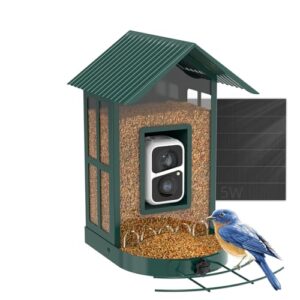
For hands-off wildlife photography enthusiasts, the Soliom BF08 pairs a metal squirrel-proof feeder with 2K image quality and a 5W solar panel that powers continuous remote monitoring. This smart feeder camera identifies over 10,000 bird species through AI recognition while its 5000mAh battery ensures you won’t miss critical bird behavior moments during extended field sessions.
The two-way audio and siren features add security functionality beyond typical bird feeder cameras, though Wi-Fi range limits placement to 12-15 feet from your router—a constraint that affects overall user experience in larger properties.
| Best For | Bird enthusiasts who want solar-powered, AI-driven species identification without constantly checking their feeder manually. |
|---|---|
| Camera Resolution | Full HD |
| Power Source | Battery powered |
| AI Identification | No |
| Weather Resistance | Weather-resistant |
| Material | ABS |
| Connectivity | N/A |
| Additional Features |
|
- 5W solar panel with 5000mAh battery means you rarely need to charge it yourself
- AI identifies over 10,000 bird species automatically, which is great for learning
- Metal construction keeps squirrels from chewing through it like they do with plastic feeders
- You need to keep it within 12-15 feet of your router, which limits where you can place it
- Solar charging won’t work well if your yard is shaded or the panel gets blocked
- The Wi-Fi range issue makes it tough to use in larger properties
9. Netvue Hummingbird Feeder Attachment
If you’re targeting fast-moving hummingbirds rather than perching songbirds, Netvue’s specialized 18.3-ounce attachment transforms your existing Birdfy camera into a dedicated hummingbird observation station. The polycarbonate feeder design features a red lid with yellow flower accents that exploit hummingbird behavior and visual preferences for nectar-rich blooms.
While the easy-refill top simplifies feeder maintenance, you’ll need to monitor the attachment clip carefully—users report it breaks under incorrect installation pressure. Seeds from nearby bird feeder cameras can clog the nectar ports, limiting this smart feeder camera’s effectiveness in multi-feeder birdwatching setups.
| Best For | Birdfy camera owners who want to record hummingbird visits without buying a separate camera system. |
|---|---|
| Camera Resolution | 2K |
| Power Source | 5W solar with 5000mAh battery |
| AI Identification | Yes (10,000+ species) |
| Weather Resistance | Metal construction |
| Material | Metal |
| Connectivity | 2.4G Wi-Fi |
| Additional Features |
|
- Red-and-yellow flower design naturally attracts hummingbirds to your existing camera’s field of view.
- Easy-refill top lets you swap nectar without dismounting the entire feeder attachment.
- Built-in perches give hummingbirds a place to rest, increasing your chances of capturing clear footage.
- Attachment clip breaks easily if you don’t follow installation instructions precisely.
- Nectar ports clog when seed debris drifts over from nearby feeders.
- Squirrels can steal detachable components if the feeder isn’t secured properly.
Installation and Maintenance Tips
Getting your bird camera up and running doesn’t have to feel like decoding a field manual. The right setup keeps your feed live, your footage sharp, and your equipment weathering every season without a hitch.
Here’s what you need to lock down for trouble-free remote viewing.
Flexible Mounting Options
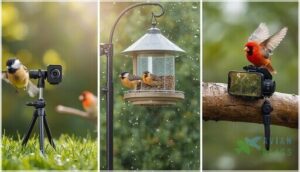
You can mount your bird feeder cameras anywhere with the right attachment system. Magnetic mounts snap onto metal surfaces without drilling. Suction cups hold up to 2 kg on glass. Clamp systems grip branches and rotate 360 degrees. Tripod stands stabilize outdoor cameras on flat ground. Adhesive pads stick wireless bird box cameras to window sills or smart feeder cameras to acrylic housings. Pick what fits your setup.
| Mount Type | Best Use |
|---|---|
| Magnetic Mounts | Metal surfaces, temporary placement |
| Suction Cups | Glass windows, smooth surfaces |
| Clamp Systems | Tree branches, railings, posts |
| Tripod Stands | Flat ground, low-height angles |
| Adhesive Pads | Window sills, garden cameras |
Setting Up Power and Connectivity
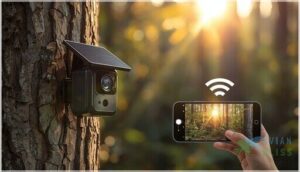
Solar power delivers freedom from cords and outlets. Most cameras need 4–6 hours of sunlight daily to keep Battery Life above 80%. Position Solar Panels toward south-facing light for maximum charge.
Battery-operated models with 3000–5000 mAh run 5–7 days between charges.
Strong Wi-Fi Signals within 30 feet guarantee smartphone apps stream live footage. Test Connectivity Options before final placement to avoid dead zones in your wireless technology setup.
Weatherproofing for Outdoor Use
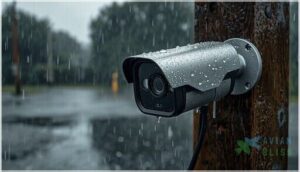
Power and connectivity mean nothing if rain destroys your outdoor camera selection. Look for these five Weatherproofing standards in wireless surveillance systems:
- IP66 or IP67 Water Resistance against driving rain
- Dust Protection sealing all entry points
- Thermal Insulation rated minus 10°C to 50°C
- UV Stability in polycarbonate housings
- Moisture Sealing with O-ring gaskets at cables
Stainless steel mounts resist corrosion. Sloped enclosures shed water naturally for outdoor surveillance that survives seasons.
Managing Storage and Data Archiving

Your wireless surveillance systems fill a 128 GB microSD card faster than you think. At 1080p, that’s roughly 56 hours before local archiving overwrites your earliest footage. Cloud storage extends data retention to 30 or 60 days, but motion detection clips compress automatically.
Set file compression to balance battery life and image quality, then enable storage security with password protection on both digital camera features and remote servers.
Understanding cloud storage options is essential for maximizing your camera’s potential.
Routine Camera Maintenance
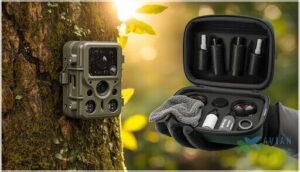
Once your data workflow runs smoothly, protect your investment with consistent upkeep. Camera technology demands attention to detail—neglect accelerates failure in outdoor conditions.
- Lens cleaning removes debris that degrades image sharpness and motion detection accuracy
- Firmware updates patch vulnerabilities and improve battery life across all operating modes
- Seal replacement maintains weatherproofing integrity against moisture infiltration
- Hardware inspection catches mounting looseness before equipment falls
- Battery care includes testing charge cycles and replacing cells showing reduced night vision performance
How to Choose The Best Bird Camera
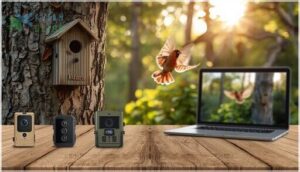
Choosing the right bird camera isn’t about buying the most expensive model—it’s about matching specific features to how you actually plan to use it. You need to factor in your budget, the real-world performance other users have experienced, and whether the camera works seamlessly with your existing tech setup.
Let’s break down the key factors that’ll help you make a confident decision.
Matching Features to Your Birdwatching Needs
Start with the bird species you want to track—are you documenting backyard regulars or hunting rare migrants? Camera placement and feeder types shape what you’ll see.
AI-powered species recognition manages identification automatically, while motion-triggered alerts match remote bird monitoring to your schedule.
Choose features that support your specific birdwatching goals, whether that’s wildlife tracking, analyzing bird behavior, or building a complete species list. For best results, consider using a smart bird camera to improve your birdwatching experience.
Assessing Budget and Value
Entry-level bird cameras run $50 to $150, while premium models with AI identification and solar charging push past $300—your budget sets the baseline, but long-term value depends on durability and feature performance in the field.
Cost analysis for smart bird feeders weighs investment returns against replacement cycles. Best bird feeder cameras balance price comparison with proven weather resistance.
Budget planning for bird watching at home prioritizes features you’ll actually use over spec-sheet bragging rights.
Evaluating User Reviews and Support
Customer feedback cuts through marketing claims—you want aggregate ratings above 4.0 stars and recent reviews that confirm product reliability across months of field use. Support quality matters when firmware fails or connectivity drops during peak migration.
Smart bird feeder reviews reveal critical patterns:
- User satisfaction tracks app stability and alert consistency
- Birdwatching at home demands reliable motion detection you can trust
- Review analysis separates one-day failures from proven performers
- Best bird feeder cameras maintain connection without weekly resets
- Bird watching success hinges on responsive customer service when issues arise
Ensuring Compatibility With Existing Devices
Before you commit to a bird feeder camera, verify your smartphone runs the vendor app—most require Android 8.0+ or iOS 14.5+. Check Wi-Fi standards: cameras lock to 2.4 GHz networks, so dual-band routers need proper network configuration.
RTSP-compatible models enable device integration across Windows and Mac. System requirements matter when mesh networks or older mobile devices limit camera connectivity and app compatibility.
Frequently Asked Questions (FAQs)
Do bird cameras disturb or scare away birds?
Most bird feeder cameras won’t spook your visitors. Shy species may startle briefly at flashing LEDs, but proper camera placement and camouflage let birds resume natural behavior within minutes.
How much monthly data do bird cameras use?
Monthly data usage depends on your setup. Motion-triggered clips usually consume 1-5 GB, while continuous HD streaming can demand 200-300 GB.
Live viewing sessions burn through data fast—expect 20 MB per minute of remote observation.
Are bird cameras legal in all locations?
Yes, but camera regulations and privacy laws vary by legal jurisdictions. You’ll face data protection requirements if recording people, and some HOAs restrict surveillance equipment. Always verify local home security and surveillance ethics rules first.
What warranty coverage do bird camera manufacturers offer?
Most manufacturers provide one to two year coverage on bird feeder cameras. Warranty length varies: Netvue offers 12 months, while Birdfy and Bird Buddy extend protection to 24 months with proof of purchase required.
Conclusion
You’ll never squint through rain-streaked windows wondering what just visited your feeder again. Bird cameras for remote viewing hand you complete control over wildlife documentation—no guesswork, no missed opportunities.
Match motion sensitivity to your yard’s traffic patterns, prioritize solar power for uninterrupted coverage, and choose AI recognition that fits your target species. Your smartphone becomes the command center. Set it up right once, and every rare sighting lands directly in your archive.
- https://cna.st/affiliate-link/36TDN37JM9t1CAkAAuKb3yi33aV9KWoSHui6Nmq2s6RGszAM5NmAB947SzqbejQQnV6kskJ3oFmsbYY6kZh8mTEX1fiz1VtqWPE759ahgmaSAfpG3YV3BnqZE5yQxUftFc6hYTjkzUjESxUzDwXFEqsf
- https://www.vicohome.io/appdownloads
- https://reconeyez.com/knowledgebase/weather-proof-cameras/
- https://security.baseus.com/blogs/content/a-guide-to-ip65-ip66-and-ip67-ratings-for-outdoor-security-cameras
- https://www.cctvcamerapros.com/IP67-Cameras-s/1757.htm