This site is supported by our readers. We may earn a commission, at no cost to you, if you purchase through links.
A flash of wings at your window, gone before you can grab your phone—birders know that frustration intimately. What if your feeder could catch every visitor, name it, and send you an alert before you’ve even looked up from your coffee?
Smart bird feeder camera systems have quietly transformed backyard birding over the past few years. Models now pack AI species recognition, solar charging, and 2K video into weatherproof units that run for months without attention. Some can identify over 16,000 species with a confidence score, log your sightings to eBird, and stream live footage directly to your phone.
Choosing the right one depends on what you actually need—and these ten options cover every type of birder.
Table Of Contents
- Key Takeaways
- Top 10 Bird Feeder Camera Systems
- 1. Bird Buddy Solar Smart Bird Feeder Camera
- 2. NETVUE Birdfy Smart Bird Feeder with Camera
- 3. Birdfy 2 Smart Bird Feeder with Camera
- 4. isYoung Smart Bird Feeder with Camera
- 5. Harymor AI Smart Solar Bird Feeder Camera
- 6. SOLIOM Solar Smart Bird Feeder Camera
- 7. Wasserstein Bird Feeder Camera Case
- 8. Wyze Cam Outdoor v2 Add-On Camera
- 9. Blink Outdoor 4 Wireless Security Camera System
- 10. Ring Stick Up Outdoor Security Camera
- Key Camera Features to Compare
- Smart Bird Identification Features
- Power, Durability, and Setup
- Choosing The Best System
- Frequently Asked Questions (FAQs)
- What is the average lifespan of bird feeder cameras?
- How do bird feeder cameras deter squirrels effectively?
- What maintenance is required to keep cameras functional?
- Can multiple users access one camera simultaneously?
- How does image quality perform in foggy conditions?
- Do cameras interfere with natural bird behavior patterns?
- Are recorded videos automatically saved to cloud storage?
- What happens during extended power outages or failures?
- How often should bird feeder cameras be cleaned?
- Which bird species are most attracted to feeders?
- Conclusion
Key Takeaways
- AI-powered feeders like the isYoung and Birdfy 2 can identify thousands of bird species in real time, turning a passive hobby into an active, logged record of every backyard visitor.
- Solar charging paired with IP65+ weatherproofing means the best systems run for months with almost no maintenance — no cables, no constant battery swaps, no babysitting.
- Subscription costs are the hidden variable that separates a great deal from an ongoing expense, since features like AI identification, cloud history, and motion alerts are often locked behind monthly fees.
- If you already own a Ring, Blink, or Wyze camera, a retrofit case like the Wasserstein lets you skip buying a dedicated unit entirely and still get close-up wildlife footage.
Top 10 Bird Feeder Camera Systems
Whether you’re just getting started or you’ve been watching birds for years, the right feeder camera can completely change how you connect with your backyard wildlife.
From picking the perfect camera to nailing placement and reading bird behavior, this guide to setting up a camera at your bird feeder covers everything you need to get started with confidence.
The options below cover a wide range — from AI-powered feeders with built-in cameras to security cameras you can retrofit around an existing setup. Here are ten of the best bird feeder camera systems worth your attention in 2026.
1. Bird Buddy Solar Smart Bird Feeder Camera

The Bird Buddy Solar Smart Bird Feeder Camera brings AI-powered bird recognition right to your backyard — no biology degree required. Its 5MP camera and 2K video capture feather-level detail, while HDR imaging controls tricky backlit scenes beautifully. A detachable solar roof keeps things running without constant battery swaps, though expect slower charging on cloudy winter days.
You get real-time app alerts, slow-motion video, and audio recording, all managed through a clean smartphone interface that even beginners can navigate comfortably.
| Best For | Families, nature lovers, and curious kids who want a fun, tech-forward way to discover and learn about the birds visiting their backyard. |
|---|---|
| Video Resolution | 5MP / 2K |
| Wi-Fi Connectivity | 2.4GHz Wi-Fi |
| Motion Detection | Real-time alerts |
| Weather Resistance | Outdoor rated |
| Power Source | Solar panel |
| Storage Options | Cloud (subscription) |
| Additional Features |
|
- AI bird identification makes spotting and learning species effortless — no expertise needed
- 5MP photos and 2K video capture stunning feather-level detail, even in tricky lighting
- Solar-powered design means low maintenance and continuous outdoor operation
- Advanced AI features and live streaming require a paid subscription to unlock
- Only works on 2.4 GHz Wi-Fi, which could be a hurdle for some home network setups
- Solar charging slows down in winter or overcast conditions, limiting off-grid reliability
2. NETVUE Birdfy Smart Bird Feeder with Camera
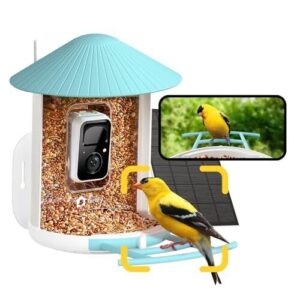
Where Bird Buddy leans into premium polish, the NETVUE Birdfy keeps things refreshingly straightforward. Its 1080P camera with color night vision covers a 135-degree field of view, catching birds from dawn through dusk without missing a beat.
Solar charging and a 1.5L seed reservoir mean you won’t be fussing with cables or constant refills. The Birdfy app identifies over 6,000 species and sends real-time alerts — and the AI identification comes free, no subscription required.
| Best For | Backyard birdwatchers and nature lovers who want a low-maintenance, feature-packed smart feeder without paying ongoing subscription fees. |
|---|---|
| Video Resolution | 1080P HD |
| Wi-Fi Connectivity | 2.4GHz Wi-Fi |
| Motion Detection | Automated highlights |
| Weather Resistance | IP65 rated |
| Power Source | Solar + battery |
| Storage Options | Cloud (3 months free) |
| Additional Features |
|
- AI identifies over 6,000 bird species with 99% accuracy — completely free, no subscription needed
- Solar-powered with a large 1.5L seed reservoir, so daily upkeep is minimal
- Color night vision and 1080P clarity mean you won’t miss a visit, day or night
- No SD card included, so you’re relying on Wi-Fi and cloud storage (only three months free) from the start
- The minimal roof overhang can let rain soak the seed tray during heavy downpours
- Plastic build feels functional rather than premium — not ideal if aesthetics matter to you
3. Birdfy 2 Smart Bird Feeder with Camera
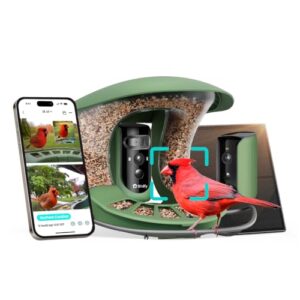
The Birdfy 2 takes things up a notch with a triple-lens system — wide-angle, 2K close-up, and side-angle views working together to capture feather-level detail you’d otherwise miss.
Its AI species recognition covers 6,000+ birds and pushes real-time alerts straight to your phone. Solar charging keeps it running wire-free, and you can share the live feed with up to 20 guests — making it surprisingly social for a backyard feeder.
| Best For | Bird enthusiasts, nature educators, and families who want an interactive, high-tech backyard birdwatching experience with easy sharing and zero wiring hassle. |
|---|---|
| Video Resolution | 2K HD |
| Wi-Fi Connectivity | 2.4GHz Wi-Fi |
| Motion Detection | Instant alerts |
| Weather Resistance | Durable construction |
| Power Source | Solar + battery |
| Storage Options | Cloud included |
| Additional Features |
|
- Triple-lens setup with 2K resolution captures stunning detail from multiple angles simultaneously
- Solar-powered and fully wireless — no outlets, no ongoing power costs
- Share live feeds with up to 20 guests, making birdwatching a genuinely social experience
- Only works on 2.4GHz WiFi, so homes with 5GHz-only networks will need a workaround
- Solar panel requires separate mounting and a Y-cable connection, adding setup steps
- AI identification isn’t perfect and can occasionally misidentify species or bird features
4. isYoung Smart Bird Feeder with Camera
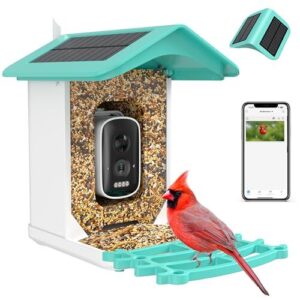
If the Birdfy 2 is the multi-lens showpiece, the isYoung takes a more focused approach — and it works.
2.5K QHD resolution paired with full-color night vision means you’re getting sharp, detailed footage day and night. Its AI can identify over 16,000 bird species through the VicoHome app, which sends instant alerts straight to your phone.
Solar-powered with IP65 weatherproofing, it runs reliably through rain or cloud cover — no fussing with cables.
| Best For | Bird enthusiasts, families with kids, or anyone who wants a reliable, solar-powered feeder cam that works day and night without a lot of setup fuss. |
|---|---|
| Video Resolution | 2.5K QHD |
| Wi-Fi Connectivity | 2.4GHz Wi-Fi |
| Motion Detection | Instant notifications |
| Weather Resistance | IP65 rated |
| Power Source | Dual solar panels |
| Storage Options | Cloud 7 days + SD card |
| Additional Features |
|
- Sharp 2.5K QHD footage with full-color night vision keeps you in the action around the clock
- AI identifies over 16,000 species through the app, making it genuinely useful for learning and logging visits
- Solar-powered with IP65 weatherproofing means it runs reliably with almost zero maintenance
- AI identification and extra cloud storage are locked behind a paid subscription
- Only works on 2.4GHz Wi-Fi, so it won’t play nicely with 5GHz-only networks
- Birds feeding close to the lens can appear blurry due to depth-of-field limitations
5. Harymor AI Smart Solar Bird Feeder Camera
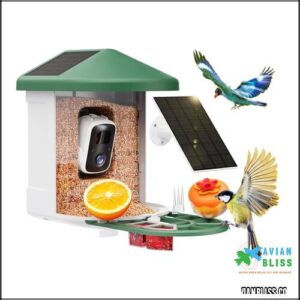
The Harymor keeps things refreshingly straightforward — dual solar panels plus a 5200mAh battery mean you’re rarely scrambling for a charger. It shoots 2K HD video through a 120° wide-angle lens, with 3x digital zoom pulling birds close enough to spot field markings clearly.
Pair those crisp 2K clips with online bird identification resources to nail down species from field markings the zoom captures.
Real-time alerts hit your phone the moment a visitor lands. With 2L seed capacity and IP65 weatherproofing, it experiences rain and long stretches between refills without complaint — a solid pick for low-fuss backyard watching.
| Best For | Families, beginners, and elderly birdwatchers who want a low-maintenance, tech-forward feeder that identifies species automatically and streams live footage straight to their phone. |
|---|---|
| Video Resolution | 2K HD |
| Wi-Fi Connectivity | 2.4GHz Wi-Fi |
| Motion Detection | Arrival alerts |
| Weather Resistance | IP65 rated |
| Power Source | Dual solar panels |
| Storage Options | Cloud + 128GB SD card |
| Additional Features |
|
- Dual solar panels plus a large battery keep it running with minimal intervention — no constant recharging needed
- 2K HD video with a 120° wide-angle lens and 3x zoom captures sharp, detailed footage of visiting birds
- AI species identification across 10,000 species makes it genuinely educational, not just a novelty
- Only works on 2.4GHz Wi-Fi, so homes with 5GHz-only networks will need to adjust their setup
- AI identification isn’t perfect and may occasionally need a manual correction
- Squirrels can be persistent, and small birds may slip inside if the seed runs low
6. SOLIOM Solar Smart Bird Feeder Camera
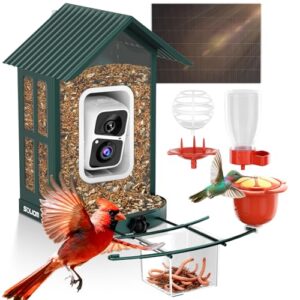
The SOLIOM stands out with 4K live view and 5G Wi-Fi support — a combination you don’t often see at this price point. Its 5000mAh battery pairs with a detachable solar panel, so the camera keeps running even through overcast stretches.
Full-color night vision and a 120° field of view mean you’re not missing much, day or night. Real-time alerts land straight on your phone, and local microSD storage keeps footage accessible without a subscription.
| Best For | Bird enthusiasts and nature lovers who want a smart, solar-powered feeder with AI species identification and the convenience of remote smartphone monitoring. |
|---|---|
| Video Resolution | 2K HD |
| Wi-Fi Connectivity | 2.4GHz Wi-Fi |
| Motion Detection | Instant motion alerts |
| Weather Resistance | Outdoor durable |
| Power Source | Solar + battery |
| Storage Options | Cloud + SD card |
| Additional Features |
|
- 2K HD camera delivers sharp, clear footage for both bird watching and casual home security monitoring
- AI-powered bird species identification makes it a genuinely educational tool, not just a camera
- Solar-powered with a built-in battery means minimal maintenance and no worrying about charging
- Requires a stable 2.4GHz Wi-Fi connection, which may limit placement options in larger yards
- Some users have reported software glitches and connectivity issues that may need periodic updates to fix
- Refilling the seed can be tricky for anyone with limited mobility due to the feeder’s design
7. Wasserstein Bird Feeder Camera Case
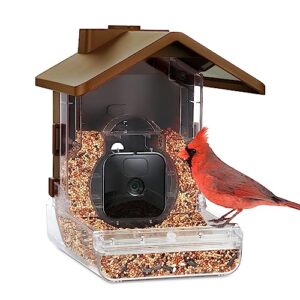
What if your existing security camera could pull double duty as a wildlife lens? That’s exactly the idea behind the Wasserstein Bird Feeder Camera Case — a weatherproof housing that turns compatible Ring, Blink, or Wyze cameras into a dedicated bird-watching setup.
The case holds 26.4 oz of seed and includes a perch positioned right in front of the camera lens. Dual mounting options — tree strap or wall bracket — make placement flexible, and a cable slot for solar panels keeps your camera charged without downtime.
| Best For | Bird watchers and home security enthusiasts who want to repurpose a compatible Ring, Blink, or Wyze camera for close-up wildlife viewing without buying dedicated equipment. |
|---|---|
| Video Resolution | Camera dependent |
| Wi-Fi Connectivity | Camera dependent |
| Motion Detection | Camera dependent |
| Weather Resistance | Weatherproof plastic |
| Power Source | Camera dependent |
| Storage Options | Camera dependent |
| Additional Features |
|
- Works with a wide range of popular cameras (Blink Outdoor 4, Wyze Cam V3, Ring Stick Up Cam, and more), so there’s a good chance your existing camera is supported
- Weatherproof build with flexible mounting options — tree strap or wall bracket — makes it easy to find the right spot in your yard
- Built-in solar panel cable slot means you can keep the camera powered around the clock with minimal hassle
- Camera isn’t included, so the total cost is higher than the case price alone
- Wide-angle security lenses can struggle to focus clearly on birds at such close range
- Cable routing and tray assembly can be fiddly, and the feeder may attract squirrels or mice depending on where you place it
8. Wyze Cam Outdoor v2 Add-On Camera
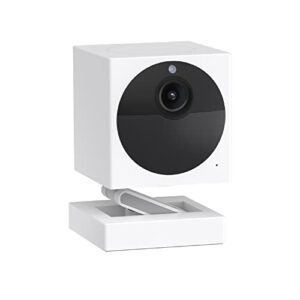
The Wyze Cam Outdoor v2 Add-On pairs well with the Wasserstein case mentioned above — but it also stands on its own as a surprisingly capable wildlife monitor. It shoots 1080p HD video at a 130-degree field of view, runs on two 2,600mAh batteries for several months, and includes color night vision for low-light captures.
Setup requires a Wyze Base Station, so it’s best suited if you’re already using those products. One base station can handle up to four cameras.
| Best For | Existing Wyze ecosystem users who want a flexible, wire-free outdoor camera with solid night vision for home security or wildlife monitoring. |
|---|---|
| Video Resolution | 1080P HD |
| Wi-Fi Connectivity | Via base station |
| Motion Detection | PIR heat-based |
| Weather Resistance | IP65 rated |
| Power Source | Rechargeable battery |
| Storage Options | Cloud 14 days free |
| Additional Features |
|
- 1080p video with a wide 130-degree field of view and color night vision for low-light conditions
- Wire-free and weather-resistant (IP65) with up to 6 months of battery life per charge
- Supports solar panel charging and works with one base station covering up to four cameras
- Color night vision needs some ambient light to work well — it won’t perform in total darkness
- Advanced features like person and package detection require a paid CamPlus subscription
- Requires a Wyze Base Station, so it’s not a plug-and-play option if you’re not already in the Wyze ecosystem
9. Blink Outdoor 4 Wireless Security Camera System
Not every backyard birder needs a purpose-built feeder cam — sometimes a reliable security camera does the job just fine.
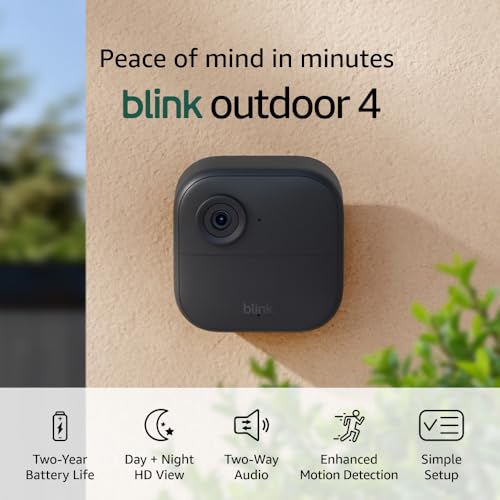
The Blink Outdoor 4 shoots crisp 1080p HD video, runs on AA lithium batteries for up to two years, and endures rain, wind, and dust without complaint. Dual-zone motion detection keeps false alerts low, and Alexa support makes remote viewing a breeze. Local storage via Sync Module 2 means no forced subscription, though cloud history does require a paid plan.
| Best For | Backyard birders and homeowners who want a no-fuss, flexible security camera that works without a monthly subscription. |
|---|---|
| Video Resolution | 1080P HD |
| Wi-Fi Connectivity | 2.4GHz Wi-Fi |
| Motion Detection | Dual-zone detection |
| Weather Resistance | Outdoor rated |
| Power Source | AA batteries |
| Storage Options | Cloud + local USB |
| Additional Features |
|
- Long-lasting AA lithium batteries offer up to two years of life, so you’re not constantly swapping cells
- Local storage via Sync Module 2 keeps your footage accessible without requiring a paid plan
- Simple DIY setup means you can mount it and start watching birds (or your backyard) in minutes
- Person detection and cloud video history are locked behind a subscription, which adds ongoing cost
- Extreme cold can sap battery performance faster than expected
- Reliable performance depends on strong Wi-Fi and staying close to the Sync Module
10. Ring Stick Up Outdoor Security Camera
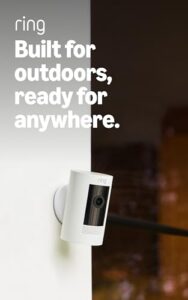
Think of the Ring Stick Up as the handy all-rounder that won’t lock you into a bird-specific setup.
It records 1080p HD video with Color Night Vision, delivers instant motion alerts to your phone, and allows for flexible mounting — flat surface or wall. Two-way audio lets you monitor activity hands-free with Alexa. Battery life depends heavily on how often motion triggers recordings. A Ring Protect subscription is required for video history, so factor that into your budget.
| Best For | Homeowners or renters who want flexible, wire-free outdoor security without committing to a fixed installation. |
|---|---|
| Video Resolution | Unspecified |
| Wi-Fi Connectivity | Wi-Fi enabled |
| Motion Detection | Instant alerts |
| Weather Resistance | Outdoor rated |
| Power Source | Rechargeable battery |
| Storage Options | Cloud (subscription) |
| Additional Features |
|
- Color Night Vision gives you clear, detailed footage even in low-light conditions
- Two-way audio and Alexa integration make hands-free monitoring genuinely convenient
- Versatile mounting options mean you can place it almost anywhere without rewiring
- Video history requires a Ring Protect subscription, adding an ongoing cost
- Battery life can drain quickly in high-traffic areas with frequent motion triggers
- Performance depends heavily on a strong Wi-Fi signal, which can be a problem in dead zones
Key Camera Features to Compare
Not all bird feeder cameras are built the same, and the differences that matter most aren’t always obvious at first glance. Before you spend your money, it’s worth knowing which features actually affect your experience day to day. Here are the key specs to look at as you compare your options.
Night Vision Quality
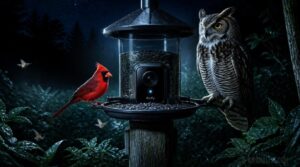
What separates a decent feeder camera from a great one often comes down to what it captures after dark. Full-color night vision — like the isYoung’s system — lets you actually identify markings, not just silhouettes.
Infrared illumination ranges reaching 75 meters mean nocturnal wildlife detection stays reliable even in total darkness, while strong sensor noise reduction keeps low-light recording sharp and grain-free.
Motion Detection Alerts
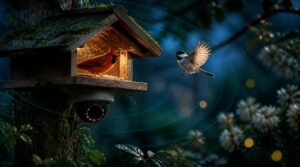
Good night vision tells you what visited — but motion detection alerts tell you when. PIR sensors trigger recording by detecting body heat, cutting false alarms from swaying branches.
- Set tight detection zones around feeder entrances
- Adjust trigger sensitivity for small birds
- Enable alert cadence limits to avoid notification floods
- Use cross-trigger rules combining PIR and video data
High-end video motion detection helps identify movement by analyzing changes in video frames.
Real-time push notifications land on your phone the moment a visitor arrives.
Viewing Angle Coverage
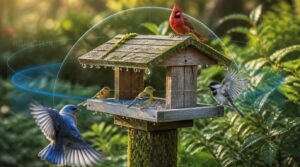
Knowing when a bird arrives is only half the picture — you also need a camera that can actually see it.
Horizontal field of view usually spans 120 to 170 degrees, while vertical reach covers roughly ±40 to ±60 degrees. Models with a triple-lens system or pan-tilt motion extend that range considerably, reducing blind spots around the feeder.
Photo and Video Storage
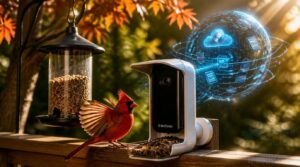
Once you’ve captured that perfect shot, you need somewhere reliable to keep it. Most systems split between cloud vs local storage — a microSD card controls on-device saves up to 128GB, while cloud plans extend your history from a few days to a full year.
App subscriptions like Birdfy’s $4.99 monthly tier provide longer retention, though some models offer free local-only access.
Smart Bird Identification Features
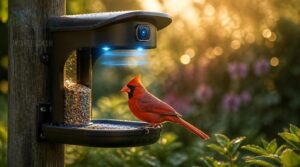
Smart feeders have come a long way from simply snapping a photo of whatever lands on the perch. The real magic happens when the camera actually knows what it’s looking at — and what you do with that information afterward.
Here’s a closer look at the identification features that separate a good smart feeder from a genuinely useful one.
AI Species Recognition
Think of AI species recognition as a bird expert living inside your feeder. Using neural network training on thousands of labeled images, a smart bird feeder can match plumage patterns, beak shape, and body size to identify visitors instantly.
AI species recognition is like having a bird expert inside your feeder, instantly identifying visitors by plumage, beak, and size
Some systems even perform acoustic pattern analysis from calls. The result is automated species recognition that logs each sighting automatically — no field guide required.
App Accuracy and Usability
How well the app performs matters just as much as the camera itself. Most apps display AI confidence scores alongside each detection, so you’re never left guessing whether that blur was a sparrow or a leaf.
You can adjust notification thresholds to cut false alerts, and video playback controls let you scrub back frame by frame. Privacy settings keep your footage yours.
Real-time Bird Alerts
Imagine glancing at your phone and seeing a Wilson’s Warbler landed at your feeder — right now.
Real-time bird arrival notifications push alerts within seconds of motion detection, often including the species name and a timestamp. You can set a geographic sighting radius and filter by rarity, so only the visits worth knowing about interrupt your day.
Sharing Bird Sightings
Every sighting you capture becomes more valuable when shared thoughtfully. Most bird feeder camera apps let you post directly to citizen science platforms like eBird, turning your backyard footage into real data for researchers.
When you share, annotate your media with time, date, and behavior — it helps with species verification accuracy. For rare birds, share locations only in trusted, private groups to protect sensitive populations.
Subscription Versus Free Features
Free plans cover the basics — motion alerts, standard video, and a few days of cloud storage. But if AI accuracy tiers matter to you, premium unlocks expanded species libraries and confidence scoring.
Birdfy’s subscription runs $4.99 monthly or $49 annually. You’ll also get longer video retention, richer export formats, and priority support — worth it if you’re serious about tracking what visits your feeder.
Power, Durability, and Setup
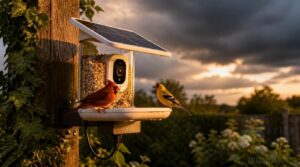
Getting a bird feeder camera up and running involves more than just picking the prettiest model — you need to think about how it stays powered, how well it holds up through rough weather, and where it actually fits in your yard.
The good news is that today’s smart feeders have come a long way in making all of this pretty straightforward. Here’s what to keep in mind across the five areas that matter most.
Solar Charging Options
A solar-powered bird feeder runs on free energy — no outlet hunting required.
Solar panels (usually 5W–20W) feed a charge controller, which prevents battery overcharging. Monocrystalline panels squeeze the most power from limited space, while south-facing, ideal tilt angles get the most out of the daily harvest.
Four things that make solar reliable:
- MPPT charge controllers improve output in changing light
- IP66-rated weatherproof enclosures protect components
- Dual solar panels double cloudy-day reliability
- UV-resistant coatings extend panel lifespan outdoors
Battery Life Expectations
Solar autonomy can stretch to 180 days on top models, but real-world battery life depends on more than sunshine. Discharge cycles, temperature swings, and even battery age quietly chip away at capacity over time.
Deep discharges wear cells faster than shallow ones, and cold winters hit rechargeable lithium-ion batteries hard. Moderate charging speeds preserve long-term health better than rapid charging ever will.
Weatherproof Ratings
Battery wear and weather damage often go hand in hand — which makes IP rating differences worth understanding before you buy.
- IP65 blocks dust and resists water jets
- IP66 experiences heavy rain and powerful sprays
- IP67 survives temporary submersion up to one meter
Weatherproof design protects against wind and rain, but waterproof vs weatherproof isn’t the same thing. UV degradation risks and thermal expansion impact seals over time, so check seal integrity maintenance guidelines too.
Mounting Location Choices
Where you place your camera matters almost as much as which one you buy. Aim for 1.5 to 2.5 meters above ground — high enough to frame visiting birds clearly, low enough to capture real detail.
A universal pole mount gives you the flexibility to fine-tune that height without committing to a fixed spot permanently.
Wi-Fi Connection Strength
Your feeder’s camera is only as good as the signal feeding it. Aim for an RSSI of -67 dBm or better — that’s the sweet spot for reliable live video streaming and real-time alerts.
If your router sits far from the garden, a mesh network node placed closer to the window solves most drop-out problems instantly.
Choosing The Best System
No two birders want exactly the same thing from a feeder camera, so the right pick really comes down to your situation. Whether you’re just starting out, watching your budget, or building a full smart home setup, there’s a system here that fits. Here’s a breakdown of the best options for every type of birder.
Best for Beginners
Starting out with a smart bird feeder doesn’t have to feel overwhelming. Models like the Bird Buddy Solar and isYoung come with plug-and-play assembly, app-guided setup, and clear on-screen prompts — so you’re watching birds within minutes.
Most include a 12-month warranty and 30-day returns, giving you real breathing room to learn as you go.
Best for Serious Birders
Dedicated birders need more than a pretty snapshot. Systems like the Birdfy Feeder 2 Duo — with its triple-lens setup and AI species recognition across 6,000+ species — pair naturally with high-magnification binoculars and regional checklists for confident plumage identification.
Autofocus tracking, HDR imaging, and 2K motion-tracking video mean you’re documenting behavior, not just glimpsing it. Your portable sighting log finally has footage to back it up.
Best Budget-friendly Option
Spending under $120 doesn’t mean settling. The isYoung Smart Bird Feeder delivers 1080p video and solid AI bird identification for as little as $60 — real capability at an entry-level price.
- Affordable solar charging extends runtime without constant battery swaps
- Budget video resolution at 1080p captures most backyard visitors clearly
- MicroSD storage eliminates the need for costly cloud subscriptions
- Entry-level app features cover motion alerts and basic species tagging
Best Smart Home Setup
If your home already runs on smart lighting and voice assistants, a smart bird feeder with camera slots right in. Look for Matter compatibility so it pairs cleanly with Alexa, Google Home, or HomeKit.
Pair that with mesh Wi-Fi coverage outdoors, and real-time visit alerts reach your phone without drops. Geofencing can even trigger porch lights when birds arrive at dusk.
Best Low-maintenance Choice
A solar-powered bird feeder basically runs itself. Built-in panels keep the rechargeable lithium-ion battery topped up through daylight hours — up to six weeks between full charges in moderate climates — so you’re rarely fumbling with cords.
Weatherproof housings rated IP66 or higher shrug off rain and dust for years. Wide-angle lenses cut repositioning needs, and automated storage syncing takes care of footage quietly in the background. Most quick-install kits are ready in under 15 minutes.
Frequently Asked Questions (FAQs)
What is the average lifespan of bird feeder cameras?
Most bird feeder cameras last 2 to 5 years, depending on build quality, climate, and how well you maintain them. Solar models tend to push that ceiling higher by reducing battery wear.
How do bird feeder cameras deter squirrels effectively?
Squirrels trigger AI motion analysis to distinguish rodent speed from bird visits. Metal seed guards and anti-chew housings block access, while brief sound or light alerts from bird feeder cameras prompt quick retreats.
What maintenance is required to keep cameras functional?
A stitch in time saves nine — wipe the lens with microfiber, check seals after storms, clean solar panels, update firmware, and monitor battery health to keep your camera sharp and reliable.
Can multiple users access one camera simultaneously?
Yes — most smart bird feeder cameras support multiple user profiles, letting family members view live feeds simultaneously without sharing login credentials.
Guest access via app invitation keeps things secure while everyone enjoys real-time bird monitoring together.
How does image quality perform in foggy conditions?
Foggy air fractures fine feather details fast. Atmospheric light scattering washes contrast away, and sensor noise spikes as active range shrinks. Dehazing algorithms help recover clarity, though moving birds can still blur.
Do cameras interfere with natural bird behavior patterns?
Most birds need just a few days to acclimate. After that, normal feeding resumes. Keep cameras at or above eye level, use infrared night vision, and choose compact housings to minimize any visual intrusion.
Are recorded videos automatically saved to cloud storage?
Most bird feeder cameras upload clips automatically to cloud storage seconds after recording ends. Free plans limit retention to a few days, while paid tiers extend this — and all transfers use encrypted connections for security.
What happens during extended power outages or failures?
Think of a power outage as pulling the plug on your entire routine. Solar-powered bird feeders with a rechargeable lithium-ion battery keep running through it — while your Wi-Fi drops and food spoils within hours.
How often should bird feeder cameras be cleaned?
Clean your feeder camera every two weeks under normal conditions. In hot, humid, or rainy weather, bump that up to every 3–5 days to prevent mold and keep your lens footage crisp.
Which bird species are most attracted to feeders?
Funny how the right seed turns your yard into a busy bird hotspot. Finches flock to nyjer, cardinals love sunflower seeds, and woodpeckers can’t resist suet — especially when winter hits and calories matter most.
Conclusion
What’s the point of watching for birds if you’re always a second too late? The best bird feeder camera system changes that—putting every visitor on record, named and logged, whether you’re watching or not.
Pick the one that fits how you actually bird: casually, obsessively, or somewhere in between. The right setup doesn’t just capture moments. It builds a living record of every species that calls your backyard home.
- https://www.nytimes.com/wirecutter/reviews/best-smart-bird-feeder
- https://www.eufy.com/blogs/security-camera/bird-feeder-camera-solar
- https://www.wired.com/story/best-smart-bird-feeders
- https://kiwibit.com/blogs/smart-bird-feeder/best-smart-bird-feeder
- https://www.spygadgets.com/products/hidden-camera-4k-dvr-bird-feeder-with-night-vision