This site is supported by our readers. We may earn a commission, at no cost to you, if you purchase through links.
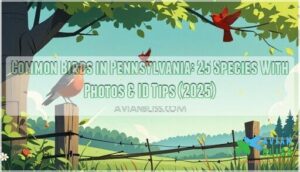 You’ll spot common birds in Pennsylvania right outside your window.
American robins hop across lawns hunting worms, while bright red northern cardinals flash through trees like living ornaments.
Blue jays announce themselves with raucous calls, and house sparrows chatter in busy flocks.
Turkey vultures soar overhead on thermal currents, and bald eagles patrol waterways with impressive wingspans.
Eastern bluebirds perch on fence posts, and European starlings gather in massive murmurations.
These species thrive year-round thanks to Pennsylvania’s diverse habitats.
From woodlands to wetlands, the state’s mix of environments supports over 400 bird species.
Knowing their key features and behaviors reveals nature’s daily entertainment, and helps in understanding the importance of Pennsylvania’s habitats and the 400 bird species that thrive there.
Table Of Contents
- Key Takeaways
- Common Backyard Birds
- Birds of Prey in Pennsylvania
- Waterfowl in Pennsylvania
- Frequent Bird Feeder Visitors
- Identifying Small Dark Grey Birds
- Common Bird Species in Pennsylvania
- Pennsylvania Bird Habitats
- Attracting Birds to Your Yard
- Pennsylvania Bird Migration Patterns
- Pennsylvania Bird Conservation
- Frequently Asked Questions (FAQs)
- What is the most common bird in Pennsylvania?
- How do I identify a bird in my yard?
- What is a small dark GREY bird in PA?
- What are the little brown birds in Pennsylvania?
- What are the most common bird sounds in Pennsylvania?
- How do seasonal changes affect Pennsylvania birds?
- Which birds in Pennsylvania are endangered?
- What are unique birdwatching spots in Pennsylvania?
- How do Pennsylvania birds adapt to urban areas?
- When do woodpeckers typically nest in Pennsylvania?
- Conclusion
Key Takeaways
- You’ll easily spot Pennsylvania’s most common backyard birds year-round, including American Robins hunting worms on lawns, bright red Northern Cardinals at feeders, chattering Blue Jays, and House Sparrows in busy flocks.
- You can attract diverse bird species to your yard by providing the right combination of feeders (tube feeders for goldfinch, platform feeders for cardinals), clean water sources, and native plants like Black-eyed Susan and elderberry.
- You’ll witness dramatic seasonal changes as Pennsylvania serves as a major migration corridor, with spring bringing colorful warblers and fall showing massive flocks heading south, while hardy residents like cardinals stay year-round.
- You can help protect Pennsylvania’s 400+ bird species by keeping cats indoors, reducing window strikes, participating in citizen science projects like bird counts, and supporting habitat restoration efforts in your community.
Common Backyard Birds
You’ll find the most abundant bird species right outside your window, where common backyard visitors like American Robins, Northern Cardinals, and House Sparrows make regular appearances throughout the year.
These familiar residents adapt well to suburban environments and provide excellent starting points for new birders learning identification techniques.
American Robin Habits
Why do American Robins thrive in Pennsylvania backyards? These Pennsylvania bird species showcase fascinating Robin Behavior through their Feeding Habits—hunting earthworms at dawn and switching to berries by afternoon.
During Bird Migration seasons, they form large flocks.
Robin Nesting occurs in shrubs or trees, with females building cup-shaped nests. Their Breeding Patterns include sky-blue eggs and protective parental care in backyard birds pa environments.
Northern Cardinal Characteristics
You’ll spot the Northern Cardinal by its brilliant red plumage and distinctive crest.
This Pennsylvania bird species showcases remarkable characteristics that make identification straightforward:
- Feather Colors: Males display vibrant red; females show warm brown with red tinges
- Beak Shapes: Thick, orange-red bills perfect for cracking seeds
- Bird Songs: Clear "birdy-birdy-birdy" whistles year-round
- Nesting Habits: Dense shrubs, 3-10 feet high
Their Cardinal Diet consists primarily of seeds, making them reliable backyard visitors among common PA birds.
House Sparrow Adaptability
Throughout Pennsylvania’s bustling cities and quiet suburbs, you’ll witness the House Sparrow’s remarkable urban survival skills firsthand.
These scrappy city dwellers have mastered the art of thriving wherever humans settle.
These adaptable pennsylvania bird species showcase impressive social behavior, forming large flocks while exploiting diverse food sources from crumbs to seeds.
Their flexible nesting habits in building crevices and their year-round presence make them masters of bird adaptation in bird habitats pa.
European Starling Behavior
European Starlings showcase remarkable social behavior that’ll captivate any Pennsylvania birding enthusiast.
You’ll witness their stunning iridescence shift from purple to green as sunlight hits their feathers. Their foraging habits reveal impressive adaptability, while flocking patterns create mesmerizing murmurations across Pennsylvania skies.
Understanding their behavior involves recognizing common backyard birds and their unique characteristics.
- Mimics over 20 bird species with uncanny accuracy
- Forms flocks of thousands during winter roosts
- Walks rather than hops when ground-feeding
Eastern Bluebird Habitat
Unlike starlings that crowd urban areas, Eastern Bluebirds seek open meadows and grasslands across Pennsylvania.
You’ll find them perched on fence posts, scanning for insects below.
These cavity nesters readily accept nesting boxes spaced 100 yards apart.
Bluebird trails with proper habitat creation support conservation efforts, making your pennsylvania birding experience rewarding while protecting pennsylvania wildlife.
Birds of Prey in Pennsylvania

You’ll find Pennsylvania’s raptors soaring overhead year-round, from massive Turkey Vultures cleaning up roadkill to majestic Bald Eagles fishing along rivers.
These powerful hunters include sharp-shinned hawks that snatch songbirds from feeders and Great Horned Owls that call through winter nights, making them easier to spot than you’d expect.
Turkey Vulture Identification
Turkey vultures soar across Pennsylvania’s skies with unmistakable features that make bird identification straightforward.
You’ll recognize their massive wingspan reaching up to 6 feet and distinctive rocking flight pattern. Their bare red heads contrast sharply against dark body plumage, while their black wing patterns show silver undersides during flight.
These Pennsylvania birds prefer vulture habitat near farmland and open areas where thermals help them glide effortlessly while searching for carrion. They play a vital role in the ecosystem as bird scavengers helping to clean up dead animals.
Key Turkey Vulture Features:
- Bare red head on adults (grayish on juveniles)
- Dark brown-black body with silver wing undersides
- V-shaped wing silhouette during soaring flight
- Side-to-side rocking motion while gliding
- Large size weighing up to 4.5 pounds
Bald Eagle Habitat
Bald Eagles flourish in Pennsylvania’s river habitats, choosing towering trees near waterways for eagle nesting sites.
These Pennsylvania birds require extensive territories with reliable fish populations and minimal human disturbance.
Forest conservation and wetland preservation efforts have dramatically improved their success rates.
Habitat restoration projects along major rivers continue protecting these magnificent raptors, ensuring future generations can witness Pennsylvania wildlife at its finest.
Osprey Migration Patterns
After learning about eagle habitats, let’s follow Ospreys as they soar across Pennsylvania skies.
Osprey Tracking reveals their flight patterns and migration routes, essential for the pa bird migration scene.
Here’s what you’ll spot:
- Long journeys from nesting sites to wintering grounds.
- Strategic water crossings for fish prey.
- Consistent timing each year.
- Site fidelity—returning to favorite spots.
Ospreys exhibit remarkable fish hawk behaviors that aid their survival and migration.
Hawk Species Found in Pennsylvania
You’ll spot several impressive hawk species soaring through Pennsylvania’s skies.
Sharp-shinned hawks dart through woodlands hunting songbirds, while Cooper’s hawks patrol suburban areas.
Red-tailed hawks circle open fields, and broad-winged hawks migrate in spectacular kettles each fall.
| Species | Size | Key Features |
|---|---|---|
| Sharp-shinned Hawk | 9-13 inches | Blue-gray back, barred chest |
| Cooper’s Hawk | 14-20 inches | Rounded tail, red eyes |
| Red-tailed Hawk | 17-22 inches | Rusty-red tail, broad wings |
| Broad-winged Hawk | 13-17 inches | Compact build, banded tail |
| Red-shouldered Hawk | 15-19 inches | Reddish shoulders, barred wings |
Pennsylvania hawks showcase remarkable raptor habits during hawk migration seasons.
These pennsylvania bird species demonstrate exceptional hunting skills, making hawk identification rewarding for bird enthusiasts.
Bird conservation efforts protect these magnificent pa bird types, ensuring future generations can witness birds of pennsylvania in their natural habitats.
Owl Species Found in Pennsylvania
Pennsylvania’s diverse owl habitats support several fascinating species throughout the year.
These nocturnal hunters adapt to various environments, from dense forests to open farmlands.
You’ll encounter these remarkable Pennsylvania owls:
- Great Horned Owls: Powerful predators with distinctive ear tufts
- Barn Owls: Heart-faced hunters preferring agricultural areas
- Barred Owls: Woodland specialists with haunting "who-cooks-for-you" calls
- Snowy Owls: Winter visitors from Arctic regions
Supporting owl conservation protects these essential pa bird species.
Waterfowl in Pennsylvania

You’ll spot Pennsylvania’s waterfowl year-round on lakes, rivers, and wetlands, from the haunting calls of Common Loons to the graceful migrations of Tundra Swans.
These aquatic birds range from diving species like Double-crested Cormorants that fish underwater to the non-native Mute Swans you’ll recognize by their distinctive orange bills and aggressive territorial behavior.
Common Loon Characteristics
Among Pennsylvania’s waterfowl, you’ll encounter the majestic Common Loon during Loon Migration seasons.
Their haunting calls echo across lakes like musical poetry, while their Diving Behavior showcases underwater hunting mastery.
| Feature | Details |
|---|---|
| Feather Camouflage | Striped black-and-white breeding plumage |
| Aquatic Diet | Fish, crustaceans, aquatic insects |
| Nesting Habits |
Ground nests near shorelines.
These pa bird species represent Pennsylvania’s diverse pennsylvania bird list, making bird watching pa exceptionally rewarding for pennsylvania birding enthusiasts.
Double-crested Cormorant Habitat
Spotting Double-crested Cormorants means understanding their precise habitat needs in Pennsylvania birding locations.
These skilled divers prefer water depth between 6-25 feet for ideal fish populations access. You’ll find them along Lake Erie shorelines, reservoirs, and rivers with adequate perching structures.
Cormorant nesting occurs on islands, cliffs, or tall trees near water. Unfortunately, habitat loss and declining wetland conservation efforts threaten their colonies.
Bird conservation programs now monitor these bird habitats closely, ensuring sustainable Double-crested Cormorant populations throughout Pennsylvania’s diverse aquatic ecosystems.
Tundra Swan Migration Patterns
Tundra Swans follow ancient Flyway Routes during their incredible journeys across North America.
You’ll witness these migratory birds using Pennsylvania as temporary Stopover Sites during spring and fall Migration Timing.
Their bird migration patterns reveal fascinating insights:
- Travel 5,000 kilometers annually through multiple staging areas
- Demonstrate complex Flocking Behavior during seasonal movements
- Utilize diverse Habitat Use strategies across breeding and wintering grounds
- Show flexible migration routes without demographic disadvantages
- Require bird conservation efforts for continued success
Mute Swan Identification
Mute Swans glide across Pennsylvania waters with unmistakable elegance. You’ll recognize them by their brilliant orange beak shape with a distinctive black knob at the base.
Their pristine white feather patterns and graceful S-curved neck posture set them apart from other bird species. Unlike Tundra Swans, these non-native residents don’t follow typical migration habits—they stay year-round.
Watch for aggressive swan behavior during nesting season when they’ll hiss and charge. Master bird identification by noting their silent flight and larger size compared to native waterfowl during your Pennsylvania birding adventures.
Frequent Bird Feeder Visitors
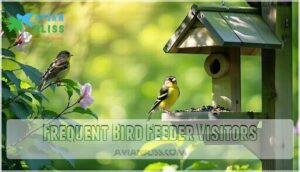
You’ll find that certain Pennsylvania birds show up at your feeders more often than others, making them reliable guests you can count on year-round.
These frequent visitors include American Goldfinches with their love for nyjer seeds, bold Blue Jays that dominate platform feeders, Northern Cardinals that prefer sunflower seeds, and persistent House Sparrows that’ll eat just about anything you offer.
American Goldfinch Favorites
During Pennsylvania’s peak birding season, American Goldfinch show distinct feeding preferences that’ll transform your backyard birdwatching experience.
These specialized granivores demonstrate remarkable loyalty to specific seed types, making feeder selection vital for successful pa bird sightings.
Their top favorites include:
- Thistle Seeds in dedicated Nyjer Feeders for ideal access
- Sunflower Chips providing high-energy nutrition year-round
- Millet scattered near Bird Baths for ground-feeding opportunities
- Safflower seeds offering protein-rich alternatives during breeding season
Blue Jay Characteristics
Blue Jays showcase stunning cobalt blue feathers with white underparts and black markings around their necks.
Their sturdy, pointed beak shape helps crack acorns and seeds efficiently.
These social birds display fascinating flocking behavior, often traveling in family groups while communicating through varied calls.
During nesting habits, they build sturdy platforms 10-25 feet high in oak trees.
Pennsylvania birding trails offer excellent Blue Jay spotting opportunities year-round.
Cardinal Diet
Northern Cardinals showcase varied Seed Preferences, favoring black oil sunflower seeds and safflower.
Their Nutritive Needs include Fruit Consumption like berries and grapes, plus Insect Eating during breeding season.
Suet Feeding attracts them in winter months.
This bird diet makes cardinals reliable Pennsylvania birding favorites among bird species.
- Black oil sunflower seeds provide essential fats for energy and feather health
- Fresh berries and chopped apples satisfy their natural fruit cravings year-round
- Protein-rich insects become vital during spring nesting and chick-rearing periods
House Sparrow Visitation Patterns
House Sparrows visit feeders in small flocks throughout the day, showing remarkable Urban Adaptation to backyard environments.
Their Feeder Preferences include mixed seeds and cracked corn. You’ll notice their social Sparrow Behavior as they chatter constantly while feeding.
- Peak feeding occurs during early morning and late afternoon hours
- They prefer ground-level or platform feeders over tube feeders
- Flocks typically consist of 6-12 individuals during non-breeding seasons
- Males often feed first while females remain alert for predators
Identifying Small Dark Grey Birds
You’ll encounter several small dark grey birds in Pennsylvania that can look surprisingly similar at first glance.
The key is observing specific features like bill shape, tail length, and behavioral patterns to tell these species apart correctly.
Characteristics of Small Dark Grey Birds
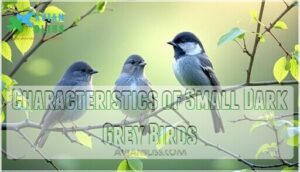
You’ll spot several small birds with dark grey plumage at feeders.
These compact species display distinct grey feather patterns and varying bird beak shapes.
The Dark-eyed Junco shows slate-gray coloring, while Gray Catbird features uniform gray tones.
Black-capped Chickadee combines gray with black markings.
Each species exhibits unique grey bird behaviors – some hop, others flit between branches.
Dark grey
Small
Shaded areas
Similar Species to Look Out For
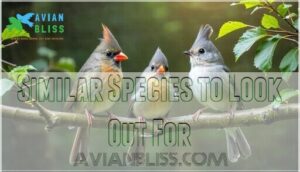
Several bird lookalikes can trick even experienced watchers when identifying small grey species.
Species comparison becomes tricky when you’re dealing with subtle differences in feather patterns and beak shapes.
Watch for these common mix-ups:
- Northern Cardinal females – brownish-grey with warm tones and thick orange beaks
- Tufted Titmouse juveniles – smaller with pointed crests and dark button eyes
- Black-capped Chickadee variants – grey backs with distinctive white cheek patches
Tips for Accurate Identification

When birding in Pennsylvania, accurate identification of small dark gray birds requires systematic observation and patience.
These species often share similar plumage colors, making field identification challenging without proper technique.
Focus on these key identification markers:
- Beak Shapes – Seed-eaters have thick, conical bills while insect-eaters sport thin, pointed beaks
- Feather Patterns – Look for subtle streaking, bars, or solid coloration differences
- Wing Structures – Note wing length relative to tail and any distinctive markings
- Bird Songs – Each species has unique vocalizations and call patterns
- Habitat Preferences – Woodland edges versus open fields reveal behavioral clues
Quality bird identification guides and PA bird photography references help confirm your observations.
Remember, bird species diversity means some features overlap, so multiple characteristics matter more than single traits for reliable identification.
Common Bird Species in Pennsylvania
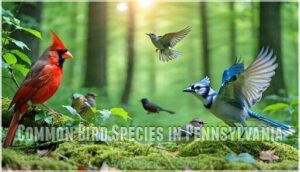
You’ll encounter 25 distinct bird species throughout Pennsylvania’s diverse habitats, from backyard feeders to woodland edges.
These birds fall into three main categories: year-round residents like Northern Cardinals and Blue Jays, seasonal migrants such as warblers and thrushes, and occasional rare visitors that create excitement among local birdwatchers.
Year-Round Residents
Pennsylvania’s year-round residents stick around through every season, making birding in Pennsylvania rewarding even in winter.
You’ll spot Northern Cardinals flashing red against snowy branches, American Robins hopping across frost-covered lawns, and Black-capped Chickadees at your feeders.
These hardy species maintain their nesting sites and continue feather care routines despite harsh weather, bringing life to bare landscapes.
Seasonal Migrants
While year-round residents provide consistent birdwatching opportunities, seasonal migrants create Pennsylvania’s most spectacular birding moments.
These migratory bird species follow established bird migration routes twice yearly, transforming your backyard into a wildlife highway. Spring warblers arrive in vibrant waves, while fall brings different songbird populations. Winter finches complete the cycle, each following distinct flight behaviors and migration patterns.
Understanding the complex migration patterns is essential for predicting seasonal changes.
Track these seasonal changes for peak bird watching seasons:
- Spring arrivals – Warblers paint trees with brilliant yellows and blues
- Fall departures – Thrushes and vireos create farewell concerts
- Winter visitors – Northern finches escape harsh Canadian weather
Rare Bird Sightings
Discovering vagrant species transforms ordinary birdwatching into extraordinary adventures.
Pennsylvania’s Ornithological Records Committee documents avian rarities like the historic Limpkin sighting in July 2023.
Submit detailed sightings reports with photos and audio recordings for verification.
Bird tracking through eBird alerts connects you with fellow enthusiasts when rare migrants appear.
| Recent Rarities | Location | Documentation Status |
|---|---|---|
| Limpkin | Statewide | First PA Record |
| Common Shelduck | Lebanon County | Committee Review |
| Yellow-headed Caracara | Regional Alert | Photo Required |
The process involves detailed sightings reports and relies on fellow enthusiasts for verification and community engagement.
Pennsylvania Bird Habitats

You’ll find Pennsylvania’s 25 common bird species thriving in three distinct habitat types that shape where and when you’ll spot them.
Understanding these woodland edges, open meadows, and wetland areas helps you predict which birds you’re likely to encounter during your next backyard birdwatching session.
Woodland Edge Habitats
Forest meets field in Pennsylvania’s woodland edge habitats, where Edge Ecology creates perfect conditions for Woodland Birds.
These boundary zones support diverse species from Forest Floors to Tree Canopy levels.
Habitat Fragmentation affects these areas, but natural edges remain essential birdwatching locations.
Backyard birds like cardinals and bluebirds flourish here, making these spots favorites among Pennsylvania bird clubs for observing diverse wildlife interactions.
Open Fields and Meadows
Something magical happens when you step into Pennsylvania’s open grasslands. These field habitats support diverse meadow birds like American Goldfinch, House Sparrow, and Eastern Bluebird. The open space creates perfect grassland ecology for species that need room to soar.
Understanding local bird friendly habitats is essential for maintaining biodiversity in these areas.
Here’s how to appreciate these environments:
- Watch for Redwinged Blackbirds perching on tall stems
- Listen for Chipping Sparrow songs echoing across fields
- Practice wildflower management to support native species, which is crucial for the local ecosystem.
Wetlands and Waterways
Pennsylvania’s wetlands and waterways serve as bustling hubs for water birds like Great Blue Herons, Wood Ducks, and Belted Kingfishers.
You’ll discover these aquatic habitats support diverse bird populations through rich river ecology and abundant wetland plants.
Shoreline management creates ideal conditions where aquatic life thrives, attracting various species for feeding and nesting.
During birdwatching excursions, watch for herons stalking through shallow marshes while ducks paddle among cattails.
These environments prove essential for bird conservation efforts across Pennsylvania.
From rushing streams to quiet ponds, each waterway offers unique opportunities to observe wetland specialists in their natural element.
Attracting Birds to Your Yard
You can transform your backyard into a bird magnet by providing the three essentials Pennsylvania birds need: food sources, clean water, and safe shelter.
The right combination of feeders, native plants, and protective cover will attract species like Northern Cardinals, Blue Jays, and American Goldfinches year-round.
Choosing The Right Bird Feeders
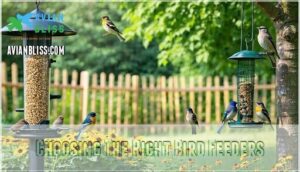
Since you want the perfect bird buffet in your Pennsylvania backyard, selecting appropriate feeders makes all the difference for attracting diverse species.
Feeder Types and Bird Attraction Strategies:
- Tube feeders work best for goldfinches and chickadees seeking sunflower seeds
- Platform feeders attract cardinals and blue jays preferring mixed seed selection
- Suet feeders draw woodpeckers during cold months for high-energy feeding
- Strategic feeder placement near cover guarantees backyard birds feel safe while birdwatching
To maximize the effectiveness of your bird feeder setup, consider investing in high-quality bird feeding systems to attract a wide variety of bird species.
Planting Bird-Friendly Vegetation

Beyond feeders, native plants transform your yard into a wildlife habitat paradise. Pennsylvania’s bird friendly gardens thrive with indigenous species that provide natural bird seeds and shelter.
Floral diversity creates year-round food sources. Smart garden design incorporates plants that mature at different seasons, supporting bird conservation through sustainable birdwatching opportunities.
| Plant Species | Primary Benefit |
|---|---|
| Black-eyed Susan | Seeds for finches |
| Wild Bergamot | Attracts insects |
| Elderberry | Berries for songbirds |
Native plants for birds require less water and maintenance too! You can find a variety of bird friendly plants to enhance your garden’s ecosystem.
Creating a Bird-Friendly Environment
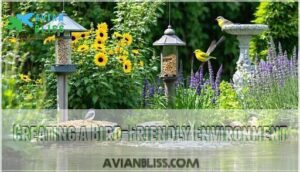
Transform your yard into a bird paradise by combining native plants with strategic garden design.
Clean bird baths and multiple water sources keep visitors hydrated year-round. Install various bird houses and feeder types to accommodate different species.
Skip pesticides—they harm the insects birds need. These bird friendly gardens support local bird conservation while creating your personal wildlife sanctuary.
Using the right bird feeder options can substantially enhance the attractiveness of your yard to various bird species.
Pennsylvania Bird Migration Patterns
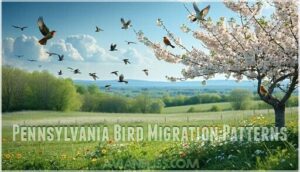
You’ll notice Pennsylvania’s bird populations change dramatically throughout the year as different species follow ancient migration routes between their breeding and wintering grounds.
Understanding these seasonal patterns helps you predict when to spot specific birds in your backyard, from the early spring arrival of American Robins to the fall departure of warblers heading south.
Spring Migration
Once you’ve created the perfect backyard habitat, spring arrives with nature’s grand performance.
Adult male birds lead the charge, arriving first to claim prime territories. You’ll spot Northern Cardinals establishing nesting sites while thousands of waterfowl stream through southeastern Pennsylvania between January and April, following ancient bird migration patterns.
Watch for these remarkable spring migration moments:
- Early dawn choruses – Males singing to attract mates fill the air with hope
- Colorful feather molting – Birds transform into breeding plumage like living rainbows
- Flock behavior shifts – Winter groups dissolve as pairs form for nesting season
- Territory battles – Dramatic aerial displays as birds defend chosen spots
- First nest building – Witnessing new life preparations brings pure joy
Fall Migration
Pennsylvania’s fall migration transforms your backyard into a bustling bird highway.
Your backyard becomes nature’s grand terminal as countless wings fill autumn skies with ancient journeys.
You’ll witness incredible seasonal changes as species like Northern Cardinal prepare for winter while others travel south.
- Monitor peak migration periods from August through October for prime birdwatching opportunities.
- Track flocking behavior patterns as birds gather before their southward journey.
- Document bird routes through your area using migration apps.
- Notice feeding frenzy activity increases before departure.
Wintering Grounds
After fall’s grand journey ends, many birds establish wintering grounds across Pennsylvania’s frosty landscapes.
Northern Cardinals become backyard regulars, their crimson feathers stunning against snow-covered branches. These hardy residents adapt well to cold climates, maintaining active bird behavior throughout winter months.
Migration patterns reveal fascinating adaptations—some species like Dark-eyed Juncos arrive from northern regions seeking Pennsylvania’s relatively milder winter habitats.
Birdwatching enthusiasts find snowy refuges particularly rewarding, as concentrated bird populations gather near reliable food sources, creating excellent observation opportunities during Pennsylvania’s coldest season.
Pennsylvania Bird Conservation

You can help protect Pennsylvania’s bird populations by understanding the challenges they face and supporting conservation efforts in your community.
Simple actions like keeping cats indoors, reducing window strikes, and participating in citizen science projects make a real difference for species like American Robins and Northern Cardinals.
Threats to Bird Populations
Habitat Loss devastates Pennsylvania’s birds as urban sprawl fragments forests into isolated patches.
Climate Change disrupts migration timing and breeding cycles.
Pollution Effects from pesticides reduce insect populations that birds depend on.
Human Impact through window strikes kills millions annually.
Invasive species compete for resources, while agricultural expansion eliminates grassland nesting sites, threatening bird conservation status statewide.
Understanding the current bird conservation status is essential for developing effective protection strategies.
Conservation Efforts
Since Wildlife Conservation programs across Pennsylvania combine science with action, you’re witnessing real change.
The state’s bird conservation efforts focus on protecting critical habitats while restoring damaged ecosystems.
Key bird conservation initiatives include:
- Habitat Preservation through land acquisitions and easements
- Species Protection programs targeting endangered species like cerulean warblers
- Biodiversity Restoration projects converting farmland back to native grasslands
These Ecosystem Management strategies help birdwatching conservation flourish statewide.
How to Get Involved in Bird Conservation
You can roll up your sleeves and plunge into Pennsylvania’s bird conservation efforts through multiple rewarding pathways.
- Join citizen science programs like Pennsylvania Bird Atlas 3 to contribute essential species research data for conservation organizations
- Participate in Bird Counts during seasonal monitoring events to track population trends and migration patterns
- Volunteer for Habitat Restoration projects that create bird-friendly environments in local communities
- Support conservation advocacy through wildlife preservation initiatives and bird watching communities
Frequently Asked Questions (FAQs)
What is the most common bird in Pennsylvania?
Pennsylvania’s bird surveys consistently show American Robins outnumber other species by 2-to-1 margins.
You’ll spot these rust-breasted beauties year-round in your backyard, making them the state’s most common resident bird you can easily identify.
How do I identify a bird in my yard?
Start by noting size, color patterns, and beak shape.
Watch how it moves and feeds.
Use a field guide or bird ID app.
Listen to its calls. These details’ll help you match your visitor to common species.
What is a small dark GREY bird in PA?
You’re likely spotting a Dark-eyed Junco, measuring about 6 inches with slate-gray plumage and white outer tail feathers. These "snowbirds" visit feeders year-round, hopping on ground beneath for scattered seeds.
What are the little brown birds in Pennsylvania?
Birds of a feather flock together, and you’ll spot several small brown species in your backyard.
House Sparrows, Song Sparrows, and Chipping Sparrows are common residents you’ll easily identify by their distinctive markings and behaviors, and they are often seen as backyard visitors.
What are the most common bird sounds in Pennsylvania?
You’ll hear American Robins‘ cheerful warbles at dawn, Cardinals’ sharp "birdy-birdy" calls, Blue Jays’ harsh cries, Mourning Doves’ soft cooing, and Chickadees’ distinctive "chick-a-dee-dee" chatter throughout your backyard adventures.
How do seasonal changes affect Pennsylvania birds?
Seasonal temperature shifts trigger dramatic changes in Pennsylvania’s avian communities.
You’ll notice summer residents like Indigo Buntings departing, while winter visitors arrive.
Migration patterns, breeding cycles, and food availability directly influence which species you’ll observe throughout the year, and these factors are closely tied to seasonal temperature shifts.
Which birds in Pennsylvania are endangered?
Picture a marsh at sunrise—some birds you’d expect to see there, like the king rail, black tern, and least bittern, are endangered in Pennsylvania.
Keep an eye out for these rare species—they need your support.
What are unique birdwatching spots in Pennsylvania?
You’ll find exceptional viewing at Presque Isle’s diverse wetlands, Hawk Mountain’s famous raptor migration corridor, and Pine Creek Gorge’s forest canopy.
These locations offer distinct ecosystems that attract specialized species year-round, providing a unique opportunity to observe a wide range of species.
How do Pennsylvania birds adapt to urban areas?
Pennsylvania birds show remarkable urban adaptability by adjusting their diets, nesting behaviors, and feeding patterns.
You’ll notice cardinals eating from feeders, robins nesting on buildings, and sparrows thriving in city parks, which demonstrates their ability to thrive.
When do woodpeckers typically nest in Pennsylvania?
Like nature’s carpenters following an ancient blueprint, you’ll spot woodpeckers building their homes from April through June in Pennsylvania.
They excavate fresh cavities in dead trees, timing their nesting with peak insect availability for feeding chicks.
Conclusion
Ironically, while you’ve been searching for exotic species in distant locations, the most enchanting wildlife show happens right outside your door.
These common birds in Pennsylvania transform ordinary yards into dynamic ecosystems through their daily routines. You’ll discover that recognizing their behaviors, feeding patterns, and seasonal movements enhances every outdoor moment.
Start observing these familiar species with fresh eyes—you’ll find that common doesn’t mean boring when you understand their remarkable adaptations and ecological roles.
- https://braxtons.com/blog/exploring-the-wild-bird-breeds-of-pennsylvania-a-guide-to-our-feathered-friends/
- https://discover.hubpages.com/education/Songbirds-of-the-Northeast
- https://www.abc27.com/digital-originals/did-you-know-these-birds-are-most-commonly-found-in-pennsylvania/
- https://avibirds.com/hawks-in-pennsylvania/
- https://www.pa.gov/agencies/pgc/wildlife/discover-pa-wildlife/blackbirds.html