This site is supported by our readers. We may earn a commission, at no cost to you, if you purchase through links.
Most bird owners don’t realize their outdoor aviaries become foot health hazards without proper perch selection. I’ve treated countless cases of bumblefoot, pressure sores, and tendon damage—all preventable with the right perch setup.
Your birds spend 12 to 16 hours daily gripping their perches, making diameter, texture, and material critical factors in their long-term wellness. The difference between a thriving aviary and a veterinary emergency often comes down to whether you’ve matched perch specifications to your species’ anatomical needs.
From natural hardwoods that mimic wild roosting branches to synthetic options with engineered grip surfaces, each material and design offers specific health functions that directly impact foot strength, nail wear, and overall mobility.
Table Of Contents
- Key Takeaways
- Best Materials for Outdoor Aviary Perches
- Choosing The Right Perch Size and Shape
- Installation and Maintenance Tips
- Top 7 Bird Perches for Outdoor Aviaries
- Enhancing Bird Health and Activity With Perches
- Frequently Asked Questions (FAQs)
- How to keep an outdoor aviary warm?
- What birds can you keep in an outside aviary?
- What kind of perch is best for budgies?
- What are some common aviary mistakes?
- How to weatherproof perches for harsh climates?
- What perch spacing prevents territorial bird conflicts?
- Can perches accommodate multiple bird species together?
- How many perches does one aviary need?
- Do seasonal temperature changes affect perch materials?
- Conclusion
Key Takeaways
- Birds spend 12-16 hours daily on perches, making perch diameter and material selection critical for preventing bumblefoot, pressure sores, and tendon damage through proper anatomical support.
- Natural hardwoods like oak and maple provide durable grip surfaces that resist outdoor weathering, while food-grade silicone and stainless steel offer corrosion-resistant alternatives that maintain safety without toxic flaking.
- Perch diameter must match species size (3/8-5/8 inch for finches, 3/4+ inch for parrots), with varied shapes and irregular surfaces preventing foot fatigue by distributing pressure across different grip zones.
- Strategic perch placement at multiple heights with 12-24 inch spacing creates safe flight pathways, while weekly rotation and quarterly replacement prevent pressure sores and maintain the textured surfaces essential for nail trimming and foot health.
Best Materials for Outdoor Aviary Perches
Your aviary perch materials need to stand up to weather, resist rot, and keep your birds safe year-round.
Choosing bird perches designed for bathing ensures your setup combines durability with features that support natural behavior and easy maintenance.
The right choice balances durability with natural texture so your birds can perch comfortably while their feet stay healthy.
Let’s look at the materials that deliver both resilience and safety for outdoor use.
Natural Hardwood Options (Oak, Maple)
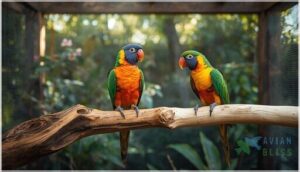
In the context of natural wood perches for your backyard aviary, oak and maple stand as champions of hardwood durability. These dense woods resist shock and wear, giving your birds stable footing season after season.
- Oak varieties feature open wood grain patterns that create natural grip surfaces in light to medium brown tones
- Maple finishes showcase smoother textures with tight uniform grain in cream to pale brown hues
- Both accept protective outdoor treatments that guard against moisture and UV damage
- Kiln-dried wooden perches minimize warping and cracking, ensuring long-term stability
The natural texture benefits extend beyond aesthetics—these aviary materials support healthy feet while standing up to outdoor conditions.
Safe Synthetic Materials (PVC, Silicone)

When hardwood isn’t practical, food-grade silicone and phthalate-free PVC offer compelling alternatives for bird perches in outdoor aviaries.
Silicone safety shines through its biocompatible surface that resists UV degradation from -60°C to 230°C, while PVC durability relies on proper stabilizers for weather resistance.
Material comparison shows silicone wipes clean easily and maintains grip after months of sun exposure, supporting pet bird accessories that prioritize bird safety in your bird cage design with secure installation.
Metal Components and Corrosion Resistance
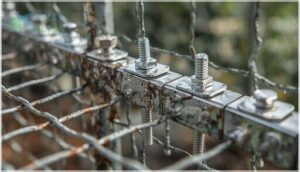
Metal hardware is where corrosion prevention becomes your first defense against aviary disasters. Stainless steel brackets resist rust for decades, while galvanized risks include zinc poisoning when parrots chew weathered wire.
Type 316 stainless steel offers outstanding rust resistance in coastal climates. Choose corrosion-resistant fasteners for secure installation that keeps bird perches stable and bird safety intact—smooth, durable materials won’t shed toxic flakes.
Always research the importance of mesh material for aviaries to guarantee both safety and durability in your setup.
Benefits of Textured and Bark-Like Surfaces
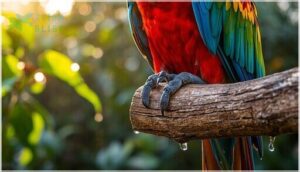
Beyond corrosion-proof metals, textured bark-like surfaces on natural wood perches deliver real grip improvement—your birds won’t slip on wet mornings. Rough wooden perches offer texture variety that prevents foot fatigue while trimming nails naturally.
- Tactile stimulation keeps parrots engaged and reduces boredom
- Bark aesthetics blend aviaries into garden landscapes
- Surface durability hides wear better than smooth finishes
Perch materials matter for long-term comfort.
Choosing The Right Perch Size and Shape
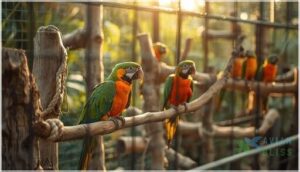
Your bird’s feet weren’t designed for just one perch size—they need variety to stay healthy and comfortable.
Birds need multiple perch sizes to keep their feet healthy and comfortable, not just one
Think of it like wearing the same tight shoes every day versus switching between sneakers, sandals, and boots. Let’s look at the key sizing and shape factors that’ll keep your birds moving freely and prevent painful foot problems.
Perch Diameters for Different Bird Species
Your bird’s comfort starts with the right fit. Finches need natural wood perches around 3/8 to 5/8 inch in diameter, while larger parrots require 3/4 inch or more.
Bird size variance demands species-specific needs—small feet grip narrow perches, preventing fatigue and supporting beak trim. Offer varying sizes within the perch diameter range to promote foot health considerations and keep your flock moving freely.
It’s important to understand how perch diameter affects foot health to guarantee your birds remain active and comfortable.
Varying Shapes: Branches, Platforms, and Ropes
Shape variety transforms your aviary layout from static to stimulating. Offer these perch types to support your birds’ freedom:
- Branch variety with natural wood perches provides irregular diameters and varied perch texture
- Platform perches create stable surfaces for sunbathing and rest
- Rope perches enable rope climbing and zygodactyl grip exercise
- Platform design at multiple heights encourages movement
- Mixed contours distribute pressure evenly across feet
This approach keeps outdoor aviary birds engaged and healthy.
Importance of Irregular and Natural Designs
Irregular contours break the monotony that uniform dowels create. Natural wood perches with uneven diameters and varied textures encourage healthy foot positioning in parrots and other aviary birds.
This forest mimicry stimulates exploration as your birds shift grip and search for comfortable spots. Natural perches with bark surfaces improve bird grip while delivering wild enrichment.
Perch variation mimics branches your birds would choose outdoors, supporting their natural freedom.
Preventing Foot Fatigue and Pressure Sores
Constant pressure on the same foot zones can lead to painful sores that compromise bird health. You’ll prevent this by offering perch sizes from 12 to 25 millimeters that encourage varied stance across different natural wood perches.
Rotate bird perches weekly to shift pressure distribution, and monitor foot health daily for redness or swelling. This proactive perch rotation strategy safeguards your flock’s freedom to move comfortably.
Installation and Maintenance Tips
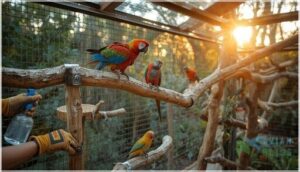
Getting your perches into the aviary shouldn’t feel like a construction project. The right installation methods keep your birds safe while making routine cleaning and upkeep manageable.
Let’s walk through the practical steps that’ll save you time and protect your flock’s health.
Easy-to-Install Perch Designs
You don’t need a toolbox to set up quality bird perches. Quick attach metal brackets and modular systems let you configure your outdoor aviary design in under 10 minutes with just a screwdriver.
Predrilled holes align with standard screws for secure perch mounting, while clip-on designs enable space optimization and easy cleanup. Reusable hardware backs multiple parrot perches, giving your flock fresh enrichment whenever you rotate placements.
Secure Fastening Methods for Outdoor Use
Your outdoor aviary needs fasteners that won’t betray your birds’ safety after a single storm. Here’s what keeps bird perches locked in place through seasons of rain, sun, and wind:
- Stainless steel bolts and lag screws provide corrosion resistance in coastal or humid climates, maintaining anchor systems for 5 to 10 years.
- Weatherproof coatings like hot-dipped galvanizing extend outdoor aviary design durability up to 20 years.
- Monthly fastener inspection catches loosening before catastrophic failure threatens avian health and safety.
Cleaning and Disinfecting Outdoor Perches
Fasteners alone won’t protect your birds if bacteria colonize their perches. Scrub surfaces weekly with bird-safe soap and warm water, then rinse until no residue remains. For deeper disinfection quarterly, apply 3% hydrogen peroxide or 1:1 white vinegar solution, contact briefly, and rinse thoroughly. Air dry completely before reinstalling to prevent mold growth.
| Cleaning Method | Frequency | Best For |
|---|---|---|
| Soap and water scrub | Weekly | Routine droppings and debris removal |
| Vinegar solution (1:1) | Quarterly | Mild disinfection on hard surfaces |
| Hydrogen peroxide (3%) | Quarterly or after illness | Deeper sanitization without harsh chemicals |
| Commercial bird-safe disinfectant | As needed | Sealed wood and composite perches |
| Full drying period | After every cleaning | Preventing mold on wooden surfaces |
When to Replace or Rotate Perches
Clean perches need regular inspection to catch wear before it harms foot health. Check weekly for splintering, cracks, or smooth spots that compromise grip—these are clear perch wear signs requiring replacement. Rotate perches every 2 to 4 weeks to introduce new textures and prevent pressure sores.
The following steps can help maintain perch quality:
- Replace splintered or cracked perches immediately to avoid foot injuries
- Swap heavily chewed perches within days to prevent toxin ingestion
- Rotate perch sizes every month to exercise different foot muscles
- Change locations quarterly to encourage varied movement patterns
Natural wood perches usually last 6 to 12 months depending on chewing intensity, while synthetic options like PVC endure 1 to 3 years. Rope perches fray faster—retire them after 6 months. If a bird suddenly avoids a perch or shows foot dragging, that’s your signal to switch diameter or texture within the week. Maintain a replacement log so you’re never caught off guard when bird perch selection needs revitalizing. Proper rotation schedules and damage inspection protect avian health and wellness far better than waiting for obvious breakage.
Top 7 Bird Perches for Outdoor Aviaries
Choosing the right perches for your outdoor aviary means matching your birds’ natural needs with materials that stand up to the elements. You want perches that support healthy feet, encourage natural behaviors, and won’t fall apart after a few months of sun and rain.
Here are seven reliable options that work well in outdoor settings.
1. Natural Wood Bird Perches
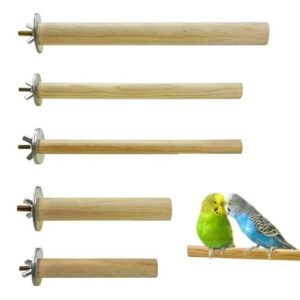
Real hardwood branches give your birds the grip and exercise they need to stay healthy. Look for oak or maple perches with variable diameters between 1.0 and 2.5 inches—these sturdy woods resist chewing while promoting natural claw development.
Choose unfinished branches that retain their bark texture and irregular surfaces. This rough, authentic grip prevents foot problems and mimics what birds experience in the wild.
Make sure your branches come from pesticide-free sources and are thoroughly dried to avoid mold issues that could compromise your flock’s health.
| Best For | Bird owners looking for natural, affordable perches that help prevent foot problems in small birds like budgies, parakeets, and canaries. |
|---|---|
| Material | Natural Wood |
| Installation | Built-in bolt & wing nut |
| Bird Size | Small birds |
| Color | Yellow |
| Pieces Included | Multiple perches |
| Primary Benefit | Prevents foot problems |
| Additional Features |
|
- Natural wood with varied widths gives birds proper foot exercise and prevents common health issues
- Easy installation with built-in hardware that mounts securely to most cages
- Authentic bark texture and irregular surfaces mimic wild perching conditions
- Some perches may be shorter than expected for larger cage setups
- Wing nuts and screws don’t always fit together properly in certain units
- Birds that chew aggressively can wear down the wood faster than expected
2. Natural Wood Bird Perches Set
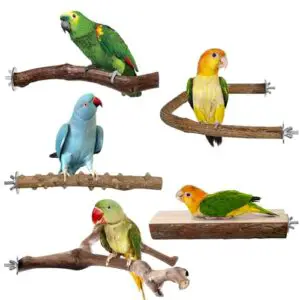
Multi-piece perch collections save you from guesswork by providing variety in one package. The HPAWHOMEPART 5-piece set includes grapevine branches, ash wood rods, U-shaped cradles, and flat platforms—all made from untreated hardwoods.
Each perch installs quickly with built-in bolts and wing nuts, so you won’t need extra tools. Diameters range from 0.5 to 2 inches, fitting finches through medium parrots like conures and cockatiels.
These sets give your birds textured grip surfaces and multiple resting angles, reducing foot fatigue while encouraging climbing and chewing behaviors.
| Best For | Bird owners who want an all-in-one variety pack of natural perches for small to medium parrots without having to shop for individual pieces. |
|---|---|
| Material | Natural Wood |
| Installation | Metal wing nuts & bolts |
| Bird Size | Small to medium birds |
| Color | Brown |
| Pieces Included | 5-piece set |
| Primary Benefit | Maintains healthy feet |
| Additional Features |
|
- Includes five different perch styles (grapevine branches, platforms, U-shapes) so birds get varied textures and gripping angles
- Quick installation with built-in bolts and wing nuts—no extra tools needed
- Made from untreated natural wood that’s safe for birds to chew and climb on
- Metal bolts can detach from the wood over time according to some users
- May not hold up well for aggressive chewers or larger bird species
- Wood chips and debris often arrive in the package from shipping
3. Natural Wooden Bird Perch Stand
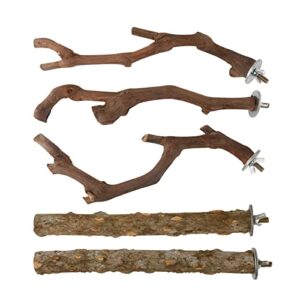
A wooden stand with irregular branches breaks the monotony of flat perches and gives your birds the textural variety they’d find in nature. These free-standing units use untreated hardwood with natural bark still attached, so your birds can scratch and grind their claws during everyday perching.
Diameters span 8 to 25 mm to fit small and medium parrots comfortably. Corrosion-resistant fasteners keep branches secure during wind and rain, while the stable base prevents wobbles when birds flap or climb.
| Best For | Bird owners who want to give small to medium parrots a natural perching experience that mimics their environment in the wild. |
|---|---|
| Material | Grape Wood |
| Installation | Metal washers & screws |
| Bird Size | Small to medium birds |
| Color | Brown |
| Pieces Included | 5-piece set |
| Primary Benefit | Natural habitat |
| Additional Features |
|
- Natural grape wood with bark intact lets birds scratch, chew, and exercise their feet on varied textures and diameters
- Anti-slip surface and stable base keep the perch secure even when birds climb or flap their wings
- Five-piece set gives you multiple perching options without using paint or artificial coatings
- Branch sizes and shapes vary because it’s real wood, so what you get might look different from the photos
- Natural wear means you’ll need to replace perches over time as birds chew through them
- Pricier than synthetic perch alternatives on the market
4. Niteangel Wooden Parrot Perch Platform
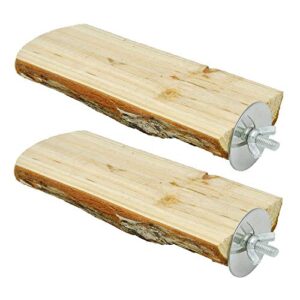
A wide platform gives larger parrots the breathing room they crave after hours of cage confinement.
The Niteangel platform measures 6 to 8 inches across and uses untreated wood with rounded edges to prevent toe injuries during rough landings. Stainless steel mounting hardware resists rust even in heavy rain, and the non-toxic sealant keeps your bird safe if it gnaws the surface.
You can pair this flat perch with natural branches to create varied textures and encourage healthy foot exercise.
| Best For | Bird owners with small to medium-sized parrots like budgies, cockatiels, and parakeets who want a comfortable flat surface for resting and foot exercise. |
|---|---|
| Material | Fir Wood |
| Installation | Metal wing nut & bolt |
| Bird Size | Small to medium birds |
| Color | Natural wood |
| Pieces Included | Single platform |
| Primary Benefit | Comfortable resting |
| Additional Features |
|
- Soft fir wood provides a natural chewing surface that helps maintain your bird’s beak while preventing foot problems like bumblefoot
- Easy installation with secure metal wing nut and built-in bolt that attaches quickly to most cages
- Unique flat design gives birds a stable resting platform and encourages healthy foot movement through climbing
- Not sturdy enough for larger or heavier parrot species that need more robust perching options
- The bark layer may peel or come loose over time with regular use and chewing
- Some users report the screw or bolt can strip, especially if over-tightened during installation
5. Jw Pet Comfy Bird Perch
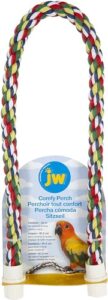
A flexible rope perch lets you break free from rigid cage layouts and design custom shapes your bird will actually use.
The JW Pet Comfy Perch bends into arches, spirals, or curves without exposing stiff wires that scratch delicate feet. Its soft multi-color rope reduces pressure points during long rests, and the tool-free clips attach securely to cage bars in seconds.
You’ll find 32-inch and 36-inch lengths suitable for species from cockatiels to macaws. Inspect weekly for fraying and replace when the rope stretches or shows wear.
| Best For | Bird owners who want a versatile, soft perch that can be shaped to fit any cage layout and provides comfortable grip for parrots, cockatiels, conures, and other pet birds. |
|---|---|
| Material | Rope/Plastic |
| Installation | Easy-twist attachments |
| Bird Size | All sizes |
| Color | Multi |
| Pieces Included | Single perch |
| Primary Benefit | Exercise & entertainment |
| Additional Features |
|
- Bends into custom shapes like arches and spirals without exposing sharp wires that can hurt your bird’s feet
- Soft multi-color rope design reduces pressure points and promotes better foot grip during rest
- Quick twist-on attachments make installation and repositioning hassle-free
- Rope can fray from chewing and may need vet wrap protection to prevent loose strings from harming birds
- Difficult to clean thoroughly, especially if not wrapped with protective covering
- Some units arrive with quality issues like missing parts, and rope length may fall short in wider cages
6. Rypet Parrot Sand Perch
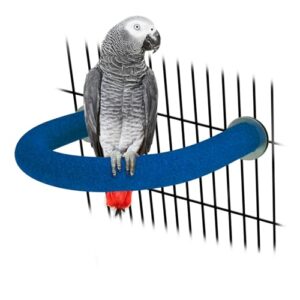
A sand-coated perch turns routine grooming into easy self-care for your parrot’s nails and beak. The Rypet Parrot Sand Perch combines a natural wood core with a gritty, non-toxic finish that mimics tree bark, giving large species like African Greys and conures a stable grip even when wet.
At 17 cm × 20 cm, it mounts quickly with included hardware and withstands outdoor moisture. Inspect the coating monthly for worn patches, and replace when smooth spots appear to maintain effective abrasion.
| Best For | Owners of medium to large parrots who want a low-maintenance perch that naturally trims nails and beaks while providing secure footing. |
|---|---|
| Material | PVC/Quartz Sand |
| Installation | Metal wing nut & bolt |
| Bird Size | Medium to large birds |
| Color | Blue |
| Pieces Included | Single U-shaped perch |
| Primary Benefit | Foot exercise |
| Additional Features |
|
- Rough sand texture gives birds excellent grip and doubles as a natural nail file
- U-shaped design offers comfortable perching angles for different bird sizes
- Quick installation with included metal hardware that stays secure
- Smaller than some buyers expected at 6.7″ × 7.9″, which may not suit very large macaws
- Abrasive surface can wear down too quickly or feel too rough for sensitive feet
- Quality concerns from some users given the price point
7. Bird Rope Perch For Parrots
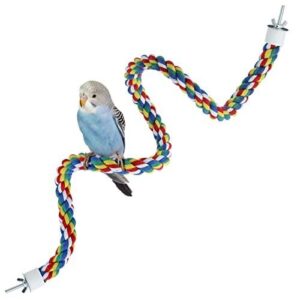
If your parrot loves to chew and climb, a rope perch offers grip that changes with every step. The Bird Rope Perch for Parrots wraps multicolor cotton thread around a bendable steel core, letting you shape curves or loops to fit odd cage corners.
At 31.5 inches long and 2 cm wide, it works well for budgies through medium-sized cockatiels. Check monthly for frayed fibers, and replace promptly to avoid ingestion hazards that can lead to crop impaction.
| Best For | Small to medium parrots like budgies, canaries, and cockatiels that enjoy climbing and need a flexible perch that fits into tight cage spaces. |
|---|---|
| Material | Cotton/Metal |
| Installation | Easy to install |
| Bird Size | Small to medium parrots |
| Color | Multicolor |
| Pieces Included | Single perch |
| Primary Benefit | Flexible climbing |
| Additional Features |
|
- Bendable steel core lets you customize the shape to fit any corner or create fun loops for your bird
- Cotton-wrapped surface gives natural grip that’s easier on bird feet than plain metal or plastic perches
- Lightweight and easy to install or move around when you want to refresh the cage layout
- Some units arrive with loose thread ends or don’t bend as easily as expected
- Requires regular checks for fraying since parrots can chew through cotton, creating a choking risk
- May feel too thin or flimsy for larger parrots that need sturdier perches
Enhancing Bird Health and Activity With Perches
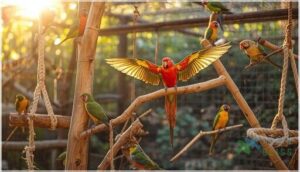
Your birds need more than just a place to sit—they need perches that bring out their natural instincts and keep them physically strong. The right setup lets them stretch, climb, and move freely while supporting proper foot health and mental stimulation.
Here’s how strategic perch choices transform your aviary into a space where birds don’t just survive, but truly thrive.
Supporting Natural Behaviors and Exercise
Your birds need more than a place to sit—they need opportunity. Quality bird perches in an outdoor bird aviary deliver foot grip on varied surfaces, balance training through different angles, and beak health from chewable textures.
Perch trees with rough bark encourage foraging stimulation as birds climb and explore. This isn’t decoration—it’s avian habitat creation that fuels bird enrichment and welfare every day.
Perch Placement for Safe Flight and Movement
Strategic perch placement transforms your aviary into a flight-safe haven. Position bird perches at three to five vertical pathways with 12 to 24 inches of level spacing—this facilitates Bird Perch Selection for climbing and safe landings. Maintain 18-inch hazard clearance from cage edges and fans to protect wings during movement. Rotate varied arrangements every two weeks to sharpen balance skills. Place sleeping perches highest, away from food bowls, ensuring Avian Health and Wellness through smart bird safety design.
- Install perches at multiple heights to create vertical pathways that encourage natural flight transitions
- Space levels 12 to 24 inches apart to prevent crowding while maintaining accessible routes
- Keep 18-inch hazard clearance from fans, cage edges, and water sources to avoid injury
- Rotate perch locations biweekly using varied arrangements that challenge grip and balance
Catering to Climbing, Chewing, and Resting Needs
Beyond safe spacing, your feathered friends need perches suited to their favorite pastimes. Install textured bark surfaces for Climbing Grip and Foot Health during active hours.
Offer hardwood branches—oak or maple—for Beak Conditioning through natural gnawing. Add wide platform Comfort Roosts where birds rest between Activity bursts.
This Bird Perch Selection blends Perching Textures that support Parrot Behavior and Enrichment, transforming your outdoor bird aviary into a playground.
Promoting Social Interaction and Enrichment
Grouping compatible species sparks curiosity and mental stimulation. Create Mixed Species Zones with Puzzle Perches that challenge beaks and talons, while platforms near Cooperative Foraging stations let flocks explore together. This avian enrichment promotes Parrot Behavior and Enrichment through:
- Side-by-side perches for social grooming sessions
- Shared foraging banks encouraging vocal exchanges
- Rotating textures weekly to maintain novelty
- Observer-friendly layouts for Health Monitoring
- Seasonal scent cues inviting playful exploration
Your Bird Perch choices directly shape Bird Welfare in any Outdoor Bird Aviary.
Frequently Asked Questions (FAQs)
How to keep an outdoor aviary warm?
What’s the secret to keeping your feathered friends comfortable when temperatures drop? Install insulated shelters with heat sources like ceramic emitters, use thermal mass bedding such as straw, and provide heated waterers to maintain aviary heating during cold weather.
What birds can you keep in an outside aviary?
You can keep zebra finches, budgerigars, lovebirds, Bourke’s parrots, and cockatiels in a secure outdoor bird aviary with climate tolerance features, predator safety measures, and proper bird enclosures designed for each parrot species.
What kind of perch is best for budgies?
Budgie foot health thrives on natural wooden perches sized 5 to 75 inches in diameter.
Mix textures and perch sizes to support nail trimming, beak maintenance, and mental stimulation while preventing pressure sores.
What are some common aviary mistakes?
Common mistakes in backyard aviary design include inadequate space, poor ventilation, predator risks, insufficient shading, and weather protection.
Regular aviary maintenance prevents these issues, ensuring bird safety and proper avian care in any outdoor setup.
How to weatherproof perches for harsh climates?
When winter bites or rain pours, apply exterior grade linseed oil to wood perches and coat metal with marine grade anti-corrosion finishes.
These climate-resistant treatments protect outdoor durability without compromising bird-safe surfaces.
What perch spacing prevents territorial bird conflicts?
Space perches 12 to 18 inches apart for medium parrots to minimize territorial behavior and conflict reduction.
Larger species need 24 inches or more. This aviary layout fosters bird socialization while protecting bird welfare and avian companions’ safety.
Can perches accommodate multiple bird species together?
One size never fits all, and your backyard aviary dynamics proves it.
Perch diversity with multiple diameters accommodates mixed flocks beautifully.
Species compatibility depends on size matching, aviary dynamics, and smart placement that encourages bird socialization while protecting bird welfare.
How many perches does one aviary need?
Your Bird Perch count depends on aviary size and bird population.
For every 100 square feet of flight space, install six to twelve birdsafe perch sizes at varied heights to support natural flight patterns.
Do seasonal temperature changes affect perch materials?
Yes—seasonal shifts cause wood cracking from sun exposure, metal expansion in heat, plastic brittleness during freezes, and bark softening in humidity.
Choose durable materials like hardwood and stainless steel for backyard aviary perch trees.
Conclusion
Your birds deserve perches that prevent disease, not cause it. Your aviary deserves materials that withstand weather, not crumble under it. Your investment deserves proper placement, not guesswork that leads to injury.
When you match bird perches for outdoor aviaries to your species’ anatomical needs, you’re not just building habitat—you’re engineering freedom from preventable foot conditions. Start with diameter measurements, prioritize texture variety, and rotate perches seasonally. Your flock’s mobility depends on it.
- https://www.picturethisai.com/
- https://freerangeparrots.substack.com/p/ultimate-list-of-safe-and-toxic-plants-to-birds
- https://www.twpinc.com/blog/how-do-i-choose-the-best-aviary-wire-mesh.html
- https://www.ftbrescue.com/post/2017/05/29/the-science-of-galvanized-material
- https://lafeber.com/pet-birds/questions/cages/