This site is supported by our readers. We may earn a commission, at no cost to you, if you purchase through links.
A bird won’t nest in a box that feels like a death trap. If the entrance hole is too large, predators reach in and snatch eggs. If there’s no drainage, heavy rain floods the nest and drowns chicks. When ventilation fails, nestlings suffocate in the heat.
These aren’t rare tragedies—they happen in poorly designed boxes every nesting season. The difference between a productive nesting box and an empty one comes down to specific features that address what birds actually need: protection from weather and predators, proper dimensions for their species, adequate airflow, and drainage that works. Get these essentials right, and you’ll create a safe space where birds return year after year to raise their young.
Table Of Contents
- Key Takeaways
- Essential Features Birds Need in a Nesting Box
- Choosing Safe Materials and Bird-Friendly Design
- How to Build a Suitable Nesting Box
- Proper Placement and Installation Tips
- Maintaining and Cleaning Nesting Boxes
- Top 5 Products for Bird Nesting Box Needs
- Frequently Asked Questions (FAQs)
- What to put in a nesting box for birds?
- What time of year should you put up a bird box?
- What do birds need from a birdhouse?
- When is the best time to install nesting boxes?
- Can different bird species share the same box?
- How do you attract specific birds to your box?
- What should you do if wasps occupy the box?
- Do nesting boxes work in urban or suburban areas?
- Conclusion
Key Takeaways
- A functional nesting box requires specific features that address birds’ actual needs: proper entrance hole sizing (1.5 inches for bluebirds, 1 inch for chickadees), adequate ventilation holes near the top, drainage openings at the bottom, and predator guards to prevent eggs and chicks from being snatched or killed.
- Use untreated cedar, redwood, or cypress for construction—never pressure-treated lumber with copper-based preservatives—and assemble with galvanized screws while leaving interior surfaces unsealed to avoid exposing nestlings to toxic chemicals through dust or contact.
- Install boxes 5-12 meters high with entrances facing east to northeast, space multiple boxes 15-20 meters apart to reduce territorial disputes, and mount them on metal poles with predator baffles positioned at least four feet above ground to block climbing threats like raccoons and snakes.
- Clean boxes thoroughly after fledging (late October to November) by removing all nesting material and pouring boiling water inside for disinfection, then inspect annually for cracks, loose joints, and rusted hardware to maintain safe conditions across breeding seasons.
Essential Features Birds Need in a Nesting Box
A good nesting box isn’t just a wooden box nailed to a tree. Birds need specific features to stay safe, raise healthy chicks, and return year after year.
Understanding bird nesting season behavior helps you time installation and choose box features that match each species’ natural preferences.
Let’s look at what makes a nesting box work for the birds you want to attract.
Weather Protection and Predator Safety
Without proper weather shielding and predator guards, your nesting box won’t protect the birds counting on it. Install a sloped roof with 1.5-inch overhangs to shed rain, and seal all joints with nontoxic caulk for climate control.
A nesting box without proper weather shielding and predator guards fails the birds depending on it for survival
Add predator guards around the entrance and mount the box on smooth surfaces. These bird safety features in your nesting box design guarantee nest box security and successful predator safety year-round.
Proper Box Size and Entrance Hole Dimensions
Box dimensions and entrance hole size determine which birds can nest safely in your box. Match the interior footprint to your target species—bluebirds thrive in 5×5 inch floors, while chickadees need only 4×4 inches.
Set entrance holes at 1.5 inches for bluebirds or 1 inch for chickadees. Position holes 6 to 8 inches above the floor, and maintain 8 to 12 inch total box height for proper nest depth.
Choosing the right bird box hole size is vital for attracting compatible species and protecting nestlings from predators.
Ventilation and Drainage Requirements
Once you’ve sized your nesting box correctly, air flow systems and drainage patterns keep nestlings healthy throughout the season. Drill two to four vent holes—each 1.5 to 2 cm wide—high on side panels to release warm air without letting rain enter. Add four corner drainage holes at the base, 3 to 5 mm each, to prevent water pooling.
| Feature | Purpose | Specification |
|---|---|---|
| Vent hole placement | Allows hot air to escape while blocking rain | Two vents, 1.5–2 cm diameter, positioned high on sides |
| Drainage patterns | Removes condensation and prevents mold | Four corner holes, 3–5 mm each, at base |
| Humidity control | Maintains 40–60% interior humidity for healthy incubation | Combined vent and drainage system with annual clearing |
| Nest box ventilation timing | Enhances cooling in warm months, limits drafts in cold seasons | Adjust vent exposure seasonally without blocking airflow |
| Nestbox maintenance schedule | Ensures clear air flow and drainage paths | Clean vents and drainage holes before each nesting season |
Proper vent hole placement and drainage keep your box dry, comfortable, and free from the foul odors and excess moisture that harm bird nesting habits.
Cleanliness and Ease of Maintenance
Once air flow and drainage are working, easy cleaning designs protect bird health between breeding cycles. Choose boxes with removable base panels or hinged side access—you’ll clean faster and reduce stress on returning birds. Look for smooth interior surfaces, rounded corners, and slip-resistant floors that simplify nestbox sanitation.
- Detachable front panels enable thorough scrubbing between seasons
- Snap-in floors allow complete litter removal during maintenance
- Light interior colors improve visibility of droppings during inspections
- Quick-release brackets simplify box removal for deep cleaning
- Weather-sealed access panels prevent water intrusion during maintenance schedules
Regular nest box maintenance and repairing worn hardware before nesting box installation keeps your shelter inviting year after year.
Choosing Safe Materials and Bird-Friendly Design
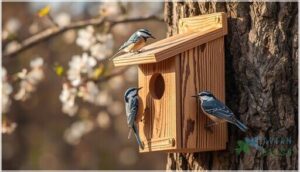
Building a nesting box that actually works starts with choosing the right materials. You can’t just grab any scrap wood and expect birds to move in—what you use matters as much as how you build it.
Let’s look at the materials that keep birds safe and the design choices that help them thrive.
Best Wood Types for Nesting Boxes
Choose cedar or redwood for your nesting box—these woods resist decay and insects naturally, lasting five to ten years outdoors. Cedar benefits include lightweight handling and easy woodworking, while their wood density balances insulation with workability.
Cypress offers similar rot resistance for DIY woodworking projects. These softwood options machine cleanly for precise entrance holes.
Select sustainable sourcing with FSC certification to support responsible Wood Duck and songbird habitats. For more details on rot-resistant wood options, consult expert recommendations.
Avoiding Treated Lumber and Toxic Finishes
Never use pressure-treated lumber for nesting box DIY woodworking projects—copper-based preservatives pose toxic material risks that can harm nestlings through dust exposure.
Instead, consider untreated cedar or pine, or explore small bird feeder designs using safe recycled materials that withstand the elements without chemical risks.
Instead, rely on these safe wood options for wildlife conservation:
- Untreated kiln-dried pine or spruce for chemical-free assembly
- Food-grade mineral oil or beeswax as non-toxic coatings
- Water-based, low-VOC finishes for eco-friendly designs
Interior surfaces need no sealant if properly ventilated.
Importance of Smooth Edges and Secure Assembly
Sand every panel until you feel no rough spots—splinters can injure adult birds and fledglings during nest box entry.
Proper edge finishing prevents joint gaps that let in rain, while secure fastening with pilot holes stops wood from splitting during DIY bird house plans assembly.
Joint reinforcement using butt joints and interior blocks keeps your bird nesting box construction solid through storms, ensuring safe weatherproofing for seasons ahead.
Using Weather-resistant Hardware
Stainless steel screws resist rain and humidity far better than standard fasteners, preventing rust that weakens your bird nesting box construction over time.
Use 1¼-inch galvanized screws with rubber washers to create a water barrier at each joint, ensuring weatherproof materials stay sealed.
For predator guard mounting and hardware selection, choose powder-coated finishes that block corrosion—critical upgrades in any DIY bird house plans requiring fastener durability and long-term sealant types performance.
How to Build a Suitable Nesting Box
Building a nesting box doesn’t require specialized carpentry skills, but it does demand attention to detail. The right measurements and materials make the difference between a box that attracts birds and one that sits empty all season.
Follow these four steps to create a safe home for your target species.
Planning for Target Bird Species
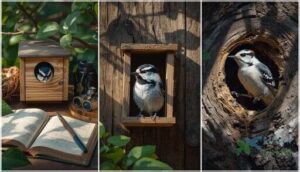
Before you build anything, identify which bird species visit your area throughout the breeding cycles. Different species have distinct nesting patterns and habitat requirements, so your research shapes every design choice.
Check these essentials:
- Entrance hole diameter matching your target bird species beak size
- Interior dimensions suited to specific nesting sites preferences
- Local bird behavior guides for seasonal nesting patterns
- Species identification resources confirming year-round presence
Accurate Measuring and Cutting Techniques
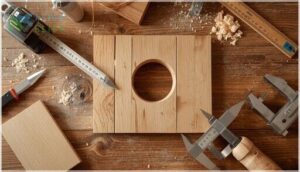
Precision cutting starts with solid measuring tools—use a steel tape measure and sharp marking knife for clean, repeatable lines on your nesting box panels. Clamp each piece firmly before cutting to prevent movement, and guide your saw with a straight edge to keep cuts parallel.
Test angles on scrap wood first, then verify box size and entrance hole size dimensions with a caliper before assembly. Follow basic safety protocols with protective eyewear throughout your DIY project.
Drilling Entrance and Ventilation Holes
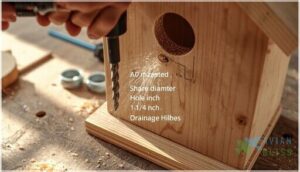
After your cuts are ready, mark the entrance hole location near the top of the front panel, matching entrance hole size to your target species—bluebirds need 1 1/8 to 1 1/4 inches. Use a sharp spade bit or hole saw for clean circles, then sand edges smooth to prevent injuries.
Add small ventilation holes near the top and drainage openings at the bottom for proper airflow and moisture control.
Assembling, Sealing, and Adding Access Panels
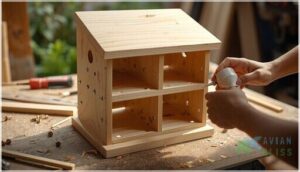
Once your holes are drilled, assemble the nesting box with 1 1/4-inch galvanized screws, joining the front, back, and side panels securely. Apply weatherproof sealant along joints to prevent moisture intrusion.
Install a hinged access panel on one side for annual cleaning. This mounting technique gives you tool-free entry while maintaining proper ventilation and box size for your target species.
Proper Placement and Installation Tips
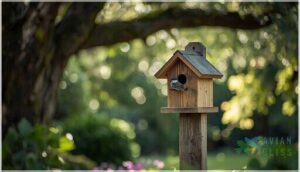
You’ve built a solid nesting box, but where you put it matters just as much as how you built it.
The right spot keeps birds safe from predators and weather while giving them the comfort they need to raise their young.
Let’s look at the key placement and installation details that make all the difference.
Optimal Height and Location for Safety
Where you position your nesting box determines whether birds will use it safely. Follow these height installation and nest box placement guidelines:
- Mount boxes 5-12 meters above ground to keep predators away while reducing human disturbance.
- Use sturdy metal poles or clear tree trunks for stable mounting that won’t sway.
- Add predator guard safety features like baffles to prevent climbing animals from reaching eggs.
- Choose locations with partial shade to prevent overheating while providing morning warmth.
Direction for Sunlight and Weather Protection
Once your nesting box is positioned at the right height, orient the entrance hole between east and northeast to catch gentle morning sunlight while avoiding harsh afternoon heat.
This orientation lets the box dry after rain without overheating chicks. Add a small roof overhang to shield the entrance from driving rain, and drill ventilation holes near the top plus drainage solutions at the floor to manage moisture inside.
Spacing Multiple Boxes to Reduce Competition
When territorial disputes flare up between cavity nesters, smart spacing of nest boxes can ease the tension. Place boxes 15 to 20 meters apart in natural settings to reduce competition for resources and create microhabitats that attract different bird species while supporting wildlife conservation.
- Use staggered box placement strategies to minimize direct clashes at entrances
- Form small clusters of 2 to 3 boxes with 8 to 12 meter gaps to encourage colony formation
- Vary entrance hole sizes across your spatial arrangement to welcome diverse nesting habits
Using Predator Guards and Safe Mounting Methods
Against climbing threats like snakes and raccoons, install a predator guard at least four feet above any pole hardware.
Choose powder-coated steel or heavy-duty polyethylene guards with 20- to 26-inch diameters that mount securely on 1- to 2-inch poles.
Position the guard to shield the entrance hole while maintaining clearance from vegetation, and tighten all mounting options to prevent gaps predators could exploit.
Maintaining and Cleaning Nesting Boxes
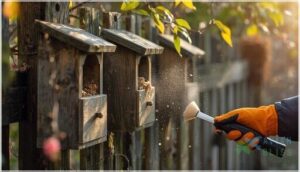
A nesting box isn’t something you can just hang and forget. Regular cleaning and upkeep keep birds healthy and coming back year after year.
Here’s what you need to know about maintaining your box through the seasons.
When and How to Clean Nest Boxes
You’ll want to tackle nest box sanitation after young birds have fledged, usually between late October and November.
Remove all old nesting material wearing gloves, then pour boiling water inside for box disinfection and parasite control. Let it dry completely before reinstalling.
This annual cleaning schedule keeps your nesting boxes healthy and ready for next season’s occupants.
Safe Cleaning Practices for Bird Health
Protecting bird health means choosing the right cleaning methods and disinfectant use for your nest box. Always pick bird-safe cleaners free from ammonia and chlorine.
Follow these steps for safe maintenance:
- Rinse all surfaces thoroughly after applying diluted cleaner
- Ventilate the area for at least 15 minutes before reintroducing birds
- Use HEPA air purification systems that don’t emit ozone
- Wear a mask to minimize dust inhalation during cleaning
Proper ventilation systems protect delicate respiratory tracts.
Repairing and Inspecting for Annual Use
Annual checks keep your nest boxes safe and functional season after season. Inspect walls and doors for cracks that could widen, then test all joints for looseness and re-secure with corrosion-resistant screws.
| Inspection Focus | Action Required |
|---|---|
| Entrance hole edges | Smooth rough spots to prevent injury |
| Drainage ports | Clear blockages after storms |
| Hardware condition | Replace rusted fasteners immediately |
Schedule mid-spring damage assessment after freeze cycles end, and keep a repair kit with screws, wood filler, and weatherproof sealant ready for box refurb tasks.
Troubleshooting Common Nesting Box Problems
Most nest box failures stem from fixable design flaws or poor placement. When birds abandon boxes mid-season or you notice repeated nesting failures, check these common culprits:
- Predator control gaps — Add metal guards around entrance holes and position boxes above six feet to block raccoons and snakes
- Ventilation issues — Drill small top holes to prevent overheating and mold growth
- Moisture pooling — Install drainage ports at the bottom and seal joints with weather-resistant sealant
- Wrong entrance size — Match hole diameter to target species’ nesting habits to prevent competition
Address nest box repair needs immediately to restore safe conditions.
Top 5 Products for Bird Nesting Box Needs
You don’t have to build a nesting box from scratch if you’d rather start with something ready-made or add essential accessories. The right products can save you time while still meeting birds’ needs for safety and protection.
Here are five reliable options that cover boxes, platforms, and predator guards to keep your backyard birds secure.
1. JCs Wildlife Bluebird Bird House
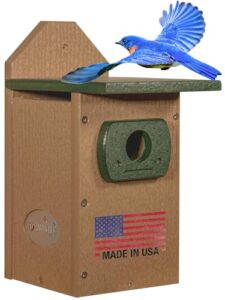
For bluebirds nesting in your yard, the JCs Wildlife Bluebird Bird House delivers a durable, low-maintenance option. The box features a 1 1/2-inch entrance hole sized for eastern and western bluebirds, while recycled poly lumber construction resists cracking and fading in tough weather.
Stainless steel screws prevent rust, and built-in ventilation plus drainage holes keep the cavity dry. You’ll appreciate the side access door for quick cleaning between seasons. The design sheds rain away from the entrance, protecting nests from moisture while maintaining stable temperatures inside.
| Best For | Backyard birders looking for a durable, weather-resistant bluebird house that’s easy to clean and won’t rot or fade over time. |
|---|---|
| Material | Recycled Poly Lumber |
| Color | Brown and Green |
| Installation | Easy to hang |
| Durability | Fade and crack resistant |
| Made In | Not specified |
| Weight | 5.4 Pounds |
| Additional Features |
|
- Recycled poly lumber construction resists cracking, fading, and moisture damage far better than wood
- Stainless steel hardware and built-in ventilation keep the house rust-free and well-aired for healthy nesting
- Side-opening design makes seasonal cleaning quick and simple
- Gaps between the lid and box can let predators like snakes access the nest or allow rain to seep in during storms
- Mounting options are limited and might need modifications depending on where you want to place it
- The brown and green color scheme may not appeal to everyone’s yard aesthetics
2. JCs Wildlife Robin Roosting Platform
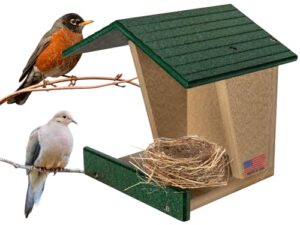
Robins and phoebes don’t nest in enclosed boxes—they prefer open platforms where they can see their surroundings.
The JCs Wildlife Robin Roosting Platform provides exactly that with its open back design, making it easy for you to monitor and clean. Measuring 9.5 inches wide by 8 inches deep, it offers enough space for nesting materials.
The recycled poly lumber won’t crack or fade, and predrilled mounting holes let you attach it securely to walls or fences at predator-safe heights.
| Best For | Birdwatchers who want to attract robins, phoebes, doves, and swallows with a durable, low-maintenance nesting platform. |
|---|---|
| Material | Poly Wood |
| Color | Green |
| Installation | Pre-drilled holes |
| Durability | Eco-friendly material |
| Made In | USA |
| Weight | Not specified |
| Additional Features |
|
- Made from recycled poly lumber that won’t crack, fade, or require painting
- Open design makes it easy to monitor nests and clean out old materials
- Pre-drilled holes make mounting quick and secure on walls or fences
- Only works for specific bird species that prefer open platforms
- Needs periodic cleaning to stay effective and hygienic
- No durability or warranty information provided
3. Woodlink Squirrel Baffle Protector
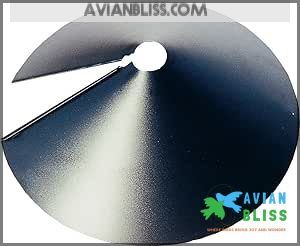
Squirrels will raid your nesting boxes if they can climb the mounting pole. The Woodlink Squirrel Baffle Protector stops them cold with its 18-inch diameter steel dome that wraps around poles from half an inch to 1 3/8 inches wide.
Install it below your nest boxes—the powder-coated steel creates a slippery barrier squirrels can’t grip. At 2.75 pounds, it won’t bend or sag through seasons of weather, and the black coupler snaps on without removing your feeder or box.
| Best For | Bird lovers who want a reliable, long-lasting solution to keep squirrels from climbing poles to reach nesting boxes or feeders. |
|---|---|
| Material | Powder Coated Steel |
| Color | Black |
| Installation | Secure coupler |
| Durability | Long-lasting |
| Made In | Not specified |
| Weight | 2.75 Pounds |
| Additional Features |
|
- Durable textured powder-coated steel construction that won’t bend or deteriorate over time
- 18-inch diameter creates an effective barrier that squirrels can’t grip or climb past
- Easy snap-on installation with a secure coupler that doesn’t require removing your feeder or nest box
- Won’t fit poles with diameters smaller than 1/2 inch
- Higher price point compared to other squirrel deterrent options
- Squirrels may still find workarounds by jumping from nearby trees or structures
4. Bird House Predator Guard
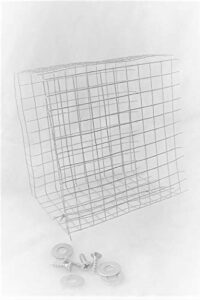
After you’ve blocked climbing predators, protect the entrance hole itself from reaching paws and beaks. The Bird House Predator Guard mounts directly over your 1 1/2-inch opening, extending outward to keep raccoons and cats from snatching eggs or chicks inside.
This all-metal guard measures 6″ x 6″ x 4″ and installs with the included screws and washers—just use a Philips screwdriver. It is handmade in America from galvanized hardware cloth, and it won’t rust or bend through years of outdoor use.
| Best For | Bluebird enthusiasts and backyard birders who want to protect nesting birds from raccoons, cats, and other predators that can reach into birdhouse entrance holes. |
|---|---|
| Material | Metal |
| Color | Metal/Galvanized |
| Installation | Enclosed hardware |
| Durability | All metal construction |
| Made In | America |
| Weight | Not specified |
| Additional Features |
|
- All-metal construction won’t rust or deteriorate, lasting for years in outdoor conditions
- Simple installation with included hardware—just need a Philips screwdriver
- Handmade in America from galvanized hardware cloth with a design that effectively blocks predator access
- Sharp edges require careful handling during installation
- May not fit all birdhouse models, so check compatibility before purchasing
- Doesn’t protect against climbing predators like snakes unless paired with a separate pole guard
5. Ripeng Metal Bird House Guard
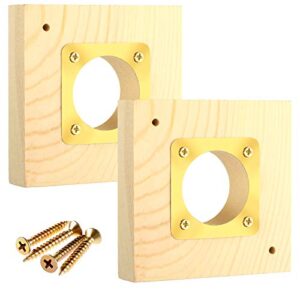
Chewers like woodpeckers and squirrels can enlarge entrance holes and ruin your box. The Ripeng Metal Bird House Guard covers standard 1 1/2-inch openings with galvanized steel that blocks gnawing attempts while adults fly in freely.
Mount it with the four included screws—no need to remove your box from its pole. The tan powder coat resists rust and blends into natural settings. At 3.5″ x 3.5″, it fits most bluebird boxes and stops predators from widening holes to reach nests inside.
| Best For | Bluebird enthusiasts who want to protect their nesting boxes from woodpeckers, squirrels, and other predators that enlarge entrance holes. |
|---|---|
| Material | Copper |
| Color | Copper |
| Installation | Mounting screws included |
| Durability | Quality copper material |
| Made In | Not specified |
| Weight | 0.21 Kilograms |
| Additional Features |
|
- Copper construction stops chewers from widening the 1 1/2-inch opening while letting adult bluebirds pass through easily
- Quick installation with included mounting screws—no need to take down your birdhouse
- Shields nests from raccoons and other predators trying to access chicks inside
- Metal may be too thin and could bend under pressure from determined predators
- Screw holes might not align perfectly, and wood can split during installation
- Build quality seems inconsistent based on user reports about flimsiness
Frequently Asked Questions (FAQs)
What to put in a nesting box for birds?
You don’t need to put anything inside. Nesting materials like grass, twigs, and feathers are brought by the birds themselves.
Your job is providing a clean, empty box with proper drainage and ventilation.
What time of year should you put up a bird box?
Install your bird box by late February in southern regions or mid-March in northern areas.
This timing lets early nesters like bluebirds discover and claim the box before breeding season begins.
What do birds need from a birdhouse?
Birds look for a secure shelter with the right entrance size, solid weather protection, good airflow, and easy drainage. Clean, safe construction keeps predators out and chicks healthy inside.
When is the best time to install nesting boxes?
Put boxes up in early autumn so birds can scout the site before winter. This timing lets them roost through cold months and claim territory well ahead of spring nesting.
Can different bird species share the same box?
While roosting outside breeding season happens occasionally, active nesting rarely overlaps.
Different species compete for space, and entrance hole size usually favors one type. Provide separate boxes spaced at least 25 feet apart.
How do you attract specific birds to your box?
Match the entrance hole size and box dimensions to your target species—bluebirds need 1 1/2 inch holes, chickadees prefer 1 1/8 inch openings—then position boxes in their preferred habitat with proper spacing.
What should you do if wasps occupy the box?
Don’t seal the entrance while wasps are buzzing—wait until dusk when they calm down, then suit up with protective gear or call a licensed pest professional to safely remove the nest.
Do nesting boxes work in urban or suburban areas?
Boxes work exceptionally well in both settings.
Urban installations see higher occupancy rates when mounted 3 to 5 meters high on buildings or poles.
Suburban yards with mature trees and hedges show the strongest nesting success.
Conclusion
Build it right and they’ll come. When you provide what birds need in a nesting box—proper dimensions, ventilation, drainage, and protection—you’re not just hanging wood on a post. You’re creating a sanctuary where parents raise their young safely.
Check your boxes each fall, repair damage, clean out old nests, and tighten loose screws. These small actions guarantee the next breed returns to the same reliable shelter you’ve maintained with care.