This site is supported by our readers. We may earn a commission, at no cost to you, if you purchase through links.
Most bird owners don’t realize their parrot or finch has a compromised immune system until feathers start looking ragged or a respiratory infection takes hold. Birds are masters at hiding illness—it’s a survival instinct that works against them in captivity.
A weakened immune system rarely announces itself loudly. By the time symptoms appear, the body has already been struggling for weeks.
The good news: targeted nutrition, smart environmental choices, and a few key supplements can meaningfully strengthen your bird’s defenses before problems start.
Table Of Contents
- Key Takeaways
- Key Nutrients for a Strong Bird Immune System
- Natural Ways to Boost Bird Immunity
- Choosing Safe Supplements for Birds
- Environmental and Lifestyle Factors
- Recognizing and Addressing Immune Weakness
- Frequently Asked Questions (FAQs)
- How do I boost my chicken’s immune system?
- What is a miracle meal for birds?
- How to improve bird’s immune system?
- Does apple cider vinegar help birds?
- Can probiotics improve a birds gut health naturally?
- How does sleep affect a birds immune function?
- Do seasonal changes impact bird immunity levels?
- Can social interaction boost a birds immune response?
- How does age affect a birds natural immunity?
- Conclusion
Key Takeaways
- Birds instinctively hide illness until it’s advanced, so building immunity through vitamins A, D3, and E — plus key minerals like zinc and selenium — is your best defense before symptoms ever appear.
- A diet of 60–70% quality pellets, rotated fresh produce, and limited seeds gives your bird’s immune system the nutritional foundation it needs to stay strong day to day.
- Environmental factors — cage hygiene, clean air, UVB light exposure, and 30–60 minutes of daily flight — matter just as much as diet when it comes to keeping immunity sharp.
- Fat-soluble vitamins accumulate in your bird’s liver, so always choose bird-specific supplements, track your doses carefully, and loop in an avian vet before stacking multiple products.
Key Nutrients for a Strong Bird Immune System
bird eats directly shapes how well its immune system functions.
A nutrient-rich diet is one of the best defenses you can give your bird, and understanding common bird illness causes and prevention can help you spot the warning signs before they become serious.
A few specific nutrients do most of the heavy lifting — and knowing which ones matter can make a real difference.
Here’s what to focus on first.
Essential Vitamins (A, D3, E)
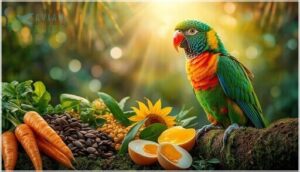
Three vitamins quietly run your bird’s immune system behind the scenes. Vitamin A keeps mucous membranes intact, supporting mucin production and IgA antibody levels that fight respiratory invaders. Vitamin D3 fine-tunes cytokine balance and drives bone calcium absorption. Vitamin E shields cell membranes from oxidative damage. Together, they form avian nutrition’s immune foundation:
- Vitamin A: guards airways against pathogens
- Vitamin D3: regulates immune cell activation
- Vitamin E: neutralizes inflammation-driven free radicals
Mind fat-soluble toxicity — more isn’t better. Supplementing with vitamin E improves antioxidant status and enhances immune competence.
Important Minerals (Zinc, Selenium, Calcium)
Vitamins lay the groundwork, but minerals do the heavy lifting too.
Zinc acts as a cofactor for T-cell maturation — deficiency shows up fast as poor feathering and weak immunity. Selenium plays a direct antiviral role, reducing viral shedding during infections.
Calcium-phosphorus ratio matters more than calcium alone; aim for 2:1.
Mineral bioavailability varies by zinc source, so organic forms absorb best. Bee pollen super food extra protein and B‑complex vitamins that further boost avian immunity.
Antioxidants and Their Benefits
Minerals set the stage — but antioxidants run the defense.
Your bird’s immune system faces constant oxidative stress from metabolism and flight. The right antioxidants keep that damage in check:
- Vitamin E shields cell membranes through Antioxidant Enzyme Activity, supporting Bird Health at the cellular level
- Vitamin C Regeneration reactivates spent Vitamin E, doubling its effectiveness
- Carotenoid Immune Boost from colorful foods strengthens both antibody and cell-mediated responses
- CoQ10 Mitochondrial Protection and Polyphenol Stress Defense round out natural supplementation beautifully
Natural Ways to Boost Bird Immunity
Good nutrition starts with what you put in the bowl — or the dish, the perch, the windowsill. simple, natural choices can make a real difference in how well your bird fights off illness.
Fresh produce and varied proteins go a long way, especially when you’re watching for bird sneezing and respiratory warning signs that often signal a weakened immune system.
where to start.
Fresh, Balanced Diet Choices
Think of your bird’s daily menu as the foundation on which everything else is built. Start with a solid pellet proportion — around 60 to 70 percent of formulated pellets cover most avian nutrition needs.
Add fresh fruits and vegetables for the rest, rotating vegetable texture mix and fruit variety rotation throughout the week. Stick to seed limitation guidelines, and keep your feeding schedule timing consistent.
Incorporating Immune-Boosting Foods
Adding the right foods makes a real difference.
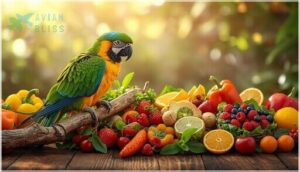
A Fruit Boost Mix of blueberries, mango, and apple pieces delivers vitamin C and beta carotene straight to your bird’s immune system.
Rotate a Leafy Green Variety — kale, broccoli, carrots, bell peppers — a few times weekly. Toss in Herb Infused Treats, like parsley or basil, maintain Nut Seed Balance with raw almonds, and add Whole Grain Fiber through cooked quinoa for complete immune support.
Sunlight Exposure for Vitamin D Synthesis
Sunlight does more than warm your bird — it triggers Preen Oil Activation, where UVB rays convert oils from the uropygial gland into Vitamin D3.
Window Glass Filtering blocks this process entirely, so outdoor sessions matter.
Aim for 20–30 minutes, two to three times weekly, within a Temperature Range Suitability of 50–80°F.
A UVB Lamp Placement inside the cage fills gaps on cloudy days.
Choosing Safe Supplements for Birds
Supplements can genuinely help your bird — but only if you choose the right ones. The market is full of products that look good on the label but aren’t safe or effective for birds.
Here’s what to look for before you buy.
Bird-Specific Supplement Selection
Not all supplements are created equal — and what’s safe for dogs or humans can be toxic to birds.
Always choose bird-specific formulas that account for species matching, proper dosage by size, and correct formulation types.
From powders to liquids, administration techniques and timing strategies differ by species.
Prioritize vitamin and mineral balance, immune booster options, and probiotics designed explicitly for avian supplement safety.
Reputable Brands and Quality Ingredients
Not all labels tell the truth — so knowing what to look for matters.
When choosing appropriate bird supplements, prioritize brands built on:
- Transparent labeling listing exact nutrient amounts, not vague blends
- Third-party testing screening for heavy metals and contaminants
- GMP compliance ensuring consistent, controlled production
- Ingredient traceability from sourced raw materials to final product
- Purity standards using food-grade carriers without unnecessary fillers
Trusted bird vitamins from veterinarian‑endorsed companies offer the reliable immune support your bird deserves.
Avoiding Over-Supplementation and Toxicity
More isn’t always better — especially with fat-soluble vitamins like A and D3, which build up in your bird’s liver rather than flushing out. Oversupplementation is a real risk when pellets, drops, and powders overlap.
Fat-soluble vitamins accumulate in your bird’s liver, making oversupplementation as dangerous as deficiency
Practice dose tracking and careful label reading, watch for kidney health monitoring opportunities at checkups, and make seasonal adjustments during molt or breeding.
Supplement interactions matter too.
Expert and Veterinary Guidance
Your avian vet isn’t just there for sick visits — they’re your bird’s immune system strategist. Veterinary guidance on avian supplementation ensures species-specific care, from probiotic guidance to vaccination timing.
Seasonal health adjustments during molt or breeding shift nutritional needs considerably. Avian veterinary guidance on immunity, combined with routine veterinary health monitoring and natural methods to boost bird immunity, keeps your bird genuinely thriving.
Environmental and Lifestyle Factors
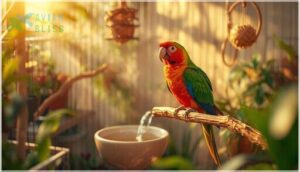
What your bird eats matters — but so does the world it lives in. A clean, calm, stimulating environment can do just as much for immunity as the right diet.
Here’s what to focus on.
Cleanliness and Cage Hygiene
A clean cage isn’t optional — it’s frontline immune defense. Daily Spot Cleaning removes droppings, spoiled food, and bacteria before they multiply. Stick to a Deep Cleaning Schedule weekly for larger parrots.
- Disinfect perches and bars with diluted bleach (1 cup per gallon), then rinse thoroughly
- Use plain paper as Cage Liner Choices — easy to swap and monitor
- Apply Safe Disinfectant — Use only on pre‑cleaned surfaces
- Follow Hand Hygiene Practices — wash up after every cage interaction
- Prevent mold and moisture buildup by drying items completely before returning them
Air Quality and Stress Reduction
A spotless cage sets the stage, but air quality and stress reduction seal the deal. Birds breathe faster than we do, so poor ventilation optimization means toxins build up quickly.
Skip fume-free cooking reminders at your bird’s expense — even oven smoke irritates delicate airways.
Use an air purifier, choose low-toxic materials, and keep noise management consistent.
Calm air, calm bird, stronger immune system support.
Exercise and Mental Enrichment
Movement matters more than most owners realize. Aim for 30 to 60 minutes of daily flight sessions in a safe room — short and frequent beats one long exhausting stretch.
Swap in foraging toys regularly, mix perch variety, so feet stay healthy, and add puzzle challenges to keep minds sharp.
Social play, talking, and training reduce stress hormones directly, building real immune resilience over time.
Recognizing and Addressing Immune Weakness
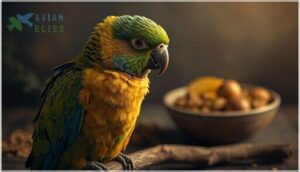
Your bird can’t tell you when something’s wrong — but their body usually does. A weakened immune system often shows up in ways you can spot early if you know what to look for.
Here’s what to watch and when it’s time to call your vet.
Signs of Deficiency or Poor Immunity
Your bird’s immune system rarely fails all at once — it sends quiet signals first. Watch for sneezing episodes, swollen nares, or clogged nostrils that keep returning. Reduced appetite and sunken eyes often follow.
Signs of a weak immune system in birds include:
- Repeated respiratory infections with nasal discharge
- Nutritional deficiencies showing as dull feathers or poor wound healing
- Signs of vitamin deficiency in birds like white mouth plaques
Don’t wait.
Monitoring Feather, Beak, and Overall Health
Think of it as a weekly health snapshot. Check feather quality for dullness, fraying, or uneven coverage. Note beak symmetry — any twist or asymmetry affects eating.
Track droppings changes daily; color shifts matter. Watch posture shifts like low perching or puffed feathers hiding weight loss.
Weekly weight checks, logged with notes on appetite, give your bird’s immune system and overall bird health a reliable baseline.
When to Consult an Avian Veterinarian
When should you call the avian vet instead of just watching and waiting? Sooner than you think.
Emergency Respiratory Signs — wheezing, open-mouth breathing, tail bobbing — cannot wait. Neither can Sudden Dropping Changes, Acute Weight Loss, or Behavioral Abnormalities like silence or floor-sitting.
Unusual Bleeding Episodes mean go now. These are classic signs of a weak immune system in birds, and early veterinary recommendation saves lives.
Frequently Asked Questions (FAQs)
How do I boost my chicken’s immune system?
Start with the basics: a balanced diet, Probiotic Supplementation, Fermented Feed, Herbal Extracts like oregano and garlic.
Solid Biosecurity Practices, proper Vaccination Timing, Vitamin D3, and Zinc all work together to strengthen your chicken’s Immune System.
What is a miracle meal for birds?
Miracle Meal is a soft food mix combining grains, whey-based Protein Sources, and Essential Fatty Acids from flax and canola — an Ingredient Blend designed for balanced diet support and natural immune system nourishment.
How to improve bird’s immune system?
Boost your bird’s immune system through balanced nutrition, gut microbiome balance with probiotics, sunlight exposure for vitamin D synthesis, dust-free bedding, hydration management, and seasonal light cycling — simple, consistent habits that genuinely strengthen their natural defenses.
Does apple cider vinegar help birds?
Apple cider vinegar can gently support gut pH balance and digestion in birds.
Dilute one teaspoon in 500ml of water, use it a few days a week, and always consult your avian vet first.
Can probiotics improve a birds gut health naturally?
Yes, probiotics genuinely support avian gut health.
They promote microbial diversity boost, reinforce tight junction strength, enable pathogen competition, and drive immune modulation — all naturally strengthening your bird’s gut health and overall immune system.
How does sleep affect a birds immune function?
Skip sleep, and your bird’s immune system practically falls apart overnight.
Birds need 8–12 hours of dark, quiet rest for melatonin regulation, circadian cytokine rhythms, and proper immune function to stay on track.
Do seasonal changes impact bird immunity levels?
Absolutely.
Bird immunity naturally shifts with the seasons. Photoperiod effects, cold stress response, breeding trade-offs, and molting immunity shifts all influence immune strength throughout the year — meaning your bird’s defenses are rarely static.
Can social interaction boost a birds immune response?
Social interaction genuinely strengthens your bird’s immune system. Group housing immunity improves through flock stress reduction, social cue priming, and visual disease exposure, helping birds pre-activate defenses.
Stable companionship, enrichment toys, and stress management keep immune responses sharp.
How does age affect a birds natural immunity?
Age reshapes your bird’s immune system in surprising ways.
Cellular immunity trend peaks at mid-life, then fades.
Humoral immunity shift runs opposite — rising with age, reflecting innate killing decline and cytokine expression loss throughout life.
Conclusion
Think of your bird’s immune system as a living shield—one you forge daily through the choices you make. Knowing how to improve your bird’s immune system naturally means more than adding a supplement; it means building a foundation of clean air, whole foods, and consistent care.
Birds can’t tell you when something’s off, but a strong immune system buys them time—and you the chance to catch it early. Start today.
- https://www.aniforte.de/en/blogs/chicken/immune-system-of-our-chickens-strong
- https://www.revivalanimal.com/learning-center/important-vitamins-and-minerals-for-pet-birds
- https://www.thepoultrysite.com/articles/effect-of-omega3-fatty-acids-on-immune-function-in-broilers
- https://fidarfeed.com/additives/probiotics/probiotic-caged-birds-the-key-to-a-healthier-companion/
- https://www.bivatec.com/blog/how-to-boost-immunity-in-chickens-naturally