This site is supported by our readers. We may earn a commission, at no cost to you, if you purchase through links.
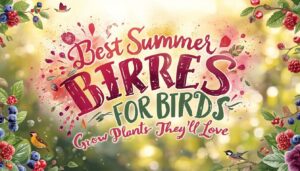
single mulberry tree in peak season can drop more than 200 pounds of berries—and birds know exactly when to show up. Watch your yard on a warm June morning and you’ll likely catch robins, catbirds, and cedar waxwings working the branches before you’ve finished your coffee.
That kind of wildlife activity doesn’t happen by accident. Birds follow food, and the right mix of summer berries for birds turns an ordinary backyard into a reliable feeding ground.
Growing these plants gives you a front-row seat to something genuinely wild, while supporting the birds that depend on seasonal fruit to raise their young and fuel long migrations.
Table Of Contents
Key Takeaways
- Planting a staggered mix of serviceberry, mulberry, elderberry, and blackberry keeps fruit ripening from June through August, giving birds a reliable food source all summer long.
- Native shrubs like chokeberry, elderberry, and highbush blueberry do double duty — they feed birds and support pollinators, nesting, and natural seed dispersal without much effort on your end.
- Skipping pesticides and choosing native plants over invasive ones protects the birds you’re trying to attract, since chemicals linger on berries and harm the wildlife that depends on them.
- A single mature mulberry tree can drop over 200 pounds of fruit in a season, making it one of the highest-impact plants you can add to a bird-friendly yard.
Best Summer Berries for Birds
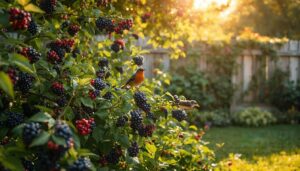
Summer is one of the best times to watch birds flock to your yard — if you’ve got the right plants growing. A handful of berry-producing shrubs can turn your garden into a reliable feeding spot from June through August.
Pairing those shrubs with a few nectar plants and seed-bearers can do even more — here’s a solid guide to building a full bird-friendly habitat in your yard.
Here are the top picks worth planting.
Serviceberry for Early Summer Feeding
Serviceberry, or Amelanchier, is one of the best early summer picks for your bird-friendly garden. It ripens in June, right when parent birds need nutritious berries to feed their young. The fruit packs natural sugars and antioxidants — quick fuel during nesting season.
Dense branches offer habitat structure, spring blooms deliver pollinator support, and propagation methods are simple enough for most home gardeners.
Its early spring bloom draws native bees.
Mulberry Trees for Abundant Fruit
Once serviceberry fades, mulberry trees take over — and they’re generous. A mature Mulberry Morus tree can drop hundreds of pounds of nutritious berries across several weeks, making fruit load monitoring almost unnecessary.
For cultivar selection, Illinois Everbearing delivers the longest seasonal fruit availability. Pair canopy management, root zone mulching, and seasonal watering with your bird-friendly garden, and mulberry becomes your summer centerpiece.
Blackberry and Raspberry Canes
After mulberry winds down, blackberry and raspberry canes step right in. These fruiting shrubs are workhorses in any bird-friendly garden — their lateral shoot production means fruit spreads across the whole cane, not just the tip.
Wild birds love that.
floricane development helps with cane pruning timing: remove spent canes after harvest, so new primocane fruit follows next season, extending your seasonal fruit availability beautifully.
Elderberry Clusters for Mixed Bird Species
Elderberry Sambucus is the shrub that pulls a crowd. Dense fruiting clusters ripen July through September, hitting seasonal energy peaks perfectly for thrushes, cedar waxwings, robins, and bluebirds all feeding together — real multi-species foraging in action.
The habitat layering effects of its 6–12-foot canopy give birds natural cover between feeds.
Birds even handle seed dispersal benefits by spreading seeds through their droppings, effectively replanting your bird-friendly garden for free.
Blueberries and Huckleberries in Sunny Spots
If you’ve got a sunny corner going to waste, blueberries and huckleberries will put it to work. Bright exposure triggers sun-boosted sugar development and sunlight-driven color deepening in the fruit — exactly the energy-dense seasonal food sources garden birds crave.
- Both need acidic soil preference (pH 4.5–5.5) to thrive
- Full sun maximizes yield for your bird-friendly garden
- Use bird netting strategies to share — not lose — your harvest
Birds That Eat Summer Berries
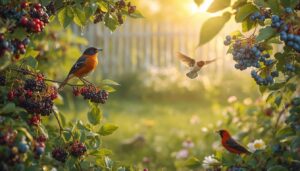
Plant the right berries and you’ll have more feathered visitors than you can count. Summer brings out a wonderful mix of birds, each with their own favorites.
Here’s a look at who’s likely showing up in your yard.
Cardinals and Mockingbirds
Cardinals and mockingbirds are two of the most rewarding visitors to a bird-friendly garden.
Both birds thrive when gardens mimic the layered diets explored in this guide to tropical bird feeding habits and fruit-seed-insect diversity.
Cardinals rely on native berry shrubs for cardinal berry consumption throughout the season — their thick bills, a classic example of bill morphology built for cracking open fruit, make them natural foragers.
Mockingbirds bring song mimicry and bold territory displays, roaming seasonal food sources for backyard birds wherever fruit ripening time peaks.
Robins and Thrushes
Robins and thrushes are early risers — their ground foraging strategies kick in at dawn, when dew-softened soil makes worm-hunting easier. That’s also when native berry shrubs become irresistible pit stops.
Robins rely on fruit ripening time to fuel seasonal migration timing, while thrushes follow similar rhythms. Plant serviceberry or winterberry, and your bird-friendly garden becomes a trusted breakfast table all season.
Cedar Waxwings and Catbirds
Few birds reveal a thriving bird‑friendly garden quite like cedar waxwings arriving in silky, synchronized flocks. Their flock feeding dynamics mean one good berry crop draws dozens at once.
Catbirds, meanwhile, work the edges solo — relying on habitat edge preference and berry caching behavior to survive leaner days.
Plant these to serve both:
- Serviceberry for early fruit ripening schedule
- Elderberry for dense native berry shrubs
- Dogwood for catbird cover
- Chokeberry supporting cedar waxwing preference through fall
Chickadees and Blue Jays
These two couldn’t be more different at the feeder — yet both reward you richly.
| Bird | Preferred Berries |
|---|---|
| Chickadee | Chokecherry, Blueberry |
| Blue Jay | Mulberry, Serviceberry, Amelanchier |
Chickadees rely on cache retrieval and vocal communication to share food finds. Blue jays use territory defense and winter foraging to dominate.
Plant Hawthorn to ease feeding competition between them.
Migratory Birds Passing Through in Summer
Your garden might be a lifeline for birds you’ve never even seen before. Summer flyway stopovers bring warblers, thrushes, tanagers, and cedar waxwings right through your yard — all urgently refueling energy before continuing their journey.
Your garden may be a lifeline for birds you have never seen, as summer stopovers bring warblers, tanagers, and waxwings urgently refueling mid-journey
Native berry shrubs are exactly what they need:
- Serviceberries for quick, high-sugar fuel
- Elderberries supporting insect protein access nearby
- Blueberries along habitat corridors
- Wild grapes easing climate route shifts
- Blackberries extending seasonal food sources for garden birds
Native Berry Plants to Grow
If you want birds showing up all season, the plants you choose make all the difference. Native shrubs are your best bet — they’re low-maintenance, locally adapted, and birds already know how to find them.
Here are five worth planting in your yard.
Chokeberry for Reliable Fruiting
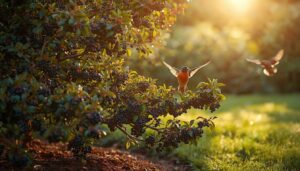
Chokeberry Aronia is one of the most dependable fruiting shrubs for wildlife you can grow. It’s drought tolerant, thrives with basic soil pH management around 6.0–6.5, and delivers a reliable late-season food source year after year.
Cross pollination boosts your berry count, and canopy thinning keeps fruit production strong.
Just watch for late frost — it can thin your blossoms fast.
American Beautyberry for Late Summer Color
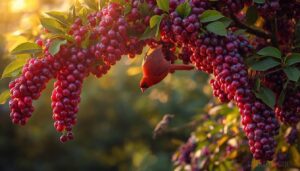
American Beautyberry (Callicarpa americana) picks up right where chokeberry leaves off. By late summer, its arching branch sculptures explode with a purple berry display so vivid it stops you in your tracks.
Cardinals, mockingbirds, and robins can’t resist this bird attraction showcase.
As a late-season food source, it gives your bird-friendly garden something beautiful and genuinely useful.
Red Osier Dogwood for Wildlife Cover
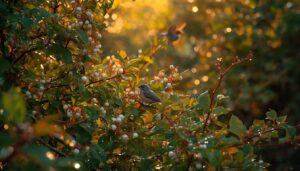
Red Osier Dogwood (Cornus sericea) brings something beautyberry can’t — shelter. Its thicket density creates a true predator refuge, with dense branches offering bird nesting sites year‑round.
The layered perching structure lets birds move safely through your bird‑friendly garden.
Plant it along a riparian buffer or wet edge, and those vivid winter stem colors will keep your wildlife habitat working every season.
Elderberry for Dense, Productive Shrubs
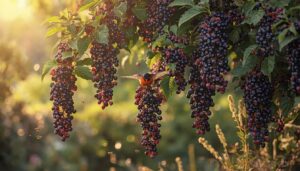
elderberry picks up right where dogwood leaves off — swapping cover for abundance. This powerhouse native berry shrub builds dense branches through natural root sucker management, reaching 8–12 feet in just a few years.
pollinator attraction strategies start in early summer with creamy flower clusters, then deliver heavy fruit loads for seasonal food sources for garden birds.
Hardy across winter hardiness zones 3–10, elderberry keeps your bird-friendly garden working hard all season.
Highbush Blueberry for Garden Borders
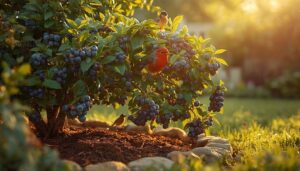
Highbush blueberry might be the most hardworking plant in a bird-friendly garden.
Its Root Zone Shallowing means shallow roots stay tidy, forming neat 3–4‑foot hedges in well-draining soil and full sun.
Varietal Diversity — from compact Northland to tall Bluecrop — staggers ripening, stretching seasonal food sources for garden birds.
Apply Organic Fertilizer Timing in early spring and use Bird Netting Techniques during peak fruiting.
Planting Summer Berry Shrubs
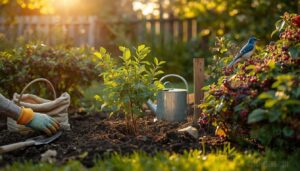
Getting your berry shrubs off to a strong start comes down to few simple choices you make before the first plant goes into the ground. Things like light, soil, spacing, and water might sound basic, but they make a real difference in how well your plants fruit — and how many birds show up.
Here’s what to focus on when you’re ready to plant.
Full Sun Versus Partial Shade
Most native berry shrubs love full sun — six-plus hours daily keeps fruit production strong and timing on track. But light duration matters as much as intensity.
In hotter regions, afternoon partial shade reduces heat stress, protects soil moisture, and creates that microclimate balance your plants need.
This thoughtful approach shapes seasonal food sources for garden birds, turning native berry shrubs into a truly bird-friendly garden.
Well-drained, Fertile Soil
Think of your soil as a living kitchen — it needs the right texture, nutrients, and balance to feed your plants well. Soil Texture Balance matters here: loamy, well-draining soil prevents root rot while holding just enough moisture.
Organic Matter Incorporation through compost improves structure naturally.
Aim for a soil pH around 5.5–6.5, using pH Adjustment Strategies like sulfur or lime as needed. Your native berry shrubs will thank you.
Proper Spacing for Airflow
Give your native berry shrubs room to breathe — literally. Keeping a canopy gap of 4 to 6 feet between plants creates natural air corridors that reduce disease and keep foliage dry.
Use row offset spacing of 6 to 8 feet, add ground cover paths between rows, and maintain an irrigation buffer around emitters.
Good plant spacing recommendations make your bird-friendly garden thrive as reliable seasonal food sources for garden birds.
Mulching to Hold Moisture
Mulch is your best friend for keeping soil moisture locked in during hot summers.
Spread 2 to 4 inches of organic mulch — shredded bark or wood chips work great — around your berry shrubs. This simple step helps soil moisture retention, regulates soil temperature, and cuts weeding time substantially.
Keep mulch away from stems to prevent rot, and replenish it annually.
Watering During Establishment
Getting water right from day one makes all the difference. Newly planted berry shrubs need deep soil soaking — saturating roots 12 to 18 inches down — so they anchor well and survive summer heat.
- Use drip irrigation installation for precise, low-waste watering
- Try the watering bag technique for larger shrubs
- Practice moisture meter monitoring to avoid over- or under-watering
Adjust your irrigation timing adjustments after rain or heat spikes.
Keep Berry Bushes Bird-Friendly
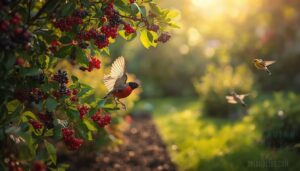
Growing berries is only half the job — keeping them safe and productive is where the real magic happens. A few simple habits can make your garden a place birds return to all season long.
Here’s what actually matters.
Avoid Pesticides and Herbicides
Pesticides don’t just target pests — they linger on berries and harm the birds you’re trying to feed. Integrated Pest Management keeps your bird-friendly garden safe by using scouting and early action instead of routine sprays.
Pair that with organic fertilizer for berries, chemical-free mulching, and beneficial insect habitat, and you’ll rarely need chemicals at all. Seasonal spray avoidance and pesticide-free gardening with native shrubs do the rest.
Prune After Fruiting for Next Season
Once your berry harvest wraps up, smart pruning timing sets you up for next season’s bounty. A well-pruned blackberry or Serviceberry (Amelanchier) rewards you with stronger fruiting wood — and healthier food for your birds.
Follow these three steps for cane removal and spur management:
- Remove old canes — cut one-third to one-half after fruiting
- Disinfect tools between cuts for disease prevention
- Water and mulch after pruning for solid post-pruning care
Prune annually, and your bird-friendly garden ecosystem keeps thriving season after season.
Choose Native Over Invasive Shrubs
Once your garden is pruned and ready, what you plant next matters just as much.
Native shrubs are the heart of any bird-friendly garden ecosystem. They support local wildlife synergy, reduce disease pressure naturally, and offer cost-effective sourcing through regional nurseries.
Choosing berry shrubs for backyard birds means skipping invasive species entirely — they crowd out seasonal food sources that your birds actually depend on, threatening long-term habitat stability.
Protect Berries From Pet Toxicity
Some berry plants — winterberry, holly, and firethorn — are toxic to pets.
Smart pet-safe placement keeps shrubs behind fencing or wire mesh, away from paths where your dog or cat roams. Use pet barriers near the base, and clean up fallen fruit daily.
Harvest timing matters too: pick ripe berries promptly. Taste deterrents can help, but remove spills fast.
Stagger Plantings for Longer Food Supply
Think of your yard as a living buffet — one that never closes. Varietal timing is your secret weapon. Stagger plantings so something’s always ripening:
- Early wave – Serviceberry feeds birds in June through multi-age plantings.
- Mid-season – Mulberry bridges the gap with staggered harvest through July.
- Late surge – Elderberry sustains seasonal food sources for backyard birds into August.
Seasonal row planting and staggered irrigation keep the table set all summer.
Frequently Asked Questions (FAQs)
Which summer berries attract the most hummingbirds?
Hummingbirds love tubular red berries and open fruit clusters with high sugar nectar.
Elderberry and serviceberry hit their mid‑summer bloom right during migration, making both smart native berry plants for any bird‑friendly garden ecosystem.
How do I prevent birds from stripping bushes too early?
You don’t need to choose between feeding birds and enjoying your harvest. Use netting installation early, rotate deterrents, and set up alternative food stations nearby to redirect traffic naturally.
Do deer compete with birds for summer berries?
Yes, deer do compete with birds, but it’s rarely a dealbreaker.
Deer browsing impact can reduce fruit set over time, so habitat diversification with multiple native berry plants helps birds find reliable seasonal food sources.
Conclusion
Berry good news: once you plant the right mix of summer berries for birds, the wildlife takes care of the rest.
A mulberry here, an elderberry there, and your yard quietly becomes a place birds return to season after season.
You’re not just growing a habitat.
Start with one or two native shrubs, watch who shows up, and let the branches do the storytelling.
Nature will fill in every gap.