This site is supported by our readers. We may earn a commission, at no cost to you, if you purchase through links.

A northern cardinal doesn’t settle for scraps. When a male lands at your feeder—that unmistakable flash of red against bare winter branches—he’s making a deliberate choice based on what you’re offering.
Cardinals have strong preferences, and the wrong seed mix means they’ll visit once and move on to a neighbor’s yard.
Black oil sunflower and safflower seeds hit the nutritional profile they’re wired to seek, delivering the fat and protein their metabolism depends on through colder months.
Choosing the right wild bird seeds for attracting cardinals comes down to seed composition, filler content, and energy density—details that separate a feeder cardinals return to from one they ignore.
Table Of Contents
- Key Takeaways
- Best Wild Bird Seeds for Attracting Cardinals
- 1. Audubon Park Cardinal Blend Bird Food
- 2. Kaytee Cardinal Bird Seed
- 3. Happy Wings Cardinal Blend Bird Seed
- 4. Wagner’s Cardinal Blend Wild Bird Food
- 5. Kaytee Ultimate Bird Seed Blend
- 6. Everwilde Cardinal Flower Wildflower Seeds
- 7. Kaytee Cardinal Seed Cake
- 8. Wagner’s Black Oil Sunflower Bird Food
- 9. Wagner’s Greatest Variety Bird Food
- 10. Lyric Cardinal Wild Bird Seed
- Key Seed Types Cardinals Love
- Important Factors in Choosing Cardinal Seed
- Tips for Attracting Cardinals With Bird Seed
- Maintaining Seed Quality and Feeder Health
- Frequently Asked Questions (FAQs)
- What is the best bird seed to attract cardinals?
- What is the 5 7 9 rule for bird feeders?
- Do cardinals recognize people who feed them?
- Do cardinals eat out of feeders?
- How do cardinals behave during harsh winter storms?
- Can cardinals recognize and return to specific feeders?
- Do male and female cardinals have different seed preferences?
- What predators commonly threaten cardinals at backyard feeders?
- At what age do young cardinals begin eating seeds?
- Conclusion
Key Takeaways
- Black oil sunflower and safflower seeds are the two seeds cardinals keep coming back for, offering about 40% fat content that helps them stay warm and energized through cold months.
- Skip any blend where corn or milo appears before sunflower or safflower on the ingredient list, since filler‑heavy mixes mostly end up scattered on the ground untouched.
- Feeder placement matters as much as what’s inside it — position yours 5 to 6 feet high and 10 to 15 feet from shrubs so cardinals feel safe enough to settle in.
- Cardinals can recognize the people who feed them and remember specific feeders by color and location, so keeping your setup clean, stocked, and consistent is what turns occasional visitors into daily regulars.
Best Wild Bird Seeds for Attracting Cardinals
Cardinals are picky eaters, but once you find the right seed, they’ll keep coming back.
Sunflower seeds and safflower are their go-to picks, so stocking the right feeder makes all the difference—here’s a look at feeders built specifically for cardinals that make it easy to keep them coming back.
The blends below are built around what cardinals actually eat — mostly sunflower and safflower seeds, with a few smart extras. Here are ten options worth trying at your feeder.
1. Audubon Park Cardinal Blend Bird Food
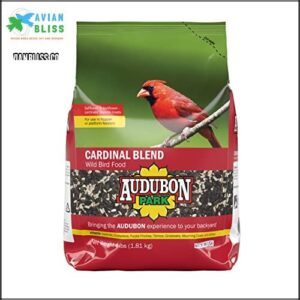
Audubon Park Cardinal Blend keeps things simple — just black oil sunflower seeds and safflower, split evenly at 50/50 with no fillers to sort through.
Cardinals can crack both shells easily, so less seed ends up on the ground.
The safflower naturally discourages squirrels, leaving more for the birds you actually want.
With 33% crude fat, it delivers real energy year-round.
Use it in a hopper or platform feeder for best results.
| Best For | Backyard birders who want to attract cardinals, chickadees, and finches without dealing with squirrels or filler seeds. |
|---|---|
| Weight | 4 lbs |
| Cardinal Attraction | Yes |
| Sunflower Seeds | Yes |
| Squirrel Deterrent | Partial |
| Made in USA | Unspecified |
| Feeder Compatible | Hopper, Tube, Platform |
| Additional Features |
|
- No fillers — every seed is one birds actually eat, so less waste hits the ground
- Safflower naturally keeps squirrels away, meaning more food stays for the birds
- Works in hopper, tube, or platform feeders, so it fits whatever setup you already have
- At 4 pounds, it goes fast if you’ve got a busy feeder — expect to restock often
- Pricier than blended mixes when you compare cost per pound
- No variety for birders who want to pull in ground-feeding species that prefer millet or corn
2. Kaytee Cardinal Bird Seed
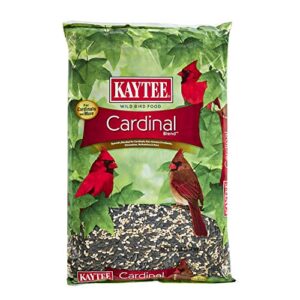
Kaytee’s Cardinal Bird Seed takes a similar approach but leans harder into safflower — and that’s actually a smart move if squirrels are a constant headache at your feeders. The mix pairs black oil sunflower with safflower, adding a touch of soybean oil to boost palatability.
It pulls in cardinals, chickadees and nuthatches, and grosbeaks reliably.
At 7 pounds per bag, it’s easy to store and refill.
A clean ingredient list with no fillers means less waste dropping to the ground.
| Best For | Bird lovers who want to attract cardinals and are tired of squirrels raiding their feeders. |
|---|---|
| Weight | 7 lbs |
| Cardinal Attraction | Yes |
| Sunflower Seeds | Yes |
| Squirrel Deterrent | Partial |
| Made in USA | Unspecified |
| Feeder Compatible | Standard Feeders |
| Additional Features |
|
- Safflower naturally discourages squirrels, so more seed actually reaches the birds
- Clean ingredient list means less waste and mess under your feeder
- Reliably pulls in cardinals, chickadees, nuthatches, and grosbeaks
- 7 pounds goes fast if you’re refilling frequently — costs can add up
- Squirrels may still visit despite the bitter safflower taste
- Occasional natural debris like twigs can show up in the bag
3. Happy Wings Cardinal Blend Bird Seed
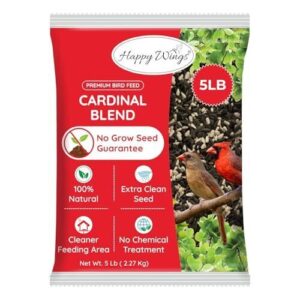
If you’re looking for something even cleaner, Happy Wings Cardinal Blend keeps it simple — safflower and sunflower seeds, nothing else.
No cheap filler seeds mean less mess under your feeder and more of what cardinals actually want.
The seeds are heat-treated to prevent sprouting, so you won’t end up with weeds taking over your yard.
It works well in both tube and tray feeders, and the vacuum packaging helps the seeds stay fresh longer.
| Best For | Bird lovers who want to attract cardinals and other songbirds without the mess of cheap filler seeds. |
|---|---|
| Weight | 5 lbs |
| Cardinal Attraction | Yes |
| Sunflower Seeds | Yes |
| Squirrel Deterrent | No |
| Made in USA | Yes |
| Feeder Compatible | Tube, Tray |
| Additional Features |
|
- Just two quality ingredients — safflower and sunflower — so birds get real nutrition without the junk
- Heat-treated seeds mean no surprise weeds sprouting up under your feeder
- Vacuum-sealed packaging keeps things fresh right up until you’re ready to fill up
- It’s pricier than most bagged birdseed on the shelf
- Sparrows and other unwanted birds may show up to the party too
- Shells and debris still fall, so cleanup under the feeder is part of the deal
4. Wagner’s Cardinal Blend Wild Bird Food
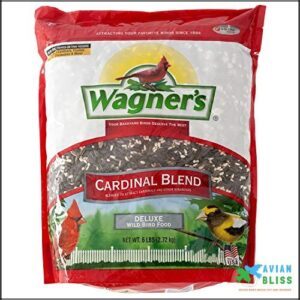
Wagner’s Cardinal Blend takes a slightly different approach — it’s 60% black oil sunflower seeds and 40% safflower, which gives you a mix that’s both energy-rich and naturally less appealing to squirrels.
Cardinals handle those thin sunflower shells easily, and the high oil content helps bright plumage and active feeding.
The 6-pound resealable bag makes storage simple, and because there’s no corn or milo filler, you’ll see less mess under the feeder and fewer unwanted birds crowding the mix.
| Best For | Bird enthusiasts who want to attract cardinals and songbirds while keeping squirrels and filler-loving birds away. |
|---|---|
| Weight | 6 lbs |
| Cardinal Attraction | Yes |
| Sunflower Seeds | Yes |
| Squirrel Deterrent | Partial |
| Made in USA | Yes |
| Feeder Compatible | Standard Feeders |
| Additional Features |
|
- The 60/40 sunflower-safflower mix draws in cardinals, finches, doves, and woodpeckers without junk filler seeds
- High oil content gives birds the energy they need, and the no-shell formula means almost zero mess under your feeder
- The resealable velcro bag keeps the seed fresh and storage hassle-free
- Squirrels and occasional raccoons or rats may still find their way to the feeder
- It runs pricier than basic wild bird mixes, so frequent refills can add up fast
- The 6-pound bag doesn’t last long if you’ve got heavy feeder traffic
5. Kaytee Ultimate Bird Seed Blend
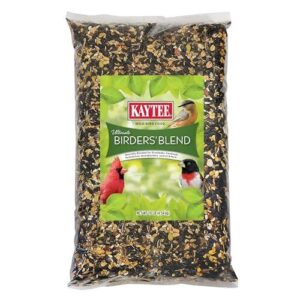
If you’re after a more than just cardinals blend, this one’s worth a look. The Kaytee Prime Bird Seed Blend combines safflower, peanuts, striped sunflower, and millet — a mix that draws cardinals, woodpeckers, blue jays, and finches to the same feeder.
At 15% minimum fat content, it helps birds through colder months when energy demands spike.
The 10‑pound bag runs $19.99, which some find a bit steep, but the variety of visitors it brings usually makes it worthwhile.
| Best For | Backyard birders who want to attract a wide variety of colorful songbirds — not just cardinals — with a single, well-rounded seed blend. |
|---|---|
| Weight | 10 lbs |
| Cardinal Attraction | Yes |
| Sunflower Seeds | Yes |
| Squirrel Deterrent | No |
| Made in USA | Yes |
| Feeder Compatible | Standard Feeders |
| Additional Features |
|
- Draws a great mix of birds, including cardinals, woodpeckers, blue jays, and finches
- Solid nutritional profile with protein, fat, and fiber to keep birds fueled year-round
- Made in the USA with quality ingredients like safflower, peanuts, and striped sunflower
- At $19.99 for 10 pounds, it’s a bit pricier than basic seed blends
- The bag can be bulky and tricky to store
- May attract unwanted birds like cowbirds due to the cracked corn content
6. Everwilde Cardinal Flower Wildflower Seeds
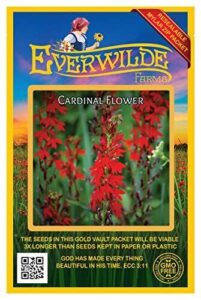
Here’s something a little different — the Everwilde Cardinal Flower Wildflower Seeds aren’t bird food at all.
They grow Lobelia cardinalis, a native perennial that shoots up to 48 inches tall and produces bright red tubular flowers that hummingbirds and butterflies genuinely can’t resist. It blooms late summer into fall, thrives near ponds or wet garden spots, and suits USDA zones 3–10.
If you want to attract cardinals by creating the right habitat rather than just stocking a feeder, this is a thoughtful addition.
| Best For | Gardeners who want to attract hummingbirds and butterflies by growing a stunning native wildflower near water features or wet garden areas. |
|---|---|
| Weight | 0.32 oz |
| Cardinal Attraction | No |
| Sunflower Seeds | No |
| Squirrel Deterrent | No |
| Made in USA | Unspecified |
| Feeder Compatible | Garden Bed |
| Additional Features |
|
- Seeds come in Gold Vault packaging with a resealable bag, so extras stay fresh for long-term storage
- Grows a striking native perennial that naturally draws hummingbirds and butterflies without any extra effort
- Current lab-tested seeds with detailed planting instructions included — both on the bag and via QR code
- Germination is slow and finicky — some buyers never got them to sprout at all
- Needs specific conditions to thrive, like consistent moisture and the right light setup
- Requires a fair amount of patience and attention, so it’s not a plant-and-forget situation
7. Kaytee Cardinal Seed Cake
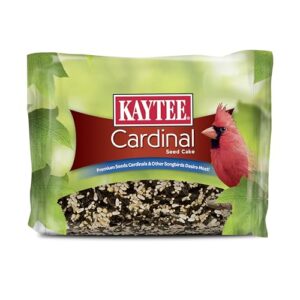
Kaytee’s Cardinal Seed Cake takes a different approach to backyard feeding. Instead of loose seeds, it’s a compressed block — packed with black oil sunflower, safflower, and a honey-infused formula — that fits snugly into a standard cake feeder.
Cardinals can’t scatter it, so waste stays minimal. At 1.85 pounds, it lasts longer than a typical loose-seed fill.
The blend guarantees at least 15% crude protein and 18% crude fat, giving your backyard birds steady, reliable nutrition through every season.
| Best For | Backyard bird lovers who want to attract cardinals without dealing with the mess of loose seeds. |
|---|---|
| Weight | 1.85 lbs |
| Cardinal Attraction | Yes |
| Sunflower Seeds | Yes |
| Squirrel Deterrent | No |
| Made in USA | Unspecified |
| Feeder Compatible | Cake Feeders |
| Additional Features |
|
- Cardinals love the black oil sunflower and safflower blend, so you’ll actually see results
- The compressed cake format cuts down on waste and lasts longer than a typical seed fill
- Ready to use right out of the bag — just drop it in a cake feeder and you’re done
- Can arrive cracked or damaged from shipping
- You’ll need a cage-style or cake feeder on hand — it won’t work in a standard tube feeder
- Other birds like woodpeckers will show up too, so don’t expect cardinals-only traffic
8. Wagner’s Black Oil Sunflower Bird Food
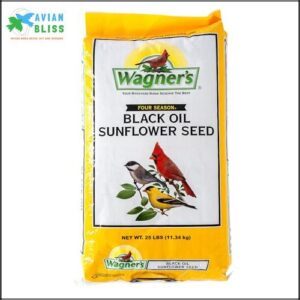
If you want to keep it simple, sometimes one ingredient does the job better than a blend.
Wagner’s Black Oil Sunflower Bird Food is exactly that — pure black oil sunflower seed, nothing else.
Cardinals prefer it over most other seeds, and the thin shells make cracking easy for their thick bills.
Each seed delivers at least 24% crude fat and 14% crude protein, so you’re offering real nutrition.
It works in tray, hopper, or platform feeders, giving you plenty of flexibility.
| Best For | Bird lovers who want a simple, high-quality single-ingredient seed that attracts a wide variety of backyard birds like Cardinals, Chickadees, and Finches. |
|---|---|
| Weight | 25 lbs |
| Cardinal Attraction | Yes |
| Sunflower Seeds | Yes |
| Squirrel Deterrent | No |
| Made in USA | Yes |
| Feeder Compatible | Tray, Hopper |
| Additional Features |
|
- Pure black oil sunflower seed with no fillers — just real, high-energy food birds actually want
- Thin shells make it easy for small-beaked birds to crack open without struggling
- Works in tray, hopper, and platform feeders, so it fits whatever setup you already have
- Some bags have been reported to contain wood chips or non-seed debris
- Single-ingredient formula may not attract as wide a variety as a blended mix
- Dropped seeds can germinate in your yard, leading to unwanted sunflower plants
9. Wagner’s Greatest Variety Bird Food
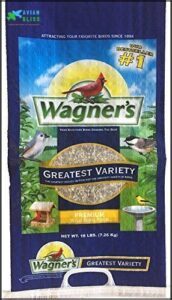
If one bag could bring the whole neighborhood to your feeder, this might be it. Wagner’s Greatest Variety Bird Food packs 12 ingredients into a single mix, with sunflower seeds alone making up over 40% of the blend.
Cardinals get black oil sunflower, safflower, and peanut kernels — seeds that match their thick-billed feeding style perfectly.
You can use it in hopper, platform, or tube feeders, and it draws in finches, jays, and titmice alongside your cardinals.
| Best For | Backyard birders who want to attract the widest range of species possible with a single, no-fuss blend. |
|---|---|
| Weight | 16 lbs |
| Cardinal Attraction | Yes |
| Sunflower Seeds | Yes |
| Squirrel Deterrent | No |
| Made in USA | Yes |
| Feeder Compatible | Tube, Hopper, Platform |
| Additional Features |
|
- 11-ingredient mix pulls in everything from Cardinals to Woodpeckers to finches — real variety in one bag
- Works in tube, hopper, and platform feeders, so you’re not locked into one setup
- Made in the USA with quality grains, and sunflower seeds make up 40% of the blend
- Some buyers have run into mold and clumping, especially if the bag sits in a humid spot
- The bag isn’t waterproof, so you’ll want to transfer it to an airtight container after opening
- At 16 pounds, it’s a solid bag — but a busy feeder will go through it faster than you’d expect
10. Lyric Cardinal Wild Bird Seed
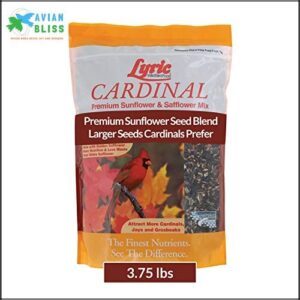
Lyric Cardinal Wild Bird Seed keeps things simple in the best way. It leans heavily on sunflower and safflower seeds — the two ingredients cardinals actually go back to again and again. The blend skips the cheap filler seeds that just pile up under your feeder untouched.
You’ll notice cardinals spending more time at the feeder rather than sorting through what they don’t want. It’s a straightforward mix that does exactly what it promises.
| Best For | Bird watchers and backyard nature lovers who want to attract cardinals, grosbeaks, and blue jays without the mess of filler seeds. |
|---|---|
| Weight | 3.75 lbs |
| Cardinal Attraction | Yes |
| Sunflower Seeds | Yes |
| Squirrel Deterrent | No |
| Made in USA | Unspecified |
| Feeder Compatible | Most Outdoor Feeders |
| Additional Features |
|
- Heavy on sunflower and safflower seeds — the stuff birds actually eat
- Attracts a solid variety of species, so there’s always something to watch
- Vacuum-sealed packaging keeps the seed fresh longer
- Squirrels will likely show up too, so a squirrel-proof feeder helps
- The 3.75 lb bag goes fast if you have a busy feeder
- Some smaller birds may struggle with the larger seeds in the mix
Key Seed Types Cardinals Love
Cardinals aren’t picky eaters, but they do have their favorites. Knowing seeds pull them in makes all the difference between an empty feeder and a yard full of red.
Here are the seed types that cardinals keep coming back for.
Black Oil Sunflower Seeds
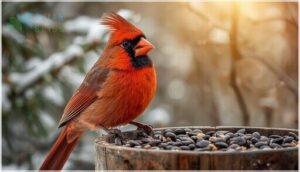
Black oil sunflower seeds are basically the benchmark when it comes to cardinal bird feeding preferences. Their thin shell thickness lets cardinals crack them open effortlessly, while the high fat content — around 40% — delivers serious energy density for cold months.
Vitamin E benefits help overall vitality, and the meaty kernel size makes every visit to your feeder worth their while. They also provide a notable high protein content that helps overall bird health.
Safflower Seeds
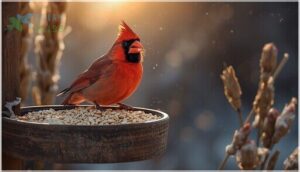
Safflower seeds are a quieter complement to sunflower — cardinals love them, but squirrels usually don’t, thanks to that bitter taste. Their calorie density (roughly 517 calories per 100g) keeps your birds fueled through cold nights, and cardinals’ strong bill adaptation makes cracking the shell easy.
- Shell thickness filters out softer-billed nuisance birds naturally
- Golden variety offers a thinner hull with the same squirrel resistance
- High fat content (~38g per 100g) provides overnight energy needs
- 16g protein per 100g aids feather health and muscle maintenance
For ideal nutrition, consider nutrient‑dense black oil sunflower seeds as a staple.
Nut and Fruit Additions
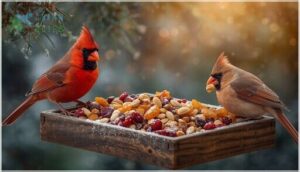
Beyond seeds alone, cardinals genuinely enjoy peanut pieces and dried fruits as a winter calorie boost.
Peanut piece preparation matters — shelled, unsalted nuts benefit their health without excess sodium.
For dried fruit sizing, cut larger pieces small enough to grab easily.
Present everything in a tray feeder so cardinals can comfortably pick through a quality nut and fruit blend.
High-Energy, Nutrient-Dense Mixes
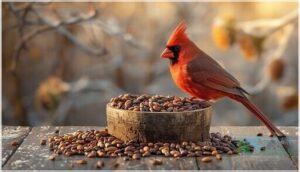
When you want cardinals coming back day after day, a high-energy mix does the heavy lifting. Look for blends that nail the calorie ratio — roughly 60% black oil sunflower seeds to 40% safflower keeps fat content high without sacrificing protein balance.
Top features to prioritize:
- Minimum 27% crude fat for reliable seasonal fat boost
- Around 13% crude protein supporting feather and muscle health
- Hulled sunflower hearts for waste reduction under feeders
- No small filler seeds that cardinals toss aside
- Year-round nutritional balance suited to cardinal seed preferences and nutrition
Important Factors in Choosing Cardinal Seed
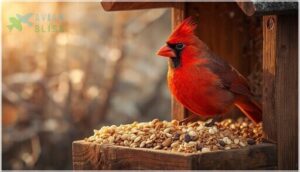
Not all cardinal seeds are created equal, and a few key factors can make the difference between a busy feeder and an ignored one.
Before you grab the first bag off the shelf, it’s worth knowing what actually matters.
Here’s what to look for when choosing the right seed for cardinals.
Nutritional Value and Energy Content
Cardinals run hot — literally. Their seasonal metabolism nearly doubles energy use on cold winter nights, so the calorie density of your seed matters more than most people realize.
Cardinals nearly double their energy use on cold winter nights, making calorie-dense seed a survival essential
High-energy seeds like black oil sunflower pack 535–584 calories per 100 grams, with a fat profile around 44–52 percent. Strong protein levels and fiber benefits round out the nutritional value, making high-energy bird seed mixes the smart choice for cardinal seed preferences and nutrition.
Seed Mix Composition and Fillers
Checking the ingredient order on the bag tells you a lot.
If corn or milo appears before sunflower or safflower, the filler ratio is working against you — and against the cardinals.
Quality seed mix composition puts high-energy bird seed mixes first, minimizing waste.
Shell-free blends cut mess by up to 85 percent, making them a smart cost-nutrients balance.
Squirrel and Pest Resistance
Squirrel deterrence starts with what’s in the bag. Safflower and hot pepper seed both work well — squirrels avoid safflower’s bitter taste, and capsaicin in hot pepper seed simply isn’t something mammals tolerate.
Pair squirrel-resistant bird seeds with weight-activated feeders or caged baffle strategies, and you’ve covered most angles. Rodent-proof bins keep stored seed safe, rounding out solid bird seed storage and pest control.
Seasonal Feeding Considerations
Cardinals need different fuel at different times of year — and matching your mix to the season makes a real difference.
- Winter Fat Boost – Black oil sunflower seeds hit 40% oil content, keeping cardinals warm through freezing nights.
- Spring Protein Surge – Add mealworms to seed mix composition for egg‑laying females.
- Summer Heat Management – Reduce feeder volume; natural berries cover 40% of their diet.
- Fall Calorie Load – High‑energy seeds like peanuts build fat reserves before temperatures drop.
- Year‑Round Timing – Feed twice daily to lock in cardinal bird feeding preferences through every season.
Tips for Attracting Cardinals With Bird Seed
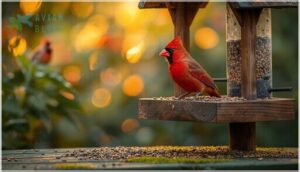
Getting the right seed is only half the story — where and how you offer it matters just as much.
Cardinals are creatures of habit, and a few small adjustments to your setup can make your yard their go-to spot.
Here’s what actually works regarding feeder placement, style, and keeping things clean and inviting.
Optimal Feeder Placement
place your feeder matters as much as what’s inside it. Aim for a feeder height of 5 to 6 feet — close enough for easy refilling, high enough to discourage cats.
position feeders 10 to 15 feet from shrubs so cardinals can scout safely.
window safety, stay within 3 feet or beyond 30 feet to prevent collisions.
Feeder Types Compatible With Cardinal Seeds
Not every feeder works well for cardinals. Hopper capacity feeders — holding up to 12 pounds of seed — give whole flocks room to settle in.
Platform drainage trays, around 12 to 15 inches wide, let multiple birds feed at once. Add a tube perch adapter or weather shield for weather protection, and window suction models bring them right to your glass.
Providing Fresh Water and Shelter
Good feeders get cardinals close — but fresh water and cover keep them coming back.
Shallow Bath Design, just 1–2 inches deep with gently sloped sides, suits cardinal bird feeding preferences year-round. Use Partial Shade Placement to slow algae growth, and add Heated Winter Water sources during cold snaps.
For bird habitat creation, layer these shelter elements:
- Evergreen Shelter Plants like Eastern red cedar block winter wind
- Brush Pile Cover from pruned branches gives quick escape routes
- Dense shrubs near feeders support seasonal bird feeding strategies
- Trim vegetation for clear sightlines without sacrificing bird feeder placement tips
Reducing Seed Waste and Mess
Fresh water brings cardinals back — and the right seed setup keeps your yard tidy.
Hulled seed benefits are real: cardinals eat nearly everything, cutting shell scatter by up to 85%. Safflower seeds add mess‑free feeding with minimal hull debris.
Platform feeder design and seed catcher trays collect dropped bits before they pile up, while squirrel‑proof mechanisms protect your seed composition from wasteful raids.
Maintaining Seed Quality and Feeder Health
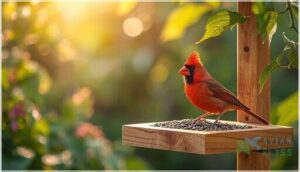
Getting cardinals to your yard is one thing — keeping them coming back is another.
The secret often comes down to how well you care for your seeds and feeders between visits. Here’s what to keep in mind to make sure everything stays fresh and clean for your feathered regulars.
Proper Bird Seed Storage
Storing bird seed the right way makes a real difference in what you’re offering to cardinals.
Use airtight containers — metal cans or gamma-seal buckets work well — and keep temperatures between 40 and 70 degrees Fahrenheit.
Humidity management matters too, so add silica gel packs if your storage area gets damp.
Freeze new bags for pest proofing, and follow a simple rotation schedule: two weeks’ supply in summer, four in winter.
Regular Feeder Cleaning Practices
Clean feeders keep cardinals coming back. A dirty feeder can spread disease fast, so bird feeder maintenance matters more than most people realize.
- Weekly Scrubbing removes buildup before bacteria takes hold
- Bleach Disinfection (one part bleach, nine parts water) kills pathogens in ten minutes
- Port Inspection and Sunlight Drying complete the job before refilling
When a Sick Bird Protocol is needed, increase cleaning to weekly immediately.
Preventing Mold and Spoilage
Mold sneaks in quietly — usually through humidity, not neglect. Store seed in airtight containers like Vittles Vault bins, which use double gaskets to control moisture.
Add DampRid packets and keep storage areas between 50–70°F. Use Feeder Fresh granules inside feeders to absorb rain and humidity. Buy only 2-week quantities, and rotate stock using FIFO so older seed always goes first.
Monitoring Seed Freshness for Cardinals
Watching your cardinals closely tells you more than any label will. If they’re visiting less, scattering seed, or ignoring the feeder after 48 hours, that’s a cardinal behavior change worth noticing.
Check for seed discoloration — dull or yellowed shells mean oil breakdown. Run a quick rancid odor test: stale seed smells sour.
Always do a package date review, since opened safflower expires within three months.
Frequently Asked Questions (FAQs)
What is the best bird seed to attract cardinals?
Black oil sunflower and safflower seeds are the best bird seed for cardinals, offering 38 percent fat and natural squirrel deterrent strategies that keep feeders busy with bright red visitors.
What is the 5 7 9 rule for bird feeders?
The 5-7-9 rule means placing feeders at least 5 feet high, 7 feet from any horizontal surface, and 9 feet below overhanging branches — keeping squirrel jump limits in mind for effective squirrel-proof bird feeding.
Do cardinals recognize people who feed them?
Yes, cardinals recognize people who feed them.
They use facial cue recognition and visual identifier cues like hair and clothing, retaining memory duration of up to six years through behavioral adaptation that improves survival benefits.
Do cardinals eat out of feeders?
Cardinals practically own your feeder — they’re among the first arrivals at dawn and last to leave at dusk, making feeder perch size and morning feeding peaks essential considerations for attracting cardinals to your backyard.
How do cardinals behave during harsh winter storms?
During harsh winter storms, cardinals rely on shelter seeking in dense evergreens, feather fluffing for warmth.
Shivering bursts to boost heat, feeding frenzies before snowfall, and flock formation for safety and foraging support.
Can cardinals recognize and return to specific feeders?
They absolutely do.
Cardinals rely on spatial memory and visual cues like feeder color and position to return daily. Their territorial fidelity means a consistent daily routine keeps them coming back reliably.
Do male and female cardinals have different seed preferences?
Not quite — like two peas in a pod, male and female cardinals share nearly identical seed preferences, both favoring black oil sunflower seeds above all, though courtship feeding dynamics and sex‑based feeder avoidance shift who visits when.
What predators commonly threaten cardinals at backyard feeders?
Hawks, cats, raccoons, snakes, and crows are the most common threats. Peak hawk attack timing is early morning, while cats rely on ambush tactics near ground-level spilled seed.
At what age do young cardinals begin eating seeds?
Young cardinals begin eating seeds around 20 days old. Before that, parents handle everything — regurgitated insects, then whole seeds mixed in. By week four, fledglings handle sunflower seeds independently.
Conclusion
A feeder stocked with the right wild bird seeds for attracting cardinals can transform your backyard into the most visited address on the block.
Black oil sunflower and safflower seeds give cardinals exactly what their bodies need, especially when temperatures drop.
Skip the filler-heavy mixes, keep your feeder clean, and place it near protective shrubs.
Do those things consistently, and that vivid flash of red won’t just visit—it’ll stay.
- https://dansbirdbites.com/the-best-bird-seed-for-cardinals/
- https://birdseedandbinoculars.com/wordpress/attracting-northern-cardinals/
- https://duncraft.com/products/coles-cajun-cardinal-bird-seed-10-or-20-lb-bag
- https://barrie.wbu.com/attracting-northern-cardinals
- https://www.audubonpark.com/audubon-park-classic/p/cardinal-blend