This site is supported by our readers. We may earn a commission, at no cost to you, if you purchase through links.
A single Wood Thrush can produce two notes simultaneously—its syrinx works like two instruments fused into one.
That haunting, flute-like spiral you hear at dusk isn’t random.
It’s a learned performance, rehearsed during a narrow developmental window that closes forever within the bird’s first year.
Young songbirds memorize patterns with a precision that rivals human musicians, building internal templates from a father’s song or a nearby tutor.
Bird song pattern learning follows rules—biological, acoustic, and neurological—and once you understand those rules, the forest stops sounding like noise.
It starts sounding like language you’re finally learning to read.
Table Of Contents
- Key Takeaways
- How Birds Learn Song Patterns
- Key Elements of Bird Song Patterns
- Step-by-Step Guide to Bird Song Pattern Learning
- Overcoming Challenges in Bird Song Recognition
- Top 10 Tools for Bird Song Pattern Learning
- 1. North American Bird Songs Book
- 2. Backyard Birdsong Guide Eastern Central America
- 3. Haikubox AI Birdsong Identifier
- 4. North America Birdwatching Guide for Beginners
- 5. Backyard Bird Songs Interactive Book
- 6. ZDH Handcrafted Wooden Bird Call Set
- 7. National Geographic Kids North America Bird Guide
- 8. Bird Talk Identify Birds By Sound
- 9. Birds of Puget Sound Region
- 10. Pishing Bird Calls Book CD
- Frequently Asked Questions (FAQs)
- What is the best way to learn bird songs?
- What are the 5 S’s of birding?
- What is the app for learning bird songs?
- Can bird songs vary by region or season?
- How do invasive species affect local bird songs?
- What role does habitat loss play in song changes?
- Do birds ever lose their songs over time?
- How do weather conditions impact bird vocalizations?
- Conclusion
Key Takeaways
- Songbirds learn their calls during a narrow developmental window — miss it, and that learning door closes forever.
- Your ear improves fastest when you pair spectrograms with mnemonics, turning abstract sound into a pattern you can actually see and remember.
- Rhythm, pitch, repetition, and tone are the four building blocks of every bird song — master those, and species ID becomes second nature.
- The right tools, from AI identifiers like Haikubox to mnemonic-driven guides like Bird Talk, can cut your learning curve dramatically.
How Birds Learn Song Patterns
Birds don’t just stumble into their songs — they learn them, much like you learned to talk.
Just like kids picking up words from those around them, young birds memorize and rehearse songs they hear — and understanding songbird melody patterns makes it surprisingly easy to start recognizing who’s singing.
Birds learn their songs the way children learn to talk — not by instinct alone, but through listening, imitation, and practice
process is surprisingly structured, shaped by timing, feedback, brain wiring, and early role models.
Here’s what’s actually happening under the feathers.
Sensitive Periods in Young Songbirds
Young songbirds don’t get unlimited time to learn — their brain opens a narrow window called the Critical Window Timing, then closes it for good.
- Neural Plasticity peaks early, rewiring circuits fast
- Gene Expression Shifts prime the auditory forebrain
- Hormonal Modulation influences when learning starts and stops
- Tutor Exposure Frequency during this phase shapes adult song permanently
Research shows that social and auditory experience before the sensitive period shapes forebrain responsiveness in zebra finches.
Role of Auditory Feedback in Learning
Once that critical window opens, auditory feedback becomes the engine driving real progress. Birds literally listen to themselves and adjust — matching pitch, timing, and tone against an internal tutor template. Think of it as self‑monitoring mechanisms in action.
Research highlights the critical auditory feedback role[https://pubmed.ncbi.nlm.nih.gov/15313790/) in song development.
| Feedback Element | Function | Outcome |
|---|---|---|
| Feedback timing | Corrects syllable errors | Precise song matching |
| Neural error signals | Detects pitch drift | Real-time adjustment |
| Dopaminergic modulation | Rewards accurate phrases | Stronger auditory-motor integration |
Brain Structures and Genetic Factors
brain built for it. The HVC‑RA Pathway drives precise timing, while the Anterior Forebrain Loop and Basal Ganglia Plasticity shape early trial-and-error learning.
FoxP2 Regulation fine-tunes syllable sequencing at the genetic level.
Seasonal Neurogenesis keeps the system flexible over time.
Auditory learning and neuroplasticity work together, turning repeated bird vocalizations into reliable audio recognition — almost like cognitive development through games.
Song Templates and Tutor Models
Think of it like a built-in blueprint. Innate Template Formation gives each songbird a head start — an internal model of what its species should sound like.
Then tutor song selection kicks in. Zebra finches, for example, lock onto their father’s voice within hours. Neural template encoding stores those patterns, while motor template plasticity and genetic template influence shape how closely the final song matches the original.
Key Elements of Bird Song Patterns
Every bird song is built from a handful of core elements — and once you can hear them, everything clicks. Think of it like learning the alphabet before you read words.
Here are the key elements to start tuning your ear to.
Rhythm and Tempo of Notes
Rhythm is the heartbeat of bird songs. Once you start noticing syllable duration stability — how a zebra finch holds each syllable steady even as tempo shifts — patterns click into place fast.
Inter-note gap variation and trill rate differences become your fingerprints for species ID.
Accelerando and ritardando, even multifractal rhythm patterns, show up clearly in spectrogram visualization, making audio recognition training surprisingly natural.
Pitch Variations and Frequency Ranges

Pitch is your sharpest tool for species ID. Bird songs span roughly 50 Hz to 16,000 Hz — and where a species lands tells you a lot. Urban Pitch Shifts, Harmonic Structure, and Species Dialect Pitch all show up cleanly in spectrogram visualization. Train your ear on these five pitch keys:
- Frequency Range Limits — warblers cluster between 1,000–8,000 Hz
- Spectral Overtones — stacked bands reveal harmonic richness
- Urban Pitch Shifts — city birds sing higher to cut through noise
- Species Dialect Pitch — regional populations vary noticeably
- Audio recognition training — match sound patterns to visual peaks
Repetition and Phrase Structure

Every bird song tells a story — and repetition is how it keeps your attention. Birds cycle through Series vs Phrase patterns, shifting between rapid-fire repeats and structured motifs.
A good beginner bird identification book can help you map those song patterns to the species singing them, making the repetition click.
That’s Temporal Hierarchy in action.
| Pattern Type | Example | Function |
|---|---|---|
| Series | Flycatcher trill | Territorial signaling |
| Phrase | Zebra finch bout | Pair bonding |
| Cross‑Phrase Motifs | Butcherbird song | Identity recognition |
Motif Reuse and Repetition Length sharpen your audio recognition training quickly.
Tone Quality—clear, Harsh, or Trilling Sounds
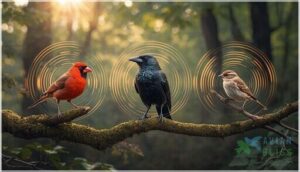
Tone is your secret weapon in bird song identification techniques. Each bird’s voice has a personality — shaped by Syrinx Mechanics and Species‑specific Timbre. Spectrogram Visuals make these differences visible instantly.
- Clear tones: pure whistles, like Northern Cardinal’s flutelike song
- Harsh tones: raspy caws, like American Crow’s grating call
- Trilling tones: rapid bursts, like Chipping Sparrow’s dry buzz
- Acoustic Habitat Effects shift how bird vocalizations carry through foliage
- Mimicry Techniques help you internalize tones for faster bird song recognition
Step-by-Step Guide to Bird Song Pattern Learning

Learning bird songs doesn’t have to feel overwhelming — you just need a clear path to follow.
Breaking it down into focused steps makes the whole process click faster than you’d expect.
Here’s exactly how to build your ear, one song at a time.
Starting With Common Local Bird Songs
Start your bird song learning journey right in your backyard. Local species selection is your smartest first move — familiar habitats make habitat-based songs easier to recognize.
Pick two or three local bird species, like the blackbird or robin, and focus there. Seasonal song variations matter too, so begin in spring when males sing most.
Short beginner listening routes near home build confidence fast.
Using Spectrograms and Visual Cues
Think of a spectrogram as a visual fingerprint for bird vocalizations. Shape-based identification makes acoustic analysis surprisingly natural—rising lines mean ascending whistles, flat lines signal clean tonal calls.
Spectrogram color coding highlights energy intensity, while visual pitch mapping shows frequency at a glance. Texture cue training helps you spot buzzy versus clear tones. Temporal pattern highlighting reveals rhythm instantly. These bird song identification techniques sharpen your audio recognition training fast.
Practicing With Recordings and Mnemonics
Once you’ve read a spectrogram, recordings become your best training partner. Pull up All About Birds or Cornell’s Macaulay Library and listen daily — that’s your Field Recording Routine right there.
- Use Mnemonic Phrase Creation: "Who cooks for you?" locks in the Barred Owl instantly
- Try App-based Playback with Merlin for real-time Audio Recognition Training
- Apply Memory Chunking — learn two or three bird songs at a time
- Practice Birdsong Mimicry Techniques to sharpen your ear fast
- Use Spectrogram Annotation alongside Bird Song Identification Techniques for deeper pattern recall
Tracking Progress With Checklists
Recordings sharpen your ear — but checklists show you where you actually stand.
Your Daily Review Cycle keeps 10 common songs fresh every morning.
Mark each one mastered after three correct identifications in a row.
Progress Bar Visualization tracks every win, while the Badge Reward System in apps like Birda rewards consistent effort.
That’s Data‑Driven Skill Metrics working for you.
Overcoming Challenges in Bird Song Recognition

Bird song recognition gets tricky — even for seasoned birders.
Similar calls, background noise, and a forgetful memory can slow your progress quickly.
Here’s how to push past the common roadblocks and sharpen your ear for good.
Distinguishing Similar-sounding Species
Even species with similar bird vocalizations reveal themselves through spectrogram shape, phrase order, and temporal gaps between notes.
One bird rushes its phrases; another pauses deliberately — that rhythm is your clue.
Watch frequency texture too: buzzy versus flute-like tones look distinct on a spectrogram.
Mimicry patterns and subtle pitch contours sharpen your sound recognition and make accurate bird identification across tricky, look-alike bird species far more achievable.
Managing Environmental Noise
Bird calls don’t exist in silence — traffic, wind, and human chatter compete for your ears constantly.
That’s where Dawn Chorus Timing works in your favor: arrive before 5 a.m., and songs travel up to 20 times farther.
Pair that with Frequency Filtering Techniques and App Noise Suppression tools like BirdNET, and environmental noise becomes manageable.
Smart Microphone Placement Strategies and Ambient Noise Monitoring sharpen your acoustic ecology game quickly.
Improving Memory and Retention
Memory is the real game. Spaced Repetition locks bird calls into long-term storage — review songs on day 1, 2, 4, then 7.
Active Recall means naming that species before peeking at the label. Visual Mapping and Mnemonic Hooks like "peter, peter" sharpen retention fast. Contextual Associations tie song learning to place and season, making cognitive training through a Bird Song Learning Game feel easy.
Benefits of Live Observation and Group Learning
sharpens your ear like being out in the field. Live Habitat Context changes everything — you’re hearing songs where they actually happen.
Group Motivation drives you further, too.
Studies show observers detect up to 14% more species in live settings, and Social Attention Boost from shared Bird Watching trips builds Field Identification Accuracy fast.
Collaborative Skill Sharing turns every outing into Environmental Education.
Top 10 Tools for Bird Song Pattern Learning
The right tools can make all the difference when you’re training your ear to recognize bird songs. From interactive books to AI-powered identifiers, there’s something here for every level of birder.
Here are ten tools worth adding to your learning kit.
1. North American Bird Songs Book
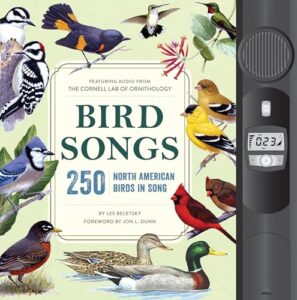
Want a song library that never leaves the shelf? The North American Bird Songs Book delivers 250 species profiles, each paired with a built-in digital audio player embedded right in the cover.
Press the numbered icon beside any illustration, and you hear that bird’s actual recording. Colorful, full-page paintings make each species memorable.
It’s ideal for backyard birders who want to match a sound to a face before heading outside. At 368 pages, it’s a serious reference dressed as a beautiful coffee-table book.
| Best For | Backyard birders, nature lovers, and anyone who wants to learn bird songs without staring at a screen. |
|---|---|
| Target Audience | All ages |
| Bird Coverage | 250 North American birds |
| Learning Format | Book with audio player |
| Audio Component | Built-in digital player |
| Language | English |
| Gift Suitability | Bird enthusiasts & nature lovers |
| Additional Features |
|
- 250 birds with real audio recordings built right into the cover — no app or internet needed
- Full-color illustrations make it easy to connect a sound to a face
- Works as both a solid reference guide and a gorgeous coffee-table book
- No number pad means you have to scroll through all 250 calls to find a specific one
- At 3.8 pounds, it’s not exactly something you toss in a hiking pack
- The price tag might give casual buyers pause
2. Backyard Birdsong Guide Eastern Central America
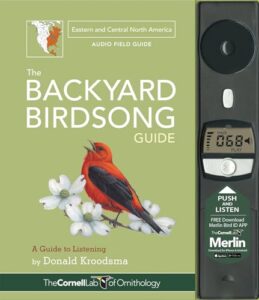
Here’s a guide built for where you actually bird. The Backyard Birdsong Guide Eastern & Central America focuses on the species most likely visiting your yard — not obscure rarities.
It pairs scientifically accurate illustrations with real vocalizations, so you connect sound to appearance fast.
The interactive electronic module covers 75 backyard species, with over 130 songs and calls sourced directly from Cornell Lab’s Macaulay Library.
Touch a button, hear the bird. Simple, reliable, and genuinely useful before your morning coffee.
| Best For | Backyard birders of all ages — especially beginners who want to connect bird sounds to faces without hauling a field guide and a separate audio device. |
|---|---|
| Target Audience | Beginners & kids |
| Bird Coverage | 75 bird species |
| Learning Format | Book with audio module |
| Audio Component | Touch-button audio module |
| Language | English |
| Gift Suitability | Teachers & students |
| Additional Features |
|
- Hear 75 species at the touch of a button — great for learning songs on the fly, right in your own yard
- Illustrations are sharp and scientifically accurate, so you’re not guessing what you’re looking at
- Comes with access to Cornell’s Merlin Bird ID app, which extends the experience way beyond the book itself
- Some users have run into audio module issues that even fresh batteries didn’t fix
- The digital display can be tricky to read if your eyesight isn’t great
- It’s smaller than some people expect, which might feel limiting if you want deeper coverage of bird vocalizations
3. Haikubox AI Birdsong Identifier
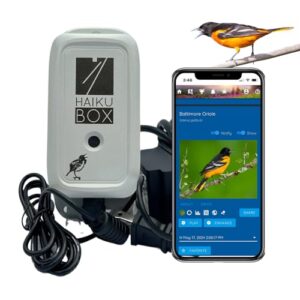
Haikubox turns your backyard into a 24/7 monitoring station. This AI-powered device records three-second audio samples continuously, day and night, identifying birds even when you can’t see them.
It runs on BirdNET, a neural network developed with Cornell Lab of Ornithology, and assigns confidence levels to every detection. You get real-time alerts on your phone, plus spectrograms to review. It only covers US and Canada species, but within that range, it’s remarkably thorough.
| Best For | Birdwatchers, nature lovers, and anyone who wants to know what’s singing outside without having to spot the bird themselves. |
|---|---|
| Target Audience | Nature enthusiasts |
| Bird Coverage | US & Canada species |
| Learning Format | AI-powered device & app |
| Audio Component | AI sound identifier |
| Language | English |
| Gift Suitability | Nature & wildlife lovers |
| Additional Features |
|
- Runs around the clock, so you never miss a bird even if you’re asleep or away
- Helps people with vision or hearing challenges still enjoy and track local birdlife
- Real-time phone alerts keep you connected to what’s happening in your yard right now
- Full features require a $59/year subscription, which adds up over time
- Multiple birds calling at once can throw off the AI’s accuracy
- The mobile app has some rough edges—bugs and a UI that could use some work
4. North America Birdwatching Guide for Beginners

Your next field companion fits right in a backpack.
The North America Birdwatching Guide for Beginners covers 200+ species with full‑color illustrations, QR codes linking to authentic bird sounds, and simple ID techniques built around shape, plumage, and song.
It organizes species into clear groups — backyard birds, songbirds, raptors, waterbirds — so you’re never hunting blindly.
At just 92 pages, it’s focused enough for beginners yet rich enough to keep you learning.
Perfect for morning walks, family outings, or your first solo birding adventure.
| Best For | Beginners, families, hikers, and outdoor enthusiasts who want a simple, approachable way to start identifying North American birds in the field. |
|---|---|
| Target Audience | Beginners |
| Bird Coverage | 200+ North American species |
| Learning Format | Book with QR codes |
| Audio Component | QR code audio links |
| Language | English |
| Gift Suitability | Families & nature enthusiasts |
| Additional Features |
|
- Covers 200 species with full-color illustrations and real bird sounds via QR codes — everything you need in one place
- Simple ID techniques based on shape, plumage, and song make it easy to pick up even with zero experience
- At 92 pages, it’s light enough to actually use on a hike without feeling overwhelmed
- Only covers North American species, so it won’t help if you’re birding internationally
- Advanced birders will likely find it too basic for their needs
- Listening to bird sounds requires internet access, which isn’t always available in remote areas
5. Backyard Bird Songs Interactive Book
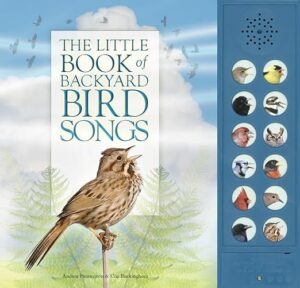
Sometimes the best teacher fits in your hands. The Backyard Bird Songs Interactive Book by Firefly Books packs 12 real recordings of common North American garden species into thick, easy-turn board pages.
Press a button, hear a House Wren trill or a Northern Cardinal whistle — instantly.
Each spread pairs a lifelike bird portrait with habitat facts, diet data, and range info. It’s built for all ages, and yes, it actually works outdoors.
| Best For | Families with young kids, backyard birders, and anyone who wants a hands-on way to learn bird songs without needing a phone or app. |
|---|---|
| Target Audience | Children & families |
| Bird Coverage | 12 garden species |
| Learning Format | Interactive board book |
| Audio Component | Sound buttons built-in |
| Language | English |
| Gift Suitability | All ages & occasions |
| Additional Features |
|
- Real recordings of 12 common North American birds — you actually hear what you’re learning
- Works for all ages, from toddlers pressing buttons to adults brushing up on their bird ID skills
- Sturdy board pages and a replaceable battery mean it holds up over time
- The volume runs on the quieter side, so it can be tough to hear outdoors or in a noisy room
- Only covers North American species, so it’s not much use if you’re birding in the UK or elsewhere
- Best suited for younger kids — older children may outgrow it faster than you’d expect
6. ZDH Handcrafted Wooden Bird Call Set
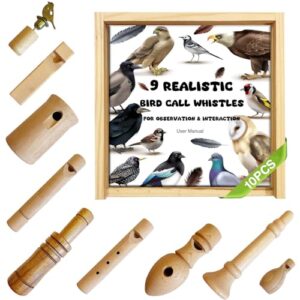
Now move from pressing buttons to holding the real thing. The ZDH Handcrafted Wooden Bird Call Set gives you nine distinct calls, each shaped from beechwood and zinc alloy for clean, accurate tones.
Twist one in your hand, and you’re producing sounds that actual birds respond to. It’s tactile learning — your ears and fingers working together.
The set arrives in a windowed wooden box, compact enough for any trail.
For photographers, teachers, or curious kids, this tool builds real auditory instincts fast.
| Best For | Birdwatchers, outdoor enthusiasts, photographers, teachers, and anyone who wants a hands-on way to connect with nature. |
|---|---|
| Target Audience | Outdoor adventurers |
| Bird Coverage | 9 bird call types |
| Learning Format | Physical bird call set |
| Audio Component | Handcrafted call instruments |
| Language | English |
| Gift Suitability | Nature lovers & outdoorsy types |
| Additional Features |
|
- Nine realistic bird calls crafted from solid beechwood and zinc alloy — feels and sounds like the real deal
- Comes packaged in a beautiful windowed wooden box, so it’s gift-ready right out of the box
- Versatile enough for birdwatching, teaching, wildlife study, or just having fun on the trail
- Takes real practice to get the calls sounding right — don’t expect to nail it on day one
- Some buyers have run into calls that don’t work properly straight out of the box
- Quality control can be inconsistent, so there’s a chance you could receive a defective unit
7. National Geographic Kids North America Bird Guide
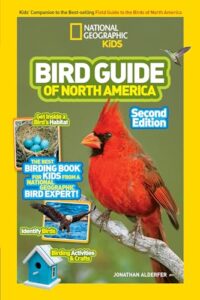
From hands-on tools to page-turning guides — the National Geographic Kids North America Bird Guide covers 150 species across 208 pages, organized by habitat zones like Eastern Backyard Birds and Southern Swamp.
Your young birder gets range maps, song descriptions, and vibrant photos by Jonathan Alderfer. It’s not a field guide — think of it as a spotlight that builds real recognition skills.
Perfect for kids just starting out, or anyone who learns best through pictures and short, clear profiles.
-focused, so Canadian kids might feel a bit underserved
- Not deep enough for serious young birders who want the full picture on every species
- Leaves out a lot of less common birds, so it’s more of a highlight reel than a complete reference
| Best For | Kids who are just getting into birds and want something fun, visual, and easy to dig into. |
|---|---|
| Target Audience | Kids |
| Bird Coverage | 150 North American species |
| Learning Format | Illustrated guidebook |
| Audio Component | No audio component |
| Language | English |
| Gift Suitability | Kids & junior birders |
| Additional Features |
|
- Covers 150 species with range maps, photos, and song descriptions — a solid starter package
- Organized by habitat zones, so it actually teaches kids how to think about birds, not just memorize them
- Fun activities and crafts keep it from feeling like a textbook
- Skews U.S.
8. Bird Talk Identify Birds By Sound
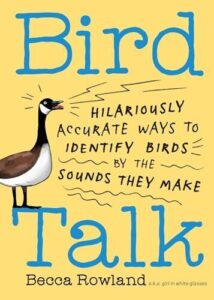
If pictures helped your young birder click with species, wait until humor does the same for you. Bird Talk by Becca Rowland covers 101 North American bird songs across 256 vibrant pages — and it doesn’t take itself too seriously.
The Turkey Vulture sounds like ripping pants. The Barn Owl? Pure screaming terror.
These aren’t random jokes — they’re memory anchors that actually stick. Released June 2025, it’s your go-to when mnemonics and illustrations work better than technical descriptions ever could.
| Best For | Bird lovers of all ages and experience levels who want a fun, memorable way to learn bird calls without wading through dry, technical guides. |
|---|---|
| Target Audience | All birders |
| Bird Coverage | 101 bird songs |
| Learning Format | Illustrated humor book |
| Audio Component | No audio component |
| Language | English |
| Gift Suitability | Bird lovers of all levels |
| Additional Features |
|
- The humor-based descriptions make bird calls genuinely stick in your memory — way better than boring mnemonics.
- Vibrant illustrations paired with fun facts make it as enjoyable to flip through as it is useful.
- Covers 101 species, so there’s plenty of variety for both beginners and seasoned birders.
- If you want deep, technical detail on bird identification, this one’s probably too lighthearted for you.
- Bird sounds can vary by region, and that nuance isn’t always captured here.
- "Hilariously funny" is a stretch for some — the humor lands differently depending on who’s reading.
9. Birds of Puget Sound Region
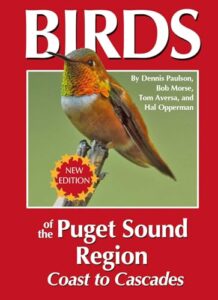
Regional mastery starts here.
The Birds of Puget Sound Region packs serious identification power into a pocket-sized 4.5 x 6-inch guide — easy to carry, hard to put down.
You’ll find 450 sharp digital photographs alongside species pages covering voice, behavior, and habitat.
Eleven distinct habitats are color‑tabbed for quick navigation.
Whether you’re spotting surf scoters in winter or tracking pigeon guillemots along the shoreline, this guide keeps you confident and prepared without weighing down your pack.
| Best For | Beginner and experienced birders exploring the Puget Sound region who want a compact, photo-packed guide they can toss in a bag and take anywhere. |
|---|---|
| Target Audience | Beginner & experienced |
| Bird Coverage | Puget Sound region birds |
| Learning Format | Photographic field guide |
| Audio Component | No audio component |
| Language | English |
| Gift Suitability | Birders & travelers |
| Additional Features |
|
- 450 real digital photos make it easy to match what you’re seeing in the field
- Color-coded habitat tabs let you flip to the right section fast
- Pocket-sized and lightweight — no excuses for leaving it at home
- Only covers Puget Sound and western Washington, so it won’t help you outside the region
- 28 pages keeps things concise, but serious birders may want more depth
- Small format could be tough to read for anyone with vision difficulties
10. Pishing Bird Calls Book CD
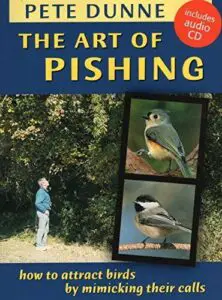
Ready to call birds right to you? Pete Dunne’s Pishing book-and-CD package teaches you exactly that. You’ll learn 13 distinct pish variations — from the basic hiss to the screech-owl warble — with audio demos so you can match Dunne’s expert timing and pitch.
It works on North American songbirds throughout the continent. Just remember: skip nesting season and sensitive areas. Used responsibly, pishing transforms a quiet morning into an up-close wildlife encounter you won’t forget.
| Best For | Birders of all skill levels who want to attract North American songbirds up close and are willing to put in a little practice to do it right. |
|---|---|
| Target Audience | All birders |
| Bird Coverage | 13 pishing techniques |
| Learning Format | Book with audio CD |
| Audio Component | Included audio CD |
| Language | English |
| Gift Suitability | Beginner & experienced birders |
| Additional Features |
|
- Covers 13 different pish techniques, so you’re not just guessing — you’re learning from one of the best in the game
- The included audio CD lets you hear exactly what good pishing sounds like, which makes a huge difference when you’re trying to match timing and pitch
- Works across North America, so whether you’re birding in your backyard or out on a trail, you’ve got something useful in your kit
- At $50.93, it’s a bit pricey for a 90-page book with a CD — especially when free audio resources exist online
- Pishing doesn’t work well for all species, so grassland birders or those targeting certain birds may find it hit or miss
- It takes real practice to get right, and using it at the wrong time — like nesting season — can actually stress birds out
Frequently Asked Questions (FAQs)
What is the best way to learn bird songs?
You’ve got to wing it at first — but not really.
Start with four or five local species, listen daily, and use mnemonics. Your ear sharpens fast when you keep sessions short and consistent.
What are the 5 S’s of birding?
The 5 S’s of birding are Size, Shape, Shade, Sound, and Space. Each one gives you a quick snapshot of a bird’s identity before you even lift your binoculars.
What is the app for learning bird songs?
You’ve got great options. Merlin Bird ID listens in real time and names species instantly.
BirdNET analyzes recordings across 3,000 species. Larkwire trains your ear through active quizzing. Each app builds recognition differently.
Can bird songs vary by region or season?
Yes, bird songs absolutely vary by region and season. White-crowned Sparrows develop distinct local dialects, while robins shift from soft winter songs to rich, lively spring calls during breeding season.
How do invasive species affect local bird songs?
Invasive species quietly reshape the soundscape.
Chipping sparrows in knapweed-invaded habitats sing nearly 20% fewer song types.
Plain prinia songs shrink dramatically — from 14 seconds to under Native birds get acoustically crowded out.
What role does habitat loss play in song changes?
Habitat loss strips birds of space to interact, forcing simpler songs.
Skylarks in fragmented fields share 40% more syllable sequences than in open grasslands, while clear-cutting pushes specialists toward repetitive 5-note motifs.
Do birds ever lose their songs over time?
Even ancient songs fade.
Adult zebra finches can lose syllables within weeks without auditory feedback, and aging birds show measurable pitch drift — but daily singing acts like a reset button, preserving vocal clarity lifelong.
How do weather conditions impact bird vocalizations?
Weather shapes how birds sing more than you’d think. Rain masks calls, wind drowns out low frequencies, and heat slows song rates. Humidity actually helps sound travel farther.
Conclusion
Picture yourself standing at the forest edge, dusk settling in, and suddenly—you hear it. That spiral of notes isn’t mystery anymore. It’s a conversation you can finally follow.
Bird song pattern learning rewires how you experience the natural world. Each walk becomes a field session. Each sound, a clue.
You’ve got the tools, the techniques, and the understanding. Now step outside. The birds have been waiting for a listener like you.