This site is supported by our readers. We may earn a commission, at no cost to you, if you purchase through links.
A sighting forgotten is a sighting lost. You might spot a stunning warbler with a bold eye-ring and a song unlike anything you’ve heard before—but without a record, that moment fades into a vague memory by Tuesday.
Serious birders know their logs are where observations become knowledge. What information to log when bird watching shapes everything, from identifying a rare species months later to tracking migration patterns across seasons.
The difference between a casual walk and meaningful fieldwork often comes down to what you write down—and how consistently you write it.
Table Of Contents
- Key Takeaways
- Record Date, Time, and Location
- Identify The Bird Accurately
- Count Every Individual Seen
- Describe Behavior and Movement
- Log Calls and Vocalizations
- Capture Habitat and Weather
- Add Visual Evidence and Field Notes
- Rate Identification Confidence
- Choose a Log Format
- Organize Entries for Future Review
- Frequently Asked Questions (FAQs)
- Conclusion
Key Takeaways
- Every sighting needs a precise timestamp, GPS coordinates, and a clear location name — without that foundation, even a rare bird observation loses its scientific value.
- Recording field marks, age, sex, behavior, and vocalizations turns a simple bird name into a complete, trustworthy identification you can verify months later.
- Habitat type, weather conditions, and wind direction aren’t background details — they explain why a species appeared and make your data meaningful across seasons.
- Whether you use a paper notebook, a spreadsheet, or a birding app, keeping a consistent log format is what transforms scattered notes into real migration and seasonal pattern data over time.
Record Date, Time, and Location

Every good bird log starts with the same foundation: when, where, and exactly what time you were there. Without that anchor, even the most detailed sighting loses its value.
Here’s what to capture before anything else.
Use ISO 8601 Date and 24-hour Time
Every sighting starts with a precise timestamp. ISO 8601 formatting locks your records into a standardized format that works across apps, spreadsheets, and platforms worldwide.
- Write dates as YYYY-MM-DD
- Use 24-hour time like 17:56
- Combine both: 2026-04-28T17:56
- Choose Extended vs Basic formats based on readability needs
- Add fractional seconds for Timestamp Precision when needed
ISO Sorting Benefits make digital record keeping simple.
Pairing that system with solid photo evidence makes IDs stick — organize your bird watching checklist by visual field marks like wing patterns or tail shape for records you can actually trust.
Include Time Zone for Every Sighting
Your date and time entry isn’t complete without a time zone. Add it directly to your ISO 8601 formatting — like 2026-04-28T17:56-05:00.
For Time Zone Standardization, use IANA Identifier Usage such as America/New_York instead of vague abbreviations.
Note Daylight Saving Notation when applicable.
This enables Cross-Region Synchronization and Timestamp Validation, keeping your recording observations accurate when shared across platforms or compared with other birders’ logs.
Write The Exact Place Name and Nearest Landmark
Once timestamp is locked in, your location entry deserves the same care. Write the official place name — think "Falkenstein Castle Trailhead," not just "the trail."
Official naming conventions matter for cross-source validation across point of interest verification sources like park maps and tourism guides. Note the nearest point of interest within 500 meters, and flag transient point of interest notes — temporary fencing, event setups — that might shift between visits.
Add GPS Coordinates in Decimal Degrees
Once you’ve named the spot, pin it exactly. GPS coordinates in decimal degrees give your sighting a precise spatial reference that no place name can match. Aim for five decimal places — that’s roughly one-meter coordinate accuracy. For reference, five decimal places precision provides about one‑meter accuracy.
- latitude first, then longitude
- negatives for south and west
- directly from your device for geotagging
- Enable GPS tagging in birding apps
- Verify against a map for map integration
Note The Datum Used, Such as WGS84
Behind every GPS coordinate is a datum — a reference framework that tells mapping tools where on Earth that point actually sits. Most devices default to WGS84, the global standard. But datum selection matters when geotagging or sharing data.
| Datum | Best Use |
|---|---|
| WGS84 | Global GPS coordinates |
| NAD83 | North American mapping tools |
| EPSG Codes | Coordinate transformations |
Ignoring this causes location mismatches. Time-dependent shifts and vertical datum differences can quietly move your pin.
Identify The Bird Accurately
Getting the ID right is the heart of any bird log. A solid identification means recording more than just a name — it means backing that name up with real evidence.
what to capture for each bird you see.
Record The Common Name
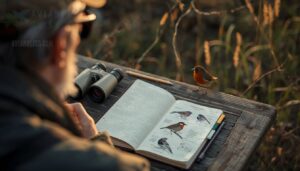
The common name is your entry point for every bird observation log. Write it exactly as your regional field guides present it — standard naming matters here.
Don’t rely on local nicknames without a source cross-check. Regional variants exist, so note them separately.
If taxonomic updates have changed a name, update your records. Never abbreviate without a clear abbreviation policy in place.
Record The Scientific Name

Every scientific name follows a two-part system: genus capitalized, species epithet lowercase — both italicized. That’s your Latin Formatting Rules in practice.
Log the full Binomial Authority, including the author and year when known. This facilitates Synonym Tracking and fits neatly into any Taxonomic Hierarchy.
Use Abbreviation Standards for repeat entries. Consistent, standardized format across your recordkeeping tools makes bird identification and species identification far more reliable over time.
Note Field Marks That Support The ID

Field marks are your shortcut to confident visual identification.
Log plumage patterns like wing covert contrast and tail markings, plus beak morphology — whether it’s stout or slightly decurved. Note eye-ring color, wing shape in flight, and any color-size markings on the crown or underparts.
These plumage characteristics and visual traits build a clear picture that helps your ID every time.
Mark Uncertain IDs as Possible or Unknown

Not every bird gives you a clean look — and that’s okay. When you’re unsure, mark the ID as "Possible" or "Unknown."
These standardized uncertain labels are core data, not failures. Jot down why you’re uncertain and flag it for tentative ID review later.
Using confidence ratings honestly sharpens your identification skills over time and keeps your post-field verification reliable.
Compare With a Field Guide or App

A field guide doesn’t require batteries. But birding apps like Merlin Bird ID, eBird Mobile App, and iNaturalist offer real advantages worth knowing:
- User Interface Speed — apps filter candidates by location instantly
- Multimedia Integration — hear the actual call, not just read about it
- Update Frequency — taxonomy changes sync automatically
Use both tools together. Offline accessibility and battery dependence make the printed field guide your backup anchor.
Count Every Individual Seen
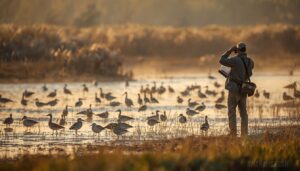
Counting birds might seem simple, but there’s more to it than just a number. good count tells you not just how many birds you saw, but who they were.
Here’s what to record every time.
Log The Number of Birds Observed
When you spot birds, log the exact species count right away — memory fades fast.
Your bird observation log becomes far more valuable with precise numbers.
Use Digital Tally Apps or birding apps like eBird for quick Batch Entry Methods that support Standardized Units.
Recording bird sightings and data with Error Margin Notation and Temporal Count Trends sharpens your species count accuracy over time.
Estimate Flock Size When Exact Counting is Hard
Sometimes a flock moves too fast for an exact count. That’s where Block Estimation helps — mentally divide the group into equal sections, count one, then multiply.
Proportionate Counting works well for mixed flocks. Sequential Tallying in groups of ten keeps things manageable.
Always use Bracketing Ranges like 180–230, and run Post-Count Validation to check your estimate. Your bird observation log stays honest that way.
Note Age Class When Visible
Once you’ve estimated flock size, look closer — age tells another story.
Note Juvenile Plumage, like scaly patterns or dull tones, and watch for Immature Wing Patterns showing partial Molt Timing transitions.
These are key Photographic Age Markers for bird identification. Use an Age Confidence Rating — juvenile, immature, or adult — in your field notes when recording core bird observation data.
Record Sex When It Can Be Determined
Once you’ve noted age, sex is your next data point — when the evidence is clear.
Plumage dimorphism makes it easy in many species; males often show bolder color size markings. Vocal sex cues help too — distinct songs or calls lean male in most songbirds.
Use app-based sex ID tools to confirm. Ethical sex logging means your field notes only record what you can actually see.
Separate Adults, Juveniles, and Fledglings
Once you can tell age from sex, sorting adults from juveniles and fledglings sharpens your bird observation log considerably.
Adults show crisp plumage markers and steady wingbeat rhythm. Juveniles are smaller in body size, with duller beak coloration. Fledgling dependence on parents is easy to spot in the field.
Log each class separately in your bird journal for cleaner bird identification records.
Describe Behavior and Movement
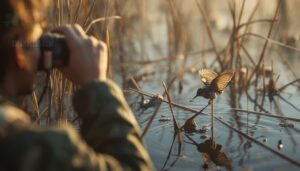
watching a bird is one thing — understanding what it’s actually doing is another. Behavior tells you a lot about a species that a simple ID never could.
Here’s what to pay attention to when you’re logging movement and activity in the field.
Note Feeding, Perching, Flying, or Bathing
Every movement a bird makes tells a story. In your bird observation log, note whether it’s feeding on the ground or at height — Feeding Height matters.
Log Perch Texture, Wingbeat Rate, and Aerial Maneuvers during flight. Record Bathing Duration too.
Strong behavior notes capture bird behavior in full context. Pairing date location and behavior in each behavioral observation makes your log genuinely useful.
Record Courtship, Nesting, or Territorial Behavior
Breeding season observations reveal some of the richest bird behavior you’ll witness. Log these five Courtship Display Elements and nesting events carefully:
- Tail fans, wing claps, or ritual dances signaling courtship
- Pair Bond Rituals, mutual preening or reciprocal feeding
- Nest Material Usage — what’s gathered and where
- Territorial Boundary Markers such as song posts or aggressive chases
- Egg Laying Timing tied to your habitat notes and seasonal phenology
Describe Flocking or Solitary Activity
Whether a bird is flying solo or moving with a crowd tells you a lot. Note flock cohesion — are birds staying tight or spreading out?
Log mixed species dynamics when different species forage together. Record territorial displays and vigilance strategies like alarm calls or scanning postures.
Your behavioral observations and habitat notes turn a basic bird observation log into a rich field notes resource.
Track Direction of Movement if Birds Are Migrating
Migrating birds don’t wander — they navigate using a magnetic compass, sun cues, and star navigation. When you spot birds on the move, note their heading and log GPS locations with timestamps.
Wind assistance often shifts their path, so record wind direction too.
GPS tagging studies confirm these patterns, helping you understand seasonal patterns and migration timing in your area.
Include Any Repeated Behavior Patterns
Birds are creatures of habit — and that’s your advantage. When you notice a pattern repeating, log it. Repeated behaviors reveal how birds use their environment day after day.
Watch for these recurring patterns in your field notes:
- Daily Roost Loops – same routes, same times
- Seasonal Migration Fidelity – returning along identical flyways
- Courtship Display Sequences – consistent order and timing
- Feeding Hotspot Recurrence – revisiting productive patches
- Flocking Time Consistency – group formations at predictable moments
Documenting behavioral observations like these strengthens your observation protocols and uncovers seasonal patterns over time.
Log Calls and Vocalizations

bird’s voice can tell you just as much as its feathers. Calls reveal mood territory, and behavior—details that a quick glance won’t always catch.
Here’s what to record when bird opens its beak.
Write Down Song, Alarm, or Contact Calls
Every call tells a story—so write it down.
Log whether you heard a song call, alarm call, or contact call right after the sighting.
Note the call type in your entry alongside your habitat-specific call observations.
Use an audio memo app like BirdNET for quick bird call recognition and build a call archive over time.
Temporal patterns in your log will reveal more than you expect.
Describe Pitch, Rhythm, and Volume
Once you’ve identified the call type, describe how it sounds. Note the pitch range — was it high and thin, or low and rich? Log rhythmic patterns, like fast repeated bursts or slow, spaced notes. Volume dynamics matter too: did it swell suddenly or stay soft?
Temporal pacing and frequency modulation help with bird call recognition, especially when using BirdNET for bioacoustic analysis.
Note When Vocalizations Occurred
Timing tells you as much as the sound itself. Log whether you heard calls during the Dawn Chorus Timing window or at Dusk Call Peaks — both are predictable hot spots.
Breeding Season Songs in spring, or Foraging Call Intervals when birds go quiet between bouts.
Migratory Stopover Vocalizations are especially worth timestamping for your bioacoustic analysis records.
Match Calls to Observed Behavior
Once you’ve noted when vocalizations occurred, match each call to what the bird was actually doing. This is Call Behavior Correlation — and it sharpens your bird vocalization identification quickly.
- Alarm calls paired with wing drops signal a nearby predator
- Contact calls intensifying as birds gather confirm cooperative foraging (Vocal Context Indicators)
- Dawn songs alongside territorial chasing reveal Behavioral Call Patterns tied to boundary defense
Audio Visual Sync turns observations into real behavioral data.
Use Audio Recordings When Possible
When written notes can’t capture the full texture of a song, audio recording fills the gap. A handheld voice recorder with a 44.1 kHz sample rate processes most vocalizations well.
Pair it with a windscreen for Noise Reduction and a stable grip for cleaner Equipment Setup.
Apply Metadata Standards when saving clips — date, time, location — and keep a Data Backup.
Analysis Techniques like bioacoustic analysis make bird vocalization identification far more confident.
Capture Habitat and Weather

Where a bird shows up tells part of the story, but the habitat and weather around it complete the picture. These details help you understand why a species was there and make your records far more useful over time.
Here’s what to capture for each sighting.
Record Habitat Type Such as Wetland or Forest Edge
bird chooses to stand tells you everything. Habitat type shapes what species you’ll find, when they arrive, and why they stay. Add a clear habitat description to your field notes every time.
- Wetlands with hydric soil indicators and aquatic prey availability draw wading birds.
- Forest edges offer edge light conditions favoring insectivores.
- Seasonal flood patterns shift habitat monitoring priorities.
- Water depth levels determine which species feed where.
Note Vegetation, Water Sources, and Elevation
What you find often depends on where you look.
Vegetation density, water source proximity, and elevation zones all shape which species appear and why. Note slope aspect too — a sun-baked south-facing hillside hosts different life than a shaded riparian microhabitat along a stream.
These habitat observation details, paired with your geographic coordinates, reveal a bird’s true habitat preferences over time.
Log Temperature and Precipitation
Temperature and precipitation do more than set the scene — they shape what you’ll actually see. Log air temperature to the nearest tenth of a degree, and note any microclimate variation near water or shade.
Sensor calibration matters; an unchecked gauge skews your data precision over time. Even light drizzle affects foraging, so tracking these seasonal changes builds a clearer picture of habitat and weather influences on birds.
Include Wind Speed and Direction
Wind doesn’t just ruffle feathers — it drives behavior.
Log wind speed units (km/h or m/s) and note gust frequency, since gusty conditions push birds to shelter fast. Record measurement height and direction in degrees or cardinal points. Wind shear effects near ridges can scatter flocks mid‑flight.
Consistent directional winds are a strong migration influence, so don’t skip these weather and habitat notes.
Add Cloud Cover or Barometric Pressure if Useful
Cloud cover influence is easy to overlook, but it shapes what you see. Dense overcast flattens contrast and makes silhouettes harder to read.
Log sky conditions using simple sky condition coding — clear, partly cloudy, or overcast — or try octas scale usage (0–8) for consistency.
Barometric data integration matters too. falling pressure trend often precedes storms, shifting bird movement fast.
Add Visual Evidence and Field Notes

Words alone don’t always capture what you saw in the field. A quick sketch, a photo, or a short audio clip can fill in the gaps your notes might miss.
Here’s what to gather while the bird is still in front of you.
Sketch Plumage, Posture, or Shape
You don’t need to be an artist to make useful visual sketches in the field. A quick line capturing the posture line, wing shape, and body proportions tells you more than words sometimes can.
Focus on silhouette emphasis first, then add feather texture details.
Even rough handwritten notes, alongside your sketch sharpen your eye and support bird identification aids when you review later.
Attach Photos When Available
Photos pick up what visual sketches sometimes miss — exact plumage tone, bill shape, subtle markings.
When field photography is possible, capture multiple angles and check Image Quality before moving on. Follow these steps:
- Name files using File Naming format: location_date_species
- Enable GPS for built-in Metadata Standards
- Store originals as Backup Strategies against loss
- Respect Copyright Considerations near restricted areas
Save Audio Clips for Bird Calls
Audio clips capture bird vocalizations that no sketch can replicate. Save recordings in lossless audio formats like WAV to preserve every detail for bioacoustic analysis.
| Step | What To Do |
|---|---|
| File Naming Conventions | Species_Location_Date (ISO 8601) |
| Metadata Tagging | Add GPS, weather, call type |
| Backup Strategies | Cloud plus external drive |
Use voice recorders or digital tools and rename files after confirming the ID.
Write Quick Notes on Field Marks
While audio clips catch what the ear hears, your eyes catch just as much.
Jot field marks fast using Field Mark Abbreviations and a personal Mnemonic Cue System — like "YWB" for yellow wing bars.
Build a Color Patch Codes list and Iconic Mark Index in your bird observation log.
A Silhouette Quick-Check and quick sketches sharpen bird identification better than memory alone.
Mention Anything Unusual or Noteworthy
When something breaks the pattern, write it down immediately. A rare duet between two species, a juvenile’s morphing plumage, or a reverse migration loop are exactly the details that matter most.
Note wing flick rate, microclimate indicators, and unusual weather conditions too.
These rare encounters reward mindful observation and often reveal seasonal trends that standard entries miss entirely.
Rate Identification Confidence

Not every bird you spot will be an easy, clean identification.
Knowing how confident you’re in your ID is just as important as the ID itself.
Here’s how to rate and record that confidence the right way.
Use Strong, Possible, or Unknown
Every bird sighting deserves an honest label. Your bird observation log uses three confidence ratings — Strong, Possible, and Unknown — as core decision rules for recording bird sightings.
- Strong — field marks, calls, and location all align
- Possible — some evidence fits but gaps remain
- Unknown — distance or obstruction blocks identification
These uncertainty notation tiers sharpen your observation skills and keep your evidence weighting clear and trustworthy.
Explain What Supports Your Confidence Level
Once you assign a confidence rating, back it up with specific reasons.
Did the field marks match your field guide? Did the vocalizations fit the species?
Note geographic range consistency and seasonal range consistency too.
Strong behavioral pattern alignment and field guide corroboration raise your rating.
Your observer expertise level matters here — honest notes sharpen identification skills and keep your species identification records trustworthy.
Flag Birds That Need Later Review
Not every bird sighting wraps up neatly — and that’s perfectly fine. When your confidence ratings land at "possible" or "unknown," flag that entry in your bird sighting log for expert verification later.
Clear flag criteria keep your bird journal honest and your data archiving clean.
- Mark the flag reason directly in the entry
- Schedule follow-up scheduling with a second observer
- Attach photos or audio clips to support the resolution process
- Keep flagged records separate but searchable using technology for bird data logging
- Leave the bird identification status open until confirmed
Separate Confirmed Sightings From Tentative Ones
Confirmed and tentative entries don’t belong in the same pile. Your bird sighting log stays trustworthy only when your flagging system clearly separates verified bird observation data from uncertain ones.
Use confidence ratings and a structured verification workflow to keep that line clean.
An observer cross-check, a firm review timeline, and standardized data recording formats protect your data integrity — so every bird identification you share actually holds up.
Choose a Log Format

How you record your observations matters just as much as what you record. The right format keeps your data organized and easy to revisit later.
Here are a few solid options worth considering.
Use a Paper Notebook for Quick Field Notes
A paper notebook is your most reliable companion in the field — no battery, no signal needed. Choose one with compact size, a waterproof cover, and weather-resistant paper to handle tough conditions.
Use pre-printed templates, bullet lists, and color coding for fast, consistent entries. Good paper quality prevents ink bleed, and a front-cover code key keeps your quick sketches and abbreviations clear every time.
Use a Digital Spreadsheet for Sorting and Search
When your notebook fills up, a spreadsheet picks up where it leaves off.
In Google Sheets, use column indexing, data validation, and standardized data recording formats to keep your bird observation log clean and consistent. Adaptive filters and conditional formatting flag uncertain IDs instantly.
Add pivot summaries for quick data analysis across seasons. These digital tools turn raw sightings into real patterns.
Try Birding Apps That Auto-tag GPS Data
Spreadsheets organize what you’ve already recorded — but mobile birding apps like eBird go further by capturing GPS coordinates the moment you spot a bird. No manual entry needed.
They handle real-time mapping, citizen science integration, and data export formats like GPX or CSV automatically. Just watch your Battery Management settings and review Privacy Settings before sharing location data publicly with the birding community.
Keep a Hybrid Paper-and-digital System
Apps are great, but phone dies. That’s why many birders rely on a hybrid notebook and app workflow — jotting quick notes on paper, then syncing them digitally within 24 hours.
Use rigid-margin templates to boost OCR accuracy when scanning. Add metadata tagging and unique identifiers to each entry, then push everything to cloud backup.
Your bird observation log stays safe either way.
Standardize Each Entry With The Same Template
Once your hybrid system is running, consistency is what keeps it reliable. A standardized format ties everything together — no guessing what goes where.
Every bird observation log entry should include:
- Mandatory metadata first: date, time, and GPS location
- A clear template field order that never changes
- Consistent units for temperature, wind, and distance
- Easy-to-use layout anyone can scan quickly
- Version control notes when you update the template
Organize Entries for Future Review

Keeping a log is only half the work — finding what you need later is where organization pays off.
A few simple habits will turn your scattered notes into a system you can actually use.
Here’s how to set yours up.
Sort by Location, Date, or Species
Sorting your logs by location, date, or species turns a pile of notes into a living reference. Geographic clustering groups sightings by GPS coordinates, while map visualizations reveal habitat descriptions tied to real places.
Use seasonal filters and monthly summaries to spot temporal trends.
Taxonomic grouping builds a tidy species checklist, and sorting by date and time uncovers migration patterns fast.
Keep an Alphabetical Species Index
alphabetical species index is your shortcut to any bird in seconds.
List entries by genus ordering, then species epithet.
Use your personal coding system to flag rarities.
Manage synonym management carefully when taxonomic updates shift names.
Build species index pages into your journal and cross-reference guides for quick lookups.
Back everything up — index backup protects your entire bird species list.
Create a Chronological Sighting List
Once you’ve built your species index, Date-First Ordering ties everything together by time.
Your bird sighting log becomes a living timeline when every entry follows Sequential Entry Templates. Each record should include:
- Date and time in ISO 8601 format
- Date, time, and location with your time zone
- Species identification and weather conditions
- Seasonal Pattern Graphs, and Migration Timing Charts for Timeline Visualization
Highlight Rare or Notable Birds
Some birds deserve a spotlight in your bird observation log.
When recording bird sightings and data, flag species with Conservation Status concerns, Range Restrictions, or Unique Adaptations — like the Philippine Eagle’s oversized beak.
Note Historical Sightings, Threats, and Protection details, and submit these to eBird for citizen science value.
Color-code or star these entries so species identification stands out during future reviews.
Use Logs to Track Migration and Seasonal Patterns
Your logs become a living map of Arrival Timing and Departure Trends over time. Record first and last sighting dates each season, then build monthly summaries to track Seasonal Abundance.
Route Mapping shows where birds move through your area.
Over years, Phenology Shifts appear — migration patterns and seasonal patterns subtly change.
Analyzing bird migration and seasonal trends this way turns your notebook into real scientific data.
Tracking migration and seasonal trends transforms your personal bird log into genuine scientific data
Frequently Asked Questions (FAQs)
How do I share my data with citizen science platforms?
Sharing sightings with citizen science platforms like eBird takes minutes. Upload your data, attach metadata, and let quality validation handle the rest — your observations instantly fuel global citizen science projects.
What equipment do beginner bird watchers really need?
You don’t need much to start. A pair of 8×42 binoculars, a waterproof field notebook, weather-resistant clothing, a lightweight backpack, and a smartphone bird ID app will cover everything essential.
How do I track breeding success across multiple seasons?
breeding success across multiple seasons is like keeping a report card for your local birds.
Log nest productivity, clutch size, fledgling survival, adult return rates, and food availability each season.
Conclusion
Two birders stand at the same marsh at dawn. One walks away with a memory. The other walks away with a record.
What information to log when bird watching isn’t just a habit—it’s the difference between a moment that disappears and one that compounds into real knowledge over years? Your notebook becomes a map of patterns, migrations, and discoveries.
The bird you document today might be the one that matters most tomorrow.