This site is supported by our readers. We may earn a commission, at no cost to you, if you purchase through links.
Somewhere around age 60, a funny thing happens to bird watching—it stops being a casual hobby and starts feeling more like a calling.
The birds don’t change, but your patience deepens, your mornings slow down, and suddenly you’re standing at the edge of a marsh at 6 a.m., wondering why your arms ache after five minutes of scanning the treeline.
The binoculars that worked fine a decade ago now feel like holding two soup cans to your face.
Choosing the right bird watching binoculars for seniors means prioritizing weight, grip, and optical clarity—features that separate a frustrating outing from a genuinely rewarding one.
Table Of Contents
- Key Takeaways
- Key Features Seniors Need in Binoculars
- Top Binoculars for Senior Bird Watchers
- Choosing The Right Magnification and Optics
- Essential Accessories for Senior Birders
- Tips for Comfortable and Safe Bird Watching
- Frequently Asked Questions (FAQs)
- What strength binoculars are best for bird watching?
- Are 8x or 10x binoculars better for bird watching?
- What magnification is best for bird watching?
- Can seniors use binoculars with arthritis or tremors?
- How much should seniors budget for quality binoculars?
- Are image-stabilizing binoculars worth it for seniors?
- How do seniors compare binocular brands before buying?
- Conclusion
Key Takeaways
- For seniors, 8×42 binoculars hit the sweet spot — steady enough for shaky hands, bright enough for dawn birding, and easy to hold for hours without your arms complaining.
- Weight, grip, and eye relief aren’t bonus features; they’re the difference between a great morning out and cutting your walk short by 9 a.m.
- Your budget shapes your options, but you don’t need to spend a fortune — quality jumps noticeably above $300, and models like the Celestron Nature DX punch well above their $136 price tag.
- The right accessories — a padded harness, a solid case, and a simple lens cleaning kit — protect your investment and keep every outing comfortable from start to finish.
Key Features Seniors Need in Binoculars
Not every binocular is built with seniors in mind, and that gap really shows up on a long birding day.
After hours in the field, the wrong weight or grip can wear you out fast — so it helps to understand how magnification affects comfort and control before you commit to a pair.
The right pair balances comfort, clarity, and ease of use without making you work for it.
Here are the key features worth paying attention to before you buy.
Lightweight Design and Portability
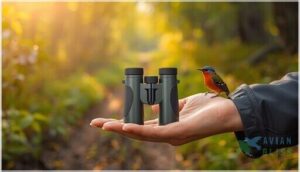
When every gram counts on a long morning walk, lightweight binoculars make a real difference.
Models under 550 g — many using magnesium alloy through material innovation — reduce arm strain considerably.
Compact foldable design keeps your portable binoculars travel‑friendly size, fitting easily in a jacket pocket.
Smart weight distribution and a low center of gravity mean you’ll hold a steady view longer without fatigue. Choose from the lightweight binoculars with lifetime guarantee for added peace of mind.
Ergonomic Grip and Handling
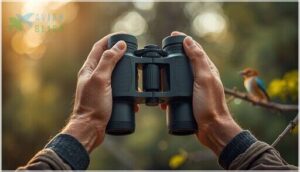
Good grip matters just as much as good glass. Rubber armouring on the barrels keeps things secure even with cold or tired hands, while an open bridge grip lets your fingers wrap through naturally — no awkward pinching.
- Barrel contours and thumb rests guide your hands into the same steady position every time.
- Balanced weight distribution reduces wrist torque during long scanning sessions.
- Adjustable eyecups lock in your fit, so you grip lighter and shake less.
- Proper eyecup adjustment widens view for a clearer birdwatching experience.
Easy Focus Mechanisms
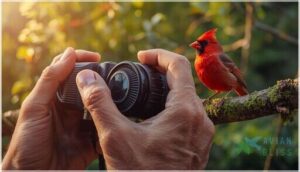
A solid grip gets you pointed at the bird — but a smooth focus system is what locks it in.
Look for a large central wheel with a smooth focus throw that moves from near to far in about one to one and a half turns. A center focus system with a diopter lock keeps both eyes balanced without constant readjusting, while a close focus range under 8 feet brings backyard feeders in crisp and clear.
Eye Relief for Eyeglass Wearers

Once focus is sharp, the next thing that can quietly ruin your view is poor eye relief — especially if you wear glasses.
Elderly birders need at least 16–20 mm of eye relief measurement for full field of view without clipped edges. Long eye relief paired with twist-up eyecups gives glasses compatibility and ease of use, making binoculars for seniors genuinely comfortable over long sessions.
Brightness and Optical Clarity

Bright, sharp optics make the difference between spotting a warbler and missing it entirely. For seniors, exit pupil size, objective lens diameter, and prism glass quality directly shape what you actually see.
Sharp optics aren’t a luxury for seniors — exit pupil, lens diameter, and prism quality decide what you actually see
- ED Glass Sharpness reduces color fringing on high-contrast edges
- Phase-Correction Coating sharpens feather detail in low-light conditions
- 8×42 magnification power delivers a 5.25 mm exit pupil for twilight birding
- Fully multi-coated lenses boost optical clarity and contrast across the field
Durability and Weather Resistance

When you’re out birding at dawn near a wetland, weather doesn’t wait. That’s why waterproof sealing with O-ring construction and anti-fog gas purging with nitrogen keeps optics clear through temperature shifts.
Shock-resistant armor absorbs bumps and improves grip for older adults with reduced hand strength.
Models with IPX7 ratings and temperature tolerance down to -25°C deliver genuine durability and weather resistance in real outdoor conditions.
Top Binoculars for Senior Bird Watchers
Finding the right pair of binoculars can feel overwhelming with so many options out there.
The good news is that several models stand out for seniors who want sharp optics, easy handling, and all-day comfort. Here are seven worth a serious look.
1. Vortex Razor HD 8×42 Binoculars
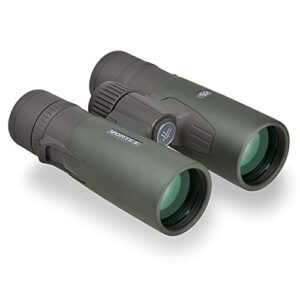
Vortex Razor HD 8×42 sits at the top of the list for good reason.
Its magnesium chassis keeps weight around 24.2 ounces — sturdy without wearing you out on a long morning walk.
The open-hinge design gives your hands a natural, secure grip, which matters if arthritis makes holding things tricky.
With eye relief of 17.5 mm and a wide 388‑foot field of view at 1,000 yards, you won’t miss a thing — even with glasses on.
| Best For | Birders, hunters, and wildlife watchers who spend long hours in the field and want top-tier optics that can handle rough weather without babying. |
|---|---|
| Magnification | 8x |
| Objective Lens | 42mm |
| Waterproof | Yes |
| Weight | 24.2 oz |
| Lens Coating | ArmorTek multi-coat |
| Target Use | Wildlife & birding |
| Additional Features |
|
- Crystal-clear images thanks to hand-selected prisms and premium HD glass — colors look true, details are sharp.
- Built tough: magnesium chassis, argon-purged, O-ring sealed, and coated with scratch-resistant ArmorTek — ready for rain, cold, and mud.
- Comfortable for extended use with an ergonomic open-hinge design that feels natural in your hands.
- The price is steep — this is a premium product, and not everyone’s budget stretches that far.
- Some users notice minor chromatic or spherical aberration, so optics perfectionists may want to test before committing.
- Buy from an authorized dealer — quality control concerns pop up with third-party sellers, and that’s a risk at this price point.
2. Nikon Monarch M5 8×42 Binoculars
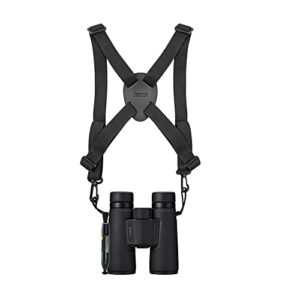
The Nikon Monarch M5 8×42 hits a sweet spot that’s hard to ignore at around $330–$360.
At just 22.2 ounces, it won’t tire your arms during a long morning out. The large, smooth focus knob adjusts easily with light finger pressure, and eye relief of 19.5 mm means eyeglass wearers get the full 335‑foot field of view at 1,000 yards. ED glass with phase‑corrected coatings keeps bird plumage sharp and colors true, even in dim woodland light.
| Best For | Bird watchers, hunters, and hikers who want sharp, lightweight optics without spending a fortune. |
|---|---|
| Magnification | 8x |
| Objective Lens | 42mm |
| Waterproof | Yes |
| Weight | 22 oz |
| Lens Coating | ED dielectric multi-coat |
| Target Use | Birding & hunting |
| Additional Features |
|
- At 22 ounces, it’s light enough to wear all day without your neck paying for it
- ED glass with phase-corrected coatings delivers crisp, true-color images even in low light
- 19.5mm eye relief means glasses wearers don’t miss a thing across that wide 335-foot field of view
- The front lens caps feel a bit cheap for a $330 optic
- Not built for rough, heavy-duty use — it’s refined, not rugged
- The limited lifetime warranty has some gaps, so it may not cover every type of damage
3. Celestron Nature DX 8×42 Binoculars
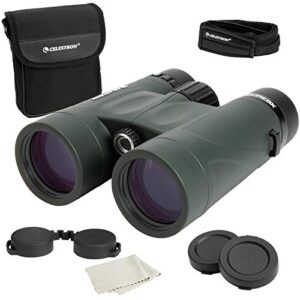
If you’re watching your budget without wanting to watch blurry birds, Celestron Nature DX 8×42 at $135.99 is genuinely hard to beat.
BaK-4 prisms with fully multi-coated lenses deliver bright, sharp views, and the 7.4° field of view makes tracking movement easy.
At 1.75 pounds, it won’t punish your arms, and 17.5mm eye relief accommodates eyeglass wearers comfortably.
Waterproof, fogproof, and tripod-adaptable — it’s a solid first serious binocular that punches well above its price.
| Best For | Birdwatchers and outdoor enthusiasts who want reliable, clear optics without spending a fortune. |
|---|---|
| Magnification | 8x |
| Objective Lens | 42mm |
| Waterproof | Yes |
| Weight | 28 oz |
| Lens Coating | Fully multi-coated |
| Target Use | Birding & hiking |
| Additional Features |
|
- BaK-4 prisms and fully multi-coated lenses give you bright, sharp images that feel way above the price point
- Waterproof and fogproof build means it can handle real outdoor conditions without babying
- Wide 7.4° field of view makes it easy to track birds and wildlife on the move
- Some users have had eye cup screws loosen or fall out over time
- Not the best pick for low-light situations or stargazing
- The included strap and ergonomics may feel lacking during long days in the field
4. ZEISS Terra ED 8×42 Binoculars
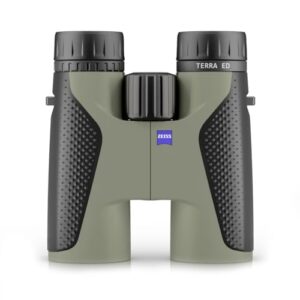
At $499.99, the ZEISS Terra ED 8×42 is a serious investment — but it earns every dollar. SCHOTT ED glass delivers 88% light transmission with minimal color fringing, so bird details stay sharp even at dusk.
The large focus wheel falls naturally under your index finger, and 18mm of eye relief keeps glass-wearers comfortable.
At just 1.6 pounds with a rubber-armored grip, it manages extended outings without tiring your hands.
Nitrogen-filled and waterproof, it’s built to last for years.
| Best For | Birders, hunters, and outdoor enthusiasts who want premium optics they can trust in any weather. |
|---|---|
| Magnification | 8x |
| Objective Lens | 42mm |
| Waterproof | Yes |
| Weight | 25.6 oz |
| Lens Coating | Zeiss anti-reflective |
| Target Use | Birding & hunting |
| Additional Features |
|
- 88% light transmission means colors and details pop even in low light
- Large focus wheel is quick and easy to use — great when birds aren’t waiting around
- Waterproof, nitrogen-filled, and tough enough for years of hard use
- $499.99 is a real commitment, especially for casual users
- 8x magnification won’t cut it if you need serious long-distance reach
- Compact build might feel a little small in larger hands
5. Athlon Optics Midas G2 8×42 Binoculars
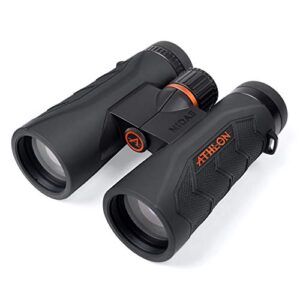
If the ZEISS feels like a splurge, the Athlon Midas G2 8×42 delivers serious performance at a friendlier price. UHD extra-low dispersion glass keeps color fringing in check, and the wide 426-foot field of view at 1,000 yards means less panning when a warbler darts through the brush.
At 23.3 ounces with rubber armor and a magnesium chassis, it’s light enough for long walks without wearing out your arms.
The 17.2mm eye relief works well with glasses, and argon purging deals with morning fog without fuss.
| Best For | Hunters, birdwatchers, and outdoor enthusiasts who want premium optics without the premium price tag. |
|---|---|
| Magnification | 8x |
| Objective Lens | 42mm |
| Waterproof | Yes |
| Weight | 24 oz |
| Lens Coating | ESP dielectric XPL |
| Target Use | Birding & hunting |
| Additional Features |
|
- UHD ED glass delivers sharp, true-color images with minimal color fringing
- Lightweight magnesium chassis makes it easy to carry on long hikes or all-day hunts
- Long eye relief and ergonomic design keep things comfortable whether you wear glasses or not
- Narrower field of view compared to lower-magnification binoculars, so fast-moving subjects take a little more effort to track
- Eyecup adjustment may not work well for people with very close-set eyes
- Minor quality control quirks with lens caps or rubber rings have been reported by some users
6. Steiner BluHorizons 10×42 Binoculars
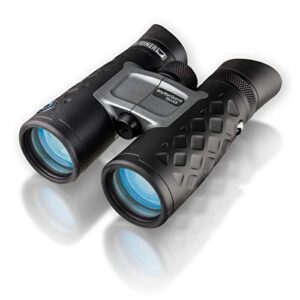
Bright conditions can wash out feather detail fast, but the Steiner BluHorizons 10×42 manages that well. Its Autobright technology uses phototropic lenses that automatically tone down glare from water, sand, or open sky — no squinting required.
At 10x magnification with a 100‑meter field of view at 1,000 meters, you’ll pick up distant birds with strong clarity.
The Fast‑Close‑Focus wheel reacts to light pressure, IPX4 waterproofing endures coastal splashes, and the 10‑year warranty adds real peace of mind.
| Best For | Outdoor enthusiasts and birdwatchers who spend a lot of time in bright, sunny environments and need binoculars that handle glare without fuss. |
|---|---|
| Magnification | 10x |
| Objective Lens | 42mm |
| Waterproof | Yes |
| Weight | 24.6 oz |
| Lens Coating | Autobright adaptive |
| Target Use | Outdoor & sports |
| Additional Features |
|
- Autobright lenses automatically adjust to harsh light — great for beaches, open fields, or snow
- 10x magnification with a solid field of view makes it easy to track distant subjects quickly
- Fast-Close-Focus wheel and IPX4 waterproofing make it genuinely practical in the field
- On the heavier side, which can be noticeable on long outings
- Some users have flagged quality control issues, like the strap clip breaking sooner than expected
- The price point may be hard to justify for casual or occasional users
7. Maven B1.2 8×42 ED Binocular
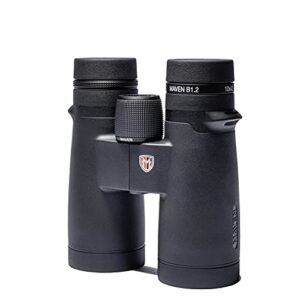
If Steiner’s auto-dimming lenses caught your attention, the Maven B1.2 8×42 takes a different approach — pure optical precision from the ground up.
Its ED glass keeps chromatic aberration in check, delivering edge-to-edge sharpness at 93.95% light transmission, so early morning warblers look crisp, not washed out.
The 18.1mm eye relief is a genuine win for eyeglass wearers, and the silky 235-degree focus throw lets you track a moving bird without fumbling.
Backed by a lifetime warranty, it’s built to last.
| Best For | Birders, hunters, and outdoor enthusiasts who want top-tier optics and are willing to pay for serious glass. |
|---|---|
| Magnification | 8x |
| Objective Lens | 42mm |
| Waterproof | Yes |
| Weight | 28 oz |
| Lens Coating | Multi-coated elite |
| Target Use | Birding & hunting |
| Additional Features |
|
- Edge-to-edge sharpness with ED glass that handles low light beautifully
- 18.1mm eye relief is a real plus if you wear glasses
- Smooth focus throw makes tracking moving birds feel effortless
- It’s pricey — you’ll definitely feel it in your wallet
- The focus mechanism takes some getting used to compared to other brands
- Eyecups can shift around, which gets annoying fast
Choosing The Right Magnification and Optics
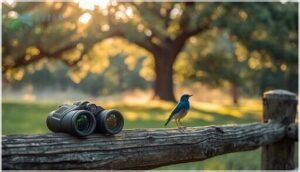
Picking the right magnification and optics isn’t as complicated as it sounds, but it does make a real difference in how much you enjoy your time outside.
A few key factors will help you zero in on what actually matters for your needs. Here’s what to keep in mind before you commit to a pair.
Ideal Magnification for Stability
For seniors, magnification power isn’t just a number — it directly affects how steady your view feels. Hand tremor impact becomes more noticeable as you go higher, making 7x vs 8x a real stability threshold worth understanding:
- 8x magnification suits most backyard and woodland birding comfortably
- 7x offers the calmest handheld image for noticeable tremor
- 10x magnification amplifies shake, increasing eye strain over time
- Lightweight binoculars with ergonomic design and comfort reduce grip fatigue
- Image stabilization tech and supportive holding techniques restore steady views at higher powers
Field of View Considerations
field of view is one of those specs that quietly makes or breaks your birdwatching experience.
For seniors, a wider angular field width — ideally around 8 degrees — means birds stay in frame even with slightly unsteady hands. Linear field metrics around 400 feet at 1,000 yards deliver generous wide view benefits, and pairing that with adequate eye relief ensures the full optical performance reaches your eyes comfortably.
Low-Light Performance
Dawn and dusk are when birds are most active — and most demanding on your optics. For birdwatching for seniors, low-light conditions are where the right specs truly matter:
- Exit Pupil Size of 5.25 mm in 8×42 models matches your dilated pupils at twilight
- Light Transmission Rate above 90 % keeps forest understory visible as daylight fades
- ED Glass Benefits reduce color fringing on plumage edges in dim conditions
- Prism Quality — BaK‑4 with dielectric coatings — preserves optical performance without brightness loss
Lens Coatings for Clarity
Lens coatings do more heavy lifting than most people realize.
Fully MultiCoated Lenses push light transmission above 90%, while Phase‑Corrected Roofs sharpen feather edges that softer prisms blur.
Dielectric Mirror Coatings reflect over 99% of visible light, keeping colors honest. Add Hydrophobic Lens Treatment for rain-ready clarity and Scratch‑Resistant Hard Coating for lasting Optical Clarity — and your Image Quality stays sharp season after season.
Essential Accessories for Senior Birders

The right accessories can make a real difference in how long and how comfortably you spend time out in the field.
A few well-chosen add-ons reduce strain, protect your investment, and honestly just make the whole experience more enjoyable.
Here’s what’s worth picking up alongside your binoculars.
Comfortable Neck Straps and Harnesses
A good neck strap does more than hold your binoculars — it takes the weight off your neck entirely.
Harnesses with ergonomic design and breathable materials spread the load across your shoulders, making even lightweight binoculars feel easy after hours outdoors.
Look for adjustable length, shock absorption, and quick release clips, all senior‑friendly products that turn a long morning into a genuinely comfortable one.
Protective Cases and Carry Bags
Your binoculars deserve protection that keeps up with you. Cases with impact foam lining and water-resistant zippers shield your investment from drops and unexpected showers, while adjustable shoulder straps and quick-release closures make access easy — even with stiff fingers.
Internal mesh pockets keep portable accessories organized, and the compact size, ergonomic design, and durability guarantee your lightweight binoculars stay trail‑ready every morning.
Lens Cleaning Kits and Tools
Dirty lenses quietly steal the joy out of birdwatching.
Lens cleaning kits built for seniors keep optical performance sharp without the fuss — microfiber cloths lift oils safely, lens cleaning pens handle smudges on the go, and air blower brushes clear dust without touching the glass.
Pre-moistened wipes and eco-friendly solutions make field cleaning simple, so easy focus stays easy.
Tripod and Smartphone Adapter Options
Once your optics are clean, a stable setup makes every sighting count. A carbon fiber tripod paired with quick‑release adapters keeps lightweight binoculars steady without shoulder strain.
- Fluid video heads track birds in flight smoothly
- Adjustable drag settings prevent sudden image swing
- Tripod adapters mount to any standard head
- Universal phone clamps fit 25–48mm eyepieces
- Smartphone adapters let seniors photograph birds effortlessly
Tips for Comfortable and Safe Bird Watching

Having the right binoculars is only part of the picture — how you use and care for them matters just as much.
A few simple habits can make your time outdoors far more comfortable and keep your optics performing well for years.
Here’s what every senior birder should know.
Techniques for Steady Viewing
Holding steady makes all the difference between a blurry blur and a crisp warbler in the branches.
Try these practical stabilization techniques:
| Technique | How It Helps |
|---|---|
| Grip Near Eyepieces | Blocks stray light, reduces hand movement |
| Elbow Tuck Method | Braces arms against torso, cuts fatigue |
| Neck Strap Tension | Distributes weight, reduces shaking |
| Body Position Aids | Lowers center of gravity for steadier views |
Lightweight binoculars with good ease of use make every method more effective—especially when you lean against a tree or rest elbows on a railing as external object aids.
Adjusting Binoculars for Eye Comfort
Getting the setup right matters just as much as steady hands.
Start with interpupillary alignment — adjust the barrels until you see one clean circle. Then dial in diopter calibration so both eyes focus equally.
Eyecup positioning removes those shadowy kidney-bean edges, while eye relief optimization keeps eyeglass wearers comfortable without straining.
Strain-reducing breaks every 10–15 minutes protect your eyes throughout longer sessions.
Preventing Arm and Shoulder Fatigue
Your arms do more work than you’d think over a long morning out. Weight distribution matters — binoculars under 25 ounces with ergonomic design and comfortable grip reduce strain noticeably.
Add support strap to shift the load off your neck. Posture alignment, keeping elbows close to your ribs, helps too.
Pair lightweight binoculars with resting techniques and session pacing, and fatigue stops cutting your outing short.
Maintenance and Care for Longevity
Keeping your binoculars in good shape doesn’t take much effort. Brush off dust first, then use a microfiber cloth with lens cleaning fluid for your lens cleaning routine — skip paper towels entirely.
For moisture prevention, store them with silica gel packs in a cool, dry case.
Waterproof models offer durability and weather resistance, but mechanical lubrication and professional servicing are jobs best left to technicians.
Frequently Asked Questions (FAQs)
What strength binoculars are best for bird watching?
For birdwatching, 8x magnification hits the sweet spot.
It delivers handshake reduction, a wider depth of field, and a brighter exit pupil than 10x — making optical performance genuinely comfortable all day.
Are 8x or 10x binoculars better for bird watching?
For most senior birdwatchers, 8x binoculars win on stability, lightweight portability, wider field of view, better low-light brightness, and longer eye-relief comfort — making them the easier, more forgiving choice over 10x.
What magnification is best for bird watching?
For most birdwatching, 8x magnification hits the sweet spot — handheld stability stays solid, optical performance stays bright, and ease of use makes long outings genuinely enjoyable without fighting a shaky image.
Can seniors use binoculars with arthritis or tremors?
Yes, absolutely.
Arthritis-friendly grips, lightweight binoculars, and battery-powered image stabilization make tremor-reducing stabilization practical. Adjustable eye cups, lightweight focus knobs, and comfortable grip designs with generous eye relief guarantee ease of use with senior-friendly products.
How much should seniors budget for quality binoculars?
A solid pair runs $300 to $500 for true value per dollar. Entry options start near $150, but quality jumps noticeably above $300, where ED glass and better eye relief make a real difference.
Are image-stabilizing binoculars worth it for seniors?
For steady hands, they’re worth every penny.
Image stabilization techniques cut tremor reduction dramatically, and battery life impact is minimal at 9–12 hours per charge.
Senior birdwatchers with noticeable shake will notice the difference immediately.
How do seniors compare binocular brands before buying?
Most start with weight comparison and eye‑relief specs, then cross‑check user review sources for real‑world ease of use.
Warranty length and price‑value ratio seal the deal on optical performance and durability.
Conclusion
Think of binoculars the way you’d think of a good pair of hiking boots—the wrong fit ruins the whole trail.
The right bird watching binoculars for seniors don’t just improve your view; they extend how long you’ll actually stay out there, watching, listening, and noticing what others walk right past. Weight, grip, and glass quality aren’t luxury features at this stage—they’re the difference between a frustrating hour and a morning you’ll want to repeat.
- https://www.bestbinocularsreviews.com/blog/image-stabilization-binoculars-for-birding-question-05/
- https://shopping.rspb.org.uk/page/how-to-choose-binoculars-for-bird-watching
- https://optics4birding.com/pages/how-to-choose-binoculars
- https://www.birdingecotours.com/best-binoculars-for-birding-bigger-not-always-better/
- https://www.audubon.org/gear/binocular-guide