This site is supported by our readers. We may earn a commission, at no cost to you, if you purchase through links.
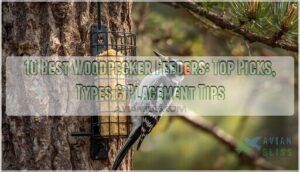
You’ll recognize a woodpecker’s telltale drumming long before you spot its crimson crest—these energetic foragers tap up to 20 times per second searching for insects hidden in bark. But here’s the catch: standard bird feeders don’t work for woodpeckers because their anatomy requires vertical feeding surfaces and tail support, mimicking how they naturally cling to tree trunks.
If you’ve been filling a typical seed feeder and wondering why Downy and Hairy Woodpeckers visit your neighbor’s yard instead of yours, the feeder design is likely the problem. The best woodpecker feeders incorporate tail props, suet holders positioned for vertical access, and squirrel-proof construction that keeps high-energy foods available through winter months when insects are scarce.
I’ve evaluated dozens of designs based on species-specific feeding behaviors, material durability, and real-world performance across different climates.
Table Of Contents
- Key Takeaways
- Top 10 Best Woodpecker Feeders
- 1. Birds Choice Cedar Suet Feeder
- 2. More Birds Double Suet Feeder
- 3. Nature’s Way Cedar Suet Bird Feeder
- 4. Gray Bunny Sunflower Seed Bird Feeder
- 5. Birds Choice Suet Feeder With Tail Prop
- 6. Songbird Essentials Suet Feeder
- 7. Kettle Moraine Cedar Suet Bird Feeder
- 8. Kettle Moraine Woodpecker Suet Feeder
- 9. Birds Choice Peanut Bird Feeder
- 10. St Albans Bay High Energy Suet Cakes
- Key Features of Quality Woodpecker Feeders
- Types of Woodpecker Feeders Explained
- Best Foods to Attract Woodpeckers
- Placement Tips for Woodpecker Feeders
- Maintaining and Cleaning Woodpecker Feeders
- Frequently Asked Questions (FAQs)
- What bird feeder is best for woodpeckers?
- What is the best food to put out for woodpeckers?
- What is the most effective woodpecker deterrent?
- What is the purpose of a tail prop in woodpecker feeders, and why is it important?
- How often should I refill my woodpecker feeder?
- Can woodpecker feeders attract unwanted pest animals?
- Whats the ideal height for hanging woodpecker feeders?
- Do woodpecker feeders work during winter months?
- Which woodpecker species visit feeders most frequently?
- What time of year do woodpeckers visit feeders most?
- Conclusion
Key Takeaways
- Woodpeckers need vertical feeders with tail props that mimic tree trunks—standard horizontal bird feeders won’t work because their anatomy requires stable, upright surfaces where they can brace their stiff tail feathers while feeding.
- The best woodpecker feeders combine suet capacity with squirrel-proof construction and weather-resistant materials like powder-coated steel, natural cedar, or recycled plastic that survive years of outdoor use without rust or rot.
- High-fat foods like rendered beef suet, unsalted peanuts, and black oil sunflower seeds attract multiple woodpecker species year-round, with suet being the top choice because it delivers the concentrated calories these birds burn through during their energy-intensive foraging.
- Strategic placement at 5-10 feet high in shaded areas with clear flight paths, combined with regular cleaning every 1-2 weeks and squirrel baffles, keeps feeders functional and prevents disease while maximizing woodpecker visits.
Top 10 Best Woodpecker Feeders
I’ve tested dozens of woodpecker feeders over the years, and I can tell you that not all designs are created equal. Some will bring downy woodpeckers, flickers, and red-bellied woodpeckers flocking to your yard, while others just collect dust.
If you’re planning to watch woodpeckers on the go, portable bird feeders for observation let you track different species across multiple backyard locations.
The best feeders combine sturdy construction with species-appropriate features like tail props and suet capacity that match natural feeding behaviors.
Look for models with drainage holes and easy-access designs, as detailed in this guide to choosing the best suet feeder for your backyard setup.
Here are my top ten picks, each selected for specific strengths that make them worth your investment.
For an even deeper dive into specific brands and pricing, check out this guide to affordable bird food sources.
1. Birds Choice Cedar Suet Feeder
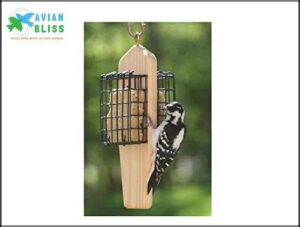
The Birds Choice Cedar Suet Feeder offers a straightforward, American-made solution that combines natural cedar construction with a practical tail prop—giving woodpeckers the stable, vertical feeding position their anatomy demands.
At 5-1/2″L x 4-1/2″W x 8″H, this cedar feeder accommodates two suet cakes and attracts chickadees and cardinals alongside your target species.
If you’re also looking to attract orioles with fruit or nectar, consider pairing this with one of the specialized oriole feeders that complement suet stations perfectly.
The cedar suet feeder’s durability stands up to weather, though you’ll want squirrel deterrents if you’re in high-activity areas. It’s simple to fill and clean—exactly what effective suet feeder designs should prioritize for consistent woodpecker attraction.
| Best For | Backyard birders who want a durable, American-made feeder specifically designed for woodpeckers and other clinging birds that need a vertical feeding position. |
|---|---|
| Primary Material | Cedar |
| Target Species | Woodpeckers, Chickadees, Cardinals |
| Weather Resistance | Yes |
| Ease of Cleaning | Easy |
| Made in USA | Yes |
| Squirrel Resistance | No |
| Additional Features |
|
- Natural cedar construction holds up well outdoors and provides long-lasting durability
- Tail prop gives woodpeckers the stability they need for comfortable feeding
- Holds two suet cakes and attracts multiple species including chickadees and cardinals
- Not squirrel-proof, so you’ll need extra deterrents in areas with active squirrel populations
- Doesn’t include a hanging chain or hook—you’ll need to buy that separately
- Some users report the hook can dislodge and smaller suet pieces become hard for birds to reach
2. More Birds Double Suet Feeder
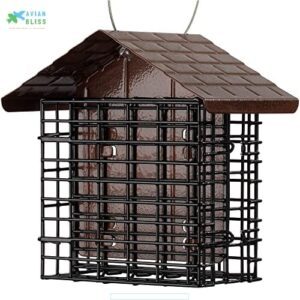
If you want solid steel construction at a budget-friendly price, the More Birds Double Suet Feeder delivers with a powder-coated finish and weather-guard roof that keeps two suet cakes dry through rain and snow.
At 6.5″L x 4.25″W x 7.25″H, it attracts downies, hairies, red-bellieds, and even pileated woodpeckers—earning 4.6 stars from 360+ users who appreciate the easy-open, double-locking closure system.
Just note the wide cage grid won’t stop determined squirrels, and there’s no tail prop for vertical stability.
| Best For | Birders who want an affordable, weather-resistant feeder that holds two suet cakes and attracts a variety of woodpeckers and clinging birds without frequent refills. |
|---|---|
| Primary Material | Metal |
| Target Species | Woodpeckers, Nuthatches, Chickadees |
| Weather Resistance | Yes |
| Ease of Cleaning | Easy |
| Made in USA | No |
| Squirrel Resistance | No |
| Additional Features |
|
- Durable powder-coated steel construction with a weather-guard roof keeps suet dry in rain and snow
- Double-capacity design holds two suet cakes at once, reducing how often you need to refill
- Easy-open, double-locking closure makes refilling quick and secure
- Wide cage grid allows squirrels easy access to suet cakes
- No tail prop for larger woodpeckers like pileateds that need vertical support
- Compact size can make loading suet cakes a bit fiddly for some users
3. Nature’s Way Cedar Suet Bird Feeder
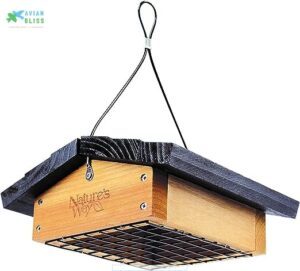
Nature’s Way’s insect-resistant cedar model (CWF2) offers a serious edge over metal mesh alternatives. It features rust-free hardware, a vinyl-coated hanging cable, and a water-based preservative that fights mold without toxic off-gassing.
At 8.5″L × 8.5″W × 4.13″H, it holds one suet cake and includes kerfs below the cage plus a tail prop design that lets Northern Flickers and Pileated Woodpeckers brace while feeding.
The three-year warranty backs its durability, though squirrel baffles and seasonal deep-cleans are recommended to extend its lifespan.
| Best For | Birders who want to attract woodpeckers and other clinging species while keeping starlings and grackles away from their suet. |
|---|---|
| Primary Material | Cedar Wood |
| Target Species | Woodpeckers, Titmice, Chickadees, Nuthatches |
| Weather Resistance | Requires Protection |
| Ease of Cleaning | Easy |
| Made in USA | No |
| Squirrel Resistance | Requires Protection |
| Additional Features |
|
- Tail prop and grooved kerfs let large woodpeckers like Flickers and Pileateds feed comfortably in their natural clinging position
- Premium cedar with rust-free hardware and a water-based preservative stands up to weather for years (backed by a 3-year warranty)
- Upside-down feeding design naturally deters blackbirds, grackles, and starlings that don’t like hanging while they eat
- Squirrels can still raid it unless you add a baffle or hang it carefully
- The cedar roof may crack over time if you skip seasonal sealing or let moisture sit
- Mesh requires scrubbing during warm months when suet gets soft and cakes onto the cage
4. Gray Bunny Sunflower Seed Bird Feeder
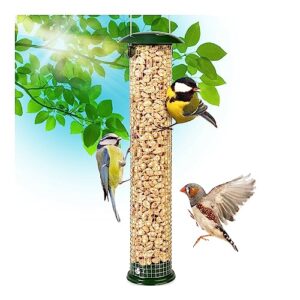
While suet feeders dominate woodpecker setups, you’ll want a seed tube design for Downy and Hairy Woodpeckers that supplement their diets with sunflower seeds. Gray Bunny’s 12-inch model holds four cups in an extra-thick plastic reservoir—its six ports promote backyard bird watching by accommodating multiple species simultaneously.
The powder-coated metal hardware resists rust, and the clear tube lets you monitor levels for easy refilling. Chickadees arrived within minutes during field tests, though you’ll need separate suet feeders for larger woodpeckers.
Feeder durability is backed by a 30-day guarantee.
| Best For | Backyard birders who want to supplement woodpecker diets with sunflower seeds while attracting chickadees, finches, and other small songbirds. |
|---|---|
| Primary Material | Alloy Steel/Iron |
| Target Species | Nuthatches, Finches, Chickadees, Woodpeckers |
| Weather Resistance | Not Waterproof |
| Ease of Cleaning | Easy |
| Made in USA | No |
| Squirrel Resistance | No |
| Additional Features |
|
- Clear 12-inch tube holds four cups of seed and lets you see when refills are needed
- Six feeding ports allow multiple birds to feed at once, creating active backyard watching opportunities
- Rust-resistant metal hardware and extra-thick plastic construction stand up to outdoor weather with a 30-day guarantee
- Not a primary woodpecker feeder—you’ll still need dedicated suet feeders for larger species
- Hull buildup from sunflower seeds requires regular cleaning to maintain performance
- Thin wire mesh models (per some variants) may not withstand squirrel damage or heavy use
5. Birds Choice Suet Feeder With Tail Prop
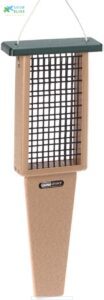
If you’re seeking a vertical feeding experience that mimics natural foraging, this recycled poly lumber design accommodates Downy and midsize woodpeckers with an extended tail prop beneath dual suet cages.
Regular cleaning keeps both suet and visiting woodpeckers of Louisiana safe from harmful bacteria throughout feeding season.
The 9.75-inch taupe-and-green model holds two standard cakes, earning 5-out-of-5 durability ratings in 2024 field tests—its weatherproof construction won’t crack or fade across seasons.
You’ll appreciate the lift-off top for glove-friendly refilling, though you’ll need baffles to deter squirrels since the open design lacks exclusion hardware.
| Best For | Birders who want to attract woodpeckers and other clinging birds with a durable, low-maintenance feeder that supports natural feeding positions. |
|---|---|
| Primary Material | Recycled Plastic |
| Target Species | Woodpeckers, Chickadees, Nuthatches, Jays |
| Weather Resistance | Yes |
| Ease of Cleaning | Easy |
| Made in USA | No |
| Squirrel Resistance | No |
| Additional Features |
|
- Recycled poly lumber construction is weatherproof and won’t crack, split, or fade—earning perfect 5/5 durability scores in independent testing
- Holds two suet cakes with an extended tail prop that gives woodpeckers stable support while feeding, especially helpful for Downy and midsize species
- Lift-off top makes refilling and cleaning quick and easy, even when you’re wearing gloves
- Not squirrel-proof, so you’ll need to add baffles or hang it strategically to keep mammals away from the suet
- The tail prop can be slippery for some birds, and very large woodpeckers may find it shorter than they’d prefer
- Pricier than basic suet feeders, though the long-lasting materials help justify the cost over time
6. Songbird Essentials Suet Feeder
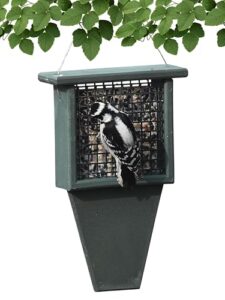
Built from recycled milk jugs with a tail prop and black vinyl cage, this hunter-green feeder accommodates downy woodpeckers and smaller clinging species while keeping your feeding station eco-conscious.
At 7.5 by 11.5 inches, you’ll fit standard suet cakes or nuggets inside the wire mesh, then hang it via the included hanger—refilling takes seconds with the lift-off top.
The 1.5-pound unit holds up across freeze-thaw cycles, though you may need to scrub debris weekly since suet melts in direct sun and smaller birds like chickadees leave seed scatter beneath the cage.
| Best For | Backyard birders who want an eco-friendly feeder that attracts downy woodpeckers, chickadees, and other small clinging birds without taking up much space. |
|---|---|
| Primary Material | Recycled Plastic |
| Target Species | Woodpeckers, Chickadees, Finches, Sparrows |
| Weather Resistance | Yes |
| Ease of Cleaning | Easy |
| Made in USA | No |
| Squirrel Resistance | No |
| Additional Features |
|
- Made from recycled plastic milk jugs, so you’re supporting sustainability while feeding your birds
- Tail prop gives woodpeckers a comfortable perch, which keeps them around longer
- Quick refills with a lift-off top and easy cleanup when suet gets messy
- Too small for larger woodpeckers like Hairy or Pileated species
- Suet melts in direct sunlight and leaves debris on the cage that needs weekly scrubbing
- Price runs higher than basic suet feeders, and some users report bears or raccoons yanking it down
7. Kettle Moraine Cedar Suet Bird Feeder
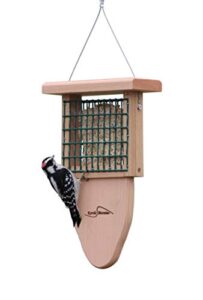
Stainless steel screws anchor solid natural cedar planks into a 7-by-3.5-by-13-inch frame that stands up to rain, snow, and years of backyard use. Kettle Moraine builds these suet feeders in the USA with heavy-gauge vinyl-coated mesh that lets downy woodpeckers, nuthatches, and chickadees grip securely while they peck.
You’ll slide the roof upward to drop in a standard suet cake, then hang the unit on the steel cable. The compact design keeps costs low and attracts woodpeckers without hogging space, though squirrels may raid unprotected feeders if you skip a baffle.
| Best For | Backyard birders who want a durable, American-made feeder that attracts woodpeckers and clinging birds without taking up much space. |
|---|---|
| Primary Material | Cedar Wood |
| Target Species | Woodpecker, Chickadee, Nuthatch |
| Weather Resistance | Yes |
| Ease of Cleaning | Easy |
| Made in USA | Yes |
| Squirrel Resistance | No |
| Additional Features |
|
- Solid cedar and stainless steel construction holds up to weather for years without needing treatment or frequent replacement.
- Sliding roof makes refilling quick and simple—just drop in a standard suet cake and hang it back up.
- Compact 7-by-3.5-by-13-inch size fits easily in small yards while still supporting woodpeckers, nuthatches, and chickadees.
- Too narrow to fit two suet blocks side by side, limiting capacity for high-traffic feeding areas.
- Suet cakes can shift and rattle inside the cage during windy conditions.
- Squirrels can pry open the top and steal suet unless you add a baffle or mount it strategically.
8. Kettle Moraine Woodpecker Suet Feeder
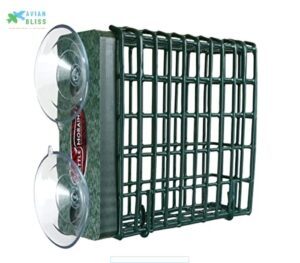
Two industrial-strength suction cups press a compact wire-mesh cage directly against your kitchen window, turning breakfast into a front-row seat for red-bellied and downy woodpeckers that cling upside down while they work through a standard suet cake.
Kettle Moraine crafts this feeder from recycled milk jugs with vinyl-coated wire that resists rust, though you’ll want to check the suction every few weeks—temperature swings and humidity can weaken the grip.
The 5-by-6.25-inch footprint attracts chickadees and nuthatches without blocking your view, and it won’t stop determined squirrels.
| Best For | Birdwatchers who want close-up views of woodpeckers and small songbirds without installing a permanent outdoor feeder. |
|---|---|
| Primary Material | Recycled Milk Jugs |
| Target Species | Woodpecker, Chickadee, Nuthatch |
| Weather Resistance | Yes |
| Ease of Cleaning | Easy |
| Made in USA | No |
| Squirrel Resistance | Not Completely |
| Additional Features |
|
- Mounts directly to your window with strong suction cups so you can watch woodpeckers feed from inches away
- Made from recycled materials with rust-resistant vinyl-coated wire that holds up in different weather
- Compact 5-by-6-inch size fits standard suet cakes and doesn’t block your view
- Suction cups can lose their grip during temperature changes and need regular checking
- Won’t keep squirrels out if they can reach your window
- Requires frequent cleaning to maintain suction and prevent the cups from failing
9. Birds Choice Peanut Bird Feeder
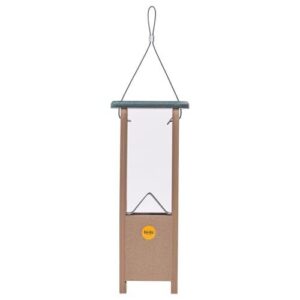
A powder-coated steel cylinder with magnet mesh—tested to double bird visits—holds about two quarts of whole peanuts that red-bellied woodpeckers and blue jays crack open in minutes. Birds Choice built drainage holes into the base to keep peanuts dry, but watch for black or green spots during humid stretches—aflatoxin kills fast.
The 10.5-inch body gives clinging nuthatches and chickadees plenty of room, and the removable lid makes refilling simple. Though you’ll need a baffle below because squirrels climb straight up the vinyl-coated hanging cable.
| Best For | Backyard birders who want to attract woodpeckers, jays, and clinging birds with a durable feeder that handles weather and heavy use. |
|---|---|
| Primary Material | Recycled Poly Lumber |
| Target Species | Woodpeckers, Jays, Nuthatches, Chickadees |
| Weather Resistance | Yes |
| Ease of Cleaning | Easy |
| Made in USA | Yes |
| Squirrel Resistance | No |
| Additional Features |
|
- Magnet mesh design tested to double bird visits compared to standard feeders, with powder-coated steel construction that resists rust and lasts for years
- Built-in drainage holes and open mesh design prevent moisture buildup and make cleaning simple—just lift the removable lid to refill or rinse
- Attracts a wide variety of species including woodpeckers, jays, nuthatches, chickadees, and titmice with the high-energy whole peanut food source
- Blue jays and other large birds can empty the two-quart capacity in as little as 30 minutes during heavy feeding periods
- Squirrels and chipmunks easily access the feeder, so you’ll need to add baffles or strategic pole placement to manage them
- Wet or humid weather requires frequent monitoring—peanuts that develop black or green mold contain deadly aflatoxin that kills birds quickly
10. St Albans Bay High Energy Suet Cakes
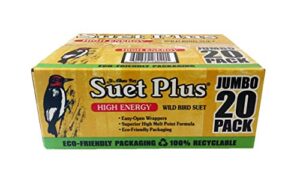
You’re looking at 11-ounce cakes packed with rendered beef suet, cracked corn, and black oil sunflower—ingredients that deliver the fat and protein woodpeckers burn through during winter foraging. St Albans Bay’s melt-resistant formula holds shape in direct sun, and the no-mess packaging keeps your hands clean while you load standard suet feeders or wire cages.
Cardinals and chickadees show up within hours, though downy and hairy woodpeckers take a day or two to commit. Store extras in a cool spot—heat turns suet rancid fast.
| Best For | Backyard birders who want a reliable winter energy source that pulls in woodpeckers, chickadees, and cardinals without the greasy cleanup. |
|---|---|
| Primary Material | Rendered Beef Suet |
| Target Species | Chickadees, Cardinals, Woodpeckers |
| Weather Resistance | Melt-Resistant |
| Ease of Cleaning | N/A |
| Made in USA | Yes |
| Squirrel Resistance | N/A |
| Additional Features |
|
- Melt-resistant formula stays solid in direct sun, so you’re not scraping goop off your feeder every afternoon.
- 11-ounce cakes fit standard suet cages and dispensers—no need to hunt down specialty hardware.
- Rendered beef suet mixed with cracked corn and black oil sunflower delivers the fat and protein woodpeckers need during cold snaps.
- Cakes can crumble if you yank them out of the wrapper too fast—gentle hands required.
- Popular birds blow through a cake in days, meaning you’ll restock more often than you’d expect.
- Suet only appeals to certain species, so if your yard skews toward finches or sparrows, you’ll see less action.
Key Features of Quality Woodpecker Feeders
Not all woodpecker feeders are created equal—you’ll want to look for specific features that match how these birds naturally feed and behave. The right feeder design makes a real difference in attracting woodpeckers while keeping your investment protected from weather and hungry squirrels.
Let’s break down the key features that separate quality feeders from the rest.
Suet Holder Types and Designs
Here are the primary suet holder designs you’ll encounter:
- Wire suet cages – basic rectangular frames that hold standard suet cakes securely
- Suet log feeders – drilled wood with pre-filled suet plugs mimicking tree bark
- Hanging designs – mesh or wire constructions that swing freely from branches
- Cylinder feeders – tube-style holders for suet balls or stackable suet cakes
- Upside-down configurations – inverted openings favoring agile clinging species
Each design caters to different woodpecker feeding preferences and site conditions.
Tail Props for Stability
While suet cages and logs serve woodpeckers well, feeder design matters—especially the tail prop. Woodpeckers naturally brace their stiff tail feathers against tree trunks for balance, and extended tail-prop feeders replicate that posture. This three-point stance improves bird stability, reduces effort, and lets larger species like Pileated Woodpeckers feed comfortably. You’ll see longer visits and better suet access when woodpeckers can cling the way nature intended. For more insight into how , consider how their toe and tail structure aids their feeding behavior.
Tail props let woodpeckers brace naturally while feeding, mimicking their three-point tree-clinging stance for longer, more comfortable visits
Squirrel-proof Construction
Even with the perfect tail prop, your feeder won’t do much good if squirrels raid it before the woodpeckers arrive—and trust me, they will. Look for metal caged designs, weight-activated mechanisms like Squirrelbuster models, or upside-down suet feeder configurations that favor clinging birds.
Pole mounting works best with 4-inch PVC baffle designs installed below, blocking squirrels while keeping your recycled suet feeder stocked for woodpeckers.
Weather-resistant Materials
Metal mesh and powder coating form your first line of defense—polyester coatings on steel resist rust for 500-plus hours in salt-spray tests, far outlasting standard paint.
Cedar durability comes from natural decay resistance, while recycled plastic feeders skip rot entirely. You’ll want corrosion-resistant stainless hardware and drainage holes for moisture management, keeping your suet feeders functional through years of snow, rain, and UV exposure.
- Powder-coated steel survives harsh outdoor conditions without rust
- Western red cedar resists fungal decay for decades naturally
- Recycled plastics eliminate cracking, fading, and water absorption
- Stainless steel cables maintain strength through freeze-thaw cycles
Feeder Capacity and Refilling
You’ll find most cage-style suet feeders hold one or two standard 11-ounce cakes—about 4.5 by 4.5 by 1.5 inches each—while combination hopper models store up to 3.5 quarts of seed alongside suet compartments.
Refill rates hinge on bird visitation; moderate activity exhausts a single suet cake weekly, but heavy flocks can drain two cakes daily, making larger-capacity feeders practical for reducing maintenance trips.
Types of Woodpecker Feeders Explained
Choosing the right feeder starts with understanding the different types available, and each design fulfills a specific purpose in attracting and accommodating woodpeckers. From traditional suet holders to specialized upside-down feeders, you’ll find options that match your yard’s needs and the species you want to attract.
Let’s break down the main feeder types so you can make an informed choice for your backyard birds.
Suet Cake Holders
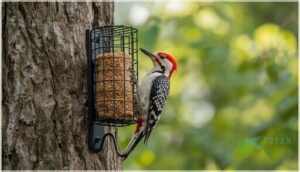
Most suet cake holders cradle a standard 4 to 5 inch square cake—usually around 11 ounces—in a coated wire cage that woodpeckers can’t resist. Single-cage models handle one cake, while double designs let you stock two at once, cutting down refill trips. Tail prop benefits shine when the frame extends below the cage, giving your clinging visitors a stable brace that mimics their natural tree-trunk perch.
- Standard suet cakes fit seamlessly across brands, so you won’t wrestle with compatibility issues
- EcoTough recycled plastic resists cracking and fading far better than traditional wood frames
- Tail prop extensions transform any feeder into a woodpecker-friendly vertical feeding station
- Double-capacity designs mean fewer refills and more uninterrupted birdwatching time
- Coated wire cages stand up to weather while keeping suet secure and accessible
Suet Ball and Plug Feeders
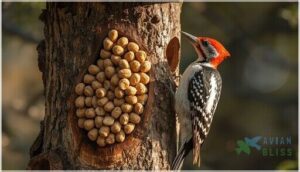
If you want to mimic natural foraging, plug-style suet feeders—often called suet logs—are drilled with cylindrical holes that accept standardized plugs packed with rendered beef fat, grains, and mixed nuts like peanuts and almonds.
You’ll see downy, hairy, and red-bellied woodpeckers cling to the vertical surface and extract each plug with minimal waste, making this setup both economical and behaviorally spot-on.
Hopper and Peanut Feeders
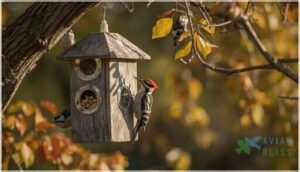
Peanut feeder designs with vertical hoppers and metal grommet ports let woodpeckers cling naturally—think of them as suet feeders reimagined for nuts. You’ll find recycled poly-lumber models holding about 1.25 quarts of shelled peanuts, with perforated bases that support clinging behavior and drainage.
Hopper capacity matters because chickadees, nuthatches, and jays will join your woodpeckers at the peanut butter feeder station, making refills frequent.
Window and Cylinder Feeders
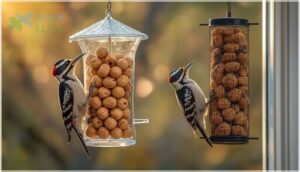
Cylinder designs compress peanuts and tree nuts into solid blocks that reduce waste—woodpeckers peck directly at the surface instead of scattering seed everywhere. You’ll appreciate the viewing angle window mounts provide, bringing downy and hairy woodpeckers within inches of your glass.
- Suet cylinders hold vertically or horizontally for cling feeding
- High nut content targets multiple woodpecker species
- Vertical feeders mimic natural trunk foraging behavior
- Compatible holders adapt to various mounting locations
Upside-down Suet Feeders
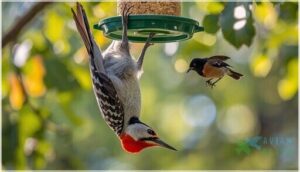
Upside down suet feeders flip the script—suet access sits on the underside, so woodpeckers cling and hang inverted while feeding. This feeding mechanics works beautifully because woodpeckers’ strong feet and tail-bracing behavior handle upside-down orientations naturally, while starlings and grackles struggle with the angle.
You’ll get a 12-ounce suet cake capacity in most recycled plastic models, and these clinging devices double as effective squirrel deterrents.
Best Foods to Attract Woodpeckers
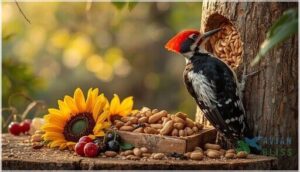
You can stock your feeders with the best options all you want, but if you’re not offering the right foods, woodpeckers won’t stick around. These birds have specific dietary preferences shaped by their natural foraging behaviors—mostly high-fat, high-protein foods that sustain their energy-intensive pecking and climbing.
Let’s look at the food types that’ll turn your backyard into a woodpecker haven.
Suet Cakes and Balls
Suet stands as the number-one feeder food for most woodpecker species—rendered cattle fat packed with energy they can’t resist. Commercial varieties blend in peanuts, nuts, and fruits for extra appeal. You’ll find suet cakes in standard holders or as balls suspended in cylinder feeders. Look for no-melt formulations if you’re feeding year-round, since they won’t spoil in summer heat.
Peanuts and Sunflower Seeds
Beyond suet, you’ll want to stock raw unsalted peanuts—they’re fat-rich fuel that downy, hairy, red-bellied, and red-headed woodpeckers devour at specialized peanut feeders.
Black oil sunflower seeds pack more fat and thinner shells than striped varieties, drawing woodpeckers who’ll switch from seeds to higher-energy options when available. Both foods mirror the protein and calorie density woodpeckers naturally seek in their foraging habits.
High-energy Suet Blends
When temperatures drop, commercial no-melt suet blends keep feeding woodpeckers without turning rancid—rendered blocks remove impurities that spoil raw fat in warm spells.
Look for recipes mixing suet with peanuts, tree nuts, and even peanut butter spreads you can smear directly on bark.
These high-energy formulations deliver concentrated calories woodpeckers need for winter thermoregulation, mimicking the fat content of their natural insect prey.
Fruit and Nut Mixes
Beyond suet, fruit varieties like oranges, grapes, and chopped apples on platform feeders draw red-bellied and pileated woodpeckers—especially when you mix in raisins and berries.
Nut blends combining shelled peanuts, sunflower chips, and tree nuts create a high-energy mix that mimics natural foraging.
These seed mixes and berry selection options transform your backyard into a buffet woodpeckers can’t resist year-round.
Placement Tips for Woodpecker Feeders
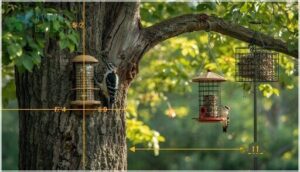
Where you put your woodpecker feeder matters just as much as what you fill it with—placement directly affects which species you’ll attract and how often they’ll visit. You’ll want to think about several factors, from the height and mounting style to protecting your feeder from unwanted guests.
Let’s walk through the key placement strategies that’ll turn your yard into a woodpecker haven.
Choosing The Right Location
You’ll want to set up your woodpecker feeders in shaded areas of your backyard, ideally 6 to 10 feet high—this strikes the perfect balance for predator avoidance while keeping refills manageable.
Tree proximity matters since woodpeckers need clear flight paths and nearby branches for quick escapes, so position bird feeders where these impressive climbers feel secure while gardening for wildlife.
Height and Mounting Options
For ideal stability, you’ll want to install your woodpecker feeders 5 to 6 feet above ground using pole installation or secure tree trunk placement—this height deters most ground predators while keeping refills comfortable.
Mount them on sturdy vertical surfaces with weather-resistant hardware to minimize sway during winds, and position units 10 to 15 inches from branches to block squirrel raids while woodpeckers enjoy unobstructed access.
Avoiding Predators and Pests
Strategic feeder placement acts as your first line of defense against squirrels, raccoons, and hawks that threaten both your woodpeckers and your investment. Effective predator proofing combines multiple squirrel deterrents with smart design choices:
- Install pole-mounted cylinder baffles (4-inch PVC) below feeders to block climbing mammals
- Position squirrel proof feeders 10+ feet from launch points like fences or deck rails
- Choose upside-down suet feeder designs that favor agile woodpeckers over chunky raiders
- Add metal feeder guards around openings to exclude larger pest species
- Maintain clear sight lines for bird safety monitoring and hawk detection
Enhancing Visibility for Birdwatching
Ever noticed how a well-placed suet feeder turns your backyard into a live bird documentary? Feeder placement is everything—set woodpecker feeders at 6–10 feet high, with open viewing angles and a simple background for crisp contrast.
Light management matters, too. Morning sun behind you lights up plumage, while smart positioning lets you catch every bit of woodpecker behavior.
Maintaining and Cleaning Woodpecker Feeders

Keeping your woodpecker feeder clean isn’t just about aesthetics—it’s essential for the health of the birds visiting your yard. Regular maintenance prevents disease transmission, discourages unwanted pests, and ensures your feeder remains functional through every season.
Let’s walk through the key practices that’ll keep your feeder in top shape year-round.
Cleaning Frequency and Methods
You’ll want to clean your woodpecker feeders at least every two weeks—that’s the baseline for keeping disease at bay. In hot, humid weather or when traffic’s heavy, bump it up to weekly.
Use hot water and dish soap first, scrubbing all those greasy suet residues, then soak everything in a 1-to-9 bleach solution for proper disinfection. Rinse thoroughly, let it air-dry completely, and you’re good to go.
Preventing Mold and Disease
Mold prevention starts with tossing any seed or suet showing visible growth—moldy feed can trigger respiratory and digestive issues in woodpeckers. In warm weather, suet spoilage accelerates fast, so swap it out more often and monitor for that telltale rancid smell.
Disease control means keeping feeder sanitation a priority: scrub away organic debris before disinfecting, since residue shields pathogens from bleach solutions and compromises bird health.
Squirrel and Pest Management
Once you’ve tackled mold, squirrels and other pests become your next challenge—these critters can empty your woodpecker feeders overnight. Here’s how to defend your suet feeder guide and maintain bird safety:
- Install squirrel baffles 4–5 feet above ground on poles, blocking climbers
- Choose squirrel proof designs like Squirrelbuster cages that exclude mammals
- Position feeders 10–12 feet from launch points—trees, fences, roofs
- Use metal components squirrels can’t gnaw through for feeder security
- Combine pest deterrents with distance-based placement for wildlife control and backyard wildlife harmony
Seasonal Maintenance Tips
Your woodpecker feeders need different care as seasons shift. Winter hygiene demands cleaning every two weeks with a 9:1 water-bleach solution—melting snow increases mold risk. Summer spoilage accelerates in heat, so inspect suet weekly and fill feeders only halfway.
Rain protection matters year-round; moisture control prevents fungal growth. Adjust your seasonal cleaning schedule based on temperature, humidity, and bird traffic for best bird feeding tips.
Frequently Asked Questions (FAQs)
What bird feeder is best for woodpeckers?
For woodpeckers, you’ll want a sturdy suet-based feeder with a tail prop—it lets them brace vertically while feeding, mimicking natural tree-trunk behavior and keeping those stiff tail feathers properly supported.
What is the best food to put out for woodpeckers?
You’ll want to serve up high-fat suet as your go-to—it’s the calorie-packed favorite most woodpeckers can’t resist.
Add unsalted peanuts and black-oil sunflower seeds for protein, with fruit as a tasty bonus.
What is the most effective woodpecker deterrent?
Like a shield deflecting unwanted visitors, reflective Irri Tape stops damage in about half of cases—the most proven visual deterrent.
Pair it with 75-inch netting and habitat modification for lasting results.
What is the purpose of a tail prop in woodpecker feeders, and why is it important?
You’ll see tail props on many suet feeders because they mimic tree trunks—woodpeckers brace their stiff tail feathers against them for balance, making feeding easier and more comfortable, especially for larger species.
How often should I refill my woodpecker feeder?
A watched pot never boils—so check your feeder daily, but expect to refill suet every 2-3 days in winter when bird energy demands spike, and weekly during summer’s abundance, adjusting for feeder capacity and traffic.
Can woodpecker feeders attract unwanted pest animals?
Yes, your feeder can draw squirrels, raccoons, and bears—wildlife management becomes essential here.
Choose squirrel-proof suet feeders with metal caging, install pole baffles, and bring feeders inside overnight for effective pest control methods.
Whats the ideal height for hanging woodpecker feeders?
You’ll want to hang your woodpecker feeders between 5 and 7 feet off the ground—high enough to deter predators and jumping squirrels, yet low enough for easy refilling and cleaning in your backyard.
Do woodpecker feeders work during winter months?
During harsh January snowstorms, downy woodpeckers visit suet feeders far more often than in summer—proof that winter feeding works brilliantly.
Cold weather actually boosts suet effectiveness, since woodpeckers need concentrated fat for seasonal adaptation and survival.
Which woodpecker species visit feeders most frequently?
Downy Woodpeckers dominate feeder visitation patterns year-round, followed closely by Hairy and Red-bellied Woodpeckers at suet stations.
Northern Flickers appear seasonally during colder months, while Yellow-bellied Sapsuckers visit less frequently overall.
What time of year do woodpeckers visit feeders most?
Woodpeckers visit feeders year round, but winter brings peak feeder activity when natural insects are scarce—downy, hairy, and red-bellied woodpeckers become your most reliable cold-weather companions at suet stations.
Conclusion
Picking the perfect perch-style feeder transforms your backyard into a woodpecker haven. When you match vertical design to their natural clinging behavior, you’ll attract Downies, Hairies, and Red-bellieds year-round.
The best woodpecker feeders combine tail props, squirrel-proof construction, and weather-resistant materials that keep suet accessible through harsh winters.
Mount your feeder where you can watch these acrobatic foragers work—their drumming rhythms and flashing crests reward every effort you invest in species-appropriate feeding stations.
- https://www.wbu.com/products/suet-feeders/ecotough-tail-prop-suet-feeder/
- https://duncraft.com/products/duncraft-woodpecker-suet-shield-wrap-feeder
- https://www.perkypet.com/articles/the-best-place-to-hang-a-suet-feeder
- https://plantaddicts.com/cedar-suet-tail-prop-bird-feeder/
- https://www.instructables.com/Bird-Feeder-Squirrel-Baffle/