This site is supported by our readers. We may earn a commission, at no cost to you, if you purchase through links.
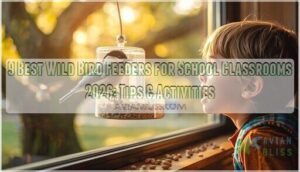
chickadee lands six inches from a third-grader’s face, and suddenly that kid who never once raised his hand during a lesson is whispering, "Wait—why does it stuff the seed in the bark like that?" That moment costs nothing extra. It just takes a feeder on the window.
wild bird feeders for school classrooms turn ordinary mornings into live field research, where students count species, argue over identification guides, and start caring about the oak tree outside in a way no worksheet ever managed.
nine feeders ahead range from simple acrylic window mounts to camera-equipped smart feeders—each one chosen to fit real classroom life.
Table Of Contents
- Key Takeaways
- Benefits of Bird Feeders in Classrooms
- Choosing The Right Bird Feeder for Schools
- Top 9 Wild Bird Feeders for School Classrooms
- 1. Blue Marble DIY Bird Feeder Kit
- 2. Crafy Happitoys DIY Birdhouse Kit
- 3. AI Smart Bird Feeder with 2K Camera
- 4. BPYOT Clear Acrylic Window Bird Feeder
- 5. FEED GARDEN Tube Bird Feeder
- 6. Gadjit Soda Bottle Bird Feeder
- 7. GAINSEN Squirrel Proof Metal Bird Feeder
- 8. Backyard Expressions Squirrel Proof Bird Feeders
- 9. Kids Bird Feeder Craft Kit
- Installation and Maintenance Tips for Classrooms
- Educational Activities Using Classroom Bird Feeders
- Frequently Asked Questions (FAQs)
- How to make a bird feeder for school project easy?
- Why put a potato in the bird feeder?
- Why should I sprinkle coffee grounds around my bird feeder?
- What types of bird food are best for classrooms?
- How can feeders be used during winter months?
- Are bird feeders safe for classrooms with allergies?
- How do you prevent squirrels from accessing feeders?
- What are the costs involved in classroom bird feeding?
- Conclusion
Key Takeaways
- bird feeder mounted within three feet of your classroom window turns passive science lessons into live data collection, where students count species, track seed consumption, and connect weather patterns to wildlife behavior.
- Whether you choose a $6.99 craft kit or an AI-powered 2K camera feeder, the right option depends on your classroom setup, students’ ages, and how hands-on you want the learning experience to be.
- Involving students directly in refilling, cleaning, and monitoring the feeder builds real-world responsibility and environmental stewardship far more effectively than any worksheet can.
- Bird feeders connect naturally across subjects—sparking writing prompts, STEM design challenges, citizen science projects like FeederWatch, and art activities that make nature feel personal and alive.
Benefits of Bird Feeders in Classrooms
A bird feeder outside your classroom window can quietly transform an ordinary Tuesday into something students actually remember.
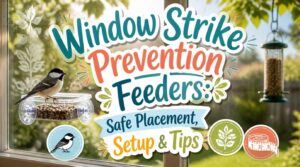
If you’re curious where to start, this guide to window bird feeders for classrooms breaks down exactly what works and why.
It brings science, curiosity, and real wildlife into the room without any extra prep. Here are some of the biggest reasons teachers keep coming back to this simple, effective tool.
Enhancing Hands-on Science Education
Watching a bird land just inches from your students is worth a thousand worksheets.
A single bird at the window teaches students more than any worksheet ever could
Classroom window bird feeders turn science lessons into live data collection events.
Students practice inquiry design by tracking species visits, logging counts, and graphing seasonal patterns.
That kind of student-led research builds real scientific habits.
It’s cross-curricular integration that feels less like a lesson and more like discovery.
Students can also join the Great Backyard Bird Count to contribute data.
Fostering Environmental Stewardship in Students
Science habits naturally grow into something bigger — a sense of responsibility.
Classroom Window Bird Feeders make Environmental Stewardship feel personal, not abstract. Students practicing Bird Feeder Maintenance and Ethical Feeding learn that wildlife depends on them. NatureBased Education through Community Projects and Citizen Science deepens that bond:
- Tracking visits enhances Stewardship Reflection
- Habitat Design planning builds civic thinking
- Classroom Learning Activities connect care to conservation
- Students become genuine wildlife advocates
Students can also join Project FeederWatch program, a community science effort that tracks winter bird populations.
Supporting Student Engagement and Curiosity
That sense of care carries right into engagement. Classroom Window Bird Feeders spark real curiosity — students naturally start asking “why” without any prompting. Question Boards near the window collect those wonderings, while Feeder Ownership gives student teams hands‑on responsibility.
Observation Routines, Student-led Experiments, and Cross‑curricular Links across math and writing make Bird Watching Activities feel meaningful. Nature‑Based Education through Classroom Learning Activities and Bird Feeder Maintenance keeps every learner invested.
Promoting Wildlife Observation and Nature Appreciation
Bird Watching Activities go beyond simple curiosity — they build real environmental awareness. Classroom Window Bird Feeders support Habitat Connection Lessons, Citizen Science Projects, and Seasonal Bird Calendars that help students see patterns across the whole school year. Even Mindful Observation Breaks at the window deepen Wildlife Conservation values naturally.
- Track daily visits to build Outdoor Education routines
- Connect feeder data to local ecosystem discussions
- Use Sensory Nature Walks to extend classroom learning outdoors
Choosing The Right Bird Feeder for Schools
Not every bird feeder works well in a classroom setting, so picking the right one really does matter. There are a few key things worth thinking through before you buy.
Here’s what to look for.
Window-mounted Vs. Free-standing Options
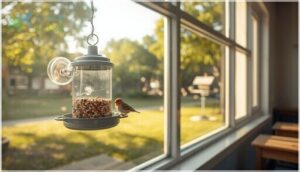
Choosing between window-mounted and free-standing feeders really comes down to your classroom setup and goals.
| Feature | Window Bird Feeders | Free-standing Feeders |
|---|---|---|
| Visibility Detail | Birds just 30–60 cm away | Usually 3–6 meters distant |
| Collision Risk | Lower when centered on glass | Reduced with proper spacing |
| Classroom Distraction | Higher; manageable with blinds | Lower; easier to ignore |
Suction cups make bird feeder installation simple — under 10 minutes, no tools needed.
Material Safety and Durability Considerations
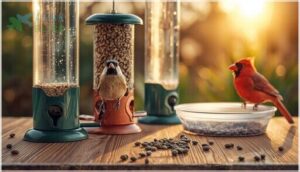
Material matters more than you might think. Look for food‑grade plastics, UV‑stabilized acrylic, or powder‑coated metal — these hold up through rain, sun, and years of little hands refilling seed.
Non‑toxic finishes and weather‑resistant seals protect visiting birds from harmful chemicals. Clear acrylic lets students see everything up close, while durable, weatherproof materials and a squirrel‑proof design mean fewer repairs and more uninterrupted learning.
Accessibility and Ease of Use for Students
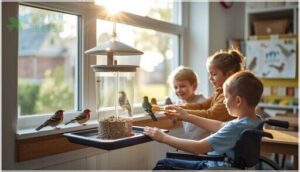
Getting every student involved starts with the right design. Classroom window bird feeders with suction cups and a removable tray make cleaning simple enough for rotating helper groups.
Adjustable height and wheelchair-friendly placement mean nobody’s left out. Large-handled scoops help students with limited grip, while clear visual contrast and audio cue indicators support diverse learners. Educational bird feeders should work for everyone.
Attracting Local Bird Species
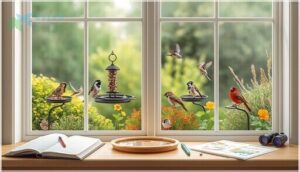
- Use Seasonal Food Strategies, smart Bird Seed Selection, and Species‑Specific Seed Types.
- Follow Feeder Height Guidelines for safe Wildlife Viewing.
- Use Habitat Planting Tips and Native Shrub Integration near feeders.
- Add water nearby to grow Environmental Awareness and Outdoor Learning.
- Track visiting species; adjust seeds and setups together.
Top 9 Wild Bird Feeders for School Classrooms
Finding the right feeder for your classroom doesn’t have to be complicated.
There are some genuinely great options out there — ones that work well for kids, hold up over time, and actually bring birds to your window.
Here are nine worth taking a closer look at.
1. Blue Marble DIY Bird Feeder Kit
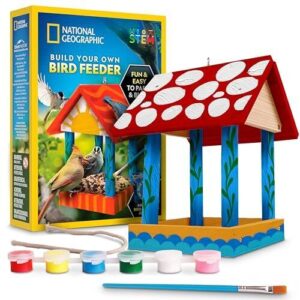
The Blue Marble DIY Bird Feeder Kit is one of those rare finds that covers craft, science, and real-world observation all in one box.
Kids ages 6 and up get pre-cut wooden panels, six paint colors, a paintbrush, and even a bird-watching journal to track their feathered visitors.
The included educational poster ties beautifully into life science units, and at around $14.99, it’s budget‑friendly enough for whole‑class sets.
You’ll just need to grab a Phillips screwdriver before the fun begins.
| Best For | Kids aged 6 and up who love hands-on projects, curious learners who want to connect with nature, and parents or teachers looking for an activity that’s actually educational and fun at the same time. |
|---|---|
| Age Range | 6 years and up |
| Material | Wood |
| Assembly Required | Yes |
| Outdoor Use | Yes |
| Educational Benefit | Yes |
| Bird Attraction | Yes |
| Additional Features |
|
- Everything you need is in the box — pre-cut panels, six paint colors, a brush, a bird-watching journal, and an educational poster
- It blends creativity with real science, so kids are learning while they think they’re just having fun
- At around $14.99, it’s an easy grab as a gift, Easter basket stuffer, or classroom activity
- You’ll need a Phillips screwdriver on hand, which isn’t included
- Younger kids (under 6) will need an adult nearby to help with assembly
- Each kit only makes one feeder, so bigger groups will need multiple kits
2. Crafy Happitoys DIY Birdhouse Kit
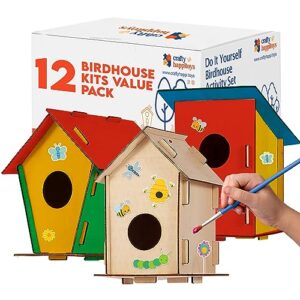
If you’re planning a group craft day, the Crafy Happitoys DIY Birdhouse Kit is built for exactly that. It comes in bulk packs of 9, 12, or 15 individually wrapped sets, so every student gets their own kit without the usual sorting chaos.
Each one includes pre-cut wooden pieces, a paintbrush, and a 6‑color paint strip. The wood is smooth, unfinished, and free of nails or screws, keeping things safe and classroom‑friendly.
Just note that some pieces may need a little adult help to fit together.
| Best For | Teachers, parents, and party hosts looking for a ready-to-go group craft activity for kids ages 3 and up. |
|---|---|
| Age Range | 3 years and above |
| Material | Wood |
| Assembly Required | Yes |
| Outdoor Use | Yes |
| Educational Benefit | Yes |
| Bird Attraction | Yes |
| Additional Features |
|
- Comes in bulk packs with individually wrapped kits — no sorting, no missing pieces
- Non-toxic paint and nail-free wood make it safe for young kids
- A fun hands-on activity that sneaks in some real STEM skills
- Some pieces don’t fit together well and may need sanding or extra adult help
- The included glue can run short, so keep a backup bottle handy
- Instructions aren’t the clearest, which can slow things down with younger kids
3. AI Smart Bird Feeder with 2K Camera
Once the birdhouses are painted and drying, you might be ready to bring some real birds into the picture.
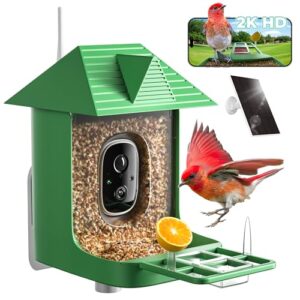
The AI Smart Bird Feeder with 2K Camera does exactly that. It identifies over 10,000 bird species automatically and sends real-time alerts straight to your phone. The 160° wide-angle lens captures multiple birds at once, and the full-color night vision keeps recording after school hours. It even detects squirrels and sounds an alarm — your students will love that part.
| Best For | Bird lovers, curious students, and nature-focused classrooms that want a hands-on way to identify and track local wildlife in real time. |
|---|---|
| Age Range | All ages |
| Material | Plastic, Metal, Electronics |
| Assembly Required | No |
| Outdoor Use | Yes |
| Educational Benefit | Yes |
| Bird Attraction | Yes |
| Additional Features |
|
- Spots and names 10,000 bird species automatically, so you don’t need to be an expert to know what’s at your feeder
- Solar-powered with a 6-month battery life — set it up outside and mostly forget about it
- The squirrel detection alarm is genuinely fun, especially for kids watching the live feed
- The AI bird recognition requires a paid subscription after the first 30 days
- Rain can blur photos, and the camera occasionally misidentifies what it’s seeing
- No 4K resolution, and video storage is limited unless you add an SD card or subscribe
4. BPYOT Clear Acrylic Window Bird Feeder
After all that high-tech smart-feeder fun, it’s nice to have a simple window option students can manage themselves.
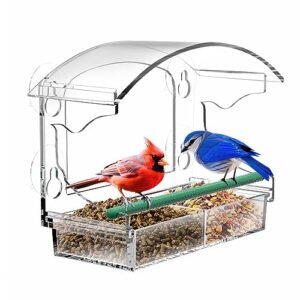
The BPYOT Clear Acrylic Window Bird Feeder sticks to your classroom window with five strong suction cups and no hardware, so maintenance stays easy and safe.
A clear acrylic body and green perch let kids watch finches or chickadees feed up close.
The removable seed tray slides out for quick cleaning at the sink, reinforcing routines about hygiene and wildlife care habits.
| Best For | Teachers, parents, and kids who want a simple, up-close way to watch backyard birds without any tools or complicated setup. |
|---|---|
| Age Range | All ages |
| Material | Acrylic |
| Assembly Required | No |
| Outdoor Use | Yes |
| Educational Benefit | Yes |
| Bird Attraction | Yes |
| Additional Features |
|
- The clear acrylic body gives kids an unobstructed, front-row view of birds like finches and chickadees right at the window.
- The removable seed tray makes cleaning quick and easy — great for building simple classroom or home routines.
- No hardware needed; five suction cups hold it in place, so kids can help with setup and maintenance safely.
- Suction cups can be tricky to get secure at first, especially if the window surface isn’t perfectly clean and dry.
- It’s on the smaller side, so larger bird species won’t get much use out of it.
- In some areas, it may take a while (or never quite work) to attract birds, depending on the local environment.
5. FEED GARDEN Tube Bird Feeder
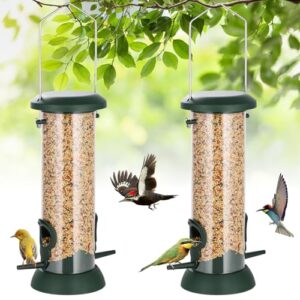
If your class needs something a bit more hands‑on, the FEED GARDEN Tube Bird Feeder fits right in. It comes as a 2‑pack, so you can set up two viewing spots at once. The clear tube shows students exactly how much seed is left — no guessing. Two feeding ports mean multiple birds can visit simultaneously, great for quick observations between lessons.
Cleaning takes about a minute with the removable base, making it a realistic weekly task even young students can manage.
| Best For | Bird lovers, classroom nature observers, and beginner backyard birders who want an easy, low-maintenance feeder setup. |
|---|---|
| Age Range | All ages |
| Material | Plastic |
| Assembly Required | No |
| Outdoor Use | Yes |
| Educational Benefit | Yes |
| Bird Attraction | Yes |
| Additional Features |
|
- Comes as a 2-pack, so you get two feeders to cover more ground right out of the box
- Clear tube makes it easy to see when seeds are running low without opening anything
- Simple lift-lid design makes refilling and cleaning quick and straightforward
- Not squirrel-proof — those lids come off way too easily for crafty critters
- The bottom can trap moisture, which makes deep cleaning a bit of a hassle
- On the smaller side, so you may find yourself refilling more often than you’d like
6. Gadjit Soda Bottle Bird Feeder
Want to fold a recycling lesson right into your science unit?
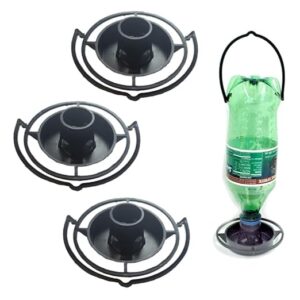
The Gadjit Soda Bottle Bird Feeder turns empty soda bottles into working feeders — no tools required. Each kit includes three feeder bases, a paper funnel, and a hanger, so your whole class can build one together.
The snap-on base screws directly onto a standard bottle, and kids in elementary grades can assemble it themselves. It’s practical, budget-friendly, and gives students genuine ownership over something they made.
| Best For | Teachers, scout leaders, and parents looking for a hands-on recycling project that gets kids excited about nature and sustainability. |
|---|---|
| Age Range | All ages |
| Material | Plastic |
| Assembly Required | Yes |
| Outdoor Use | Yes |
| Educational Benefit | Yes |
| Bird Attraction | Yes |
| Additional Features |
|
- Super easy to assemble — kids can do it themselves with no tools
- Comes with three bases, so a whole group can build together
- Made in the USA by a family-owned company, so you’re supporting a good cause while you shop
- Soda bottles aren’t included, so you’ll need to plan ahead and collect them beforehand
- Only works well with small seeds — larger seeds tend to clog the feeder
- Squirrels can get into it pretty easily unless you add extra protection
7. GAINSEN Squirrel Proof Metal Bird Feeder
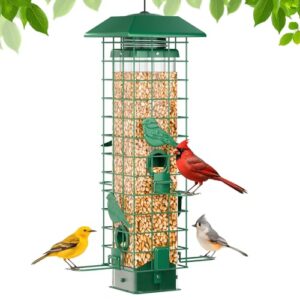
Think of the GAINSEN Squirrel Proof Metal Bird Feeder as your seed‑saving security guard outside the classroom window. Its metal, rust‑resistant cage and weight‑activated spring close off the feeding ports when a heavier squirrel lands, but it stays open for small songbirds.
The 3‑pound seed capacity means fewer refills during busy weeks. A removable base lets adults dump the old seed and rinse quickly, making regular cleaning realistic even with tight school schedules. Students can track visitors, seed levels, and weather together.
| Best For | Teachers, families, and bird lovers who want a durable, mostly squirrel-resistant feeder that lets small songbirds feed while everyone enjoys watching them up close. |
|---|---|
| Age Range | All ages |
| Material | Metal, PVC |
| Assembly Required | No |
| Outdoor Use | Yes |
| Educational Benefit | Yes |
| Bird Attraction | Yes |
| Additional Features |
|
- Metal, rust-resistant design holds up well outdoors and stands up to chewing.
- Weight-activated spring helps keep squirrels from stealing seed while allowing small to medium birds to feed.
- 3-pound seed capacity and easy-to-clean design make refills and maintenance simple, even on busy days.
- Not ideal for larger birds like blue jays or cardinals due to perch and hole spacing.
- Not completely squirrel-proof, since clever squirrels may still reach seed from the pole or hanger.
- Needs regular cleaning to keep seed fresh and birds healthy, which adds a bit of upkeep.
8. Backyard Expressions Squirrel Proof Bird Feeders

Three colors, one clever idea. The Backyard Expressions set comes in red, blue, and yellow — perfect for color-sorting observations with younger students.
Each compact feeder holds over a pound of black oil sunflower seeds and uses a tight metal mesh that lets small birds like finches and chickadees eat freely while keeping squirrels out. At just over four inches wide, they fit neatly near any classroom window.
The bonus ebook and bird audio files make these an easy tie‑in to science lessons.
| Best For | Families, educators, and backyard birders who want an affordable, squirrel-resistant feeder set that attracts small songbirds like finches and chickadees. |
|---|---|
| Age Range | All ages |
| Material | Acrylic Metal |
| Assembly Required | No |
| Outdoor Use | Yes |
| Educational Benefit | Yes |
| Bird Attraction | Yes |
| Additional Features |
|
- Comes as a set of three in fun colors, so you can place them around your yard and attract more birds at once
- The metal mesh design keeps squirrels out while giving small birds a natural, easy way to cling and feed
- Includes a bonus ebook and bird audio — a nice little extra if you’re just getting into birdwatching
- Not a great fit for larger birds or species that need a perch to feel comfortable feeding
- Some buyers have run into issues with the lid locking mechanism not holding up over time
- May struggle in rough weather or with a determined squirrel — it’s resistant, not invincible
9. Kids Bird Feeder Craft Kit
This hands-on craft kit is where science meets art.
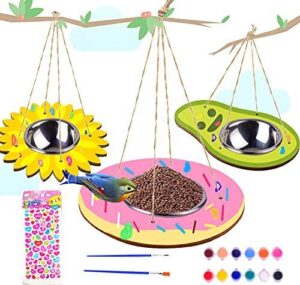
For $6.99, you get three wooden bird feeders, 12 paint colors, brushes, and heart stickers — everything your students need to build and personalize their own feeder.
The laser-cut wood pieces have smooth edges and pre-drilled holes, so assembly stays safe and simple.
Kids design, paint, and hang their creation, then watch real birds arrive.
It’s a satisfying full-circle moment that makes the learning feel genuinely theirs.
| Best For | Teachers, parents, and caregivers looking for an easy, low-mess craft that lets kids (around ages 3–12) paint, build, and try attracting birds, without needing fancy supplies. |
|---|---|
| Age Range | 3-12 years old |
| Material | Metal, Wood |
| Assembly Required | Yes |
| Outdoor Use | Yes |
| Educational Benefit | Yes |
| Bird Attraction | Yes |
| Additional Features |
|
- All-in-one kit with wooden feeders, paints, brushes, strings, and stickers, so you don’t have to buy extra supplies.
- Pre-cut holes and smooth wooden pieces make assembly simpler and safer for kids.
- Great for creativity, fine motor skills, and sparking interest in birds and nature.
- No step-by-step instructions, so adults may need to figure out assembly and hanging on their own.
- Thin hemp string may wear out or break over time, especially if used outside.
- Feeders are light and can swing or tip in the wind, so they may not work well as long-term outdoor bird feeders.
Installation and Maintenance Tips for Classrooms

Getting a bird feeder set up in your classroom is easier than you might think, but a few smart habits from the start will save you headaches later.
The right placement and a simple cleaning routine make all the difference between a thriving little feeding station and one that sits forgotten in the corner.
Here are the key tips to keep things running smoothly all year long.
Safe and Secure Feeder Placement
Placement matters more than most teachers realize. Mount your feeder within 3 feet of the glass — suction cups keep clear acrylic panels stable, while the window collision risk drops substantially because birds can’t build speed that close.
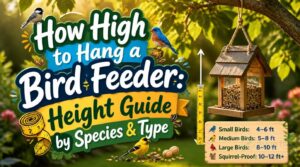
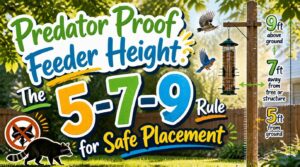
Aim for 5–6 feet off the ground for height safety, stay about 10 feet from shrubs for predator distance, and keep visibility clearance open from your teaching spot.
Cleaning Routines to Prevent Disease
A simple Disinfection Schedule keeps Classroom Bird Feeders from becoming germ hotspots. Aim for Easy Cleaning every two weeks, using a Removable Tray, hot soapy water, then diluted bleach.
Follow a clear Glove Protocol, plus Waste Management and Surface Sanitizing around window sills. Choose Weather Resistance and Nontoxic materials, and add gentle Bird Health Monitoring for safety in your students’ care.
Refilling and Monitoring Seed Supply
Keeping your classroom window bird feeders full doesn’t have to feel like guesswork. A little Refill Scheduling goes a long way:
- Weigh seed before and after 48 hours for simple Seed Weight Tracking
- Log Species Consumption Rates — goldfinches eat roughly 0.3 teaspoons daily
- Store seed in sealed bins for Storage Hygiene
- Use Consumption Logs to spot patterns
- Pull the Removable Tray for Easy Cleaning during refills
Smart Bird Seed Selection, combined with Weather Resistance materials, keeps everything running smoothly.
Involving Students in Maintenance Tasks
Once refills and the removable tray feel routine, you can hand more responsibility to students.
Try Rotating Roles for Bird Feeders for Classrooms, with job cards for seed checks, Easy Cleaning, and Observation Logs.
Teach Cleaning Safety with gloves and handwashing, and connect Hygiene Routines and gentle Problem Solving to real‑world Environmental Awareness and meaningful Classroom Activities students can proudly lead.
Educational Activities Using Classroom Bird Feeders
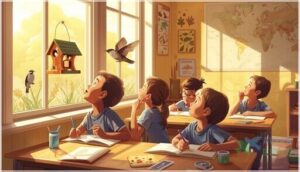
Once your bird feeder is up and busy, it becomes much more than classroom décor—it’s a living learning tool.
You can use those daily visits from chickadees and sparrows to spark science thinking, creative projects, and real-world problem solving.
In the next sections, you’ll find simple, classroom-ready activity ideas you can plug right into your lessons.
Science Experiments and Observation Journals
Turning your classroom window bird feeders into living science labs is easier than you think. A well-designed bird watching in the classroom experiment starts with one clear question and solid observation protocols — like recording visits every five minutes.
- Practice variable control by testing sunflower seeds vs. millet
- Build data charting skills with weekly visit tallies
- Strengthen species identification using color and beak notes
- Explore weather correlation by logging temperature alongside bird activity
Art and Writing Projects Inspired by Birds
Once your data notebooks are full, let the creativity spill over.
Classroom Window Bird Feeders spark astonishing Art Projects — kids fill Bird Sketch Journals with real feather details they’ve actually watched.
Try Feeder Poetry Prompts, Collage Feather Patterns, or 3D Bird Sculptures.
Narrative Bird Stories and Creative Writing bloom naturally from Bird Watching in the Classroom, making Nature-Based Learning feel genuinely alive.
STEM Challenges: Designing and Building Feeders
Once the creative energy settles, channel it straight into building. STEM challenges around Bird Feeder Kits for School Science Projects give students real Design Constraints — think maximum size, seed capacity, and materials from recycling bins.
Through Iterative Prototyping, Material Selection, and Testing Protocols, kids collect Data Analysis notes on actual bird visits. DIY Bird House Kits make these Science Projects feel like genuine engineering work.
Integrating Bird Watching Into Lesson Plans
Bird watching in the classroom fits naturally into science, language arts, and environmental education all at once. Cross-curricular links make it easy to weave seasonal observation into your existing lesson plans.
Students build data analysis skills through citizen science projects like FeederWatch, which runs November through April.
Classroom window bird feeders support behavioral ecology study, outdoor learning activities, and nature education — turning everyday classroom science projects into something genuinely memorable.
Frequently Asked Questions (FAQs)
How to make a bird feeder for school project easy?
Making one is easier than you’d think.
Grab recycled materials like a toilet paper roll, coat it with an allergy‑safe binder, roll it in a quick seed mix, and it’s ready to hang.
Why put a potato in the bird feeder?
Offering plain cooked potato in your feeder gives birds an energy boost, plus Vitamin C and B It’s safe if you skip skins—solanine safety matters!
Try it for species attraction and fresh observation data in classroom window bird feeders.
Why should I sprinkle coffee grounds around my bird feeder?
When you sprinkle coffee grounds around your feeder, you’re killing two birds with one stone—squirrel deterrent and ant control, plus soil enrichment and earthworm attraction.
It’s safe for wildlife and promotes Environmental Education and Sustainable Living.
What types of bird food are best for classrooms?
Stick with black oil sunflower seeds and white proso millet as your foundation. Add nyjer seed for finches, suet blocks in winter, and shell-free sunflower hearts to keep things tidy.
How can feeders be used during winter months?
Winter is when empty skies teach the most.
Energy-dense foods like suet keep birds returning, turning your window bird feeders into daily science stations for temperature tracking, ice management, and migration monitoring.
Are bird feeders safe for classrooms with allergies?
Bird Feeders for Classrooms can be safe with allergy‑friendly seed, nontoxic materials, and dander control.
Legal compliance means clear labeling protocols, Easy Cleaning with a Removable Tray, and strong hand hygiene—essential for Environmental Education for Kids in allergy‑aware schools.
How do you prevent squirrels from accessing feeders?
Use weight‑activated mechanisms, smart baffle placement, and careful seed selection. Keep feeder distance at least 10 feet from trees and pole height around 5 feet.
Squirrelproof design keeps the birds—not the chaos—coming to you.
What are the costs involved in classroom bird feeding?
Like packing a school lunch, classroom bird feeding costs less than you’d think. A basic seed budget runs about $56 monthly, while DIY kit costs start at just $
Conclusion
Picture a second-grader named Maya who once dreaded Monday mornings—until a red-breasted nuthatch appeared at the window feeder and became her reason to rush through the door.
That’s what wild bird feeders for school classrooms quietly do: they turn reluctant learners into genuinely curious scientists.
Pick the feeder that fits your space, get students involved in filling and watching, and let the birds handle the rest of the teaching.