This site is supported by our readers. We may earn a commission, at no cost to you, if you purchase through links.

A single wren weighs less than an AA battery, yet it’ll pass up a perfectly good tree cavity for the right birdhouse in your yard. That kind of specificity matters—entrance hole diameter off by a quarter inch, and your intended resident moves on, or, worse, an invasive house sparrow moves in.
Most people hang whatever looks charming at the garden center and wonder why nothing nests.
The right birdhouse isn’t about aesthetics alone; it’s about matching species needs down to interior floor depth and mounting height.
These ten picks cover the full range, from beginner guides to smart camera houses.
Table Of Contents
- Key Takeaways
- 10 Best Birdhouses for Wildlife Enthusiasts
- 1. Complete Birdhouse Guide for Beginners
- 2. Birdhouse Building and Placement Guide
- 3. MIXUMON Outdoor Decorative Birdhouse
- 4. Wildlife World New England Pale Blue Nest Box
- 5. Cedar Bluebird Viewing House
- 6. MIXUMON Outdoor Hanging Pine Birdhouse
- 7. JEAPKA Smart Bird House Camera
- 8. Glitzhome Rustic Hanging Barn Birdhouse
- 9. Home Bazaar Blue Bristol Cottage Birdhouse
- 10. SUQEFAN Waterproof Resin Bird House
- Choosing The Right Birdhouse for Each Species
- Key Features That Make Birdhouses Last Longer
- Where and How to Mount Your Birdhouse
- How to Clean and Maintain Your Birdhouse Yearly
- Frequently Asked Questions (FAQs)
- What kind of bird house do birds like the best?
- Where not to put a birdhouse?
- Can birdhouses attract snakes or unwanted pests?
- Do bright birdhouse colors scare away birds?
- How do you discourage house sparrows from nesting?
- Should birdhouses be removed during winter months?
- Can multiple species share one birdhouse safely?
- Conclusion
Key Takeaways
- Entrance hole diameter is the single most critical spec — being off by even a quarter inch can invite invasive species or leave your birdhouse empty all season.
- Material choice determines longevity: cedar, resin, and composite PVC each resist rot, UV damage, and moisture in ways that painted softwood simply can’t match over time.
- Mounting height and spacing aren’t afterthoughts — bluebirds need 5–6 feet, purple martins need up to 20 feet, and houses placed too close together will push birds away entirely.
- A quick post-season bleach scrub and twice-yearly hardware check is all it takes to keep a birdhouse functional for years and safe for the birds returning to it.
10 Best Birdhouses for Wildlife Enthusiasts
Finding the right birdhouse doesn’t have to be complicated, but with so many options out there, it helps to know what’s worth your time. These ten picks cover a range of styles, materials, and features for different birds and backyard setups.
Whether you’re attracting wrens or bluebirds, this guide to best birdhouses for gardens breaks down what actually works across different yard sizes and species.
Here’s a closer look at each one.
1. Complete Birdhouse Guide for Beginners
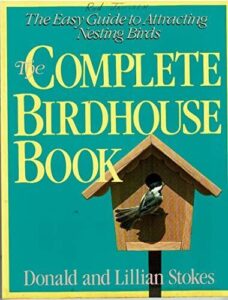
If you’re just getting started with backyard birding, this Little, Brown and Company guide is worth keeping close. Published in 1990 and still relevant, it covers entrance-hole sizes, interior dimensions, placement heights, and ventilation — all in one slim 95-page reference.
You’ll find a species-specific chart, full-color photos, and line drawings that make the information easy to act on.
At around $9, it’s a practical starting point before you spend anything on an actual birdhouse.
| Best For | Backyard birdwatchers and beginner builders — especially parents, grandparents, or educators looking for a quick, easy reference to get kids started with a birdhouse project. |
|---|---|
| Material | Paper/Paperback |
| Weight | 12.8 oz |
| Dimensions | 8.5×0.33×11 in |
| Target Birds | Multiple species |
| Cleaning Access | N/A |
| Price | $9.14 |
| Additional Features |
|
- Covers all the key specs (hole size, dimensions, placement height) for multiple species in one handy chart
- Full-color photos and line drawings make it easy to understand without wading through walls of text
- At around $9, it’s a low-risk way to get reliable info before spending money on materials
- Only includes one basic building plan — not great if you want step-by-step instructions or multiple designs to choose from
- Published in 1990, so a few recommendations may not line up with current best practices
- A lot of the dimension and species info is available free online if you’re willing to search around
2. Birdhouse Building and Placement Guide
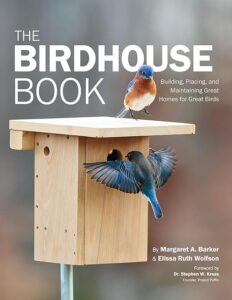
Once you’ve got the basics down, this book from Cool Springs Press takes things further. Published in 2021, it’s 176 pages of step-by-step plans with cut lists, line diagrams, and full-color photos — all written for beginners.
You don’t need specialized woodworking skills to follow along. It also covers placement, maintenance, and climate-aware design, plus guidance for citizen science nest-box monitoring.
At $14.53, it’s a solid investment if you’re ready to build, not just buy.
| Best For | Backyard birders and beginner woodworkers who want to build safe, functional homes for native North American birds. |
|---|---|
| Material | Paper/Paperback |
| Weight | 1.5 lb |
| Dimensions | 10.3×0.65×11 in |
| Target Birds | 20+ NA species |
| Cleaning Access | N/A |
| Price | $14.53 |
| Additional Features |
|
- Beginner-friendly plans with cut lists, diagrams, and full-color photos make it easy to jump in with no woodworking experience
- Covers 20 species with placement and maintenance tips to actually keep birds safe and coming back
- Great value at $14.53 — practical enough to use as a reference long after your first build
- Light on western and California species, so birders in those regions may find gaps in coverage
- Advanced woodworkers will likely find the designs too simple
- Paperback only — no digital version if you prefer reading on a screen or want interactive content
3. MIXUMON Outdoor Decorative Birdhouse
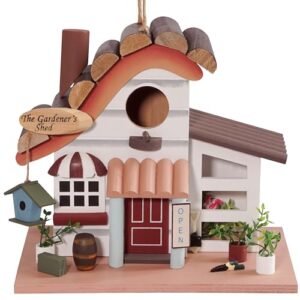
If building feels like too much right now, this MIXUMON birdhouse is a ready-to-hang option worth considering. It’s made from polywood — a synthetic material that resists cracking, warping, and UV fading — so it holds up through rain and sun without much fuss.
The 1.5-inch entry hole fits wrens, chickadees, and titmice, and the back panel opens for easy cleaning.
At 1.87 lb, it hangs lightly on a branch or hook using the included rope.
| Best For | Gardeners and bird lovers who want a charming, no-assembly birdhouse that looks great on a porch or patio. |
|---|---|
| Material | Polywood |
| Weight | 1.87 lb |
| Dimensions | 9.5×8.5×6.7 in |
| Target Birds | Small cavity nesters |
| Cleaning Access | Rear panel |
| Price | Not listed |
| Additional Features |
|
- Polywood construction holds up against rain, sun, and temperature swings without cracking or warping.
- Back panel opens easily so cleaning between seasons takes no effort at all.
- Comes with a rope already tied — just find a branch or hook and hang it.
- Decorative pieces like the window shade can arrive broken or pop off under stress.
- Lightweight build can swing around or feel unstable in windy spots.
- Only works for small birds — if you’re hoping to attract larger species, the 1.5-inch hole won’t cut it.
4. Wildlife World New England Pale Blue Nest Box
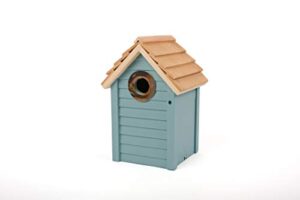
If you want something that looks like it belongs in a coastal garden, the Wildlife World New England Pale Blue Nest Box is worth a look. That aquamarine finish gives it a clean, understated charm — no painting needed.
It’s built from FSC timber with a real shingle roof, metal hole protector, and stainless steel hinges that won’t rust out after one wet season. The hinged side door makes yearly cleaning simple.
Weighing under two pounds, you can hang it just about anywhere.
| Best For | Gardeners who want an attractive, low-maintenance nest box that blends into a coastal or cottage-style outdoor space. |
|---|---|
| Material | Wood Board |
| Weight | 1.94 lb |
| Dimensions | 10.39×8.35×7.48 in |
| Target Birds | Small cavity nesters |
| Cleaning Access | Hinged side door |
| Price | Not listed |
| Additional Features |
|
- That pale aquamarine finish looks great straight out of the box — no painting or treatment needed.
- The hinged side door makes end-of-season cleaning quick and easy.
- At under two pounds, it’s light enough to hang from a branch, post, or feeder rig without any hassle.
- Build quality can vary — some units arrive with cracked wood, paint bleed, or misaligned hinges.
- The soft wood roof may not hold up perfectly over time, especially in wet conditions.
- It can shift around in strong wind, so you might need to add a couple of extra screws at the back to keep it steady.
5. Cedar Bluebird Viewing House
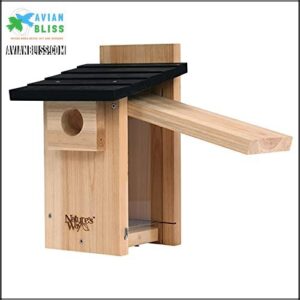
The Nature’s Way Cedar Bluebird Viewing House (CWH4) is one of those rare designs that actually thinks about the birds first. Cedar construction accommodates moisture and insects naturally, so it holds up year after year.
For even better results, pair the cedar’s natural durability with smart placement strategies like those covered in this guide to birdhouses designed to attract backyard songbirds.
The stay-clear viewing window lets you watch nest progress without cracking the door open.
A predator guard extends the entrance hole, and fledgling kerfs give young birds extra grip on the way out.
At $26.99, it covers the basics well.
| Best For | Backyard birdwatchers, families, and educators who want to attract bluebirds and observe nesting up close without disturbing the birds. |
|---|---|
| Material | Cedar Wood |
| Weight | 2.91 lb |
| Dimensions | 8.13×7.5×12 in |
| Target Birds | Bluebirds, chickadees |
| Cleaning Access | Side clean-out doors |
| Price | $26.99 |
| Additional Features |
|
- The plexiglass viewing window lets you check on nest progress without opening the box or stressing the birds.
- Cedar construction plus stainless steel hardware means it holds up through rain, humidity, and temperature swings season after season.
- The mesh floor and clean-out doors make parasite control and seasonal cleaning genuinely easy.
- The 1.5" entrance hole can let house sparrows in, so you may need a portal reducer to keep invasive birds out.
- The predator guard attachment points are a weak spot — a few owners reported breakage and had to reinforce them with extra glue.
- The cedar can dry out over time, and in harsher climates you’ll probably want to add extra weatherproofing to extend its life.
6. MIXUMON Outdoor Hanging Pine Birdhouse
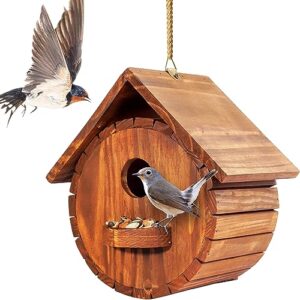
The MIXUMON Outdoor Hanging Pine Birdhouse keeps things simple — and that’s exactly the point. Built from solid natural pine in a compact 7.5 × 7.5 × 7.5‑in cube, it fits comfortably in any yard without taking over the space.
The burnt wood finish gives it a rustic look that blends right in. A front-facing cleaning door makes post-season maintenance easy.
It hangs or mounts on a pole, so you’ve got flexibility. Good for wrens, finches, and small songbirds.
| Best For | Backyard birders who want a simple, good-looking home for small songbirds like wrens, finches, and bluebirds. |
|---|---|
| Material | Pine Wood |
| Weight | 1.94 lb |
| Dimensions | 7.5×7.5×7.5 in |
| Target Birds | Bluebirds, wrens, finches |
| Cleaning Access | Front cleaning door |
| Price | Not listed |
| Additional Features |
|
- Dual-mount design lets you hang it from a branch or stick it on a pole — your call.
- The front cleaning door makes end-of-season cleanup quick and painless.
- Rustic burnt wood finish looks natural in any yard without trying too hard.
- Some users have had panels crack or loosen after a few months in rough weather.
- No UV coating means the wood can fade or break down faster in sunny spots.
- Only works for smaller birds — larger species won’t find it a comfortable fit.
7. JEAPKA Smart Bird House Camera
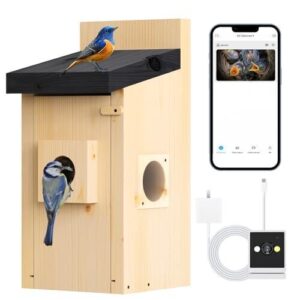
The JEAPKA Smart Bird House Camera is one of those rare finds that changes how you experience backyard birding. You get a built-in 1080p HD camera with night vision, motion alerts, and real-time Wi‑Fi streaming — all housed in a waterproof blue wood box measuring 5.7 × 6.1 × 12.6 inches.
Watch eggs hatch from your phone without disturbing a single feather.
Just keep in mind it runs on a plug‑in AC adapter, so you’ll need an outlet nearby.
| Best For | Backyard birdwatchers and nature lovers who want to watch nesting birds up close without the disturbance. |
|---|---|
| Material | Wood |
| Weight | 3.84 lb |
| Dimensions | 5.7×6.1×12.6 in |
| Target Birds | Small backyard birds |
| Cleaning Access | N/A |
| Price | Not listed |
| Additional Features |
|
- Live 1080p HD video with night vision so you catch all the action, day or night
- Motion alerts ping your phone the moment something’s happening in the nest
- Ready-to-use weatherproof design — just mount it, plug it in, and you’re good to go
- Needs a nearby outlet to run, so placement options are more limited than you’d think
- 2.4 GHz only Wi-Fi can get spotty if your backyard is far from your router
- Image quality is decent but not outstanding for the price point
8. Glitzhome Rustic Hanging Barn Birdhouse
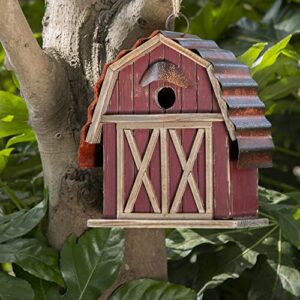
The Glitzhome Rustic Hanging Barn Birdhouse looks like something straight off a countryside property — and it works just as well as it looks. The distressed wood finish and metal roof give it that weathered charm, while the solid wood body keeps things sturdy outdoors.
At 9 × 5.25 × 10.25 inches, it’s sized right for wrens and titmice.
The removable back panel makes yearly cleaning simple.
Just note the MDF door and metal hanger can show wear over time in wet climates.
| Best For | Gardeners and backyard bird enthusiasts who want a charming, low-maintenance nesting spot that doubles as a decorative accent. |
|---|---|
| Material | Solid Wood |
| Weight | 1.98 lb |
| Dimensions | 9×5.25×10.25 in |
| Target Birds | Small backyard birds |
| Cleaning Access | Removable back panel |
| Price | Not listed |
| Additional Features |
|
- Rustic barn look with distressed wood and a metal roof — genuinely nice curb appeal
- Removable back panel makes seasonal cleaning quick and painless
- No tools or assembly needed — just hang it and you’re done
- The MDF door and metal hardware can rust or degrade faster in rainy climates
- The 1.18-inch entry hole is too small for most birds beyond wrens or chickadees
- Some buyers have reported the hanging hardware arriving bent or rusty right out of the box
9. Home Bazaar Blue Bristol Cottage Birdhouse
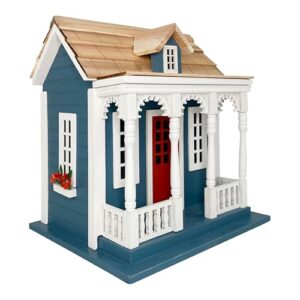
Home Bazaar Blue Bristol Cottage Birdhouse looks like a tiny coastal retreat tucked into your garden. The blue body, white trim, red faux door, and shingled roof make it genuinely pretty — not just functional.
That 1.25-inch entry hole is right-sized for wrens, chickadees, and nuthatches. Inside, there’s a mesh ladder to help fledglings climb out safely.
The removable back panel keeps cleaning easy each season. At $79.99, it’s a solid pick for bird lovers who care about both form and function.
| Best For | Bird lovers and garden decorators who want something that actually looks good hanging on a fence or porch, not just a plain wooden box. |
|---|---|
| Material | Wood |
| Weight | 4 lb |
| Dimensions | 7.25x9x10.5 in |
| Target Birds | Wrens, chickadees |
| Cleaning Access | Removable back panel |
| Price | $79.99 |
| Additional Features |
|
- The coastal cottage design is genuinely charming — blue, white trim, red door, shingled roof. It pulls its weight as decor even when no birds are home.
- That mesh ladder inside is a thoughtful touch. Fledglings can climb out on their own without getting stuck.
- The removable back panel makes seasonal cleaning quick and painless, which matters a lot for keeping birds healthy year after year.
- No mounting plate or pole included, so you’ll need to budget for extra hardware depending on where you want to put it.
- The painted wood will weather over time and may need touch-ups to keep it looking sharp.
- At 4 lbs, it’s a bit heavy for flimsy fence rails — you’ll want a solid anchor point before hanging it.
10. SUQEFAN Waterproof Resin Bird House
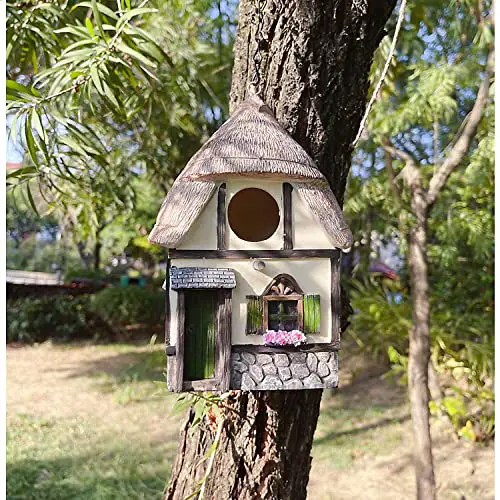
If you want something that holds up season after season without a lot of fuss, the SUQEFAN Waterproof Resin Bird House is worth a look. It’s lightweight at 1.28 lb and comes in at 4.5 × 5.7 × 8.2 inches — a good fit for bluebirds, finches, and swallows. The resin body resists rain, UV rays, and cracking.
Mount it facing east at about 7 feet, and you’re set. It arrives pre-assembled, so there’s no toolbox required.
| Best For | Bird lovers, gardeners, and gift-givers who want a low-maintenance, decorative birdhouse that actually attracts small backyard birds like bluebirds and finches. |
|---|---|
| Material | Resin |
| Weight | 1.28 lb |
| Dimensions | 4.5×5.7×8.2 in |
| Target Birds | Bluebirds, finches |
| Cleaning Access | N/A |
| Price | Not listed |
| Additional Features |
|
- Built to last — the resin body handles rain, UV, and cold without warping or cracking
- Comes pre-assembled, so you can hang it up the same day it arrives
- Hand-painted with a natural green finish that looks great in a garden or on a patio
- Only works for smaller bird species — larger birds won’t fit through the entry hole
- The hand-painted finish can vary slightly from what you see in product photos
- Placement matters a lot — wrong height or direction and birds may skip it entirely
Choosing The Right Birdhouse for Each Species
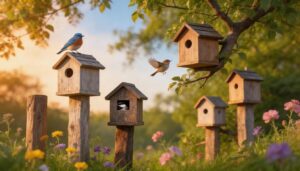
Not every birdhouse works for every bird, and the difference often comes down to a few small details. Getting those details right is what separates an empty box from a thriving nest.
The right birdhouse comes down to small details — get them wrong, and you’ll have an empty box
Here’s what to look for when matching a house to the species you want to attract.
Entrance Hole Sizes for Bluebirds, Wrens, and Chickadees
Entrance hole size is one of the most important details you can get right.
Bluebird Hole Diameter sits at 1.5 inches — wide enough for bluebirds, but it keeps out larger intruders. Wren Hole Diameter drops to about 1.0 to 1.125 inches, same as Chickadee Hole Diameter, giving both Species Hole Overlap while limiting competition.
Smooth Hole Edge Rounding protects nestlings during entry. Following the mounting height guidelines helps guarantee each species gets the ideal elevation.
Interior Cavity Dimensions by Bird Type
Once you’ve matched the species-specific entrance hole size, the interior dimensions matter just as much. Cavity-nesting birds are particular about their space.
- Bluebird Depth: 7–9 inches floor to ceiling; floor area around 42 sq. in.
- Chickadee Width: 4–4.5 inches interior width; compact small cavity dwellers.
- Wren Floor: 15–25 sq. in.; shallower suits their style.
Martin Height and Swallow Volume both run deeper — 9–12 inches — reflecting bird species preferences for roomier nesting chambers.
Designs That Discourage Invasive Species
Beyond size, smart design keeps uninvited guests out. A predatorproof birdhouse design skips perches entirely — they give starlings and sparrows an easy foothold.
Screened vents block insects without cutting airflow. Pair that with a predator guard around the entrance, and small cavity dwellers stay safer.
A native plant buffer and stone wall perimeter outside reinforce the whole setup naturally.
Multi-Room Houses for Purple Martins and Swallows
Purple martins are true colony birds — they don’t do solitude. Multiroom Purple Martin houses give them exactly what they need.
- Chamber Layout spaces 2–2.5" entrances evenly across multispecies nesting compartments
- Entrance Orientation faces away from the wind to keep nests dry
- Pole Baffles block climbing predators for reliable predator protection
- Roof Pitch sheds rain and regulates interior heat
Social Dynamics thrive when cavity-nesting birds nest close together.
Key Features That Make Birdhouses Last Longer
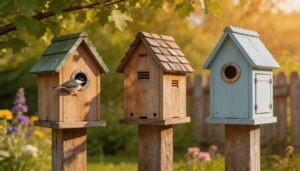
A birdhouse can last a season or a decade — the difference usually comes down to how it’s built.
The right materials and a few smart design choices go a long way toward keeping it standing through rain, heat, and the occasional curious predator.
Here’s what to look for.
Best Materials: Cedar, Resin, and Composite PVC
The material your birdhouse is made from determines how long it actually lasts outside.
Rot-resistant premium cedar uses natural oil resistance to fend off decay and insects without chemicals.
Resin brings UV stabilization benefits and lightweight mounting ease.
Composite PVC won’t crack or fade and often comes from durable recycled materials, making it a solid eco-friendly choice for weatherproof, long-lasting outdoor décor.
Weatherproofing With Copper Roofs and Galvanized Hardware
A copper roof does more than look good — it actively protects your birdhouse. The Copper Roof Patina that develops over months creates a natural barrier against moisture and mold.
Pair that with Galvanized Fastener Corrosion resistance, and your hardware stays solid for decades. Just mind Copper Galvanized Compatibility by leaving Thermal Expansion Gaps between panels.
Together, they deliver a true rainproof birdhouse design built to last.
Ventilation and Drainage Hole Placement
Small holes make a big difference. Good Vent Placement Height — just under the roofline — lets warm air escape while Cross Vent Alignment keeps fresh air moving through. Drain Hole Position matters too: corners at floor level clear rainwater fast.
For Moisture Prevention, keep these in mind:
- Use 1/8–1/4 inch ventilation holes in birdhouses
- Place drainage system holes at opposite floor corners
- Keep ventilation openings unblocked by nesting material
- Angle drain holes slightly outward for a rainproof birdhouse design
- Apply Vent Size Optimization — small enough to limit drafts, big enough for ventilation for nest temperature regulation
Predator Guards and Perch-Free Entry Designs
Predator guards do more than look protective — they work. A tube-style guard extends the entrance by 1 to 2 inches, and Tube Depth Optimization slows raccoons and snakes before they reach the nest.
Rounded Interior Surfaces prevent snags, while Collar Material Choice — usually powder-coated steel — keeps the hole from being gnawed wider.
Skip the perch. Perchless Entry Benefits are real: no foothold means fewer ambush points.
Where and How to Mount Your Birdhouse
Getting the location right makes all the difference between a birdhouse that sits empty and one that fills up fast. Height, wind direction, and spacing all play a bigger role than most people expect.
Here’s what you need to know before you hang anything up.
Ideal Mounting Heights for Common Backyard Species
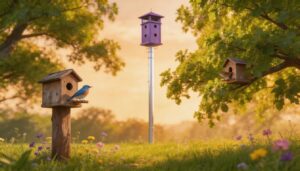
Height matters more than most people realize.
Species-specific height ranges vary quite a bit — bluebirds do best at 5 to 6 feet, wrens at 5 to 10 feet, and chickadees at 6 to 12 feet. Purple martins need 12 to 20 feet.
Following birdhouse placement guidelines for each bird keeps your setup working with nature, not against it.
Positioning Away From Prevailing Winds and Dense Foliage
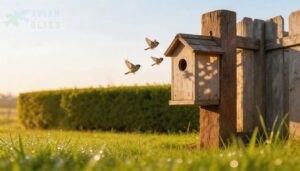
Wind and shade can quietly work against your setup. Try a Leeward Slope Placement — tucking the house behind a low hedge creates a natural Windbreak Buffer Zone, cutting gusts by up to 40 percent.
Aim for Open Canopy Clearance with morning sun hitting the entrance. A Strategic Fence Corner often offers the ideal Sunlit Microclimate Spot, balancing warmth and shelter without trapping moisture.
Spacing Between Houses to Reduce Competition
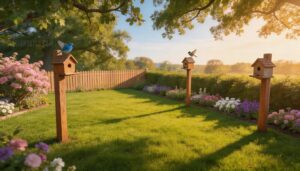
Spacing matters more than most people realize. Too close, and birds skip your yard entirely.
- Keep a minimum distance of at least 21 metres between houses to reduce competition zones and support species segregation.
- Stagger placement to improve wind flow and shade management across your yard.
- Separate houses by species using size and entrance hole guidelines for different bird species.
- Consider seasonal timing for installing birdhouses — spring arrivals claim territory fast.
- Varied spacing encourages bird population diversity over time.
How to Clean and Maintain Your Birdhouse Yearly
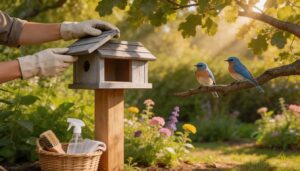
A good birdhouse doesn’t stop working when the last chick flies away — it just needs a little attention to stay ready for next season. Keeping it clean and solid is simpler than most people think.
Here’s what to do each year to keep your setup in top shape.
Post-Season Cleaning With Bleach Solution
Once the last fledgling leaves, it’s time to reset the house for the next season. Mix your bleach dilution ratio to 1 cup per gallon of water, put on protective gloves, and scrub the interior clean. Rinse thoroughly, then air dry completely.
| Step | Detail |
|---|---|
| Apply solution | 5-minute contact time |
| Rinse thoroughly | Remove all residue |
| Safe disposal | Follow local guidelines |
Seasonal timing matters — clean every fall.
Inspecting Hardware and Structural Wear Every Six Months
Cleaning gets the obvious dirt out — but every six months, take a closer look at the hardware. Seasonal birdhouse maintenance means checking for structural cracks, latch corrosion, and sealant integrity around vents and joints.
- Tighten all fasteners to 6–8 Nm for joint tightness
- stainless steel rust-free hardware for rust-resistant hardware performance
- weatherproof birdhouse features like sealed seams and entrance sealants
Catch small issues early.
Reapplying Weatherproof Coatings to Wood Surfaces
Once your hardware check is done, turn your attention to the wood itself. Weatherproof Coating Reapplication keeps moisture from sneaking into joints and grain.
Sand lightly with 180–220 grit — Surface Sanding Guidelines suggest wiping dust with a tack cloth after.
Recoat Timing matters too: wait for Humidity Control, ideally moderate conditions, before applying eco-friendly paint options like water-based acrylics.
| Factor | Guideline | Why It Matters |
|---|---|---|
| Recoat Timing | Start of season, low humidity | Better adhesion |
| Sanding Grit | 180–220 grit | Smooth keying surface |
| Coating Type | Water-based acrylic | Eco-friendly, fast-drying |
Recording Nest Activity to Monitor Local Wildlife Over Time
Keeping a record of what’s happening inside your birdhouse turns casual watching into real wildlife observation.
Use a smart camera with weatherproof housing and solar charging to capture bird behavior observations without frequent visits.
Log microclimate data like temperature and humidity, note clutch sizes on standardized observation forms, and upload findings to citizen science networks.
Over seasons, that data reveals genuine bird population monitoring trends worth tracking.
Frequently Asked Questions (FAQs)
What kind of bird house do birds like the best?
Birds don’t care about visual appeal or color preference — they care about survival.
natural wood house with proper ventilation holes, weatherproof features, roof overhang angle, and the right entrance hole size wins every time.
Where not to put a birdhouse?
Skip ground level placement, cat access zones, and busy road proximity. Direct sun exposure overheats nests. Poor birdhouse placement height and obstructed access invite predators and drive birds away.
Can birdhouses attract snakes or unwanted pests?
Yes, birdhouses can attract snakes and pests. Poor placement near ground cover, rodent activity, and moisture accumulation create snake access points.
Regular cleaning and open surroundings help control insect habitat creation and reduce unwanted visitors.
Do bright birdhouse colors scare away birds?
Color can cut both ways. Bright shades attract attention but may spook shy species. Muted, natural tones generally support better occupancy by blending with surroundings and lowering predator detection risk.
How do you discourage house sparrows from nesting?
Use a species-specific entrance hole size of 1½ inches or smaller to block sparrows naturally.
Add sparrow netting, visual deterrent strips, and predator guards.
Swap mixed seed for native blends to reduce sparrow attraction without affecting other birds.
Should birdhouses be removed during winter months?
No, don’t remove them.
Chickadees, bluebirds, and wrens rely on Winter Roosting for Energy Conservation during cold snaps. Leaving boxes up maintains Habitat Continuity and reduces Predator Exposure for birds seeking overnight Thermal Insulation.
Can multiple species share one birdhouse safely?
It’s possible, but not always peaceful. Multi-Species Compatibility depends on cavity-nesting birds having matched needs.
Use species-specific entrance hole sizes and monitor Behavioral Observation closely to apply Conflict Mitigation Techniques before aggression takes hold.
Conclusion
You’ve taken the first step to becoming a bird’s best friend by choosing the right birdhouse.
Now, get ready to "nest" a lifelong connection with wildlife. With these top picks and expert tips, you’ll be well on your way to creating a haven for your feathered friends.
Remember, the right birdhouse isn’t just a home—it’s a haven. Attract birds with confidence using birdhouses for wildlife enthusiasts that meet their unique needs.