This site is supported by our readers. We may earn a commission, at no cost to you, if you purchase through links.
Most backyard feeders sit half-empty by February—stocked with the same generic seed mix that worked fine in October but now leaves birds scrambling when temperatures drop and fat reserves matter most. The truth is, birds don’t need the same thing in January that they need in May.
A goldfinch fueling up for migration has completely different needs than a nuthatch burning calories just to survive a cold snap. Matching your feeder to the season makes a real difference, and the right year round bird food choices keep your yard busy with activity no matter what the calendar says.
Table Of Contents
- Key Takeaways
- Top 10 Year-Round Bird Foods
- 1. Kaytee Nut Fruit Wild Bird Seed
- 2. Kaytee Wild Bird No Mess Seed Blend
- 3. Kaytee Wild Bird Ultimate No Mess Seed
- 4. Kaytee Wild Bird Seed Blend
- 5. Wild Harvest Small Bird Seed Blend
- 6. Wild Harvest Orange Bird Seed Blend
- 7. Audubon Park Cardinal Blend Bird Seed
- 8. Kaytee Balcony Wild Bird Seed
- 9. Wild Harvest Bird Seed Blend
- 10. Wagner Midwest Regional Bird Seed
- Bird Nutrition Needs Through Seasons
- Best Seeds for All Seasons
- Protein Foods That Support Birds
- Fruit and Berry Feeding Options
- Feeder Types for Year-Round Use
- How to Keep Feeders Clean
- Water and Grit for Backyard Birds
- Native Plants That Add Natural Food
- Frequently Asked Questions (FAQs)
- Conclusion
Key Takeaways
- Birds need different food in different seasons — high-fat seeds and suet in winter, protein-rich mealworms in spring, and soft fruit or insects in summer.
- Black-oil sunflower seeds, safflower, and nyjer are the three seeds worth keeping on hand year-round because they attract the widest variety of birds with the least waste.
- A clean feeder matters as much as what’s in it — mold and crowded perches spread disease fast, so a quick daily sweep and weekly bleach wash keep your yard birds healthy.
- Native plants like oaks, serviceberry, and winterberry work alongside your feeders, giving birds food, shelter, and insects through every season without any extra effort from you.
Top 10 Year-Round Bird Foods
Finding the right bird food doesn’t have to mean guessing at the store. These ten options cover everything from high-fat winter blends to fruit-packed summer mixes, so there’s something useful no matter the season.
For a deeper look at what works season by season, bird table food ideas for every time of year can help you fine-tune your setup beyond the basics.
Here’s what made the cut.
1. Kaytee Nut Fruit Wild Bird Seed
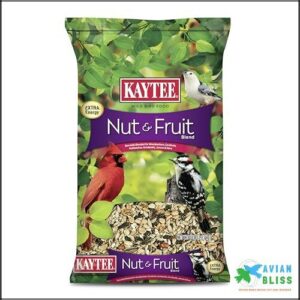
Kaytee Nut & Fruit Wild Bird Seed is one of those blends that pulls Nut & Fruit Wild Bird Seed — cardinals, chickadees, nuthatches, woodpeckers, even grosbeaks. It combines black oil sunflower seeds, peanuts, mixed nuts, raisins, and cherries into a high-calorie mix that keeps birds coming back throughout the day.
At $12.59 for a 5 lb bag, it’s pricier than basic mixes, but the variety genuinely broadens the species you’ll see.
Just watch for squirrels — they love it too.
| Best For | Backyard birdwatchers who want to attract a wide variety of species and don’t mind paying a little more for a premium blend. |
|---|---|
| Net Weight | 5 lb |
| Price | $12.59 |
| Bird Life Stage | All life stages |
| Primary Ingredient | Sunflower seeds |
| Target Birds | Cardinals, chickadees, woodpeckers |
| Feeder Type | Standard feeders |
| Additional Features |
|
- Pulls in a great mix of birds — cardinals, woodpeckers, nuthatches, grosbeaks, and more
- High-calorie ingredients like peanuts, nuts, and fruit keep birds at your feeder longer
- Allergen-free and works for all life stages, so it’s low-hassle to use
- At $12.59 for 5 lbs, it’s noticeably pricier than basic seed mixes
- Squirrels and other critters are big fans too, so you may need a protected feeder
- The blend composition can vary batch to batch, which might throw off your regulars
2. Kaytee Wild Bird No Mess Seed Blend
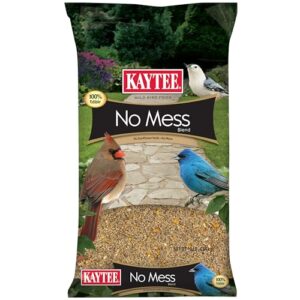
If keeping your yard tidy matters as much as the birds themselves, this blend is worth a look.
The Kaytee No Mess mix uses hulled sunflower seeds, shelled peanuts, cracked corn, and millet — all shell-free, so nothing piles up under your feeder. It also includes calcium carbonate for bone health and won’t sprout weeds in your lawn.
Cardinals, finches nuthatches, and woodpeckers all take to it well.
A clean feeder area means less maintenance and more time actually watching the birds.
| Best For | Bird lovers who hate cleanup — especially those feeding from patios, decks, or manicured lawns where shell debris is a real headache. |
|---|---|
| Net Weight | 10 lb |
| Price | $12.99 |
| Bird Life Stage | All life stages |
| Primary Ingredient | Hulled sunflower |
| Target Birds | Cardinals, finches, blue jays |
| Feeder Type | Hopper, tube feeders |
| Additional Features |
|
- Shell-free mix means no hull waste piling up under your feeder — your yard stays clean with almost no effort.
- Pulls in a solid variety of birds (cardinals, woodpeckers, finches, jays) so there’s always something worth watching.
- Added calcium carbonate supports bird health, and the no-sprout formula keeps weeds out of your lawn.
- Costs more per pound than standard hulled mixes, so it adds up if you’re refilling often.
- Bigger pieces like corn and peanuts can get tossed aside by smaller birds, which partly defeats the no-mess promise.
- Squirrels love it just as much as the birds do, so a squirrel-proof feeder is basically a must.
3. Kaytee Wild Bird Ultimate No Mess Seed
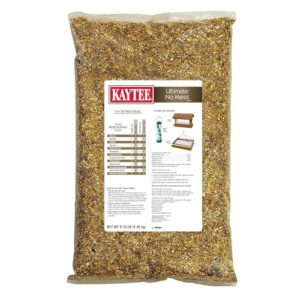
Think of this as the upgraded version of the No Mess blend — same tidy concept, but with a higher share of peanuts and sunflower hearts packed in.
The Kaytee Premium No Mess mix runs about $21.99 for 9.75 pounds and is 100% edible, no hulls at all. Calcium carbonate is added to support bone health and egg quality.
Cardinals, chickadees, nuthatches, and woodpeckers all show up reliably.
It works in hopper, tube, or gazebo feeders without much fuss.
| Best For | Backyard birders who want a clean, no-mess feeding experience and are willing to pay a little more for a premium, hull-free mix that attracts a wide range of songbirds. |
|---|---|
| Net Weight | 9.75 lb |
| Price | $21.99 |
| Bird Life Stage | All life stages |
| Primary Ingredient | Hulled sunflower |
| Target Birds | Cardinals, finches, chickadees |
| Feeder Type | Hopper, gazebo, tube |
| Additional Features |
|
- 100% edible mix means no hull waste piling up on your patio or garden beds
- Higher peanut and sunflower heart content gives birds more energy-dense nutrition per bite
- Added calcium carbonate supports bird health — especially useful during nesting season
- At $21.99 for under 10 lbs, it costs more per pound than bulk seed alternatives
- The rich mix can pull in squirrels and larger birds that crowd out smaller songbirds
- Some buyers have found insects or moths in the bag, so you may want to air it out before storing
4. Kaytee Wild Bird Seed Blend
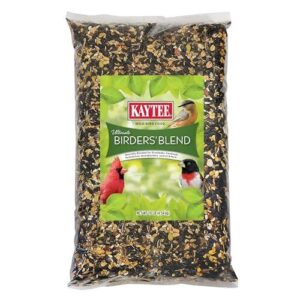
Not every yard needs specialty blend. Sometimes a solid, no-fuss mix covers the bases just fine, and that’s where Kaytee’s Wild Bird Seed Blend earns its spot.
The 10-pound bag runs about $19 and combines white millet, sunflower seed, cracked corn, safflower, and peanuts — covering ground feeders, perch feeders, and everything in between. Cardinals, finches, sparrows, and doves all respond well. It’s a practical everyday option when you want consistent feeder traffic without overcomplicating things.
| Best For | Backyard birders who want a reliable, all-around seed mix that draws a variety of species without the hassle of managing multiple feeders. |
|---|---|
| Net Weight | 10 lb |
| Price | $19.01 |
| Bird Life Stage | All life stages |
| Primary Ingredient | White millet |
| Target Birds | Cardinals, woodpeckers, finches |
| Feeder Type | Ground & standard feeders |
| Additional Features |
|
- Attracts a solid range of birds — cardinals, finches, sparrows, blue jays, and more — so your feeder stays busy
- Good nutritional balance with protein, fat, and fiber to keep birds healthy through breeding and migration seasons
- Reasonably priced at around $19 for 10 lbs, making it easy to keep the feeder stocked without breaking the bank
- The mix includes fillers like milo and cracked corn that some birds skip, which can lead to wasted seed and messy ground litter
- A 10-lb bag is a bit awkward to store neatly without a separate sealed container
- Contains artificial flavor, which is a turn-off for buyers looking for a completely natural, additive-free option
5. Wild Harvest Small Bird Seed Blend
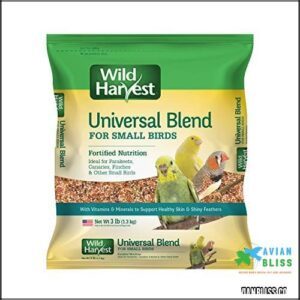
Small birds have their own preferences, and Wild Harvest’s Small Bird Seed Blend actually pays attention to that.
The mix centers on canary grass seed, red and white millets, oat groats, and flaxseed — sizes and textures that canaries, parakeets, and finches handle easily.
It’s also fortified with vitamins A, D3, and B-complex, so you’re not just filling a cup; you’re supporting feather health and immunity.
The cherry-flavored formula with rosemary extract keeps things fresh between refills.
| Best For | Bird owners with canaries, parakeets, or finches who want a well-rounded daily seed mix that covers nutrition without a lot of extra work. |
|---|---|
| Net Weight | 3 lb |
| Price | Not specified |
| Bird Life Stage | Baby/All stages |
| Primary Ingredient | Canary grass seed |
| Target Birds | Canaries, parakeets, finches |
| Feeder Type | Indoor seed cups |
| Additional Features |
|
- Solid mix of seeds that small birds actually eat — canary grass, millet, oat groats, and flaxseed hit the right sizes and textures
- Fortified with vitamins A, D3, E, and B-complex, so it does more than just fill the feeder
- Bulk 3 lb size saves money and cuts down on how often you’re restocking
- Cockatiels and some pickier species may turn their beaks up at it
- Some batches come with extra hulls and dust, so you might need to sieve before filling
- Contains artificial color additives (FD&C dyes), which is a dealbreaker for owners going the all-natural route
6. Wild Harvest Orange Bird Seed Blend
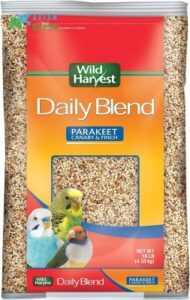
One twist that sets Wild Harvest’s Orange Bird Seed Blend apart is the citrus-scented element — birds notice it, and so will you.
The scent also works in your favor when positioning feeders near shrubs for safe bird access, since curious birds follow their noses straight to a well-placed station.
The mix combines red and white millet, canary grass seed, and select grains, making it a solid daily staple for finches, canaries, and parakeets.
It’s fortified with calcium and phosphorus to support bone health and eggshell formation, and the resealable bag actually helps keep things fresh between fills.
Compatible with tube and platform feeders, it earns its spot year-round.
| Best For | Small pet bird owners — especially those with finches, canaries, or parakeets — who want an affordable, flavorful daily seed blend that works for both indoor cages and backyard feeders. |
|---|---|
| Net Weight | 10 lb |
| Price | $10.94 |
| Bird Life Stage | All life stages |
| Primary Ingredient | Red & white millet |
| Target Birds | Parakeets, canaries, finches |
| Feeder Type | Indoor & outdoor feeders |
| Additional Features |
|
- The orange essence gives it a little something extra that birds seem to actually enjoy, which makes it easier to get picky eaters on board.
- Red and white millet plus canary grass seed covers the core nutritional bases for small birds, making it a reliable everyday staple.
- The resealable bag is a nice touch — keeps things fresher longer and cuts down on waste between refills.
- It’s not a complete diet on its own, so you’ll still need to round things out with fresh fruits, veggies, or a formulated supplement.
- The "grain-free" label is confusing since the ingredient list clearly includes grains — worth knowing before you buy.
- Once opened, the bag’s seal doesn’t always hold up great, so transferring the seeds to an airtight container is a smart move.
7. Audubon Park Cardinal Blend Bird Seed
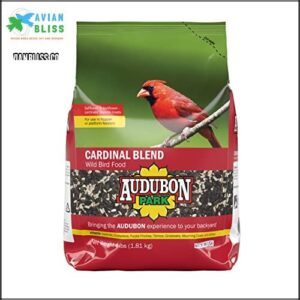
Cardinals are hard to miss, and this blend is built with them in mind. Audubon Park’s Cardinal Blend (model 12231) combines black-oil sunflower and safflower seeds — no fillers, no fluff.
safflower is a quiet win: squirrels tend to skip it, so your birds actually get to eat. At $7.99 for 4 lbs, it’s a fair deal.
Chickadees, titmice, finches, and grosbeaks all show up too. Works in hopper, tube, or platform feeders without any fuss.
| Best For | Backyard bird lovers who want to attract cardinals and songbirds without constantly fighting off squirrels. |
|---|---|
| Net Weight | 4 lb |
| Price | $7.99 |
| Bird Life Stage | All life stages |
| Primary Ingredient | Black-oil sunflower |
| Target Birds | Cardinals, titmice, chickadees |
| Feeder Type | Hopper, tube, platform |
| Additional Features |
|
- Pure sunflower and safflower blend — no cheap filler seeds taking up space
- Safflower naturally deters squirrels, so more food actually reaches your birds
- Works with hopper, tube, and platform feeders, so no new gear needed
- Pricier per pound than generic mixes, which adds up fast if you feed year-round
- No millet or nyjer, so it won’t appeal to every bird species in your yard
- Squirrels will still try their luck — safflower slows them down, not stops them
8. Kaytee Balcony Wild Bird Seed
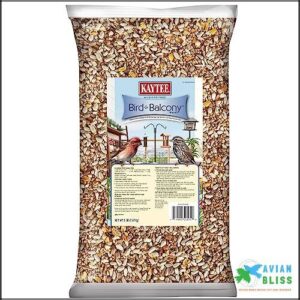
Living on a balcony doesn’t mean missing out on the birds. Kaytee’s Balcony Wild Bird Seed is made for exactly that — tight spaces, clean surfaces, and curious city birds.
The no-mess formula keeps hulls off your railing, so cleanup is quick.
Sunflower seed leads the blend, with millet, safflower, and cracked corn filling it out.
Finches, sparrows, and mourning doves are regulars.
At $12.79 for 5 lbs, it’s an easy, low-fuss way to bring a little wildness to your window.
| Best For | City dwellers and apartment renters who want to attract local birds without the mess or extra cleanup. |
|---|---|
| Net Weight | 5 lb |
| Price | $12.79 |
| Bird Life Stage | All life stages |
| Primary Ingredient | Hulled sunflower |
| Target Birds | Finches, sparrows, doves |
| Feeder Type | Railing, window, balcony |
| Additional Features |
|
- No-mess formula means fewer hulls and debris on your railing or balcony floor
- Sunflower-forward blend attracts a solid variety of small birds like finches, sparrows, and mourning doves
- Affordable at $12.79 for 5 lbs — easy to try without much commitment
- Cracked corn isn’t a favorite for every bird, so some species may pick around it
- A 5 lb bag goes fast if you get a lot of feathered visitors — no bulk option available
- Seeds can arrive partially crushed, and humidity may affect quality if not stored carefully
9. Wild Harvest Bird Seed Blend
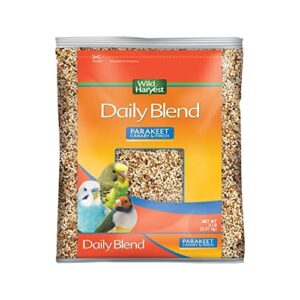
Wild Harvest Bird Seed Blend is a solid everyday option if you’re feeding a mixed yard. It leans on white millet, canary grass seed, nyjer, and sunflower seeds — a lineup that keeps finches, sparrows, and chickadees coming back.
The moisture-resistant packaging helps it stay fresh longer, which matters when you’re buying in bulk.
Shelf life runs about 9 to 12 months stored properly. Nothing flashy here, just a dependable, widely available blend that does the job season after season.
| Best For | Small bird owners and backyard wildlife feeders looking for an affordable, everyday seed blend that works for parakeets, canaries, finches, and similar species. |
|---|---|
| Net Weight | 5 lb |
| Price | $5.66 |
| Bird Life Stage | All life stages |
| Primary Ingredient | White millet |
| Target Birds | Parakeets, canaries, finches |
| Feeder Type | Outdoor feeders |
| Additional Features |
|
- Good value for the price — 5 lbs for $5.66 is hard to beat for a vitamin-enriched blend
- Resealable zipper bag keeps things fresh after you open it
- Versatile enough for daily feeding and as a training treat during bonding sessions
- Not a complete diet on its own — you’ll still need to supplement with fresh fruits and veggies
- Larger seeds may give very small birds a hard time
- The resealable bag doesn’t always work as advertised, according to some users
10. Wagner Midwest Regional Bird Seed
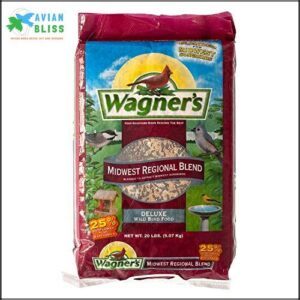
Wagner’s Midwest Regional Blend is built for the birds actually showing up in your yard. The mix — black-oil sunflower, striped sunflower, safflower, white millet, and cracked corn — covers cardinals, chickadees, blue jays, and mourning doves without missing a beat.
At $21.48 for 20 lbs, it’s solid value for regular feeders.
It works in tube, hopper, and platform setups, so you don’t need to overthink equipment.
One bag usually lasts about a month in a busy backyard.
| Best For | Midwestern backyard birders who want to attract a wide variety of songbirds without juggling multiple seed types. |
|---|---|
| Net Weight | 20 lb |
| Price | $21.48 |
| Bird Life Stage | All life stages |
| Primary Ingredient | Black-oil sunflower |
| Target Birds | Cardinals, chickadees, blue jays |
| Feeder Type | Tube, hopper, platform |
| Additional Features |
|
- Covers a solid range of birds — cardinals, chickadees, blue jays, finches, and mourning doves all show up for this mix.
- Works with tube, hopper, and platform feeders, so no special equipment needed.
- Good value at $21.48 for 20 lbs — a busy feeder can stretch it about a month.
- The cracked corn can get messy and pile up on the ground fast.
- Sunflower seeds tend to scatter, which can bring squirrels into the mix.
- Not the best pick if you’re trying to attract one specific type of bird.
Bird Nutrition Needs Through Seasons
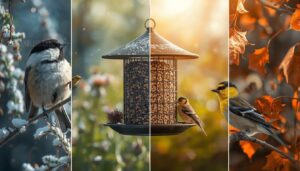
Birds don’t eat the same way in January as they do in July — and honestly, why would they? What they need shifts with the season, from heavy fats in the cold to protein when nests are full.
Here’s a look at how their nutritional needs change throughout the year.
High-fat Foods for Winter Energy
Winter is no joke for backyard birds — their energy needs spike just to stay warm.
High-fat foods like suet, black oil sunflower seeds, and High-Fat Seed Cakes are your best tools. Stock up on:
- Rendered Animal Fat suet blocks
- Nut Butter Mixes pressed into cakes
- Coconut Oil Seeds for quick metabolism
- Energy-Rich Trail Mix with nuts and dried fruit
winter high-fat foods keep your birds fueled when temperatures plunge.
Protein Support for Spring Breeding
Once the cold eases up, spring nesting kicks birds into a whole new gear. Protein needs jump fast—egg production, chick growth, and feather molt all demand it.
Look for high protein seed mixes with insect meal or mealworms to cover spring nesting food requirements. Amino acid balance matters here, since methionine supplementation directly promotes sperm viability and egg shell quality.
Protein-rich blends make a real difference. Effective pre‑breeding management promotes timely conception.
Fruit and Insects for Summer
Summer shifts everything. Once nesting wraps up, birds need High‑Moisture Fruit and Fresh Insect Snacks to handle the heat.
Native Summer Berries, like blueberries and raspberries, deliver quick energy, while Protein‑Rich Insects — especially mealworms and black soldier fly larvae — keep growing chicks strong.
Fruit‑Insect Mixes cover both needs at once.
Top summer feeding picks:
- Fresh blueberries or raspberries
- Live or dried mealworms
- Soft fruit pieces like peaches or grapes
- Insect-rich seed blends
Seed Blends for Fall Migration
Fall changes the game fast. Birds heading south need an energy-boosting seeds mix that’s heavy on fat and calories.
Think black-oil sunflower, peanut kernels, and shell-free blend options that cut foraging effort.
A high-calorie mix with seasonal fat balance — plus insect supplementation from dried mealworms — gives migrants the fuel they need.
Toss in dried berries, and you’ve got a solid fall migration diet covered.
Best Seeds for All Seasons
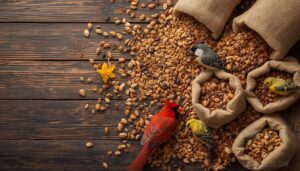
Some seeds just work well no matter the time of year, and a few reliable ones can cover most of the birds visiting your yard.
Knowing which to stock takes a lot of the guesswork out of feeding. Here are the seeds worth keeping on hand through every season.
Black-oil Sunflower Seeds
Black-oil sunflower seeds are the backbone of high-quality seed mixes — and for good reason. They pack 40–50% oil by weight, making them incredibly energy-dense for birds managing year-round energy needs. Their thin shells mean chickadees, finches, and cardinals crack them with ease, which is why species attraction is so broad.
Black-oil sunflower seeds pack 40–50% oil by weight, making them the most energy-dense staple you can offer birds year-round
Shell-free options cut cleanup too. Store in a sealed, cool container to preserve that nutrient profile all season.
Safflower Seeds for General Feeding
Safflower seeds are a quiet workhorse in year-round bird feeding — and cardinals especially can’t get enough of them. Their nutrient balance is solid: roughly 38% fat, 16% protein, and steady carbohydrates for quick energy.
- Palatability factors favor cardinals and chickadees
- Pest deterrence keeps squirrels and starlings away
- Feeder preference suits platform and tube setups
- Shelf life stays fresh weeks in sealed storage
Nyjer Seed for Finches
Nyjer seed is the go-to choice for finches, and for good reason. These small birds are built for it — slender beaks, quick movements, and a serious appetite for energy-dense food.
Feeder height optimization matters here; hang tube feeders at five to six feet to keep squirrels out.
Watch for seed freshness indicators like powdery texture or musty smell, and replace every two to four weeks.
Millet and Mixed Seed Blends
Millet and mixed seed blends are the quiet workhorses of any backyard setup.
Pearl millet gives sparrows and doves a fast carbohydrate boost during daily foraging, while sunflower and safflower round out the blend ratio optimization with healthy fats.
Look for high-quality seed mixes with dust reduction techniques and hulled options — they stay fresher longer and keep your feeders cleaner.
Protein Foods That Support Birds
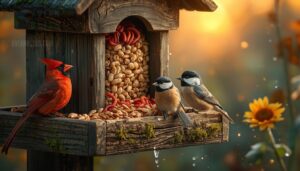
Seeds do a lot of heavy lifting, but protein is what really keeps birds going — especially during nesting season and the coldest stretches of winter. The right high-protein foods can mean the difference between a thriving yard full of birds and one that’s just getting by.
Here are the best protein options worth keeping in your feeding rotation.
Mealworms for Nesting Season
When nesting season hits — roughly March through July — mealworms become one of the most valuable things you can offer. Live mealworm feeding gives parent birds a moisture-rich insect packed with around 50% protein, directly supporting nestling growth nutrition. Bluebirds and wrens carry them straight to chicks.
If you’re keen, mealworm rearing tips are simple: raise larvae at 25–30°C on oats. sustainable insect sourcing.
Suet for Cold-weather Feeding
Suet is basically a lifeline when temperatures drop hard. Birds like woodpeckers, chickadees, and nuthatches burn enormous energy just staying warm, and high-fat suet blocks replace those calories fast.
Look for melt-resistant suet formulations in winter — they hold their shape in the cold. Hang suet cages in a sheltered, shaded spot, and swap blocks every week or two to keep things fresh.
Peanuts for Energy and Calories
Peanuts pull double duty where suet leaves off.
Calorie-packed peanuts deliver roughly 567 calories per 100 grams — most of them from peanut oil energy and healthy fats. Protein-rich peanuts also carry niacin, magnesium, and peanut micronutrients that support bird nutrition across every season. Peanut antioxidant power adds another quiet benefit.
Offer shelled peanuts in a mesh feeder to cover winter energy needs without waste.
Insect-rich Blends for Growing Chicks
Think of insect-rich blends as nature’s starter kit for baby birds. Dried mealworms and black soldier fly larvae deliver High Digestibility Protein — around 50% crude protein — with Amino Acid Balance that plant sources simply can’t match. Calcium-Rich Insects support bone development too.
- Supporting fledgling growth with insects accelerates feathering speed
- Starter Blend Formulation pairs insect protein with grains for balance
- Growth Rate Enhancement peaks during that critical first week
- Nutritional fortification through high-energy ingredients builds immunity early
Fruit and Berry Feeding Options
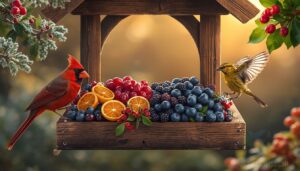
Fruit and berries do more for birds than most people realize — they’re not just a summer treat. From dried raisins tucked into seed mixes to winter holly berries still clinging to bare branches, there’s a lot of variety to work with.
Here are some of the best fruit and berry options to keep your feeders interesting all year long.
Dried Fruit in Seed Mixes
Dried fruit might seem like a small addition, but it punches above its weight in seed blend formulation. Raisins and cherries bring calorie concentration, vitamin enrichment, and antioxidant content that plain seeds can’t match. That pop of color attraction draws birds in faster, too.
Kaytee Nut Fruit Wild Bird Seed uses these high-energy ingredients well. Just watch moisture management — wet dried fruit spoils quickly.
Native Berries for Seasonal Support
Native berries take seasonal feeding further than any packaged mix can.
Elderberry delivers an Elderberry Energy Boost in late fall, while Serviceberry Spring Forage pulls in thrushes right at nesting time.
Salal works as a Salal Calcium Source along Pacific edges.
For year-round bird feeding, plant Winterberry holly shrubs — Winterberry shrubs hold fruit through January, giving cardinals and bluebirds reliable calories when everything else is gone.
Apples and Soft Fruit Pieces
Fresh apple slices are a quiet favorite among robins, thrushes, and waxwings — birds you don’t always see at seed feeders.
Here’s why soft fruit earns a spot in your year-round bird feeding routine:
- Hydration Benefits — Apples are 85% water, helping birds stay hydrated in dry summer heat.
- Pectin Digestion Aid — Natural pectin helps gut health in small songbirds.
- Attracting Insectivores — Soft texture draws omnivorous species not interested in seeds.
- Sugar Content Impact — Fructose gives quick energy, especially useful during migration pushes.
- Seasonal Spoilage Risk — Remove uneaten fruit within a day in warm weather to prevent mold.
Fall and Winter Berry Sources
As temperatures drop, your yard becomes a lifeline. Winterberry shrubs and highbush cranberry hold bright fruit well into February — exactly when birds need winter high‑fat foods and energy support the most. Berry species selection matters here.
| Berry Shrub | Ripening Timing | Bird Preference Patterns |
|---|---|---|
| Winterberry holly | Late fall–February | Cardinals, bluebirds |
| Nannyberry | Early winter | Thrushes, waxwings |
| Highbush cranberry | November–January | Robins, sparrows |
| Black chokeberry | Fall–mid-winter | Finches, juncos |
| Invasive buckthorn | Early fall | Avoid — invasive berry risks |
habitat moisture management — waterlogged roots weaken fruiting. Fall berry and seed feeding for migratory birds peaks when natural supplies thin.
Feeder Types for Year-Round Use
The right feeder makes a real difference in which birds actually show up — and how often. Different species have different feeding styles, so one feeder in the yard rarely cuts it.
Here are four feeder types worth having on hand throughout the year.
Tube Feeders for Small Seeds
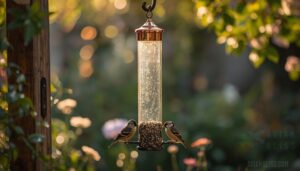
Tube feeders are practically built for small seeds like nyjer and millet. Their port size optimization keeps seeds from spilling everywhere, and clear tube visibility lets you check levels at a glance.
Moisture-resistant caps protect your high-quality seed mixes from rain, so nothing goes to waste.
Minimal perches discourage larger birds, keeping your clean feeders focused on finches and small songbirds year‑round.
Platform Feeders for Mixed Birds
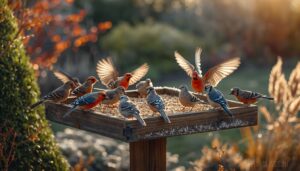
Platform feeders are basically the town square of your yard — everyone shows up. Their wide, open surface gives cardinals, jays, doves, and even larger thrushes room to feed without bumping into each other.
For multi-species access, place your bird feeding stations near shrubs, but keep some open sightlines for predator protection.
Weather-resistant materials handle seasonal height adjustments well, and rotating high-quality seed mixes keep clean feeders attracting real bird species diversity year‑round.
Suet Cages for High-fat Food
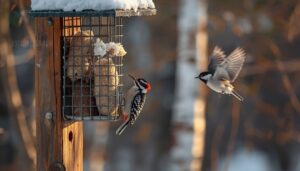
Suet cages are the workhorses of cold-weather feeding. Woodpeckers, nuthatches, and chickadees all flock to them when temperatures drop. The right cage makes high‑fat foods, winter high‑fat foods, and energy support easy to deliver year‑round.
- Weatherproof Construction – Coated steel resists rust through rain and snow
- Multi-Entry Access – Multiple openings let several birds feed at once
- Squirrel Guard System – Baffles keep suet for the birds you actually want
- Lockable Lid Design with Capacity Variants – Holds one or two cakes; secure latches stop raccoons cold
Seasonal feeding strategies work best when your suet cages stay clean and stocked.
Nectar Feeders for Hummingbirds
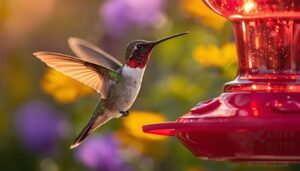
Hummingbirds follow color before they taste anything — that’s why red feeders with a bee shield do half the work for you.
Fill yours with a simple nectar recipe: one part white sugar to four parts water. Skip the food coloring.
An anti-drip design keeps things tidy, and swapping seasonal nectar every few days prevents fermentation.
These little feeders earn their spot all summer long.
How to Keep Feeders Clean
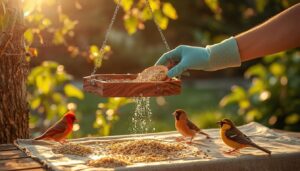
A clean feeder can mean the difference between a healthy backyard flock and a sick one. Mold, old seed, and crowded perches are more dangerous than most people realize.
Here’s what you need to know to stay on top of it.
Daily Seed Removal and Debris Control
Keeping debris from piling up starts with a simple daily sweep routine around your feeders. Seed catcher trays do a lot of the heavy lifting, collecting fallen hulls before they hit the ground. Pair those with a ground mat beneath busy stations for easier ground mat maintenance.
For debris disposal methods, toss waste away from garden beds — sprouting millet is nobody’s friend.
Weekly Washing and Drying Routine
Once the daily sweep is done, a weekly wash makes all the difference. Think of it like laundry — you sort feeders by type before scrubbing, tackle stuck‑on grime early (stain pre‑treatment style), then rinse with cold water. Let them air‑dry completely before refilling.
- Sort feeders by material
- Scrub with 10% bleach solution
- Rinse thoroughly with cold water
- Dry fully before rehanging
Safe Storage to Prevent Spoilage
Good storage is just as important as a clean feeder. Transfer seed into airtight containers — BPA-free plastic or glass — and label each one with the purchase date.
Keep them between 40 and 70°F, away from sunlight or heat sources. Aim for around 50% humidity, and rotate stock oldest-first to cut waste and keep every fill fresh.
Disease Prevention at Crowded Feeders
Even the best feeder sanitation schedule breaks down when birds crowd a single spot. Spread your stations across the yard — spatial feeder distribution naturally limits contact and slows pathogen spread.
If you spot sick or dead birds, that’s your disease outbreak response signal: pull every feeder, disinfect thoroughly, and don’t restart until surfaces are fully dry. Pathogen monitoring protocols don’t have to be complicated — just stay observant.
Water and Grit for Backyard Birds

Food gets most of the attention, but water and grit are just as important for keeping backyard birds healthy through every season. Birds need more than a puddle — the right setup makes a real difference in who shows up and how often.
Here’s what to have on hand.
Clean Water in Every Season
Water is just as essential as food — birds need a clean, reliable source year‑round. In summer, stagnant water breeds mosquitoes and algae fast, so daily refills and a solid bath hygiene schedule matter.
Winter calls for simple ice prevention techniques, like floating a small object.
Good water source maintenance for all seasons keeps your yard a true bird haven.
Shallow Birdbaths for Daily Hydration
Most small songbirds won’t touch a deep pool — that’s where Bath Depth Safety matters most. Keep your birdbath at 1 to 2 inches, with Non-slip Surface Texturing so wet feet don’t slip.
Smart Shade Placement Strategy slows algae and keeps water cooler. Add a simple Bird Perch Integration nearby for confident landings.
- Aim for 1–2 inch depth maximum
- Use textured, grippy basin surfaces
- Place in partial shade to slow algae
- Add a nearby twig or stone perch
Moving Water Features for Attraction
Birds notice movement before they notice stillness — that’s why a moving water source beats a flat birdbath every time. A cascading waterfall, bubbling rock, or pondless waterfall adds sound that carries across your yard.
A streambed channel with adjustable flow works beautifully year-round, and for summer water features, hummingbird attraction spikes near gentle jets. Keep water source maintenance consistent across all seasons.
Mineral Grit for Digestion Support
Think of mineral grit as your birds’ built-in blender. Insoluble grit benefits digestion by physically grinding seeds inside the gizzard — no digestive enzymes needed for that part.
Shell grit calcium promotes eggshell strength and bone health.
Abrasive grit size matters, so choose commercially sized products.
Offer it free-choice in a separate dish, since grit intake regulation varies bird to bird.
Keep it clean — grit hygiene protocols prevent debris from entering the gut.
Native Plants That Add Natural Food

Feeders and seed blends do a lot of heavy lifting, but your yard’s plants can quietly do just as much work. A few smart native choices give birds food, cover, and insects across every season without any extra effort from you.
Here’s where to start.
Oak Trees for Acorns and Insects
Few trees work as hard as a mature oak. Through acorn masting, a single tree can drop thousands of acorns in peak years, fueling blue jays, woodpeckers, and small mammals alike.
Weevil interactions, leaf litter habitat, and caterpillar host diversity make oaks a layered habitat design for avian species — supporting the whole insect food web, mycorrhizal support included.
Berry Shrubs for Seasonal Nutrition
A well-planted shrub border feeds birds from spring straight through winter.
Serviceberry’s spring yield draws early migrants, while Aronia’s autumn harvest fuels fall travelers.
Viburnum winter fruit and Winterberry shrubs carry cardinals through the coldest months.
Add Ribes for early-season foragers and Berberis for late fruit interest.
Native plants as year-round bird food simply outperform any feeder alone.
Seed Heads Left for Winter Birds
Shrubs carry birds through the cold, but don’t overlook what’s standing right in your garden beds.
Sunflower Seed Heads, Coneflower Seed Heads, and Echinacea Seed Heads are reliable winter food sources for backyard birds like goldfinches, cardinals, and nuthatches.
Bluestem Seed Heads and Sedge Seed Heads feed juncos and sparrows close to the ground.
Seed head retention is one of the simplest gifts native plants can offer as year-round bird food.
Layered Habitat for Year-round Foraging
Seed heads carry birds through the lean months, but the real magic happens when your whole yard works as one layered system.
Vertical canopy layers shelter warblers up high, midstory shrub clusters feed thrushes in autumn, and groundcover insect habitats support sparrows all winter. Dead wood niches and microclimate windbreaks fill the gaps.
That’s layered habitat design for avian species doing its quiet, steady work.
Frequently Asked Questions (FAQs)
How do I attract birds in urban areas?
Start with native plants, a clean birdbath, and high-quality seed mixes featuring black oil sunflower seeds.
Place bird feeders 4 meters from windows for window collision mitigation, and create cat-proof feeding zones using baffles.
Which birds benefit most from year-round feeding?
Chickadees, nuthatches, cardinals, and house sparrows benefit most from year-round bird feeding.
Woodpeckers, titmice, doves, finches, warblers, and bluebirds also thrive with consistent food, supporting bird conservation and avian ecology through every seasonal shift.
Can feeding birds affect their migration patterns?
Yes, it can.
Reliable feeders can shift migration timing, alter stopover site selection, and even nudge route alteration over time. Consistent food also drives population structure change and raises disease transmission risk at crowded sites.
How do weather changes impact feeder activity?
Weather flips the switch on feeder activity fast. Cold snap spikes visits by 15 percent, rainy day influx fills platforms, and wind shelter effects keep birds returning.
Storm closures drop traffic until calm returns.
What signs show birds are stressed at feeders?
Watch for feather flattening, tense crest position, rapid wing flicks, or head bobbing. Alarm calls and sudden departures signal stress. Clean feeders regularly — feeder hygiene directly protects bird health.
Conclusion
Your yard could practically run its own wild restaurant—open every season, rain or frozen ground, with a packed house every morning. That’s what choosing the right year-round bird food actually does.
It turns a forgotten feeder into a place birds trust. Stock the right seeds in winter, shift toward protein in spring, and keep the water clean year‑round. Birds notice every change you make, far more than you’d expect.