This site is supported by our readers. We may earn a commission, at no cost to you, if you purchase through links.
Walk through almost any woodland edge in early spring, and you’ll pass food without knowing it. Wild garlic carpets the ground before most garden crops even sprout. Ramps push up through leaf litter while snow still lingers on north-facing slopes.
These aren’t novelties—they’re native plants that have fed people through every season for thousands of years. Seasonal food follows a rhythm that’s older than any grocery store, and once you learn to read it, your yard and local wild spaces start looking completely different.
From spring’s first greens to winter’s stored nuts and dried berries, this guide walks you through what’s worth knowing—and growing.
Table Of Contents
- Key Takeaways
- Spring Native Foods
- Summer Native Foods
- Fall and Winter Native Foods
- Top 5 Native Garden Products
- Frequently Asked Questions (FAQs)
- What are native edibles?
- How do I grow native edibles?
- Can you grow plants to eat?
- Why are native plants important?
- What food plants grow all year round?
- Is blood and bone ok for natives?
- What are the 30 edible plants?
- Which native plants grow best in shade?
- How do I propagate native edibles at home?
- Can native plants thrive in container gardens?
- Conclusion
Key Takeaways
- Wild edibles like ramps, wild garlic, and dandelion greens show up before most garden crops do, giving you a head start on fresh food if you know where to look.
- Each season hands off to the next — spring greens give way to summer berries, then fall nuts and frost‑sweetened fruits like pawpaw and persimmon carry you through winter.
- Native edibles like mountain mint, bee balm, and serviceberry do double duty, feeding your kitchen and supporting pollinators and wildlife at the same time.
- Simple preservation methods — drying below 15% moisture, vacuum sealing, and low‑sugar jam‑making — let you stretch a short harvest window into a full winter’s worth of food.
Spring Native Foods
Spring is when the land starts offering food again, quietly and without much fanfare. A few native plants come up early enough to beat most of what’s in the produce aisle, and they’re worth knowing by name.
If you’re also trying to bring more life into your yard, native trees that shelter and feed local birds pair beautifully with these early-season plants.
Here’s a closer look at the first ones worth finding.
Wild Garlic, Ramps, and Wood Sorrel
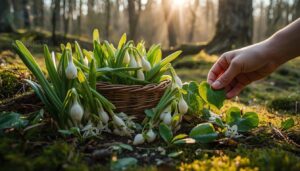
Spring’s first wild forage rewards patience and a sharp nose. Crush a leaf — that unmistakable Garlic Aroma Test confirms wild garlic or wild leeks instantly.
Ramps’ bulb harvest should stay selective; overharvesting threatens local populations. Wood sorrel’s oxalate content means moderation matters for sensitive folks.
Spring Forage Ethics and Culinary Flavor Pairings to know:
- Wild garlic leaves brighten pestos and egg dishes
- Ramp bulbs add punch to herby butters and soups
- Wood sorrel’s lemony bite lifts salads and teas
- Edible wildflowers and herbs extend your seasonal planting calendar for native edibles
- Wild foraging thrives when you take only what you need
Remember that ramps have an early spring emergence, making them one of the first foraged greens.
Dandelion Greens and Early Shoots
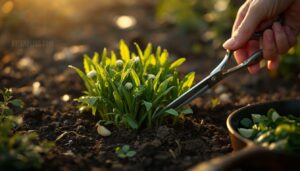
Dandelions are a perennial herb most people overlook — or pull. Once soil temperatures climb past 50°F, those early rosettes signal that your seasonal planting calendar for native edibles is officially open.
Harvest young leaves using leaf cutting techniques, snipping at the base for regrowth. Their vitamin richness — calcium, iron, vitamin C — rewards the effort. A quick sauté with garlic reduces bitterness beautifully in sautéed recipes.
Harvest Timing and Safe Identification
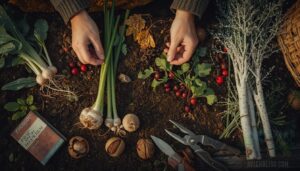
Morning Sugar Peaks make early harvests worthwhile — sugars concentrate before midday heat sets in. Bend a stem; a clean snap from the Leaf Snap Test confirms freshness. Use Scent Cue Verification by crushing a leaf — ramps up the smell unmistakably garlicky.
Keep a Seasonal Weather Log, since rain shifts Harvest Window Indicators.
For safe Native plant identification, always cross-check a regional field guide before consuming anything.
Summer Native Foods
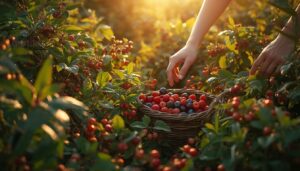
Summer is when your native garden really starts paying off. The warm months bring a steady stream of edibles worth knowing, from fruit you can eat straight off the plant to herbs that work just as well in your kitchen as they do in the garden.
Here’s what to watch for this season.
Wild Strawberries, Blueberries, and Blackberries
Summer’s berry trio is basically a food forest in miniature. Each plant pulls its weight — feeding you, feeding wildlife, and supporting pollinators all at once.
The fragrant blooms do double duty — and native flowers that hummingbirds and bees truly prefer make every square foot of your garden work harder for wildlife.
Summer’s wild berries feed you, wildlife, and pollinators — a miniature food forest earning its keep
- Wild Strawberry spreads through propagation via runners, forming low mats with intense fruit flavor compounds like linalool.
- Blueberry demands acidic soil pH requirements of 4.0–5.5 to thrive.
- Blackberry ripens mid-to-late summer on thorny, productive canes.
- All three are a reliable wildlife food source throughout the season.
- Cultivating native berries for wildlife builds real pollinator benefits into your yard.
Bee Balm, Mountain Mint, and Edible Flowers
While berries steal the show, bee balm and mountain mint quietly run the garden.
Both native edible species offer real culinary uses — bee balm’s oregano-thyme flavor works fresh or dried, and mountain mint leaves brew beautifully into tea.
Their pollinator benefits are hard to beat, drawing bees and hummingbirds all summer. Smart garden design places them as borders in any pollinator-friendly garden.
Fresh Eating, Tea, and Preserves
Summer’s harvest gives you more options than you might expect.
Steep bee balm and mountain mint using simple herb infusion techniques for bright cold brew teas with real depth. Dried berry skins add richness to herbal tea preparation without sugar.
Low sugar jams from blueberries and strawberries preserve seasonal flavor pairings beautifully.
Edible wildflowers and native culinary herbs round out the culinary applications all season long.
Fall and Winter Native Foods
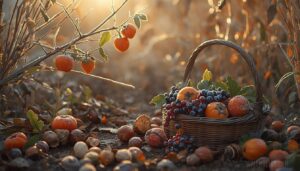
Once summer winds down, the landscape doesn’t go quiet — it just shifts gears. Fall and winter actually bring some of the most rewarding native foods, from frost-sweetened fruits to nuts ready for long-term storage.
Here’s what’s worth knowing about the plants that carry you through the colder months.
Serviceberries, Plums, Pawpaws, and Persimmons
Late summer through fall is when native edible plants truly deliver.
- Allegheny Serviceberry ripens in June with sweet, almond-hinted berries packed with vitamin C — perfect for jams and pies.
- Wild Plum offers tart, stone-centered fruit with strong ornamental appeal and pollinator attraction each spring.
- Pawpaw and American Persimmon round out fall with custard-rich and frost-sweetened fruits boasting impressive nutrient profiles and adaptable culinary pairings.
Muscadine Grapes, Hawthorn Berries, and Nuts
Fall’s last gifts deserve real attention.
Muscadine Grape vines — reaching 50 to 90 feet with proper vine management — produce thick-skinned berries hitting 16–23% Brix, ideal for muscadine fermentation or fresh eating.
Hawthorn, one of the most useful fruitbearing shrubs in any food forest, offers berry antioxidants and works beautifully as a hawthorn tincture.
Native plants like pecans round out nut nutrition season perfectly.
Storage, Drying, and Jam-making
Good storage starts the moment you finish harvesting — and that’s no exaggeration.
- Moisture Control: Dry fruits below 15% moisture, then condition 4–10 days to equalize
- Pectin Gelation: Boil hawthorn or muscadine with lemon juice for reliable jam set
- Vacuum Sealing: Limits oxygen, extending shelf-life considerably
- Conditioning Process: Ensures traditional food preservation safety before sealing
Seasonal harvesting and food preservation done right keep your pantry stocked all winter.
Top 5 Native Garden Products
Growing native edibles is rewarding, but the right products can make the whole process a lot smoother. Whether you’re just getting started or filling in gaps in an established garden, a few well-chosen tools go a long way.
Here are five products worth keeping on your radar.
1. Miracle Gro Water Soluble Plant Food
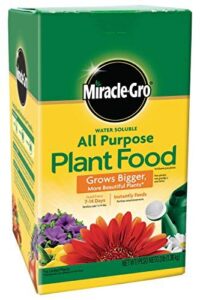
Think of this as a quick energy drink for your native edibles when the soil just isn’t cutting it. The 24-8-16 NPK formula, plus chelated iron and five trace minerals, promotes strong leafy growth and fruit production.
Mix ½ teaspoon per gallon for indoor plants or 1½ tablespoons per 1½ gallons outdoors, and feed every one to two weeks.
At $11.99 for 3 pounds, it’s an affordable boost without overcomplicating your routine.
| Best For | Gardeners who want a simple, affordable way to feed a wide range of plants—from houseplants and veggies to roses and shrubs—without a complicated routine. |
|---|---|
| Primary Use | Plant nutrition |
| Price | $11.99 |
| Garden Setting | Indoor and outdoor |
| Wildlife Benefit | Supports plant growth |
| Skill Level | Beginner friendly |
| Seasonal Relevance | Year-round |
| Additional Features |
|
- The 24-8-16 formula with chelated iron covers most plants’ needs and visibly improves leaf color and growth.
- At $11.99 for 3 pounds with coverage up to 1,200 sq ft, you get a lot of mileage for the money.
- The included dual-size scoop makes dosing straightforward for both indoor and outdoor use.
- You have to stay on top of dilution—too strong and you’ll burn sensitive leaves, no matter what the label says.
- It’s not a fit for specialty plants like orchids or Venus flytraps that need tailored nutrition.
- Reapplying every one to two weeks adds up, and skipping or overdoing it can cause nutrient buildup in the soil.
2. Atticus Talak Bifenthrin Insect Control
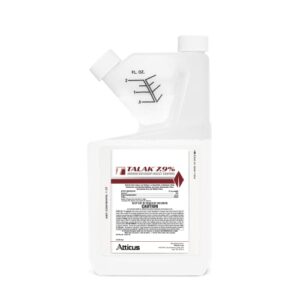
When pests start threatening your native edibles, you need something reliable.
Atticus Talak 7.9% Bifenthrin targets over 75 pest species, including ants, ticks, spiders, and fire ants, and stays active for up to three months per application.
Mix 0.75 oz per gallon for perimeter treatments, apply around foundations or garden borders, and let it dry before people or pets return.
It dries clear and odorless, won’t stain surfaces, and at $27.99 for 32 oz, it covers a full season affordably.
| Best For | DIY homeowners who want a cost-effective, season-long solution for controlling a wide range of indoor and outdoor pests without hiring a professional. |
|---|---|
| Primary Use | Pest control |
| Price | $27.99 |
| Garden Setting | Indoor and outdoor |
| Wildlife Benefit | Controls pest insects |
| Skill Level | Beginner friendly |
| Seasonal Relevance | Year-round |
| Additional Features |
|
- Kills over 75 pest species and keeps working for up to three months, so you’re not reapplying every few weeks.
- Dries clear with little to no odor, meaning you can treat baseboards, cabinets, and surfaces without worrying about stains or smell.
- One 32 oz bottle at $27.99 can cover an entire season of perimeter treatments—way cheaper than a pest control contract.
- Not available in Connecticut, New York, or Vermont, so some shoppers are out of luck entirely.
- You have to mix it correctly and let it dry fully before kids or pets can return—skipping steps can reduce effectiveness or create safety issues.
- Doesn’t work well on everything—spider mites, for example, seem to shrug it off, so it’s not a catch-all for every pest problem.
3. Eastern Redbud Live Tree with Fertilizer
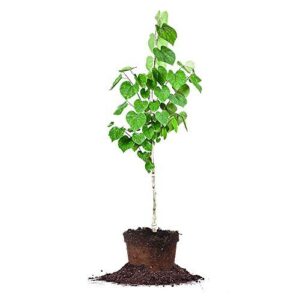
Once you’ve handled pests, it’s time to think long-term. The Eastern Redbud (Cercis canadensis) arrives at 4–5 ft tall, ready to anchor your landscape for decades.
It blooms in early spring with pink-purple flowers before a single leaf appears — genuinely stunning when little else is growing.
Plant it in well-drained, slightly acidic soil (pH 6.0–7.0), full sun to part shade, and use the included balanced fertilizer around the drip line. At $99.55, it’s a worthwhile investment.
| Best For | Homeowners and gardeners in USDA zones 4–9 who want a low-maintenance, eye-catching specimen tree that puts on a show every spring before most other plants even wake up. |
|---|---|
| Primary Use | Ornamental tree |
| Price | $99.55 |
| Garden Setting | Outdoor landscape |
| Wildlife Benefit | Attracts butterflies |
| Skill Level | Beginner friendly |
| Seasonal Relevance | Spring bloom |
| Additional Features |
|
- Arrives at 4–5 ft tall with multiple trunks, so it already has presence and doesn’t look like a twig in the ground
- That early pink-purple bloom before the leaves come in is genuinely hard to beat for spring visual impact
- Attracts butterflies and pollinators, so you’re not just getting a pretty tree — you’re adding life to your yard
- Shipping can be rough on live plants — broken branches and leaf loss show up in reviews often enough to be a real concern
- The guarantee only covers 30 days, so if it struggles after that window, you’re on your own
- It’ll eventually reach 20–30 ft wide and tall, which means it’s not a good fit if you’re working with a tight space
4. QAUZUY Virginia Bluebells Wildflower Seeds
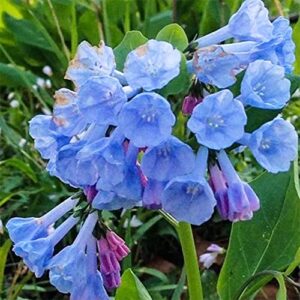
For something smaller but just as rewarding, try QAUZUY Virginia Bluebells (Mertensia virginica) — 200 seeds per packet, ready to fill shaded corners with nodding violet-blue bells each spring.
Cold-stratify the seeds at 34–41°F for 4–6 weeks before sowing. They’ll reach 12–24 inches tall and spread naturally by rhizomes over time. Rich, moist soil and partial shade are your best starting conditions. As a spring ephemeral, the foliage fades by summer, so pair it with ferns or hostas to fill the gap.
| Best For | Gardeners who want early spring color in shaded or woodland beds and love supporting native pollinators without a lot of fuss. |
|---|---|
| Primary Use | Native wildflower |
| Price | Not listed |
| Garden Setting | Outdoor garden |
| Wildlife Benefit | Attracts bees and butterflies |
| Skill Level | Beginner friendly |
| Seasonal Relevance | Spring bloom |
| Additional Features |
|
- 200 seeds per packet gives you plenty to work with, and the planting instructions make it approachable even if you’re new to growing from seed.
- One of the first nectar sources of the year, so bees and butterflies will thank you before most other flowers even wake up.
- Naturally suited to shaded spots that are hard to fill with color — no fighting the conditions.
- Cold stratification is non-negotiable, so you need to plan 4–6 weeks ahead or the seeds likely won’t germinate.
- The foliage completely dies back by summer, leaving a bare patch you’ll need to plan around with companion plants.
- Full sun pushes them outside their comfort zone, so if your yard is mostly sunny, you’ll be fighting the plant the whole time.
5. Echinacea Pink Coneflower Perennial
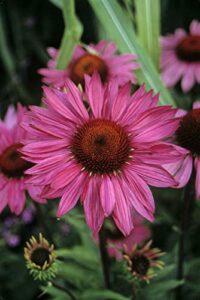
If you want a bold summer presence, the Echinacea Pink Coneflower is hard to overlook.
It grows 36–42 inches tall, blooms June through September, and thrives in USDA zones 3–8 with full sun and well‑drained soil.
Deep pink petals draw bees and butterflies all season, and the seed heads feed songbirds into fall.
At $20.99 per plant, it arrives fully rooted and ready to go.
Heavy clay soil may need amending, and deer occasionally browse it — worth knowing upfront.
| Best For | Gardeners who want a low-maintenance perennial that pulls double duty — feeding pollinators all summer and songbirds into fall. |
|---|---|
| Primary Use | Pollinator perennial |
| Price | $20.99 |
| Garden Setting | Outdoor garden |
| Wildlife Benefit | Attracts bees and birds |
| Skill Level | Beginner friendly |
| Seasonal Relevance | Summer bloom |
| Additional Features |
|
- Tall, sturdy stems (36–42 in) that hold up without staking, making it great for mid-to-back border plantings
- Long bloom window from June into September, with deep pink flowers that attract bees, butterflies, and birds
- Arrives fully rooted and ready to plant — no nursery trip needed
- Deer and rabbits will browse it despite its reputation for resistance, so it’s not fully critter-proof
- First-season blooms can be sparse or shorter than expected — it often performs better in year two
- Heavy clay soil needs amending before planting, which adds a step (and cost) for some gardeners
Frequently Asked Questions (FAQs)
What are native edibles?
The wildest foods are often the ones nobody planted.
Native edibles are fruits, nuts, greens, and roots from local plants that evolved here, need little care, and reflect your region’s own flavors.
How do I grow native edibles?
Start with good soil prep, match each plant to your USDA zone, mulch well, and water deeply until roots establish. After that, most native edibles largely take care of themselves.
Can you grow plants to eat?
Your yard is a quiet pantry waiting to be opened.
Yes, you can absolutely grow plants to eat — native edibles like wild leeks, serviceberries, and mountain mint thrive with minimal care and reward you generously.
Why are native plants important?
Native plants hold the local ecosystem together. feed pollinators, shelter wildlife, and build healthy soil — all without much help from you.
Simply put, they belong here, and everything around them knows it.
What food plants grow all year round?
Perennial herbs like chives, sorrel, and mountain mint keep producing for years with little fuss.
Kale and perpetual spinach fill gaps through winter, giving you fresh greens almost any time of year.
Is blood and bone ok for natives?
Yes, blood meal and bonemeal work well for natives. Blood meal boosts leafy growth with nitrogen, while bonemeal helps roots and flowering. Just follow label directions to avoid over-fertilizing.
What are the 30 edible plants?
Some plants look like weeds but feed you well.
From ramps and wood sorrel in spring to persimmons and muscadine grapes in fall, you’ve got roughly 30 edible natives to explore year-round.
Which native plants grow best in shade?
Shade-loving picks include wild ginger, serviceberry, American pawpaw, hazelnut, and spicebush. They thrive under tree canopies with moist, rich soil and reward you with edible harvests even in low-light spots.
How do I propagate native edibles at home?
Propagating native edibles isn’t complicated. Divide wild leeks after flowering, layer blackberry canes in summer, and take hardwood cuttings from persimmons in winter.
Clean tools and rooting hormone make a real difference.
Can native plants thrive in container gardens?
Absolutely — native plants can thrive in containers. Choose compact or dwarf cultivars, use well-draining potting mix, and group plants with similar light and water needs.
Many natives even regrow year after year with minimal replanting.
Conclusion
Here’s something worth noticing: the moment you plant your first native species, the seasons stop feeling like weather and start feeling like a calendar you actually understand.
That shift isn’t accidental—it’s what native plants’ seasonal food has always offered people willing to pay attention. Spring ramps, summer berries, fall pawpaws—each one arrives exactly when you need it most.
Tend the right plants, and the land quietly tends you back.