This site is supported by our readers. We may earn a commission, at no cost to you, if you purchase through links.
A bird with patchy, dull plumage often isn’t sick in the way most owners fear—it’s starving for something invisible. Nutrient deficiencies, particularly vitamins A, D3, E, and biotin, quietly disrupt the biological processes that build and hold feathers in place.
By the time you notice the bald spots, the damage has been building for weeks. Most companion birds eat seed-heavy diets that look adequate but fall critically short of what healthy feathers actually require.
Understanding exactly which nutrients do what—and how to restore them safely—can turn a distressed, patchy bird back into one with full, vibrant plumage.
Table Of Contents
Key Takeaways
- Seed-heavy diets are the leading cause of feather loss in companion birds, falling short of the vitamins A, D3, E, and biotin that healthy plumage actually requires.
- Behavioral shifts like irritability, sleep disruption, and feeding aggression often signal nutritional deficiency before a single feather visibly drops.
- Fixing feather loss means addressing the diet first—transitioning to 60–70% pellets, adding fresh leafy greens, and boosting protein during molt—not just reaching for supplements.
- If you notice sudden bald patches, bleeding skin, weight loss, or changes in droppings alongside feather loss, those symptoms warrant a vet visit, not a diet tweak.
Why Birds Lose Feathers From Vitamin Deficiency
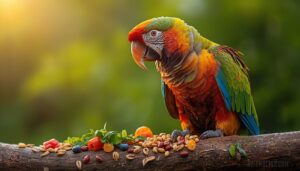
When a bird’s feathers start looking dull, brittle, or patchy, the diet is usually the first place to look. Several key vitamins and minerals directly affect how feathers grow and hold together.
Beyond diet, things like air quality, stress, and light exposure also shape feather health, as explored in this guide to environmental factors affecting feather quality.
Here’s what’s most commonly missing and why it matters.
Vitamin a Deficiency and Brittle Feathers
Vitamin A is the quiet guardian of your bird’s skin and feathers.
Without it, epithelial integrity breaks down, disrupting feather follicle health and keratin synthesis — the very process that builds strong, smooth feathers.
Immune suppression follows, making infections more likely and feather problems worse.
Dietary carotenoids from leafy greens and quality pellets are your bird’s best defense against vitamin A deficiency.
Ensuring daily sunlight exposure promotes vitamin D3 production, which aids calcium absorption for healthy feather growth.
Vitamin D3 and Poor Feather Quality
Sunlight does more than warm your bird — it drives the D3 Synthesis Pathway, enabling the Calcium Absorption Mechanism that keeps Feather Follicle Integrity intact.
Without enough vitamin D3, calcium metabolism falters, weakening the Skeletal Support Role that feather growth depends on.
Environmental D3 Factors, like limited UVB lighting accelerate these nutritional deficiencies, making targeted vitamin supplementation and feather problems harder to ignore.
Vitamin E and Weakened Plumage
Beyond calcium, your bird’s plumage also depends on antioxidant protection — and that’s where vitamin E earns its place. Without adequate vitamin E, feather shaft strength deteriorates, leaving quills brittle and prone to breakage. You may also notice plumage depigmentation in colored feathers, a visible sign of deeper nutrient deficiencies.
Proper fatty acid balance in the diet enhances immune system support and reduces feather loss through targeted dietary supplementation.
Biotin and Keratin Formation
Feathers are made almost entirely of keratin, and biotin is what keeps that keratin synthesis running smoothly. Acting as a Biotin Cofactor Role in amino acid metabolism, biotin helps your bird build and maintain Feather Keratin Strength. Without it, nutritional deficiencies show up fast.
Watch for these signs of low biotin:
- Brittle, easily broken feathers
- Flaky or rough skin patches
- Dull, lackluster plumage despite a clean environment
- Slow feather regrowth after molting
Adding egg yolk biotin sources, nuts, or seeds treats protein deficiency gaps before feather loss worsens.
Calcium Imbalance and Feather Problems
Calcium does more than build bones — it governs nerve signaling, muscle control, and feather retention. calcium deficiency disrupts all three. laying females face the heaviest toll, since eggshell formation stress pulls heavily from body reserves, leaving little for healthy plumage. calcium-phosphorus balance makes things worse.
| Problem | Cause | Effect on Feathers |
|---|---|---|
| Nerve hyperactivity | Low calcium | Irritability, plucking |
| Bone density impact | Calcium deficiency | Weak posture, poor preening |
| Eggshell formation stress | Depleted reserves | Feather loss during laying |
calcium-rich diet with the correct calcium-phosphorus ratio — ideally 2:1 — promotes normal molt. vitamin D3 through UVB lighting to enhance absorption.
Signs Your Bird Has a Deficiency
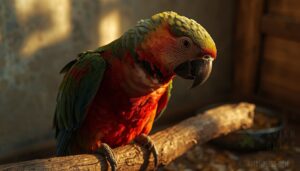
Vitamin deficiencies don’t always announce themselves loudly — sometimes the signs are subtle enough to miss until things get worse. Knowing what to look for puts you in a much stronger position to act early.
Here are the key signals that your bird’s body may not be getting what it needs.
Dull, Brittle, or Broken Feathers
Run your fingers gently along your bird’s feathers — do they feel rough, snap easily, or look ragged at the edges?
Damaged feather barbs alignment and brittle shafts often signal nutritional deficiencies impacting feathers, particularly low protein quality or vitamin deficiencies.
Environmental humidity impact, poor hydration, and feather integrity can worsen the breakdown, while improper handling techniques physically stress the feather structure anatomy further.
Dry Skin and Flaky Patches
Look closely at the skin beneath your bird’s feathers — dry, flaky patches often signal vitamin deficiencies, particularly low vitamin A and E. These nutrients provide critical skin barrier support, and without them, moisture balance breaks down.
Essential fatty acids also play a key role.
Poor environmental air quality and neglecting gentle bathing practices can worsen skin irritation, accelerating feather loss over time.
Slow Regrowth After Molting
molting drags on longer than expected, it’s rarely just bad luck. poor follicle function tied to nutritional deficiencies — especially low protein, biotin, or vitamin D3 — disrupts energy allocation at the cellular level.
metabolic stress slows feather regrowth substantially. seasonal light cues compound the problem.
protein-rich diet, proper hydration levels, and a targeted vitamin supplement can help your bird complete its molt on schedule.
Weakness, Weight Loss, or Lethargy
Feather loss paired with lethargy and weakness tells you something deeper is wrong. Vitamin deficiency can quietly trigger anemia indicators, disrupt electrolyte balance, and even contribute to hepatic lipidosis from poor nutrition.
Hormonal disorders and behavioral depression often follow. Unexplained weight loss alongside low energy warrants diagnostic procedures for avian vitamin deficiencies and prompt treatment and supplementation strategies for birds.
Behavioral Changes Like Irritability
A bird in discomfort doesn’t stay quiet about it. Nutritional deficiencies can reshape your bird’s personality before you notice the feather loss.
A bird’s personality often shifts from nutritional deficiency before a single feather falls
Watch for these behavioral signs of nutritional deficiencies:
- Territorial Guarding — guarding perches or food dishes aggressively
- Feeding Aggression — biting during meals or routine handling
- Sleep Disruption — restless nights and reactive waking
Shifts in vocalization patterns, stress-induced feather plucking, and unusual perch preference changes are flags that any avian veterinarian takes seriously when identifying vitamin deficiencies in pet birds.
Other Causes of Feather Loss
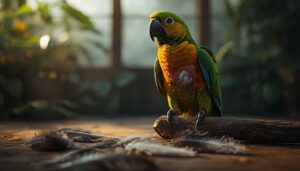
Vitamin deficiency isn’t the only reason your bird might be dropping feathers. Several other causes — some harmless, some serious — could be behind what you’re seeing.
Here are the main ones worth knowing about.
Normal Molting Versus Abnormal Shedding
Not every handful of feathers on the cage floor means something’s wrong. Seasonal timing matters — a normal molting process follows predictable windows tied to daylight and reproductive cycles.
Watch skin appearance (calm, unbroken) and feather regrowth rate (steady pin feathers emerging). When energy levels stay strong and loss looks even, that’s biology doing its job.
Rapid, patchy loss outside those windows warrants veterinary care.
Feather Plucking and Over-preening
Sometimes the problem isn’t loss — it’s damage from the bird itself. Feather plucking and over-preening often stem from stress-induced feather plucking triggered by boredom, loneliness, or disrupted cage layout.
Companion birds, especially need social stimulation.
Seasonal hormones, noise pollution, and even irregular beak trimming can escalate grooming into a destructive loop.
Vitamin supplement and guidance from an avian veterinarian can help break that cycle.
Mites, Lice, and Other Parasites
Not all feather damage comes from within. External parasites like mites and lice are sneaky culprits that often go unnoticed until the infestation is well established.
Mite identification can be tricky since they’re tiny and need magnification to confirm.
Lice, meanwhile, chew through feather material and follow a fast lice life cycle, rebuilding numbers quickly without proper parasite treatment options, environmental decontamination, and transmission prevention.
Skin Infections and Inflammation
Parasites aren’t the only external threat. Skin infections — bacterial cellulitis, fungal dermatitis, and viral pox infections — can cause inflammatory swelling, redness, and accelerated feather loss.
Watch for:
- Crusty lesions or scabs near feather shafts
- Localized skin irritation with redness or discharge
- Patchy loss beyond what parasite infestations or vitamin deficiencies explain
Diagnostic skin scrapings help distinguish bacterial infection from fungal infection accurately.
Stress, Boredom, and Poor Environment
Even a well-fed bird can develop stress-induced feather plucking when its environment works against it. Noise pollution from speakers or busy household traffic keeps cortisol elevated, while inconsistent lighting disrupts the daily rhythms that support healthy feather growth.
Draft exposure and lack of perches add physical discomfort.
Without toy rotation and behavioral enrichment, caged bird syndrome sets in — and feather plucking behavior follows.
Best Foods for Feather Health
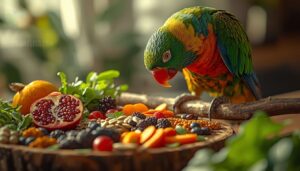
What your bird eats directly shapes how well it grows and holds onto its feathers. The right foods supply the vitamins, minerals, and protein that support healthy plumage from the inside out.
Here’s what to focus on when building a feather-friendly diet.
Pellets as The Diet Foundation
Think of pellets as your bird’s nutritional insurance policy. A quality pelleted diet eliminates seed-only diet risks by delivering Pellet Nutrient Consistency in every bite — no selective eating, no gaps.
Species-Specific Pellet Formulas match your bird’s life stage, while Pellet Shelf Stability keeps vitamins potent for longer. Use Pellet Adjustment Strategies gradually, and practice Pellet Portion Control so pellets genuinely anchor the daily diet.
Fresh Leafy Greens and Vegetables
Pellets cover the basics, but fresh vegetables fill the gaps that no bag of pellets can fully replicate. Dark leafy greens deliver Beta-Carotene Benefits, converting into vitamin A to combat feather loss from nutritional deficiencies. Mineral-Rich Leaves like kale and spinach also supply calcium, folate, and vitamin K — nutrients your bird needs for steady feather regrowth.
- Practice Seasonal Veg Rotation to vary nutrient profiles
- Respect your bird’s Leafy Texture Preference — chop or tear leaves as needed
- Follow proper Fresh Veg Storage: refrigerate and rinse before serving
- Offer fresh vegetables and fresh fruits and vegetables separately to track intake
Fruits in Moderation
Fruit is a supplement, not a staple. High water content can loosen droppings, while excess sugar intake displaces balanced diet essentials that your bird needs for nutrient absorption and feather loss prevention. Vitamin A-rich options like papaya support plumage when offered with portion control.
| Fruit | Key Nutrient | Serving Tip |
|---|---|---|
| Papaya | Vitamin A | 1 tsp, twice weekly |
| Blueberries | Antioxidants | 2–3 berries per session |
| Mango | Fiber balance | Small cubes, seasonal selection |
Rotate fresh fruits and vegetables to keep nutrition varied without overwhelming digestion.
Healthy Seeds, Nuts, and Grains
Seeds and nuts deserve a place in your bird’s diet — just not the starring role. seed-only diet lacks the protein, fiber, and mineral diversity your bird needs for healthy feathers.
Mix almonds, chia, and flax for fat balance and fiber benefits. Add whole grains for whole grain advantages.
Store seeds in airtight containers to prevent nutrient loss.
Foods Rich in Vitamin a and E
Two vitamins quietly do the most work for your bird’s feathers: vitamin A and E. Nutritional deficiencies in both accelerate feather loss faster than most owners expect.
For bird nutrition, focus on these five foods:
- Carrot beta-carotene converts directly to vitamin A
- Butternut squash adds a rich carotenoid boost
- Collard greens deliver vitamins A, D, E together
- Safflower oil improves fat-soluble vitamin absorption
- Egg yolk rounds out feather-rebuilding nutrients
How to Fix Vitamin Deficiencies
Fixing vitamin deficiencies doesn’t have to feel overwhelming once you know where to start.
The good news is that most cases respond well to a few targeted changes in diet, light exposure, and supplementation.
Here’s what actually works.
Safe Vitamin Supplementation
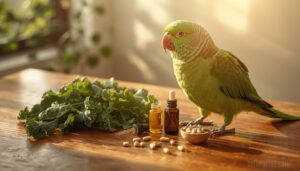
Before reaching for a supplement bottle, read the label carefully — Label Reading and Dosage Calculation matter more than most owners realize. Fat-soluble vitamins like A, D3, and E can accumulate, making Toxicity Monitoring essential. Time doses consistently for proper Supplement Timing, and watch for Avoiding Interactions between pellets and additives.
| Vitamin | Risk if Overdosed | Safe Source |
|---|---|---|
| A | Skin shedding, toxicity | Leafy greens |
| D3 | Calcium imbalance | UVB + low-dose supplement |
| E | Cumulative fat load | Seeds, greens |
Switching From Seed-only Diets
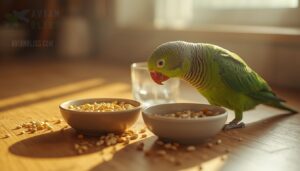
Once you’ve sorted out supplementation, tackling the seed-only diet itself is the real fix for feather loss.
Pellet introduction strategies work best when you’re gradual — offer pelleted diets in a separate dish first.
Texture modification techniques like softening pellets help finicky birds adjust.
Monitor intake changes daily.
A steady, gradual food change corrects vitamin deficiencies far more reliably than supplements alone.
Improving Protein Intake During Molt
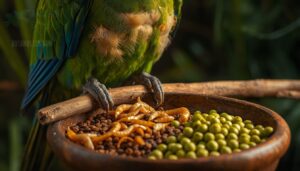
Diet changes alone won’t rebuild feathers if protein intake falls short during molting. Feathers are almost pure keratin, meaning your bird’s protein requirement spikes sharply when regrowth begins.
Prioritize these four strategies:
- Switch to a molt-specific feed with higher feed formulation ratios
- Add insect protein sources like mealworms or black soldier fly larvae
- Offer plant protein options such as cooked legumes or peas
- Time protein increases to peak feather loss, not after
Essential amino acids — especially lysine and methionine — drive healthy regrowth and correct nutritional deficiencies that worsen feather loss.
Using UVB Light for Vitamin D3
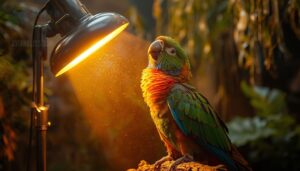
Protein isn’t the only nutrient that needs a delivery system — vitamin D3 does too, and your bird can’t make it without UVB light. A daily UVB lighting setup using the 290–315 nm UVB wavelength range gives your bird what indoor living strips away.
Watch lamp distance and exposure duration closely, and consider skin pigmentation, since darker-feathered birds need longer sessions.
When to Avoid Over-supplementing
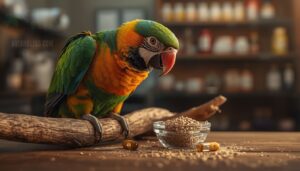
More isn’t always better — and with fat-soluble vitamins, it can quietly become dangerous. Vitamins A and D store in fat and liver tissue, so repeated high doses push past toxicity thresholds before you notice a problem.
Always check labels carefully, since supplement interaction risks are real when pellets already contain fortified nutrients.
An avian veterinarian can guide dose monitoring to protect your bird’s balanced diet and feather health.
When Feather Loss Needs a Vet
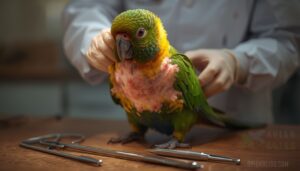
Sometimes feather loss goes beyond what better food or lighting can fix. When certain symptoms show up, your bird needs a professional eye — not just a diet tweak.
Watch for these signs that it’s time to call your avian vet.
Red Skin, Sores, or Bleeding
Red skin, open sores, or bleeding around bare patches aren’t just cosmetic concerns — they’re your bird’s body sending an urgent signal.
Inflammatory skin reactions, skin scabbing, and chronic wound management issues often trace back to bacterial infections, parasites, or deficiencies in vitamin A and zinc that compromise skin integrity.
If you notice persistent skin irritation, warmth, or vascular hemorrhage beneath the surface, see your avian vet promptly.
Sudden Feather Loss or Bald Patches
Sudden bald patches or rapid feather loss between molts shouldn’t be dismissed. underlying medical conditions can be responsible:
- Follicle necrosis from bacterial or viral pox infections
- Hormonal imbalance disrupting normal feather cycling
- Blood flow restriction starving developing follicles
- Genetic feather disorders or stress-induced feather plucking
Nutritional deficiencies can also accelerate loss. Regular veterinary checkups help identify the cause before patches spread.
Changes in Appetite or Droppings
Your bird’s gut doesn’t lie. Changes in appetite or droppings often signal deeper trouble — digestive upset, gut microbiome imbalance, or food aversion tied to vitamin deficiency.
Watch for parasite-related diarrhea, watery droppings, or reduced water intake issues alongside feather loss.
These paired symptoms suggest nutritional balance has broken down.
Regular veterinary checkups help connect the dots before things worsen.
Weight Loss and Low Energy
Weight loss and low energy together are a serious warning, not just a rough patch.
A calorie deficit slows energy metabolism, while protein catabolism breaks down muscle when intake is too low. Dehydration effects and electrolyte imbalance compound the fatigue.
Parasite energy drain can accelerate feather loss and malnutrition in birds quickly.
If your bird feels lighter than usual, see a vet promptly.
How to Prevent Future Feather Loss
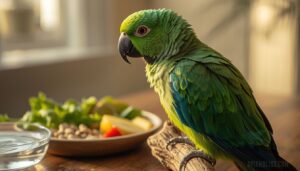
Preventing feather loss comes down to a few consistent habits you can start today. Most of them don’t require much time or money — just a little attention to the right things.
Here’s what to focus on.
Balanced Daily Diet for Birds
Think of your bird’s daily diet as the foundation everything else rests on. A seed-only diet leaves critical nutritional gaps, and vitamin deficiency doesn’t announce itself until feather growth disorders appear.
Aim for 60–70% pelleted diets, paired with fresh vegetables for vitamin A and E.
Adjust portion sizes seasonally, provide clean hydration sources daily, and consider probiotic supplementation to support nutrient absorption.
Regular Weight and Food Tracking
A solid diet means little if you can’t see what your bird actually eats. Daily Food Log entries, paired with consistent Scale Calibration Practices, turn guesswork into real answers.
- Weigh your bird at the same time daily for accurate Weight Trend Analysis
- Record Portion Size Monitoring data for pellets, greens, and treats separately
- Log leftovers to assess true intake through Feeding Schedule Consistency
- Track weight loss alongside appetite dips using Reviewing Food Logs and Weight Tracking for Birds
- Flag any drop exceeding 5% through Monitoring Weight Changes as Early Deficiency Indicator for Regular health checkups for pet birds
Clean Cages and Proper Humidity
A clean cage matters just as much as a clean diet. A consistent Spot Cleaning Routine — removing droppings and wet food daily — keeps ammonia low and bacteria from multiplying.
Follow that with proper Disinfection Timing weekly, and you’ve cut two major triggers of environmental stress.
Keep humidity levels between 40–60% using Humidity Monitoring Tips like placing a hygrometer near your bird’s perch, practice Moisture Source Control by fixing leaks promptly, and make sure Ventilation Management keeps air moving without direct drafts.
Enrichment to Reduce Stress
A tidy cage sets the stage, but your bird’s mind needs feeding too. Boredom quietly fuels feather plucking.
Rotate puzzle feeders, offer foraging toys that make meals a small challenge, and vary perch heights for natural movement.
Short, calm training sessions add predictability.
Sensory enrichment, cage enrichment, and consistent psychological enrichment are your best tools for stress management in pet birds.
Routine Avian Checkups
Even the best enrichment routine can’t replace what a vet catches early.
Regular health checkups for pet birds include weight monitoring, crop palpation, uropygial gland exam, and respiratory auscultation — details easy to miss at home.
Blood panel screening and diagnostic testing for parasites can reveal hidden problems before feathers suffer.
Don’t wait for visible symptoms; schedule routine veterinary care annually.
Frequently Asked Questions (FAQs)
How to treat feather loss in birds naturally?
Natural treatment starts with diet, not a medicine cabinet.
Address nutritional deficiencies first through dietary recommendations for healthy feathers: upgrade to pellets, add leafy greens, and introduce foraging toys to ease stress-induced feather plucking.
Can birds recover feathers after severe vitamin loss?
Yes, most birds can recover feathers after vitamin deficiency, but the feather recovery timeline depends on how long the deficiency lasted.
Severe or prolonged cases may result in only partial follicle regeneration, even with corrected nutrition.
Which bird species are most prone to deficiencies?
Seed‑only parrots, low‑light cockatiels, high‑metabolism budgerigars, large‑beaked African greys, and tropical conures top the list — each carries species‑specific vitamin needs that make nutritional deficiencies and feather loss especially likely in parrots.
How long does feather regrowth typically take?
Feather regrowth generally takes 4–12 weeks, depending on feather type and species. Primary feathers regrow slowest, while small contour feathers return faster. Nutritional deficiencies can delay the process considerably.
Can vitamin deficiencies affect a birds lifespan?
Vitamin deficiency absolutely affects lifespan. Immune decline, oxidative damage, and organ failure are all mortality risks in longevity studies on avian nutrition.
Chronic deficiencies quietly shorten bird health outcomes faster than most owners realize.
Conclusion
A molting feather is more than lost plumage—it’s a signal your bird is sending, one nutrient at a time. When you ask why is my bird losing feathers vitamin, deficiency is often the quiet answer hiding behind a seed bowl that looks full but delivers little.
Fix the diet, add real variety, restore what’s missing, and your bird’s feathers will reflect exactly what you put into its care.
- https://azeah.com/birds/vitamin-deficiency-parrots
- https://featheredfarmlife.com/why-your-chicken-loses-feathers-causes-and-solutions/
- https://birdsinthetree.com/why-is-my-bird-losing-feathers/
- https://www.bivatec.com/blog/vitamin-deficiencies-in-poultry-birds-avitaminoses
- https://iere.org/what-vitamins-help-birds-grow-feathers/