This site is supported by our readers. We may earn a commission, at no cost to you, if you purchase through links.

A breeding parrot burns through nutrients the way a marathon runner burns through calories—fast, relentlessly, and with little margin for a bad meal. During laying season, a hen pulls calcium from her own bones if her diet falls short, and chicks fed by nutritionally depleted parents often show it in their feather quality and growth rate. The difference between a failed clutch and a thriving one often comes down to what’s sitting in the food dish.
Choosing the right parrot pellet foods for breeding pairs isn’t about picking the prettiest bag—it’s about matching measurable nutrition to real biological demand.
Table Of Contents
- Key Takeaways
- Best Parrot Breeder Pellet Foods
- Breeding Pair Nutrition Requirements
- Key Ingredients in Breeder Pellets
- Calcium and Vitamin D3 Balance
- Vitamins, Probiotics, and Additives
- Pellets Versus Seed Diets
- Feeding Schedule for Breeding Parrots
- Choosing Pellets for Your Pair
- Frequently Asked Questions (FAQs)
- What food is good for parrots breeding?
- Can breeding parrots eat the same pellets year-round?
- Do male parrots need different nutrition than females?
- How do I store breeder pellets to maintain freshness?
- Should pellets change between first and second clutches?
- Can overcrowded aviaries affect how pairs eat pellets?
- Conclusion
Key Takeaways
- Breeding hens will pull calcium straight from their own bones if their diet falls short, so 4–5 grams of daily calcium isn’t optional — it’s the floor.
- Breeder pellets need at least 19% protein and 6.5% fat to keep up with the energy demands of laying, chick-rearing, and the hormonal surge that comes with both.
- Seeds can’t fill the nutritional gaps that breeding creates — pellets win because every bite delivers the same balanced mix, with no cherry-picking and no surprises.
- Match pellet size to your bird’s beak, check labels for specific calcium sources like dicalcium phosphate, and store everything airtight — freshness and fit matter as much as the formula itself.
Best Parrot Breeder Pellet Foods
Not every pellet on the market is built for breeding demands — and that difference really does show up in your results.
The four options below are worth knowing if you’re serious about giving your pair the right nutritional foundation. Here’s what stood out:
Getting the pellet-to-produce ratio right is a solid start, but understanding common parrot vitamin deficiencies and their causes helps you spot gaps before they become health problems.
1. Roudybush High Energy Breeder Pellets
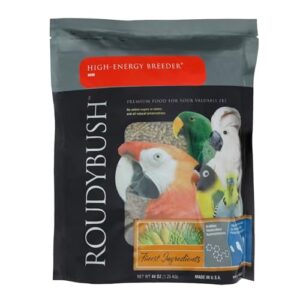
Roudybush High Energy Breeder Pellets have been a trusted choice for serious bird breeders since 1985. Formulated for birds at least 3 inches tall—such as conures, lovebirds, and parakeets—these mini pellets provide essential nutrition for demanding breeding seasons.
The pellets deliver at least 19% crude protein and 6.5% crude fat, ensuring birds meet their energy needs. Calcium carbonate and dicalcium phosphate are included to support healthy egg production, while added lysine, methionine, and arginine address critical amino acid gaps often missing in basic diets.
With no fluff, just solid nutrition, this formula prioritizes functional ingredients to fuel reproductive success.
| Best For | Bird breeders with conures, lovebirds, or parakeets who need a complete, high-energy diet to support breeding pairs, egg laying, and chick weaning. |
|---|---|
| Primary Ingredients | Corn, wheat, soy, rosemary, yucca |
| Breeder Formula | Yes, high-energy breeder |
| Added Vitamins | Comprehensive vitamin/mineral blend |
| Pellet Form | Small dry pellets (mini) |
| Net Weight | 44 oz (1.25 kg) |
| Waste Reduction | Yes, vs. seed diets |
| Additional Features |
|
- Packed with extra protein, calcium, and Vitamin D₃ to power through demanding breeding seasons without needing extra supplements.
- Clean pellet format means less mess and waste than seed diets—easier on you, better for the birds.
- Science-backed formula from a brand that’s been at it since 1985, so you know it’s not guesswork.
- Pellet size can be too big for very small or young birds under 3 inches, so it’s not a one-size-fits-all solution.
- Contains soy and various additives that might not sit well with birds that have sensitivities.
- Some owners report dusty pellets and picky birds that take time to warm up to them—acceptance can be hit or miss.
2. Roudybush High Energy Breeder Crumble
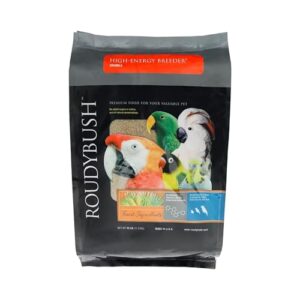
If your birds are on the smaller side — conures, lovebirds, parakeets — the Crumble version of this formula might suit them better. It offers the same high-energy breeder nutrition, just in smaller, uniform pieces for easier grabbing and swallowing.
This format reduces waste in the dish and mess on the cage floor. The smaller pieces maintain all nutritional benefits, ensuring your breeding pair receives the elevated protein, fat, and Vitamin D₃ they need.
Critically, the formula preserves what’s working nutritionally, delivering optimal energy and nutrients without compromise.
| Best For | Bird owners breeding or weaning smaller species like conures, lovebirds, and parakeets who want a complete, low-mess diet that supports egg production and chick growth. |
|---|---|
| Primary Ingredients | Corn, wheat, soy, rosemary, yucca |
| Breeder Formula | Yes, high-energy breeder |
| Added Vitamins | Comprehensive vitamin/mineral blend |
| Pellet Form | Crumble pellets |
| Net Weight | 25 lb (11.3 kg) |
| Waste Reduction | Yes, vs. seed diets |
| Additional Features |
|
- Crumble size is a great fit for smaller birds, making it easier to grab and swallow without wasting food
- Packed with extra protein, calcium, and Vitamin D₃ — exactly what breeding pairs and growing chicks need
- Less spillage and mess than seed mixes, so cleanup is a lot quicker
- At $79.95 for a 25 lb bag, it’s a bigger upfront cost — especially with no trial size to test if your birds will even eat it
- Some buyers have run into dust, broken packaging, or inconsistent pellet quality on delivery
- The high-energy formula is overkill for birds that aren’t breeding or molting, so it’s not a great everyday option for sedentary pets
3. Psittacus Parrot Breeder Pellet Food
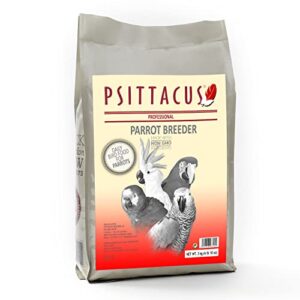
If you’re working with medium to large parrots — Amazons, African Greys, macaws, cockatoos — the Psittacus Parrot Breeder Pellet is worth a close look. Designed to meet the demands of breeding season, it is formulated in Europe using non-GMO ingredients and no artificial colors.
The formula includes soybean meal, peas, linseed oil, and dual calcium sources (calcium carbonate and dicalcium phosphate). These components ensure a balanced nutritional profile tailored to the needs of breeding parrots.
This pellet should constitute approximately 70–80% of the total diet, with fresh produce rounding out the remaining portion. This combination supports optimal health and reproductive success during critical periods.
| Best For | Owners of medium to large parrots — Amazons, African Greys, macaws, cockatoos — especially during breeding season. |
|---|---|
| Primary Ingredients | Non-GMO corn, soy, wheat, fruit flavor |
| Breeder Formula | Yes, breeding-suitable |
| Added Vitamins | Full vitamin/mineral profile |
| Pellet Form | Standard pellets |
| Net Weight | 6.6 lb (3 kg) |
| Waste Reduction | Yes, vs. seed diets |
| Additional Features |
|
- Non-GMO, no artificial colors or synthetic antioxidants — clean ingredients you can feel good about
- Works as a complete diet base, so no need to stress over extra vitamin or mineral supplements
- Formulated for all life stages, making it easy to use across your whole flock
- Pricier than a lot of competing pellet brands on the market
- Contains corn, soy, and wheat — not ideal if your bird has known sensitivities
- Needs careful storage after opening (airtight container, cool and dry) or it’ll go stale fast
4. Roudybush High Energy Breeder Bird Food
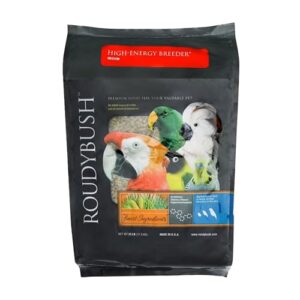
For larger parrots feeding growing chicks, Roudybush High Energy Breeder Bird Food hits a practical sweet spot. At $19.95 for 44 oz, it’s reasonably priced without cutting corners. The medium pellets suit birds 8 inches and up — think conures, cockatiels, and mid-sized parrots.
Extra protein, calcium, and Vitamin D3 support both parents and post-weaning chicks through the most demanding stretch of the breeding cycle.
The zip-lock bag and low-waste pellet format keep things clean and consistent.
| Best For | Owners of medium to large parrots — conures, cockatiels, and similar birds — who are actively breeding or raising chicks and want a complete, no-fuss diet. |
|---|---|
| Primary Ingredients | Corn, wheat, soy, rosemary, yucca |
| Breeder Formula | Yes, high-energy breeder |
| Added Vitamins | Comprehensive vitamin/mineral blend |
| Pellet Form | Medium pellets |
| Net Weight | 44 oz (1.25 kg) |
| Waste Reduction | Yes, vs. seed diets |
| Additional Features |
|
- Packed with extra protein, calcium, and Vitamin D3 to support breeding parents and growing chicks through the toughest part of the cycle
- Low-waste pellet format means less mess in the cage and more food actually eaten
- Resealable zip-lock bag keeps things fresh and easy to store between feedings
- Medium pellets aren’t a great fit for smaller birds under 8 inches — you’ll likely see waste or struggle with acceptance
- Pricier than basic seed mixes, which can add up fast if you’re feeding a larger flock
- No trial size available, so if your bird turns its beak up at it, you’re stuck with a full bag
Breeding Pair Nutrition Requirements
Breeding season puts your parrots’ bodies through a lot, and their food needs to keep up. What works fine for a non-breeding adult simply won’t cut it once egg-laying begins.
Fueling your pair through every stage requires understanding these heightened demands. Here’s what you need to know about providing adequate nutrition during this critical period.
Higher Protein Needs During Breeding Season
Breeding season hits your parrots like a second job. Protein requirement surge is real — laying hens and active parents need up to 20% protein, nearly double a maintenance diet.
Without it, muscle preservation suffers and egg protein synthesis stalls. Ensuring optimal pre‑breeding nutrition is essential for reproductive success in breeding parrots.
- Reproductive stress depletes body reserves quickly
- Seasonal diet boost prevents parents from "running on empty"
- Pelleted feed for captive parrots delivers consistent protein content in feed
- Complete nutritional formula for breeding parrots covers amino acid gaps that seeds lack
- Balanced protein, fat, and fiber levels in bird feed support the full breeding cycle
Ideal Crude Protein, Fat, and Fiber Ranges
Think of these numbers as your baseline: crude protein not less than 19%, crude fat not less than 6.5%, and crude fiber not more than 4.5%. However, protein target variability exists—species-specific ratios shift these targets depending on size and life stage.
Fine-tuning these numbers for your specific birds gets easier with a look at avian health supplements for breeding birds, especially when timing nutrition around the breeding cycle.
Fat level benchmarks and fiber ideal ranges together determine digestible energy balance. Thus, balanced protein, fat, and fiber for parrots matter more than any single number.
Formulated parrot breeder feed composition ties it all together.
Why Breeding Parrots Need More Calories
Once egg production begins, your pair’s calorie demands shift dramatically. The hormonal energy surge alone raises their elevated metabolic rate far beyond normal levels. Adding nesting activity costs, reproductive thermogenesis, and frequent feeding runs means these birds are burning serious fuel daily.
Your pelleted feed must deliver:
- Fat-driven calories for energy metabolizable content
- Balanced protein, fat, and fiber levels in bird feed
- Adequate protein content in feed for tissue demands
- Complete nutritional requirements for breeding birds at every stage
Nutritional Differences Between Breeders and Maintenance Diets
A maintenance pellet isn’t built for reproduction demands, as metabolic demand spikes during breeding. Pelleted feed formulations for captive parrots must therefore prioritize higher fat for lipid sourcing and more calcium for mineral bioavailability to meet these intensified needs.
Essential fatty acids also require adjustment, with higher levels of essential fatty acids critical for ensuring egg quality. This reflects the broader necessity of recalibrating nutrient profiles to support reproductive physiology.
Seasonal nutrient timing matters significantly, as resource allocation shifts toward reproduction. Consequently, balanced protein, fat, and fiber levels in bird feed must exceed standard nutritional requirements to sustain breeding birds’ elevated metabolic and developmental demands.
How Chick-rearing Changes Parental Food Demands
Once chicks hatch, your pair’s nutritional requirements for breeding birds shift rapidly. Here’s what changes:
Key adaptations include:
- Feeding frequency boost — parents deliver more meals when chicks signal hunger
- Meal size adjustment — second-arriving parents reduce portions if chicks are already fed
- Parental coordination — both parents jointly increase feedings when chicks are deprived
- Begging-driven selectivity — intense begging determines who gets fed first
- Foraging condition impact — better food availability means heavier parents and stronger fledging success
Maintain constant access to high-protein pellets throughout this critical period.
Key Ingredients in Breeder Pellets
Not all pellets are created equal, and what’s inside the bag matters more than the brand name. Breeder pellets are formulated with specific ingredients that directly support egg production, fertility, and chick growth.
Here’s what to look for when reading labels: focus on components that explicitly promote these critical functions.
Soybean Meal, Corn Gluten Meal, and Egg Protein
Three protein sources do the heavy lifting in most breeder pellets: Dehulled Soybean Meal, Corn Gluten Meal, and Dried Egg Product.
Dehulled Soybean Meal offers solid digestibility, supplying lysine your breeding birds need most.
Corn Gluten Meal contributes sulfur amino acids and maintains consistent protein content across batches.
Dried Egg Product enhances palatability, providing a complete, highly digestible boost for parents and chicks—especially during peak nutritional demands.
Both source variability and processing impact matter, so check labels carefully.
Ground Flaxseed for Essential Fatty Acids
Ground flaxseed brings more than just fat to your breeding pairs’ pellet. It’s a solid plant source of ALA, the omega-3 that enhances membrane health support and anti-inflammatory benefits during the physical demands of laying and chick rearing.
ALA bioavailability from ground flaxseed beats whole seeds every time.
Lignans add lignan antioxidant synergy on top, making it a smart addition to any quality pelleted feed.
Wheat Middlings and Digestible Energy Sources
Wheat middlings serve a dual role in pelleted feed for captive parrots: they supply digestible carbohydrates and act as a binding agent for the pellet matrix.
Their DE range of 2,352–2,844 kcal/kg highlights significant variability, largely influenced by starch content fluctuations. Starch variability directly impacts energy consistency in formulations.
NSP digestibility can reduce metabolizable energy, further complicating energy predictions. Additionally, moisture levels introduce another layer of variability, altering energy calculations.
Well-designed formulations must enforce inclusion limits to maintain stable metabolizable energy content, ensuring nutritional reliability despite these dynamic factors.
Amino Acids for Fertility and Chick Growth
Beyond energy, the building blocks really matter. Lysine support drives tissue growth in hatchlings.
Methionine glutathione activity protects cells during the stress of egg production.
Arginine metabolism helps regulate hormones tied to fertility.
Threonine gut development shapes how well chicks absorb nutrients from day one.
Balanced amino acids — not just protein content in feed — are what avian reproductive nutrition actually depends on.
Ingredients to Compare on Pellet Labels
Once you’ve confirmed amino acid balance matters, flip the bag over. Ingredient order tells you what dominates the formula.
Watch for by-product coding, oil type disclosure, and mineral form labeling — specifics like "dicalcium phosphate" are preferable to vague terms like "mineral blend."
Check antioxidant claims and probiotic enrichment details, as these impact formula quality.
Solid nutrient profile labeling eliminates guesswork from your breeding program entirely.
Calcium and Vitamin D3 Balance
Calcium is one of those nutrients that can make or break a breeding season, especially for laying hens going through clutch after clutch. Getting the balance right between calcium, phosphorus, and vitamin D3 matters more than most people realize.
Here’s what you need to know about each piece of that puzzle.
Calcium Needs for Laying Hens
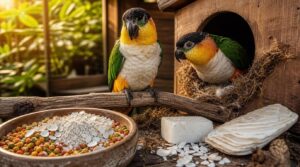
Eggshell demand during laying is relentless—a laying hen requires roughly 4 to 5 grams of daily calcium to sustain production. She cannot rely on bone reserves alone for more than a few eggs, making bioavailable calcium in her diet non-negotiable.
A laying hen needs 4 to 5 grams of daily calcium — bone reserves alone simply cannot sustain production
Calcium deficiency manifests quickly: thin shells, soft eggs, or reduced production. Mineral supplementation for avian health begins with a consistent calcium source for egg laying every single day.
Calcium Carbonate and Dicalcium Phosphate Sources
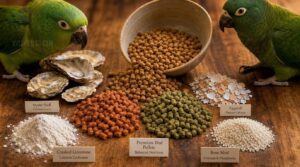
Most breeder pellets rely on two calcium workhorses: calcium carbonate and dicalcium phosphate. Calcium carbonate — often limestone-derived, with limestone particle fineness controlling absorption rate — supplies pure calcium. Shell-derived calcium from oyster or eggshell sources works similarly. Bone-sourced dicalcium phosphate adds both calcium and phosphorus in one ingredient.
Check for label ingredient clarity when comparing products, since your breeding bird’s diet depends on knowing exactly what’s inside.
Why Calcium-to-phosphorus Ratios Matter
Getting the calcium to phosphorus ratio right isn’t just a formulation detail — it’s the backbone of mineral balance in avian diets.
When phosphorus runs too high relative to calcium, a bird’s body triggers metabolic compensation, straining hormone regulation and kidney function over time.
Poor balance also weakens bone mineralization and eggshell quality.
Calcium carbonate helps, but the formulation of pelleted feed for captive parrots ultimately determines reproductive health outcomes.
Vitamin D3’s Role in Calcium Absorption
Calcium only works if your bird can actually absorb it — and that’s where vitamin D3’s crucial role begins. Once converted to its active form, it activates vitamin D receptors in the gut, driving both transcellular transport and paracellular diffusion.
Calcium-binding protein synthesis begins within hours, ensuring efficient absorption. However, without enough D3, even a perfect calcium-to-phosphorus ratio fails to meet breeding nutrition demands.
Special Considerations for African Greys and Cockatiels
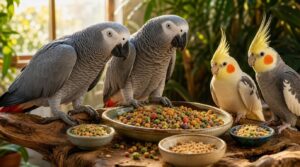
African greys and cockatiels aren’t interchangeable regarding calcium management — and that distinction matters during breeding. African grey parrots face a real hypocalcemia risk, so their species-specific diet needs reliable calcium and D3 together.
- Stress Reduction: Keep routines stable; disruption disrupts breeding behavior fast
- Protein Demands: Match pelleted bird food to each species’ size and output
- Texture Preference: Cockatiels often do better with crumble over standard pellets
- Health Monitoring: Watch for tremors in African greys — a red flag for calcium shortfall
Vitamins, Probiotics, and Additives
Protein and calcium get a lot of attention, but vitamins, probiotics, and extra additives in breeder pellets quietly do a lot of heavy lifting too. These ingredients support everything from egg production to gut health to feather quality during one of the most demanding periods in your bird’s life.
Here’s what to look for in a good breeder formula.
Vitamin A, E, K, and B-complex Support
Think of vitamins as a behind-the-scenes crew keeping everything running. Retinyl acetate (Vitamin A) manages immune modulation and tissue health. d-Alpha Tocopheryl Acetate delivers antioxidant synergy, protecting cells from oxidative stress. Menadione Sodium Bisulfite Complex Vitamin K aids blood clotting — essential during laying. Fat-soluble absorption means all three need dietary fat to work.
B-complex vitamins drive energy metabolism daily, fueling both parents through the breeding push.
Probiotics for Digestive Health During Breeding
Beyond vitamins, probiotic and vitamin enrichment in avian diets work as a gut‑stabilizing layer during the stress of breeding.
Strains like Lactobacillus acidophilus fermentation product support the gut barrier when microbiome stress peaks.
Strain matching and encapsulation delivery matter — poorly protected cultures die before reaching the intestine.
Dose timing around laying keeps microbial balance steady, directly supporting avian reproductive nutrition and chick digestive development.
Natural Antioxidants and Pellet Freshness
Good gut support matters — and so does what’s in the bag when you open it. Mixed tocopherols and rosemary polyphenols work as antioxidant preservatives that slow lipid oxidation, protecting the fats your breeders rely on.
Tocopherol stability and oxygen barrier packaging together extend shelf life meaningfully.
Keep pellets sealed and away from humidity — humidity control is just as important as the formula itself.
Carotenoids for Coloration and Reproductive Support
Carotenoids do more than enhance avian appearance. Canthaxanthin, beta-carotene, and Tagetes extract support ketocarotenoid synthesis—pigment conversion pathways directly linking coloration to fertility. This antioxidant function is critical during breeding, when oxidative stress peaks. Quality dietary carotenoids reinforce the coloration-fertility connection, enhancing vitamin and mineral fortification for reproductive success.
- Beta-carotene converts to vitamin A, protecting reproductive tissue
- Canthaxanthin supports red plumage through pigment conversion pathways
- Tagetes extract provides natural colorants and antioxidants in parrot diets
- Ketocarotenoid synthesis reflects oxidative stress management ability
- Carotenoid levels correlate with clutch success and fledgling output
Fermented Yeast, Enzymes, and Nutrient Availability
Fermented brewers dried yeast takes nutrient density a step further. Through Fermentation Enzyme Synergy, yeast breaks down anti-nutritional compounds — a process called Antinutrient Degradation — unlocking Mineral Bioavailability Increase across calcium, zinc, and phosphorus. Yeast Protein Enhancement also boosts digestible protein fractions, supporting your breeding bird diet when it matters most.
| Fermentation Benefit | Breeding Impact |
|---|---|
| Digestive Enzyme Activation | Faster nutrient absorption |
| Anti-nutrient Degradation | Better mineral uptake |
| Yeast Protein Enhancement | Higher usable protein |
| Lactobacillus casei Fermentation Product | Improved gut health |
| Mineral Bioavailability Increase | Stronger eggshell formation |
Pellets Versus Seed Diets
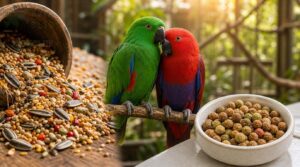
Seeds aren’t bad, but they can’t do it all — especially when your birds are breeding. Pellets fill the nutritional gaps that seeds leave behind.
Knowing when to use each one makes a real difference.
Here’s what you need to know about both.
Benefits of Formulated Breeder Pellets
Formulated breeder pellets take the guesswork out of breeding nutrition. Each bite delivers consistent nutrient delivery — no cherry-picking, no gaps.
- Selective feeding reduction — Birds can’t sort out favorites like they do with seed mixes
- Label fortification — Vitamin and mineral fortification for reproductive performance is printed right on the bag
- Enhanced digestibility — Pelleting improves nutrient absorption, supporting calcium source for egg laying and essential fatty acids uptake
- Microbial safety — Heat processing reduces harmful bacteria
Risks of Seed-heavy Breeding Diets
Seeds look harmless, but a seed-heavy breeding diet quietly stacks the odds against your birds. Selective eating means your birds cherry-pick favorites and skip key nutrients —
This creates calcium deficiency, protein inadequacy, and real nutrient deficiencies without obvious warning signs. Add in the fatty liver and obesity risk from all that extra fat, and the health risks of seed-only diets during breeding become hard to ignore.
Why Pellets Improve Nutrient Consistency
Unlike seeds, a pellet-based diet gives your breeding pair the same balanced nutrient profile in every bite. That is the power of a uniform mix and fixed density — no sorting, no gaps.
Three reasons pellets win on consistency:
- Thermal processing improves digestibility and nutrient absorption
- Reduced waste means more nutrients actually reach the crop
- Stable formulation keeps protein, calcium, and vitamins steady daily
When Seeds and Sprouts Can Support Breeding
Sprouted seeds act as a seasonal boost — not a replacement for pellets during breeding season. They supplement nutrition when offered strategically, not as a primary feed source.
Timing is critical: provide sprouts during peak laying and chick-rearing periods, when nutrient demands surge. This aligns with the birds’ heightened requirements for successful reproduction and growth.
Watch sprout hygiene closely, as moisture fosters bacterial growth. Prioritize high-viability seed mixes and maintain strict cleanliness to prevent contamination.
Adhere to small portions to avoid overfeeding. Let pellets remain the foundation of the diet, ensuring balanced nutrition year-round.
Avoiding Nutritional Gaps During Chick Rearing
Chick rearing is where nutritional gaps bite hardest. Missing the window can cause growth to stall rapidly. Keep these three priorities straight:
- Offer stage-specific crumbles early — smaller particles match beak size and aid digestion.
- Practice amino acid profiling — lysine and methionine drive muscle development, not just total protein.
- Track mineral ratio monitoring — calcium and phosphorus requirements must stay balanced for healthy bone formation.
Gut flora stability, shift timing, and weaning chick nutrition all depend on consistent, balanced protein, fat, and fiber levels in bird feed. Optimizing nutrient density for breeding success means that your supplementation strategies during bird breeding should never leave chicks on incomplete diets.
Feeding Schedule for Breeding Parrots
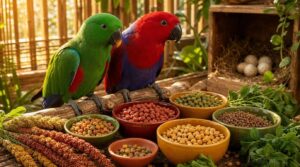
Timing matters more than most people realize for feeding breeding parrots. What you offer — and when can make a real difference in egg quality, clutch size, and how well your chicks grow.
Here’s how to structure feeding from pre-lay through weaning.
When to Start Breeder Pellets
Start your lead-in period one to two weeks before pre-laying activity ramps up—once the pair’s appetite stability is confirmed and both birds are eating normally. Delay if illness or crop adjustment issues arise.
Think of it like Mazuri Parrot Breeder timing: optimizing nutrient density for breeding success means the diet is already working before the first egg arrives.
Feeding During Egg Laying
Once laying begins, your feeding guidelines for exotic parrots shift quickly. Evening calcium timing matters most — eggshell calcification occurs overnight, so offer pelleted bird food and a small calcium boost late in the day.
Maintain a steady energy balance and ensure continuous access to nighttime feed. Introduce eggfood to provide a protein spike timing boost, and monitor hydration management closely — hens drinking less is an early warning sign.
Pellet Access During Chick Rearing
Once chicks hatch, your feeding schedule for breeding pairs shifts into high gear. Keep pelleted bird food available all day—parents feed on demand, and gaps hurt chick growth fast.
- Moisture Timing – Soften pellets slightly before peak feeding hours.
- Softening Techniques – Small portions prevent spoilage; remove leftovers promptly.
- Fines Management – Clean your feeding trays daily to reduce waste.
Good parent regurgitation depends on pellet texture. A pellet-based diet with balanced protein, fat, and fiber levels in bird feed makes crop transfer smoother and ensures the nutrient requirements of laying birds are fully met.
Switching to Starter-grower Formulas
When feathers grow in and chicks start eating independently, it’s time to transition to a starter-grower formula. Begin with a 50/50 Mix Ratio Strategy—blend both pellet types until fully consumed.
| Shift Step | What to Watch |
|---|---|
| 50/50 blend start | Daily intake monitoring |
| Protein Phase Matching | Feather and weight progress |
| Digestive Stress Mitigation | Slow transition if intake drops |
| Full grower switch | Steady independent feeding |
Using Fresh Foods Alongside Pellets
Once your starter-grower blend is established, fresh foods become your secret edge. Aim for 20–30% of daily intake as produce — sound portion guidelines that support nutritional balance without crowding out pelleted bird food. Fresh fruits and vegetables add a hydration boost, foraging enrichment, and seasonal variety that breeding pairs genuinely respond to.
- Sprouted seeds for digestible protein content in feed
- Leafy greens for calcium and plant compounds
- Soft vegetables like cooked sweet potato for easy crop digestion
- Fresh fruit in small amounts for natural sugars and variety
- Dried insects for an additional protein boost during chick-rearing
Always remove fresh food within two hours — food safety matters most when chicks are in the nest.
Monitoring Crop Moisture and Chick Growth
Once pellets are in place, don’t forget to track how well chicks are actually eating. Crop Fill Sampling at 2, 4, and 8 hours post-hatch tells you whether the diet is landing.
| Metric | Target |
|---|---|
| Vent Temp Indicators | 39.4–40.5°C |
| Early Growth Benchmarks | Improving CV by day 7 |
Moisture Probe Placement and Uniformity Metrics round out your monitoring routine.
Choosing Pellets for Your Pair
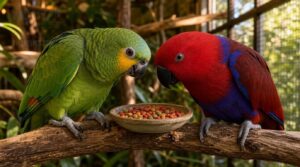
Picking the right pellet isn’t just about grabbing whatever’s on the shelf — your pair’s size, species, and stage of breeding all play a role. A few key factors can help you narrow it down fast and avoid costly trial and error.
Here’s what to look at before you buy: size, species, and breeding stage. These elements ensure you select the optimal pellet for your needs.
Match Pellet Size to Parrot Species
Beak compatibility shapes how well your bird accepts a pellet-based diet — a macaw and a cockatiel simply aren’t built the same. Size matters more than you’d think, as proper sizing ensures comfortable chewing and safe swallowing.
Roudybush addresses this with small, medium, and large options tailored to species-specific dietary needs. To confirm the right fit, use size preference testing to ensure your bird chews comfortably.
Prioritizing good pellet chewability and swallowing safety makes the species-sizing decision worthwhile, supporting your bird’s health and acceptance of the diet.
Compare Protein, Fat, Calcium, and Moisture
Labels don’t always tell the full story at first glance. Moisture impact is real — a pellet with 12% moisture shows lower nutrient percentages in comparison to one at 10%, even if protein and fat content are identical.
Always verify these critical parameters on a dry matter basis:
- Protein-fat ratio (aim for 19%+ protein, 6.5%+ fat)
- Calcium density (0.6%–1.3%)
- Calcium requirements vs. phosphorus balance
- Moisture (max 12%)
- Pellet formulation type (laying vs. maintenance)
Check Freshness, Preservatives, and Storage Needs
Fresh pellets are non-negotiable during breeding season. Always verify seal integrity before every bag, as compromised packaging rapidly degrades antioxidant efficacy and shelf-life indicators.
Natural preservatives like mixed tocopherols and rosemary extract enhance feed stability but require proper temperature controls and moisture management to remain effective.
Store pelleted bird food in a cool, airtight container, rotate stock diligently, and strictly adhere to the "use by" date to maintain quality.
Consider Crumble Versus Pellet Texture
Texture matters more than you’d think. Crumble offers a softer mouthfeel for birds new to a pellet diet shift, and feeding speed often increases since smaller fragments require less beak effort to break down. However, crumble raises dust production and feeder clogging concerns.
Compact bird pellets suit experienced eaters better, maintaining a tidier pelleted bird food routine and supporting balanced feeding guidelines for exotic parrots.
Watch for Acceptance and Feeding Behavior
Your bird’s behavior tells you everything. Watch these four signs to track acceptance trends early:
- Crop fullness — check that it fills consistently after meal bout frequency increase
- Spitting behavior — ignore dropped pellets calmly; repeated rejection signals a texture preference
- Chewing progression — "tap and drop" means try shifting strategies like smaller crumble forms
- Activity level — steady energy confirms feeding behavior modifications are working
Consult an Avian Veterinarian Before Breeding
Before your pair lays a single egg, book a health screening with an avian veterinarian. A reproductive exam catches issues that behavior alone won’t reveal — infertility, disease, quarantine needs, or stress assessment for pair compatibility.
Your vet can also fine-tune a pellet-based, species-specific diet and build a feeding schedule tailored to your setup, ensuring optimal nutrition for breeding pairs and chicks.
Frequently Asked Questions (FAQs)
What food is good for parrots breeding?
Breeding parrots do best on high‑protein, high‑energy formulated pellets with balanced protein, fat, and fiber levels in bird feed, plus mineral supplementation, omega fatty acids, and calcium — 19% protein minimum keeps reproduction on track.
Can breeding parrots eat the same pellets year-round?
Yes, you can feed the same pellet-based diet year-round — just make sure it’s complete and balanced for breeders. Brand consistency and supply continuity matter more than seasonal variation.
Do male parrots need different nutrition than females?
Not really. Both sexes share the same core needs — protein, fat, fiber, vitamins, minerals. The real driver is reproductive role, not gender.
She demands more calcium and calories; he just needs balance.
How do I store breeder pellets to maintain freshness?
Store breeder pellets in airtight containers in cool, dark storage away from light and heat. Practicing FIFO rotation, maintain tight moisture control, and check for pests.
Fresh pellets feed healthy chicks.
Should pellets change between first and second clutches?
Not usually. If your first clutch went well, stick with the same breeder pellet. Second clutch dynamics rarely justify a full pellet change protocol — consistent energy demands and shell quality matter more than switching.
Can overcrowded aviaries affect how pairs eat pellets?
Overcrowded aviaries disrupt how pairs eat. Feeding competition, dominance dynamics, and social stress reduce foraging efficiency, while pellet contamination from crowded feeders cuts intake further.
This quietly undermines your breeding pair’s nutrition when it matters most.
Conclusion
Every chick your pair raises is built meal by meal, and the wrong pellet can quietly unravel a whole season’s effort. Choosing the right parrot pellet foods for breeding pairs isn’t a one-time decision—it’s a practice you hone each cycle. Match protein and calcium to real demand, watch how your birds eat, and adjust when something’s off.
The pair does the work. Your job is to make sure the food dish never lets them down.
- http://littlefeatheredbuddies.com/info/nutrition-calcium.html
- https://vin.com/apputil/content/defaultadv1.aspx?id=9768894&pid=25844&
- https://www.harrisonsbirdfoods.com/
- https://parrotessentials.co.uk/blog/pellets-for-parakeets-the-complete-guide-to-choosing-the-best-nutrition
- https://theparrotsocietyuk.org/parrot-nutrition/