
This site is supported by our readers. We may earn a commission, at no cost to you, if you purchase through links.

Most owls start calling around 30 minutes after sunset—and most birders miss them entirely because they’re still packing up their gear.
Night birding runs on a completely different clock than daytime watching, and it rewards people who show up prepared.
The right bird watching field guides for night birding do more than list species; they train your eyes and ears to read darkness the way you’d read a trail map.
Silhouette shapes, wingbeat rhythms, habitat sounds—these become your tools when color and detail disappear.
The guides below are the ones worth carrying into the dark.
Table Of Contents
Key Takeaways
- Most owls start calling just 30 minutes after sunset, so arriving early and ready—binoculars out, guide open—is what separates a great night from a missed one.
- Sound does the heavy lifting after dark, so pick a field guide that pairs call descriptions with silhouettes, not one that relies on color plates you simply can’t use at night.
- The best guide for you depends on your focus—owl specialists need facial disc detail and species depth, while broader nocturnal birders benefit from cross-family coverage including nightjars and marsh birds.
- Pairing a printed field guide with an app like Merlin gives you the durability and tactile ease of paper plus real-time audio ID, which is genuinely hard to beat at 2 a.m. in the dark.
Top 6 Night Birding Field Guides
Not every field guide pulls its weight once the sun goes down — the right one can mean the difference between a confident ID and a shrug in the dark.
I’ve narrowed it down to six guides worth carrying on a night outing, each chosen for a specific reason. Here’s what made the cut.
1. Celestron Nature DX Waterproof Binoculars
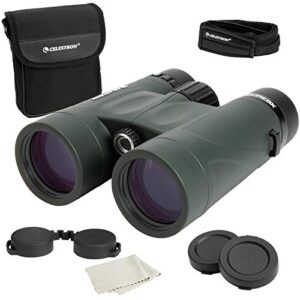
Here’s a piece of gear that isn’t a field guide — but it’ll change your nights out. The Celestron Nature DX 8×42 binoculars pull in serious light through fully multi-coated optics and BaK-4 prisms, so you’re actually SEEING that Great Horned Owl (Bubo virginianus) perched in the dark, not just guessing at a shape.
If you wear glasses, these are especially worth a look — the long eye relief means you’re not fighting your frames all night, as covered in this guide to binoculars built for eyeglass-wearing birders.
They’re waterproof, nitrogen-purged, and weigh under two pounds, making them perfect for long hauls through wet marshes or misty forests. Trust me, good glass makes everything else work better.
| Best For | Birders, hikers, and wildlife watchers who want reliable, weather-ready glass without spending a fortune. |
|---|---|
| Price | ~$150–$200 |
| Format | Physical device |
| Target Audience | Birders & hikers |
| Geographic Focus | Global use |
| Night Birding Use | Low-light optics |
| Language | N/A |
| Additional Features |
|
- Bright, clear images even at dawn or dusk thanks to fully multi-coated optics and BaK-4 prisms
- Weatherproof and nitrogen-purged, so rain and fog won’t ruin your day in the field
- Light and compact enough to wear all day without your neck paying for it
- Eye-cup screws can loosen over time and may need occasional tightening or a tape fix
- The stock neck strap feels cheap and most users end up swapping it out
- Optics are solid for the price but won’t match premium ED glass if you’re doing serious detail work
2. Night Wings Nocturnal Bird Identification Guide
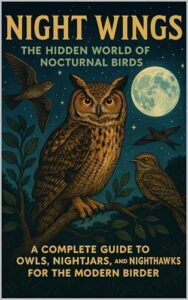
Once you’ve got solid glass in hand, you need something to back it up in the field. The Night Wings Nocturnal Bird Identification Guide is a smart companion for exactly that—and at $9.99, it won’t break the bank.
It covers owls, nightjars, and nighthawks with silhouettes, flight patterns, and facial disc details you can actually use in low light. It also pairs visuals with call descriptions, so you’re cross-checking what you see and hear at the same time.
| Best For | Birders of all skill levels who want a no-fuss, affordable field guide for spotting and identifying owls, nightjars, and nighthawks after dark. |
|---|---|
| Price | $9.99 |
| Format | Printed guidebook |
| Target Audience | Beginners & experts |
| Geographic Focus | North America |
| Night Birding Use | Nocturnal species guide |
| Language | English |
| Additional Features |
|
- Covers silhouettes, flight patterns, and calls together, so you’re not piecing things together from multiple sources.
- At $9.99, it’s an easy add to any birder’s kit without any second-guessing.
- Practical night-birding tips built in—gear, safety, low-light techniques—so it works as more than just an ID guide.
- Leans heavily on North America, so if you’re traveling abroad, you’ll hit its limits pretty fast.
- You’ll still need your own gear—binoculars, a flashlight—to get real use out of it.
- Audio ID sections are only as useful as your ability to actually hear and distinguish calls in the dark.
3. Night Wings Guide to Nocturnal Birds
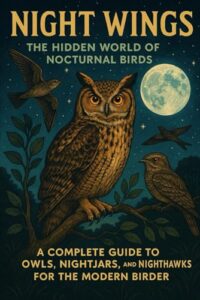
Night Wings Guide to Nocturnal Birds goes deeper than a quick reference card. This comprehensive resource spans 258 pages, offering detailed field identification tips for owls, nightjars, and nighthawks. It covers critical cues like sound, silhouette, flight pattern, and habitat—all consolidated in one place.
At $19.99, the guide includes color plates and illustrated charts designed for practicality in low-light conditions. These visual aids ensure usability during nocturnal observations, enhancing your ability to distinguish species in the dark.
Beyond identification, the book explores seasonal migration and major hotspots, empowering you to understand not just what you’re seeing, but also where and when to find them. This dual focus transforms the guide into an essential tool for both spotting and studying nocturnal birds.
| Best For | Birders of all skill levels—especially those who love getting outside after dark to spot owls, nightjars, and nighthawks across North America. |
|---|---|
| Price | $19.99 |
| Format | Printed guidebook |
| Target Audience | Beginners & experts |
| Geographic Focus | North America |
| Night Birding Use | Nocturnal species guide |
| Language | English |
| Additional Features |
|
- Covers the stuff that actually matters at night—sound, silhouette, flight pattern, and habitat cues all in one place
- Illustrated charts and color plates make it easy to use even when the light is terrible
- Goes beyond ID tips to cover migration seasons and hotspots, so you know where and when to look
- Focused on North American species, so it won’t be as useful if you’re birding elsewhere
- Only covers three bird groups—if you’re after other nocturnal species, you’ll need another resource
- It’s a paperback, which can be a little awkward to flip through in the field in the dark
4. Barred Owl Field Guide

If your nights revolve around one species, the Barred Owl Field Guide is built for you. It zeroes in on Strix varia — that distinctive voice calling "Who cooks for you?" through the dark trees.
If you’ve ever wondered why they’re so chatty after dark, this piece on why birds vocalize at night sheds light on the instincts driving all that after-hours conversation.
At just $17.00 and 116 pages, it’s lightweight enough to slip into any pack.
You’ll get sharp field marks, habitat tips, and behavioral notes that actually help you find barred owls, not just recognize them once they’ve flown off.
| Best For | Birdwatchers who are laser-focused on barred owls — from curious beginners to educators and citizen scientists working in North American woodlands. |
|---|---|
| Price | $17.00 |
| Format | Printed guidebook |
| Target Audience | Novice birdwatchers |
| Geographic Focus | North America |
| Night Birding Use | Owl behavior guide |
| Language | English |
| Additional Features |
|
- Covers everything you need in one place — field marks, calls, habitat, and behavior all specific to barred owls
- At $17 and 116 pages, it’s affordable and light enough to actually bring into the field
- Promotes ethical observation practices, so you’re not just finding owls — you’re doing it the right way
- Strictly a barred owl guide — if you want broader owl or bird coverage, you’ll need something else
- Paperback-only means it won’t love rain or muddy pack pockets the way a digital version would
- Written as of early 2026, so newer research on behavior or range could eventually date some of the content
5. Owling Guide to Mysterious Night Owls
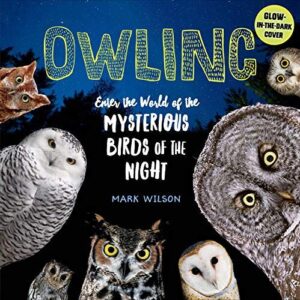
Owl-watchers, this one’s a quiet gem. The Owling Guide to Mysterious Night Owls walks you through identifying nocturnal species by silhouette, call, and habitat — exactly what you need when it’s dark and you’re squinting at a shape on a branch.
It covers five key species, from the Great Horned Owl (Bubo virginianus) to the tiny Northern Saw-whet, with practical behavioral notes on when and where they vocalize. Think of it as your personal mentor whispering field tips after sunset.
| Best For | Families, homeschoolers, and backyard birders who want a solid, visually rich guide to North American owls. |
|---|---|
| Price | $15.49 |
| Format | Hardback book |
| Target Audience | Children & families |
| Geographic Focus | North America |
| Night Birding Use | Owl identification guide |
| Language | English |
| Additional Features |
|
- Covers all 19 North American species with great photos and illustrations — really useful for both beginners and enthusiasts
- Packed with practical field tips: calls, plumage, pellets, and even how to build your own owl box
- The glow-in-the-dark cover is a fun touch, and the expert commentary adds real depth without feeling dry
- Strictly North America — if you’re curious about owls from other parts of the world, you’ll need another book
- Heavy on detail, so younger kids will probably need an adult to help them get the most out of it
- The hardcover format looks great on a shelf but isn’t the most grab-and-go option for actual field trips
6. Eastern North America Hawks and Owls Field Guide
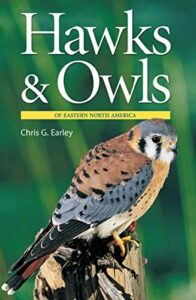
If you’re serious about raptors east of the Mississippi, this guide deserves a spot in your pack. It covers 39 species — hawks, owls, vultures, and more — with 200+ full-color photos showing real plumage variation across ages and sexes. The comparison charts alone are worth it, putting look-alike species side by side so you’re not second-guessing yourself at midnight.
At $24.87, it’s an honest deal. Just know it’s Eastern North America only, and there’s no audio support.
| Best For | Birders and naturalists in Eastern North America who want a no-fuss, affordable field guide for identifying hawks and owls on the go. |
|---|---|
| Price | $24.87 |
| Format | Printed guidebook |
| Target Audience | Beginners & naturalists |
| Geographic Focus | Eastern North America |
| Night Birding Use | Owl & raptor guide |
| Language | English |
| Additional Features |
|
- 200 color photos show real plumage variation by age and sex, so you know what you’re actually looking at
- Side-by-side comparison charts make sorting out look-alike species fast and easy
- Range maps for all 39 species help you know what’s realistic to spot in your area
- Some comparison photos run small, making fine detail hard to pick out
- Covers Eastern North America only — no use if you’re heading west
- It’s print-only, so no audio calls or searchable database like the apps offer
How to Choose Night Field Guides

Not every field guide works the same way after dark, and picking the wrong one is a real buzzkill when you’re standing in the woods at midnight.
The good news is a few key factors make the difference between a guide you’ll actually use and one that stays in the car.
Here’s what to look for before you buy.
Printed Vs Digital Night Birding Guides
Printed field guides win on durability — no battery dependency, no screen glare killing your night vision. But digital birding guides and birdwatching apps like Merlin beat them on update frequency, pushing fresh range data instantly. Tactile navigation through a physical book feels natural after dark, while a Bird Field Guide App shines for Night Bird Identification when connectivity allows. Pick your trade-off.
Recording nocturnal flight calls lets you identify species without visual observation.
Owl-specific Vs Broader Nocturnal Bird Guides
Think of it this way: an owl-focused bird identification guide goes deep on facial disc patterns, ear tufts, and canonical calls — perfect species depth for dedicated owl enthusiasts.
A broader nocturnal birdwatching guide widens your audio breadth to nightjars, rails, and marsh birds, with a varied illustration style for cross-family silhouettes.
Your target audience matters — pick the guide matching your night bird identification ambitions.
Range Maps for Nighttime Species Identification
Range maps in a night birding field guide are like a cheat sheet for where to even bother looking. The best guides layer in Confidence Shading, Elevation Contours, and Habitat Overlay so you’re not guessing in the dark.
- Confidence Shading shows likely vs. uncertain presence zones
- Seasonal Range Shifts reveal migration timing night by night
- Data Gap Visualization flags low-coverage regions honestly
- Habitat Overlay pinpoints wetlands and forest edges for identifying nocturnal bird species
Bird Call Descriptions and Audio Support
A good field guide doesn’t just show you the bird — it helps you HEAR it first. At night, audio cues do most of the heavy lifting.
| Feature | What It Does | Why It Matters |
|---|---|---|
| Call Frequency Ranges | Lists kHz values per species | Aids Spectrogram Interpretation |
| Real-time Sound ID | Merlin’s birding app sound identification | Instant bird call recognition |
| Background Noise Mitigation | Filters wind/water interference | Cleaner nighttime birdwatching results |
Low-light Visual Identification Features
Sound got you to the bird — now your eyes take over. Look for facial disc contrast on owls; that pale, circular outline stays visible even when color washes out completely.
Eye-ring brightness, wing bar outlines, leg posture cues, and tail shape silhouette all help confirm what you’re seeing. These visual cues become essential when color is minimal.
Good night-vision binoculars and low-light optics make spotting these details genuinely easy, transforming challenging observations into clear, confident identifications.
Portability for Field Use After Dark
Compact gear that folds flat, weighs around 10 ounces, and features tactile labels lets you grab what you need one-handed in seconds. Ensure your field guide and essentials are accessible, not buried at the bottom of your pack.
Lightweight batteries keep your essential night birding gear running all night, eliminating worries about power during extended outings.
Before your night birding route begins, make sure everything’s organized and accessible to streamline your experience under the stars.
Key Features for Night Identification
A good field guide only works at night if it’s built for night.
The features you actually need go beyond pretty illustrations — these include silhouettes, habitat cues, migration timing, and comparison charts that help you tell one dark shape from another.
Here’s what to look for.
Nocturnal Bird Silhouettes and Flight Patterns

Before you even hear a call, silhouette tells the whole story. Owls show that rounded body and broad wingspan — slow, deliberate Silhouette Wingbeat Rhythm you can’t mistake. Nighthawks cut a crescent shape, all Flight Path Geometry and sudden darts.
Use Aerial Contrast Cues against the moonlit sky, apply Contour Recognition Techniques, and Temporal Flight Signatures make your nocturnal bird identification feel almost instinctive.
Owl, Nightjar, and Marsh Bird Coverage

Once you’ve nailed silhouettes, species-specific coverage becomes your best friend. A solid guide breaks down owls—like the Great Horned Owl—nightjars like the Large-tailed Nightjar, and marsh birds separately, because each group behaves differently after dark.
- Owls: Watch Roost Site Indicators and Predator-Prey Interactions near tree lines
- Nightjars: Track Nocturnal Foraging Behaviors and Vocal Dialect Variation in open scrub
- Marsh birds: Listen for low flight call frequencies across wetlands
- Apps: Use a bird field guide app alongside bird identification resources for birders to cross-check calls instantly
Habitat Clues for Finding Night Birds

Think of habitat as your first field guide. Water-edge clues are everything — marsh vegetation signs like reeds and cattails tell you nightjars and owls are close. Forest-edge perches on bare snags? Classic owl territory.
Do not overlook urban night-nooks either; cemetery trees and park hedgerows host surprising visitors.
Seasonal insect swarms draw birds fast, so habitat selection is your REAL nighttime birdwatching superpower.
Seasonal Migration and Nighttime Movement Details

Migration timing is your secret weapon for nighttime birdwatching. Most nocturnal movement peaks between 9 PM and 2 AM — that’s when Tailwind Timing works in the birds’ favor, sometimes boosting flight speed by 40 percent.
Moonlit Foraging nights push activity even higher, creating optimal conditions for observation.
Your field guide’s migration patterns section helps you target the right Stopover Habitat before birds vanish by dawn.
Comparison Charts for Similar Nocturnal Species

Here’s where a good bird field guide really earns its keep. Comparison charts use color coding and habitat shading to separate look-alike species fast — say, Barn Owl versus Eastern Screech-Owl. These tools streamline identification, making complex distinctions intuitive.
Silhouette details, acoustic cues, and misidentification tips sit side by side, ensuring nighttime birdwatching decisions take seconds, not minutes. This efficiency transforms challenging observations into confident conclusions, even in low-light conditions.
Pair it with a Bird Field Guide app for deeper understanding of nocturnal species and sharper field identification overall. This combination enhances both learning and practical application in the field.
Using Guides During Night Birding

Owning the right field guide is only half the battle—knowing how to use it after dark is where it really counts. Night birding has its own rhythm, and a few simple habits can make the difference between a confident ID and a frustrating maybe.
Here’s what I’ve learned about getting the most out of your guides once the sun goes down.
Preparing Target Species Before Sunset
Before darkness falls, your best work happens in daylight. Study your target species’ crepuscular timing — that golden window 30–60 minutes before sunset when birds surge into motion. Use roost location mapping to pinpoint departure zones, and check weather-driven activity patterns, since wind and humidity shift everything.
A solid Bird Field Guide App paired with a vocal cue catalog and target movement routes makes preparing for nighttime birding genuinely straightforward.
Matching Calls to Field Guide Descriptions
Matching a bird call to your field guide is like tuning a radio — you’re hunting for that exact frequency. Focus on cadence matching first: count syllables, note tempo.
Your Bird Field App makes spectrogram reference fast, even after dark. Cross-check with multi-guide verification for trickier dialect identification.
Acoustic cue pairing, combined with habitat notes, is honestly the smartest avian identification tool you’ve got.
Confirming Birds With Safe Flashlight Use
Once you’ve matched that call, it’s time to confirm — and how you use your flashlight matters more than most beginners realize. Red-light positioning is key: angle your beam 20–45 degrees away from the bird’s face, keep intensity low, and move slowly.
Species-specific illumination helps too — owls need barely any light, while nightjars reveal wing patterns beautifully under dim red light. That’s real light discipline.
Recording Observations for Later Verification
After you’ve confirmed the bird, write it down immediately. Timestamped entries with date, location, and weather conditions are your proof later. Use standard field codes to stay consistently, and attach audio-visual corroboration whenever you can — a quick recording beats memory every time.
Log it to eBird for citizen science data collection, and apply privacy masking for any sensitive nesting sites.
Verification worksheets keep everything honest.
Pairing Field Guides With Birding Apps
Your field notes don’t have to live in isolation. Pair your printed guide with Merlin’s real-time alerts and Sound ID for instant call confirmation, then use eBird for nighttime birdwatching logs along your night birding route.
Offline access keeps both tools running without signal. Syncing annotations and community verification across platforms — that’s cross-platform integration working exactly as it should.
Avoiding Misidentification in Low Light
Even with great avian identification tools, low light conditions play tricks on you. That’s where Multi-Source Confirmation saves the night — never rely on just one cue.
- Practice Red Light Discipline to protect your night vision
- Use Call Visual Correlation to cross-check sounds against silhouettes
- Log uncertainty with Error Margin Logging and Time Phase Contextualization notes
Your Bird Field Guide-App combo makes nighttime birdwatching far more accurate.
Buying Tips for Night Birders

Picking the right field guide isn’t just about what looks good on a shelf — it’s about what actually works when you’re standing in the dark at 2 a.m. trying to ID a call you’ve never heard before. A few key factors will help you spend your money wisely and avoid buyer’s remorse on your next outing.
The right field guide isn’t shelf decor — it’s what saves you at 2 a.m. in the dark
Here’s what to keep in mind before you buy.
Best Guide Type for Beginners
If you’re just starting out with nighttime birdwatching, don’t grab the most exhaustive guide on the shelf. Start with something that has a gradual difficulty curve, clear iconography, and basic silhouette charts — so you’re not squinting at tiny text at 2 a.m.
A compact quick-reference format, introductory audio guides, and a bird field guide app paired together make seasoned birders and beginners equally approachable through illustrated and photo-based bird books.
Best Option for Owl-focused Birders
If owls are your thing, you need a guide built around facial disk details, eye color cues, and wing shape focus — not one that buries owls in a general species list. Look for illustrated and photo-based bird books covering regional owl variants, with quick reference cards you can flip through fast.
Pair it with a Bird Field Guide App for real-time call matching during nighttime birdwatching.
Best Choice for Eastern North America
Eastern forests demand guides built for them — not generic ones. Look for an Eastern Habitat Atlas with an Owl Silhouette Guide section, clear Coastal Migration Corridors maps, and State Park Hotspots marked throughout.
Seasonal dialect variations matter here too, since coastal and inland populations sound different. The National Society Birds of North America pairs well with illustrated and photo-based bird books and a Bird Field Guide App.
Best Companion Gear for Field Guides
A few key items transform a good field guide into a great night birding session.
- A Red‑Light Headlamp paired with night vision binoculars or infrared binoculars keeps your eyes adapted to darkness.
- A Waterproof Notebook and flashlight let you record observations safely.
- A Portable Power Bank, GPS waypoint device, and lens cleaning kit round out your equipment checklist.
Pair everything with a bird field guide app.
Durability, Size, and Field Usability
Look for Waterproof Covers rated IP54 or higher, Reinforced Binding, and a Pocket-Sized Format around 4–6 inches tall. These features ensure durability in wet, dark conditions and portability for repeated use.
A High-Contrast Layout under red light is a real asset. Bonus points for Glow-in-the-Dark Tabs — no fumbling required. These enhancements optimize visibility and usability in low-light environments.
Good illustrated and photo-based bird books nail all of this, combining practicality with effective design for field use.
Choosing Based on Budget and Birding Goals
Your budget tier comparison matters more than you’d think. If you’re just starting out, budget models under €150 give you solid nocturnal silhouettes without breaking the bank.
Owl-focused birders should prioritize goals first — a good field guide covering 39 species beats a generic one every time. Illustrated and photo-based bird books offer the best price-per-species value for serious night birders.
Frequently Asked Questions (FAQs)
How do weather conditions affect nocturnal bird activity?
Think of weather as nature’s volume knob for nocturnal birds. Clear skies, light winds, and warm temperatures turn activity UP. Rain, strong winds, and cold nights dial everything DOWN fast.
Which habitats attract the most night bird species?
Forest edges and wetlands win, hands down. Wetland nightbird diversity is unsurpassed — night herons, marsh owls, all hunting together.
Riparian night owls love stream corridors too.
Grassland nightjar hotspots surprise most beginners.
How can beginners safely navigate unfamiliar terrain at night?
Stick to marked trails. Use a red-light headlamp to protect your night vision. Take compass bearings every few hundred meters. Always bring a buddy.
Scout your route before sunset — surprises at midnight aren’t fun.
What ethics apply when using recorded calls at night?
Leave only footprints." Don’t play recorded bird calls carelessly at night. It stresses birds and disrupts nesting.
Consent protocols, privacy compliance, and Leave No Trace principles matter — keep ethical considerations in night birding front of mind always.
How does moon phase influence night birding success?
Full moon nights are your best friend for nighttime birdwatching. Moonlit foraging peaks, silhouette contrast sharpens, migration cues align, and activity windows stretch longer.
However, predation risk rises too, so birds get sneaky.
Conclusion
The owl you almost identify tonight becomes the one you’ll name with certainty next time out. That’s how night birding actually works—each session builds on the last.
The right bird watching field guides for night birding don’t just fill your shelf; they sharpen the instincts you carry into every dark field. Start with one guide and learn it deeply: the calls, the silhouettes, the habitats.
Darkness stops feeling like an obstacle and starts feeling like your advantage.
- https://birdingoutdoors.com/category/birding/birding-guides
- https://www.birdcollective.com/blogs/news/the-ultimate-beginner-s-guide-to-birding?srsltid=AfmBOooOUVFbehPevkUHF6vbSIaPrmAJJroef-DNF_7IsoZsx8Lt7THM
- https://www.flockingaround.com/post/what-field-guide-is-best-for-birdwatching
- https://www.birdwatching-bliss.com/infrared-binoculars.html
- https://notyouraverageamerican.com/our-basic-birdwatching-kit-beginners/