This site is supported by our readers. We may earn a commission, at no cost to you, if you purchase through links.
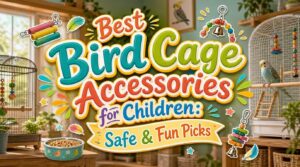
Most kids don’t just want to watch their bird—they want to be part of its world. Feeding time, toy swaps, cage decorations: these small moments build a bond that sticks. But not every accessory on the market is made with little hands in mind, and the wrong perch material or poorly secured hook can turn a sweet routine into a safety headache fast.
Choosing bird cage accessories for children means balancing two needs at once—what keeps the bird healthy and what keeps the child safe. The good news is those two things overlap more than you’d think.
Table Of Contents
Key Takeaways
- Choosing bird cage accessories for kids means picking materials like stainless steel, cotton rope, and non‑toxic dyes that keep both little hands and your bird safe at the same time.
- Feeding tools like removable clip‑lock feeders and spill‑reducing designs let your child take an active role in daily care without the mess or frustration.
- Enrichment toys — from foraging puzzles to swinging perches — don’t just entertain your bird; they give kids a front‑row seat to genuinely interesting animal behavior.
- Keeping accessories clean, correctly sized for your bird’s species, and fitted with secure hanging hardware turns a basic cage setup into a safe, lasting routine your child can own.
Best Child-Friendly Bird Cage Accessories
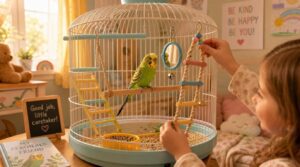
Picking the right accessories makes a real difference in how much your child enjoys caring for their bird. Some items are easier to handle than others, and a few stand out as genuinely great starting points. Here are the top child-friendly picks worth having in your bird’s cage.
Each of these picks also supports your bird’s long-term health — check out this guide to bird cage accessories for parakeets to see how the right setup keeps them mentally sharp and physically thriving.
Bissap Plastic Chain Links
When considering bird-safe materials, Bissap plastic chain links are a smart pick for young helpers. They’re made from non-toxic, certified polymers — free from phthalates and heavy metals — so you don’t have to worry during supervised play. Here’s why they work well:
- UV-stabilized for lasting outdoor use
- Resists moisture to prevent swelling
- Meets toy safety standards for children
Swinging Perches
Swinging perches are a natural next step after snap-link connectors. The JW Swing N’ Perch Bird Toy is a great example — it hangs from flexible cords, creating gentle pendulum motion that keeps birds active and engaged. The perch is made from soft, machine washable cotton rope, providing a gentle surface for birds’ talons.
| Feature | Detail |
|---|---|
| Diameter Range | 0.5–1.25 inches |
| Swing Motion | Pendulum-style |
| Weight Capacity | Species-dependent |
| Cord Tension | Adjustable hooks |
| Balance Training | Foot grip textures |
Treat Skewers
Treat skewers are a small but mighty addition to any bird cage setup.
They’re simple: slide pieces of fruit or veggies onto a 12–20 cm skewer, hang it inside the cage, and watch your bird go to work.
Food-grade stainless steel or untreated wooden skewers keep things safe — no rust, no toxins, no worries.
Foraging Toys
If treat skewers keep your bird busy eating, foraging toys keep them busy thinking.
- Hidden treat compartments reward birds for opening doors or flaps
- Nested cups and sliding blocks increase difficulty over time
- Twist-and-turn mechanisms release food only after the right moves
- Shreddable food toys let birds rip through material to find treats
- Rotating treat wheels need beak and foot coordination together
The JW Peck-A-Mole Bird Toy is a great starting point for interactive foraging.
Cage Activity Sets
When you put it all together, cage activity sets are where the real magic happens. These sets combine a modular compartment layout with a timer mechanism that randomly releases treats — so your bird never quite knows what’s coming next.
For the best results, pair these setups with a thoughtful bird cage toy arrangement strategy that balances exploration zones with open space for safe movement.
Built with chew-resistant, BPA-free materials, they’re safe for kids to handle and easy to clean between sessions.
Safe Materials for Young Handlers
When kids help care for a pet bird, what the accessories are made of really matters. You want materials that are gentle on little hands and safe if curious fingers find their way into the cage. Here’s what to look for.
Non-Toxic Dyes

Color matters more than you’d think when bird cage accessories are involved. Vegetable-based dyes are the go-to here — sourced from plants like indigo, turmeric, and madder root, they skip the heavy metals and harsh solvents found in synthetic alternatives.
That means safer handling for your child and no toxic residues near your bird. Always rinse dyed items thoroughly before use.
Food-Grade Cardboard
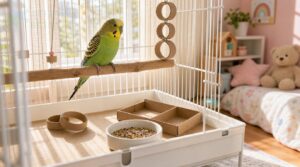
Food-grade cardboard shows up in cage liners, toy bases, and packaging for bird feeding equipment — and it’s safer than it looks. It passes migration testing, meaning no harmful substances transfer to your bird’s environment during typical handling.
Look for FDA or EU food contact certification on product labels. Sustainably sourced options often carry FSC certification too.
Cotton and Sisal Rope
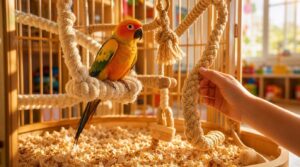
Both cotton and sisal rope are biodegradable choices that kids can handle safely.
Cotton is soft, knots securely, and works well for bird toys and perches.
Sisal is rougher but naturally durable.
Keep in mind that moisture absorption weakens both over time, so dry them fully after cleaning. For rope maintenance, inspect regularly for fraying and replace worn pieces promptly.
Untreated Natural Wood
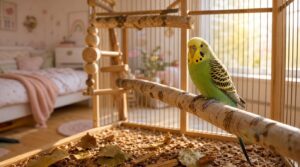
Natural wood brings a warm, living feel to any bird cage décor — but it does come with trade-offs worth knowing.
- Allergen concerns: some wood species release irritants that can affect sensitive kids
- Moisture warping: untreated wood absorbs humidity and may crack or warp
- Decay risks: damp conditions can trigger early rot
- Natural grain aesthetics: every perch looks beautifully unique
- Nontoxic pet products: always choose non-allergenic, resin-free species
Bird-Safe Metals
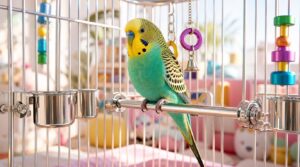
Not all metals are created equal regarding bird-safe materials. Stainless steel is your safest bet — it resists rust, cleans easily, and won’t flake. Anodized aluminum is lighter and works well in humid cages.
Avoid galvanized metals and brass near curious beaks, as zinc and copper can cause real harm if ingested.
Easy Feeding and Drinking Accessories
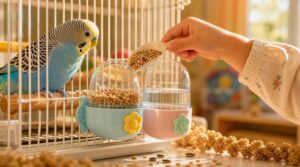
Feeding time doesn’t have to be messy or complicated, even for little hands. The right accessories make it easy for kids to help care for their bird without the usual spills and fuss. Here are some feeding and drinking options worth having in the cage.
Removable Feeders
Removable feeders are one of those bird cage accessories kids actually enjoy using. The clip locking mechanism lets your child snap the feeder on and off without tools — usually in under six seconds. Adjustable height means you can align it with the perch so your bird eats comfortably.
- Transparent feeder bodies let kids check fill levels at a glance
- Capacity options range from 5 to 15 ml depending on your cage size
- All contact surfaces use bird-safe materials and food-grade plastics
- Dishwasher safe components make cleanup genuinely simple
- Rounded edges keep little hands safe during handling
Revolving Food Bowls
If removable feeders make cleanup easier, revolving food bowls take feeding one step further.
Their 360-degree rotating mechanism lets your bird eat from any angle — no awkward stretching required. BPA-free plastic or stainless steel construction withstands daily washing without warping. Most fit standard cage bars in minutes, with no tools needed.
Drinking Bottles
Keeping your bird hydrated is just as important as what’s in the food bowl. Drinking bottles clip neatly onto cage bars and keep water cleaner than open dishes.
PET plastic bottles are lightweight and affordable, while stainless steel resists corrosion and cleans up fast. Glass and ceramic options are chemical‑free and dishwasher‑safe — great for families who want nontoxic cleaning supplies within easy reach.
Fruit Bowls
Fresh fruit is a treat birds actually get excited about. A wide open-top fruit bowl lets air move freely around the food, slowing spoilage and keeping things fresher longer.
Here’s what to look for:
- Stainless steel bowls resist staining and sanitize easily
- Elevated edges keep pieces contained
- Non-slip bases prevent sliding during handling
- Bright, clear bowls showcase colorful fruit visually
- Lightweight designs are easier for small hands to manage
Spill-Reducing Designs
Spills happen fast when little hands are involved. That’s why spill-reducing designs make such a difference in day-to-day cage care.
| Feature | Benefit |
|---|---|
| Self-sealing lids | Stop leaks between feedings |
| Gravity-fed designs | Limit excess discharge |
| Anti-siphon valves | Prevent backflow flooding |
| Drip-controlling bases | Reduce tipping and drips |
Removable trays, cage liners, and spill-proof perches keep cleanup simple for young helpers.
Enrichment Toys for Happy Birds
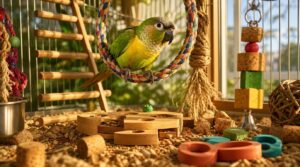
A bored bird is a stressed bird, and the right toys make all the difference. Whether your child loves watching their feathered friend solve puzzles or just wants to see them swing and explore, enrichment toys cover a little of everything.
Here are some of the best options to keep your bird busy and your kid genuinely entertained.
Chewing and Climbing
Birds need both chewing and climbing to stay sharp and healthy. The JW Swing N’ Perch Bird Toy keeps feet active, while the JW Peck-A-Mole Bird Toy satisfies natural biting urges.
Natural wood perches and textured ropes build real grip strength over time.
Rotate chew items every week or two so your bird doesn’t lose interest.
Problem-Solving Play
Watching your bird work through a puzzle challenge is genuinely rewarding. Foraging toys like the JW Peck-A-Mole encourage sequential thinking — your bird tries one approach, adjusts, and tries again.
- Builds trial and error habits naturally
- Encourages strategic planning through repeated attempts
- Encourages mental stimulation with hidden treats
- Uses bird-safe materials throughout
- Invites collaborative solutions during supervised child interaction
Foot Exercise
Healthy feet make for a happier, more active bird. Rotating perches and swinging toys give your bird’s feet a real workout — building foot strength, toe flexibility, and arch stability naturally throughout the day.
| Accessory | Benefit | Best For |
|---|---|---|
| Swinging perch | Foot coordination | Small birds |
| Rope perch | Arch stability | Medium birds |
| Natural wood perch | Toe flexibility | All species |
Natural Foraging Behavior
In the wild, your bird spends hours on hidden food search — probing, pecking, and problem-solving.
Foraging enrichment toys like woven seagrass mats and treat skewers tap directly into that instinct. Your bird uses visual cue selection and even olfactory guidance to locate rewards, turning each session into genuinely stimulating, natural bird activity that keeps boredom far away.
Foraging toys turn every feeding session into a natural hunt, keeping curious birds stimulated and boredom at bay
Supervised Child Interaction
There’s something genuinely heartwarming about a child and a bird finding their rhythm together.
Supervised child interaction works best when a trained adult stays close, watching from a dedicated observation area and stepping in gently if needed.
Interactive play with bird enrichment toys keeps sessions positive, while session documentation helps caregivers track progress and adjust the experience over time.
Shopping and Maintenance Tips
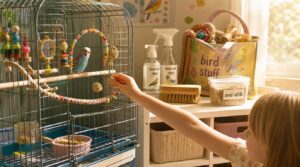
Getting the right accessories is only half the job — knowing what to look for and how to keep things clean makes all the difference. Whether you’re shopping in-store or setting up an autoship, a few smart habits go a long way. Here’s what to keep in mind as you build out your bird’s space.
Size and Species Fit
Getting the cage dimensions right makes all the difference.
Parakeets need bar spacing of 0.5 to 0.75 inches, while cockatiels need vertical room to move freely. Finches need at least 18 inches of width for short flights. Always check species requirements before buying.
Many accessories come with a "more sizes" option, so you can match perch heights and bird-friendly perches to your bird’s actual size.
Secure Hanging Hardware
Once you’ve matched accessories to your bird’s size, you want to make sure everything actually stays put. C-shaped double-U hooks are your safest bet for hanging toys — birds can’t accidentally unlatch them.
For heavier setups, stainless steel hooks with rated cables resist moisture and bending.
Quick-link connectors replace loose keyrings, keeping little hands and curious beaks out of trouble.
Cleaning-Friendly Accessories
Once everything is hanging securely, keeping it clean is where the real routine begins. Look for accessories with smooth surfaces and detachable components — they make wipe-downs quick and stress-free.
- Non-porous materials resist odors and staining
- Quick-release latches let you remove perches without tools
- Modular pieces swap out easily during maintenance
- Acid-free cage liners roll up for fast disposal
- Stainless steel parts won’t rust from water exposure
Sustainable Product Labels
Once you’ve sorted the cleaning routine, take a moment to check the label. Look for a sustainability label — it tells you if the product uses recycled or eco-friendly materials.
Many wooden bird accessories carry certification marks from independent bodies. A quick QR code scan can reveal the full story behind what you’re bringing home.
Pickup and Delivery Options
Once your order is ready, you’ve got options. Choose curbside pickup and get a real-time SMS when it’s set — no walking required.
Prefer browsing first? In-store pickup works too.
Need it today? Same-day delivery via DoorDash brings it straight to your door.
And for regulars, Autoship manages repeat orders automatically, so you never run low.
Frequently Asked Questions (FAQs)
How often should bird cage accessories be replaced?
Like a garden that needs tending, your bird’s accessories have a natural lifespan. Inspect toys weekly, replace rope every 2–6 months, and swap liners daily to keep things fresh and safe.
Can bird cage accessories fit all cage sizes?
Most bird cage accessories are built to fit a large selection of cage sizes. With adjustable hook systems and universal mounting options, they work across standard bar spacings — so you’re rarely stuck hunting for the perfect fit.
Are bird cage accessories safe for younger toddlers?
Yes, they can be — non-toxic materials, smooth edges, and no small detachable parts make most accessories toddler-safe. Always supervise handling and choose items with secure installation to prevent accidents.
What accessories help reduce bird stress levels?
Soft fabric toys, gentle swaying perches, and shallow bathing dishes all help calm a stressed bird. Rotating toy sets and large mirror toys also ease loneliness and boredom throughout the day.
How do I store unused bird cage accessories?
Think of storage like a library: every item has its home. Use airtight storage solutions with clear labels, keep moisture out, and follow a rotation schedule so no bird cage accessories get forgotten.
Conclusion
They say it takes a village to raise a child—and sometimes, a well‑chosen perch to raise a happy bird.
The right bird cage accessories for children don’t just keep things safe; they turn daily care into real connection.
When little hands know exactly what to grab, how to fill a feeder, or where to hang a toy, confidence grows alongside the bond.
Start simple, stay safe, and let the routine do the rest.