This site is supported by our readers. We may earn a commission, at no cost to you, if you purchase through links.

A hummingbird hovered outside a sixth-floor window in Chicago last summer, working a neighbor’s tiny feeder like it owned the building. That moment catches most people off guard—the assumption that urban living and wildlife are incompatible runs deep, yet hummingbirds navigate cities with surprising confidence, following flowering plants and feeders across rooftops and railings.
Your balcony, however small, sits squarely on their radar. The right nectar hummingbird feeder for apartment balconies doesn’t demand a yard or a garden bed—it just needs a secure mount, fresh nectar, and a spot with decent morning light. What follows covers exactly how to get all three right.
Table Of Contents
- Key Takeaways
- Top Nectar Feeders for Apartment Balconies
- 1. Aspects Gem Window Hummingbird Feeder
- 2. LaElvish Hand Blown Glass Hummingbird Feeder
- 3. Glass Mason Jar Hummingbird Feeder
- 4. Clamp On Rail Bird Feeder
- 5. Adjustable Deck Bird Feeder Pole
- 6. Urban Deco Deck Railing Bird Feeder
- 7. Red Glass Hummingbird Feeder with Ant Moat
- 8. Red Glass Hummingbird Feeders
- What to Look for in a Feeder
- Best Mounting Options for Small Balconies
- Where to Hang a Balcony Feeder
- How to Make Hummingbird Nectar
- Cleaning Your Balcony Feeder Regularly
- Choosing The Right Feeder Size
- Other Small Feeder Options to Consider
- Tips for Attracting More Hummingbirds
- Frequently Asked Questions (FAQs)
- Conclusion
Key Takeaways
- Your balcony already sits on a hummingbird flight path—a secure mount, fresh nectar, and a bit of morning light are all you need to turn it into a regular stop.
- Match your feeder to your space: window suction-cup models work best for tight spots, rail clamps suit most balcony railings without any drilling, and deck poles give you extra height when birds need clear flight access.
- A simple 1:4 sugar-to-water mix mimics natural flower nectar perfectly, but swap it out every 2–3 days in warm weather and skip honey, dyes, and sweeteners entirely—they do more harm than good.
- Clean feeders and smart placement—sheltered near a wall, away from harsh afternoon sun, and at least 3 feet from windows—make a bigger difference than the feeder itself when it comes to keeping hummingbirds coming back.
Top Nectar Feeders for Apartment Balconies
Even a small balcony can become a real hummingbird hangout with the right feeder. You don’t need a yard to enjoy these tiny visitors, just a sturdy spot and a feeder that fits your space. Here are eight options worth a closer look, each suited to different rails, windows, and budgets.
If you’re unsure where to start, browsing through the different types of hummingbird feeders can help you quickly narrow down what actually works for a small balcony setup.
1. Aspects Gem Window Hummingbird Feeder
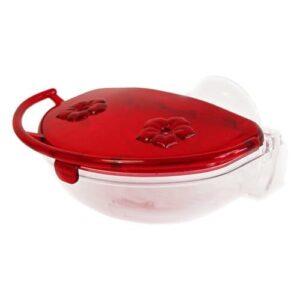
If your balcony has a window that gets good hummingbird traffic, the Aspects Gem Window Hummingbird Feeder is worth a look. It mounts to glass with a suction cup, so you skip drilling or clamping anything.
With a 4-ounce capacity and two feeding ports, it’s sized just right for compact spaces. The HighView perch lets birds rest while sipping, and the reservoir slides out easily for quick refills and cleaning—no fuss, no mess.
| Best For | This feeder is best for apartment or condo dwellers who want an easy, up-close hummingbird-watching spot right outside a window. |
|---|---|
| Material | Plastic |
| Primary Color | Red |
| Mounting Style | Window suction cup |
| Weight | 1 oz |
| Dimensions | 5.13″x3.5″x1.88″ |
| Cleaning Method | Detachable reservoir |
| Additional Features |
|
- Suction cup mount means no drilling, clamping, or tools needed
- Detachable reservoir makes refilling and cleaning quick and simple
- Elevated perch lets hummingbirds rest while they feed
- Single suction cup may not hold as securely as multi-point mounts
- No built-in ant moat, so pests could be an issue
- Needs a clean, smooth window surface for the suction cup to stick well
2. LaElvish Hand Blown Glass Hummingbird Feeder
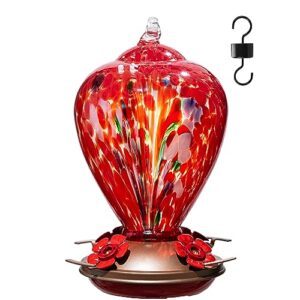
If you want something bigger and a bit more eye-catching, the LaElvish Hand Blown Glass Hummingbird Feeder holds a generous 34 ounces, so refills are few and far between.
Each piece is hand-blown, giving it slight color and shape variations that add real charm to your space. Four copper ports reduce tongue wear, while a built-in ant moat and gasketed seal keep nectar clean and leak-free, even on windy balconies.
| Best For | Hummingbird lovers and gardeners who want a decorative feeder that doubles as a charming accent piece for their porch or balcony. |
|---|---|
| Material | Glass and copper |
| Primary Color | Multicolor |
| Mounting Style | Hanging |
| Weight | Not specified |
| Dimensions | Not specified |
| Cleaning Method | Wide-mouth opening |
| Additional Features |
|
- Hand-blown glass with fade-resistant colors gives it a one-of-a-kind, decorative look
- Built-in ant moat and leakproof gasketed base keep nectar clean and mess-free
- Wide mouth opening makes refilling and cleaning quick and easy
- Hand-blown construction means slight variations in color and shape from piece to piece
- You’ll need a separate funnel to refill the nectar without spills
- The gasket has to be seated correctly, or it can leak
3. Glass Mason Jar Hummingbird Feeder
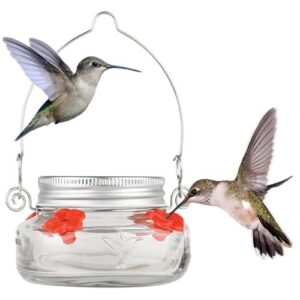
If hand-blown glass feels a little fancy, the Glass Mason Jar Hummingbird Feeder brings that same classic charm in a sturdier package. The jar holds 25 to 32 ounces, so it’s perfect for busy migration season, and a rust-resistant metal hanger keeps things steady on windy days.
Five flower-shaped ports circle a wrap-around perch, giving birds a spot to rest while feeding. Everything disassembles easily, and glass parts are top-rack dishwasher safe.
| Best For | This little feeder is great for small backyard flocks or balcony setups where you just want to keep an eye on a few hummingbirds without fuss. |
|---|---|
| Material | Glass |
| Primary Color | Clear |
| Mounting Style | Hanging |
| Weight | 8 oz |
| Dimensions | 5″x4″x6″ |
| Cleaning Method | Dishwasher safe |
| Additional Features |
|
- Clear glass jar makes it easy to check nectar levels at a glance
- Removable flowers and dishwasher-safe parts make cleaning a breeze
- Holds up better in the sun than plastic feeders tend to
- Small capacity means you’ll be refilling often if you get a lot of visitors
- Glass can break if dropped, so handle with care
- Overfilling past the flower ports can lead to leaks
4. Clamp On Rail Bird Feeder
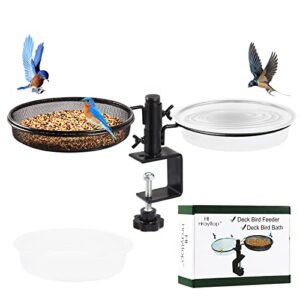
If your railing’s a perfect fit for clamping, the Clamp On Rail Bird Feeder is hard to beat. Its heavy-duty clamp grips rails 0.2 to 2 inches thick, while 360-degree rotating arms let you angle the tray toward sunlight or foot traffic.
The detachable mesh tray and plastic water bowls create a combo feeding-and-hydration station, all in a compact 17.3" x 7" x 8.8" footprint that won’t crowd a small balcony.
| Best For | Anyone with a balcony or porch railing who wants an easy, no-drill way to attract birds without giving up much space. |
|---|---|
| Material | Alloy steel and plastic |
| Primary Color | Black |
| Mounting Style | Rail clamp |
| Weight | 0.95 kg |
| Dimensions | 17.3″x7″x8.8″ |
| Cleaning Method | Removable trays |
| Additional Features |
|
- Heavy-duty clamp fits rails from 0.2 to 2 inches thick, so it works on most railings without tools or drilling.
- 360-degree rotating arms let you angle the tray for the best sun or viewing spot.
- Combo tray and water bowl setup gives birds food and a drink in one compact unit.
- The small tray means you’ll be refilling it pretty often.
- Empty bowls can blow away on windy days.
- Bigger birds may hog the feeder and crowd out smaller visitors.
5. Adjustable Deck Bird Feeder Pole
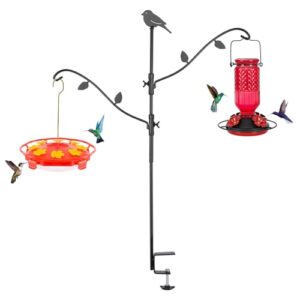
Sometimes you need a little extra height, and that’s where an adjustable deck pole comes in. Standing around 42 inches tall with a 17-inch swing arm, it lifts your feeder well above the rail, giving hummingbirds clear flight access.
The clamp mount fits rails up to 2.75 inches thick, and independent arms let you hang a feeder and ant moat at different angles without crowding your view.
| Best For | Folks who want an easy, no-tools way to hang bird feeders, flower baskets, or lanterns from their deck rail and enjoy watching wildlife up close. |
|---|---|
| Material | Alloy steel |
| Primary Color | Black |
| Mounting Style | Rail clamp |
| Weight | 1.68 kg |
| Dimensions | 41″H x 29.9″W |
| Cleaning Method | Tool-free disassembly |
| Additional Features |
|
- Sturdy alloy steel build with a tough black powder coating that holds up outdoors
- Tool-free setup with adjustable arms, so you can position things exactly how you like
- Clamp-on design works on horizontal deck rails up to 2.1 inches thick
- Not built for heavy items, so stick to lighter feeders and decorations
- Repositioning the arms can leave circular marks over time
- Curious critters like raccoons may loosen the adjustable parts, and chipped coating can lead to rust.
6. Urban Deco Deck Railing Bird Feeder
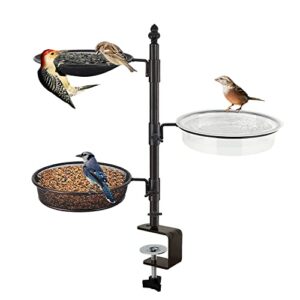
If you’d rather have one accessory that does it all, the Urban Deco Deck Railing Bird Feeder might fit the bill. Its clamp mount tightens onto rails up to 2.6 inches thick, no tools needed, and the detachable tray plus two water bowls let birds eat and drink in one spot.
If hummingbirds are your priority, pairing it with a dedicated hummingbird feeder setup ensures those tiny visitors get the specialized nectar station they actually need.
Built from powder-coated steel, it doubles as a flower pot stand or bird bath, giving your balcony charm beyond just feeding duties.
| Best For | This is a great pick for apartment or condo dwellers who want to attract birds to a balcony without drilling holes or dealing with extra tools. |
|---|---|
| Material | Alloy steel and plastic |
| Primary Color | Black |
| Mounting Style | Rail clamp |
| Weight | 1.28 kg |
| Dimensions | 7″x6″x19″ |
| Cleaning Method | Removable trays |
| Additional Features |
|
- Tool-free clamp mount fits rails up to 2.6 inches thick, so setup takes minutes.
- Doubles as a bird feeder, bath, and flower pot stand for year-round use.
- Removable trays make cleaning quick and easy.
- The open tray design can attract bigger birds, which may lead to seed mess on your deck.
- Screws and poles may rust over time with regular outdoor exposure.
- The water tray may have drainage issues, so you’ll want to check it after rain.
7. Red Glass Hummingbird Feeder with Ant Moat
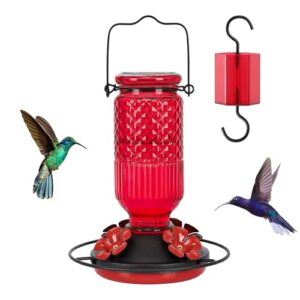
Ants ruining your nectar? This 16-ounce glass feeder solves that with a built-in ant moat sitting above the reservoir, creating a water barrier crawling pests can’t cross. Six flower-shaped ports circle the body, each designed to minimize drips while multiple hummingbirds feed at once.
The wide-mouth glass bottle makes refilling simple, and a leak-proof gasket keeps things tidy during hanging. At 4"L x 4"W x 8"H, it’s compact enough for tight balconies, with red glass that adds charm.
| Best For | This feeder is best for backyard bird watchers who want to keep hummingbirds happy without dealing with ant invasions or messy drips. |
|---|---|
| Material | Glass and metal |
| Primary Color | Red |
| Mounting Style | Hanging |
| Weight | Not specified |
| Dimensions | 4″x4″x8″ |
| Cleaning Method | Hand wash only |
| Additional Features |
|
- The built-in ant moat keeps pests away using a simple water barrier, so your nectar stays clean.
- The wide-mouth glass bottle makes cleaning and refilling quick and easy.
- The 360-degree perch ring lets several birds feed at the same time.
- It’s hand wash only, so you can’t toss it in the dishwasher.
- The 16 oz capacity means you’ll be refilling more often than larger feeders.
- In warm weather, you’ll need to clean it every 3–4 days to keep nectar fresh.
8. Red Glass Hummingbird Feeders
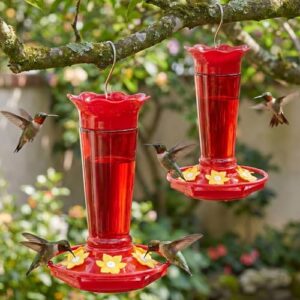
There’s something about red glass that hummingbirds just can’t resist, and these feeders lean into that with vivid ruby hues that brighten any balcony. The vase-like shape with a narrow neck keeps dust out, while transparent walls let you check nectar levels at a glance.
Most hold 8 to 20 ounces, with wide-mouth designs that simplify filling. Flower-shaped rubber ports resist leaks, and perch rings give visiting birds a comfortable spot to rest while feeding.
| Best For | This feeder is best for hummingbird lovers who want to attract several birds at once while keeping nectar clean and easy to monitor. |
|---|---|
| Material | Glass |
| Primary Color | Red |
| Mounting Style | Hanging |
| Weight | 1.63 lbs |
| Dimensions | 6″x6″x8.8″ |
| Cleaning Method | Fully disassemblable |
| Additional Features |
|
- Six flower-shaped ports with perches let multiple hummingbirds feed and rest at the same time
- Ant and bee proof nectar pool plus a leak-proof, gasketed base keep messes to a minimum
- Wide mouth and fully disassemblable design make refilling and cleaning quick and simple
- Some buyers received plastic parts instead of the advertised glass
- The included top hook can come loose and detach easily
- The base needs just the right pressure to remove, which can feel tricky during cleaning
What to Look for in a Feeder
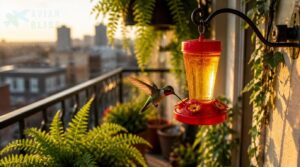
Picking the right feeder isn’t just about looks—it’s about what fits your space and your routine. A few key features make the difference between a feeder you love and one that ends up forgotten in a drawer. Here’s what to keep in mind as you weigh your options.
Nectar Capacity and Size
Size matters more than you’d think on a balcony. Smaller capacities (5-12 ounces) suit compact spaces, since you’ll refill often anyway. Check capacity labeling on packaging—ounces or milliliters. For multi-port feeders, divide total volume by port count: a 16-ounce, 6-port feeder gives roughly 2.7 ounces per port. Keep nectar levels below the ports, leaving a half-inch of headroom to prevent spills during windy days.
Attracting hummingbirds helps support the pollination of flowering plants in your garden.
Mounting Style Options
How will your feeder actually stay put? That’s the real question. Adjustable Rail Clamps grip railings up to 2.6 inches thick in minutes—no drilling needed. Pick from:
- Vertical Suction Cups for windowattached setups holding up to 8 ounces
- Portable Deck Poles for railmounted or freestanding spots
- Flexible Ceiling Hooks or Compact Wall Brackets for polemounted, balconyfriendly hummingbird feeders with adjustable mounting flexibility
Material and Durability
Once your feeder is mounted securely, what it’s made of matters just as much. Glass vs plastic comes down to weather resistance: glass resists UV yellowing and won’t warp, while UV-stable plastics resist cracking and stay lighter.
| Material | Pro | Watch For |
|---|---|---|
| Glass | Won’t fade or warp | Heavy, can shatter |
| Plastic | Lightweight, impact-resistant | Lower grades fade faster |
| Powder-coated steel | Rust-resistant, sturdy | Scratches invite corrosion |
Seal longevity matters too—silicone gaskets outlast rubber.
Ease of Cleaning
Material durability is one thing, but how easily you can scrub your feeder is another story entirely.
Look for non-porous surfaces with wide mouth openings, since these resist staining and let brushes reach every corner.
Detachable reservoirs and removable trays make rinsing simple, while antimicrobial coatings and quick twist locks keep mold at bay and reassembly quick after each wash.
Leak-proof Seals
A sparkling clean feeder still leaks if seals fail, so check gaskets around nectar ports.
- Leakproof rings made of silicone or rubber resist temperature cycling
- Gasketed reservoirs prevent nectar spillage onto your balcony floor
- Snug-fitting lids offer weatherproofing during rain
Inspect seals each cleaning—worn rings cause sticky messes and wasted nectar on balcony-friendly setups.
Best Mounting Options for Small Balconies

Once you’ve picked a feeder, the next question is how to actually get it onto your balcony. Small spaces call for smart mounting, and the right setup can make all the difference between a wobbly feeder and a secure one. Here are four mounting styles worth considering for your space.
Rail Clamp Feeders
Got a sturdy railing? A clamp-style bracket turns it into hummingbird headquarters. These feeders use quick release mechanisms and adjustable clamp pressure to grip rails 8 to 12mm thick, no drilling needed.
| Feature | Detail | Benefit |
|---|---|---|
| Rail Diameter Range | 8-12mm | Fits most rails |
| Ant Moat | Built-in | Bug-free nectar |
| Material | Steel/aluminum | Weather resistant |
| Capacity | 200-500ml | Multiple visitors |
Window Suction-cup Feeders
No rails? No problem. A window hummingbird feeder sticks right to your glass with suction cups, perfect for tiny apartment balconies.
- Check suction cup stability monthly
- Clean glass surface preparation before sticking
- Watch weather impact adhesion in heat/cold
- Confirm feeder drainage design holes work
Easy cleaning, clear nectar views, and balcony-friendly options make these a charming pick.
Deck Pole Feeders
A few hummingbirds at once? A deck bird feeder pole supports it. These stand-alone poles use adjustable arm rotation so you can space out multiple nectar ports, while weight stabilization systems keep things steady on a breezy apartment balcony.
Look for corrosion resistant coatings and modular pole extensions for added height. Removable heads mean easy cleaning, ant moat integration keeps pests away, and sturdy construction means it’ll last.
Hook and Flexible Arm Kits
If your balcony rail can’t fit a bulky base, a hook and flexible arm kit might be your best bet. With 360-degree rotation, an adjustable arm length up to 24 inches, and quick release joints, you get flexible deck rail mounting wherever you need it.
- Stainless steel durability for outdoor weather
- Weight capacity support up to 2 pounds
- Clampstyle brackets with non-marring silicone pads
- Adjustable clamp fits rails 0.5 to 1.5 inches
Where to Hang a Balcony Feeder
Picking the right feeder is only half the job—where you hang it matters just as much. A few small choices about placement can mean the difference between a feeder that gets visited daily and one that sits empty. Here’s what to think about before you settle on a spot.
Ideal Height From Floor

Picture your feeder swinging gently at eye level, easy to admire from your favorite chair. The ideal feeder height is 4 to 5 feet from the floor, perfect for railing mounts or a deck bird feeder pole.
This range offers wind resistance height, good balcony safety clearance, and keeps cleaning accessibility height comfortable—no awkward stretching required.
Shaded Versus Sunny Spots

Too much afternoon sun speeds up sunlight nectar fermentation, making nectar cloudy fast. Shade reduces evaporation and helps nectar stay fresher longer, though it can trap humidity, which promotes mold on damp parts.
Temperature affects feeder durability too—seals and plastic last longer out of harsh rays.
Aim for balanced light visibility: morning sun with afternoon shade keeps your hummingbird feeder appealing, balcony-friendly, and easy to maintain.
Distance From Windows
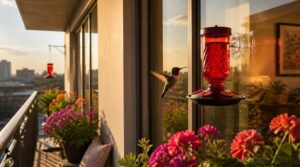
Glass and feathers don’t mix well, so window distance matters more than you’d think. The golden rule is Three Foot Safety or a Thirty Foot Buffer—anything between becomes a danger zone.
For apartment balconies, a window hummingbird feeder mounted right on the glass works great for collision risk reduction. Smart feeder placement keeps your balcony-friendly options safe and welcoming.
Sheltered Placement Near Walls
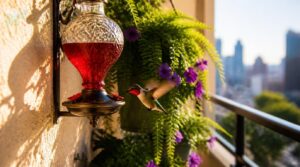
Tucking your feeder near a wall isn’t just about looks—it’s smart strategy. Walls act as a wind gust shield, keeping nectar from sloshing while slowing evaporation. Shade near walls also keeps sugar water fresher, longer.
Plus, hummingbirds get predator quick cover and a calmer spot away from the balcony traffic line—making your apartment balcony feel like a cozy, balcony-friendly refuge they’ll return to again and again.
A sheltered balcony wall gives hummingbirds cover from predators and a peaceful refuge they will return to again and again
How to Make Hummingbird Nectar
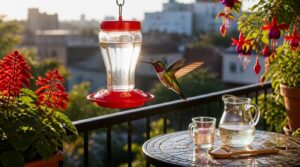
Once your feeder’s hung up and ready, it’s time to fill it with something your hummingbirds will love. Good news: homemade nectar is simple, cheap, and just takes a few basic steps to get right. Here’s exactly how to mix it up, adjust it for weather, and avoid a few common mistakes.
Standard Sugar-to-water Ratio
Getting the sugar-to-water ratio right is the easiest part of feeding hummingbirds, and it’s just 1 part sugar to 4 parts water.
Measure by volume—1/4 cup sugar with 1 cup water works fine for any hummingbird feeder on your apartment balcony. Stir until the sugar fully dissolves, since this energy balance ratio mirrors natural flower nectar without overloading your visitors.
Cold Weather Nectar Mix
When temps drop, bump your sugar water solution to a 1:3 ratio—this Winter Sugar Ratio gives birds an Energy Boost Mix and lowers the Freezing Point Adjustment slightly.
On your apartment balcony, keep extra batches with Cold Storage Guidelines (fridge, up to two weeks). For weather-resistant setups, consider Heated Feeder Tips or swap frozen feeders with fresh, balcony-friendly options to keep nectar concentration usable.
Ingredients to Avoid
Now that your sugar-water solution is ready, keep it pure.
Skip honey—honey breeds bacteria and fungus fast. Avoid molasses, corn syrup, and artificial sweeteners like stevia or Splenda; hummingbirds need real sugar. Brown, raw, or organic sugars cause inconsistent nectar concentration. Skip red dye and flavor additives like chili powder.
Plain white sugar keeps your balcony nectar recipe safe and fermentation-free.
Boiling and Cooling Steps
Boil your water first, then stir in the sugar until it dissolves—this follows basic boiling point basics, since heat speeds dissolving. Cooling by boiling also helps release excess gas.
Let your sugarwater solution cool completely before filling feeders; warm nectar invites bacteria. Once cooled, check nectar levels and store extras in the fridge for upcoming nectar refills.
Cleaning Your Balcony Feeder Regularly

Fresh nectar is only half the job—keeping that feeder clean is what really keeps your hummingbird visitors coming back. A dirty feeder can turn from a treat into a health risk pretty fast, so a simple routine makes all the difference.
Here’s what you need to know about timing, tools, and storage to keep things running smoothly.
Warm Weather Cleaning Frequency
Heat speeds up nectar spoilage fast, so plan on cleaning every 2 to 3 days once temps climb past 85°F.
Check for cloudiness, crystals, or odd smells daily. Rinse seals and ant moats, watch for condensation on cooler nights, and dry feeders fully in shade.
This keeps your apartment balcony feeder fresh, safe, and inviting for visitors.
Cool Weather Cleaning Schedule
Once temperatures hover near freezing, switch to a Weekly Cleaning Routine as part of your Mold Prevention Schedule.
Follow the Freezing Temperature Protocol: rinse with warm water, then dry fully to avoid cracking. Add Cold Weather Disinfection using diluted soap, and pair cleaning with a Winter Feeder Inspection, checking seals so your apartment balcony feeder stays free from nectar spoilage.
Cleaning Tools and Supplies
The right tools make cleaning a breeze instead of a chore. Keep a microfiber cloth handy for wiping housings, a glass squeegee for streak-free jars, and a soft nylon brush to scrub away algae.
A bottle brush reaches narrow necks easily, while residue removal pads tackle perches. Detachable trays simplify nectar replacement and overall ease of cleaning.
Storing Leftover Nectar Safely
Got extra nectar? Don’t toss it. Pour leftovers into an airtight container, label with the date, and refrigerate—it stays fresh 5 to 7 days. On your apartment balcony, this prevents waste and nectar fermentation.
- Use clean, sealed jars
- Refrigerate immediately
- Label with date
- Keep away from sunlight
Stick to your standard sugar-to-water ratio, and always check for cloudiness before reuse.
Choosing The Right Feeder Size
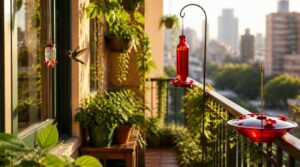
Size matters just as much as style when you’re picking a feeder for a small balcony. The right capacity depends on how much space you have and how often you’re willing to refill. Here’s how feeders stack up, from compact window models to bigger rail-mounted options.
Small-capacity Window Feeders
If your balcony is more "Juliet" than patio, a window hummingbird feeder is your best friend. These hold about half a cup of nectar, perfect for an apartment balcony’s tight space.
Look for a clear nectar window for easy checks, ant moat protection, a heat-resistant reservoir, and an easy refill system—all balcony-friendly options for small nectar capacity needs.
Mid-size Deck Feeders
If you’ve got more room than a window allows, mid-size deck bird feeders hit the sweet spot. Holding 8 to 16 ounces, they’re great for busy balconies.
- UV protected polycarbonate bodies
- Ant moat integration built in
- Smart port spacing for multiple birds
- Easy disassembly for cleaning
Weather resistant design means these balcony-friendly options handle sun and rain without cracking or fading.
Large-capacity Rail Feeders
For larger balconies, rail feeders offer serious nectar capacity—2 to 10 liters per port—with Bulk Nectar Delivery along a mounted track.
| Feature | Benefit |
|---|---|
| Spill Containment System | Reduces waste from wind/bumps |
| Anti Siphon Seal | Prevents backflow |
| Port Flow Control | Drip-free delivery |
| Weather Resistant Finish | Fights fading |
| Clamp mount | Fits round/square rails up to 2.5" |
Other Small Feeder Options to Consider

If the feeders above don’t quite fit your space or style, there are a few more small options worth a look. Some focus on feeding multiple birds at once, while others bring a charming, homemade feel or extra protection from pesky ants. Here’s a quick rundown of each one.
Multi-port Small Feeders
If you’ve got a small flock of regulars, multi-port feeders let several hummingbirds dine at once without squabbling.
Port spacing of 0.75 to 1.25 inches keeps beaks from crowding, while an anti-seep base stops sticky drips. Look for UV-resistant coatings, balanced nectar flow to each port, and quick disassembly cleaning—all perfect for compact, balcony-friendly setups with 8 to 16 ounces of nectar capacity.
Glass Jar Style Feeders
There’s something charming about a glass jar hummingbird feeder on your balcony rail. The wide jar mouth design makes filling and cleaning easy, while a sturdy stability base keeps it steady in wind.
Look for:
- Wide-mouth jar for brush access
- Copper feeder ports
- Gasket seals to prevent leaks
- UV coating to protect nectar
- Clamp-on or hanging base options
Compact Ant-moat Feeders
Ants love nectar as much as hummingbirds do, so a built-in ant moat matters. Compact, integrated covers seal around the hanger, creating a 360-degree ant barrier design with no loose parts—perfect space-saving moat options for tight balconies.
Check the moat water level weekly; UV-resistant plastic resists fading. Quick moat refill caps make upkeep simple, giving your hummingbird feeder solid balcony ant protection among other balcony-friendly options.
Tips for Attracting More Hummingbirds
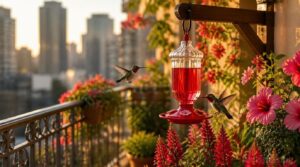
Picking the right feeder is only half the battle—how you set it up matters just as much. A few small tweaks to your balcony setup can turn a quiet spot into a hummingbird hotspot. Here’s what to keep in mind once your feeder’s up and ready.
Adding Perches for Resting
A small perch can turn a quick sip into a genuine visit.
Mount untreated wood or natural branches 8 to 15 inches above the tray, keeping the diameter between 1 and 2 centimeters so tiny feet grip comfortably.
Position perches 6 to 12 inches from the feeding ports, angled away from direct sun, and clean them weekly with mild soap and warm water.
Using Red Accents Wisely
Red draws hummingbirds in before they even spot the nectar. Limit red focal points to one or two items — a feeder perch, a copper-accented tray — and pair them against neutral white or gray walls for clean contrast.
Choose UV-resistant, matte finishes over glossy plastics, which can glare and startle birds, and swap faded pieces every two or three seasons to keep your balcony-friendly setup consistently inviting.
Pairing Feeders With Balcony Plants
Think of your balcony as a living buffet — feeders and red tubular flowers working together to keep hummingbirds coming back.
- Plant height variety creates natural vertical feeding zones
- Bee balm and cardinal flower add extra nectar-rich flowers
- Seasonal bloom pairing with early zinnias and late salvias extends visits
Position plants 6 to 8 inches from feeders for easy hopping.
Reducing Window Collision Risks
Even a small balcony can become a danger zone if large glass panes create invisible reflections.
Placing irregular dot patterns spaced 1 to 2 inches apart on exterior glass disrupts those mirror-like reflections before birds get close. Pair that with reflective film application or external netting stretched across your balcony railing, and you’ve given every visiting hummingbird a much safer path in.
Frequently Asked Questions (FAQs)
Where to hang a hummingbird feeder on a balcony?
Hang your feeder 5 to 6 feet above the floor, on the sheltered side of the balcony, within 10 feet of your seating area, and at least 3 feet from any window.
Do hummingbirds visit balconies in urban areas?
Yes, hummingbirds do visit urban balconies. They’re drawn to reliable nectar sources during migration and breeding seasons, and city birds adapt surprisingly well to balcony feeders, making urban wildlife encounters more common than you’d expect.
Can multiple feeders coexist on one balcony?
Absolutely — two feeders can share a balcony if you space them 8 to 15 feet apart to limit territorial overlap and keep hummingbird traffic flowing smoothly without one bird dominating the space.
How do I deter bees from my feeder?
Choose a feeder with built-in nectar guards and small ports — around 1–2mm wide — so bees can’t reach the nectar. Shade placement and regular cleaning every 2–3 days help, too.
Will rain dilute or contaminate exposed nectar?
Rain can dilute nectar concentration and introduce contaminants like pollen, dust, and microbial spores. Even light rainfall reduces sweetness, which may deter hummingbirds. Replace exposed nectar promptly after rain to keep it fresh.
Do hummingbirds return to the same feeder seasonally?
They really do. Hummingbirds remember feeder locations year after year, returning to reliable nectar sources thanks to strong site fidelity. Keeping your feeder in the same spot each season is the simplest way to welcome them back.
Conclusion
Your balcony is a runway that hummingbirds are already scanning from the skyline above. Choosing the right nectar hummingbird feeders for apartment balconies doesn’t take a garden or a ground-floor setup—just clean nectar, a reliable mount, and a little patience while the birds learn to map your small outdoor space.
Start with one feeder, keep it refreshed every few days, and tuck a flowering plant nearby if you can. They’ll find you soon enough.
- https://birdseedandbinoculars.com/wordpress/putting-up-the-hummingbird-feeders
- https://www.allaboutbirds.org/news/i-live-in-a-high-rise-apartment-in-the-city-how-can-i-attract-birds
- https://duncraft.com/collections/deck-rail-mount-brackets-1
- https://www.audubon.org/news/how-make-hummingbird-nectar
- https://www.birdsandblooms.com/birding/attracting-hummingbirds/attract-hummingbirds-balcony